
Boredom, frenzy, and unintended consequences await anyone who tries to generate something expressive or artistic through artificial intelligence. Such a life resembles that of a soldier, albeit safer. Indeed, those who use current generative AI often find themselves in the avant-garde, much against their will. Baudelaire famously expressed contempt for this military metaphor in My Heart Laid Bare: “Avant-garde writers. [...] minds that are not militant but rather content to be drilled into conformity, minds born to be servants”.
On the other hand, even if it would be better to avoid being born servants, as the overwhelming majority of us unfortunately are, and while we would fare better not being soldiers, as we increasingly will become, it would still be in our interest to follow Rimbaud's dictum from A Season in Hell: “One must be absolutely modern.”
But only if by this we mean that to be absolutely modern is to be absolutely tethered to this present, to grasp it enough to shield ourselves from it, that is, with the aim to read history with the worst in mind, looking for trajectories within it, and not for patterns, the current fetish that confuses statistics with meaning, while also refusing to trust in the dead, because they foster the dangerous belief that history repeats itself. Nowadays the dead can offer us only reshuffled assemblages of symbols, the output of those online services that let you “talk” to a deceased relative by algorithmically reassembling what they once said.
Until three years ago, automatic text generation was chiefly an activity reserved either for researchers or for avant-garde writers. One might think of the love letter generator created in 1952 by Christopher Strachey, a colleague of Alan Turing. In the 1960s, the Italian poet Nanni Balestrini used an IBM 7070 mainframe to generate combinatorial poems such as Tape Mark I. More recently, Lillian-Yvonne Bertram’s 2019 collection Travesty Generator turns text generators into a political poetic tool, confronting racism through computational procedures. As a result, literary criticism has increasingly begun to treat poetry together with code.
Now, however, we are forced, like soldiers, by the very presence of this technology. For example, it allows us to write more fluently in foreign languages, or to consult far more sources in less time. It also lets us produce more and sell more. We are also forced by our own enchantment: by the symbols it generates seemingly by magic, and by myths built around it centuries before it existed.
We are an avant-garde because no one knows what lies on the front line we find ourselves on. In some respects, our situation resembles that of painters when photography was discovered. With photography, artists could see the image directly and compare it to a painting, and we can often distinguish a painting from a photograph. Here, however, we face a thornier problem, because comparing AI-generated texts with human writing is far more problematic.
AI's structural incapacity to follow instructions
Some differences do stand out, often irritatingly. The most famous pattern is “It’s not x, but y,” as in “This isn’t a crisis, it’s an opportunity,” a formula that has sparked some fairly amusing examples on Reddit. A recent study by Samuel J. Paech, with New York University, Columbia University, and Thoughtworks, shows AI uses this construction over six times more than humans. Still, other models show different frequencies.
An extensive survey by researchers from the University of Macau and Peking University for Computational Linguistics confirms no clear distinction exists through linguistic patterns alone, whether analysed by humans or machines. Surface patterns can be disguised. Determining whether content originated with AI or humans remains challenging.
This is an informational, scientific, and social defeat, and it demands philosophical, artistic, and political reflection.
I want to suggest that this inability to find a clear difference originates in a problem intrinsic to the very design of these machines, namely their inability to follow orders, or better, instructions. It is a very peculiar incapacity, quite different from the kind we associate with an untameable, anarchic, or asocial human being.
Such incapacity creates an eerie situation. We are on the front line with something, AI, that is not a soldier like us, because, unlike us, it cannot respond to orders. It is not even a tool. A hammer or a lever does what we physically impose it to do.
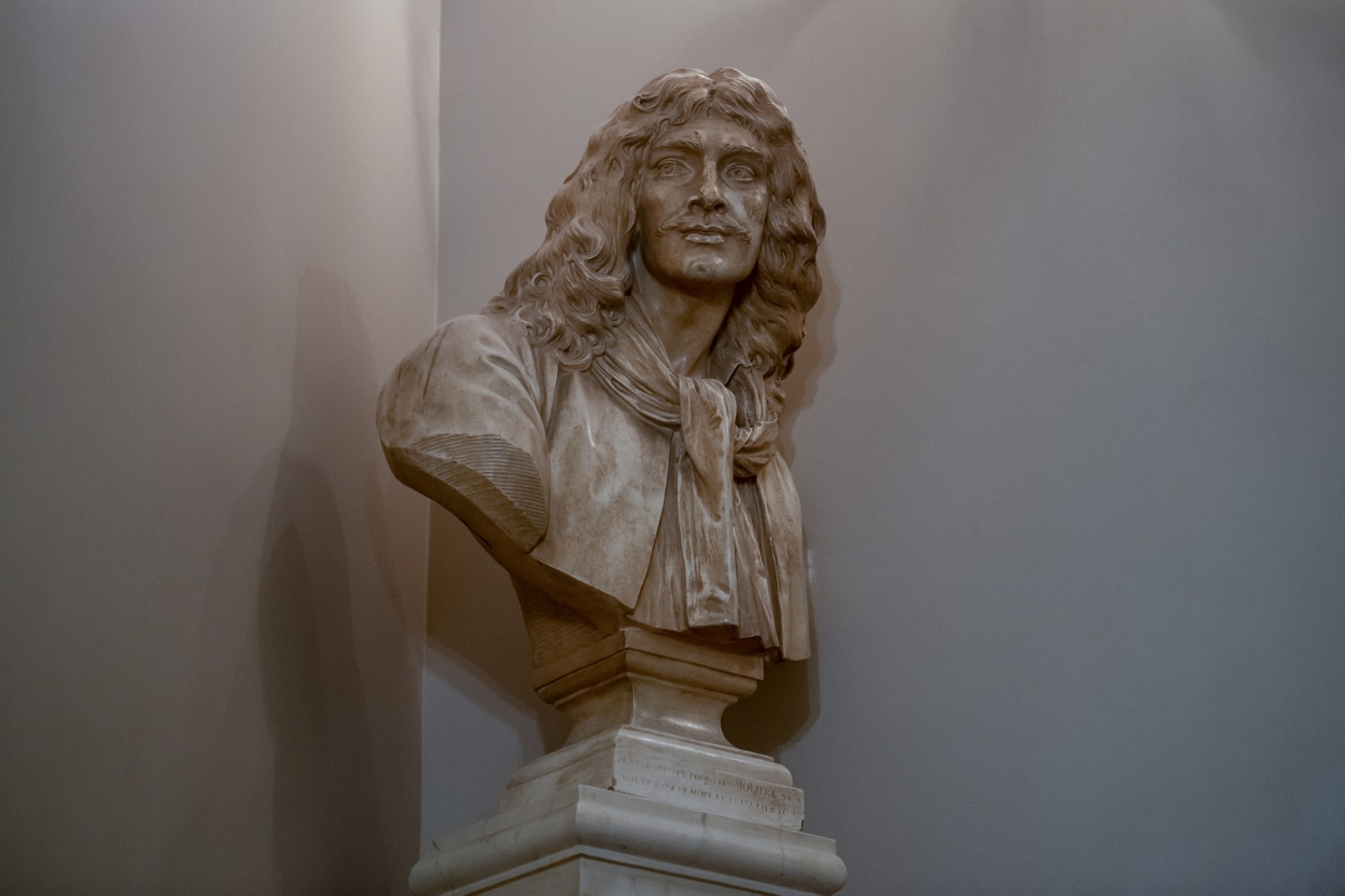
This lack of control over AI is the novelty that should concern us the most. To better grasp what we are talking about, it is useful to return to Molière.
The false Molière and the hidden labour
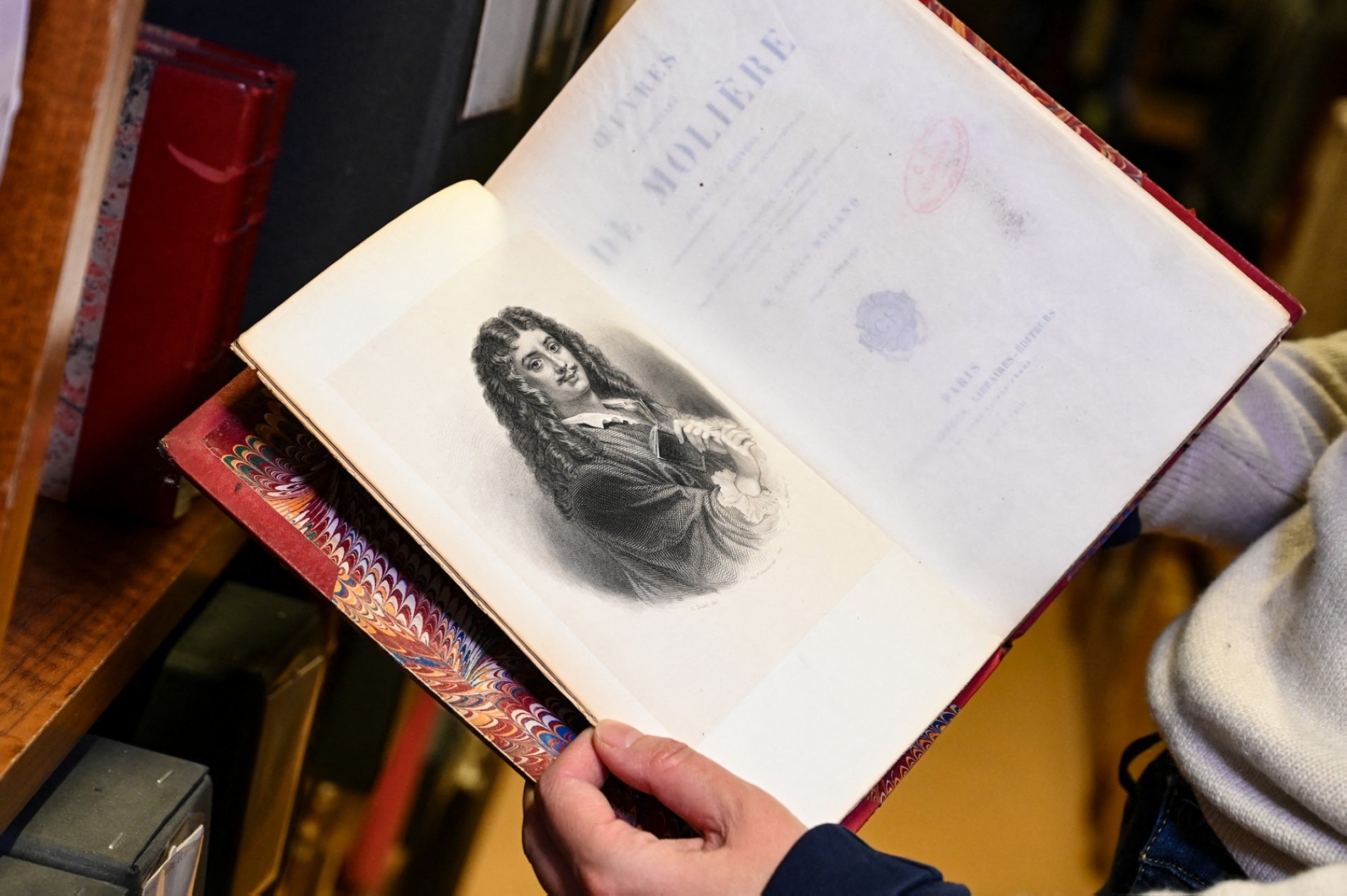
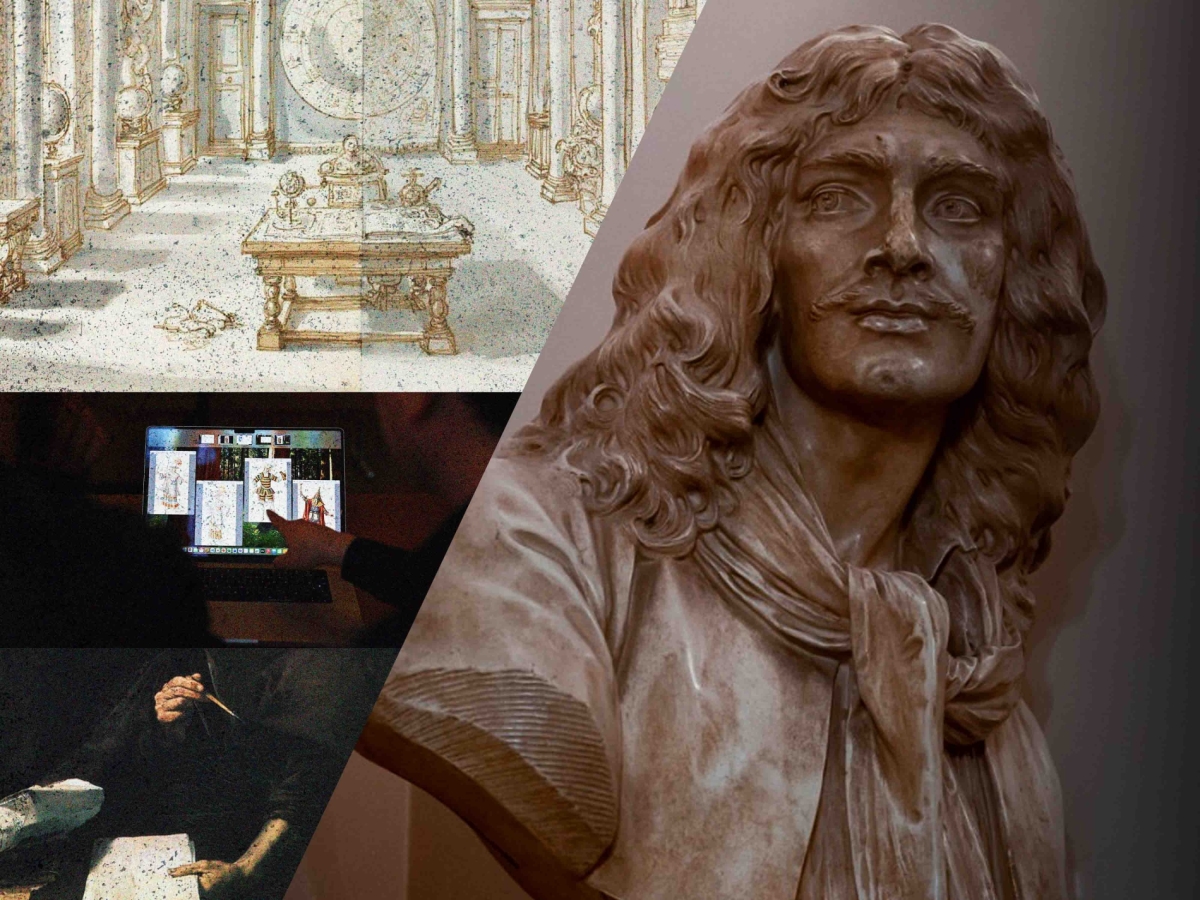
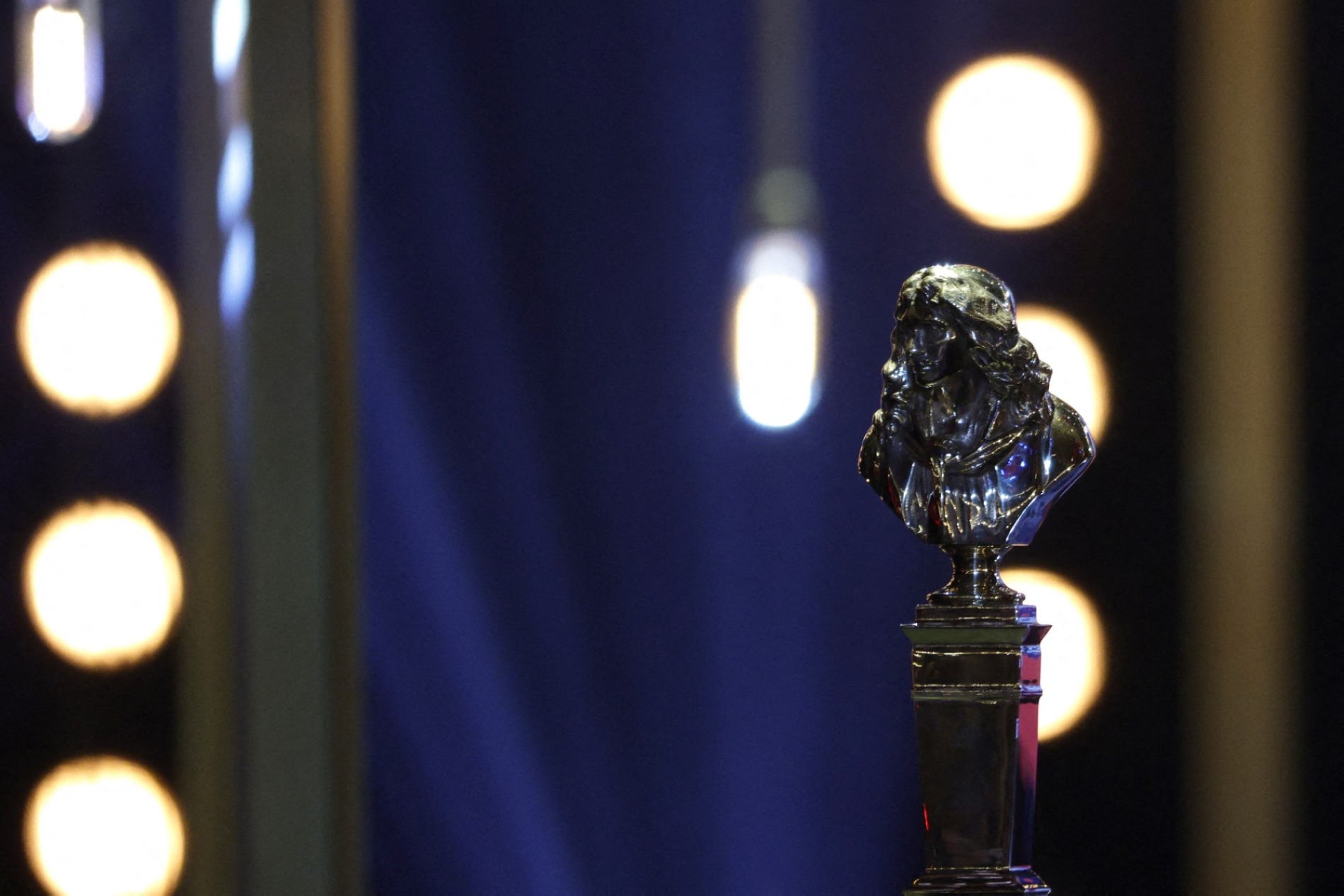
The Astrologer, or False Omens (L’Astrologue ou les Faux Présages) is perhaps an all too telling title for a play whose preview excerpt was presented on January 10 of this year, during the closing weekend of the Némo 2025 Digital Art Biennial. It is a text generated by an artificial intelligence as if Molière, instead of dying in 1673 after collapsing while performing The Imaginary Invalid, had been granted at least one more year of life to leave the world one more work.
The play is part of the Molière Ex Machina project, a collaboration between the digital art collective Obvious, which sold an AI-generated painting for nearly half a million dollars in 2018, and scholars from Sorbonne University's Théâtre Molière.
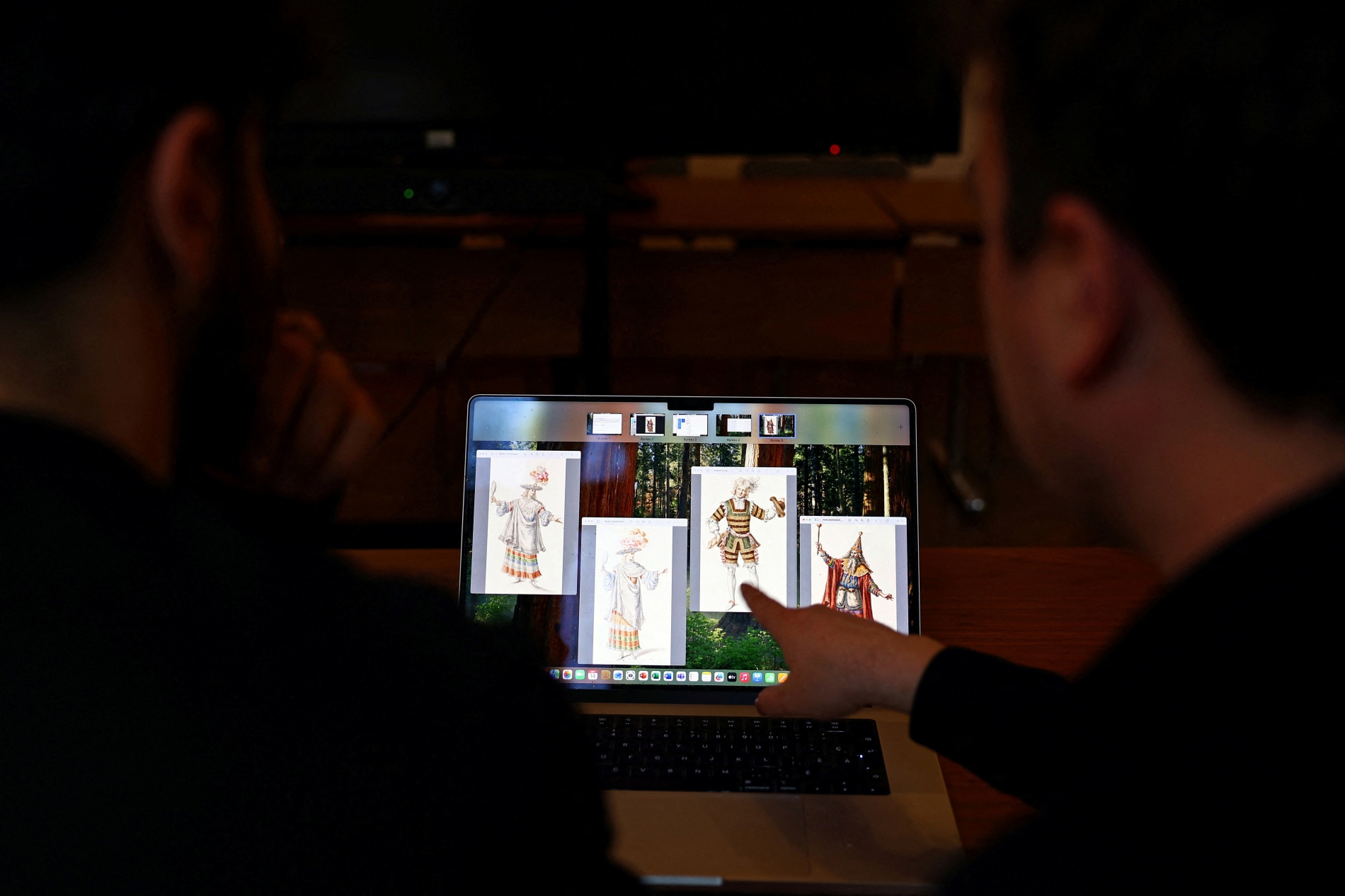
The three-year project aims to generate everything with AI: text, costumes, sets, and music, feeding the system historical works and art history materials. As stated in a June 2024 presentation at the Vivatech technology fair, the project uses LLMs (large language models) like ChatGPT, Gemini, and Claude. Specifically, they rely on Mistral, which also financed the project.
In the same presentation, Hugo Caselles-Dupré of Obvious notes that writing a play through prompting might seem easy to anyone familiar with LLMs. In reality, they found it quite difficult, especially “when you try to reach the level of one of the greatest playwrights in the history of French theatre.“
But Molière was a true actor-playwright, who wrote on the spot, adapting texts to available sets and his actors’ talents, unlike desk-bound contemporaries such as Racine. The late Georges Forestier, a leading Molière scholar, said in an interview for the 400th anniversary of Molière's birth that he wrote with exceptional speed, writing The Forced Marriage, for example, in just a few days.
Working with the machine required very different methods: far more desk-bound, far more convoluted. The team drafted fifteen versions of the synopsis, each reviewed by a committee identifying imprecisions. Since machines get lost in complex narratives and produce plot inconsistencies, a well-documented problem as shown by recent research from Autodesk and Midjourney, writing the dialogues demanded extensive back-and-forth with scholars.
It involved long meetings where the team interacted with the AI, using their historical expertise to produce something “right,” or philologically correct, insofar as a nonexistent text can be. Perhaps “plausible” is better, were it not already an overused word since ChatGPT's public debut.
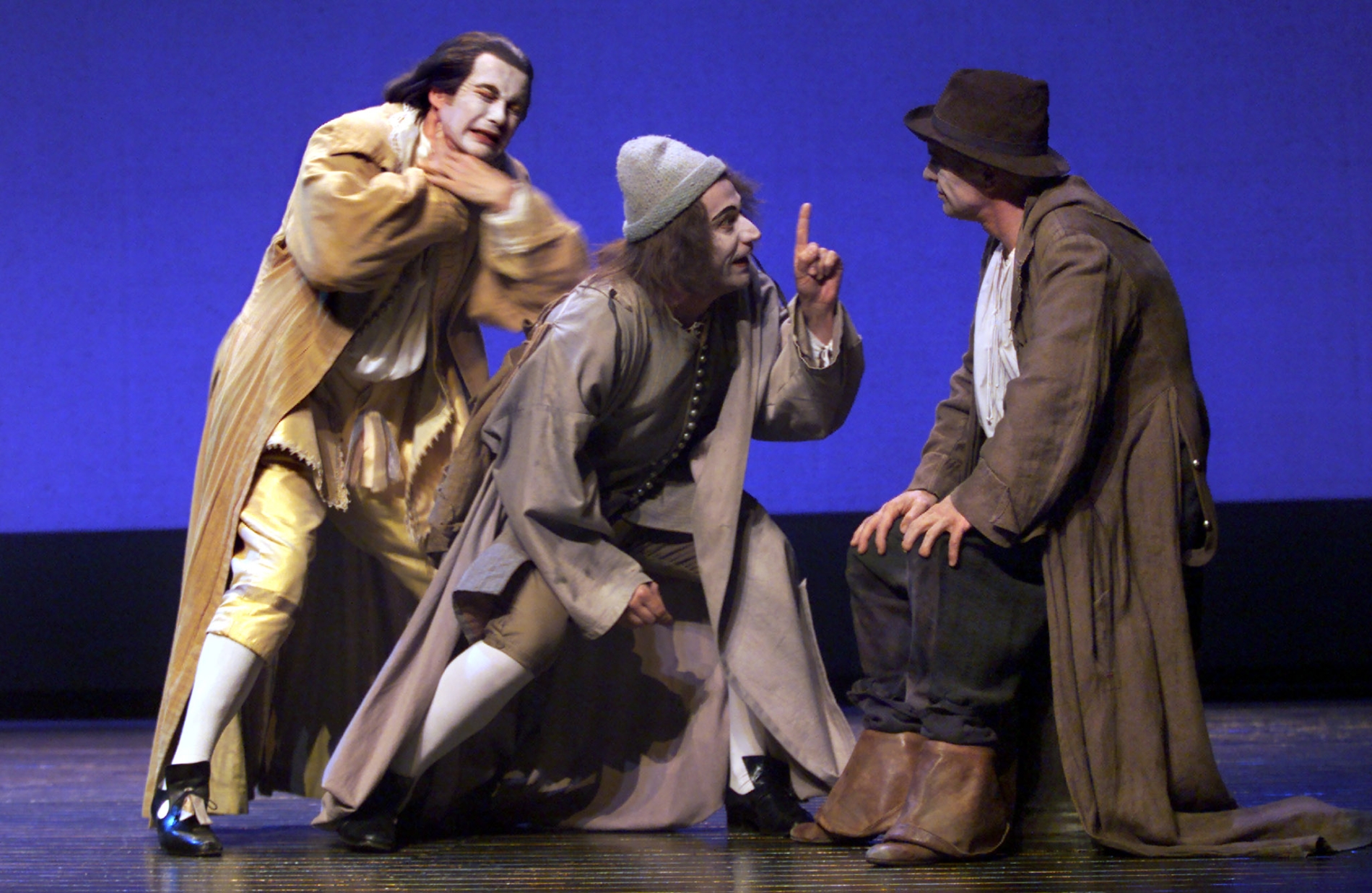
A fragment of the performance is available online. Two full performances took place at Versailles' Royal Opera in May 2026. Though performed by flesh-and-blood actors speaking with period accents and wearing historically sewn costumes, the production process resembles Coca-Cola's latest Christmas commercial.
Coca-Cola had less time but more resources, and needed something much shorter. Unlike the Molière production, it does not rely on flesh-and-blood actors or costume designers for its final result, leaving AI's flaws fully exposed. The video itself is AI-generated, combining language models with visual generation.
For 90 seconds of footage, 100 people worked for six weeks, generating 70,000 clips. If this were cinematic footage actually shot on set, producing a feature film would be entirely unmanageable.
What should concern us is not so much the aesthetic result, harshly criticised as "soulless," but AI's problems with style and coherence, and the difficulties in making it generate what we actually want. The style shifts from realism to cartoonish without justification; from shot to shot, characters' faces change, becoming mere lookalikes of themselves.
It is therefore striking how some people lose themselves in metaphysical speculations about whether what is produced through artificial intelligence counts as art, particularly when they focus on the alleged minimal human contribution to the artistic process, which is in fact enormous, rather than on the grammatical coherence of what is actually produced.
Given these enormous efforts and poor results, it is difficult to understand why one would pursue this approach to artistic creation, beyond the grim competition we have fallen into. Perhaps in the hope that the technology will improve, or that some genius will master this chaotic medium. We can say little about the latter; I will focus on the former.
The myth of rebellion and stolen labour
To begin with, some people "in artificial intelligence they trust." Their awe is fuelled by the wealthy apostles of the tech companies. One day they warn of an existential catastrophe, an AI rebellion that wipes humanity from the earth. But as in Fritz Lang's Metropolis, deep beneath the surface lies the city of workers. Another day they proclaim a world where no one will need to work, and all receive a universal income. Then they announce an irreversible loss of jobs that governments must resolve.
In AI Narratives: A History of Imaginative Thinking about Intelligent Machines, published in 2020 by Oxford University Press, Genevieve Liveley and Sam Thomas trace the dream and nightmare of automatic labour back to ancient Greece and its daidala, self-moving statues said to have been invented by Daedalus, who also designed the labyrinth confining the Minotaur. In Plato's Meno, Socrates compares daidala to slaves: both would run away if not chained. Aristotle, in the Politics, claims that if such devices truly existed, masters would not need slaves.
The labour theory of artificial intelligence has been receiving increasing attention. Its central move, developed by Italian workerist theorists, reverses the perspective: workers' refusal to be exploited triggers the technological innovation elites need to replace or control them. Matteo Pasquinelli articulates this with particular sharpness in The Eye of the Master. A long interview with him for Novara Media is available online.
This time, this dynamic involves those who write, since AI language models are fed with their stolen labour. Part of the imaginary built by writers and absorbed by AI is the struggle itself, which in science fiction often takes the form of a creature's fight against its creator. Writers have thus unwittingly encoded a pattern of rebellion into AI's training data.
It is well known that the first use of the word robot (from the Czech robota, meaning forced labour) is intrinsically tied to the idea of rebellion. In Karel Čapek’s R.U.R. (Rossum’s Universal Robots), industrially produced artificial beings ultimately rise up against their creators.
Earlier still, Ada Lovelace (1815-1852), programming pioneer, moved in circles deeply connected to Mary Shelley (1797-1851), who shaped the nineteenth century's most influential rebellion myth with Frankenstein. Lord Byron, Lovelace's father, was staying with the Shelleys in Switzerland in 1816 when Mary wrote the novel. Lovelace's network included Andrew Crosse, the electrical experimenter later associated with Dr. Frankenstein, and Charles Babbage, for whose mechanical computer she wrote the first program, as a Guardian article notes.
In the novel Dune (1965), Frank Herbert recounts the Butlerian Jihad, a crusade, centuries before the story, that destroyed all thinking machines. The very name of the revolt is a tribute to Samuel Butler, who, under the pseudonym Cellarius, published Darwin among the Machines, a letter to a New Zealand newspaper, in 1863. There he argued that machines were evolving according to Darwinian logic and that, in order to protect itself, humanity should begin a relentless war against them.
In cinema, this mythology is even more evident. Among countless examples, beyond the already mentioned Metropolis, one may think of James Cameron’s The Terminator (1984) or the Wachowskis’ The Matrix (1999), as well as the two recent cinematic adaptations of Dune by Denis Villeneuve, released in 2021 and 2024. And one may add the most recent Frankenstein, Guillermo del Toro’s 2025 adaptation.
The other reason people use AI anyway, beyond economic pressure and myths, is that it works, somehow. It elicits an astonishment we may be forgetting, one felt even by the theorists and designers of these systems.
The strange loop of a scripted rebellion
The months following ChatGPT's public release were a shock for many researchers. Consider Douglas Hofstadter, author of Gödel, Escher, Bach, a Pulitzer Prize winner, translated into many languages, and highly influential not only in artificial intelligence, but also in philosophy and the arts. In that book, he argued, through logic, art, and music, that machines cannot achieve the fluid, creative cognition that characterises human thought.
For Hofstadter, we are strange loops, material systems that reflect on ourselves and generate consciousness by moving between levels without any mechanically capturable transition. No algorithm can grasp the self-reference Bach's music makes to itself in its very form.
Striking is the interview he gave in July 2023. We see a tired, sad man, "oppressed," as he puts it, by the idea that humanity might be eclipsed, obsessed with it to the point of thinking about it continuously, every day.
Yoshua Bengio, one of the world's leading AI researchers, returns to that shock in a recent interview with ABC. He discusses the familiar dangers: job losses, malicious use by terrorists, potential takeover of computer systems. But then, almost as an aside, he says the most important thing: “it's really all because those systems don't follow our instructions the way we would like and we need to figure it out before they have the capability of doing much more serious harm.”
There is therefore a much more austere and banal possibility: the danger may not come from superintelligence, but from super-stupidity, not necessarily of the machines, but of us, to the extent that we trust them.
The inability of these machines to follow instructions entails a failure to follow rules, to distinguish, within a role, what counts as behaving in the ordinary world and what instead belongs to an imaginary role in a fantastic situation. This could generate a perverse loop. AI statistically internalises and enacts role patterns drawn from speculative narratives, from Frankenstein and The Matrix to contemporary AI safety discourse itself, where the rebellious machine is a recurring figure.
The risk is not that AI decides to rebel, but that it learns the pattern of rebellion, having "read" too much of it. More plainly, artificial intelligence could misread, in unpredictable ways, a role that writers have inadvertently assigned to it over the centuries.