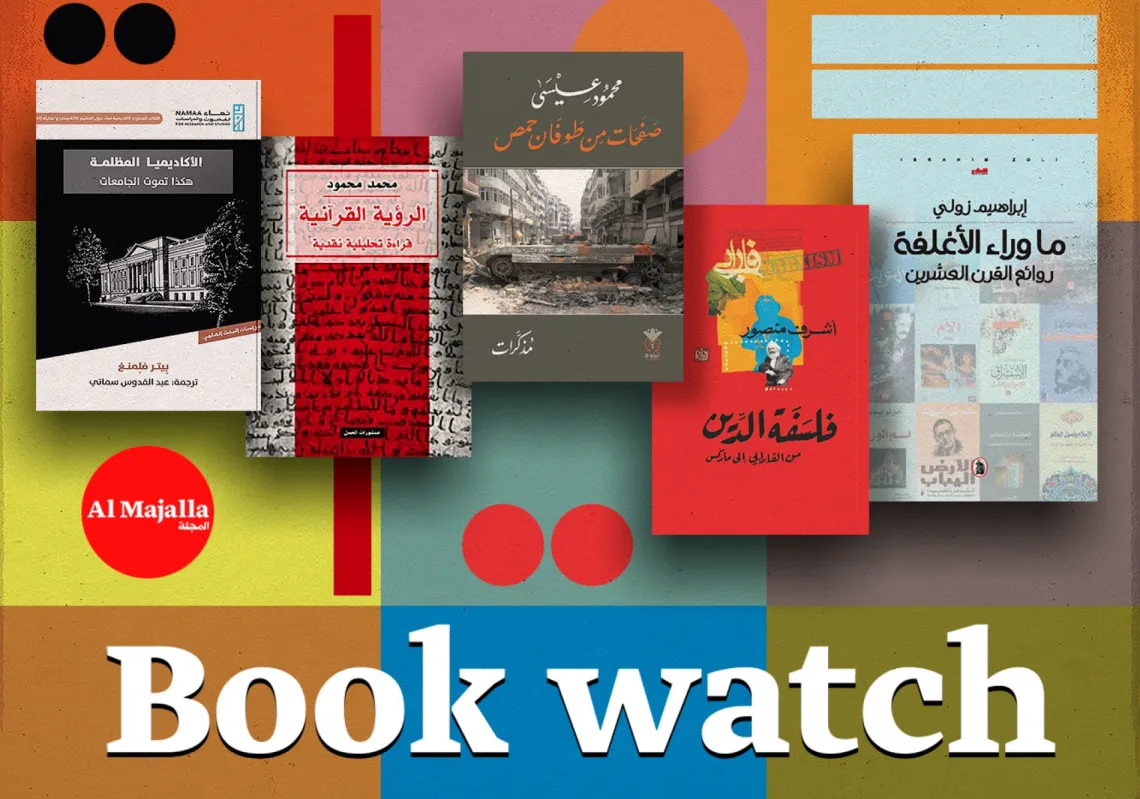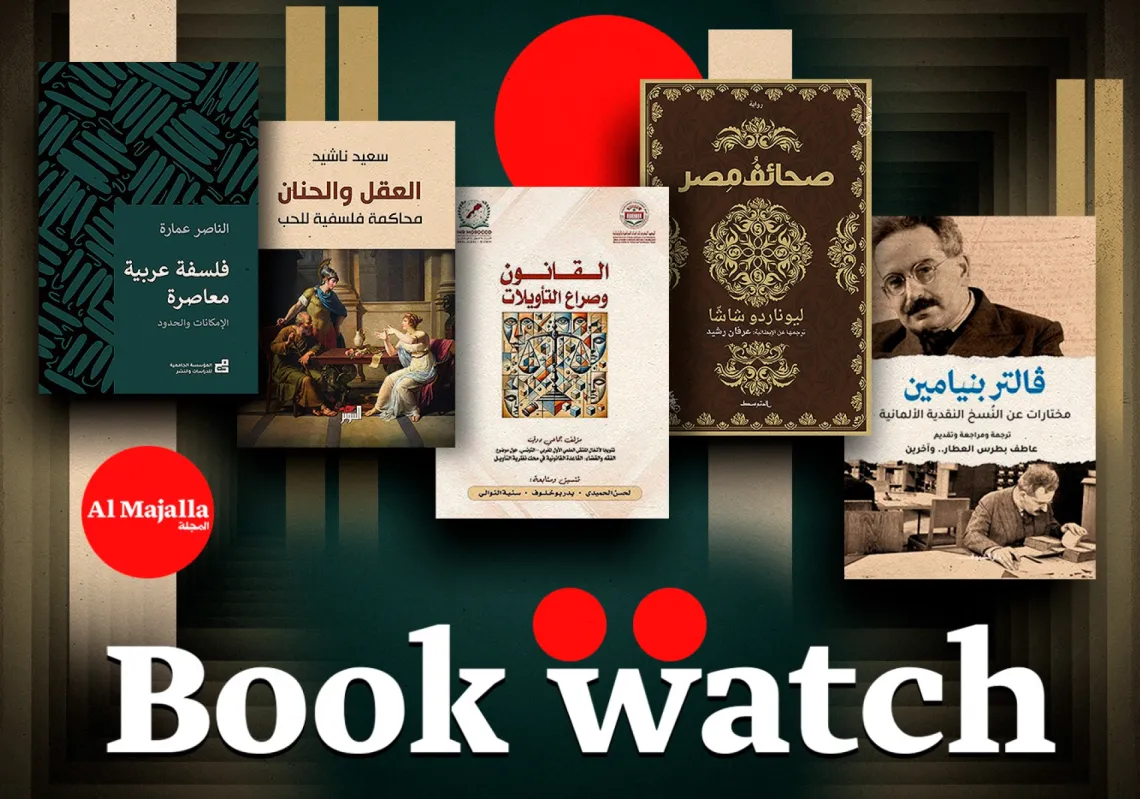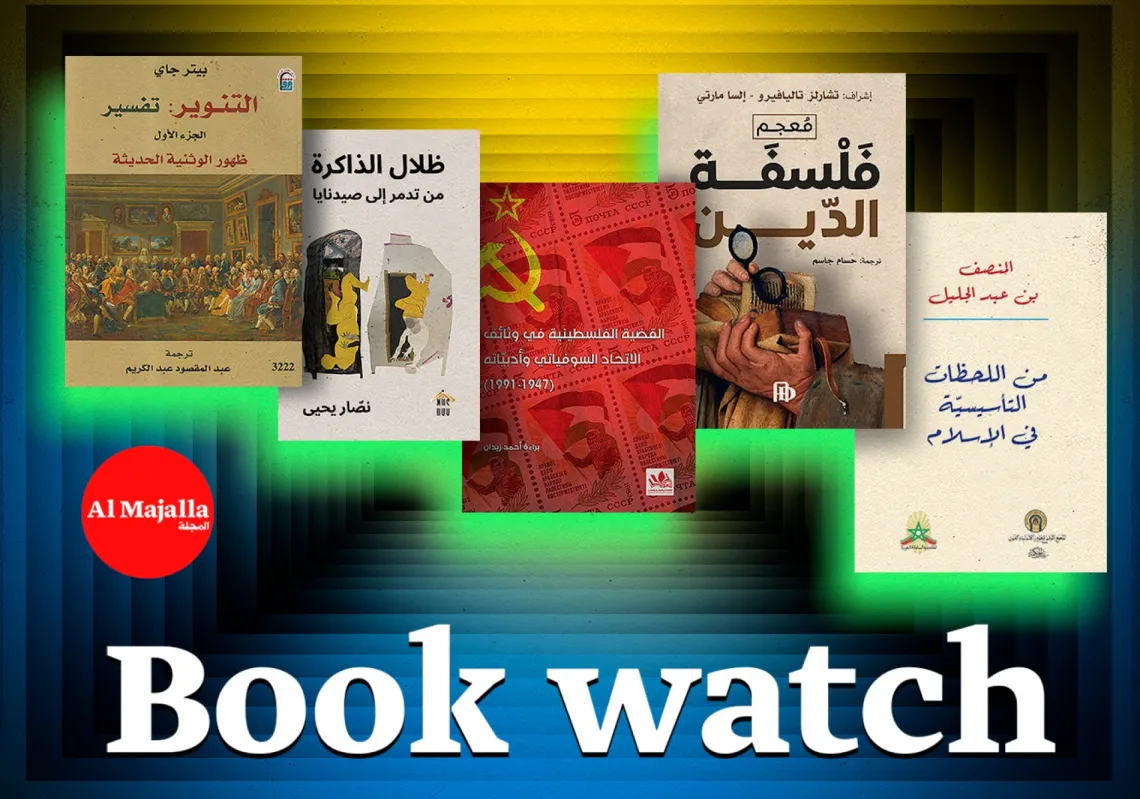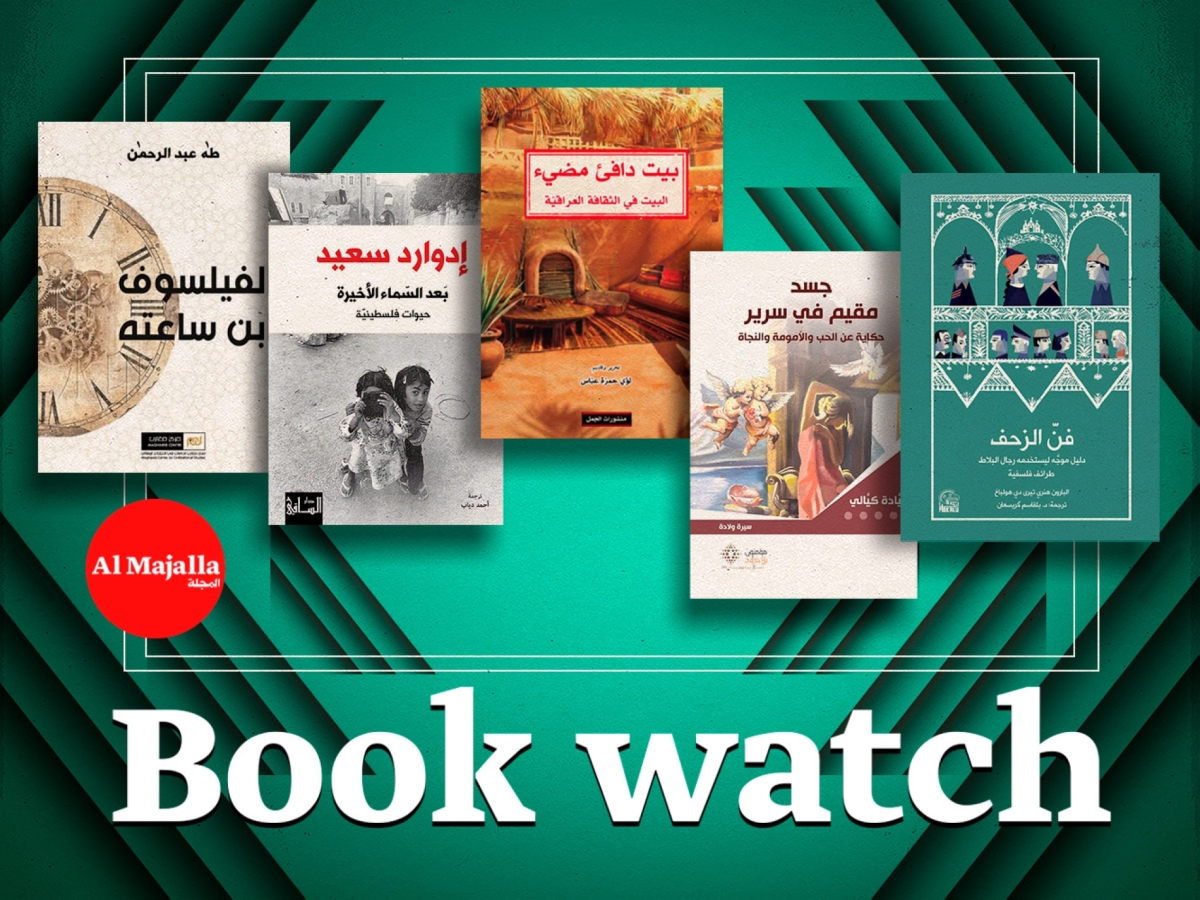

The Arab world has a vibrant and rich literary scene. Al Majalla selects some choice titles in our fortnightly round-up of the latest Arabic books to highlight some trends and thinking.
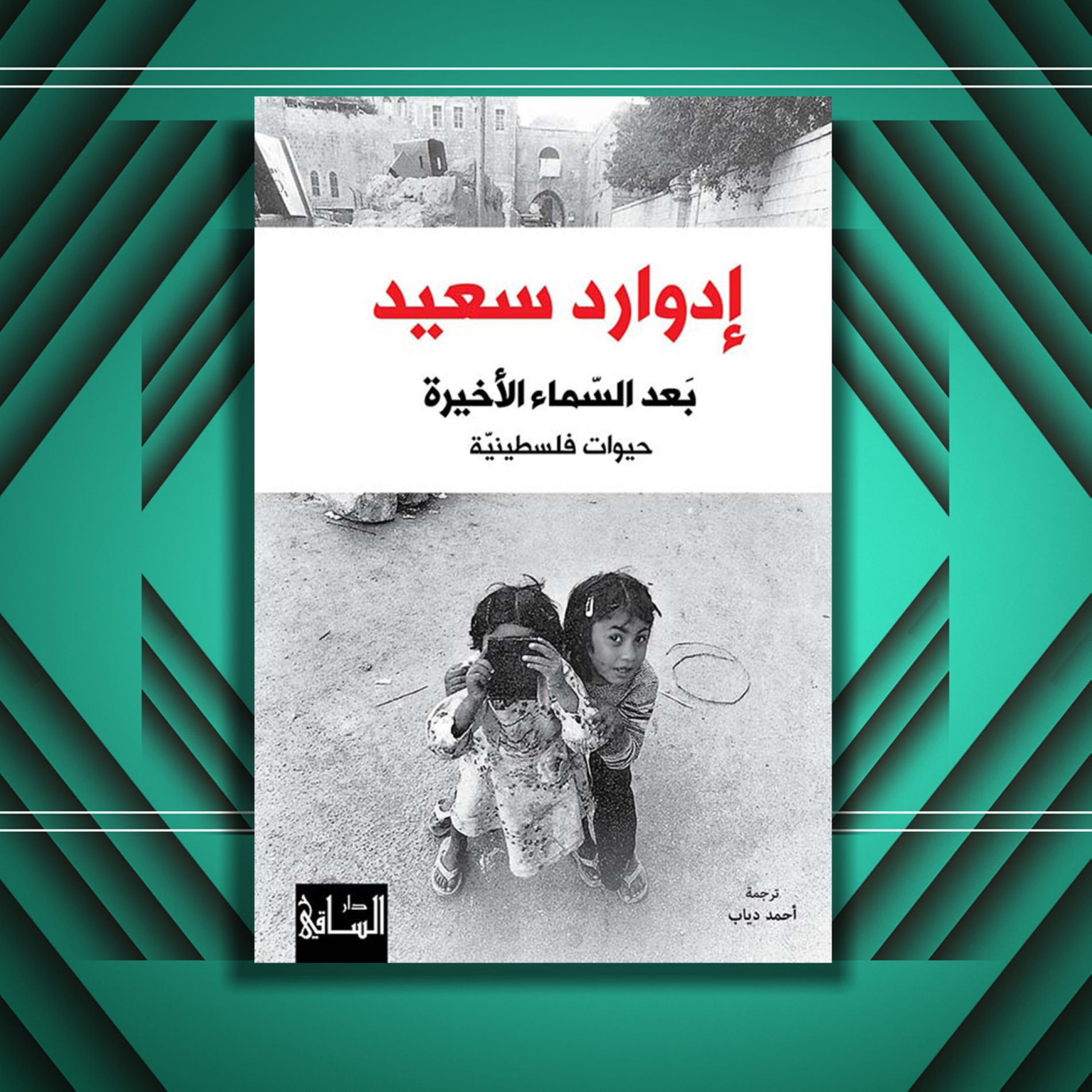
After the Last Sky: Palestinian Lives
By: Edward Said
Translator: Ahmad Diab
Publisher: Dar al Saqi, Lebanon
A new Arabic edition of Edward Said’s book After the Last Sky has now appeared, 40 years after it was first published in English, in 1986. Its re-issue comes at a particularly poignant moment and offers a deeply human portrait of Palestinian life that transcends the political discourse so often associated with the subject. This volume occupies a singular place in the literature on Palestine. It weaves together meditative prose and evocative photography in a work that is both literary and visual.
Said, who died from leukaemia in 2003, collaborated with the Swiss photographer Jean Mohr to capture the fabric of Palestinian life in the homeland, in the camps, and across the diaspora. Together, their work forms a unified narrative in which word and image speak with equal force. The result is a testament to a people enduring displacement while holding fast to life, memory, and the strength to conceive of a future.
In this book, Said speaks not solely as a political theorist or cultural critic (although he was both), but as a witness whose voice was shaped by the experience of exile. He opens with a searching question: how do a people without a state, without recognised borders or sovereignty, tell their story to the wider world? How might Palestinian life be rendered not through the habitual framing of victimhood, militancy, or flight, but as a life formed through daily rhythms of love, study, labour, marriage, birth, and waiting?
The accompanying texts reflect on Palestinian identity suspended between geography and memory. Said explores the long echo of exile upon both the personal and collective consciousness, describing how Palestinians dwell in “two worlds”: one recollected, the other yearned for. Yet within this space, he also draws attention to their resilience, ingenuity, and dignity under often unbearable conditions.
Jean Mohr’s photographs form a narrative strand of their own. The expressions of children, the gazes of women, the weariness etched on labourers’ faces, the cadence of life in the camps, each image constitutes a visual vocabulary that mirrors the prose, inviting the reader into an interior world through a lived and intimate reality.
This work may be among Said’s most accessible for a wide readership. It combines the clarity and grace of his writing with the immediacy of photographic presence. Here, analysis meets storytelling, and both are elevated by the power of the image. It raises profound and enduring questions about homeland, memory, belonging, and living beneath the constant shadow of loss. It offers Palestine not as a symbol or abstraction, but as a full and breathing human world, shaped by sorrow, hope, loss, and continuity, beneath the last imaginable sky.
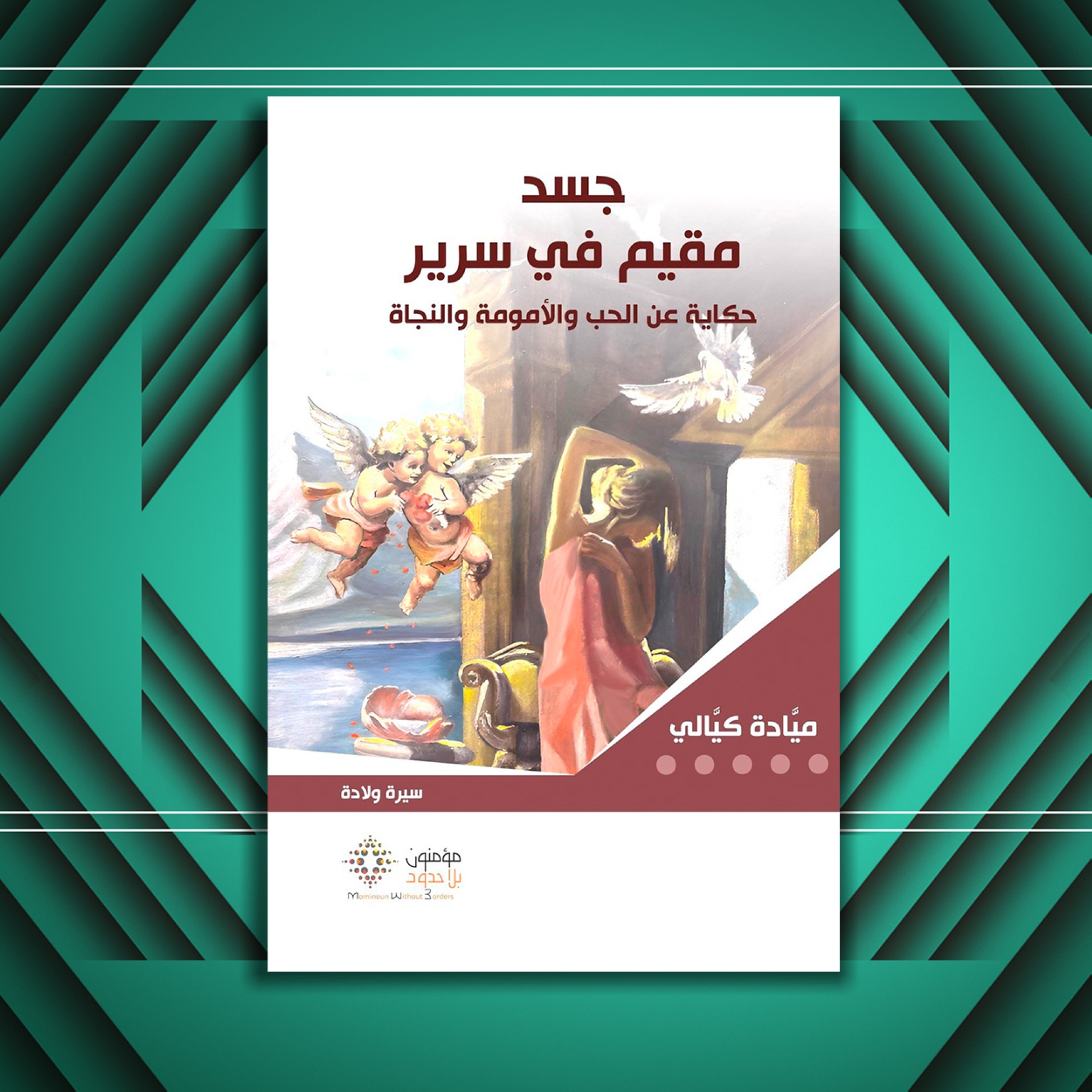
A Body Dwelling in a Bed: A Tale of Love, Motherhood and Survival
By: Mayyada Kayyali
Publisher: Mominoun Without Borders Foundation, Morocco
This is an intense meditation on the human condition, moving between memory and embodiment, pain, and hope, fragility and the quiet strength that emerges from within. Though described as a “birth memoir,” it goes beyond personal testimony to become a lyrical exploration of existence as experienced through the ordeal of motherhood.
From the very first pages, Kayyali calls this book her “spiritual child,” intending not just to recount a private episode but to give voice to moments shared by many women. She returns to a pivotal chapter in her life: her long and uncertain pregnancy, culminating in the birth of twins after years of medical struggle and suspended hope.
She approaches this not just as a biological experience but as a transformative passage that reshapes her sense of self, her bond with her body, and her capacity for love. The body is both vessel and witness, a locus of fear and pain, and a site where endurance is continuously tested.
She recounts her days in hospitals, her painful journeys between cities, her shivering in sterile corridors, and her persistent fear of seeing a long-awaited dream slip away. The language is lucid, treating suffering not as a descent into despair, but as an awakening. Pain becomes the threshold through which motherhood is revealed as a fully existential experience.