One year of Trump 2.0: the age of MAGA imperialism?
From kidnapping Venezuela's president to proposing the annexation of Greenland, Trump appears to be the most ‘imperialist’ leader the US has had in decades
Shutterstock
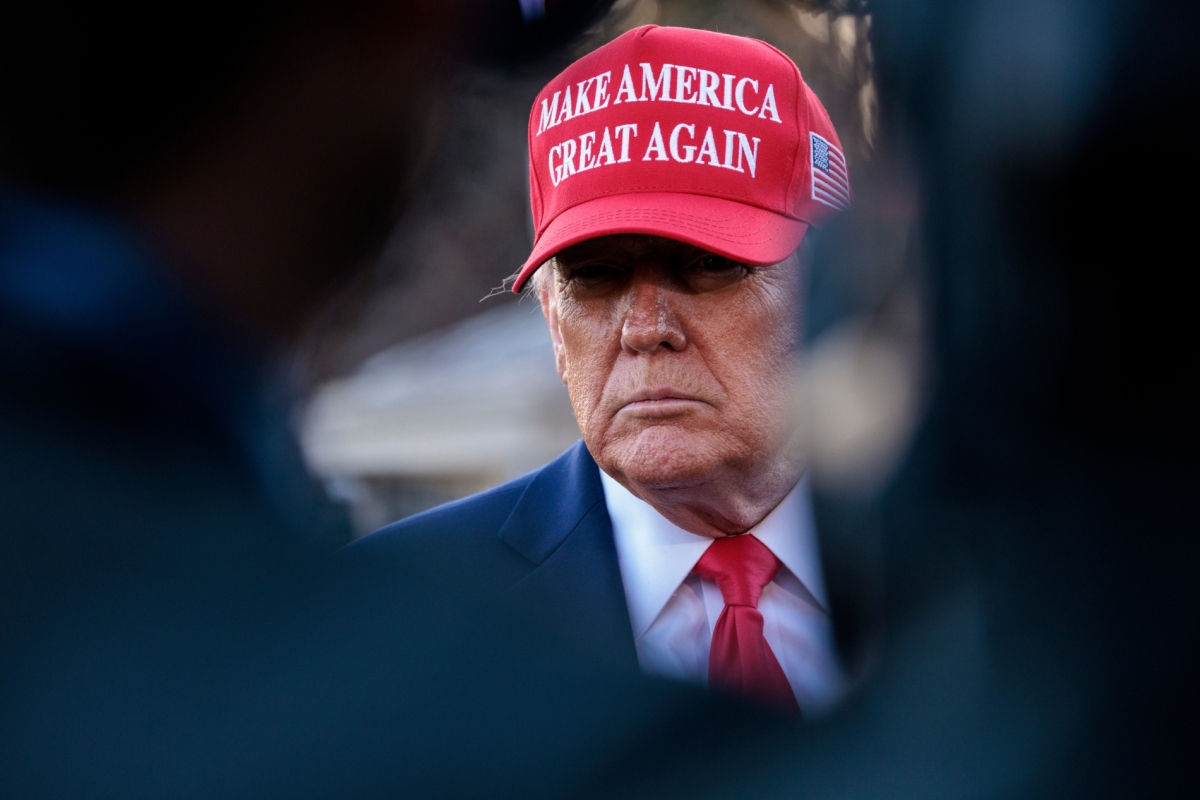
President Donald Trump speaks to reporters on the South Lawn of the White House on 28 February 2025.
One year of Trump 2.0: the age of MAGA imperialism?
The United States has long been accused of being an ‘empire’. Whether conquering indigenous lands on its own continent, capturing Spanish territory in the late 19th century or interfering repeatedly in Latin America, history is replete with examples of Uncle Sam’s imperial side. Even in recent decades, many commentators argued that grand US plans like ‘the new World Order’, ‘the Washington Consensus’ and ‘the War on Terror’ contained imperialist elements, even if dressed up in democratic and liberal rhetoric.
But many expected Donald Trump to be different. His ‘America First’ mantra hinted at isolationism or, at least, fewer foreign adventures. His first term seemed to bear this out, as Trump lamented ‘forever wars’ and sought to reduce America’s military and diplomatic entanglements. Even in his inauguration address in 2025, Trump said, ‘We’ll measure our success by the wars we end and the wars we never get into'.
However, less than a year since returning to office, it’s clear that he has a very different approach this time around. From kidnapping Venezuela's president to proposing the annexation of Greenland, Trump 2.0 appears to be the most ‘imperialist’ leader the US has had in decades. Shorn of any pretence of spreading democracy or liberal values, are we now in an age of ‘MAGA imperialism’?
The ’I’ word
‘Imperialism’ is frequently thrown around as an insult toward any state pursuing a foreign policy that the accuser doesn’t like. The US, especially, as it became the dominant world power, was regularly labelled ‘imperialist’. To avoid such subjectivity, political scientists have developed numerous theories and models to assess when a state is, in their view, being ‘imperial’.
One of the most persuasive came from Columbia University’s Michael K Doyle, who argued in his 1986 book, Empires, that powerful governments will often try to impose their will on less powerful states, but this is not always' imperialism.’ He argued that the key is whether the powerful state is trying to control the weaker state's domestic and foreign policy. If not, he defines this as ‘hegemony’ rather than ‘imperialism.’ But if domestic as well as foreign policy is trying to be controlled, whether by “force, by political collaboration, by economic, social, or cultural dependence,” then this is imperialism.
In his inauguration speech, Trump said, 'We'll measure our success by the wars we end and the wars we never get into'. But a different reality seems to be unfolding.
Using this definition, many times the US was accused of 'imperialism', it was actually being 'hegemonic. Supporting coups during the Cold War to keep the Soviets out of Latin America, for example, might be viewed as hegemonic, given Washington often didn't pay attention to how the post-coup regimes operated, as long as they opposed Communism.
In contrast, the conquest of Spanish Cuba and the Philippines in 1898-1902, or the invasions of Afghanistan and Iraq during the War on Terror, might be seen as 'imperialism' given Washington sought to control and reshape these states' domestic policy as well, crafting new constitutions and governmental structures.
Trumpian imperialism?
Applying Doyle's approach to Trump's recent policies suggests imperialism, but also some nuance. The administration's statements about taking over Greenland, Canada, Panama and even Gaza certainly sound like a desire to control both foreign and domestic policy. In December, for example, when Trump named Louisiana governor Jeff Landry as his new special envoy to Greenland, Landry bluntly stated that his role was to "to make Greenland part of the US." Similarly, Trump has repeatedly stated his intention to, "take back," the Panama Canal and has told Canada that it should, "become the 51st state." This has come alongside a threat to use military force to annex Greenland, and high trade tariffs on Canada.
While this looks like Doyle's imperialism, a note of caution. For all the rhetoric and threats, Trump has made no serious action to annex any of these territories yet, so it is too early to call this imperialist. Trump often uses extravagant threats to squeeze other concessions from his adversaries. It is plausible that Trump is using the threat of annexing Greenland to force Denmark to grant Washington great basing and mineral rights and using the same tactics with Canada and Panama to get the US a 'better deal.'
Indeed, arguably this already has happened with Gaza. In February Trump made the highly spurious claim that the US would, "take over," the decimated strip, but in the end helped broker a ceasefire that would, theoretically, see an international stabilisation force govern.
Trump's supporters argue that his threat of a US takeover helped persuade the various stakeholders to accept a compromise deal. Perhaps then, the same is true with Greenland, Panama and Canada, and the ultimate goal is hegemony – getting more US control over foreign policy – rather than imperialism.
Donroe Doctrine?
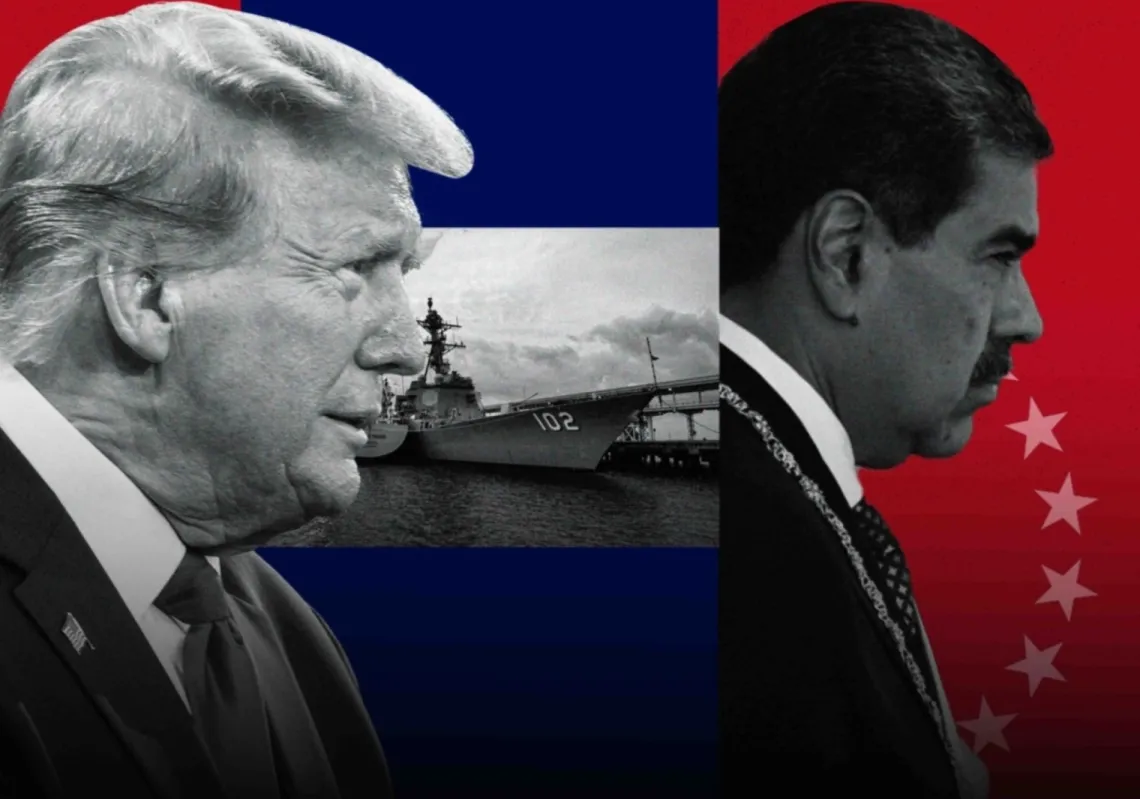
In contrast, the White House's actions in Latin America appear more intrusive. Certainly, Washington's recent clashes with Venezuela have raised accusations of imperialism, not least from Caracas itself. Alongside sanctions, the US has imposed a naval blockade and deployed 15,000 troops off Venezuela's coast. But the administration's stated aim is not, currently, regime change. Instead, the charge sheet for Nicolás Maduro's government is over foreign policy: apparently shipping large quantities of fentanyl and cocaine, as well as migrants, to the US, and shipping sanctioned Iranian oil.
Though the administration has used force, seizing oil tankers and launching lethal strikes that have killed over 80 people, it has not yet set a goal of changing, let alone controlling, Venezuela's domestic politics. This appears more hegemonic than imperial.
However, elsewhere in Latin America, Trump has been more invasive of domestic policies. In Honduras' recent election, Trump openly backed Nasry 'Tito' Asfura, the hard right National Party candidate and suggested he could cut the US' financial assistance to the country if he didn't win. This threw the election into turmoil, with Asfura's rivals accusing Trump of interference. Similarly, Trump's open support for Argentina's president Javier Melei played a role in the latter's victory in recent elections, with the US' president's threat to cut financial support to Buenos Airies if his ally lost believed to have helped sway the vote.
Less successful for Trump were his threats to impose 50% tariffs on Brazil if Brasilia continued to prosecute Trump's ally, the former president Jair Bolsonaro. This failed and Bolsonaro was sentenced to 27 years in prison for attempting a coup, but the pattern of Trump's Latin American 'imperialism' was clear. In each case, he interfered in domestic politics by using financial pressure to strongarm electors or governments to back his preferred, pro-MAGA right wing candidates.
Eyes on Europe
And now, it seems, the administration hopes to do the same in Europe. The new National Security Strategy explicitly states the need to back similar nationalist populist parties to prevent Europe's "civilisational erasure." Already, Vice President JD Vance has shown his support for the German hardliners, Alternative for Germany (AFD), while MAGA supporters are building links with Reform UK in Britain and the National Rally in France.
Though we have not yet seen direct interference like that found in Latin America, the National Security Strategy appears to show similar intent. While the rhetoric around annexing territories may prove to be tactical to get better concessions, the real Trumpian imperialism appears to be to export the MAGA project into Latin America and Europe. This may not be the military-led 'imperialism' of the War on Terror, but, by seeking to help MAGA-aligned groups take power in other states, it is arguably far more ambitious.