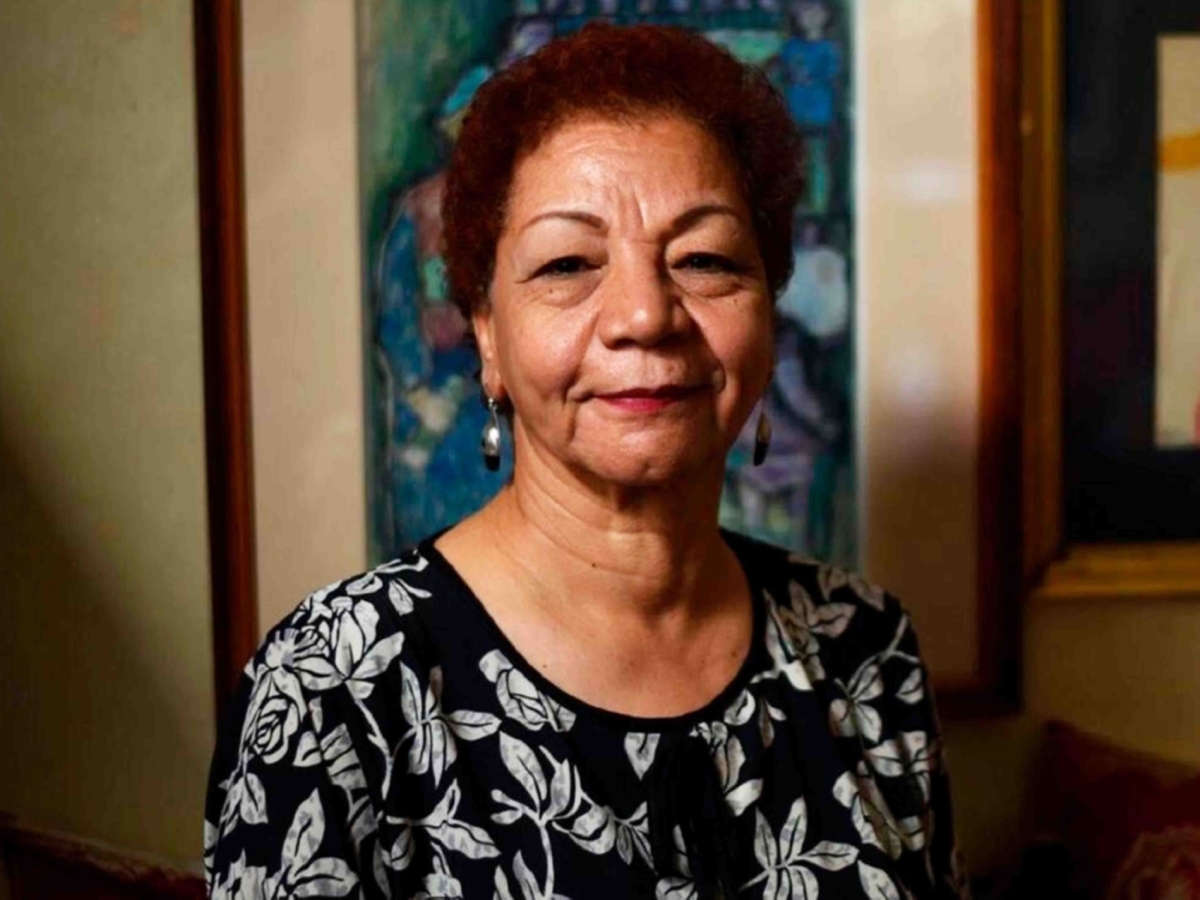
Egyptian novelist Salwa Bakr: literature is born of questions

The veteran writer is the first winner of the new BRICS Literature Award. She speaks to Al Majalla about societal changes, political Islam, and why she never re-reads her novels.

Egyptian novelist Salwa Bakr: literature is born of questions

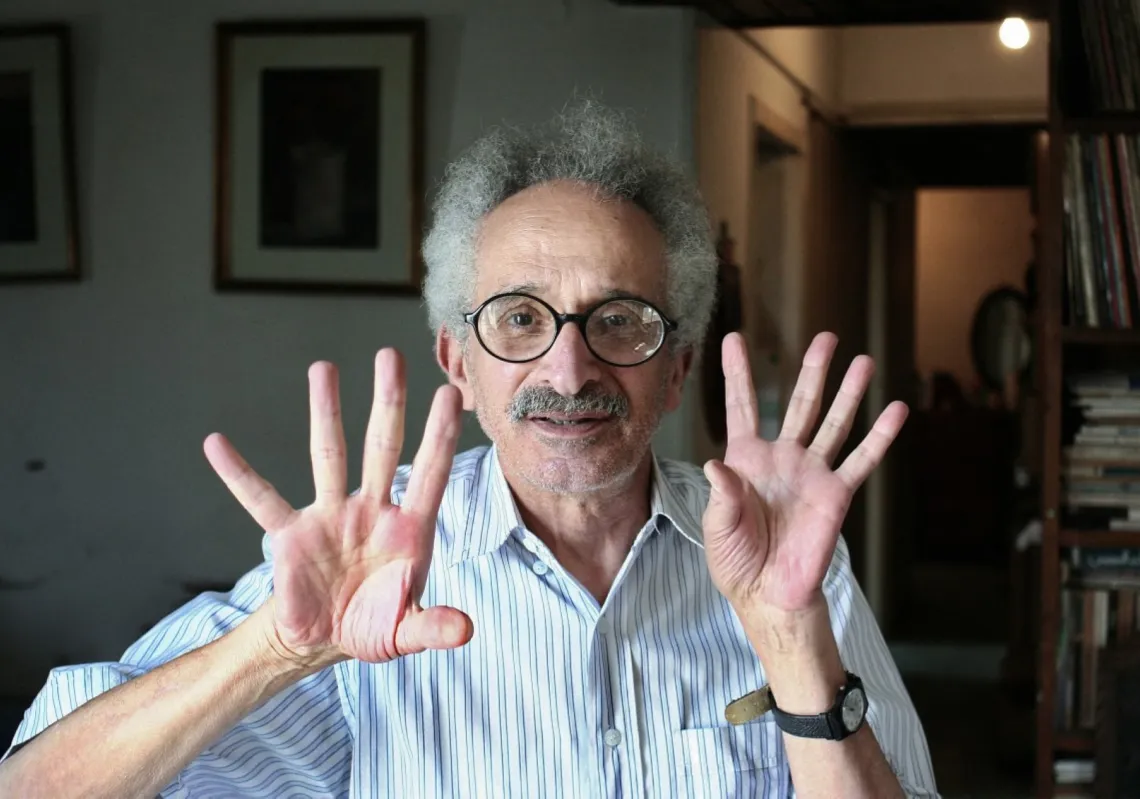
At the end of November, Egyptian novelist and writer Salwa Bakr became the first laureate of the BRICS Literature Award, crowning a literary career that began four decades ago when she published her first collection of short stories. The award was presented in the city of Khabarovsk, in Russia’s far-east, and Bakr’s prize included one million Russian rubles—around $12,600. The awarding committee described her as “one of the leading figures in contemporary Arabic prose”.

The author of seven short-story collections, seven novels and a play, whose works have been translated into numerous European languages, Bakr was born in Cairo in 1949, studying business at university before also studying theatre criticism. Upon entering the world of cultural journalism, she began as a film and theatre critic for various Arab publications, before devoting herself full-time to creative writing.

Her first short-story collection, Zeinat at the President’s Funeral, appeared in 1985, followed by several others. In 1991, she published her debut novel, The Golden Chariot Does Not Ascend to Heaven, a work rooted in the lives of the marginalised and the overlooked. Al Majalla spoke to Bakr about her literary journey and the significance of her recent award. Here is the conversation:


Was it a deliberate decision to start writing, or was it a path that unfolded gradually?

Literature was never a planned choice. It was a childhood passion. I read literature and history, and writing was something I approached with awe for years. I grew up in a period of fine translations, and the works of great writers were widely available, which raised the standards of taste and made the first step more difficult. The first book that truly captivated me and drew me into storytelling was Kalila wa Dimna.

After graduating, I worked for six years as a government inspector, monitoring market prices. Then I began to write, though I dared not publish, for fear that my texts might not be good enough. One day, my friend Shaaban Youssef asked whether I knew anyone who wrote short stories. I told him that I did and gave him some of my work. He showed them to the late Yahya Taher Abdullah, who knew me as a reader, not as a writer. That’s where my journey with writing began.
The novel is not merely the narration of a moment or a slice of history. It is an attempt to understand how changes are reflected in people's lives and values

Egyptian novelist Salwa Bakr

You've just won the inaugural Prix BRICS. Do you see it as recognition for your creativity?

To be honest, I don't attach much importance to terms like recognition. Since I began publishing, prominent critics including Ali al-Ra'i, Hamdi al-Nassaj, Ibrahim Fathi, and Ferial Ghazoul have written about my work.

When I published The Golden Chariot in 1991, it was met with acclaim and translated into several languages, so if recognition exists, it comes from an accumulated literary record, quite apart from readers who matter most to me. Still, this prize undoubtedly reinforces that recognition and may also carry it to a wider horizon, especially in countries that may not know Egyptian or Arab literature well.

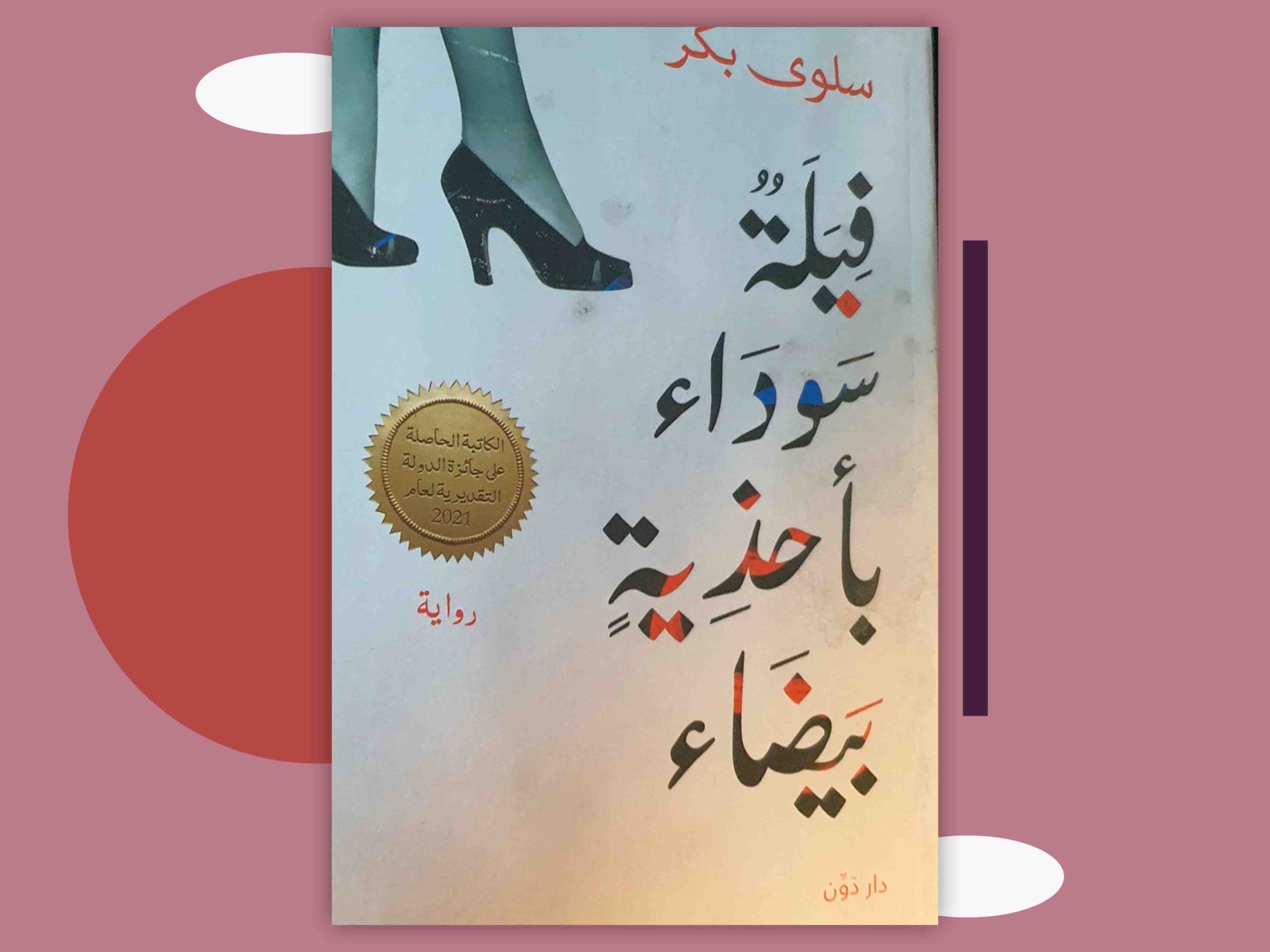
In your latest novel, Black Elephants in White Shoes, you trace changes in Egyptian society, the emergence of extremist groups, and their deep impact. Why did you choose that period, and what are your hopes for the novel?

I chose this period because it was a decisive moment, an inflection point of radical change in Egyptian social consciousness and values. Political Islam appeared as a force that imposed grand slogans such as "true Islam", yet it did not come to return us to the essence of religion. It came to serve a major political project. That project begins with modern colonialism—represented by the United States—and extends into the region as a tool in the struggle among major powers, reaching, ultimately, attempts at Turkish hegemony through a "caliphate" project.

The Islam we know is altogether different. It is a religion of decent conduct, of wishing good for others as we wish it for ourselves; a faith that forbids deceit and fraud, as expressed in the Prophetic saying: "Whoever deceives us is not of us." It rests on the Qur'an and its moral guidance, not on political slogans that mask the interests of great powers. These shifts did not remain at the level of thought and values.

They seeped into the details of daily life. Patterns of living changed. Many households came to rely on domestic workers from distant countries, while the working Egyptian woman carried the full weight of the family and laboured in fields, factories, and across professions. The contrast lays bare a conflict between progress and reaction, between those who want to keep pace with humanity and technology, and those who seek to drag society back to its most regressive positions.

So, the novel is not merely the narration of a moment or a slice of history. It is an attempt to understand how changes are reflected in people's everyday lives and in their consciousness and values. It is also a message to the reader: a call to reflection and awareness, and to the conviction that the essence of religion and society can only be recovered through knowledge, understanding, and fidelity to authentic human values. 

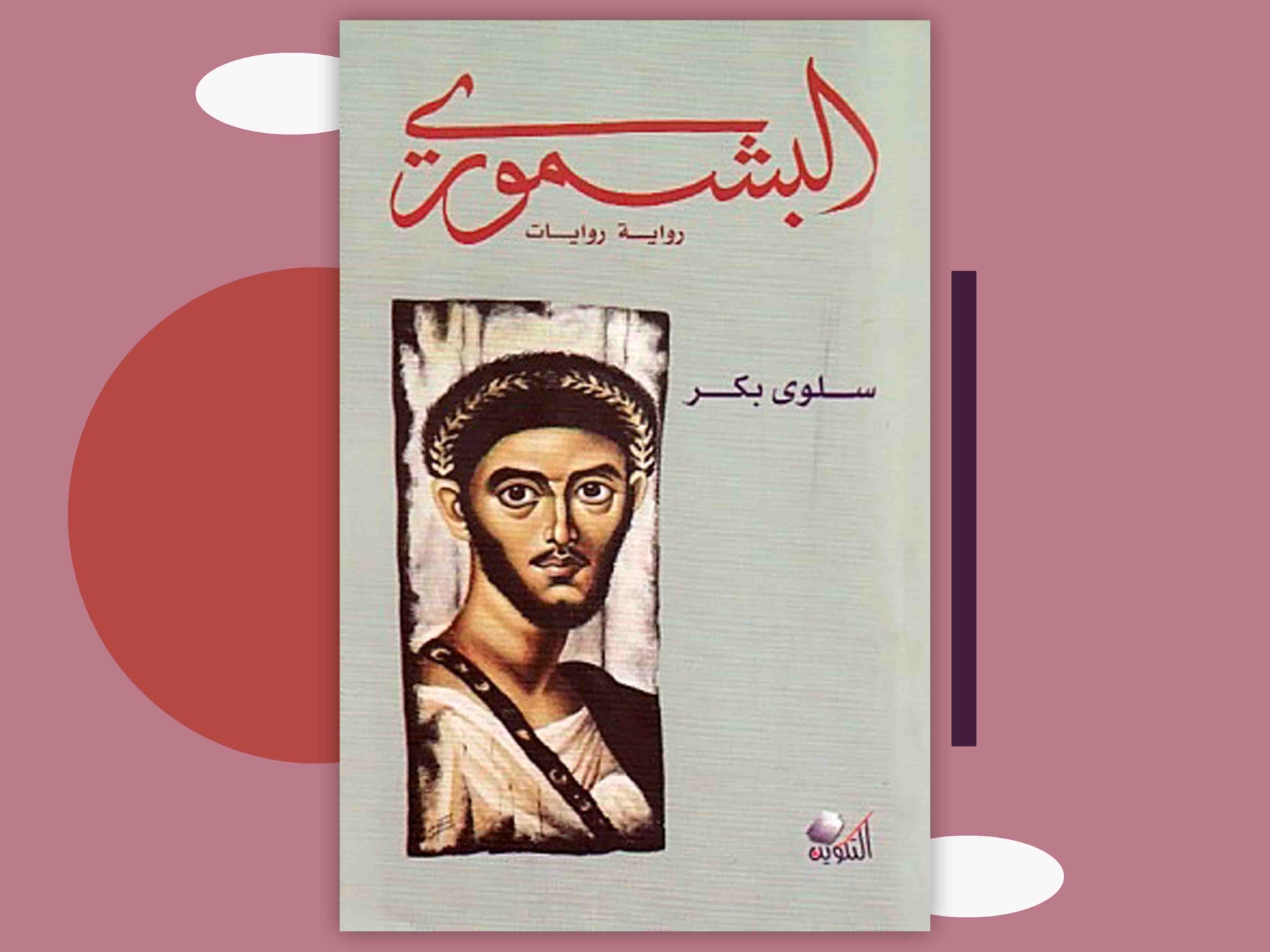
You seem to have tackled the same matter differently in your novel Al-Bashmuri, which caused a stir when it was published...

Everything political Islam offers, whether it be declaring a woman's voice inherently indecent or endless commands, the veil, the beard, none of it belonged to the humane Islam we knew, the Islam that made the Egyptian—shaped by a deep civilisational inheritance—act humanely in the name of both Islam and Christianity.

When this political Islam arrived, women suffered its sharpest blows, women who had achieved immense progress since the late 19th century, with Qasim Amin's call for women's liberation, work, and education, and through what followed, until Egyptian women marched alongside men during the 1919 Revolution.

Yet this political current, bound to what I call 'the new colonialism,' sought to push Egypt backwards towards a caliphate, sending women back into the home, treating them as objects for sex and family duties like cooking, baking, and having children.

Literature can only emerge through asking questions

Egyptian novelist Salwa Bakr

How do you view the dialectical relationship between the novel and history? Is there an overlap, or a structural bond? In other words, is the novel history in itself?

The most dangerous matter is the aggressive attempt to falsify history, whether in Arabic or foreign novels. History is being falsified, including ancient Egyptian history, established through archaeological evidence. They appeal instead to religious mythology. That is the most perilous kind of falsification, because it amounts to stealing history and its proven facts.

Do you agree with the many labels now in circulation—historical novel, political novel, social novel, and so on?

These classificatory labels aim to understand the broad frame within which a literary work unfolds. I'm not opposed. The problem lies in how those divisions are defined. If you write a novel in which the October War is a backdrop, does that make it a 'war novel'? Not necessarily. But if you write a novel centred first and foremost on the human details lived by those who fought the October War, then yes, it does.

When the poet Abdel Aziz Mowafi wrote The Battle of Ras al-Esh, he drew attention to what took place on a human level in that battle, because the soldier is above all a human being with emotions, hopes, dreams, a family, and a desire for life. When Hemingway wrote about the Spanish War, we saw the human details before the battles, during them, and after them.

I write about ordinary, marginalised people, those who live on the edges of life

Egyptian novelist Salwa Bakr

Must the historical novel remain faithful to facts, or is imagination the more essential tool in shaping events?

Aristotle has a beautiful line in distinguishing between history and poetry, by which he meant drama: history tells what happened; poetry, literature, drama engage tells what could happen and what might be. That is literature, and it can only emerge through asking questions.

Are you pleased to be described as a writer of the marginalised and the dispossessed?

I write about ordinary people, those who live on the edges of life. They are marginalised, of course, because they lack the experience, knowledge, or education that would enable them to stand up to the world. Take the woman whose husband disappears for seven years and never returns. She remarries, only to be prosecuted for "being married to two men". She's poor; she doesn't know the law and knows little else. She is not immoral. She is simply a woman with children to feed.

Do you follow what is written today in criticism? Do we have a serious, critical movement?

This is an extremely complex question, and I can't give a definitive answer, but I welcome every effort made in this field. People constantly try to express opinions, each from their own perspective, including me. I'm not a critic, nor an academic, nor a judge. Everyone offers what they can. Ultimately, the credibility of what is written about this work or that belongs to the reader alone, according to each person's private sensibility.

Criticism is not a set of rigid laws; it is taste. A novel may enchant one person and hold them captive, while another may pass over it without the slightest effect. It depends on your references, experience, education, and how you see the world.

I don't purposely choose my book titles; they come as a kind of divine inspiration

Egyptian novelist Salwa Bakr

Can literature separate itself from politics?

There is no separation between culture, politics, economics, and society. These fields interweave, different threads in a single fabric. The more important question is: does the cultural lead the political, or does the political lead the cultural? Which one holds the reins? Does culture guide politics, or does politics direct culture?

What do you feel after finishing a literary work?

Honestly, I have no particular feelings; nothing overwhelms me. After writing it, I have no relationship with it. I leave it to the reader. The moment I complete it, my task is finished. I don't like returning to it after publication.

Do you believe there is a difference between the creativity of men and women?

Of course, because a man writes from his perspective and a woman writes from hers. A man often sees a woman as an object of beauty and desire. When he wants to describe her, he will write about her body, her breasts, her eyes, and so forth. If a woman did that, she would appear unnatural. To me, a woman is noble, gallant, and intelligent. Men rarely describe women in emotional or spiritual terms; they almost always describe them in physical, sensual terms.

Your book titles are striking. Do you choose the title before writing?

In truth, I don't purposely choose my book titles; they come as a kind of divine inspiration. I don't plan it, and I don't seek to attract the reader through it. When the reader encounters the written work, they judge it as they wish.

font change