Morocco’s economy pivots but growth is yet to be felt

With seasonal rainfall easing pressure on agriculture and nearly 20 million international tourists visiting the country, there are reasons for optimism, but youth unemployment remains a big problem

Eduardo Ramon

Morocco’s economy pivots but growth is yet to be felt

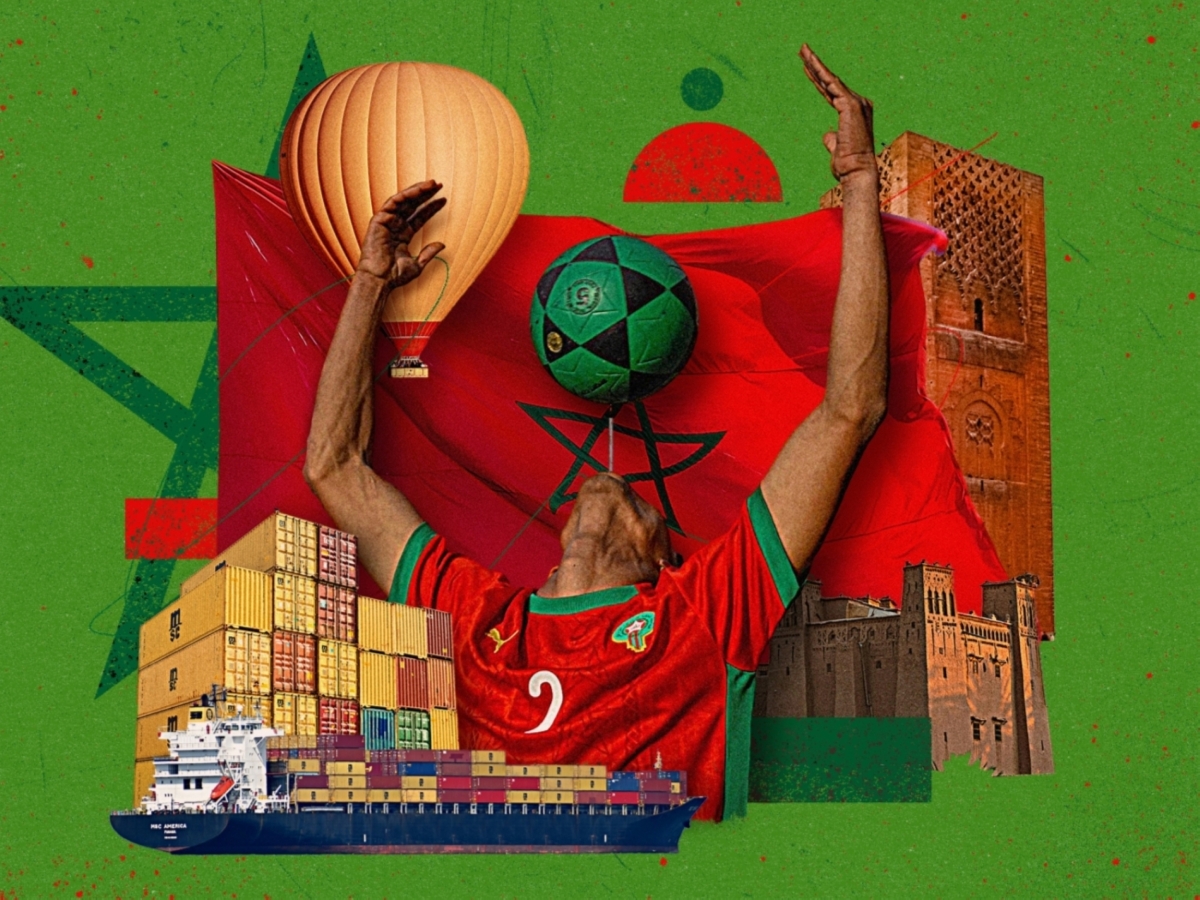
Entering 2026, Morocco’s economy has been boosted by tourism and investment, but significant challenges remain, including persistent youth unemployment, as the country moves towards a production-based model centred on exports and technology. With seasonal rainfall easing pressure on agriculture and nearly 20 million international tourists visiting the country, there are reasons for optimism, not least Morocco hosting a major football tournament, the Africa Cup of Nations.

The newly approved budget anticipates gross domestic product (GDP) growth of 4.8% in 2025 and 4.6% in 2026, the strongest performance since the Covid-19 crisis and similar to the average annual growth rate at the turn of the century. In recent years, that figure had fallen to around 2.5%, however, with economic and geopolitical crises running alongside seven consecutive years of drought. This hit rural areas particularly hard, with nearly one million jobs lost as a result.

According to Fitch Ratings, GDP growth in the coming year is forecast to be 3.5%, driven largely by non-agricultural sectors, particularly industry. Nonetheless, the economy remains vulnerable to the unpredictability of climate change. The agency has maintained the country’s sovereign credit rating at BB+, on a par with Oman and ahead of Egypt, Jordan, and Tunisia. Fitch highlights a narrowing of the budget deficit to 3.8% and notes that current debt levels pose limited exposure to external shocks, as most obligations are denominated in Moroccan dirhams.

Debt and spending

At 62% of GDP, public debt exceeds the global average. The 2026 budget estimates that debt servicing will amount to roughly $6.7bn. It aims to reduce public debt, but that is an ambitious goal that must be balanced against the urgent need for investment in big infrastructure projects, including a 400km high-speed rail line between Kenitra and Marrakech, an expansion of highways, upgrades to sports facilities, and the acquisition of dozens of new aircraft ahead of the 2030 World Cup, which Morocco will co-host.

Total expenditures in the 2026 budget are estimated at roughly $80bn. Sources at the finance ministry told Al Majalla that the government’s aim is to balance financial discipline and deficit and public debt reduction with investment for development, to stimulate economic activity, create jobs, and increase national wealth. They noted a turbulent economic environment globally, one that is marked by uncertainty.

The Moroccan budget identifies several priorities, including consolidating the country within global supply chains and accelerating major structural reforms. The budget aims to reduce the fiscal deficit to 3% of GDP by the end of 2026, an improvement of 0.5% compared with 2025. Even so, the Treasury will require an additional $5bn next year to bridge the gap between revenues and expenditures. The budget forecasts GDP growth of 4.5%, inflation capped at 2%, Brent crude at around $65 a barrel, and an exchange rate of ten dirhams to the dollar. These projections reflect a tilt toward stability.
AFP
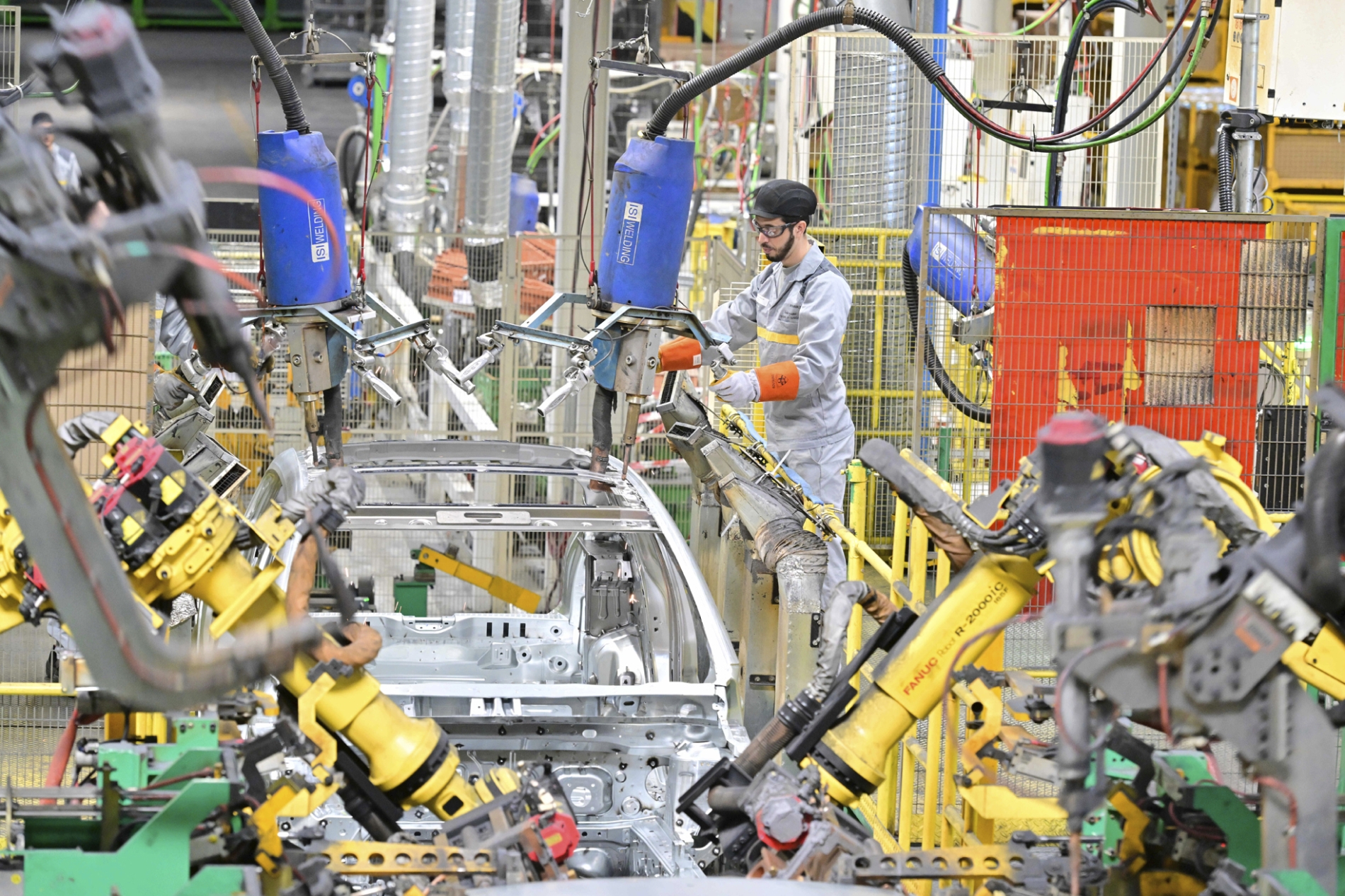
A worker assembles vehicle parts on a production line inside the Renault factory on the outskirts of Tangier, Morocco, which has grown to become a giant in automobile manufacturing over the past 15 years, on 29 April 2024.

Growth and jobs

Fitch noted global volatility and climate change as factors in its growth forecast, despite the dynamism of Morocco’s automotive, aerospace, and phosphate exports, and its flourishing tourism sector. Agriculture contributes 11% of GDP but drought has hit jobs, with 275,000 young people entering the labour market each year.

Morocco appears to be an attractive destination for foreign direct investment (FDI) but the challenge lies in transforming these inflows into growth, job, and a surplus in the trade balance. Herein lies a point of contention between the central bank and the government, particularly over the impact of investment on Moroccans’ livelihoods and incomes. In 2024, despite a 3.8% growth rate, the Moroccan economy created only 82,000 jobs, while more than 140,000 entered the labour market.
The budget identifies several priorities, including consolidating the country within global supply chains and accelerating major structural reforms

Some think growth figures are no longer the best indicator of labour‑market progress or rising incomes. Others note a lack of policies to broaden employment opportunities and strengthen social justice in the distribution of wealth through better wages and lower inflation. Growth is not helping to absorb the swelling ranks of university graduates and young people who leave education earlier. Of Morocco's 1.6 million unemployed, 75% are aged 35 or under, according to the High Commission for Planning.

Reviewing priorities

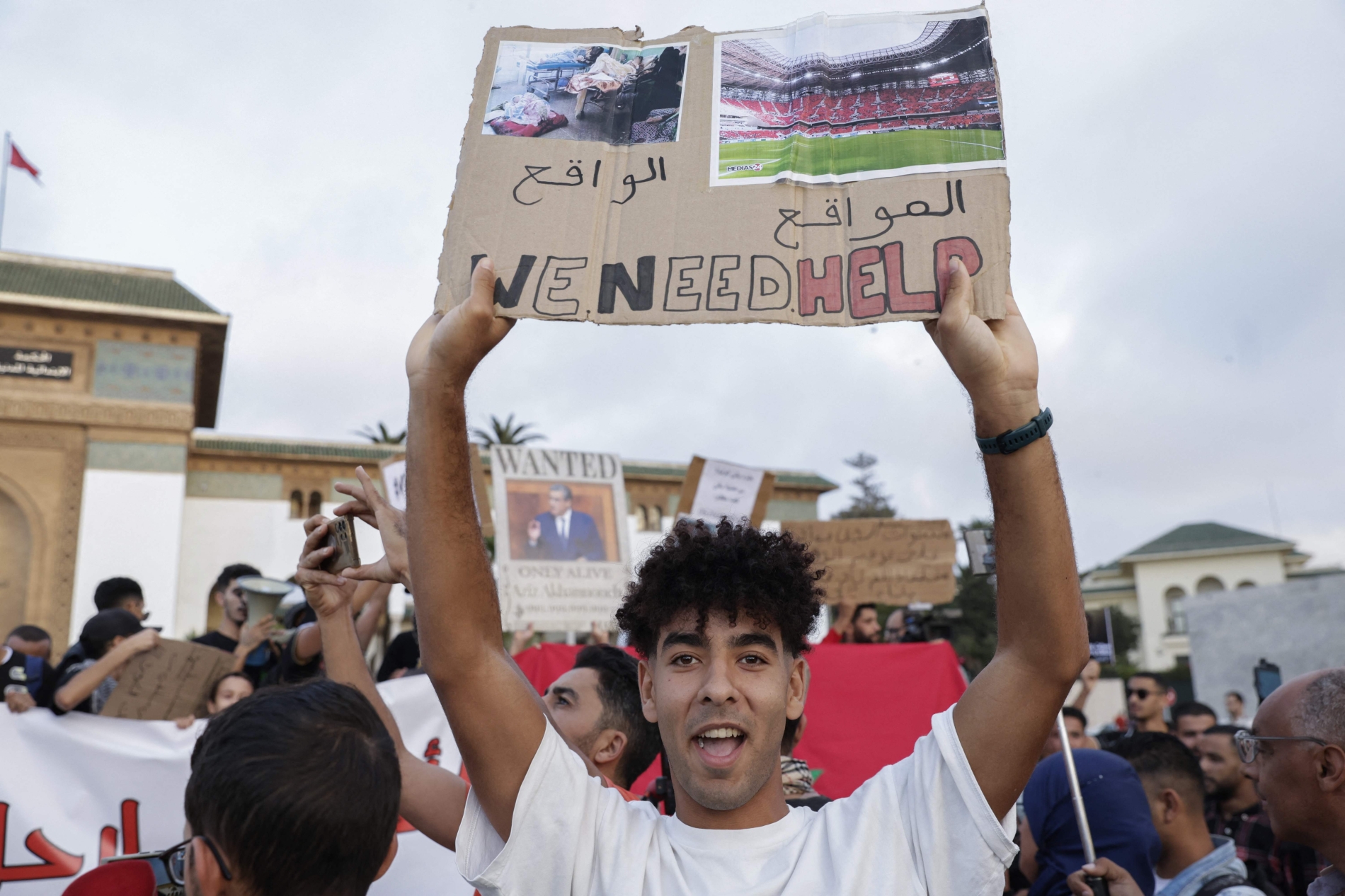
The new budget allocates $14bn to health and education. This is partly in response to public calls for the government to invest less in large-scale showcase projects and more in education and health, particularly in rural areas. This divide has come to be known as 'two‑speed Morocco,' with two contrasting economic portraits. On the one hand, Morocco's growth rates exceed the European average. On the other, one in every three young Moroccans is jobless, often because the education system has failed to give them the skills needed in today's labour market.

Abdel Majid BZIOUAT / AFP
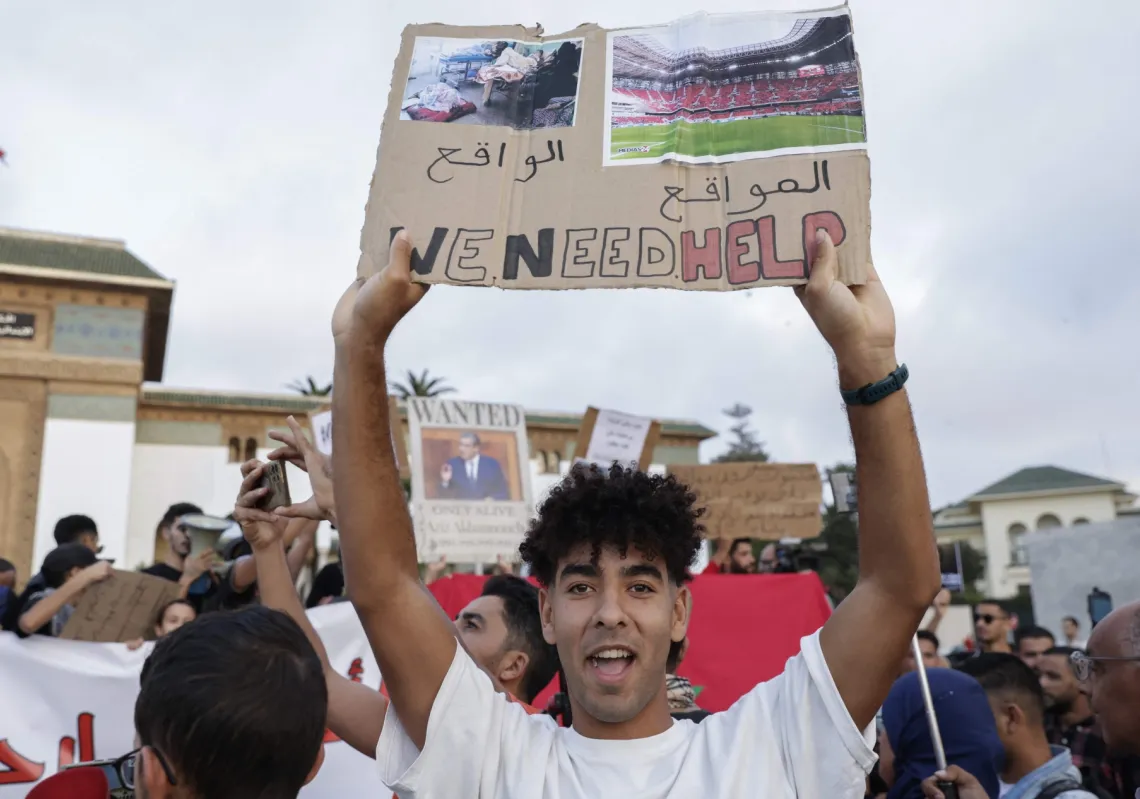
Demonstrators lift placards during a youth-led protest demanding reforms to public healthcare and education at Mohamed V square in Casablanca on 6 October 2025.

Meanwhile, nearly 500 major private‑sector companies generated revenue exceeding $111bn last year, up 5.7%. Morocco's FDI averages 2.5% of GDP. During the first ten months of 2025, FDI inflows were about $4.7bn, a year‑on‑year increase of 28%, supported largely by European and Gulf money. Fitch noted that political stability and ongoing economic reforms provide foreign investors with additional assurance in the Moroccan market.

There is less attention on this year's budget, for which the parliamentary process of reviewing and amending it can take two months. Partly this is because debates coincided with major sporting events like the FIFA U‑20 World Cup in Chile, the Arab Cup in Qatar, and the Africa Cup of Nations in Morocco. This year's budget is also the final budget before the September elections, so it avoided major points of contention.

Contrasting views

Young Moroccans tend to take a dim view of political parties, with accusations of corruption and politicians misusing public office for personal gain deepening public mistrust. This sentiment has been reinforced by the dismissal of several mayors and the imprisonment of some parliamentarians on charges of embezzlement and the mismanagement of public funds.

Fouzi Lekjaa, the minister responsible for the budget and president of the Royal Moroccan Football Federation, believes that Morocco has an historic opportunity with the major structural projects now underway in preparation for hosting the 2030 World Cup in partnership with Spain and Portugal. This will be the first time an international sporting competition of such scale is held across two continents.

Morocco has allocated $40bn in public investment within the 2026 budget for high‑speed rail, commercial ports, airport upgrades, modernised infrastructure, new tourism facilities, and the development of sports stadiums. Total planned investments until 2030 exceed $230bn. In cooperation with the UAE, Morocco is investing more than $13bn in renewable energy, seawater desalination, and the creation of a clean‑energy grid linking the far south to the north.

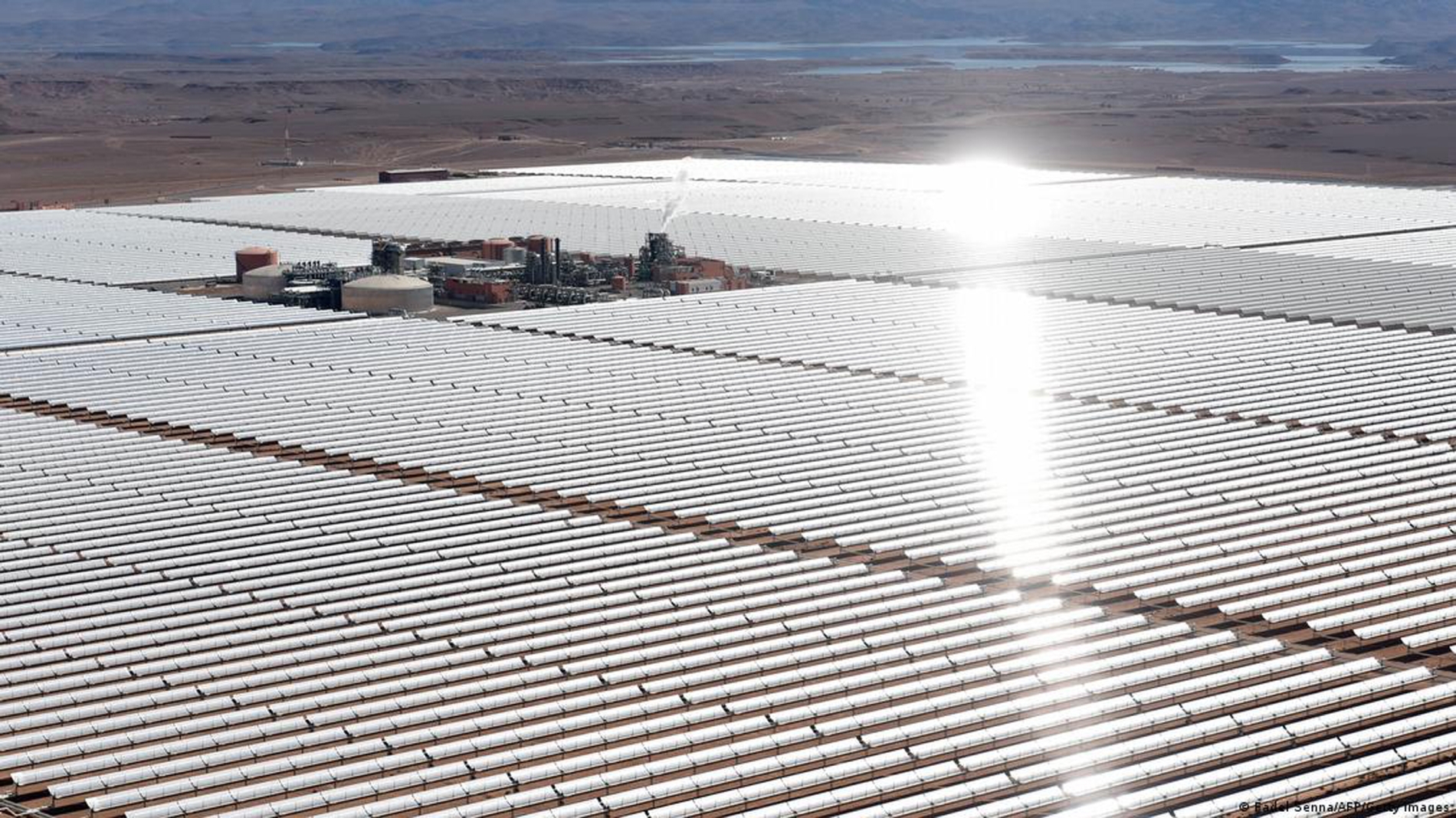
Morocco has intensified its investments in solar and wind energy.

Looking ahead

UN Security Council Resolution 2797 supports Morocco's sovereignty over the Sahara under the framework of autonomy. This has encouraged investment in the region in energy, green hydrogen, tourism, fisheries, mining, air transport, and trade. IMF projections are aligned with the government's aim of raising per‑capita income to $16,000 before 2030. These next four years will be crucial for the Moroccan economy.

The country is transforming from an economy reliant on agriculture, tourism, and consumption to one driven by high‑value exports and technology, with the goal of increasing national income and creating employment. But the Moroccan economy thrives in periods of stability, lower prices, and rising tourism, travel, and investment.

Tourism revenues in the first ten months of 2025 rose by 16.7% to reach $12bn, while remittances from Moroccans abroad amounted to $11bn. Morocco's foreign trade climbed to about $140bn, driven by exports of cars, aircraft, phosphates, and food products, according to data from the Exchange Office. Foreign‑exchange reserves rose to $4.8bn, enough to cover nearly five months of imports, and helped stabilise the value of the dirham, which has held firm amid global currency volatility while expanding its regional role in West Africa.

Overall, Morocco's economy shows plenty of positive signs heading into 2026, but significant questions remain. At the September elections, voters will have their say.

font change