
As the first quarter of the 21st century draws to a close, cinema finds itself at a crossroads. Netflix’s planned acquisition of Warner Bros, including its film and television studios, HBO Max, and HBO, set the cat amongst the pigeons, raising fears of algorithmic dominance and the potential erosion of creative autonomy.
Nevertheless, directors—both within and beyond the studio system—delivered works of popular acclaim, among them Ryan Coogler’s Sinners, which ranked among the highest-grossing films in North America. The year also witnessed a notable flowering of directorial debuts, including actress Kristen Stewart’s The Chronology of Water, in which she proved as audacious behind the camera as she has long been in front of it.
Equally striking was Urchin, written and directed by the British filmmaker Harris Dickinson, tracing the arduous recovery of a young man from addiction. The seasoned actress Embeth Davidtz chose to revisit her own memories in Don’t Let’s Go to the Dogs Tonight, weaving a tapestry in which the personal and the historical intertwine.
Producer Joy Gharoro Akpajotor made her directing debut with Dreamers, which she co-wrote, while The Scout marked cinematographer Gonzales Nassar’s first feature. Meanwhile, the French actress Juliette Binoche turned to documentary filmmaking with her first film, In-I In Motion, an experimental work that won the Eastern Documentary Prize at the Red Sea International Film Festival in Jeddah.
Equally significant was Eleanor the Great, the directorial debut of Hollywood star Scarlett Johansson. Having long captivated audiences with her performances, she has now shaped a coherent cinematic vision as a filmmaker. The story follows Eleanor, a woman nearing 90, who moves in with her daughter after losing her only friend.
What begins as a series of comic misadventures leads her, by chance, to a gathering where survivors of Hitler’s massacres recount their stories. In that moment, she finds herself retelling her friend’s tale as though it were her own. As media sympathy swells, she becomes enmeshed in the narrative until history and imagination blur into one.
From cinema to streaming
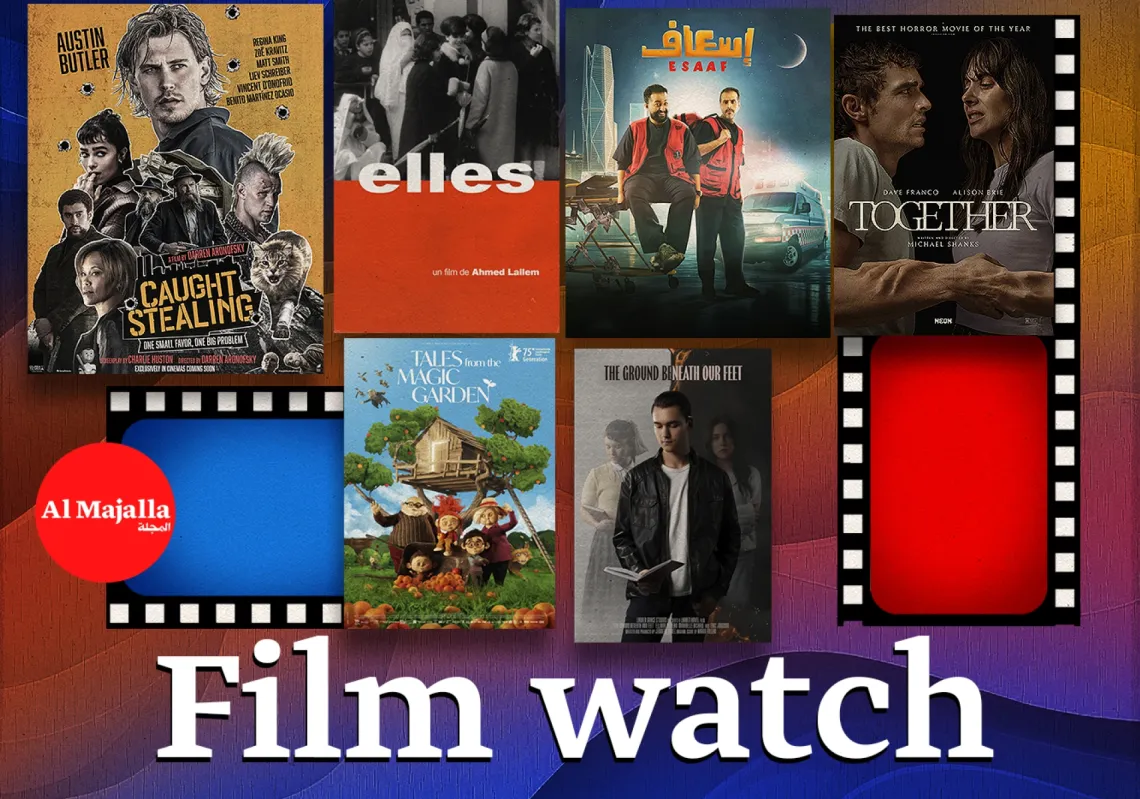
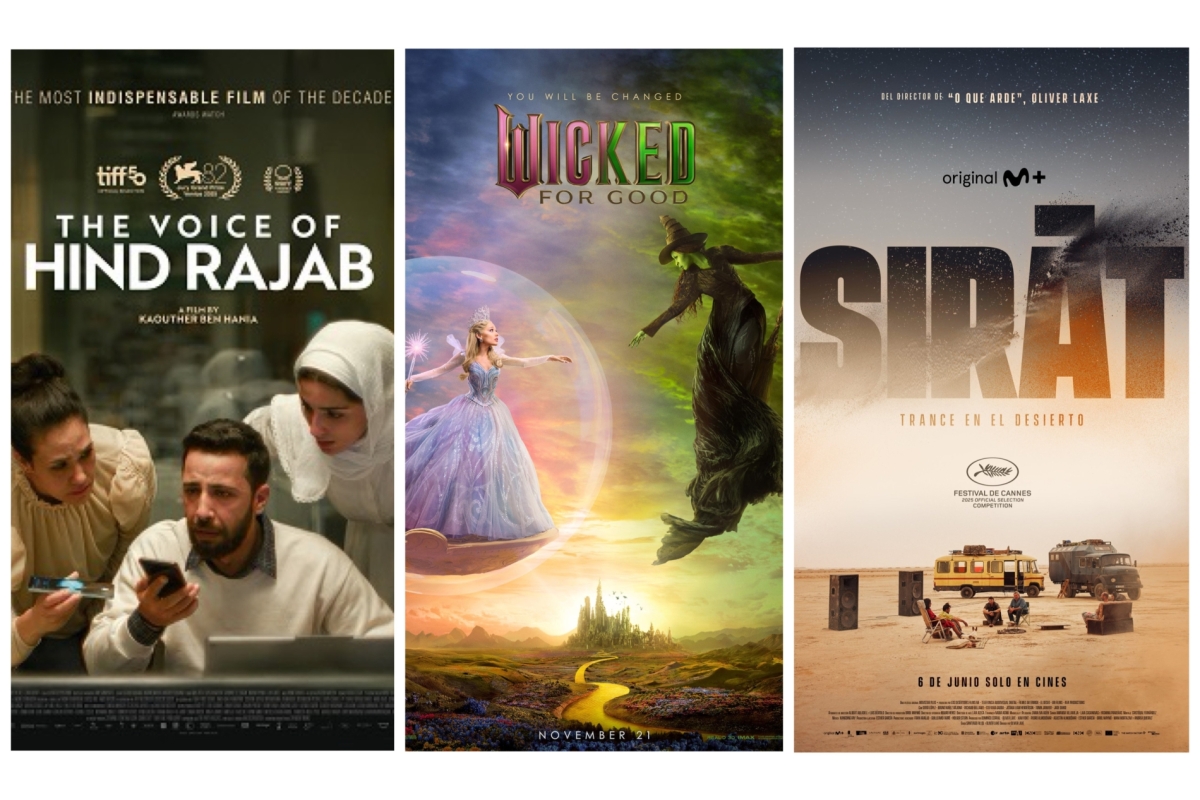
Far from Hollywood and the well-worn avenues of European cinema, streaming platforms offered a striking breadth of films. Netflix released the Indian thriller Jewel Thief: The Heist Begins, which quickly rose to the top of the viewing charts, and Wicked: For Good, directed by Jon M Chu, who drew on the enchanted world of Broadway to create a dazzling blend of fantasy and song.
Films now move at remarkable speed from cinema to streaming platforms, even while generating box-office revenue. The shift may have a lasting impact on the industry, with audiences increasingly reluctant to attend theatres, confident that a film will soon be available at home or on the move through their devices.
A telling example was the Egyptian film Fiha Eh Yaani, which began streaming on the Yango platform, despite taking EGP 1.2mn and SAR 1.8mn in its final week of theatrical release. Similar cases have proliferated in recent seasons. While such strategies may prove lucrative in the short term, thanks to the guaranteed returns of streaming, they threaten the very premise of collective viewing, on which cinema is built.
Works of humanity shone during the year. The Chinese film Mumu, directed by Sha Mo, follows its protagonist as she grows up with her deaf father and his friends, becoming their voice and interpreter. Apple's The Lost Bus, written and directed by the British filmmaker Paul Greengrass, renowned for turning real events into intensely charged cinema, revisited one of California's most notorious wildfires. When a school bus carrying more than 20 children is in danger of being engulfed by fire, the driver and a supervisor find themselves in a desperate race against time.
Works of humanity shone during the year. The Chinese film Mumu, directed by Sha Mo, follows its protagonist as she grows up with her deaf father and his friends, becoming their voice and interpreter. Apple's The Lost Bus, written and directed by the British filmmaker Paul Greengrass, renowned for turning real events into intensely charged cinema, revisited one of California's most notorious wildfires. When a school bus carrying more than 20 children is in danger of being engulfed by fire, the driver and a supervisor find themselves in a desperate race against time.
That struggle for survival resonates, albeit indirectly, with The Long Walk, adapted from Stephen King's novel of the same name by Francis Lawrence. The film imagines a dystopian ordeal in which contestants are forced to keep walking until death claims them—a vision that recalls Horace McCoy's They Shoot Horses, Don't They?, and echoes in films such as Nut Shell by the Egyptian director Khairy Beshara.
From Spain came one of the year's most distinguished philosophical meditations on survival. Though its story appears deceptively simple, Oliver Laxe's Sirat deftly examines the religious and existential idea of the path—that precarious line between salvation and ruin. By the end, he shifts the concept into a starkly existential register, framing a divide that separates impoverished nations from life itself, as though the thread between bliss and torment were also the thread between privilege and deprivation.
From Gaza to Cannes
One of the defining features of this year was the emergence of films that diverge from the traditional international landscape, including a notable wave of Arab cinema. A number of works toured festivals and global showcases, collecting awards and critical acclaim. Foremost among them was the Palestinian film Once Upon a Time in Gaza by the brothers Arab and Tarzan Nasser, which took the lion's share of honours at the Cairo International Film Festival. It also landed the brothers best director plaudits at Cannes, where it competed in the Un Certain Regard section.
Despite relentless pursuit by the Iranian authorities, the exiled filmmaker Jafar Panahi once again asserted his presence on the world stage, winning the Palme d'Or at the 78th Cannes Film Festival for It Was Just an Accident. Joachim Trier's Emotional Value received the Grand Prix, joining a constellation of films previously discussed in these pages.
At the Venice Film Festival, Jim Jarmusch's Father, Mother, Sister, Brother won the Golden Lion for best film. In under two hours, the veteran director shaped a family drama voiced by siblings reunited after years of estrangement. The Silver Lion went to Kaouther Ben Hania's docudrama The Voice of Hind Rajab, a tragic retelling of the brutal killing of five-year-old Hind Rajab by Israeli forces in Gaza. The film is arguably the strongest Arab contender for the 98th Academy Awards.
Hind's killing is revisited in several other works, including two short films from Jordan and Syria: Hind Under Siege and Close Your Eyes, Hind. Elsewhere, Annemarie Jacir's Palestine 36 explores the pre-Nakba era under British occupation. The roster of Arab submissions to the Academy Awards also includes four films from Morocco, Jordan, Iraq, and Lebanon: Zanqat Malqa, What Remains of You, Kingdom of Reeds, and Stars of Hope and Pain. Saudi Arabia's Migration, written and directed by the young filmmaker Shahad Ameen, will represent the country in the best international feature category.
A collaboration between Iraq, Egypt, and the UK, and supported by both the Red Sea Fund and the Ithra Film Fund, Migration tells the story of Jana, a child who travels with her grandmother and sister, Sarah, to perform the Hajj. When Sarah vanishes, the journey becomes a fevered search.