Clemency for retirement: the deal shaking Israel

Israel’s Prime Minister Benjamin Netanyahu seeks presidential clemency in the face of incarceration and political oblivion

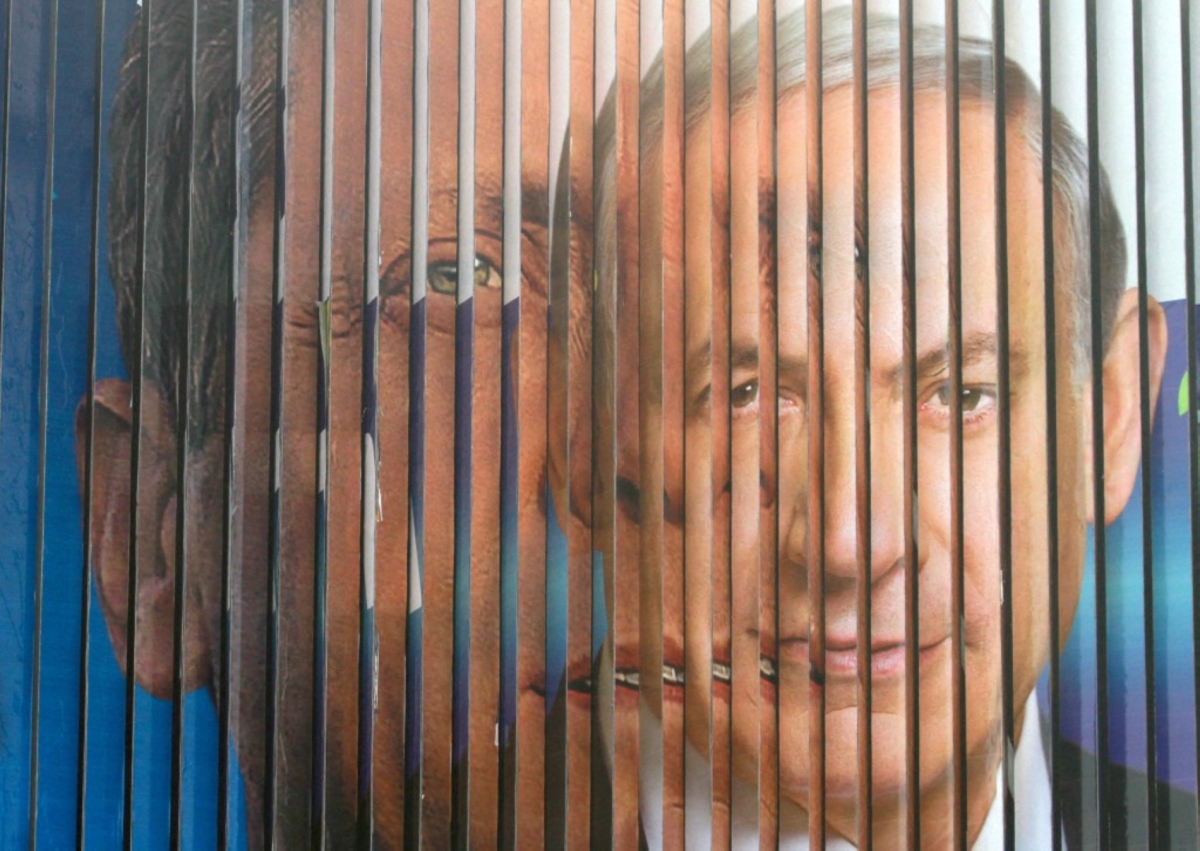
A giant campaign billboard rotates showing Likud candidate Benjamin Netanyahu (R) and Labour Party leader Isaac Herzog (L) in March 2015. Today, Netanyahu is asking Herzog to grant him a presidential pardon.
Gil Cohen Magen / AFP
A giant campaign billboard rotates showing Likud candidate Benjamin Netanyahu (R) and Labour Party leader Isaac Herzog (L) in March 2015. Today, Netanyahu is asking Herzog to grant him a presidential pardon.

Clemency for retirement: the deal shaking Israel

In what might be the most critical moment in Israel’s political history, Prime Minister Benjamin Netanyahu stands on the brink of a judicial reckoning that could bring an end to his decades-long career. More than the potential fall of a politician, it could mark the end of a leader who has dominated public life for nearly three decades.

As the Israeli arena convulses with protests and bitter divisions, Netanyahu’s formal request for presidential clemency, submitted on 30 November, has caused a constitutional and political earthquake. It threatens to reshape the balance of power and revives a long-running debate over the limits of executive authority—and whether a prime minister can ever stand above the law.

The charges against him are grave. Case 4000, the Bezeq Walla affair, involves allegations of bribery and could carry a lengthy prison term. Case 2000 concerns negotiations with the publisher of Yedioth Ahronoth for more positive coverage in exchange for curbing a rival newspaper. Case 1000 involves gifts worth hundreds of thousands of dollars from wealthy businessmen. According to Israeli legal experts, a conviction in Case 4000 alone could result in five to ten years in prison. It would also bring a legal stigma, making any return to political life virtually impossible.

Netanyahu fears the courtroom. At 75 years of age, any lengthy sentence would spell the end of his political existence, destroy his legacy as Israel’s longest-serving prime minister, and place his name among disgraced leaders such as Ehud Olmert. Unlike wars or political battles, the trial is beyond his control. He cannot attack judges as he does rivals, nor can he endlessly persuade the right-wing public that everything is a conspiracy.

Israel’s prosecutors are known for securing ‘state witness’ deals within the inner circles of power, and past cases have seen close associates break ranks. Netanyahu dreads that moment.

Trump’s intervention

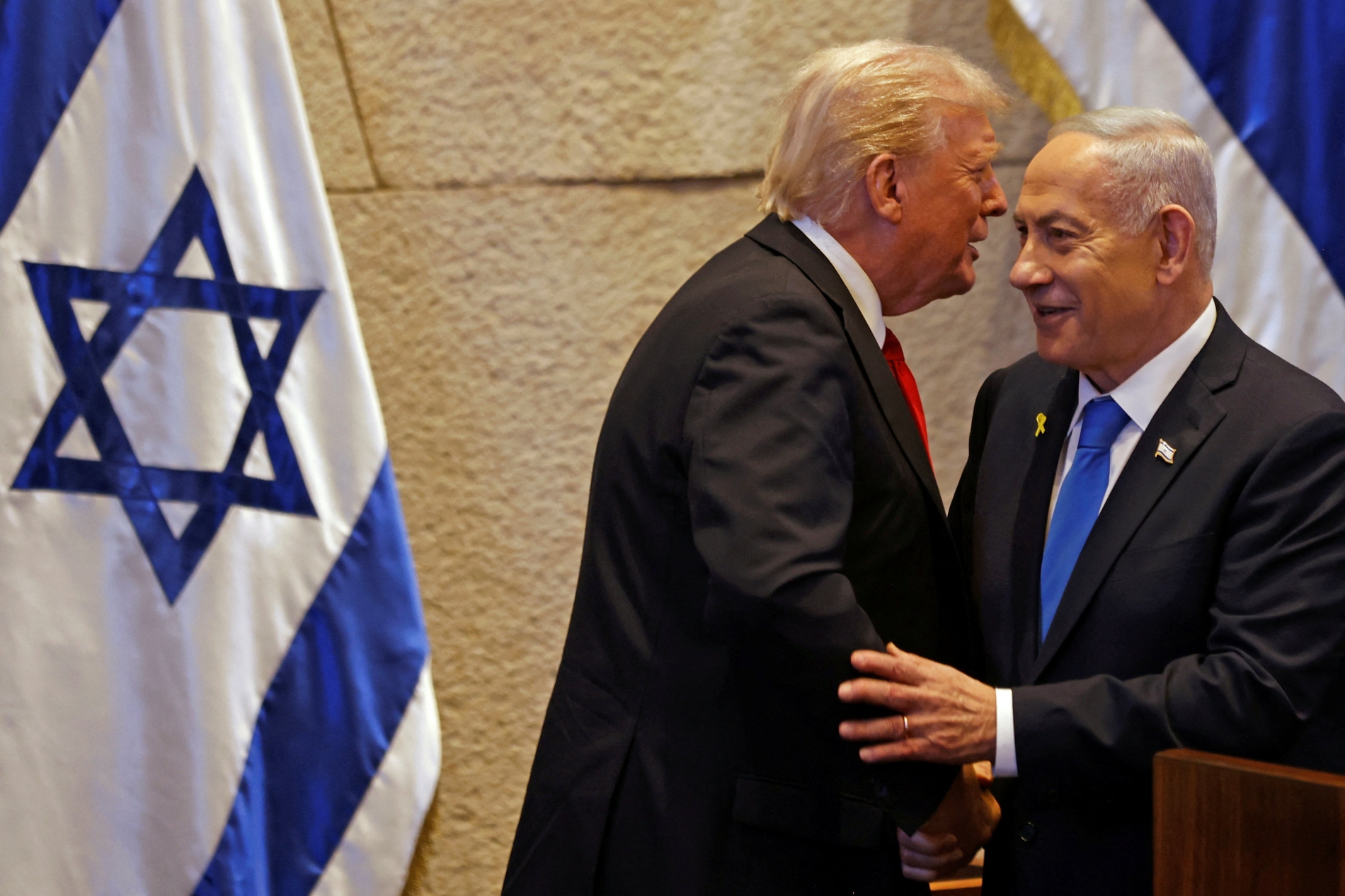
This drama has not unfolded in isolation. It was amplified by US President Donald Trump’s intervention during his visit to the Knesset (Israeli parliament) on 13 October, when he voiced support for granting Netanyahu a pardon. The remarks ignited a fierce political storm, widely condemned as interference in Israel’s judiciary.
Jalaa Marey/Reuters
US President Donald Trump (L) speaks with Israel's Prime Minister Benjamin Netanyahu at the Israeli parliament in Jerusalem on 13 October 2025.

Subsequent pressure on Israeli President Isaac Herzog deepened the controversy and introduced an unprecedented international dimension, while thousands of Israelis poured into the streets to denounce the idea of a ‘personal pardon’, which they viewed as a direct threat to the essence of Israel’s democratic order.

The notion of clemency has surfaced just as the trial enters its decisive phase. Key witnesses have testified, judges are approaching their final assessment of the evidence, and judicial leaks suggest that Case 4000 is strong enough to secure a conviction. Some right-wing parties are even contemplating the ‘post-Netanyahu’ era. Israeli observers note that Trump’s words in the Knesset were not casual. His influence within Israel’s right is considerable, and his hints about a pardon have compelled Netanyahu to weigh the possibility with utmost seriousness.

What drew particular attention were the mass demonstrations in West Jerusalem against the prospect of a pardon. These protests reflected a democratic civic current that sees clemency as a blow to the rule of law. They are not confined to the left either. The protesters include segments of the religious middle class, highlighting the erosion of the prime minister’s social legitimacy. In their eyes, Netanyahu has come to embody the image of a monarch defying the law.

Furthermore, the public prosecution and judiciary have firmly rejected any attempt to turn the trial into a political bargaining chip, while elements of the secular right now view Netanyahu as an electoral liability and want him gone.

The power to pardon

The Israeli president holds one of the broadest pardon powers in parliamentary systems, yet is constrained by three factors. No pardon may be granted before the conclusion of a trial except under truly exceptional circumstances—a condition that the Supreme Court, the public, and the opposition will invoke forcefully against Netanyahu. The attorney general must also advise that clemency would not undermine the rule of law; otherwise, the president risks being seen as serving the ruling party and provoking a constitutional crisis. Any pardon, therefore, would not be simple; it would amount to a political and judicial bargain.
Menahem Kahana / AFP
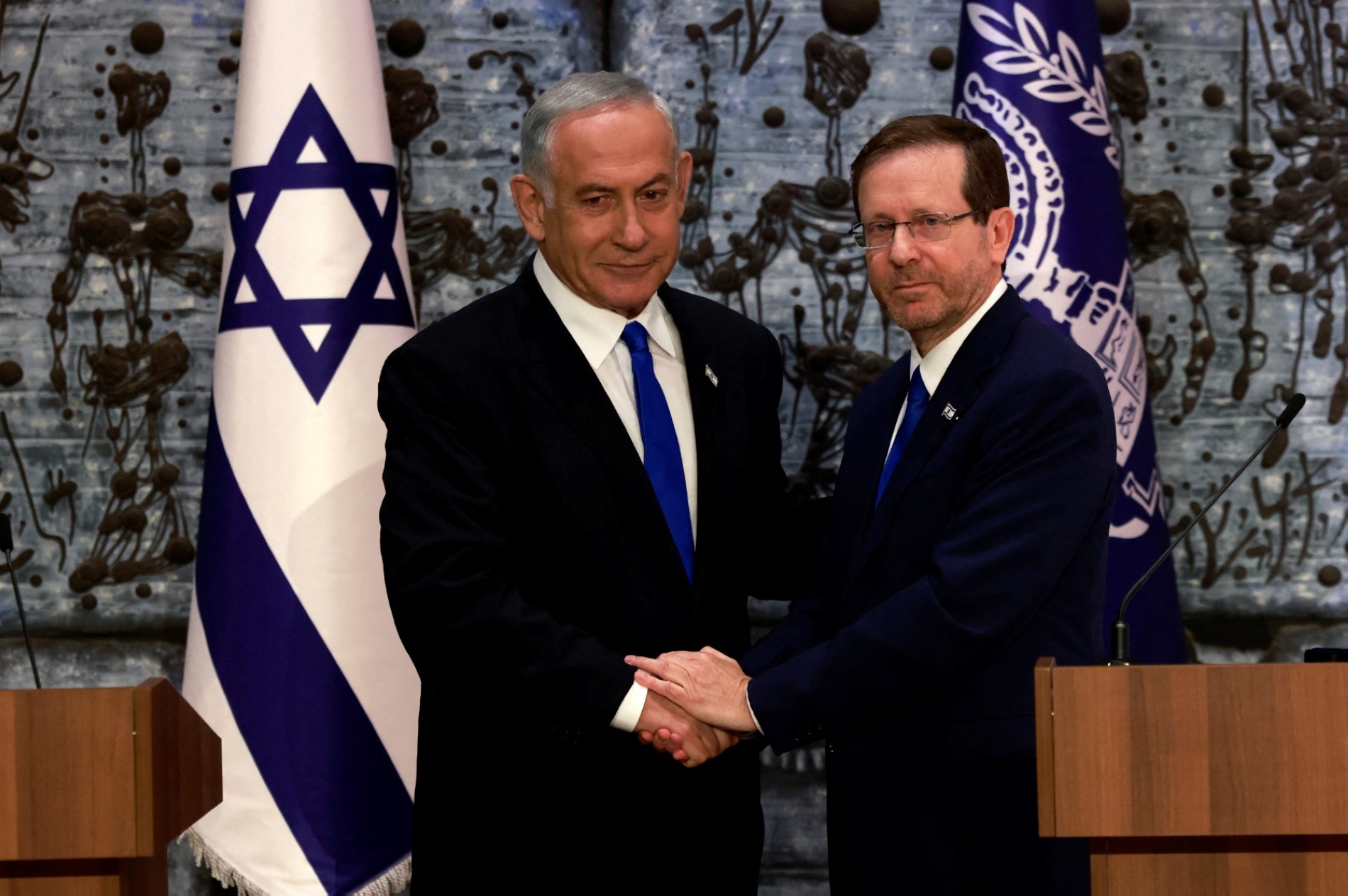
Israel's President Isaac Herzog (R) and Benjamin Netanyahu shake hands after the former tasked the latter with forming a new government, in Jerusalem, on 13 November 2022.

The power of pardon in Israel is enshrined in the Basic Law, but it has traditionally been exercised under strict conditions that uphold the separation of powers and preserve the presidency’s apolitical status. A request for clemency from a sitting prime minister still on trial for corruption is virtually unprecedented. The Basic Law itself stipulates that “no-one is above the law, including the prime minister”.

Legal experts in Israel argue that granting a pardon before conviction, or before the judicial process has run its course, poses fundamental problems. It would breach the integrity of justice by interfering in an incomplete trial, and erode public confidence in the judiciary, given that Cases 1000, 2000, and 4000—concerning bribery, fraud, and breach of trust—were accepted by the courts after years of investigation and are not frivolous. It would also redefine the president’s role as a political actor rather than a symbolic figure, in contradiction to his limited constitutional function.

For these reasons, most legal scholars contend that granting clemency at this stage would directly undermine judicial independence and set a precedent that future officials facing trial could exploit.

Between prison and survival

Netanyahu is acutely aware that his trial is both complex and protracted, and that the likelihood of conviction is substantial. Despite his insistence on a narrative of ‘political persecution’ and accusations against the ‘deep state’, the cache of documents, recordings, and testimony from state witnesses such as Nir Hefetz and Shlomo Filber render the case far more perilous than he publicly concedes. For Netanyahu, the real spectre is not prison, but a collapsed political legacy.
Atef Safadi / AFP
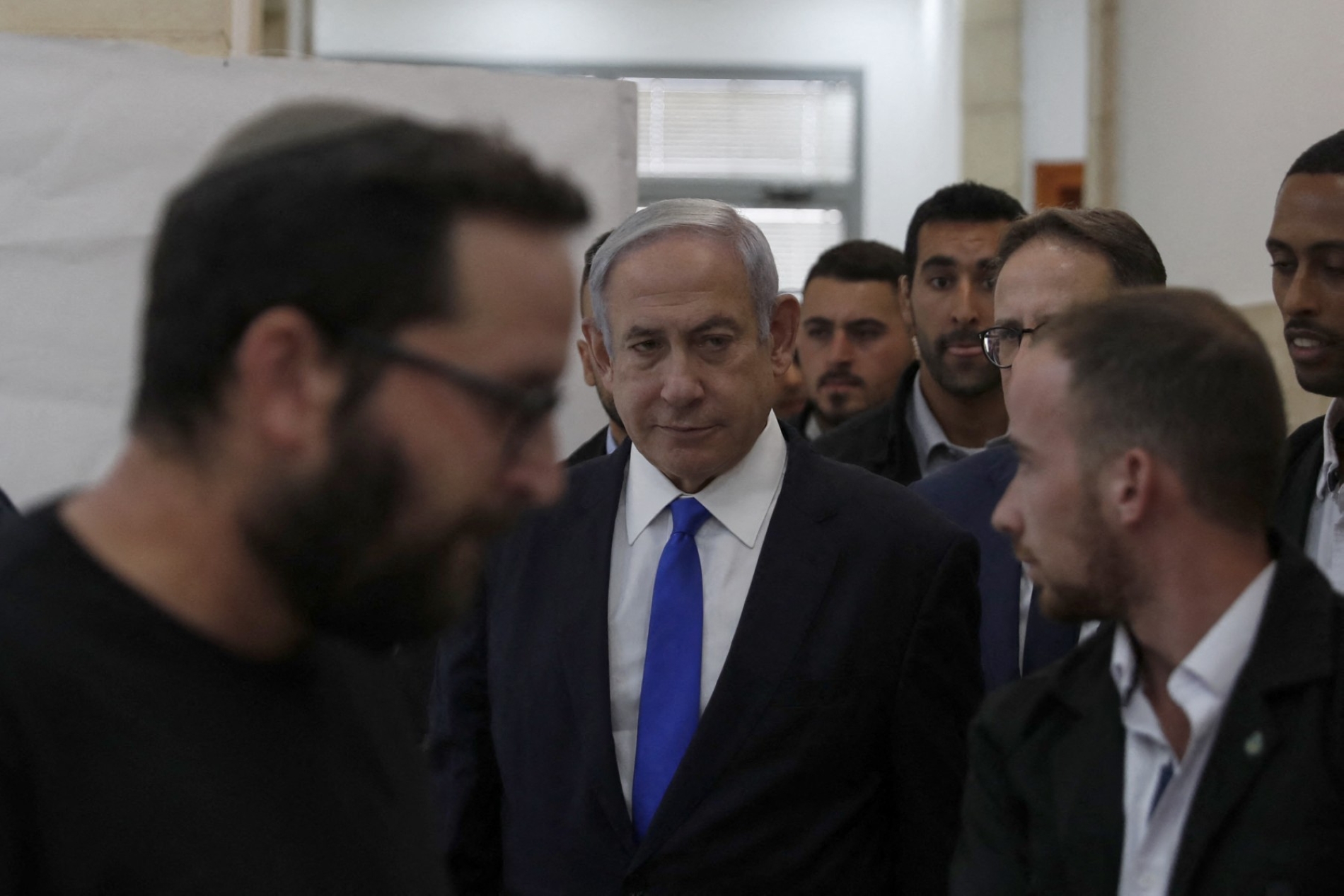
Israeli Prime Minister Benjamin Netanyahu arrives at the District Court in Jerusalem on 25 June 2023.

Should Netanyahu secure a pardon, his supporters would hail him a victor over conspiracy and institutional persecution. Such a narrative could provide him with significant electoral momentum and might even enhance his prospects in the next election, portraying him as a leader who ‘stood firm and prevailed’.

Such a triumph would not come without cost. Civil society and the middle class would perceive the prime minister as ‘above accountability’, while the opposition would portray such clemency as Netanyahu pardoning himself through manipulation.
Netanyahu is besieged by judicial pressure, the demands of religious allies, the expectations of settlers, shifts in public opinion, and declining support from parts of the US

If the pardon is denied, the rejection could become a rallying point. Netanyahu would argue the judiciary is intent on toppling the right, adopt a populist discourse of 'persecution' reminiscent of Trump, and mobilise nationalist and religious constituencies. In this light, the denial of clemency may strengthen him,rather than diminish him.

Netanyahu now finds himself besieged on multiple fronts: by judicial pressure, by the demands of religious allies, by the expectations of settlers, by shifts in public opinion, and by declining support from parts of the US establishment. Whether clemency is granted or refused, it will inevitably alter these dynamics. For the right, Netanyahu's downfall would mark the collapse of the entire nationalist and religious project, and they will mobilise politically to prevent it.

Against this backdrop, Israel's parliamentary opposition sees a historic opportunity to present itself as the guardian 'restoring democracy'. Should clemency be granted, it may galvanise a broad civic front against Netanyahu. If it is denied, the opposition will intensify its critique, branding him as 'morally unfit' to lead the country.

Judiciary vs executive

Netanyahu and his allies have long waged a campaign to curtail judicial authority, including the contentious 'judicial reform' that sparked widespread protests prior to 7 October 2023. The request for clemency is not merely a legal manoeuvre; it is widely seen as an extension of this political struggle.

Ronen Zvulun/Reuters
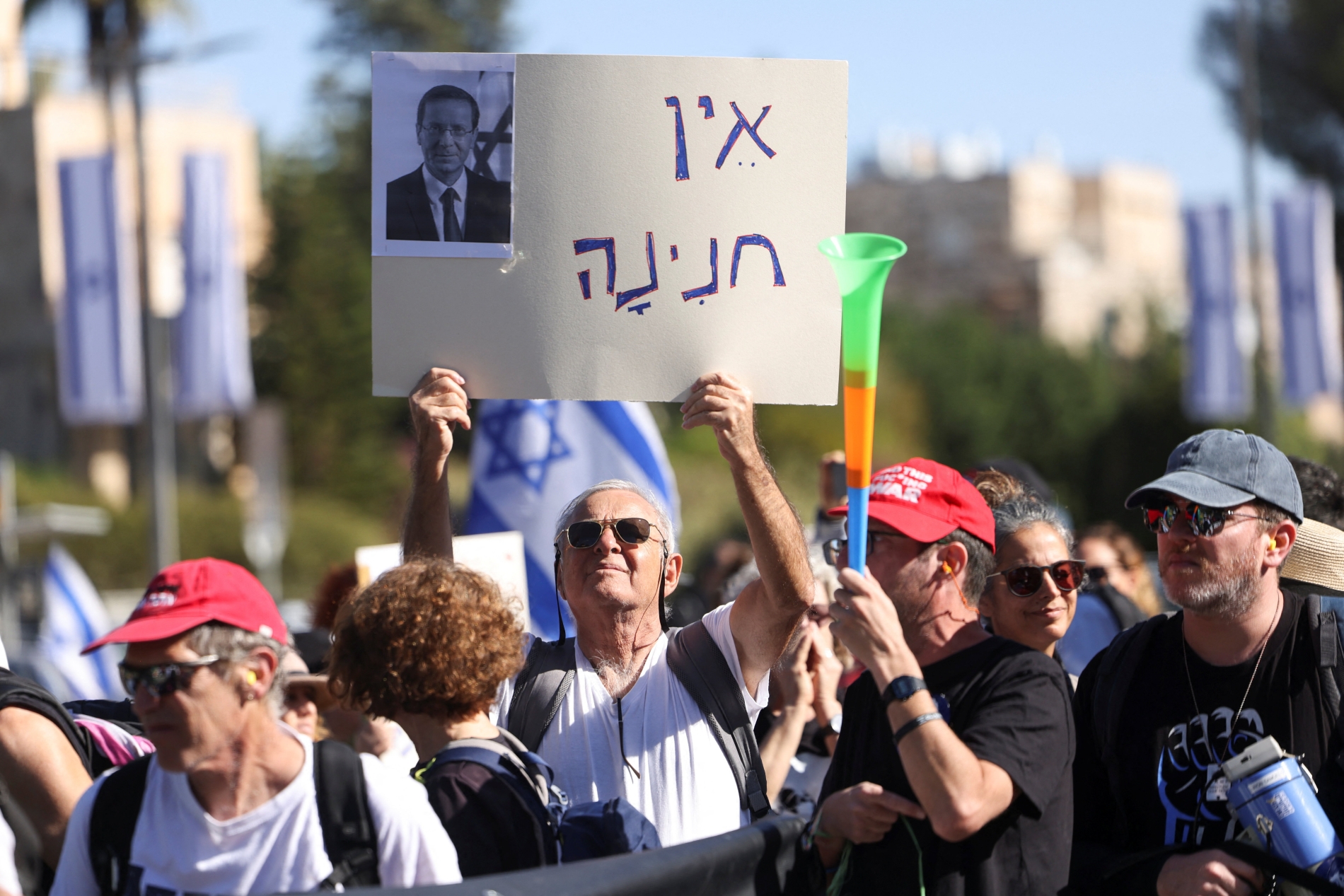
A man holds a sign that reads 'No Pardon' as Israelis protest outside the President's residence in Jerusalem on 2 December 2025.

Herzog now finds himself in a fraught position. Should he approve clemency, he will be accused of undermining democracy. Should he refuse, he will be attacked from the nationalist and religious right. A role once largely ceremonial has become a focal point in Israel's institutional crisis.

Israeli media reflects this deepening divide. Right-leaning outlets present clemency as a 'national necessity to end division', while liberal platforms denounce it as an 'assault on the rule of law'.

Meanwhile, the intelligence services and the military fear any perceived weakening of judicial authority will erode international trust, undermine Israel's legal standing in international forums, and politicise the security apparatus. Several former generals have publicly warned that such developments pose a grave challenge to the country's checks and balances. And as Israel's internal divisions deepen, attention in Washington has turned increasingly to the broader implications of Netanyahu's request. 

While Trump has openly expressed support for granting clemency to his ally Netanyahu, senior Israeli figures point out that the broader American establishment is concerned. Washington does not wish to see the prime minister of a close ally evade trial through a presidential pardon. Israeli officials fear that such a move could severely damage US confidence in the independence of Israel's judiciary and risk reducing the country's standing to that of Hungary or Poland.

Israel has witnessed corruption scandals before. Olmert was imprisoned on graft charges despite having served as prime minister. Moshe Katsav, the president himself, was jailed for sexual offences, his office affording him no protection. Other ministers and lawmakers faced accusations but resigned before their cases reached court. The crucial difference in Netanyahu's case is that none of his predecessors sought a pardon before the conclusion of their trials.

No religious grounding

Although Netanyahu leads a coalition that includes prominent religious figures, his pursuit of personal clemency finds no grounding in religious tradition. Jewish teaching places greater moral responsibility on leaders, not less, and the Talmudic heritage rejects the notion that any ruler may stand 'above justice'.

Ahmad Gharabli / AFP
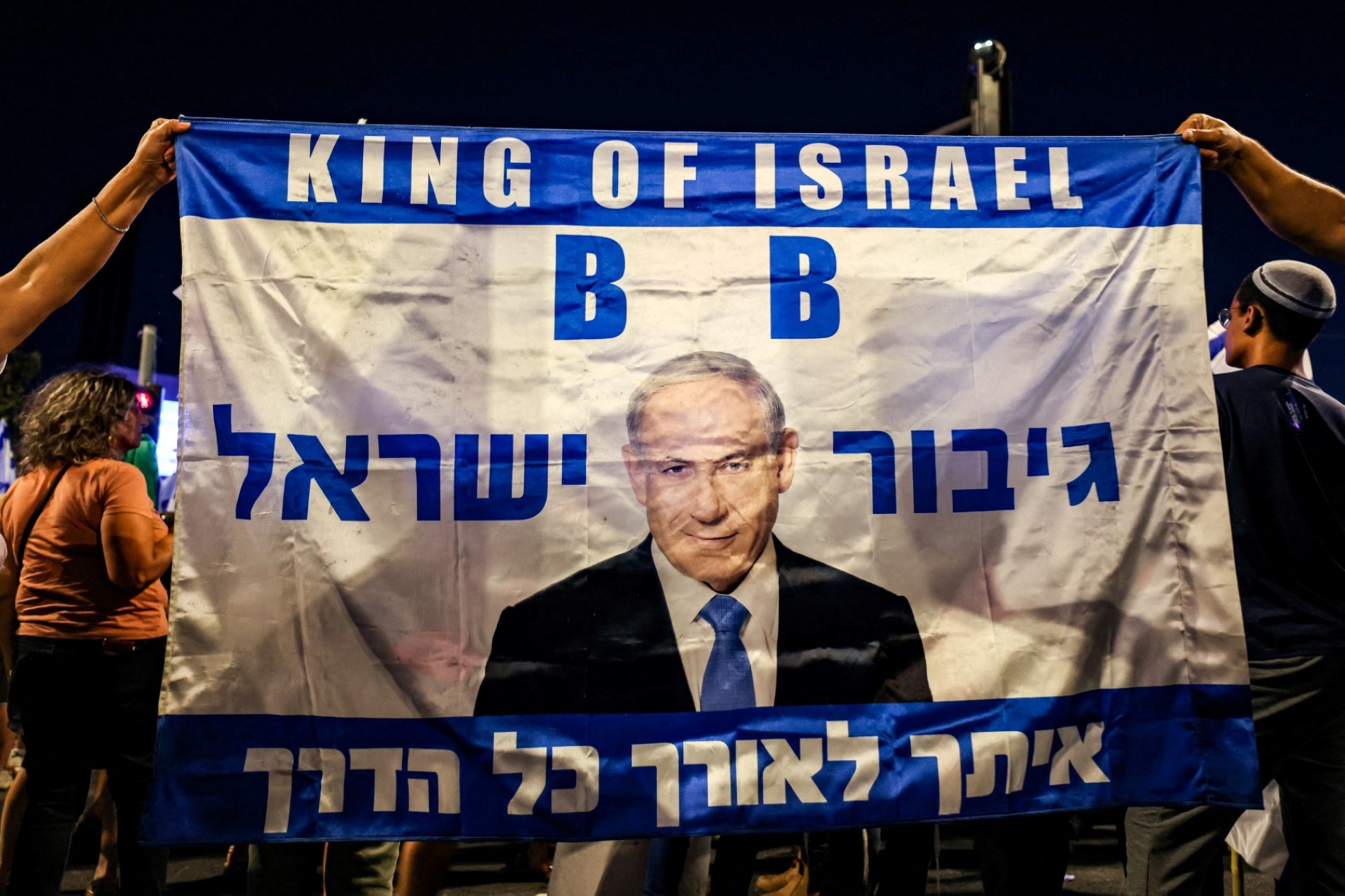
Right-wing demonstrators hold a banner depicting Israeli Prime Minister Benjamin Netanyahu during a rally in support of his government's planned judicial overhaul outside the Supreme Court in Jerusalem on 7 September 2023.

Even ancient kings were subject to public rebuke by prophets: Nathan confronted King David over the affair of Uriah the Hittite despite David's sacred status, while King Saul forfeited his legitimacy through personal failings. By contrast, Netanyahu seeks a personal pardon that draws no support from faith or tradition.

Netanyahu has compared his case to that of former US President Richard Nixon, who received a pardon from his successor, Gerald Ford, in 1974 following the Watergate scandal. Yet the contrast is striking: Nixon first resigned, admitted wrongdoing, and was pardoned only then. Netanyahu has neither confessed nor stepped down. 

His critics argue that he more closely resembles Silvio Berlusconi, the former Italian prime minister who repeatedly sought to shield himself from prosecution through legislation and political manoeuvring, but who was ultimately convicted in 2013 and barred from public office. These precedents show that while pardons are not impossible, they invariably carry a heavy political price. 

In Netanyahu's case, the request must first be reviewed by the justice minister, then referred to the president, who will consult his legal adviser. Based on her recommendation, Herzog will decide—though probably not before January.

The only precedent in Israeli judicial history for granting clemency before the conclusion of a trial dates back to 1984. It involved Shin Bet officers who killed two Palestinians from Gaza after capturing them during the hijacking of an Israeli bus, known as the Line 300 affair. The officers admitted to killing the detainees while in custody and later expressed remorse.

Amir Cohen / Reuters
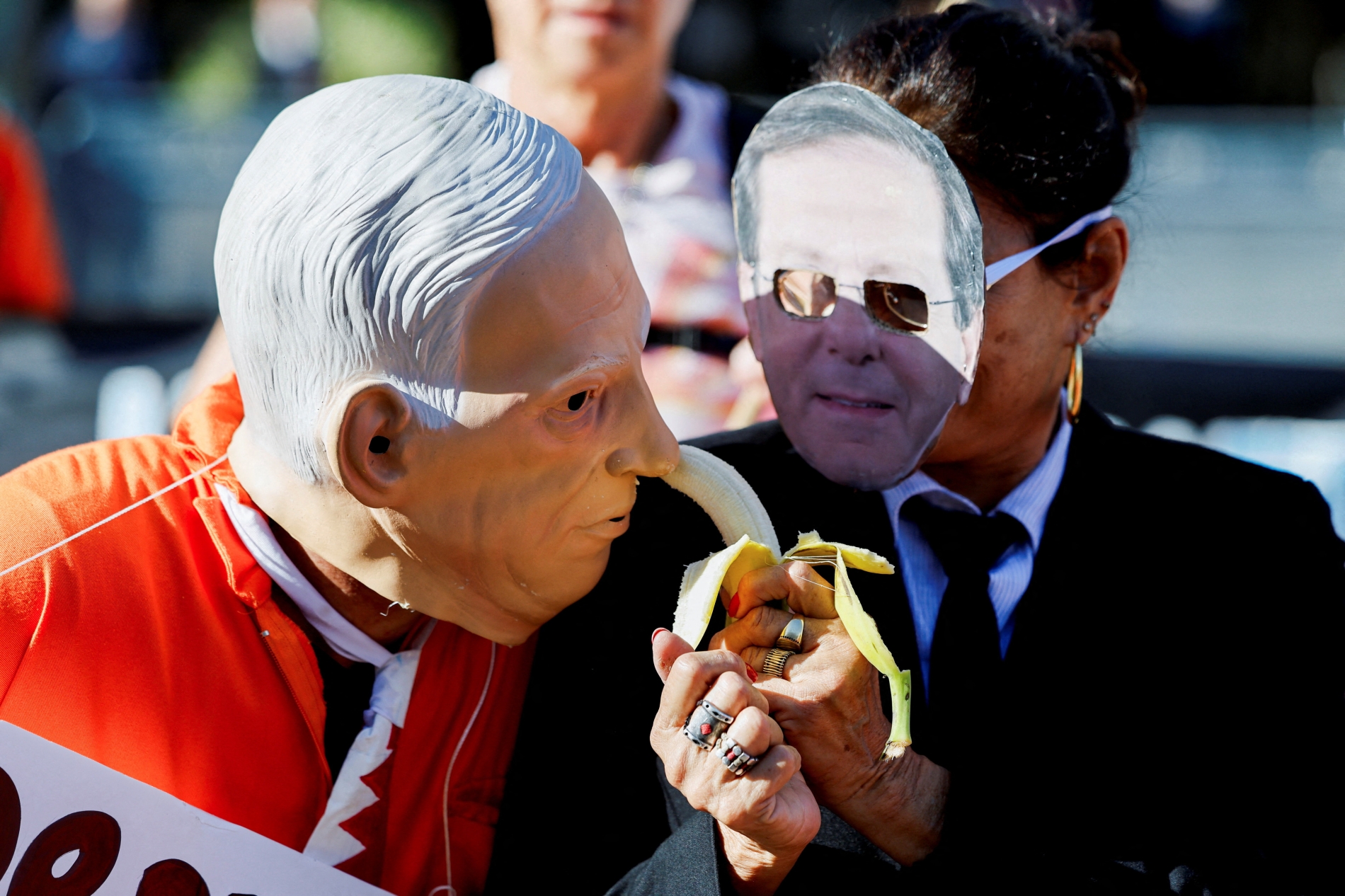
Masked protesters opposed to a presidential pardon outside a courthouse in Tel Aviv on 1 December 2025.

A prominent Israeli legal expert told Al Majalla: "It is extremely rare to request a pardon or cancel a trial before proceedings are complete." He added: "Netanyahu has realised during the last 10 sessions of his trial, after hearing witnesses and reviewing the evidence against him, that he is heading toward conviction and prison. He now invokes Israel's national security as justification. But if national security truly mattered to him, he would have ended the Gaza war two years ago."

Four possible scenarios

President Herzog now faces four complex scenarios. The first is outright rejection, in line with the opposition's call for Netanyahu to admit guilt and withdraw from political life in exchange for a pardon. The second is granting conditional clemency, requiring Netanyahu's retirement from politics. Third, Herzog might demand broader concessions, such as the establishment of a governmental inquiry into the events of 7 October 2023. Or fourth, he could require the withdrawal of controversial judicial and media reform bills. 

Leaks from the presidential office suggest that any pardon will not come without a price. Herzog is reportedly considering conditions that would oblige Netanyahu to step aside, at least temporarily, and to abandon the divisive judicial overhaul should he wish his request to be considered.

Of the four scenarios, the first would preserve the dignity of the judiciary by averting a full conviction and allow the Likud party to reorganise its leadership. Yet it could also trigger public outrage, invite intervention by the Supreme Court, and be rejected by the far right, which may refuse to accept Netanyahu's departure. The second, and most legally sound, scenario—and the least comfortable for Netanyahu—is the continuation of the trial through to its final verdict. While this path would deepen political polarisation, it has the strongest backing among democratic currents. 

The third possibility—partial or conditional clemency—offers a form of protection from incarceration that nonetheless leaves the stain of conviction, while the fourth involves legislative intervention by the governing coalition to pass a law shielding a sitting prime minister from prosecution. Netanyahu has attempted this route in the past, but it failed amid popular and judicial resistance, rendering its likelihood now remote.

Finally, there is the so-called 'compromise' scenario: conviction without imprisonment, involving a reduced sentence in exchange for a partial admission of guilt. Such arrangements have occurred with other Israeli figures, but prosecutors have thus far dismissed this option.

Defining moment

Netanyahu's request for clemency is not a routine legal measure. It is a defining moment for Israel's political system, a moment that lays bare an institutional crisis years in the making. It tests the principle that 'no-one is above the law' and challenges the resilience of democratic structures when faced with a leader of formidable popularity, influence, and deeply entrenched alliances. 

Matty Stern / Reuters
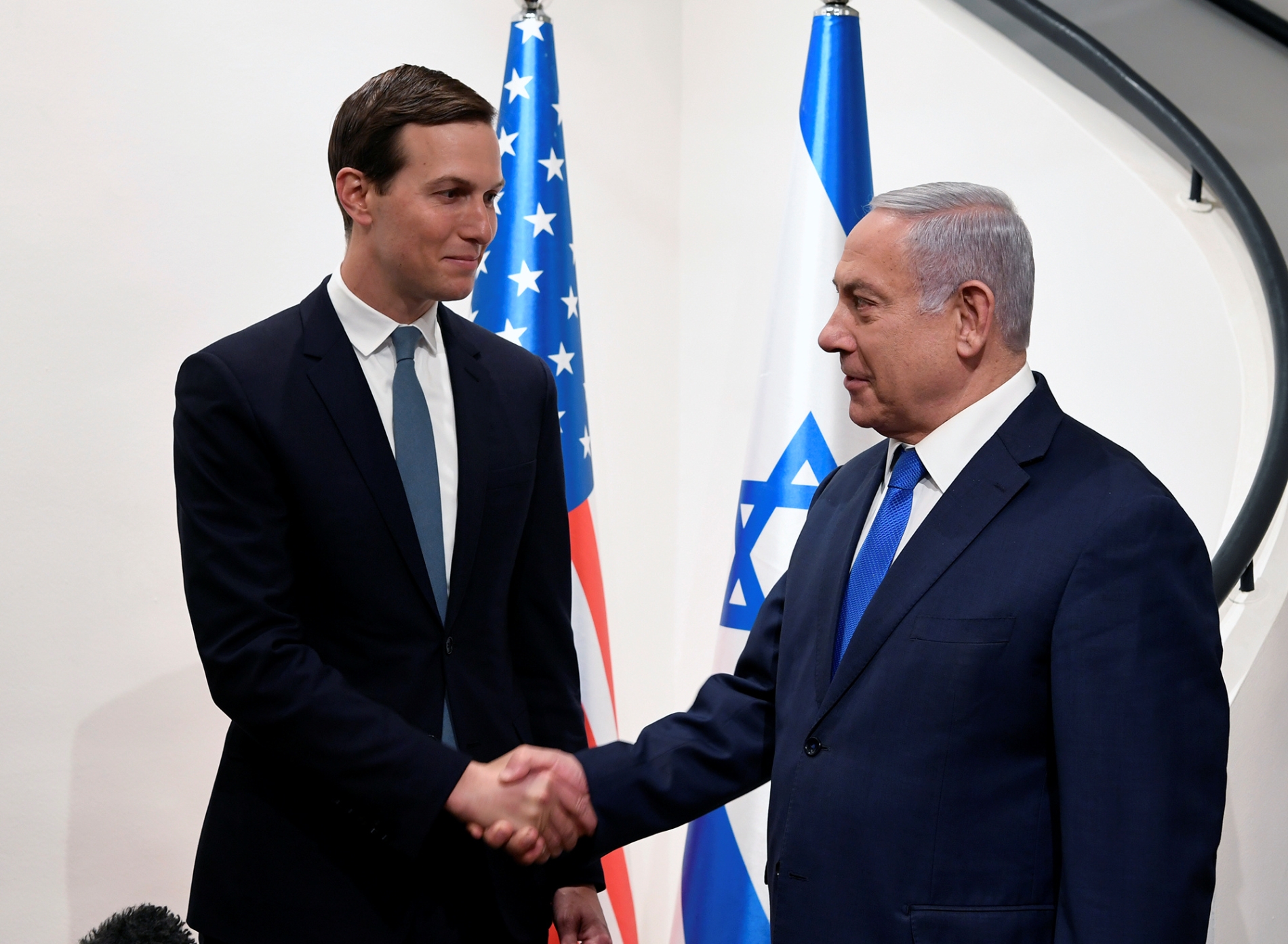
Israeli Prime Minister Benjamin Netanyahu shakes hands with Senior White House advisor Jared Kushner during their meeting in Jerusalem, on 30 May 2019.

Whether clemency is granted or denied, Israel will live with the consequences for years, deepening internal fractures, eroding confidence in the judiciary, redefining Israeli presidency, and sharpening tensions among the branches of government.

The electoral consequences will be equally profound. This is not merely the story of a prime minister facing corruption charges who refuses to step down; it is a broader question of state governance confronting unprecedented internal and external pressures. Strong democracies do not absolve their leaders while they remain in power.

This is not merely the story of a prime minister facing corruption charges who refuses to step down. It is a broader question of state governance confronting unprecedented internal and external pressures

Netanyahu has long cast himself as the singular exception in Israeli politics—the man who cannot be toppled. Yet the trial that has dogged him for years, the mounting judicial and political pressure, and the renewed talk of a 'pardon for retirement' suggest that Israel now faces a defining test between the rule of law and the calculus of political survival.

The real question is not simply whether Netanyahu will be pardoned or become the first Israeli prime minister to be imprisoned; it is whether Israel can uphold the rule of law when the defendant is the most powerful political figure in the land. That is the gravest trial the state must now endure.

Another critical dimension is the impact on next year's elections. Should he be acquitted, Netanyahu's position would be significantly bolstered. If convicted, he is likely to exploit the verdict to consolidate support behind his claim that the 'deep state' has conspired against him.

font change