China is redefining global trade dynamics in America’s backyard

There are signs that a new Pacific-Atlantic trade corridor financed by Beijing to bypass any US naval blockade of the Panama Canal will reorient Latin America towards Asia.

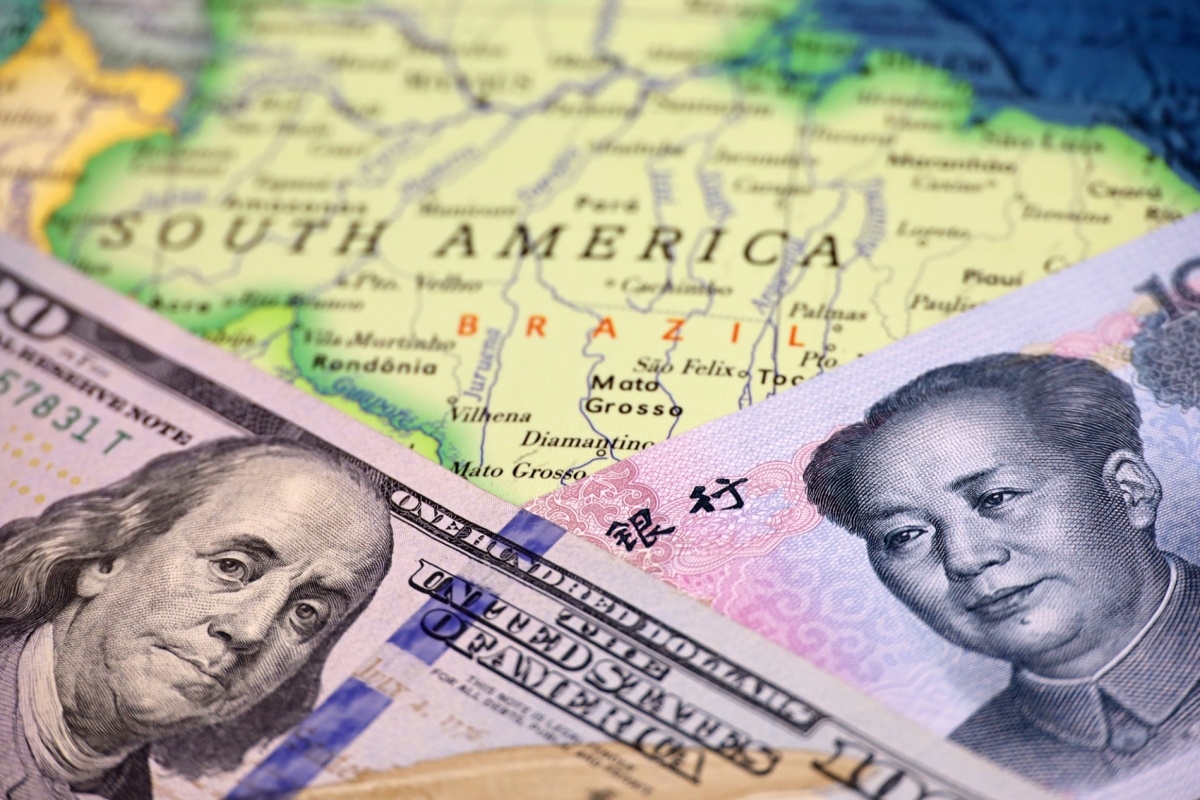
China's far-shoring strategy in Latin America: does this mean the end of Washington dictating Latin America's destiny?
Shutterstock
China's far-shoring strategy in Latin America: does this mean the end of Washington dictating Latin America's destiny?

China is redefining global trade dynamics in America’s backyard

When China’s President Xi Jinping inaugurated Peru’s Chancay megaport in November 2024, he was doing far more than opening a Chinese offshore project; he was executing a vision that has reshaped global power three times before and is poised to do so again.

The $1.3bn deep-water facility, capable of handling the world’s largest container ships, is an audacious Chinese attempt to rewrite the economic geography of the Pacific, challenging 200 years of American hegemony in the Western hemisphere through infrastructure, the geopolitical consequences of which will only be seen in future decades. Modern history shows that whoever controls the world’s strategic maritime passages shapes not just trade routes but the very architecture of global power.

The Suez Canal, opened in 1869, eliminated the need for European vessels to circumnavigate the southern tip of Africa, cutting the London-Bombay journey by 6,000 miles. Britain’s control over the canal became a linchpin of its imperial power, cementing London’s position at the centre of global finance and trade. When Egyptian President Gamal Abdel Nasser nationalised the canal in 1956, it marked the end of British and French imperial dominance, replacing it with US-USSR Cold War bipolarity.

The Panama Canal, completed in 1914, similarly rewrote global trade patterns. By compressing an 8,000-mile voyage around Cape Horn into a 48-mile passage, it fundamentally altered the economics of trans-oceanic trade. Every cargo vessel moving between these two oceans had to pass through the (then) US-controlled territory, giving Washington both revenue and leverage over global trade flows. Yet the canal’s strategic importance extended beyond commerce—it enabled the US Navy to project power across two oceans simultaneously, which proved decisive in both World Wars.

The Strait of Malacca further illustrates how natural chokepoints define contemporary geopolitics. Approximately 25% of global oil shipments and 60% of Chinese energy imports pass through this narrow waterway off the coast of Malaysia. China’s ‘Malacca Dilemma’ (i.e. the prospect that the US may force the strait’s closure in the event of conflict) has driven huge investment in alternative routes, such as land pipelines through Myanmar and Pakistan, Arctic shipping routes, and the overland corridors across Central Asia that form part of Beijing’s Belt and Road Initiative (BRI).

Restructuring trade

Against this historical backdrop, the Chancay port’s transformative potential becomes clear. China is creating a new maritime opening that will restructure trans-Pacific trade flows and pivot the economic centre of gravity in the Pacific away from North America and toward East Asia. This is a significant geopolitical development in the Americas, the full implications of which will only materialise over decades as infrastructure reshapes investment patterns, supply chains, and continental economic dynamics.

Chancay can accommodate vessels carrying up to 18,000 containers (called Twenty Foot (20ft) Equivalent Units, or TEUs). Such mega-ships increasingly dominate transoceanic trade but are too big to transit the Panama Canal, which is limited by its locks system to vessels carrying 14,000 TEUs.
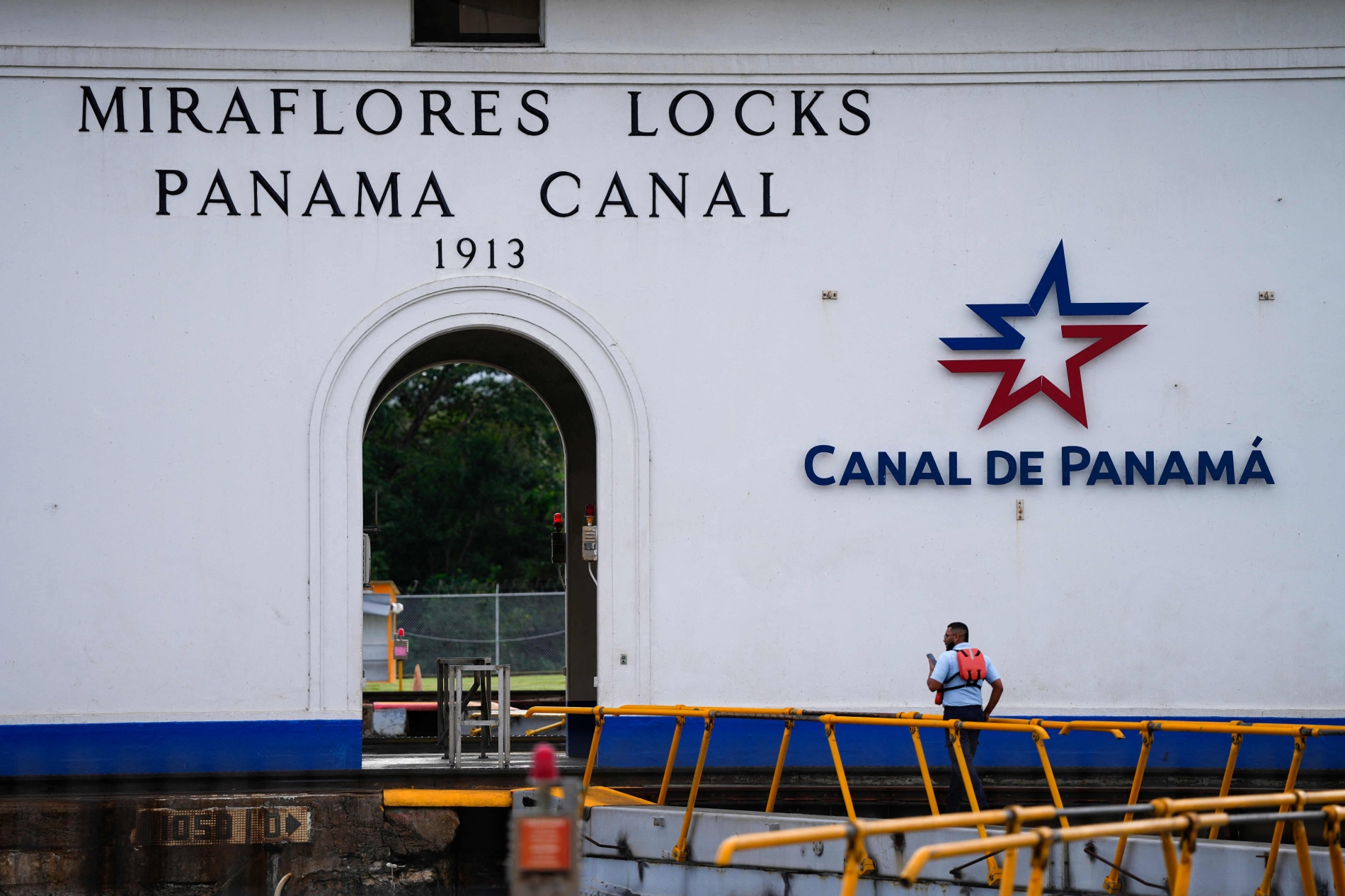
AFP
The Panama Canal on 23 December 2024. Whoever controls the world’s strategic maritime passages shapes not just trade routes but the very architecture of global power.

Beyond its capacity advantage, the port’s more important role is as the anchor in a 2,600-mile bi-oceanic corridor that Chinese state-owned companies are financing. This corridor cuts across South America using railways and highways. From Chancay, it heads over the Andes to Brazil’s agricultural heartland via Bolivia, creating a new trade routes that bypasses the traditional Panama passage.

There are economic calculations in this. Take Brazilian soybeans, destined for Chinese markets. They currently travel to Atlantic ports like Santos, then either pass through Panama or sail around South America, taking up to 40 days. Via Chancay and the bi-oceanic corridor, the same cargo would reach Shanghai in 23 days, while reducing transportation costs by around 20%.

The significance of a new corridor extends beyond shipping efficiency. Chancay creates a Chinese-operated infrastructure immune to US embargo. In any future crisis between the US and China, the Panama Canal could become vulnerable to US pressure, up to and including a naval blockade. Chancay offers Beijing an alternative route over which it has leverage.

Given that infrastructure determines development patterns over decades, Chancay will gradually reorient the South American economy. For 500 years, South American cities, industries, and transport networks faced the Atlantic, reflecting colonial histories and commercial ties to Europe and North America. Now, Chinese investment is turning the continent back toward the Pacific. Peru, Bolivia, and western Brazil are becoming gateways to Asian markets, not hinterlands of Atlantic commerce.
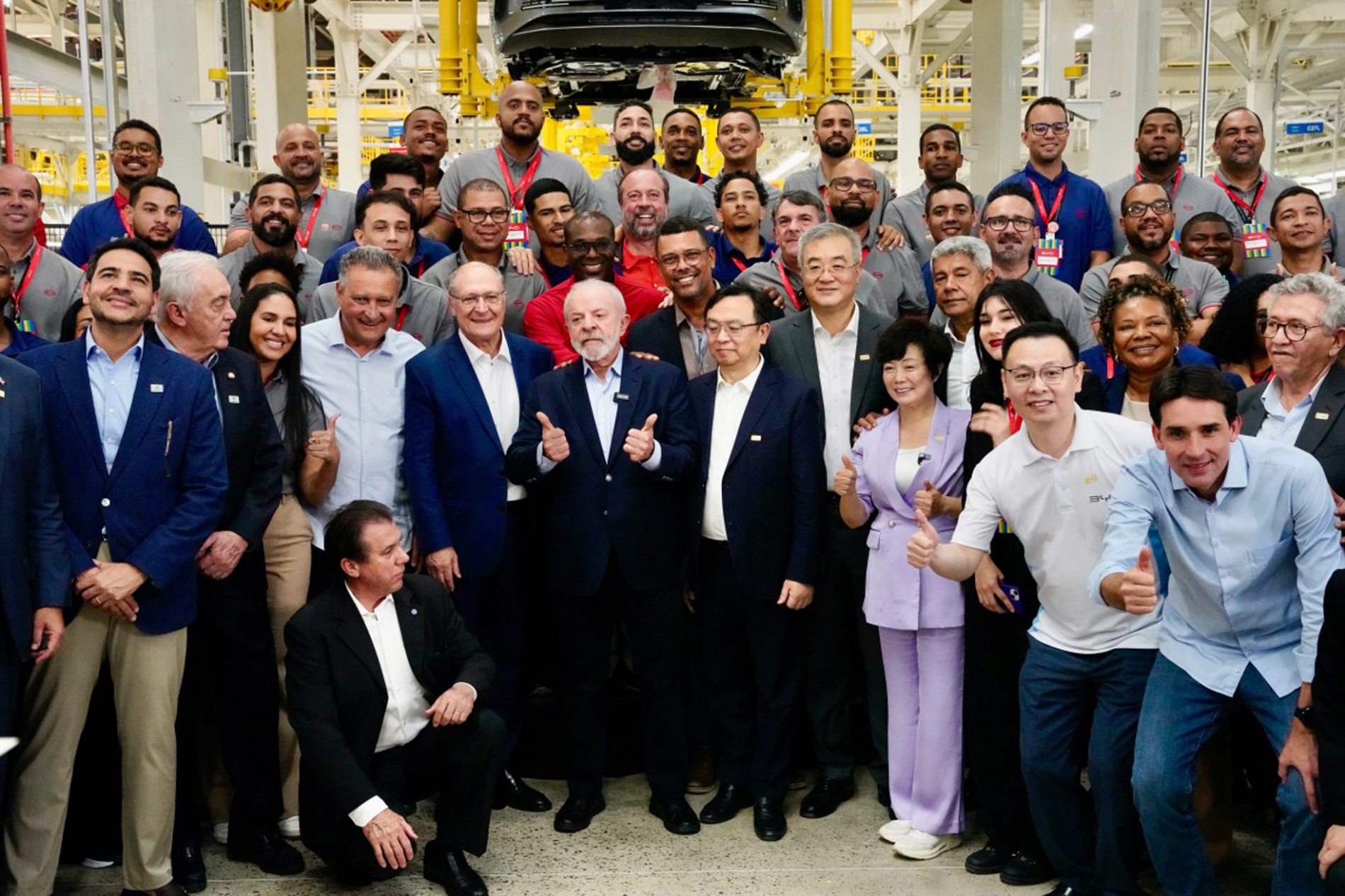
AFP
Brazilian Vice President Luiz Incio Lula da Silva (centre) standing with workers during the opening of the BYD car factory in Camacari, Bahia, Brazil, on 9 October 2025.

It is expected that industries will locate near the Pacific to minimise distance to Asian markets and agricultural production will shift towards crops with demand from China. These changes create path dependencies that last for generations, just as the Panama Canal shaped American hemispheric dominance for more than a century.

Late to the problem

The United States is belatedly recognising the issue. When Washington was treaty-bound to hand over canal operations to Panama on 31 December 1999, there was little attention paid to the canal’s two new port operators. CK Hutchison Holdings secured long-term concessions for the ports of Balboa and Cristóbal, but the company is controlled by Hong Kong billionaire Li Ka-shing, who has deep ties to Beijing. While Panama maintained canal sovereignty, Chinese corporate control of terminal facilities gave Beijing influence over cargo flows, pricing, and logistics prioritisation.

Chinese firms further operate, or hold significant stakes in, more than a dozen major Latin American ports. COSCO Shipping Ports controls terminals in Peru, Brazil, Argentina, and Uruguay, while China Merchants Port Holdings operates facilities in Colombia and Panama. This gives China influence and control over the economic artery through which trade flows. With characteristic bluntness, US President Donald Trump grasped this vulnerability in recent years, repeatedly pledging to “take back” the canal, arguing that Chinese port control threatens US strategic interests.
Industries will locate near the Pacific to minimise distance to Asian markets and agricultural production will shift to crops demanded in China

While the fate of the Panama ports remains uncertain, Trump's rhetoric signals that Washington finally recognises the problem in America's own backyard. His approach to Chinese influence in Latin America has evolved from neglect to confrontation. This is most visible vis-à-vis Venezuela, where Nicolás Maduro's increasingly authoritarian regime relies on Chinese and Russian economic and military support.

Yet Venezuela is just one of several states in the developing world in which China is filling a strategic vacuum left by the United States. As US sanctions isolated Maduro's regime, Beijing offered oil-for-loan agreements that gave Caracas a lifeline. Chinese firms now operate in Venezuela's Orinoco Belt oil fields, while Chinese banks hold significant Venezuelan debt. Meanwhile, Russia provides military equipment, training, and even temporary bomber deployments to Venezuelan airbases. Together, they have created a support structure that has kept Maduro in power.

Trump's most recent military threats signal a willingness to escalate towards confrontation, yet they also reveal the limits of American power in Latin America, where Washington cannot expel the Chinese and Russian presence through force. Venezuela's government will defend itself, and neither Beijing nor Moscow will withdraw because the US demands it.

Losing influence

Trump knows that attacking Venezuela will alienate others on the continent, driving more states towards China, and will not reverse the structural conditions that make China attractive to governments that are estranged from Washington. Even Argentina's President Javier Milei, a Trump fan, has had to acknowledge reality. "We will not make pacts with communists," Milei declared, vowing to cut ties with Beijing and pivot toward Washington.

Yet Argentina's inflation is running at more than 20%, its foreign reserves are depleted, and its huge debt obligations are imminent. Stabilisation requires capital inflows and trade revenues that only China can provide at a sufficient scale. Despite Milei's stated wish, Argentina depends on China as its second-largest export market, particularly for soybeans and beef. Sure enough, within months, Milei's position collapsed.

In January 2025, his administration said it would renew the $18bn currency swap agreement with China's central bank, essential for accessing foreign exchange. In February, his government approved the continuation of Chinese-financed hydroelectric projects (despite earlier threats to cancel them). By March, his officials were quietly negotiating expanded agricultural exports to China. In May, he said Argentina would pursue "pragmatic relations" with China. In short, he came to realise that Chinese capital and markets are essential to economic survival.

Developments in Latin America represents China's response to its own vulnerability in an era of US-China strategic confrontation. Just as the US depends on South-East Asian supply chains to reduce dependence on Chinese manufacturing, so China is building Latin America into a far-shoring network that provides it with energy, resources, and food, replacing the demand from the US.

AFP
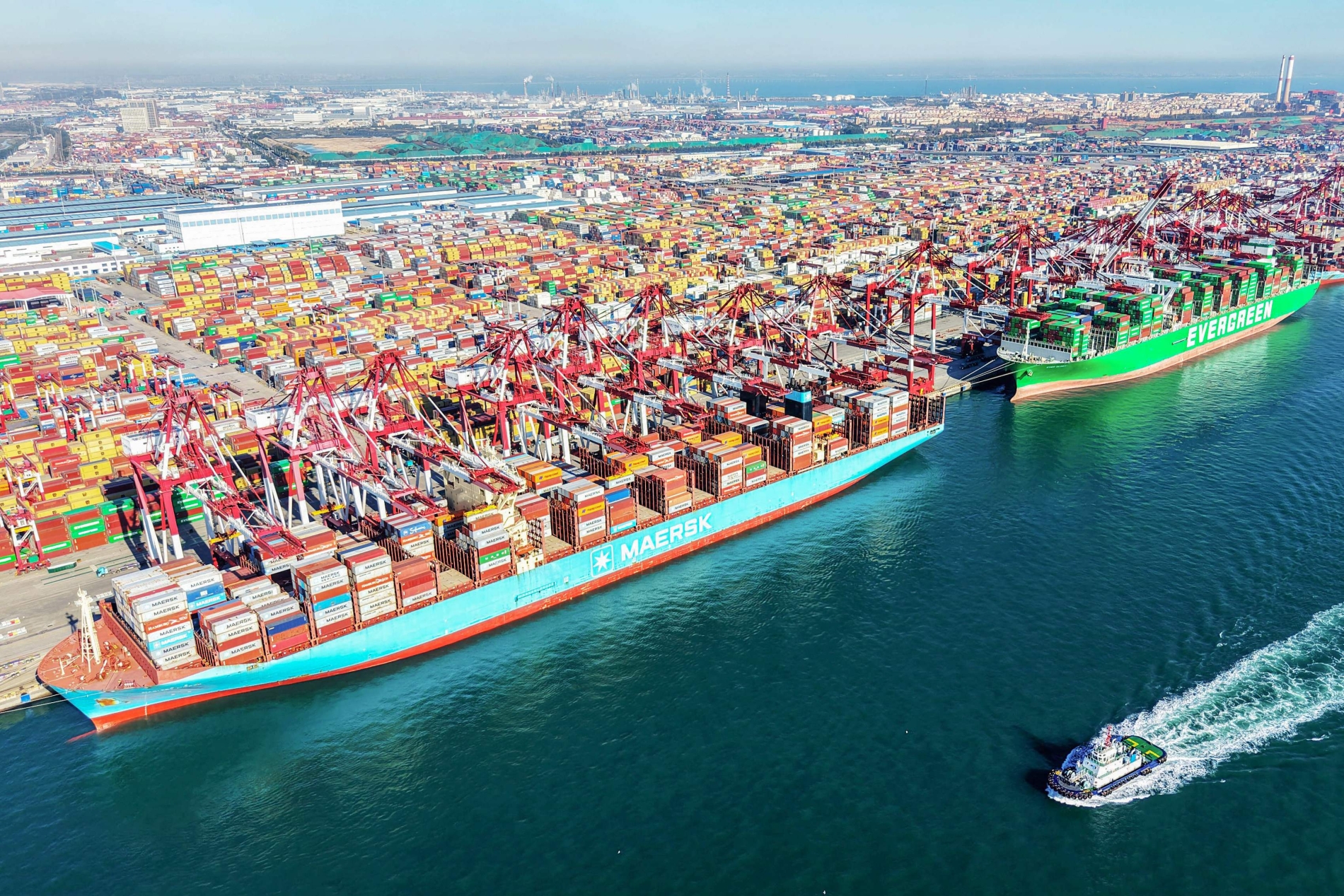
Qingdao Port in Shandong Province, eastern China, on 3 November 2025. Trade relations inform geopolitical realities.

Most critically, China delivers the infrastructure that bypasses potential US chokepoints. For decades, globalisation has created efficient regional economic blocs: East Asia for manufacturing, Europe for services and advanced industries, and Latin America for commodities flowing primarily to North American and European markets. This model is collapsing. China's far-shoring strategy in Latin America creates trans-Pacific economic integration that defies the traditional Atlantic-oriented trade patterns.

For the US, this represents the most significant challenge to its regional hegemony since the Monroe Doctrine's articulation in 1823. For two centuries, American power in the Western Hemisphere rested on geographic proximity, economic integration, and the absence of peer competitors. China's strategy shows that geographic proximity matters less when infrastructure connects Latin America more efficiently to Asian markets than to North American ones. Meanwhile, economic integration favours whoever offers more capital, larger markets, and fewer conditions.

A new era opens

Beijing is not merely contesting America's influence in the Western hemisphere but building alternative frameworks that make Latin American economies less dependent on US-controlled trade routes and financial systems. The context is the end of an era of US-China economic interdependence, shuttered by tariffs, technology restrictions, and mutual distrust. Latin America therefore finds itself in an unprecedented position.

The calculus is no longer straightforward. A country can maintain security cooperation with the US while accepting Chinese infrastructure financing. It can export commodities to China while importing technology from America. It can vote with Washington on human rights at the United Nations while partnering with Beijing on development.

This complexity frustrates American strategists accustomed to alliance structures where economic, political, and security relationships reinforce each other. Yet it reflects the reality of multipolar competition, where middle powers maximise autonomy by refusing exclusive alignment. For Washington, which cannot restore hemispheric hegemony through military threats or economic pressure, the implications are sobering.

Trump's instinct is to confront Chinese influence directly, whether through military threats in Venezuela, or demands that Argentina drive China out, yet these will likely backfire, because coercion creates resentment, which leads states to look elsewhere. At the same time, Washington cannot compete with China dollar-for-dollar in infrastructure financing and building. The fiscal commitments required exceed America's political will.

That means accepting an uncomfortable reality: that Chinese commercial presence in Latin America is in demand and will expand. In a hemisphere where nations exercise genuine strategic autonomy, maintaining relationships with multiple major powers based on interests rather than ideology may serve long-term American interests better than futile attempts to restore hegemony based on legacy.

The same dynamics that reshaped global power through Suez in 1869 and Panama in 1914 can be seen through Chancay in 2024, only this time, the United States is not the architect. China's far-shoring strategy in Latin America will not eliminate the American influence, but the era of Washington dictating Latin America's destiny is over. Influence must be continuously earned, rather than assumed.

Whether American strategy can evolve from the reflexive pursuit of hegemony to the patient cultivation of partnerships will determine not just US power in the region, but the viability of American leadership in an increasingly multipolar world.

font change