Andriy Yermak: Zelensky's chief of staff 'resigns' amid corruption scandal

The abrupt resignation of Ukraine's second-most-powerful man will please Putin, as Yermak had been leading efforts to revise Trump's 28-point peace plan, which critics said was in Russia's favour

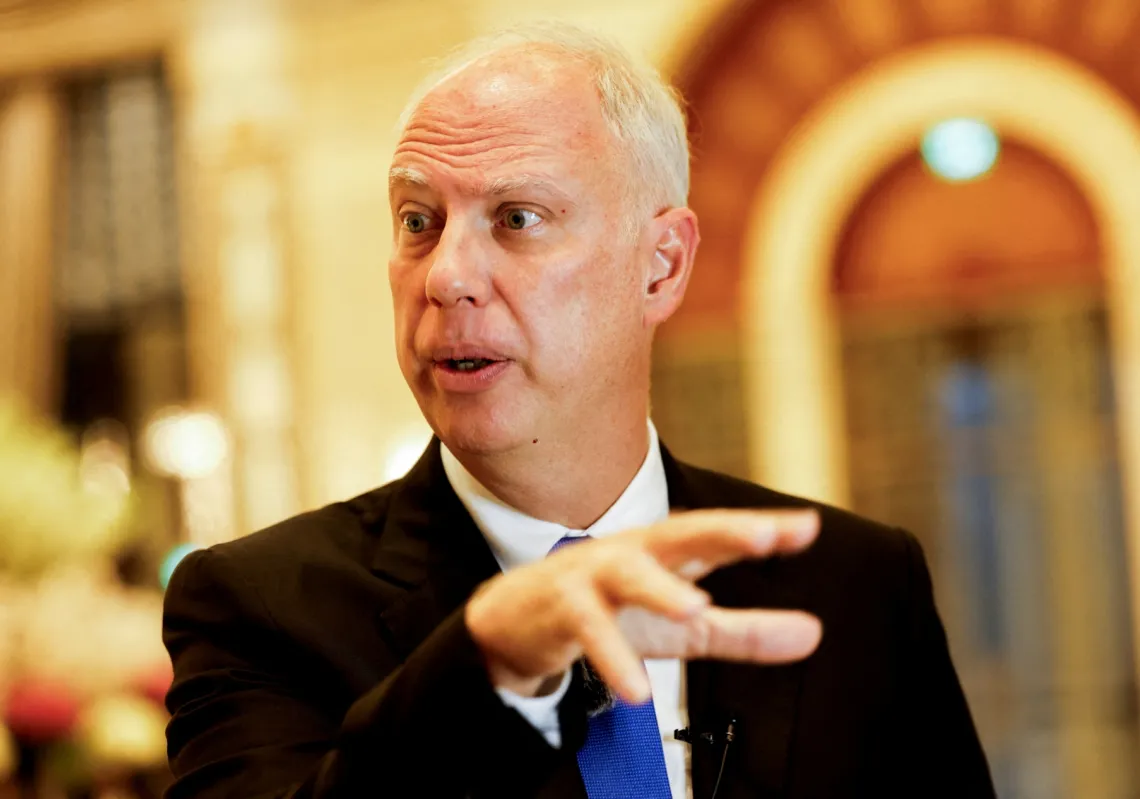
Andriy Yermak, Ukrainian President's chief of staff, looks on during a press conference in Kyiv on 27 August 2024, amid the Russian invasion of Ukraine.
Sergei CHUZAVKOV / AFP
Andriy Yermak, Ukrainian President's chief of staff, looks on during a press conference in Kyiv on 27 August 2024, amid the Russian invasion of Ukraine.

Andriy Yermak: Zelensky's chief of staff 'resigns' amid corruption scandal

With negotiations over Ukraine’s future entering a critical stage, the surprise resignation of Andriy Yermak, the head of Kyiv’s negotiating team and Ukrainian President Volodymyr Zelensky’s closest political ally, represents a major setback in diplomatic efforts to resolve the long-running conflict.

Prior to his resignation in late November over a deepening corruption scandal, the 54-year-old Yermak had played a pivotal role in Ukraine’s efforts to persuade the Trump administration to protect its interests in any future peace deal with Russia.

Before the dramatic announcement that he was resigning as Zelensky’s chief of staff, Yermak had led Ukrainian efforts to persuade US President Donald Trump to revise his 28-point peace plan for ending the Ukraine conflict, which was widely criticised for offering major concessions to Russia. He had been due to fly to Florida for discussions about the latest peace proposals with US officials at Trump’s Mar-a-Lago resort.

Instead, Yermak found he had no alternative but to tender his resignation after his home was raided by anti-corruption investigators looking into a $100mn corruption scandal said to involve senior government officials involved in the country’s energy sector.

After resigning, Yermak announced he would go to the front lines and fight for Ukraine. “I’ve been desecrated, and my dignity hasn’t been protected,” Yermak told the New York Post. “Therefore, I don’t want to create problems for Zelensky; I’m going to the front.”

Yermak’s removal from office came after Ukrainian anti-corruption agencies claimed that officials close to Zelensky were involved in a plot to skim around $100mn from Ukraine’s energy sector.
Reuters
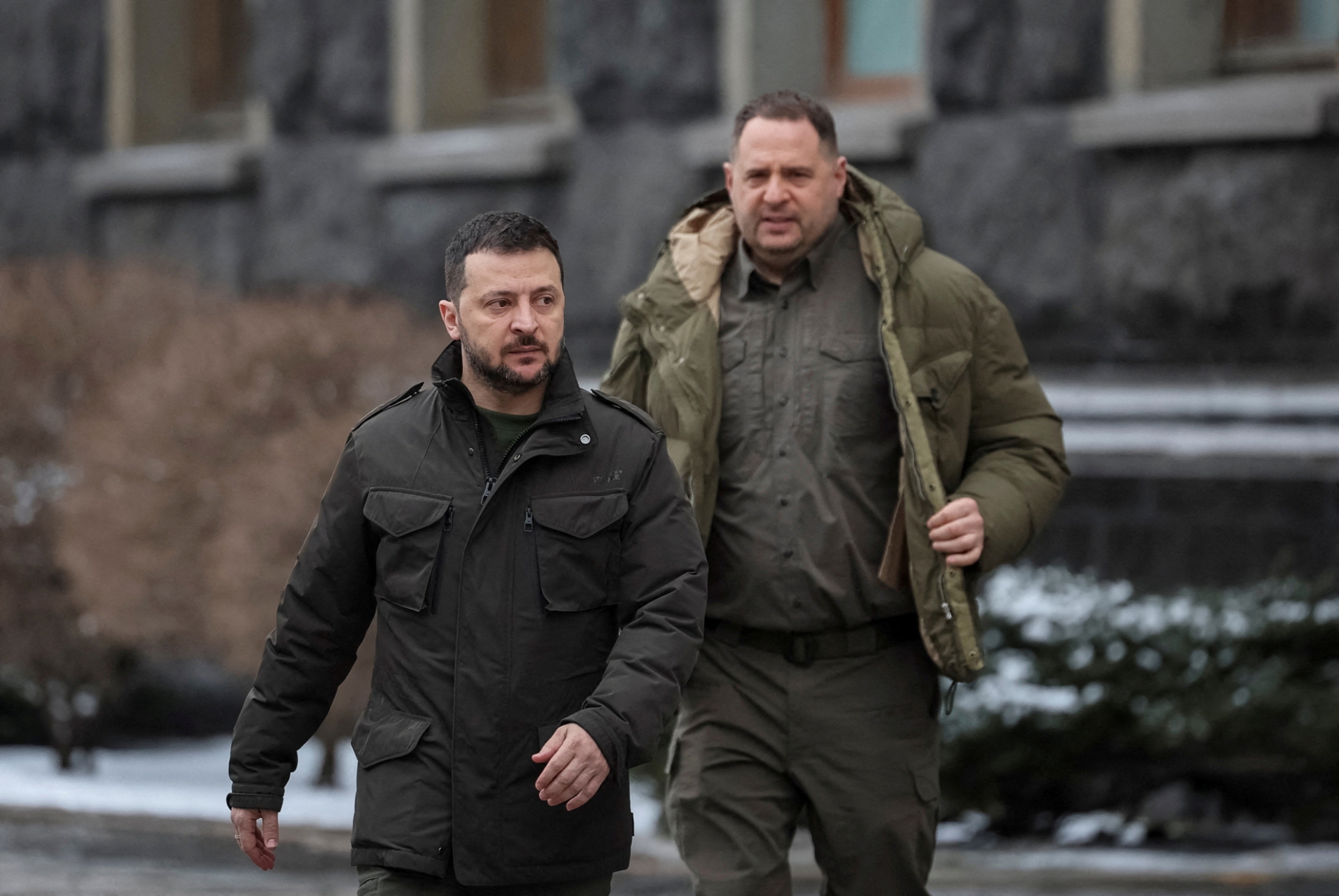
Ukraine's President Volodymyr Zelensky and Head of the Presidential Office Andriy Yermak walk, amid Russia's attack on Ukraine, in Kyiv, Ukraine, on 22 January 2024.

Second-most powerful man

No charges have been brought yet against Yermak, who was seen as the second-most powerful man in the Ukrainian government. The former adviser had played a key role in nurturing Ukraine’s relations with Western allies and had led negotiations with the White House. In his place, Zelensky appointed Rustem Umerov, secretary of Ukraine’s National Security and Defence Council.

Yermak was scathing in his message announcing that he would go fight for his country: “I’m disgusted by the filth directed at me, and even more disgusted by the lack of support from those who know the truth.

“Maybe we’ll see each other again. Glory to Ukraine,” the former powerbroker added in his signoff.

Despite the acrimony surrounding Yermak’s fall from grace, Zelensky paid tribute to his efforts in seeking to negotiate a deal to end the war.

“I am grateful to Andriy for the fact that the Ukrainian position in the negotiation track has always been presented by him exactly as it should be. It has always been a patriotic position.”
There was a feeling that Yermak was becoming more of a liability than an asset in Kyiv's attempts to secure an acceptable deal to end the conflict

Yermak's fall from grace is certainly a bitter blow for the Ukrainian president, who has already lost two ministers and been forced to impose sanctions on close associates after anti-corruption bodies revealed that millions had been embezzled from the state-run nuclear energy company Energoatom. Investigators had secretly recorded conversations between senior officials, uncovering a scheme to skim £100mn from Energoatom.

Before his resignation, Yermak reaffirmed Kyiv's long-held position that it will not cede land to Russia in any future peace deal. "As long as Zelensky is president, no one should count on us giving up territory. He will not sign away territory," he told The Atlantic magazine.

The implications of Yermak's removal were felt in Washington, where Trump conceded the corruption scandal engulfing Ukraine's government was "not helpful" to ongoing peace talks. "Ukraine's got some difficult little problems", said Trump, referring to Yermak's resignation. Meanwhile, Russian President Vladimir Putin said the scandal raised questions about whether Zelensky could still participate in future peace negotiations.

Having served as head of Zelensky's presidential office for well over five years—long before Russia's full-scale invasion of Ukraine in February 2022— Yermak's resignation is certainly a bitter blow for the Ukrainian leader. 

Reuters
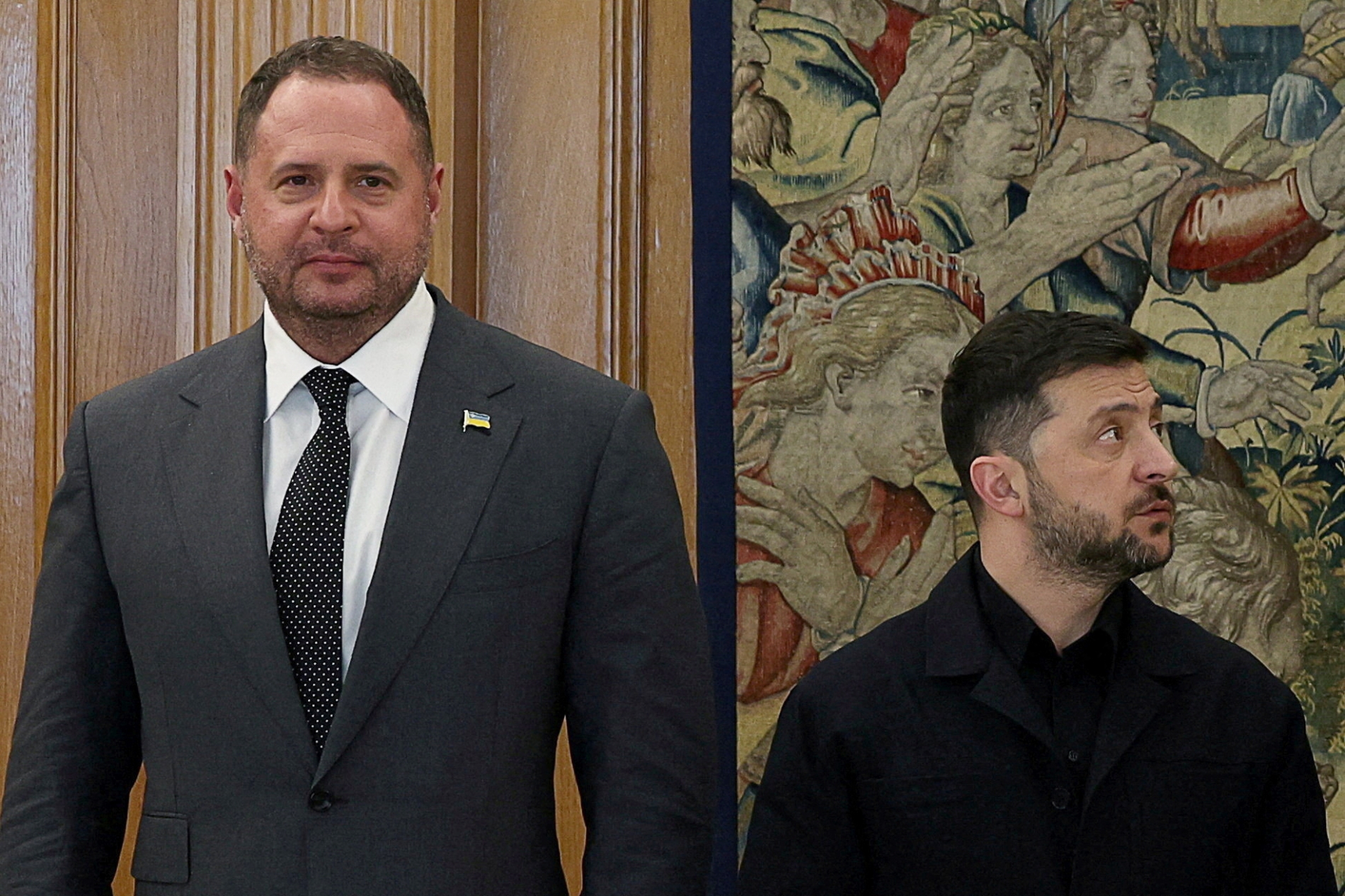
Ukraine's President Volodymyr Zelenskiy and Head of the Office of the President of Ukraine Andriy Yermak in Madrid, Spain, 18 November 2025.

Early life and career

Born in November 1971 in Kyiv, when Ukraine was still part of the Soviet Union, his father, Borys, met his mother, Maria, on a school trip. After studying at Kyiv's Taras Shevchenko National University's Institute of International Relations, he took a master's degree in international private law. After establishing his own law practice, he branched out into film production.

Zelensky first befriended Yermak in 2011, when the latter was working as both an entertainment lawyer and a film producer, and both men worked for the same television station.

He later appointed Yermak as head of Ukraine's presidential office in 2020, where the lawyer's communication and negotiation skills quickly made him a leading behind-the-scenes figure within the administration.

Yermak promptly assumed a key role in the administration of the war-battered country in 2022 and helped to shape an international alliance in support of Ukraine.

Russia's full-scale invasion of Ukraine only deepened the pair's relationship. In the early weeks of the war, when Kyiv was almost encircled, they slept just feet apart in the presidential bunker, working side by side during the day. Yermak reportedly became Zelensky's most trusted ally and only real confidant.

REUTERS
Ukrainian President Volodymyr Zelensky and Presidential Office Head Andriy Yermak attend a meeting with US Special Envoy for Ukraine Keith Kellogg, in Rome, Italy, on 9 July 2025.

Wildly unpopular

For an unelected official, Yermak quickly amassed enormous power, consolidating his influence by handling both domestic and foreign affairs. His rapid rise to power made him an unpopular figure in Ukraine, where he was accused of centralising power around the presidency and undermining the country's democratic institutions. He was responsible for appointing the prime minister and ministers, heads of state agencies, and asserting control over areas of law enforcement. This led opponents to claim that he was sidelining parliament to concentrate power in the executive branch.

By 2024, Yermak's all-encompassing influence in overseeing all aspects of the Ukrainian government led Time magazine to include him on its annual list of the world's 100 most influential people. Zelensky's name was not included in the list.

The roots of Yermak's downfall lie in last summer's anti-corruption protests, which took place in Kyiv and other Ukrainian cities in protest at Zelensky's ill-judged attempt to pass a law neutering Ukraine's two main anti-corruption agencies—the National Anti-Corruption Bureau of Ukraine (NABU) and Special Anti-Corruption Prosecutor's Office (SAPO).

The move drew condemnation from Western allies and sparked anti-government protests throughout the country. "Sack Yermak! Sack Yermak!" shouted demonstrators in Kyiv.

The protests, together with the widespread global condemnation of his actions, forced Zelensky to reverse course and restore the agencies' independence.

Yermak's rapid rise to power made him an unpopular figure in Ukraine, where he was accused of undermining the country's democratic institutions

Fall from grace

Public concerns about rampant corruption in Ukraine appeared to be confirmed in early November when NABU announced that a high-powered clique of Ukrainian officials with close ties to Zelensky had embezzled $100mn from the country's energy sector.

Apart from taking lucrative kickbacks from government energy contracts, the clique was accused of undermining the defensive fortifications of the national electrical grid, thereby enabling Russia to plunge the country into prolonged blackouts by attacking Ukraine's national infrastructure.

Another factor contributing to Yermak's demise was the possibility that allegations of his involvement in Ukraine's corruption scandal could undermine Kyiv's efforts to strike a deal with the Trump administration to end the war.

Many in Ukraine believed that Trump's willingness to make major concessions to Russia, which would result in Ukraine surrendering territory to Moscow, stemmed from the Trump administration's view that Kyiv was not in a strong position to make demands. As a key member of Zelensky's negotiating team, there was a feeling that Yermak was becoming more of a liability than an asset in Kyiv's attempts to secure an acceptable deal to end the conflict.

Jared Kushner, Steve Witkoff, Marco Rubio, and Daniel Driscoll hold closed-door talks with Head of the Office of the President of Ukraine Andriy Yermak (not pictured) on ending Russia's war in Ukraine, in Geneva on 23 November 2025.

The other consideration Zelensky had to take on board was that any deal agreed by Yermak would have been difficult to sell to the Ukrainian people, whose trust in his ability to secure an agreement that represented their interests had been diminished by the corruption scandal.

In such circumstances, while Yermak's removal from high office is certainly a major setback for Zelensky, in the long term, it could help the Ukrainian leader to secure the backing of his people for any future peace deal with Russia.

font change