A new update lets users see where an account is based, when it was created, and how often it has changed. Suddenly, highly political ‘locals’ are being exposed as frauds.
Recent changes to social media platform X have caused quite the stir among its users. It came after the platform introduced a new update that reveals detailed information about user accounts, including when the account was created, where the user is based, and how many times the user has changed their username.
For users, it is a striking change that has stirred significant debate. For the company, it is a way to enhance transparency and boost the credibility of its content. Either way, it has kick-started a wide-ranging discussion around user privacy and the accuracy of the platform’s geographic data.
Questions have emerged concerning the boundaries of online disclosure. While X says its aim is to combat fake accounts and provide clearer context around content, others think the change presents potential security risks and could lead to the unwanted tracking of users, particularly in politically or socially sensitive regions.
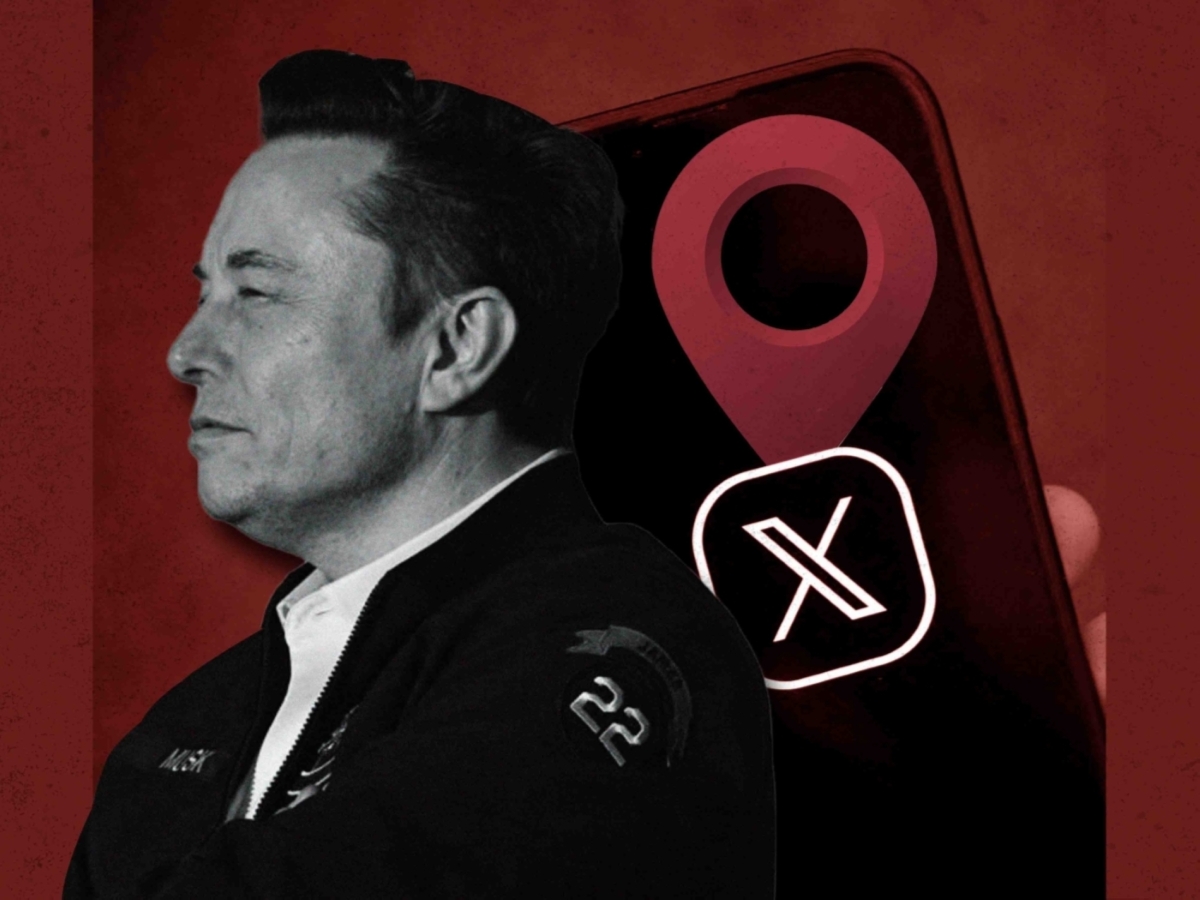
Since taking over Twitter and rebranding it as X, Musk has embraced a vision rooted in radical openness, as he seeks to build a freer, more transparent digital space that is less vulnerable to manipulation and deceit. He believes that freedom of expression should not be restricted and that X should not prevent anyone from expressing an opinion, no matter how controversial. But he also recognises that this freedom must be exercised within an environment where identities and sources are visible, allowing users to know who is behind each account and where they are based.
This move prevents hidden actors from operating in secrecy or manipulating the public behind a veil. In other words, some may still use X to deceive, but Musk wants users to have the information to help them work out when that might be the case.
Transparency campaigners hope that disclosing a user’s location will be a tool for exposing accounts that build their presence on distorted identities or misleading geographies, particularly in political debates. This approach is aligned with the community-based fact-checking feature, which, over the past two years, has become one of X’s central tools for filtering information.
The transparency update is a blow to the 'digital armies' employed by political entities, security agencies, lobbyists, and media companies
Collective correction
Instead of relying on traditional methods such as deleting posts or banning users, the platform now publicly attaches corrective notes to posts that contain misleading or incomplete information. In this way, falsehoods are not erased but revealed to everyone and addressed through collective correction, which redefines the relationship between publishing and accountability. It makes the exposure of falsehoods part of the debate, rather than an exercise in private enforcement.
The transparency update is the latest Musk-inspired change since he bought the company for $44bn in 2022 and fundamentally reshaped the platform's identity. He binned the traditional verification system, which relied on internal, selectively applied reviews, a and replaced it with a subscription-based mechanism linked to a verifiable identity via a phone number or an approved payment method.
He also tightened restrictions on accounts that use deceptive data or engage in illicit automated activity, and ended free access to the platform's application programming interfaces (API), which had served as daily fuel for thousands of bots. This led to a significant decline in anonymous and cross-border activity. To further increase transparency, a view counter was added to each post to reveal actual engagement levels and reduce the creation of artificial momentum.
X users pose for a picture next to the company's logo.
Heavy blow
The recent transparency update is a heavy blow to the kind of 'digital armies' employed by political entities, security agencies, lobbyists, and media companies. In short, it turns their operating model on its head. For years, actors with a political agenda enjoyed the fact that their location was hidden. They often posed as internal, domestic, or grassroots voices when, in fact, they were based thousands of kilometres away, wading into local debates from a digital control room whose activities were being centrally coordinated, sometimes from a foreign government.
If a user opposes the policies of a particular country and is physically located within that country, they can be seen as a credible and authentic voice, but if they are in fact from a distant foreign state, this discredits them as authorities on the relevant subject matter and exposes the political agendas of the foreign actors.
The impact has been immediate. The new tool revealed that some accounts soliciting donations and claiming to be from those in the Gaza Strip were in fact being operated from abroad, which has shocked donors in the West. In the US, President Donald Trump's 'Make America Great Again' (MAGA) movement was also left in shock after accounts that had long portrayed themselves as conservative American voices from the heart of the country were revealed to be from India, Nigeria, and Eastern Europe.
While this update does not sound the death knell for digital armies or coordinated campaigns, it does strip these actors of the anonymity that was such a crucial enabler for so long. The geographical location feature has quickly become a tool of collective verification in the hands of the public, who expose deceptive accounts.
Geographic location feature on social media
Broader implications
There are broader implications for digital discourse and media policy. At one level, the change enhances transparency in public debate by allowing users to understand where in the world any political, social, or ideological stance is expressed. This weakens the ability of external actors to fabricate false 'public' opinion or manipulate local discourse. Yet despite these benefits, the update also raises a more sensitive issue concerning privacy and personal safety.
In states where freedom of expression can pose problems for those exercising it, or where dissent carries legal or social repercussions, users may feel that revealing their account's country of origin could expose them to risk. In some cases, the need to protect their identity may override their desire to speak out. This could have the adverse effect of stifling the very speech Musk aims to encourage.
While there is a balance to be struck between transparency and safety, in general, audiences will be more alert to politically-motivated content originating abroad and place greater trust in accounts genuinely connected to the environments they comment on, which may lead to a decline in the spread of misinformation. If the update proves effective, it could prompt other social media platforms to follow suit.
X is an anomaly in the social media landscape: it is the only platform built on the principle that society itself should reveal truths and expose falsehoods
A social media anomaly
Yet X is an anomaly in the social media landscape: it is the only platform built on the principle that society itself should reveal truths and expose falsehoods, rather than relying on algorithmic censorship or internal moderation teams. Under this model, speech is not deleted, and debate is not suppressed. Instead, misinformation is allowed to surface so that it can be publicly corrected through tools such as community fact-checking, location visibility, and view counters.
By contrast, platforms such as Facebook, Instagram and YouTube operate according to a fundamentally different philosophy. Certain words and phrases trigger immediate removal, while certain topics are categorised as unsuitable for circulation, even when they form part of public discourse. For these platforms to follow the X model, they would need to completely restructure their identities and moderation systems.
Although the X update is still new and being debated, a significant number of accounts with large followings and a history of engaging in politically sensitive discussions are being shown as operating from locations that do not align with the user's narratives. This could quickly and fundamentally alter the way the public understands digital debate, and may redraw the map of influence and power across social media.