50 years on, Hannah Arendt's works resonate more than ever

The renowned German-American philosopher's analyses showed how governments deploy deceit for political gain and blur the lines between truth and lies

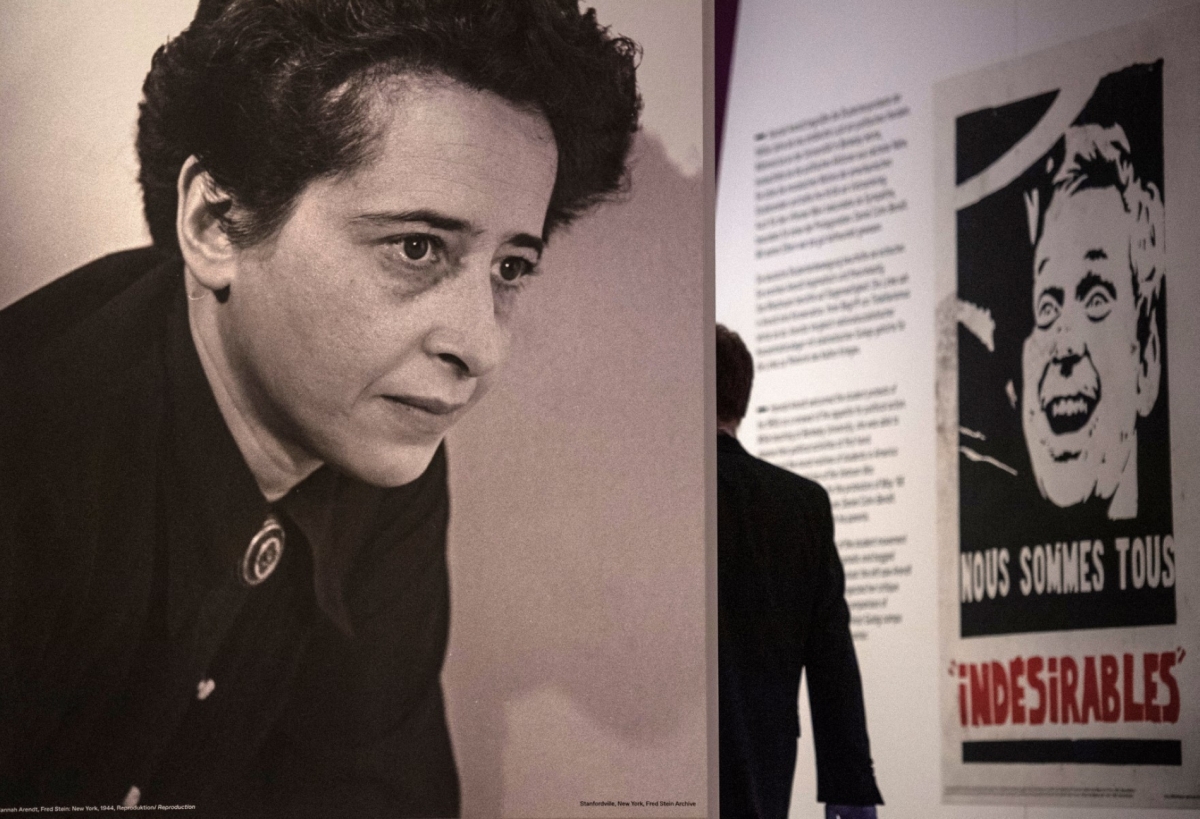
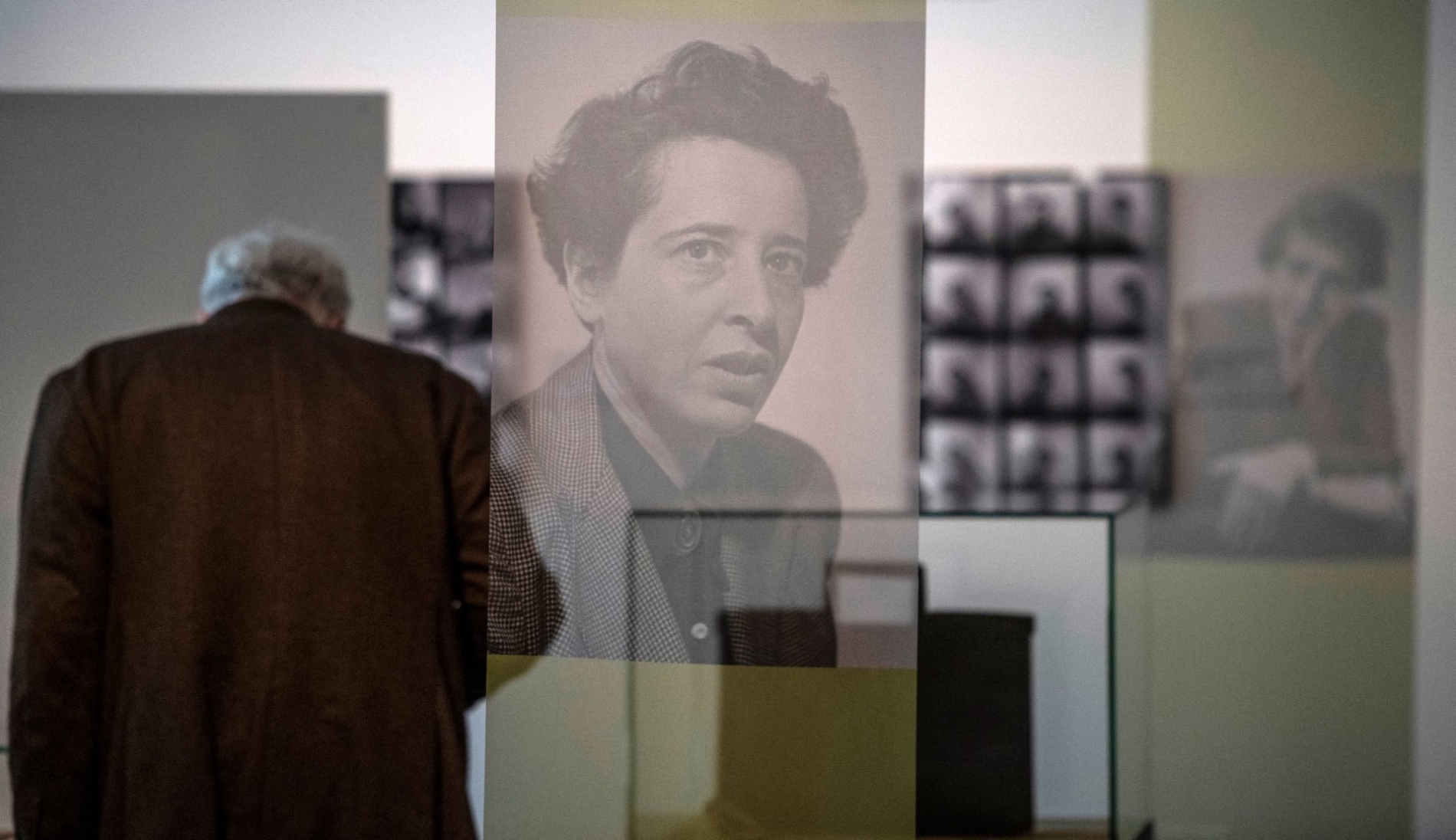
A visitor stands next to a photograph of German-American philosopher Hannah Arendt at the German Historical Museum in Berlin on 6 May 2020.
John MACDOUGALL / AFP
A visitor stands next to a photograph of German-American philosopher Hannah Arendt at the German Historical Museum in Berlin on 6 May 2020.

50 years on, Hannah Arendt's works resonate more than ever

Today marks 50 years since the passing of German-American philosopher Hannah Arendt, whose analyses of totalitarian regimes provided an exact portrait of politics and ideology in the 20th century and beyond. Their ways of thinking and acting were examined in rich and vivid detail, especially in works such as The Origins of Totalitarianism, The Human Condition, On Violence, What Is Politics, and Eichmann in Jerusalem.

After the 1971 publication of the US Department of War’s secret documents on the Vietnam War, known as the Pentagon Papers, Arendt turned her attention to the functions and uses of falsehood. Those papers had exposed the lies of the Lyndon Johnson administration. She observed that secrets—what diplomatic language terms the hidden workings of power, its puzzles and deceits, as well as deliberate distortion and sheer fabrication—had been present throughout history.

Truth had never constituted a political virtue. For this reason, Arendt held that viewing politics through a truth-centred lens places us outside history. On this basis, she urged us to view politics from the perspective of falsehood, which, in political affairs, is considered a legitimate means.

Falsehood is a familiar tool in the hands of rulers and a recognised device among diplomats. In this sense, it has always been regarded as permissible.

A reality subordinated to ideology

In the 20th century, falsehood underwent a transformation in its very nature. According to Arendt, it had previously concerned only those who had not sought to deceive the entire world. It aimed only to alter partial events. It had consisted of scattered holes in the fabric of facts. It had not amounted to a distortion capable of transforming the entire context within which events occur.
John MACDOUGALL / AFP
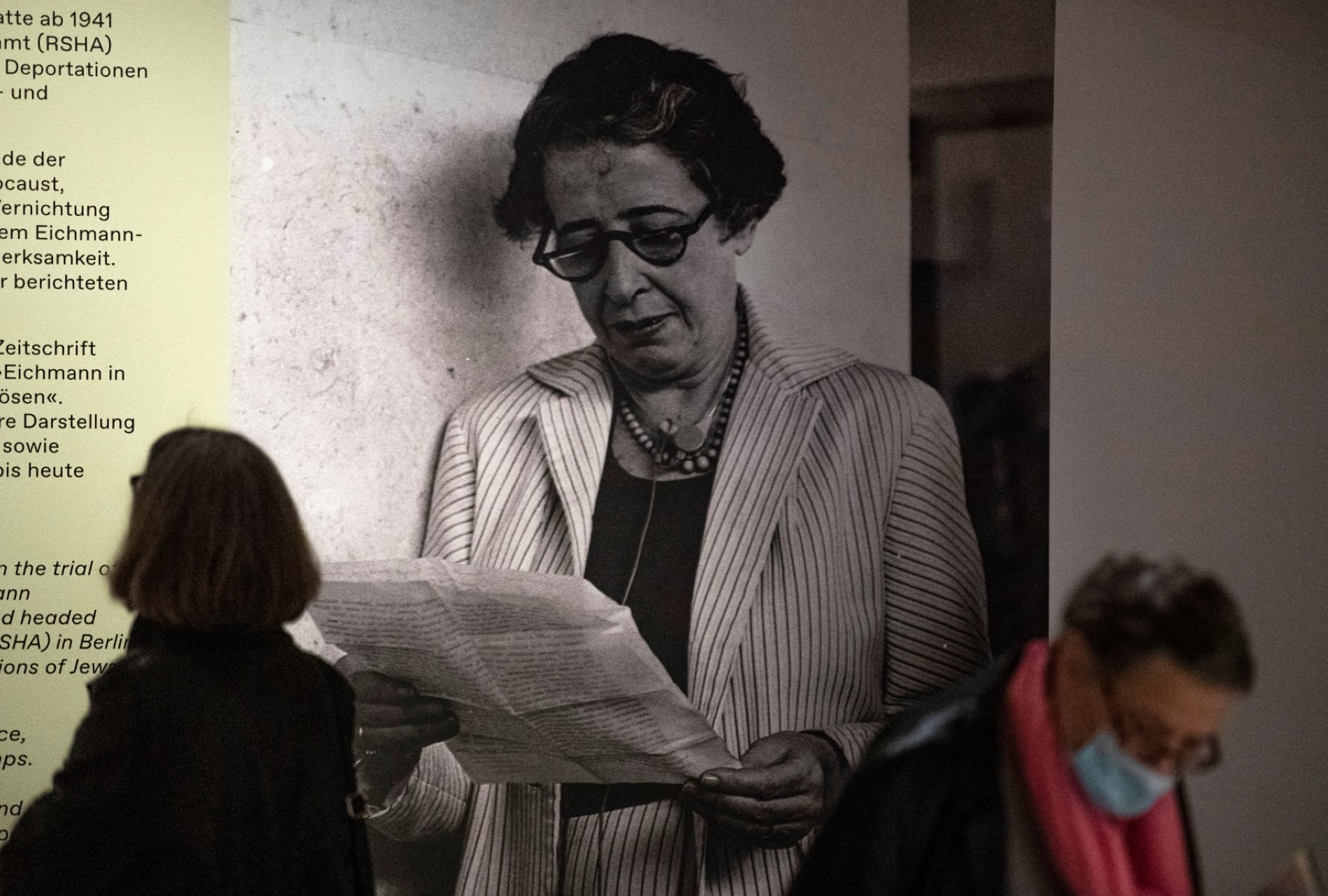
A visitor stands next to a photograph of German-American philosopher Hannah Arendt at the German Historical Museum in Berlin on 6 May 2020.

With the emergence of totalitarian regimes, however, falsehood expanded in scope. Reality as a whole became wrapped in propaganda and subordinated to, and moulded by, ideology. Anything that refused such subordination was set aside and eliminated. In contrast to the limited falsehood once practised by diplomatic channels, which took into account confidentiality and the nuances of deception, falsehood was enacted openly before all, even in relation to events whose factual nature was scarcely hidden from anyone.

Among the transformations that falsehood underwent was the use of truth itself. Arendt pointed to what she described as a distinctly Machiavellian technique mastered by Adolf Hitler. He would state the truth, knowing that anyone unfamiliar with the hidden meanings or codes behind his words would dismiss them as unbelievable or irrelevant. This amounted to a conspiracy conducted in broad daylight. Arendt often considered this to be the clearest expression of the falsehood that defines our age—telling the truth in a way that deceives people who assume they do not need to question or distrust it.

She believed this contemporary form of falsehood transcended individual and moral domains. It was collective and political, leaving its imprint on history. Modernity may be linked to this radical transformation of the nature of falsehood, especially political falsehood, for it no longer functions as a cover concealing truth. It has become a final obliteration of reality and a practical destruction of its original documents and records.

Falsehood thus ceased to be the concealment of truth. It became the eradication of truth. It ceased to be a historical ruse. It became a ruse practised upon history. Perhaps the most widespread mechanism of falsehood in this regard is the turning of history into myth; the extraction of an event from its circumstances so that it becomes an endlessly repeated beginning, a memory that continually revives and persists.
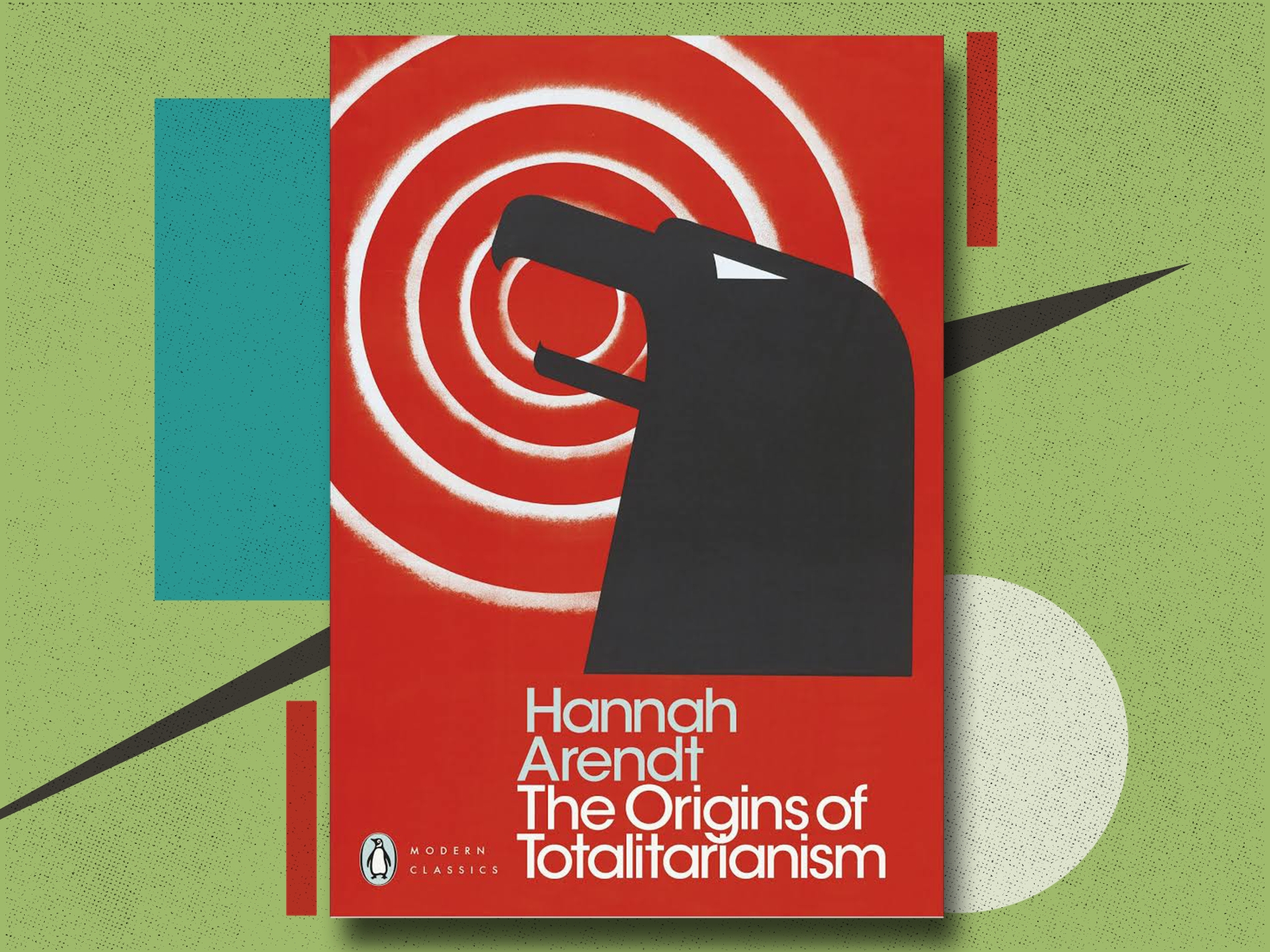
The cover of Hannah Arendt's book 'The Origins of Totalitarianism'.

‘Legitimate’ falsehoods

Arendt went further than merely describing how totalitarian regimes falsified facts, implanted falsehoods, and contrived to outwit history. She spoke of the lies regarded as necessary and legitimate instruments in the service of political actors, regardless of the systems within which they operate. Such lies enable these actors to interpret events in accordance with the dictates of the moment and the demands of circumstance.

Falsehood can afflict democracies, too. Even in what is termed the ‘free world’, entire nations can be steered by a web of deception. In this respect, it is essential to note the role of the media, and both official and unofficial propaganda, in colouring historical events to suit need and circumstance, opening the way for comprehensive falsehood. It is a danger born of the modern management of facts—a danger applicable to democratic systems as much as to totalitarian ones.
Falsehood is no longer a deliberate technique pursued with prior intention. It operates within reality and distorts it.

For this reason, education in such systems works to eliminate the capacity to distinguish between right and wrong and between reality from imagination. Gradually, narratives, images, and fabricated 'counter-facts' supplant actual reality.

The contemporary liar is a professional liar, meaning they are lying about facts and, ultimately, to themselves. Falsehood is no longer a deliberate technique pursued with prior intention. It operates within reality and distorts it. However, liars can quickly fall victim to the narratives they weave, as falsehood do not confine themselves to words and discourse. They are embodied in images, too.

John MACDOUGALL / AFP
A visitor stands next to a photograph of German-American philosopher Hannah Arendt at the German Historical Museum in Berlin on 6 May 2020.

The 'credibility' of falsehood

Here we must underline the role played by images in imparting an aura of credibility to operations of deceit. For Arendt, the age of the image was accompanied by an obsession with immediate reality and acquiring what may be termed a credibility that feels empirically proven. 

In the age of the image, those who venerate transparency have abandoned every ideal that might act as a source of restraint or obligation. Such a person turns inward, distancing themself from any openness to the outside world, content with the narrowness of their worldview and clinging to familiar representations that cleave most closely to immediate reality. In this way, falsehood can take the place of truth and assume its guise. The result of replacing truth with falsehood is not that the false is accepted as true, nor that truth becomes false, but that the meaning by which we navigate the real world is demolished and eradicated.

This mechanism finds fertile ground in democratic systems founded upon the expression of opinions. All opinions in such systems have the right to be expressed. Contrary to the Greek philosophers, Arendt holds that the initial opinion plays a fundamental role in political life. The sharing and exchange of opinions is what weaves the common world. It is tied to plurality. It refers to events and facts involving many people. It finds its grounding in witnesses and exists only insofar as it is the subject of speech and discourse. It is political by nature. Hence, although we must distinguish between facts and opinions, they are not in conflict. They belong to the same sphere. 

Facts are the material of opinions, and opinions are admissible so long as they respond to facts. The exchange of views rests upon a logic of equality, the logic of politics, whereas factual truths do not rest upon that logic but impose themselves upon us. Facts surpass agreement and consensus, and any debate concerning them has nothing to do with their existence.

We are free in our opinions, but an opinion acquires meaning only in its relation to a fact. This does not eliminate the tension between factual truth and our opinions about it. Herein lies the danger of opinions dispensing with recourse to facts and attempting to mould, adapt, or even distort them. When the truth of facts is obstructed or absent, public debate loses its foundation and point of reference. 

John MACDOUGALL / AFP
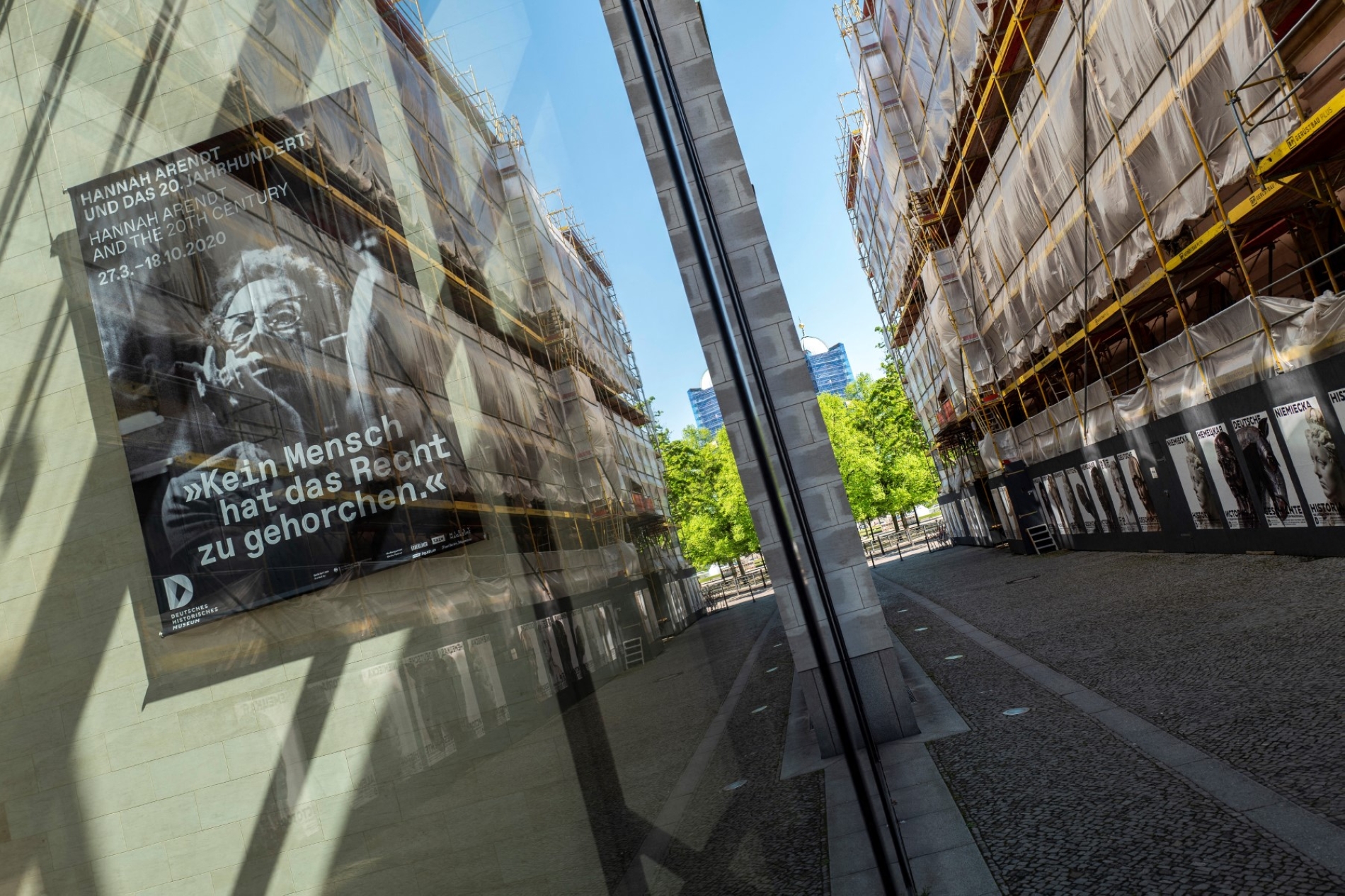
A poster advertising the exhibition "Hannah Arendt and the Twentieth Century" hangs in Berlin on 6 May 2020.

Between reality and truth

This is precisely what Arendt discerned in contemporary societies. No previous age permitted such an abundance of opinions on religious or philosophical matters, yet reality encountered a degree of hostility greater than ever before. The masses no longer placed their trust in sight or hearing. They surrendered instead to an imagination captivated by whatever appeared general, overarching, and coherent. 

Falsehood thus becomes more seductive and appealing than truth itself, especially since the liar enjoys prior knowledge of what the public desires and expects to hear. Their lies are crafted with the public in mind, and their credibility is therefore anticipated. Facts, by contrast, confront us with the unexpected and the unforeseen.

Arendt concluded that truth and falsehood are no longer opposites. Once falsehood has inundated collective life, the two become blended categories. The result of this blending is confusion between reality and truth. This, in her view, was what distinguished fascist propaganda. Its essential feature did not lie in its falsehoods, for lying is common enough in propaganda everywhere and at all times. What fascist propaganda exploited above all was the old Western bias that conflates reality with truth. This bias allowed what had hitherto been deemed impossible and dismissed as false to appear correct.

Arendt concluded that truth and falsehood are no longer opposites. Once falsehood has inundated collective life, the two become blended categories.

For this reason, Arendt believed that any argument against fascism—any so-called counter-propaganda—was futile. She wrote that the situation resembled debating with a potential murderer whether their future victim was alive or dead, while entirely forgetting that a human being is capable of killing and that the murderer—by killing the person in question—can at any moment prove their claim correct. 

These mechanisms did not disappear in democratic systems. They merely assumed less crude forms. While totalitarian regimes exercised overt violence upon truth, contemporary democracies developed subtler techniques. Falsehood no longer needed the furnaces that consumed documents. It relied instead on the flood of media that drowns truth without burning it. 

When truth is submerged, and everybody lies to you continuously, the result is not that you end up believing those lies. It is that neither you nor anyone else will trust anything. A people that trusts nothing cannot form an opinion. It becomes bereft not only of the capacity to act but even of the ability to think and judge. Such people can be shaped in whatever way one desires. 

John MACDOUGALL / AFP
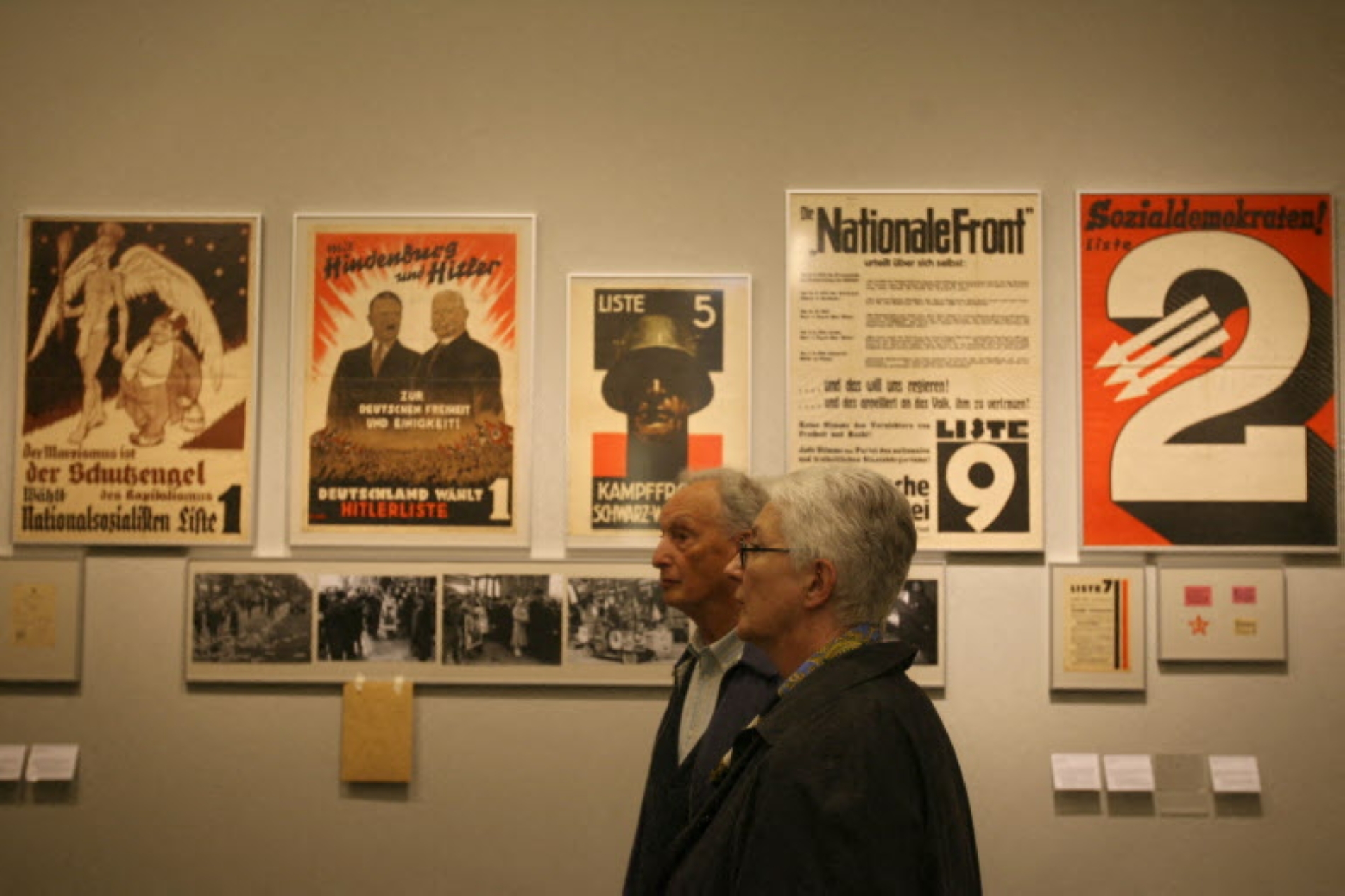
Visitors look at Nazi propaganda posters of the 1930's on display at the German Historical Museum's permanent exhibition entitled "German History through Pictures and Witnesses" at the museum in Berlin 1 June 2006.

The 'innocuous' falsehood

Here, falsehood no longer requires noise, deceit, or concealment. It becomes a peaceful, democratic falsehood, a smooth falsehood that needs neither the destruction of documents nor the burning of records nor even a definitive sentence upon reality. It contents itself with clinging to the present moment, fragmenting events and dissolving them into partial occurrences stripped of meaning.

In contemporary life, this has come to constitute an innocuous-seeming falsehood that appears not to need the destruction of reality but is satisfied with dissolving its significations. Falsehood seems no longer to eradicate truth but to eradicate meaning. We are no longer incapable of believing or disbelieving what occurs. We have become incapable of understanding and absorbing it because, as Arendt observed, we have metaphorically lost both our sight and our hearing.

This is precisely the new form of falsehood that we have come to experience. It is entrenched in modern media, which replace the thing itself with its substitute, render reality absent, and pursue the development of events to make them a perpetual present, a constant and unending immediacy, a sequence of partial events that constantly succeed one another. It leaves us unable not only to distinguish truth from falsehood but even to distinguish things from their substitutes, to discern meanings, and to grasp significance.

font change