
 [/caption]
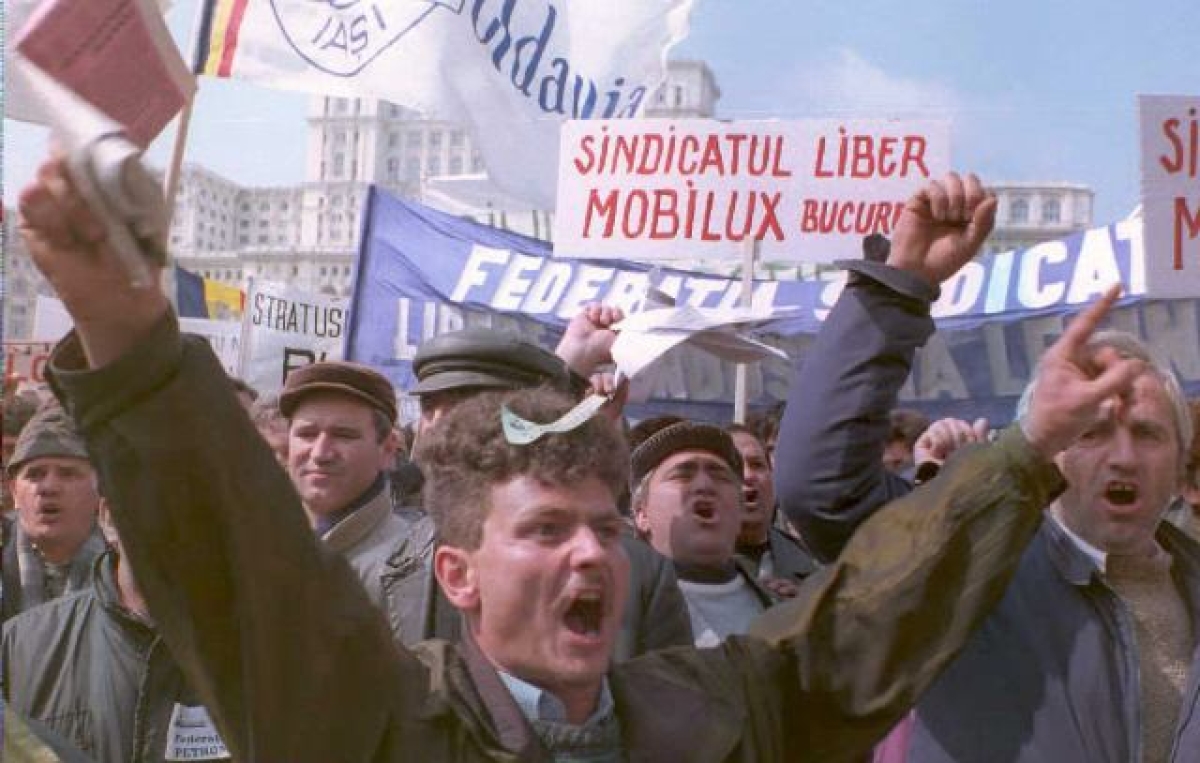
On first look, the revolts sweeping across some of the Arab countries appear to be a new chapter of the wave of democratization that emerged in Eastern Europe in 1989. Previously disenfranchised and politically suppressed people are rising up not only against their rulers, but also against the elites and structures through which they were dominated and kept under guard. In 1989, the people of Eastern Europe were rebelling against a system that tightly controlled them and left them in a stagnant position both politically and economically. The malign outside forces that had so long justified the Soviet regime’s rule and suppression were no longer seen as the enemy, and so the uprisings that took place brought out on the streets the long silent majorities.
The sense of frustration and stagnation, of corruption and nepotism, of an illusion that could no longer be sustained, had been brewing in small private gatherings for a long time, both in the period before 1989 and 2011. When the pressure had reached a high point the ruling elites in Eastern Europe decided to either abandon the sinking ship or to try to stand their ground by bringing the army out of their barracks. In 1989, in a number of countries the people were able to drive a wedge between the rulers and their henchmen, and the same is found in 2011.
Yet despite these similarities there are profound differences: For the people in Eastern Europe in 1989 there was a great idol, an existing and radiating example they had in view—the liberal capitalist democracies of Western Europe. From blue jeans to rock n’roll, bananas and Hollywood, free elections and the aspiration to a middle class life with a house, a car and foreign travel. Here was a way of life that worked as an example for the people.
In 2011, this is absent. There is no great example that can serve for the people of Tunisia, Egypt, Libya or Syria and many other countries in the Arab World. The liberal democracies of Europe are seen as decadent and lacking a cultural and religious unity; their political systems are seen as corrupt and focused on the same moneymaking interests as the Arab regimes they so happily dealt with for the sake of “stability.”
Justice—socially, economically, and politically—is the demand so often heard in the current revolts. But there is no society that can serve as a guide on how to reach those grand aims. On second look, the ideals of the Arab Spring in 2011 are so very different to those of Eastern Europe in 1989, that it does not make sense to see the current uprisings and their aftermath as the Arab World’s 1989.