




With $175bn worth of annual business between the two blocs, a free trade deal seems only sensible, yet visas and vested commercial interests remain obstacles.
Set to the stunning backdrop of AlUla, Norah by Tawfiq Al-Zaidi has broken new ground for Saudi cinema with a story about two people who inspire one another.
Filmmakers are being adventurous, and production quality is superb, but the tendency to over-indulge has lessened the impact of some Saudi films. Still, the future is bright.
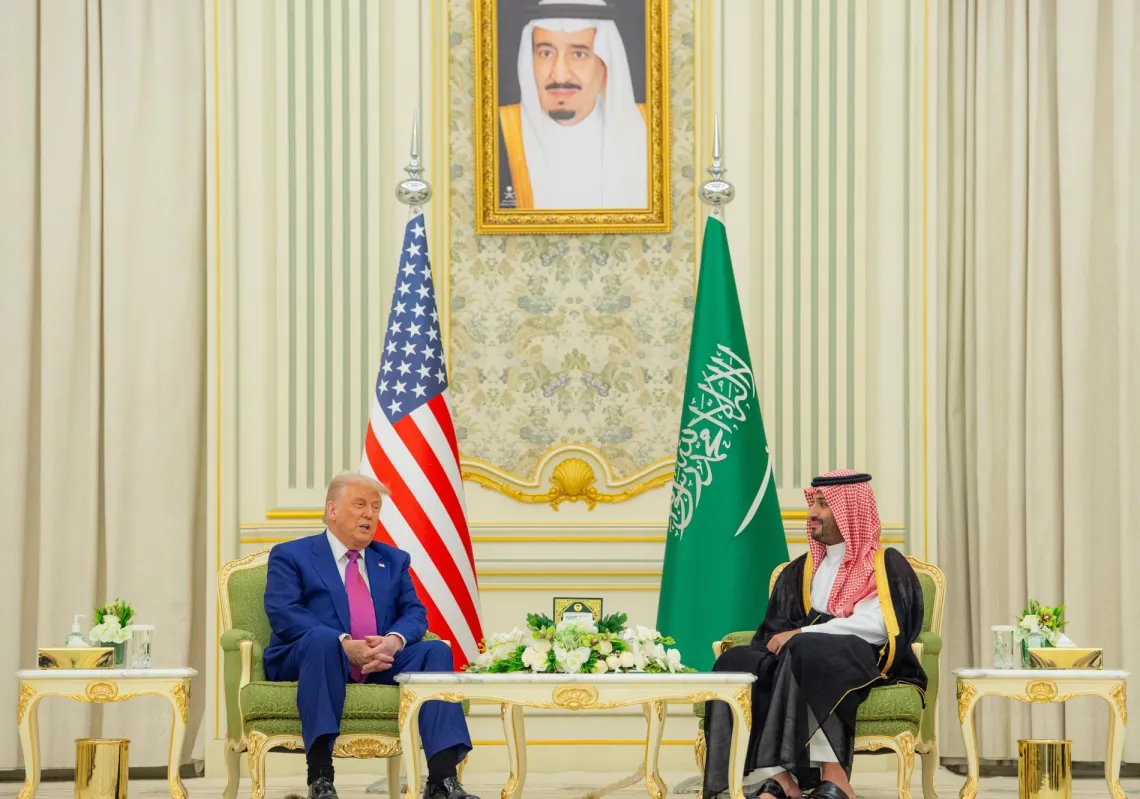
Ahead of a possible US-Saudi defence agreement, it is worth remembering Roosevelt reassured the Saudi king over Palestine, only for Truman to renege on it two years later.
The Saudis have outlined their conditions for a true and binding pact. Such a pact is highly unlikely, not least because of the current US political atmosphere and the issue of US-Saudi mistrust.
News of a $40bn fund in collaboration with Silicon Valley and Wall Street will places Riyadh among the leading riders in the race for dominance in an AI-driven future.
The Kingdom has seen visitor numbers grow but its ambitions are much bigger and broader. Plans to open its doors and sites come with a massive $800bn investment set to boost the sector.
Saudi Arabia's new approach that looks after its own interests seems to be paying off. China has been pivotal in getting regional players to cooperate peacefully in a way that benefits all.
Opening up shares in the state oil firm to domestic and global investors has helped its $3tn valuation, leaving it in the top three firms by market capitalisation, behind only US tech giants
China's maritime focus at present remains in its vicinity. Its presence in the Middle East is a slow build. It might never become a regional military superpower, but it can't be ruled out entirely.
In an interview with Al Majalla, the prominent French jurist discusses Israeli and Western duplicity, their violation of international law, and why Israel bears the cost of Gaza's reconstruction
Tehran's elite have few friends, but regional states fear the consequences of a disorderly transition. If Iran's 92 million people turn on one another, it could cause millions to flee abroad.
Going forward, the international community needs to reduce dependence on the US without upsetting the world's largest military and economic power. It will be a shaky tightrope to walk.
Scrapping foreign ownership caps and qualifying criteria will bring in more capital, with markets reacting positively to the latest reforms that build towards a more open country
