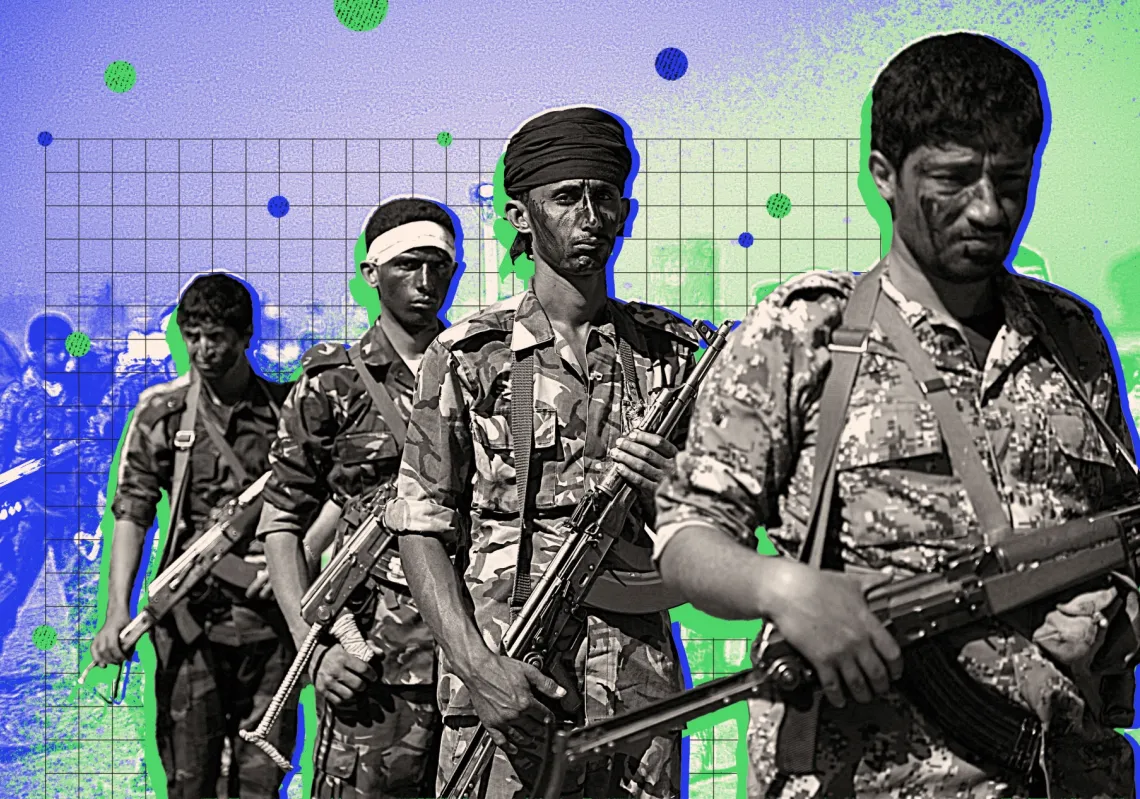
Sudan's two military factions and offshoot militias are all part of the intricate web of foreign interests in Sudan and are merely tools to protects these interests
Why Washington prioritised shutting down the embassy and sending its staff home over helping US citizens escape the dangerous situation unfolding in Sudan
Whoever emerges the winner must meet certain expectations and understand that backsliding into Islamism is not acceptable or the conflict is at risk of reigniting once more
A novelist who decried military rule, tracing it to the country's colonial roots, and a poet showing how tyranny destroys itself both resonate afresh as conflict rages in their homeland once more
Fighting from Khartoum to Darfur endangers hard-won international support for economic development in one of the world's poorest countries. And there may be worse to come for the Sudanese people.
In early 1991, the late Sudanese writer Tayyeb Saleh penned an essay for Al Majalla lamenting the conditions of his country. We have decided to republish it today as it resonates with current events.
Known for avoiding politics, the man from the Nile River state insists on only one army in the country. That has set up a clash with a rival leader known as Hemedti and a delay to civilian rule.
The US-Israeli war against Iran aims to draw in Gulf states, but history has shown that entering wars is far easier than exiting them. Prudence is needed now more than ever.
PA Foreign Minister Varsen Aghabekian Shahin tells Al Majalla that Israel is taking advantage of the fact that the world is distracted by the US-Iran war to create irreversible facts on the ground
Given the effective closure of the Hormuz Strait and Houthi threats to close off the Red Sea, Syria may emerge as a corridor and conduit to bypass these embattled maritime chokepoints
A former army forensics employee who later became known as Caesar tells Al Majalla how he risked his life to expose the torture and killing of countless Syrians in regime prisons