Macron and Scholz have suffered humiliating defeats triggering concern of a bigger shift to the right in France and Germany. If this happens, Europe's power balance could fundamentally transform.
For decades the far right sat on the periphery of Western politics, dismissed as angry skinheads or deluded neo-Nazis by the centrist mainstream. No longer.
A big pro-EU bloc should still hold sway even if the ultra-nationalists make gains. More broadly, the results will act as a barometer of public mood in the first vote since Russia invaded Ukraine.
Twin fears of an inward-looking Donald Trump and a westward-looking Vladimir Putin have left officials in Europe's treasuries urgently revising their budgets to make room for more defence spending.
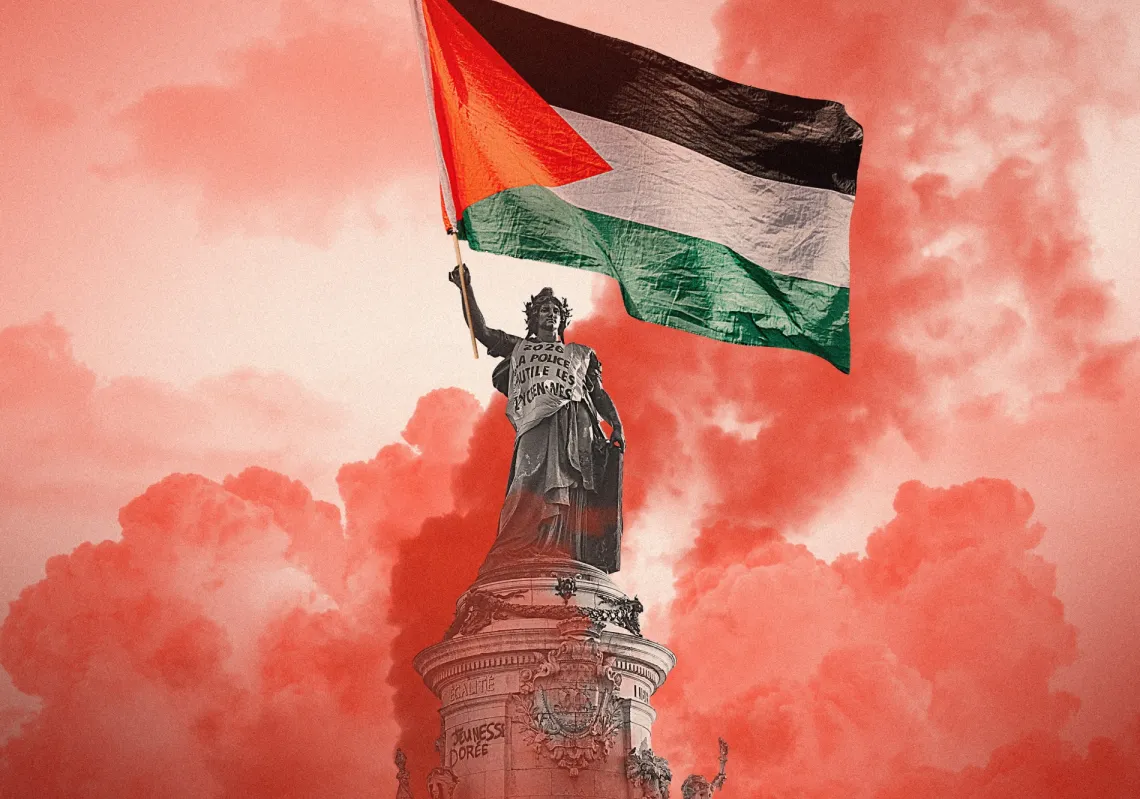
It is curious that amid the global attention on the Gaza war, very few commentators have remarked on the way that European imperialism laid the foundations for the Israel-Palestine conflict.
The political goal was a US and European effort to demonstrate the capacity for connectivity idea generation, or less generously, to try and out-China the Chinese Belt Road Initiative.
A simple snapshot of a small grocery shop in Amsterdam reveals the power of human geography and how it can shape society. Without embracing diversity, European cities cannot re-invent themselves.
An Israeli diplomat recently told Lebanese Shiites that Israel did not see them as the enemy, but it is a difficult argument to make given the death and destruction. Is there a better way?