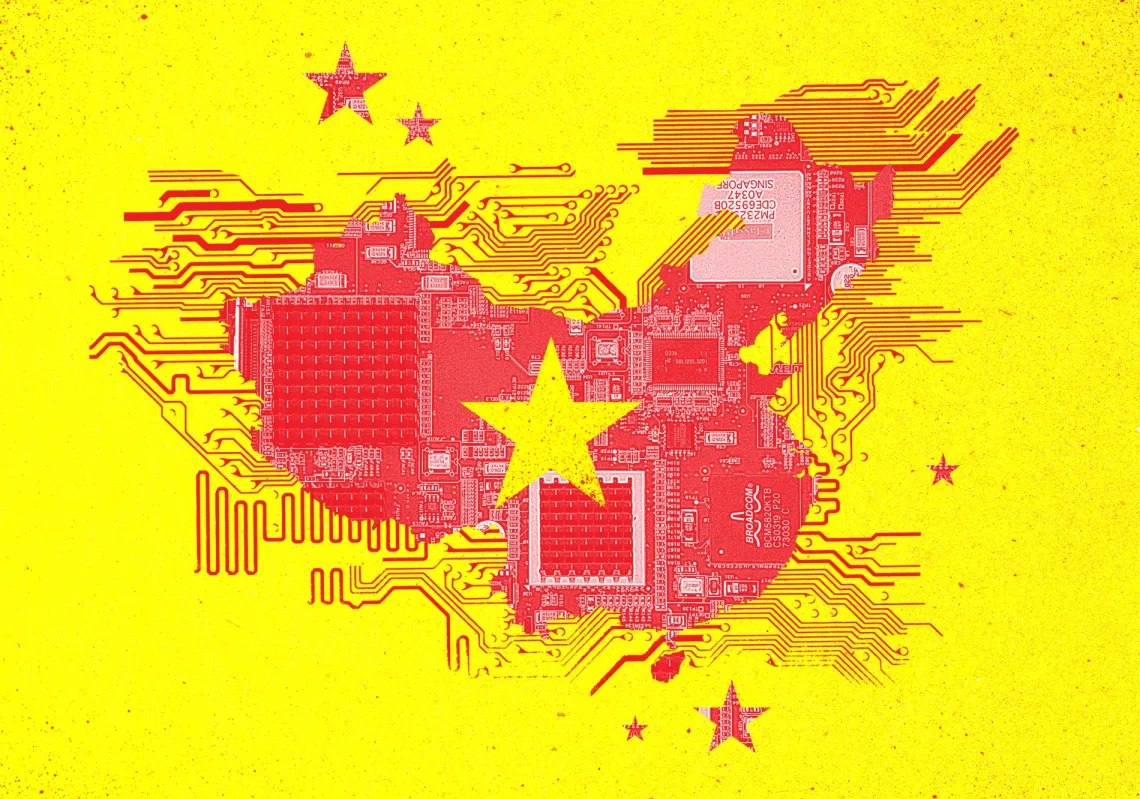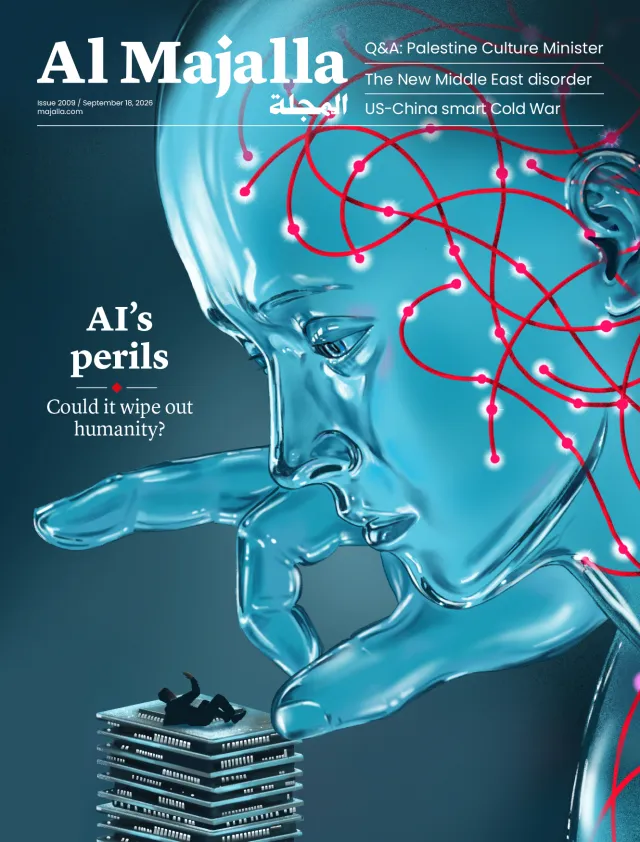

When the very people who created artificial intelligence start sounding the alarm over its dangers, you know the threat is real, which is why Al Majalla has chosen this question for this week’s cover story. Geoffrey Hinton, one of the godfathers of AI, has recently put the possibility of human extinction at the hands of the technology squarely on the table. Leading industry figures also warn that machine capabilities are advancing faster than humanity’s ability to govern, restrain, and control them. But the problem is that no one is prepared to slow down the AI race, as countries and companies fear being overtaken by rivals; the United States fears losing ground to China, and China has no intention of letting America forge ahead unchallenged.Al Majalla therefore asks: Is artificial intelligence opening the way to humanity’s greatest future, or carrying us across a threshold beyond which there may one day be no easy return?