Dismantling Gaza's tunnels: where politics meets security
The past three years have shown how Gaza’s tunnels have evolved from an instrument of military confrontation into an issue involving security, borders, governance, and reconstruction
Israeli Army / AFP
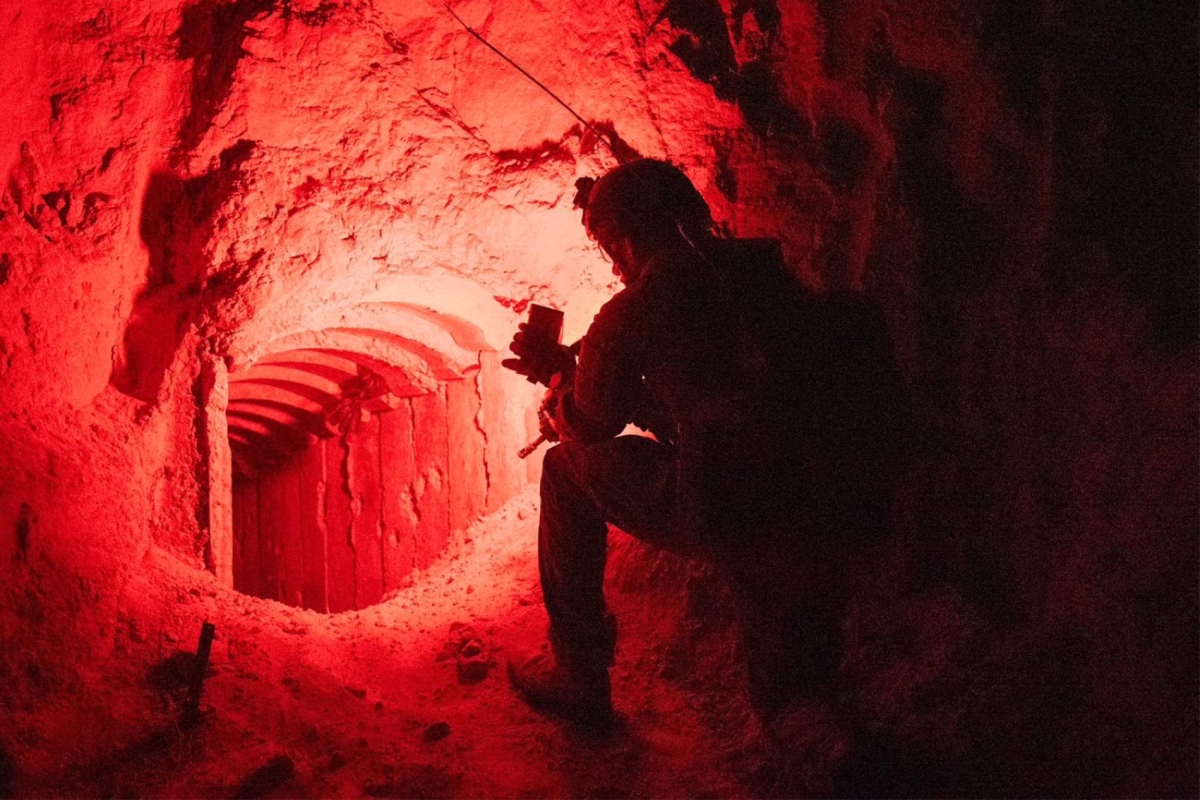
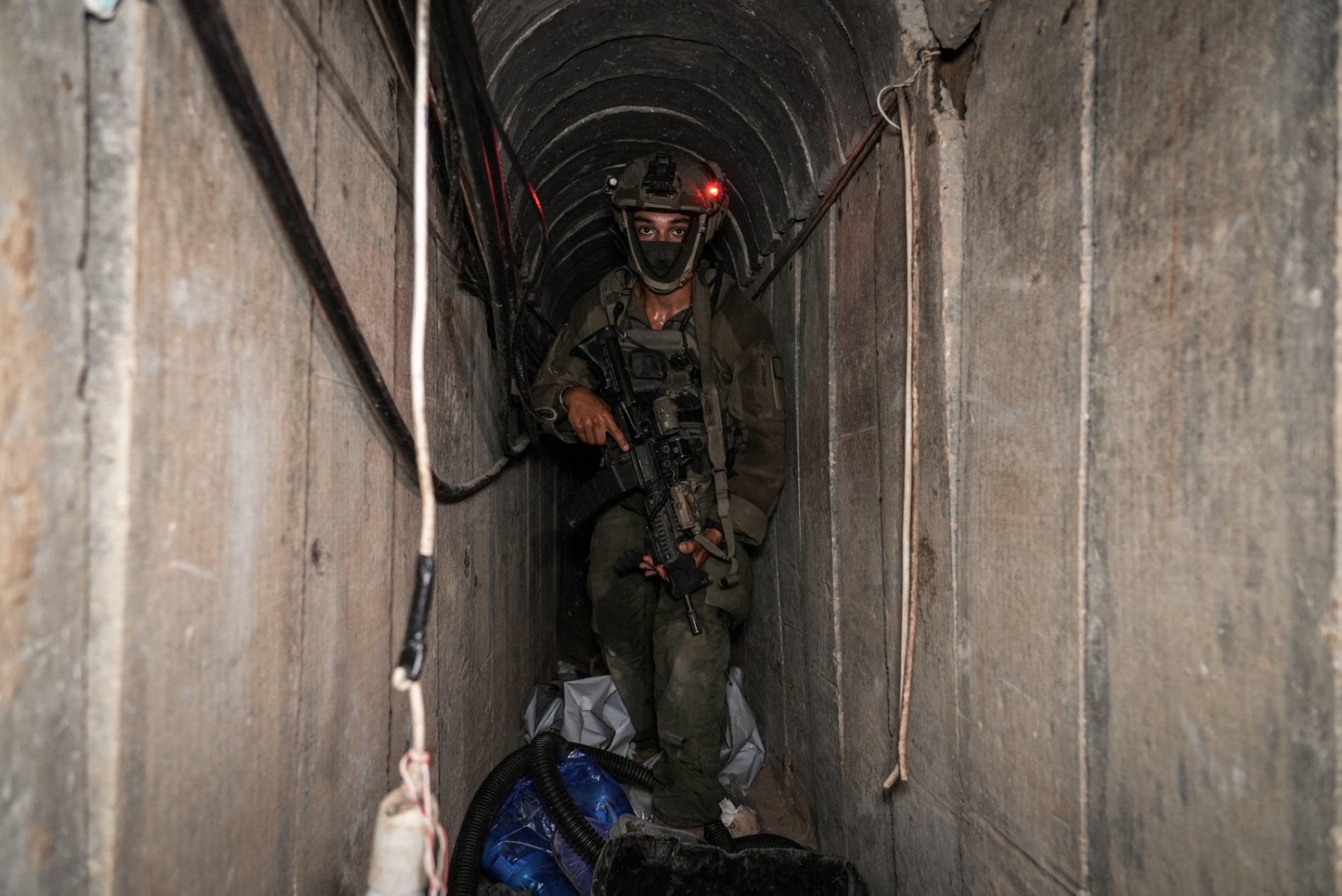
This handout picture released by the Israeli army on 23 August 2024 reportedly shows Israeli forces during an operation to dismantle a tunnel in Rafah in the southern Gaza Strip.
Dismantling Gaza's tunnels: where politics meets security
For many years, the tunnels that ran beneath the Gaza Strip were used by Hamas in combat before being systematically targeted by Israel for destruction since 7 October 2023. Today, this underground network has acquired a significance far beyond its military function. It is part of a wider equation involving the terms of disarmament, the future of security control in Gaza, Israeli withdrawal, and reconstruction.
At first glance, the task appears technical: locate the tunnels, determine how much of the network remains, then destroy or disable it. Yet this raises difficult questions. How can the dismantling of military infrastructure beneath populated and devastated areas be verified? Who would do so? Can Gaza be rebuilt while some sites still require engineering and security inspections? Above all, can the tunnel issue be separated from the dispute over Gaza’s future governance and the question of weapons in the Strip?
These questions have become more pressing as Israel has increasingly presented tunnel destruction as a condition for eliminating Hamas’s military capabilities, rather than treating the tunnels solely as military targets. The issue now concerns both what can be destroyed underground and what can be agreed about Gaza’s future above it.
Gaza’s tunnels long predate the latest war and their purpose has not always been solely military. For years, they crossed under the border with Egypt to sustain a smuggling economy that brought goods into Gaza that would have otherwise been difficult to obtain through official crossings, particularly after Israel tightened its blockade of the Strip in 2007, following Hamas’s takeover.
Alongside the smuggling tunnels that supported economic activity in border areas, particularly Rafah, Hamas developed a military network through which to move fighters, store supplies, issue commands, coordinate communications, and keep hostages. In an investigation published on 31 December 2023 called Inside Gaza’s Tunnels, Reuters drew on military experts, officials, and images released by the Israeli military and Hamas to establish how the network had been built and used.
Before the war, Hamas had claimed its tunnels extended more than 500km. That figure cannot be independently measured, nor used to establish how much of the network has survived. Gaza’s tunnels serve different purposes in different locations, but their geographical distribution and present condition are unknown.
Israel has wanted to destroy the tunnels since long before 2023. Its army said it had discovered and destroyed tunnels during earlier confrontations, maintaining its focus on them after the 2014 war, and intensifying its efforts following the fighting in 2021. The war that erupted in October 2023, however, brought extensive ground operations. Locating and destroying the tunnels became one of Israel’s principal military objectives.
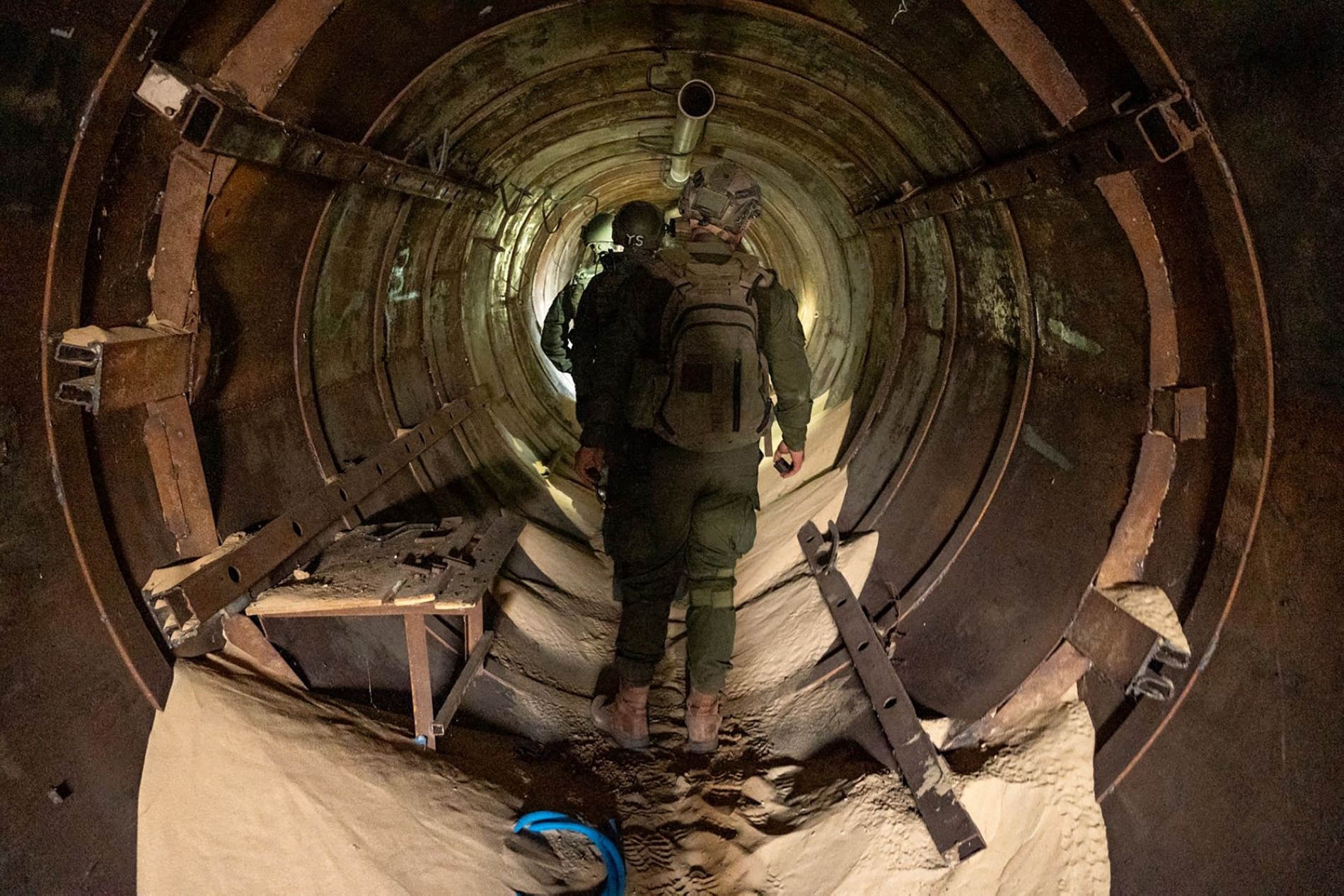
Israeli troops in an underground tunnel, which they said they found during a raid in Khan Yunis in the southern Gaza Strip, on 4 February 2024.
‘Underground city’
During the opening months of the war, Israeli statements concentrated on the discovery of tunnel entrances, passages, and facilities that Israel said Hamas used to conduct its military operations. On 3 December 2023, the Israeli military announced that it had found more than 800 tunnel shafts and destroyed around 500 of them since 8 October.
Yet these figures alone reveal little about the network’s true extent. Each tunnel entrance does not necessarily lead to a different tunnel. Onenetwork can contain many passages and branches, so destroying an entrance does not mean every connected passage has been rendered unusable
One tunnel network can contain many passages and branches, so destroying an entrance does not mean every connected passage has been rendered unusable
A fortnight later, on 17 December 2023, the Israeli military announced the discovery of a tunnel near the Erez Crossing which it said was more than 4km long and 50m deep. Its spokesman Daniel Hagari said it was part of an "underground city of terror". In February 2024, the military announced the discovery of underground complexes in Khan Younis, which it said were associated with Hamas's leadership and the detention of hostages.
Attention subsequently shifted to Rafah and the Philadelphi Corridor, where Israel reported finding tunnels it said were linked to smuggling under the Egyptian border. By September 2024, control of the Philadelphi Corridor had become one of the principal points of contention. Israel maintained that its presence there was necessary to prevent weapons smuggling through the tunnels, but Egypt demanded the withdrawal of Israeli forces from the corridor, while Hamas insisted on Israel withdrawing from the Strip.
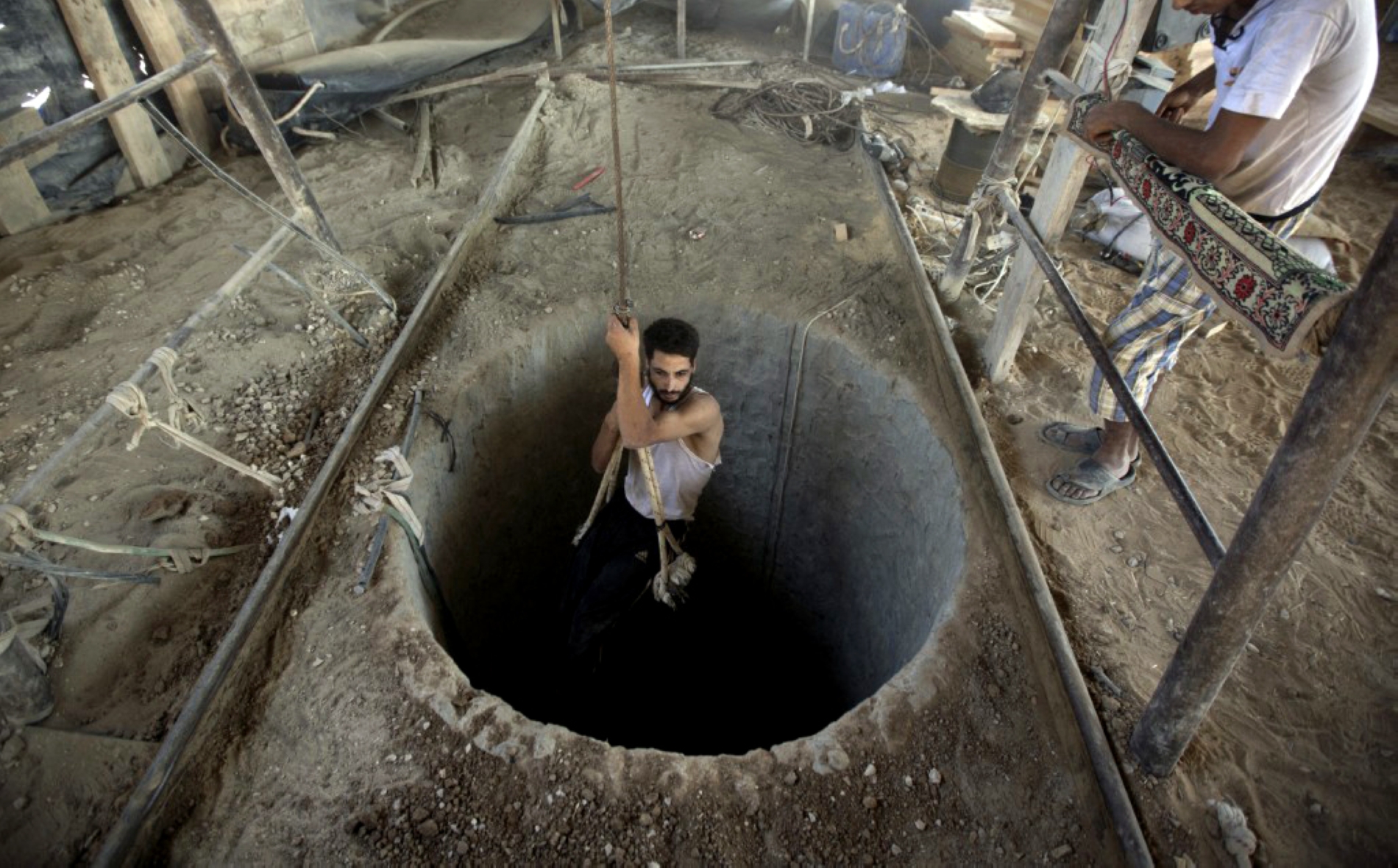
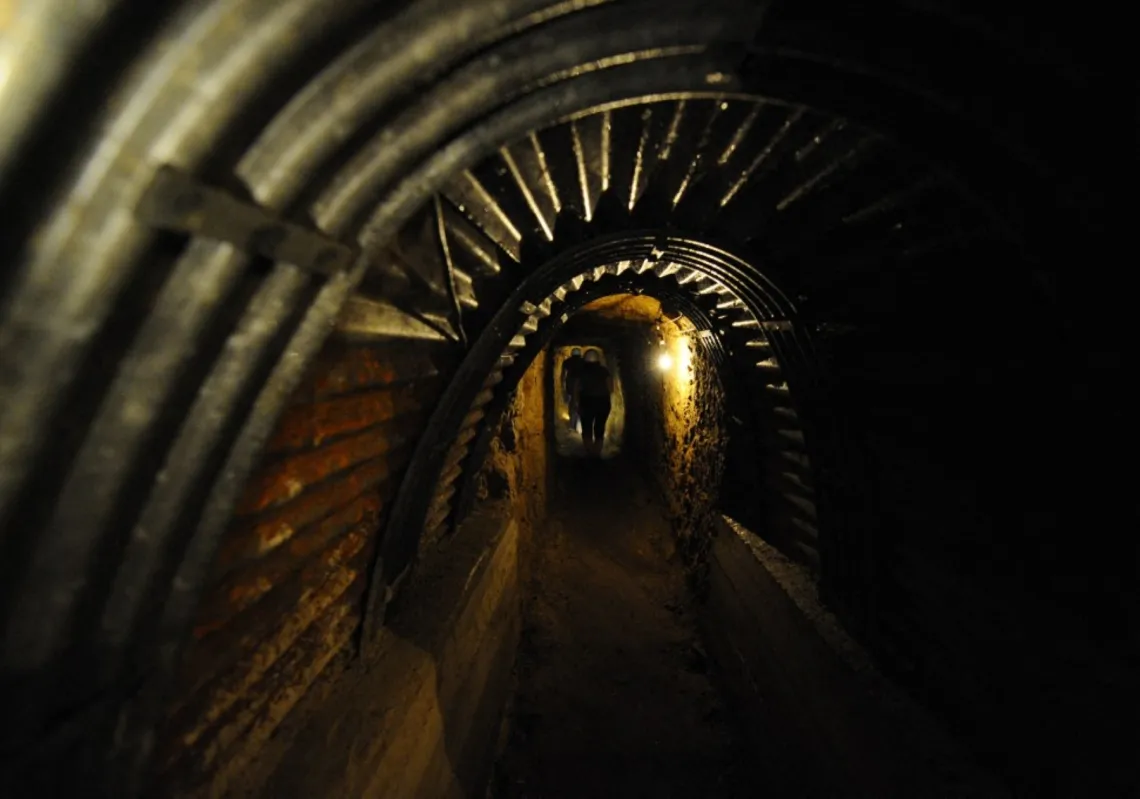
A Palestinian man is lowered into a smuggling tunnel beneath the Gaza-Egypt border, in the southern Gaza Strip, on 11 September 2013.
Justifying occupation
The tunnels thus became part of Israel's security justification for retaining control of strategic areas, particularly along Gaza's southern border, yet their discovery in a particular location did not mean that they were in use, just as the destruction of individual installations did not mean that the entire network now ceased to exist.
By October 2025, Israel was drawing an increasingly explicit connection between tunnel destruction and the future of Hamas's military capabilities. Israeli Defence Minister Israel Katz said destroying the tunnels was one of the principal tasks of the next phase and that he had told the military to destroy every tunnel in Gaza. The following month, he linked it to the demilitarisation of Gaza and the elimination of Hamas's ability to use its underground military infrastructure.
The Times of Israel reported several statements by Katz concerning the proportion of tunnels destroyed in areas under Israeli military control (about 70% of the Strip). In July 2026, he announced that 83% of the tunnels had been destroyed in territory under military control. How will it deal with tunnels outside its control? Who will verify their removal if Israeli forces withdraw? How will they be monitored? Will Israel retain the authority to determine whether disarmament has been completed?
Destroying the existing infrastructure would not necessarily prevent Hamas from rebuilding it. Much would depend on its remaining capabilities, and on the future arrangements for governing Gaza. The connection between the tunnels and disarmament became clearer in American post-war proposals.
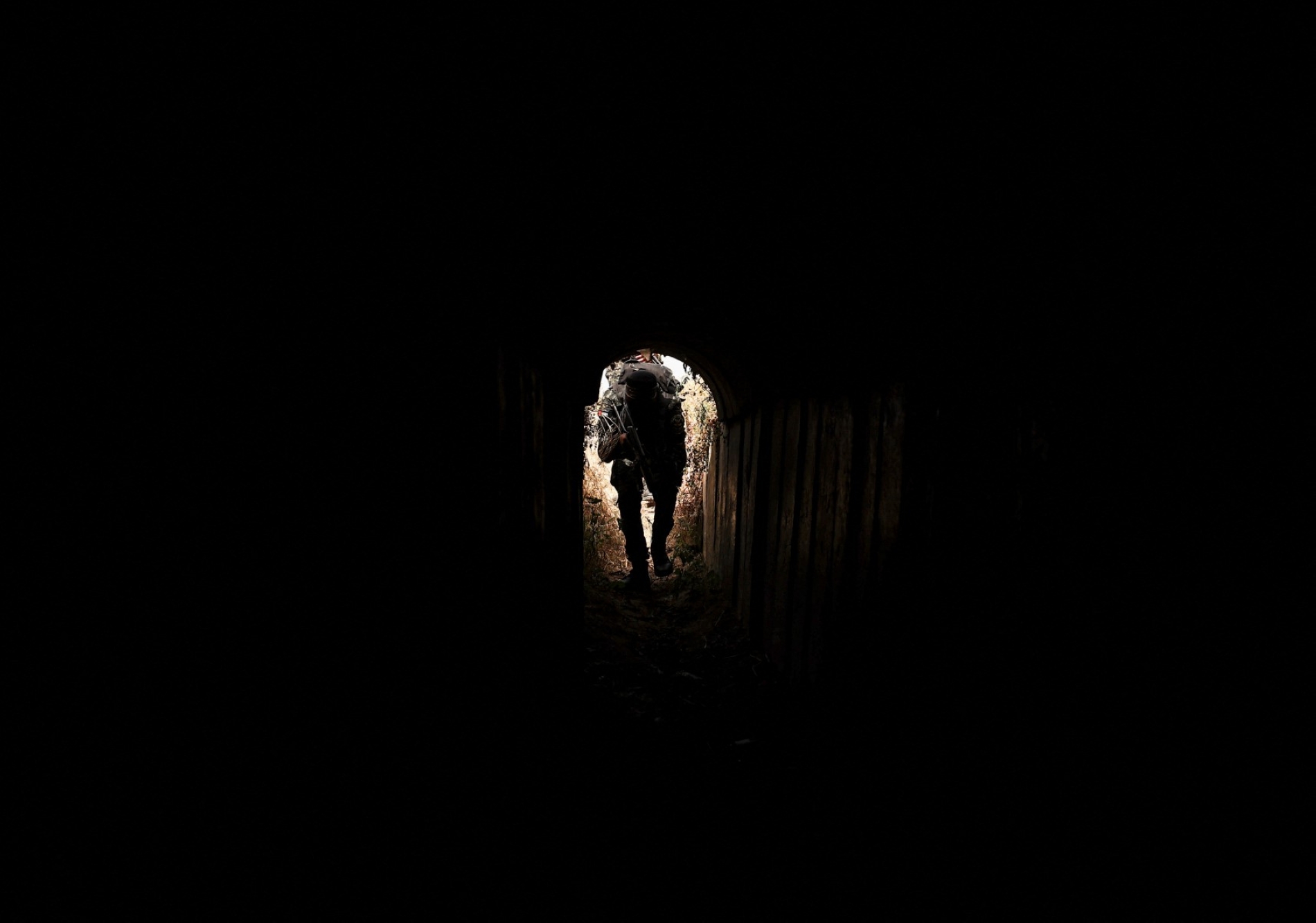
A member of the Palestinian Islamic Jihad militant group enters a tunnel in the Gaza Strip on 17 April 2022, during a media tour amid escalating violence with Israel.
Heart of a settlement
On 27 March 2026, Reuters published details of a plan presented by the Board of Peace (chaired by US President Donald Trump) that envisages the phased, 8-month disarmament of Hamas, alongside the destruction of tunnels, weapons, and military infrastructure. This would come after a Palestinian committee of technocrats assumed administrative and security responsibilities.
After the surrender of weapons, the destruction of tunnels, and the deployment of an international security force, culminating in verification that Gaza had been demilitarised, Israeli forces would withdraw. The proposal therefore places tunnels at the heart of a political and security settlement. Their destruction would be part of a new security arrangement that would require agreement on the details.
Yet simply having a plan about a proposed verification mechanism offers no guarantee that it will be accepted or implemented, as it does not resolve questions such as the limits of its authority or how it would deal with sites that are difficult to inspect. A more fundamental question is whether an agreement on disarmament can be reached without a corresponding settlement on Gaza's future governance, the Palestinian role in security, and the relationship between these arrangements and an Israeli withdrawal.
If withdrawal depends on verified disarmament, the definition of 'verification' itself becomes a political issue. For instance, who has the authority to declare the process complete? Who determines the standards against which compliance will be judged?
An Israeli soldier walks through a tunnel on 8 June 2025, during a controlled embed organised by the Israeli military, in Khan Yunis in the Gaza Strip.
Specialists needed
Rebuilding Gaza presents further difficulties. The tunnel network extends beneath residential areas and infrastructure that have suffered extensive destruction, raising questions about the safety of certain sites, the clearance of rubble, repairs to water and sewage systems, and whether damaged buildings are suitable for reconstruction. Not all tunnels present comparable engineering risks. Likewise, a tunnel beneath a building does not necessarily make the building unfit for habitation.
Assessing such risks requires knowledge of soil conditions, the depth of underground passages, the condition of structures, and the damage they have sustained, so civil and geotechnical engineers must work with specialists in explosive ordnance disposal on the task of assessing damage and planning reconstruction. Some hazards will require technical intervention, others further investigation.
The consequences of the tunnels may extend beyond engineering issues. If political or security authorities require certain sites to be surveyed before reconstruction can proceed, such requirements could affect the order of priorities, increase costs, and delay residents' return to their homes. On 5 July 2026, Israeli Prime Minister Benjamin Netanyahu said Gaza would not be rebuilt unless its military capabilities were dismantled and the territory disarmed. Will all forms of civilian recovery be subject to the same condition? How will the population's urgent needs be met in the meantime?
Clearing dangerous debris, repairing water networks, providing temporary accommodation, and rebuilding entire neighbourhoods entails different requirements and risks. The effect of tunnels on reconstruction is just one factor. Other questions include how sites requiring security or engineering intervention will be identified, who will decide, what criteria will apply, and who will pay for it.
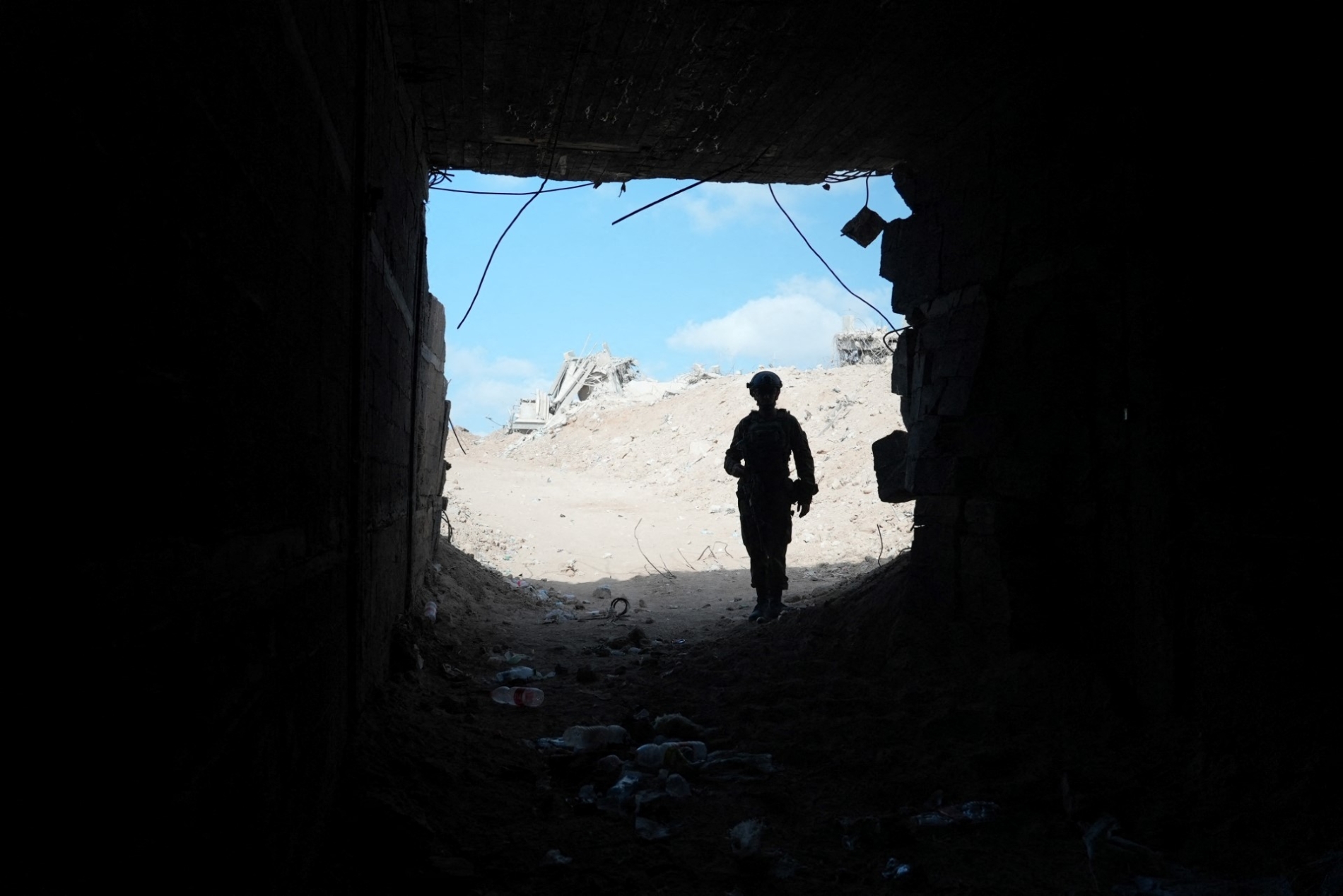
An Israeli soldier stands at the entrance of a tunnel in Rafah in the Gaza Strip on 13 September 2024, amid the ongoing war between Israel and Palestinian militant groups.
Questions abound
The past three years have shown how Gaza's tunnels have evolved from an instrument of military confrontation into an issue involving security, borders, governance, and reconstruction. Initially, Israeli statements concentrated on locating and destroying the tunnel network, but it later became part of the debate over control of border areas, and a declared condition for disarming Hamas.
The fate of the tunnels depends on more than how much of the network remains. It also rests on how their condition will be verified, who will be responsible for dealing with them, and how that process will relate to the future of security control in Gaza. The success of these arrangements will depend on more than the number of passages sealed; it will require the parties to agree on clear, workable verification mechanisms.
Equally, the success of reconstruction cannot be judged simply by the number of buildings erected above ground; it must be measured by Gazans' ability to return to stability, the establishment of clear technical standards for addressing risks, and guarantees that civilian recovery will not be postponed indefinitely.
Tunnels expose the difficulty of separating security from politics in Gaza, and of separating the question of reconstruction from the struggle over Gaza's future. Will dealing with the tunnels become part of a broader agreement governing Gaza's future administration, security, Israeli withdrawal and reconstruction? Or will it remain an open-ended security condition that must be satisfied before any progress can be made towards rebuilding the Strip? The answer will determine the tunnels' significance in the months and years ahead.