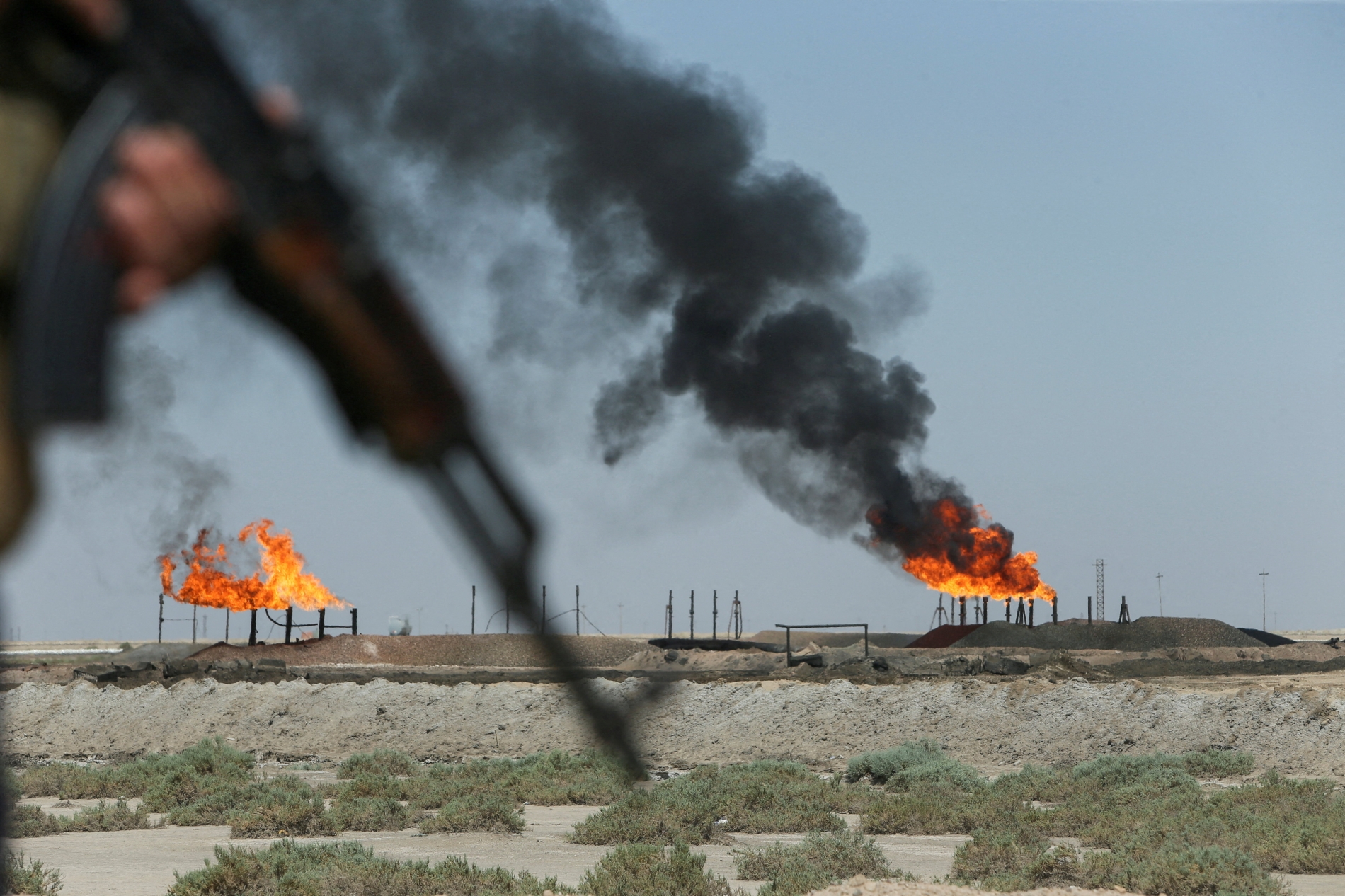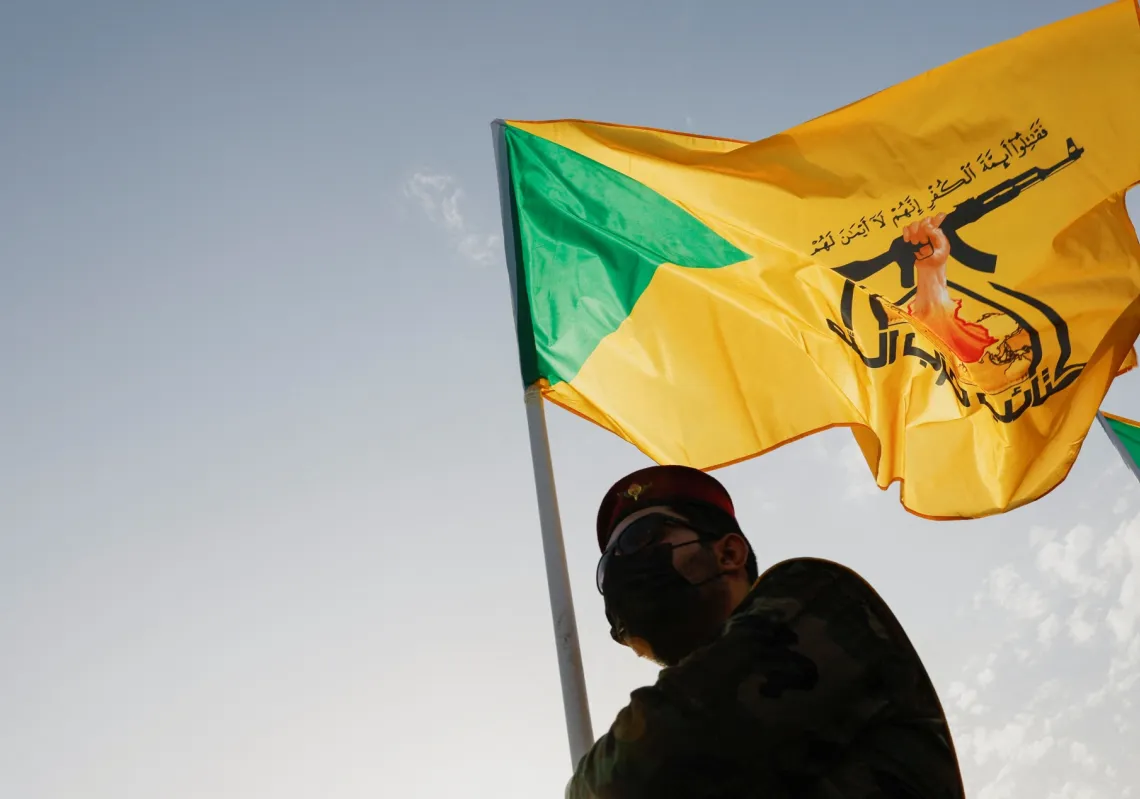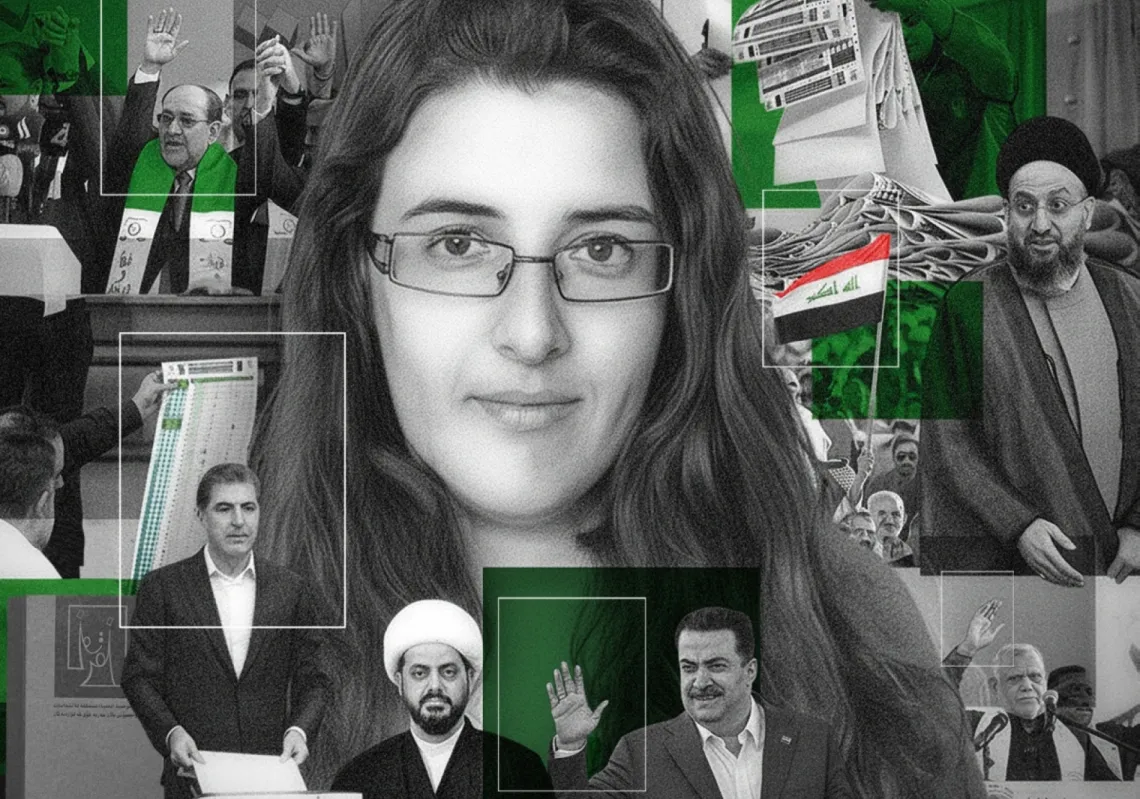


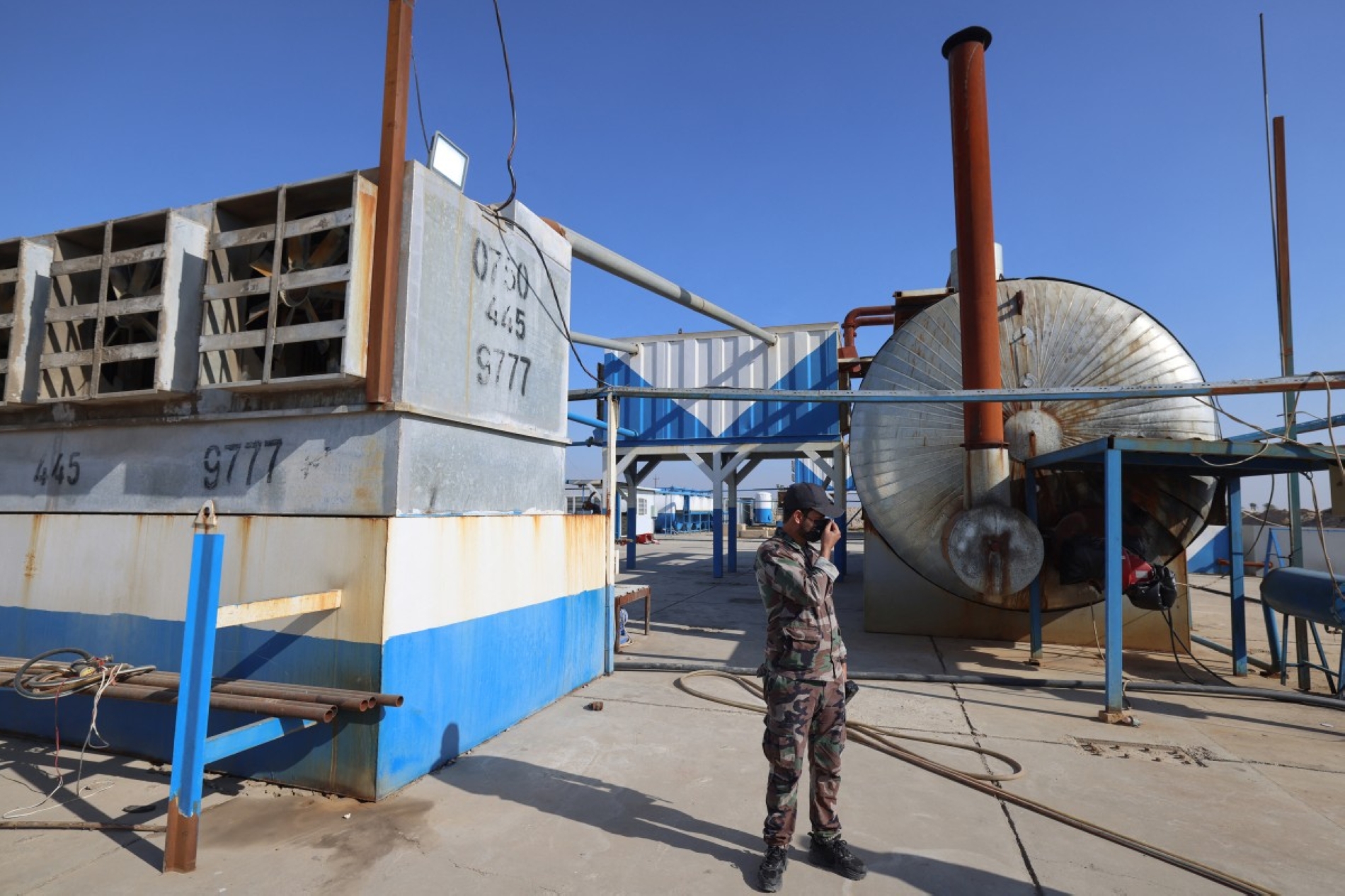
On the banks of the Euphrates River, about 60km south of Baghdad, recent events in Jurf al-Sakhar have exposed a vast political and economic enterprise built around the illicit activities of armed factions in Iraq. The town has long been held by the Iran-backed armed group Kataib Hezbollah, which has been siphoning oil from local pipelines. As the Iraqi army descended last week, a confrontation was narrowly avoided by a last-minute compromise. Yet this has raised questions about the future of Iraqi militias.
Exploiting their control over territory, these groups use an extensive and opaque network of companies and intermediaries to secure government contracts, monopolise entire industrial sectors, and even control designated transit points at ports and border crossings. The armed factions engage in extortion, oil smuggling, and other illicit trade.
They use their security and political influence to exert pressure on the business community and are particularly active in areas formerly occupied by the Islamic State (IS), where the state is yet to regain authority. Jurf al-Sakhar is a prime example. By weaving together military, security, economic and political interests, these armed factions have established extensive control over large swathes of Iraq, especially in its central and western regions.
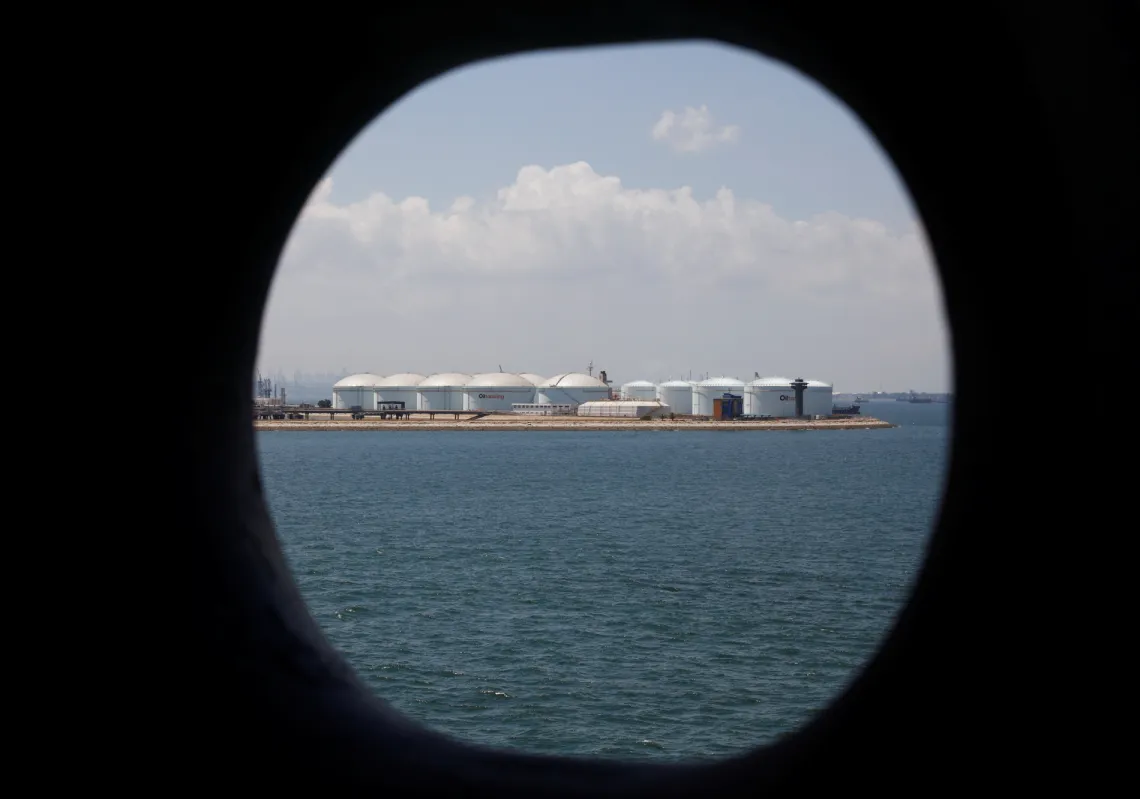
Analysts trace the militias' ascendancy to Iraq’s new political order in 2003. The political parties that dominated this new system gained control of vast sums of public money, which they multiplied through corruption centred on government contracts and oil smuggling. According to an official US report published in 2007 and aired by The New York Times, militias that had arrived from abroad alongside these Shiite political parties were stealing up to 300,000 barrels of oil every month.
Between 2003-10, most of the proceeds were channelled into either property and other assets abroad, or the factions’ military, security, and organisational structures. These gradually developed into institutions operating alongside the Iraqi army and security services. Ideological parties thus became powerful centres of influence at the heart of the state, forming vast alliances through political authority, wealth, and weaponry.
From 2010-14, dozens of affiliated companies secured government contracts through the political parties that made up the federal government. These companies carried out only nominal work without oversight, accountability, or prosecution. It became known in Iraq as a system of ‘gifts’ or ‘favours,’ and bred a new business elite, largely drawn from the families of returning politicians or faction leaders.
Replacing the state
The war against IS from 2014 ushered in a new phase, during which the factions increasingly behaved as if they were state institutions and that state laws did not apply to them. They established economic control over vast territories, set up private banks, and established unofficial border crossings with Iran to help Tehran circumvent international sanctions and launder money on its behalf. In recent years, they have been sanctioned by the US. More recently, these factions have come into confrontation with the Iraqi government.
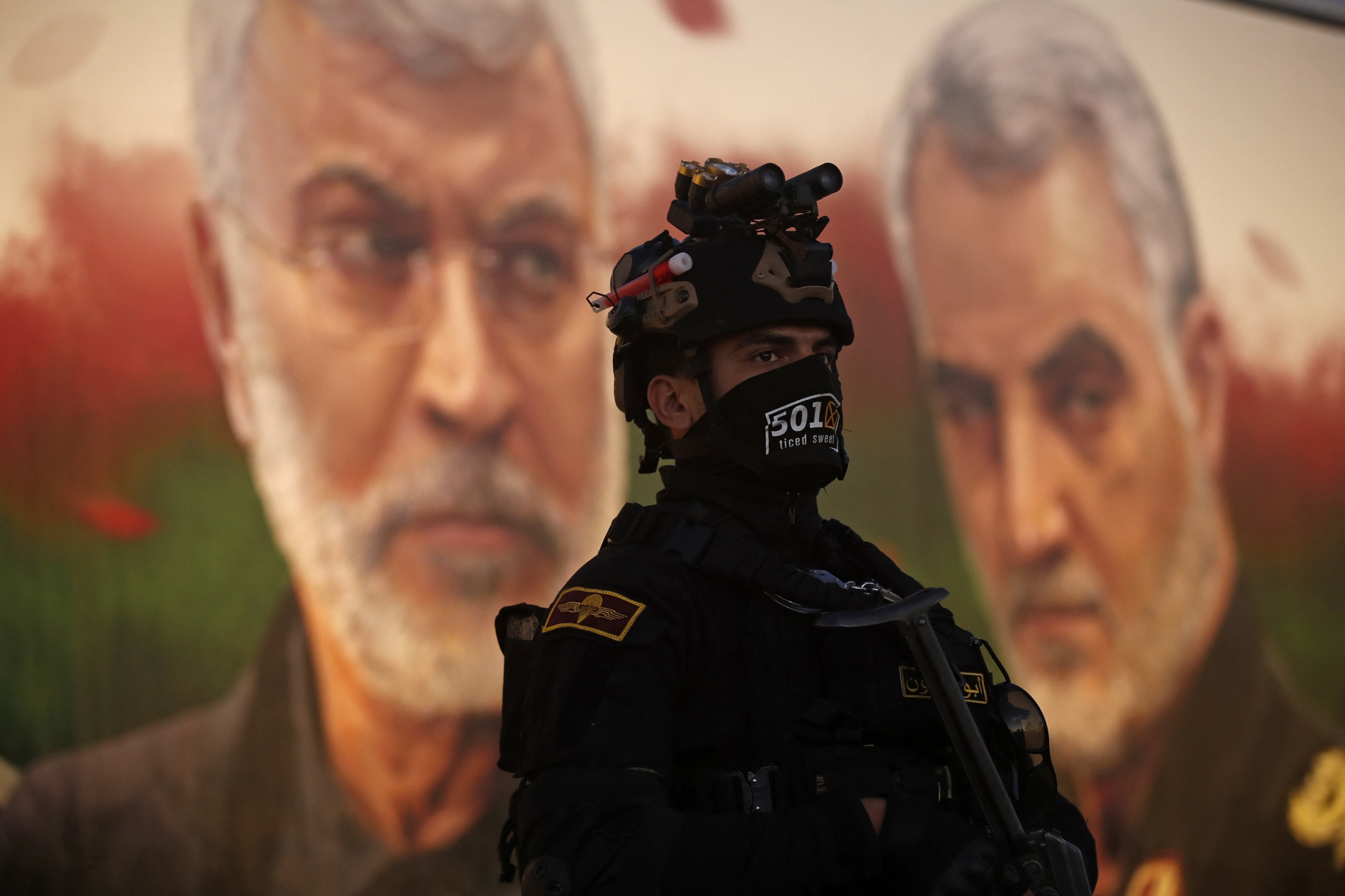
In late 2022, just weeks after former Prime Minister Mohammed Shia al-Sudani took office, the Muhandis General Company was established with an initial capital of $74mn. Conceived as the economic arm of the Popular Mobilisation Forces (PMF), it was modelled on Khatam al-Anbiya Construction Headquarters, the conglomerate affiliated with Iran’s Islamic Revolutionary Guard Corps (IRGC). Its operations cover agriculture, infrastructure, and crossings, and it has the backing of the Shiite Coordination Framework (CF) alliance.
For years, there had been unsuccessful attempts to establish a similar enterprise. In late 2018, Abu Mahdi al-Muhandis, the PMF commander (who was later killed by the Americans), proposed establishing the Al-Mutasim Company and presented the plan to the then Prime Minister Adil Abdul-Mahdi, but failed to secure his approval. A subsequent attempt by another PMF commander, Abu Fadak, met with the same response from former Prime Minister Mustafa al-Kadhimi. When Sudani finally nodded it through, the new company was named after al-Muhandis.
In the PMF’s grip
One of the company’s first major government allocations was 1.2 million acres of agricultural land across the governorates of Muthanna, Anbar and Babil. The official justification was a project to plant one million trees, but the land was already under the factions’ control, and the allocation effectively just transferred ownership. Security reports indicating that Iraqi factions had launched attacks against neighbouring countries from these lands revealed their underlying purpose.
A few months later, Abbas al-Zamili, head of the parliamentary bloc affiliated with the Badr Organisation, announced that an additional $305mn had been allocated to the PMF’s investment budget for use by its newly established Muhandis Company. The Iraqi government also approved a provision for ‘secret expenditures’ for the PMF, a privilege previously reserved for the Iraqi National Intelligence Service.