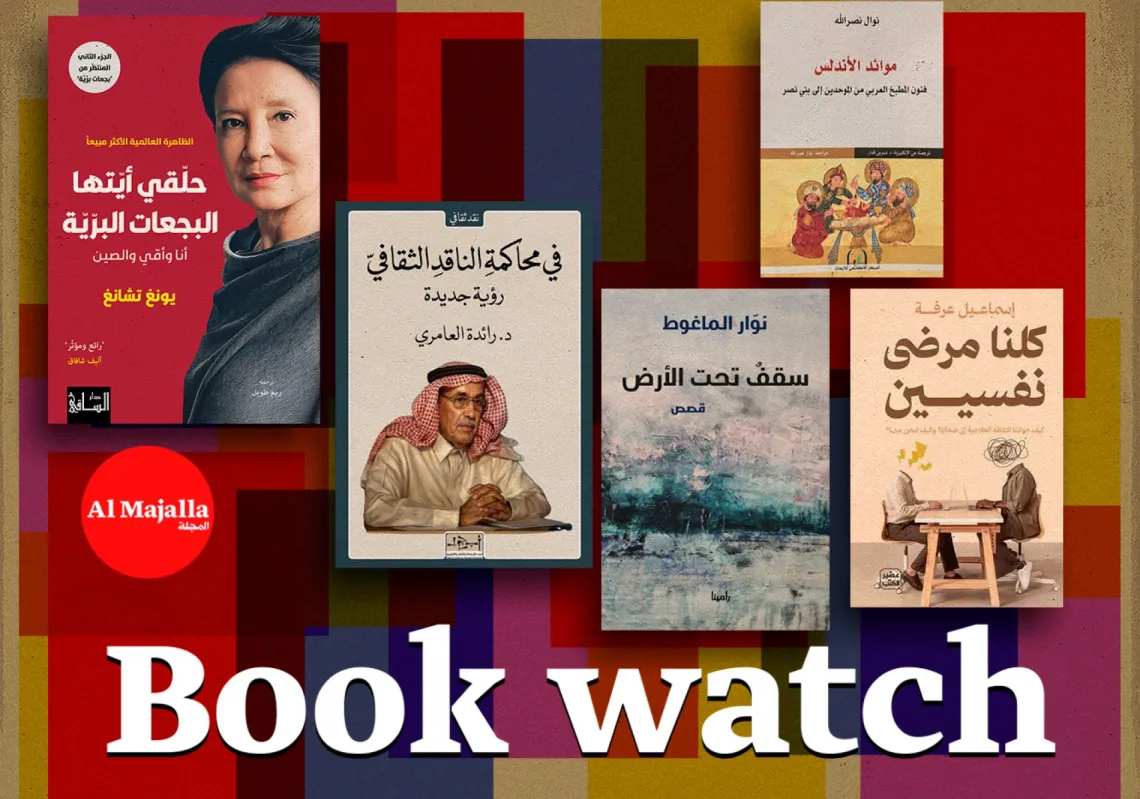
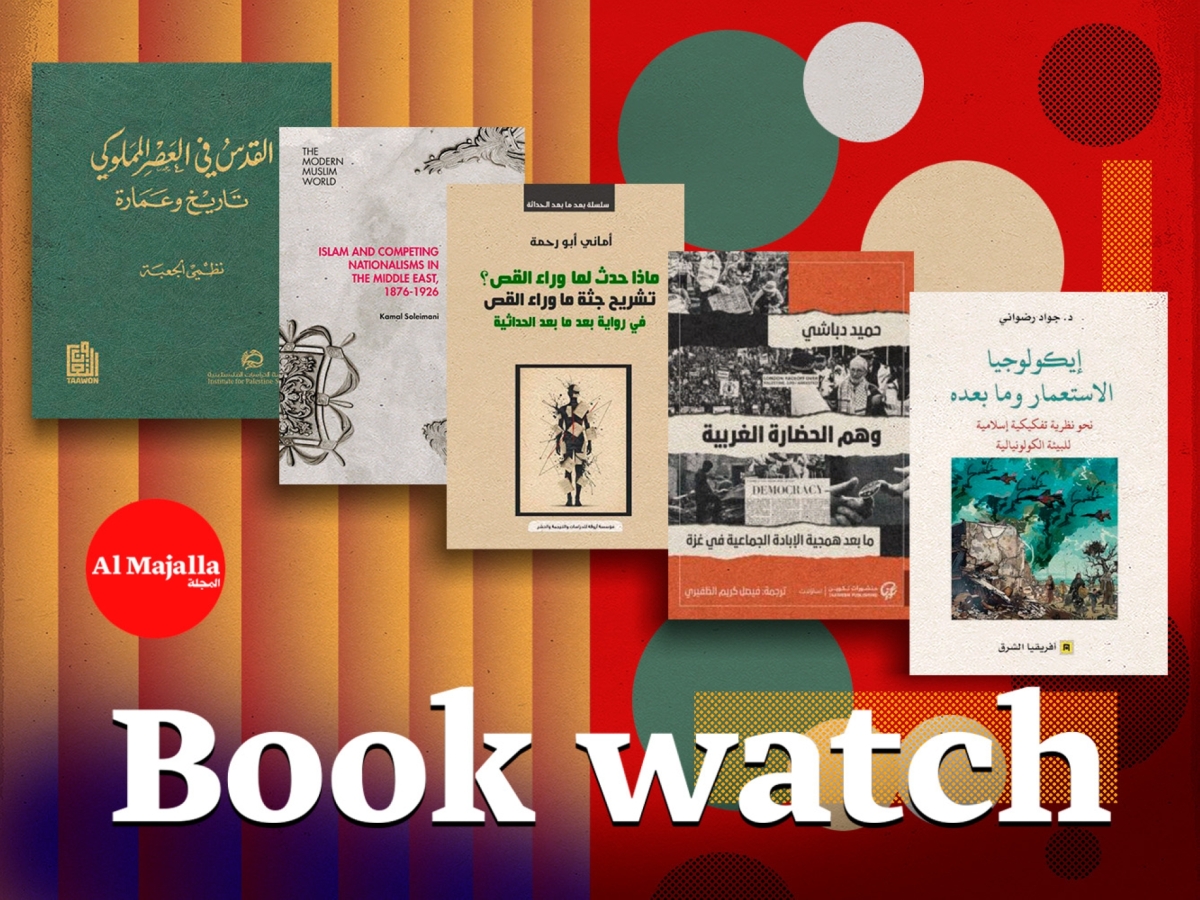

The Arab world has a vibrant and rich literary scene. Al Majalla highlights emerging trends and ideas in its latest Arabic book picks.
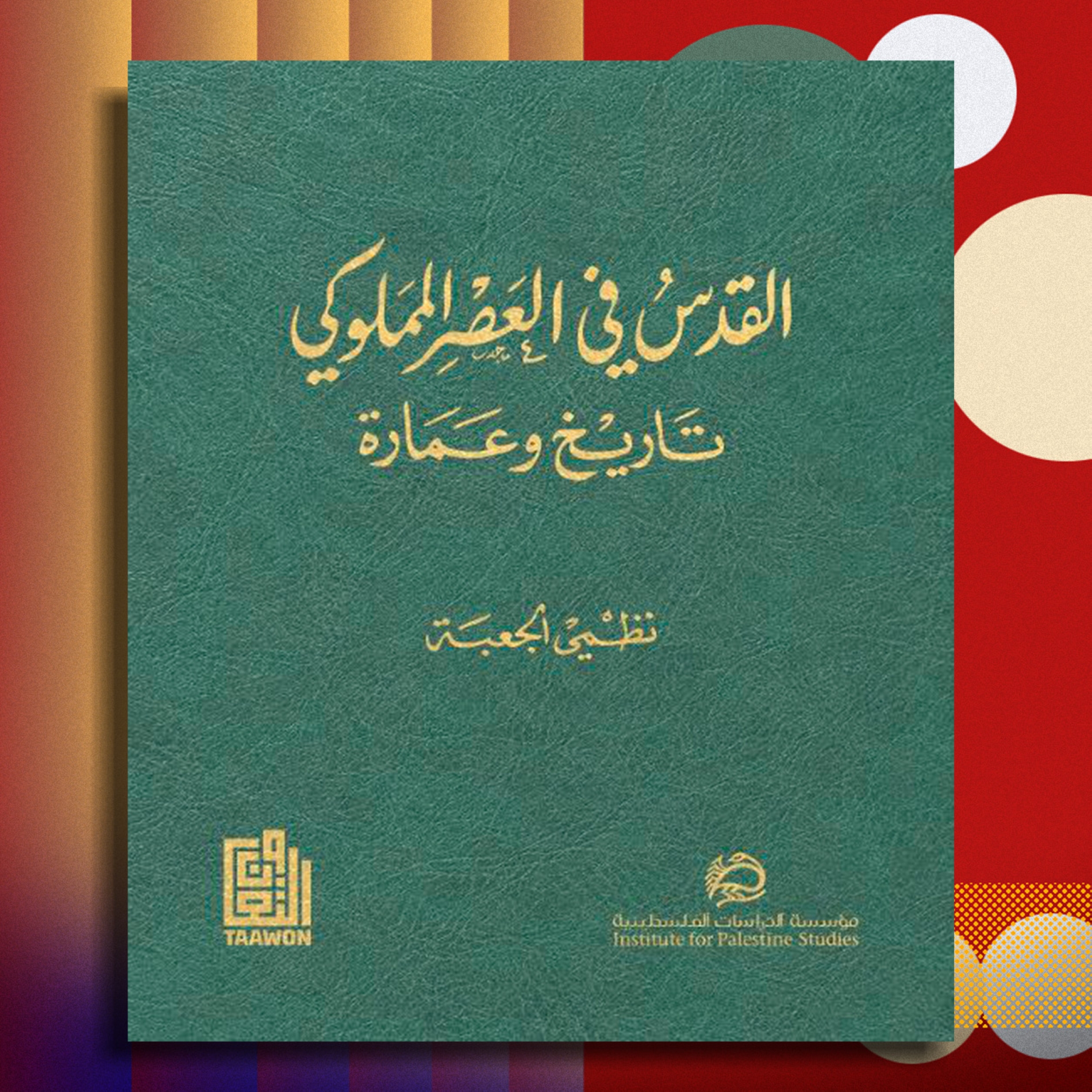
Jerusalem in the Mamluk Era: History and Architecture
By: Nazmi Jubeh
Publisher: Centre for Palestinian Studies, Taawon, Palestine
Jerusalem’s architecture reflects the city’s political, social, and religious transformations, and the relationship between power, place, memory, and identity. This is the premise behind Palestinian historian and researcher Nazmi Jubeh’s encyclopaedic book, which examines the holy city over more than two centuries of Mamluk rule.
Jubeh regards the Mamluk era as a turning point that reshaped Jerusalem’s cultural and architectural landscape. From the middle of the 13th century, the Mamluks consolidated their presence in the city through religious patronage, investment in construction, and the development of institutions. These policies were intended to strengthen the legitimacy of their rule and their standing in the Islamic world.
Jerusalem, with its religious and political significance, held particular importance in this strategy. The book explores this by examining the sultans, emirs, scholars, merchants, and women who helped establish institutions, care for holy sites, and create religious endowments. It also examines the city’s administration, population, economy, and religious life, documenting its religious composition, markets, pilgrims and visitors, and the role of endowments.
Architecture is central to Jubeh’s study. He examines Al Aqsa Mosque, the Dome of the Rock, madrasas, hospices, religious lodges, markets, public fountains, waterworks, and homes, tracing construction, restoration, and architectural additions. He also highlights the distinctive character of Jerusalem’s architecture, which retained the broader Mamluk style while preserving local features and adapting to the physical urban setting.
Jubeh shows that many Mamluk buildings still stand in Jerusalem’s Old City, making it an exceptional repository of architectural heritage. He documents more than 100 buildings and architectural interventions, drawing on historical sources, documents, inscriptions, photos, and architectural plans.
Combining history, archaeology, and architecture, this book shows how historic buildings can reveal much about the societies that constructed them. Jerusalem today bears the accumulated layers of its history, visible in streets and buildings, that still carry traces of eras past. It is a book about a city whose history can be read in its stones, and about an architectural memory that stubbornly resists oblivion. Protecting Jerusalem’s heritage means defending its history, identity, and the right to remember.

After Savagery: Gaza, Genocide, and the Illusion of Western Civilisation
By: Hamid Dabashi
Translated by: Faisal Karim Al Dhafiri
Publisher: Takween Publications, Kuwait
Hamid Dabashi begins with the contention that the values, freedoms, and human rights that the West presents itself as defending have been profoundly shaken by the genocide in Gaza. Is this double standards, he asks, or does the problem lie in the foundations of Western civilisation itself?
The Palestinian tragedy is used as a starting point for a sweeping critical reassessment of Western modernity and its moral claims. Dabashi looks beyond the contradiction between Western rhetoric and practices directed against Palestinians. He questions the intellectual and historical roots of that contradiction, arguing that the problem is neither recent nor confined to any particular government, but rooted in a long history of colonialism, imperialism and racial supremacy.