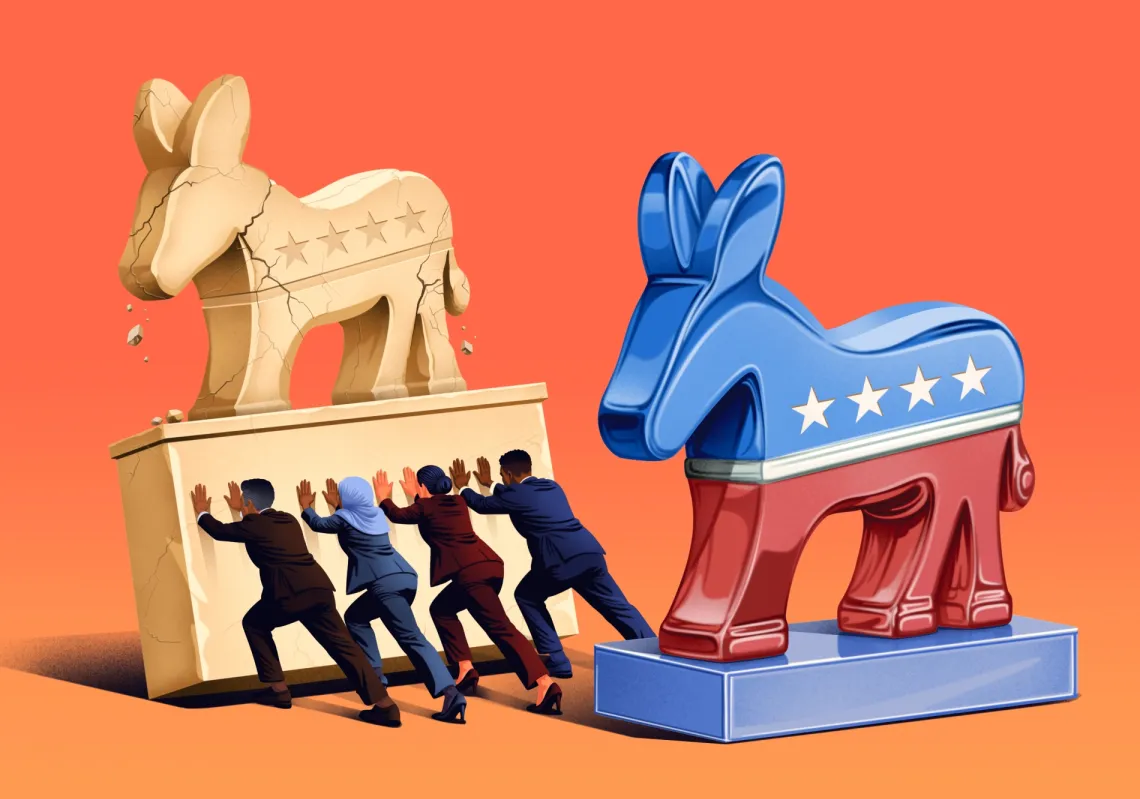
Iraqi Kurdistan divisions threaten hard-won gains

The last time rival Kurdish parties fell out this badly it led to fighting. With trust non-existent and risks from abroad, something needs to change and fast

Iraqi Kurds attend the 4th (Shal Shabek) Kurdish costume festival in the city of Zakho, in Iraq's northern autonomous Kurdistan region, on 10 June 2026.
SAFIN HAMID / AFP
Iraqi Kurds attend the 4th (Shal Shabek) Kurdish costume festival in the city of Zakho, in Iraq's northern autonomous Kurdistan region, on 10 June 2026.

Iraqi Kurdistan divisions threaten hard-won gains

Iraqi Kurdistan is facing its most serious political division since the Kurdistan Region's unification two decades ago. Some are deeply worried about the consequences of the dispute, which began when the two dominant parties failed to agree on the formation of a new regional government. American troops’ withdrawal and the growing influence of Iran are contributory factors, according to a senior Kurdish political source.

In the most recent parliamentary elections, held two years ago, the Kurdistan Democratic Party (KDP) won 39 of the regional parliament’s 100 seats, five of which are reserved for minorities. The Patriotic Union of Kurdistan (PUK) secured 23 seats, while the remainder went to opposition parties, led by the New Generation Movement with 15. Since then, the KDP and PUK have wrangled but failed to make the region’s parliament effective or form a government.

Their disagreement centres on power-sharing. The KDP insists on upholding the Strategic Agreement the two parties signed in 2005, which divided senior offices between them. Under its terms, the PUK would hold the Iraqi presidency, with the KDP agreeing not to field a rival candidate. In return, the KDP would retain the presidency of the Kurdistan Region without PUK opposition.

Today, the KDP argues that its larger parliamentary representation, together with demographic changes (population growth in its strongholds in western Kurdistan), entitles it to more senior positions. The PUK rejects this argument and maintains that it secured the Iraqi presidency through its own alliances (such as with the New Generation Movement), despite the KDP having fielded a rival candidate. It therefore demands a share of senior posts reflective of the combined political strength of its alliance, which holds almost as many seats as the KDP.

This squabbling has resulted in two years of deadlock. Although the parties reached a preliminary understanding that would give the KDP both the regional premiership and the presidency, while allocating the parliamentary speakership to the PUK, negotiations encountered fresh obstacles, such as who controlled the Interior Ministry, the security agencies, and the office of the deputy prime minister and vice-president of Kurdistan (both earmarked for the PUK).

Such tensions have resulted in armed clashes in Iraqi Kurdistan, such as in the mid-1990s, following the popular uprising of 1991 and the Second Gulf War, when the Kurds gained autonomy in northern Iraq. Local elections the following year led to the establishment of a regional parliament and government, but fighting between the two main parties lasted from 1994-96, known locally as ‘the war of the enemy brothers’.

In 1998, American diplomats tried to reunite the Kurdish parties’ respective territories, but Kurdistan remained effectively divided between two administrations. The KDP controlled Erbil and Duhok provinces, while the PUK governed Sulaymaniyah. Each exercised complete authority over administrative, economic, and security affairs in its territory, before they were finally brought together in a unified government under the Washington Agreement in 2006.
Reuters
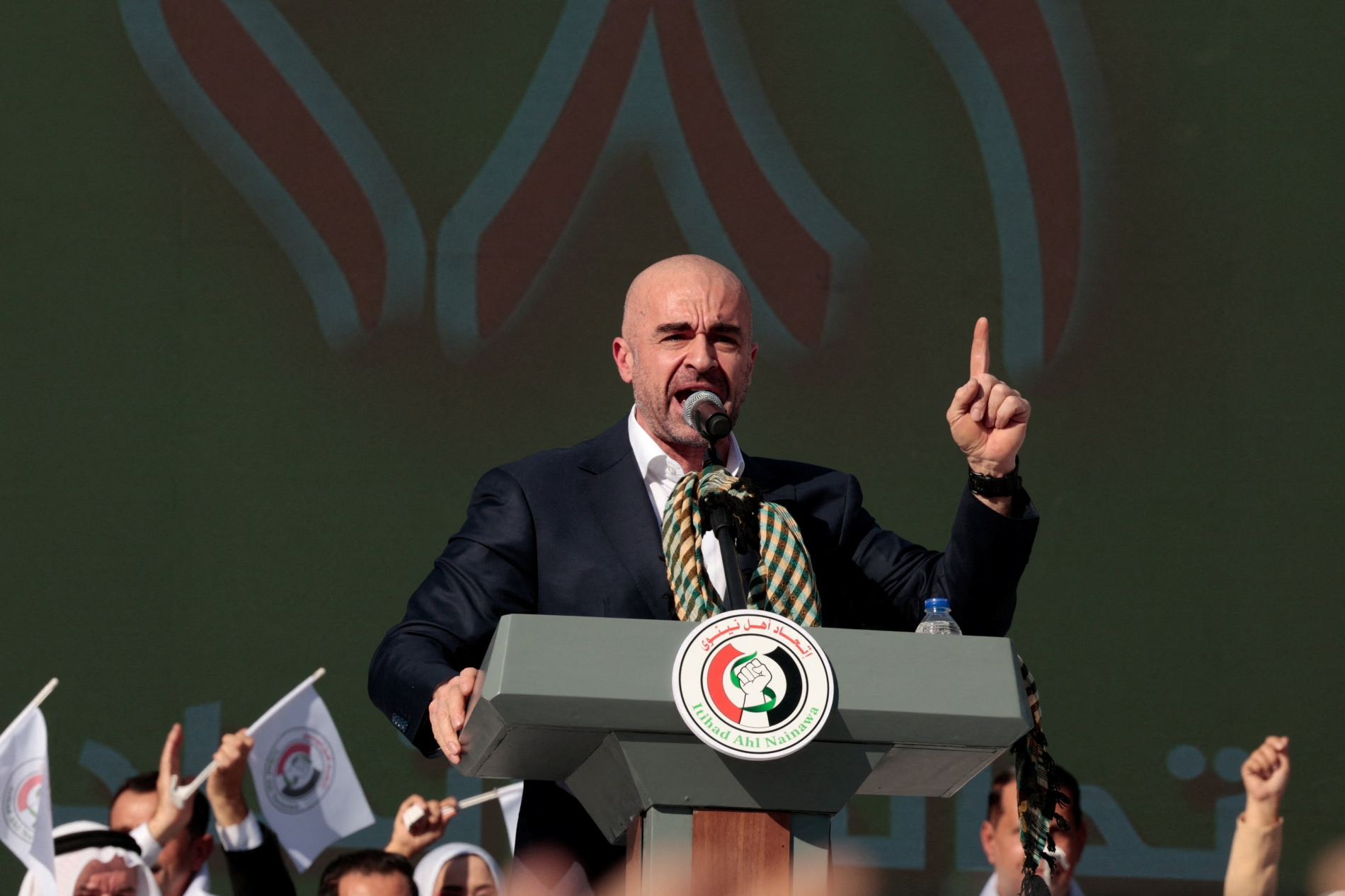
Bafel Talabani, leader of the Patriotic Union of Kurdistan, speaks during an election rally for the "Nineveh People's Union Alliance" ahead of the Iraqi parliamentary elections, in Mosul, Iraq, on 3 November 2025.

A KDP coup?

Recent developments suggest this division could soon return. On 4 November, the KDP parliamentary bloc convened a session without prior coordination or agreement with the PUK, relying on its ability to secure the required quorum of 52 members. The session resulted in the election of KDP candidate Vala Farid as Speaker, accompanied by a call to begin forming parliamentary committees.

PUK leader Bafel Talabani denounced it as a “coup,” describing the session as illegitimate. He announced the withdrawal of all PUK ministers and threatened escalatory measures if the KDP proceeded with electing parliamentary committees or choosing the region’s president and prime minister. Al Majalla understands that PUK ministers and senior government officials are now holding their meetings in Sulaimaniyah under the chairmanship of Deputy Prime Minister Qubad Talabani.
On 4 November, the KDP parliamentary bloc convened a session without prior coordination or agreement with the PUK, electing KDP candidate Vala Farid as Speaker

Ministers have been instructed to accept government directives only from Talabani, while government departments and public service institutions in Sulaimaniyah province have stopped communicating with ministries and official bodies in Erbil. PUK checkpoints have been told to treat KDP ministers and officials as ordinary citizens, denying them the privileges and authority associated with their positions.

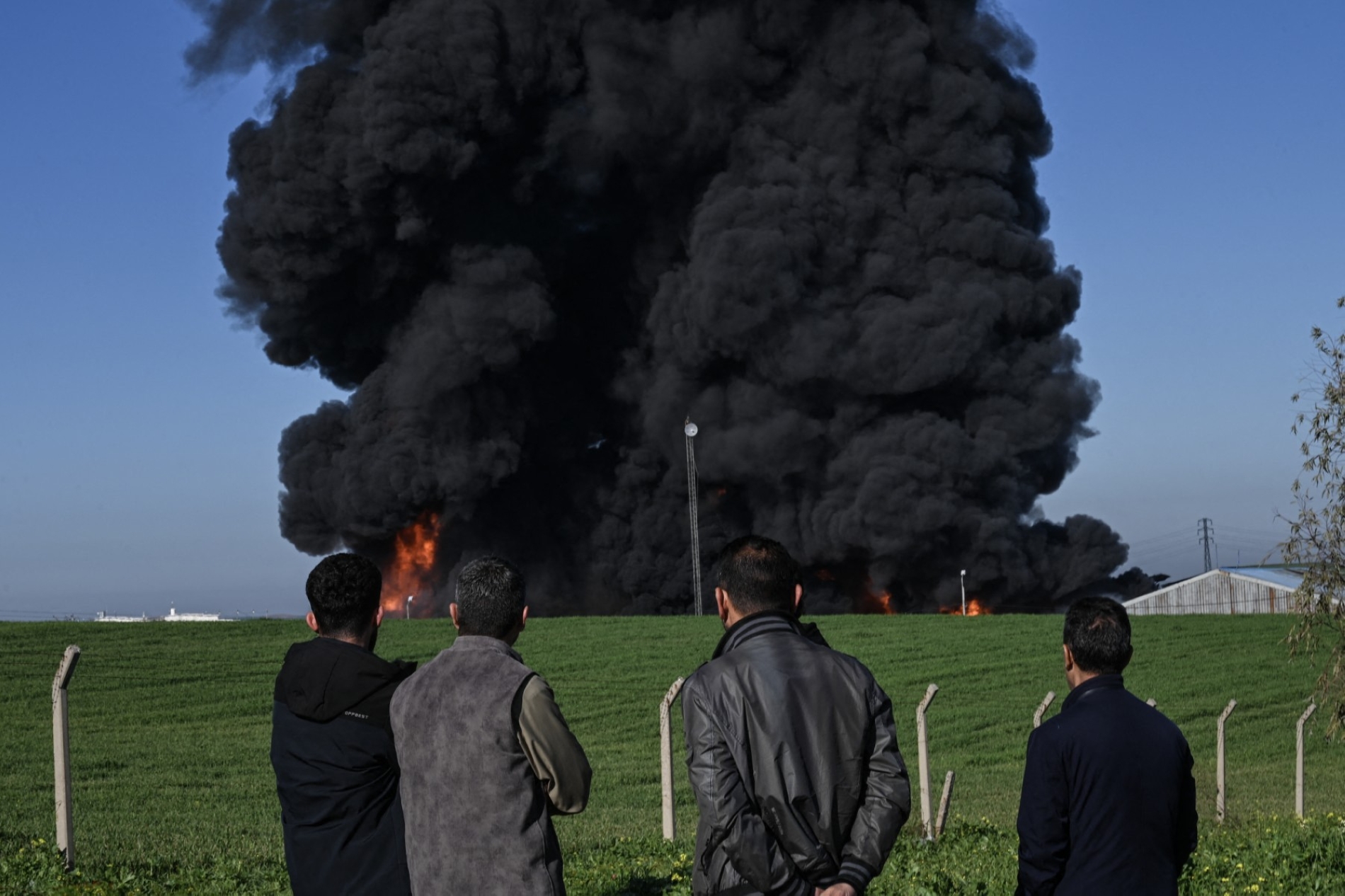
Local observers in the Kurdistan Region expressed concern about the security and economic consequences of the crisis, after the Khor Mor gas field in Sulaimaniyah came under drone attack, causing an almost complete shutdown of the electricity grid across the Kurdistan Region. Reports indicated that the attack originated inside Iraq, specifically from areas controlled by Iran-aligned armed factions.

AFP
People watch as smoke billows from an oil warehouse in the Kani Qirzhala area on the outskirts of Erbil, the capital of Iraq's autonomous Kurdistan region, following a suspected drone strike on 1 April 2026.

Moving pieces

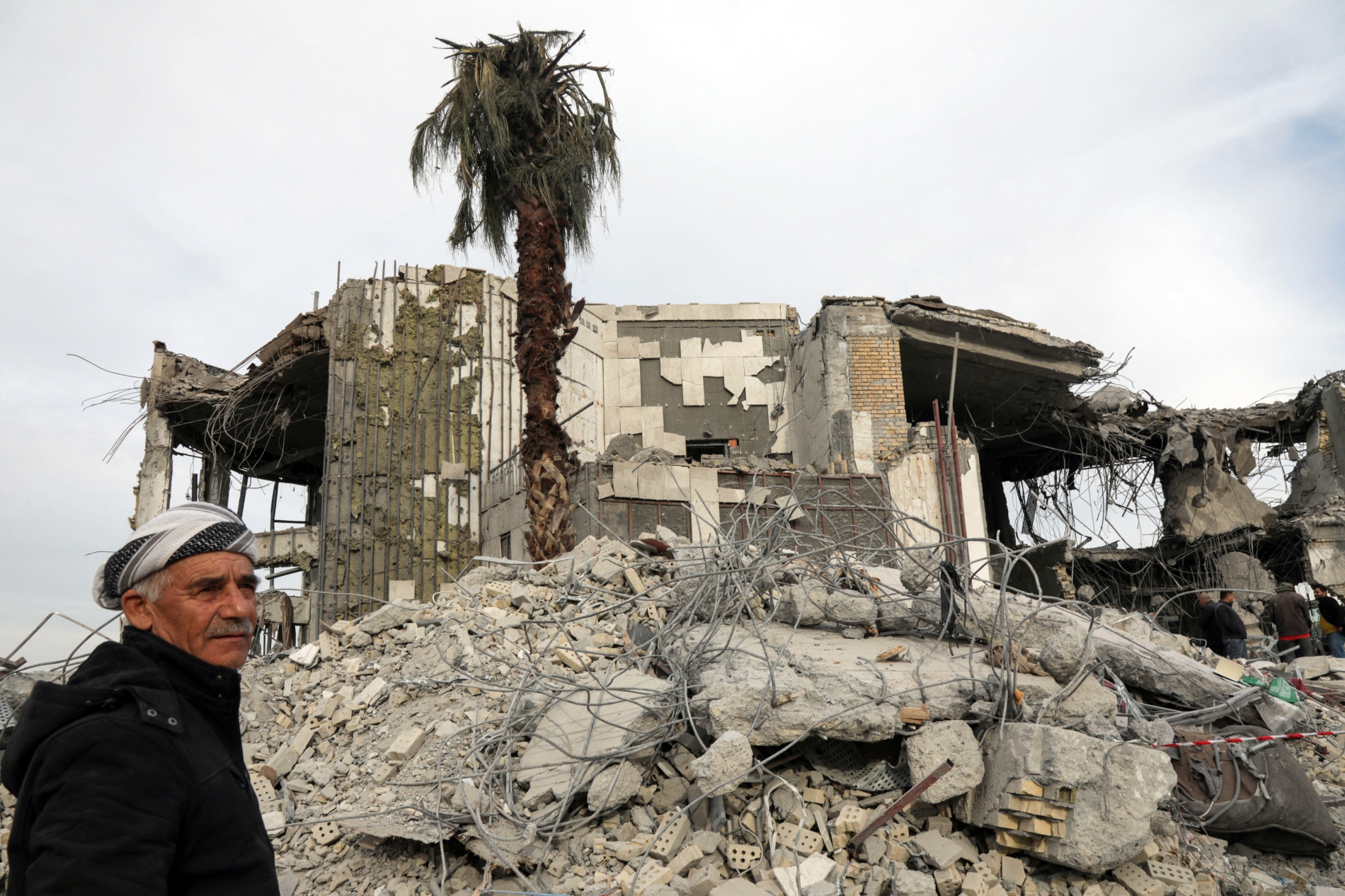
Observers believe the attack reflects Kurdistan's growing vulnerability amid internal division and warn that this weakness will affect the region's economy, particularly the energy sector and funding for public-sector salaries through transfers from the federal government in Baghdad. Meanwhile, Iranian air strikes continue to target political headquarters and civilian camps sheltering Iranian Kurdish refugees, despite the Kurdistan Regional Government's compliance with the security agreement concluded between Iraq and Iran.

Developments in the peace process between Türkiye and the militant Kurdistan Workers' Party (PKK) are also affecting Kurdish politics in Iraq. Turkish military bases remain spread across the region, with consequences for the future of Sinjar, the Yazidi district that remains one of Iraq's most prominent disputed territories. Meanwhile, Kirkuk province is undergoing new political and administrative arrangements after its governor, Mohammed Samaan Agha, left to take up a ministerial portfolio in the government.

The dangers of division are particularly acute as Erbil prepares for lengthy and important negotiations with the national government in Baghdad, which will decide the region's share of the new federal budget, the proposed oil and gas law expected to come before parliament, and a reassessment of Iraq's strategic position in response to the challenges facing the wider region.

Iranian interference coincided with the Americans' withdrawal

Political researcher, Dilshad Sherzad

Regional powers

An informed Kurdish political source told Al Majalla that the KDP-PUK dispute involves far more than disagreements over ministries or positions. A complete collapse in trust has brought the crisis back to its original roots. The election of senior PUK figure Nizar Amedi as Iraq's president in April 2026 took place "without any coordination with the KDP," they said. "It came just two days after the American offensive against Iran ended, revealing Washington's inability to overthrow the Iranian regime by military force."

Shortly after, the US announced its forthcoming withdrawal from Iraq by the end of September, which it subsequently carried out. As this was happening, Türkiye sought to secure its interests in Iraq by engaging with the PKK and the federal government in Baghdad, such as over the future of Sinjar, after Turkish forces withdrew from the Zilkan military base in Nineveh province and from their bases along the border. It left the KDP leadership feeling marginalised and excluded.

"In a sense, the two main parties are caught in a regional power equation greater than either of them, and neither has sufficient leverage to protect the domestic front," said the informed Kurdish political source. "The balance and mutual trust that once rested on regional power arrangements and American protection of the Kurdistan Region's geopolitical position have been completely disrupted, opening the door to the present crisis of confidence."

Political researcher Dilshad Sherzad, meanwhile, said foreign powers were fuelling internal tensions in Kurdistan. "The fragility of the democratic structure underpinning the Kurdistan Region's political experiment cannot be denied, but the crisis goes much further than that," Sherzad said. "It is linked to the ability and determination of external actors to deepen internal divisions as part of an effort to redraw the balance of power in the region."

AFP
A Kurdish man walks past debris following an Iranian missile strike on the Kurdistan region's capital of Erbil, on 17 January 2024.

Iranian role?

He said Iran was seeking to drive the two Kurdish parties further apart by establishing new realities on the ground, citing the recent activities of Faramarz Asadi, Iran's consul in Kurdistan, and Mohammad Reza Maskarian, a senior Islamic Revolutionary Guard Corps (IRGC) officer responsible for Kurdish affairs. He noted that early Iranian interference coincided with the Americans' withdrawal.

Despite these suggestions of outside interference, many think the Kurdish political elite have a historical responsibility to iron out differences. The consequences of its continued failure to do so, he said, could include armed conflict or a return to the system of two separate, rival administrations, which very few Iraqi Kurds want to see. Unless and until there is a fundamental change, however, this state of 'contained division' in Kurdistan looks set to persist, to the disadvantage of the people who live there.

font change