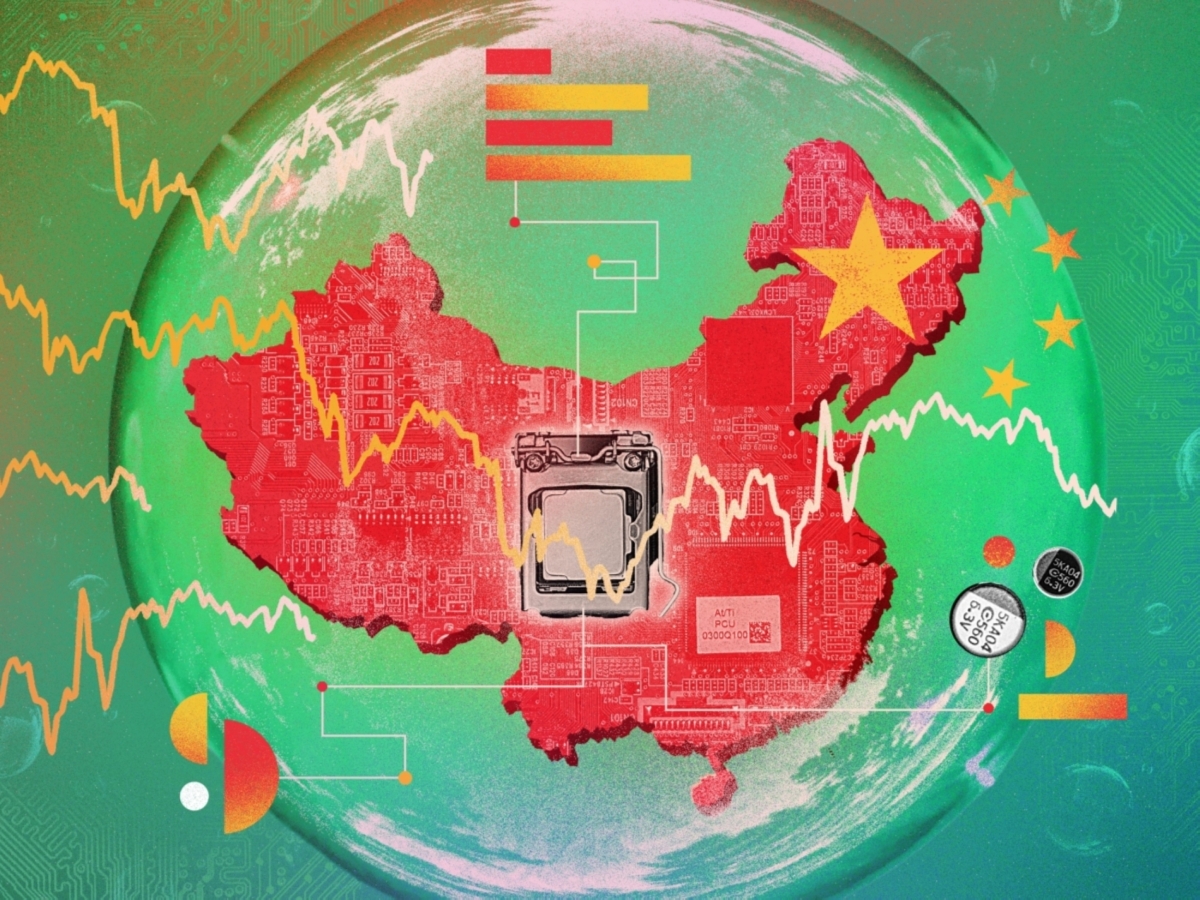

The fall was as swift as the rise had been noisy. In less than four months, the STAR 50, which tracks 50 of the largest science and technology innovators listed on the Shanghai Stock Exchange’s STAR Market, lost about 40% of its value. According to a Reuters analysis published on 26 October 2026, roughly $480bn was wiped from the market value of companies listed on the innovation board during the sell-off.
The index is not devoted solely to AI firms. It includes companies working in semiconductors, advanced equipment, biotechnology and other fields. Yet it is heavily exposed to chips and computing, making it a useful, if imperfect, reflection of both the enthusiasm that surrounded China’s technology story and the doubts that have since begun to shadow it.
The decline does not prove that AI is a bubble, nor does it mean that demand for chips and data centres will decline. It does, however, raise questions put aside while share prices were rising: how much are companies spending? How much of their computing capacity are they actually using? And are their expected revenues and profits sufficient to justify what investors have paid?
Even after the correction, the STAR 50’s trailing price-to-earnings ratio remained near 100, after approaching 250 during the rally. That compared with around 30 for the Nasdaq 100. This does not mean that every Chinese company in the sector was overvalued, but it does show how much future growth had already been priced in before it materialised.
AI- and technology-related shares accounted for an estimated 42% of market capitalisation and 57% of trading in mainland Chinese and Hong Kong-listed shares, according to Goldman Sachs figures Reuters cited. When liquidity and expectations concentrate around a single investment track, the market becomes sensitive to doubts about demand, earnings, or companies’ access to advanced technology.
Shares in robotics company Unitree have lost roughly half their value since its August listing, after the offering attracted extraordinary demand. Memory-chip maker CXMT lost more than a quarter of its value in a month, while MetaX and Moore Threads fell to around half their July levels after recording spectacular gains following their stock-market debuts.

No single cause drove the correction. High valuations that were hard to justify with current profits coincided with questions about the durability of demand, tax bills, and the possibility of further US and Western restrictions on the use of Chinese equipment in data centres. Sales by Chinese state-backed investors added to the pressure, as authorities sought to cool speculation and preserve a gradually rising market that would not end in another boom-and-bust.
China’s data centres tell a story that matters more than short-term share-price movements. The Ministry of Industry and Information Technology says the occupancy rate for computing-infrastructure racks has reached 71.4%. By contrast, Chinese industry estimates compiled by business publications and research bodies put the actual utilisation of intelligent-computing capacity at around 30-37%, with some public computing centres thought to be even lower.
The two figures are not necessarily contradictory. Rack occupancy means that equipment has been installed in a data centre. Capacity utilisation measures how much time processors spend doing actual work. A centre may therefore be filled with servers while many of them wait for paying workloads or operate far below their potential.
Industry estimates suggest China will have more than 500 intelligent-computing centres by mid-2026. Some, however, were built in response to local-government incentives and investment targets before sufficient commercial demand or adequate network infrastructure existed to distribute workloads efficiently.
At the same time, China continues to face shortages of the most advanced chips, high-speed memory and interconnection components needed to train large models. The situation therefore cannot simply be described as a “computing glut”. It is more accurately a mismatch: less efficient capacity, or capacity in the wrong place, alongside a shortage of the advanced computing resources developers actually need.

Expenditure outpacing ROI
The question extends far beyond China. The world is building the physical foundations of the AI economy more quickly than the ultimate return on that investment is becoming clear. The International Energy Agency estimates that capital expenditure by the largest cloud-computing providers will exceed $700bn in 2026, with most of the money going into data centres, chips, electricity networks and cooling equipment.
JPMorgan estimates global AI-related capital expenditure at about $900bn in 2026 and says the cumulative total could reach $5.5tn by 2030. Goldman Sachs puts global investment in 2026 at around $1tn. The figures differ because the institutions do not define AI investment in precisely the same way. They nevertheless agree that the world is experiencing one of the largest waves of digital-infrastructure investment in history.
The cost is also visible in the energy bill. Data centres consumed about 485 terawatt-hours of electricity in 2025. The International Energy Agency expects their consumption to approach 950 terawatt-hours by 2030, equivalent to about 3% of global electricity demand.
Direct revenue has not yet caught up with spending. An analysis by the University of California, Los Angeles estimates that the infrastructure built by major investors since 2022 may require annual revenue of $500bn to $650bn to cover depreciation and operating costs and provide an adequate return on capital. By contrast, estimates put the current annual revenue of the leading AI application providers at between $150bn and $218bn.
This comparison is not a final verdict on the viability of the investments. Revenue is growing rapidly, the assets will remain in use for years, and some of the benefits appear as savings within businesses rather than as separate AI revenue. It does, however, illustrate how far the industry still has to travel before its returns match the amount of capital committed to it.
Other bottlenecks
Concerns surrounding AI are no longer confined to whether companies can generate returns commensurate with their spending. Recent developments involving Nvidia, Microsoft and Anthropic show that bottlenecks may also stem from management upheaval, geopolitical restrictions, delays in building data centres and even disruption to the services companies and governments rely on every day.
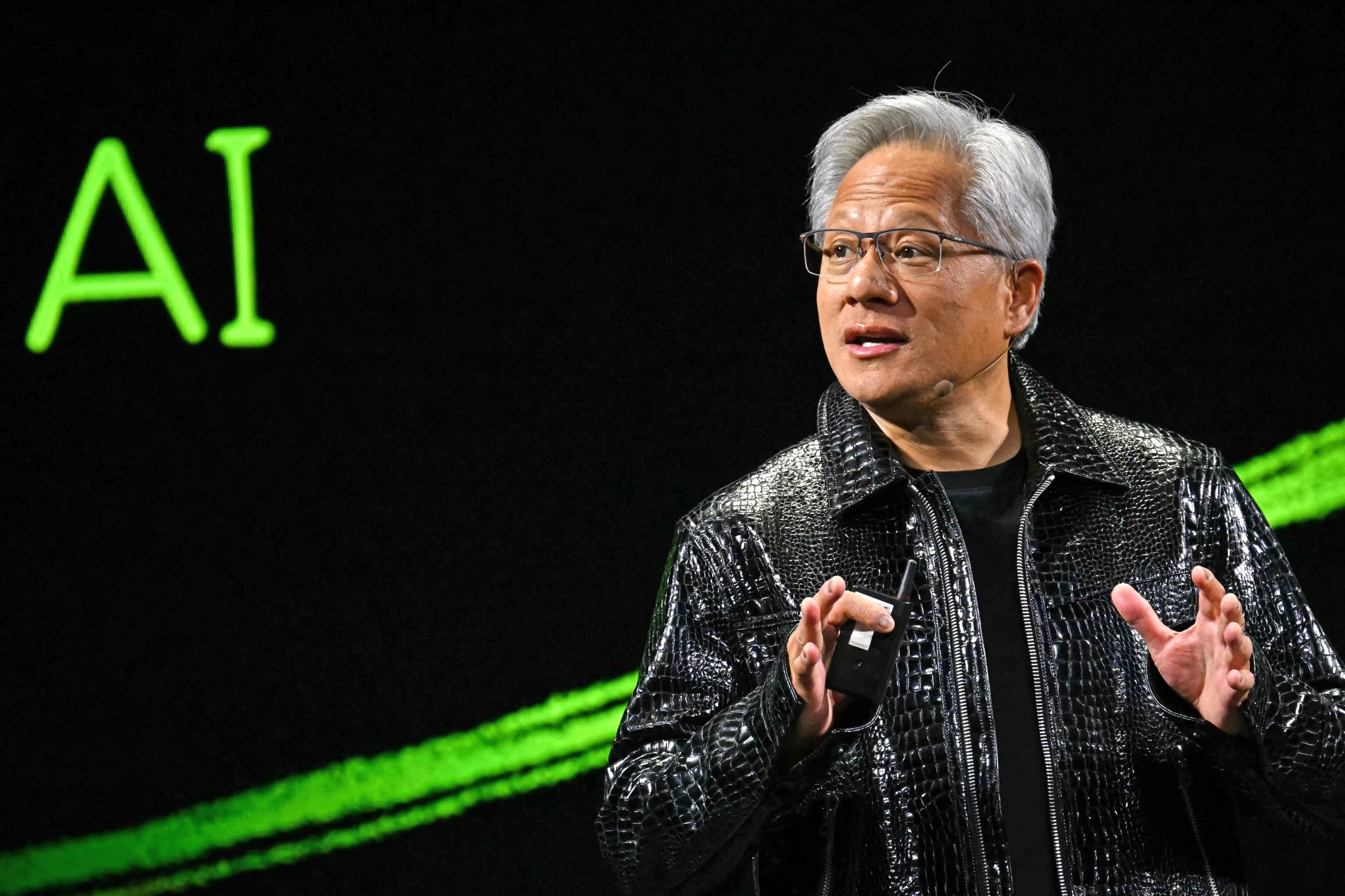
On 12 November 2026, Nvidia announced that its founder, Jensen Huang, had resigned as president and chief executive and stepped down from the board with immediate effect. Chief Financial Officer Colette Kress was appointed interim chief executive pending the selection of a permanent successor. The official announcement did not give a reason for Huang’s resignation, but it came days after a governance crisis prompted the board to open an independent investigation. Reports had alleged that Huang was the target of a foreign intelligence operation, while separate reports concerning personal relationships raised questions about executive conduct and potential conflicts of interest. When announcing the investigation, the board said it had no reason to believe that company secrets or US national security had been compromised.
Alongside the succession crisis, Nvidia faces a problem more directly connected to the real economy. Reuters reported that around 600,000 of its H200 chips were being stored in Hong Kong in early November, awaiting Beijing’s approval for large-scale entry into mainland China.
In the first half of its 2027 financial year, Nvidia recorded a $400mn charge related to excess inventory and purchase commitments for the chips, after demand weakened and Chinese restrictions prevented it from selling all the units that Washington had authorised for export. Shipments made under the licensing programme accounted for less than 1% of data-centre revenue in its most recent quarter. The episode shows that having prospective customers is not enough when trade policy and technological-security concerns prevent products from reaching them.

Return gap explained
Anthropic, the developer of the Claude model, illustrates the financial side of the returns gap more directly. Ahead of its planned Nasdaq listing on 19 November, the company sought a valuation of up to $1.4tn, after scaling back earlier expectations of $1.5tn or more. Although its revenue rose to about $16.96bn in the third quarter of 2026, quarterly growth slowed to 47%, from 144% in the preceding quarter, and it recorded an operating loss of $567mn. Its net loss reached $23.3bn, although roughly $21.9bn reflected a non-cash accounting charge from revaluing convertible bonds and other financing instruments.
More burdensome than the quarterly loss was the company’s commitment to nearly $895bn in future spending on computing capacity and infrastructure, of which about $69.8bn falls due within 12 months. Investors’ doubts therefore centred not on Claude’s ability to attract users, but on whether revenue could keep growing fast enough to cover long-term computing commitments, many of which will fall due before the corresponding revenue is secured.
Microsoft presents a different aspect of the problem. The company recorded capital expenditure of $45.2bn in the quarter ending in September 2026, about $4.8bn below its expected level, after third-party providers delivered data-centre capacity late and it came online during the quarter. The lower spending did not signal weaker demand: Azure revenue grew by 48%. It did, however, show that capital and customers are not sufficient if facilities, electricity connections or server installations are delayed.
Then came the outage that began on 12 November and lasted for more than 12 hours, disrupting Outlook, Teams and Copilot in several countries. Government bodies, airlines, trading firms and shipping companies were affected, and some organisations had to return to paper records and fax machines. Morningstar DBRS estimated insured losses at between $300mn and $500mn. These estimates do not capture the full economic cost. Still, they show how concentrating software and cloud computing in the hands of a few companies can turn a technical failure into a shock felt across numerous sectors and countries.

Momentum still strong
These developments do not mean that the AI boom has lost momentum. Nvidia recorded strong revenue growth in its previous quarter, while Microsoft’s cloud business continued to expand. They do, however, broaden the meaning of the returns gap. The problem is not simply selling the service or the chip, but delivering it, keeping it running, and protecting the business from political, managerial, and operational risks.
The picture is not devoid of genuine returns. Stanford University’s 2026 AI Index Report brings together studies that found productivity improvements of 14-15% in customer support, 26% in software development and as much as 50% in certain marketing tasks.
The largest gains, however, tend to appear in specific, easily measurable tasks rather than across an entire job or organisation. When the time saved is calculated as a share of total working hours, some studies put the gain within a narrower range of 2.8-5.4%. Doctors, engineers, and accountants do not spend their entire workday on the specific task that AI can accelerate.