Twice a month, Al Majalla reviews a selection of the latest films (and occasionally a golden oldie). In this series, we cover new releases in Arab cinema and beyond.
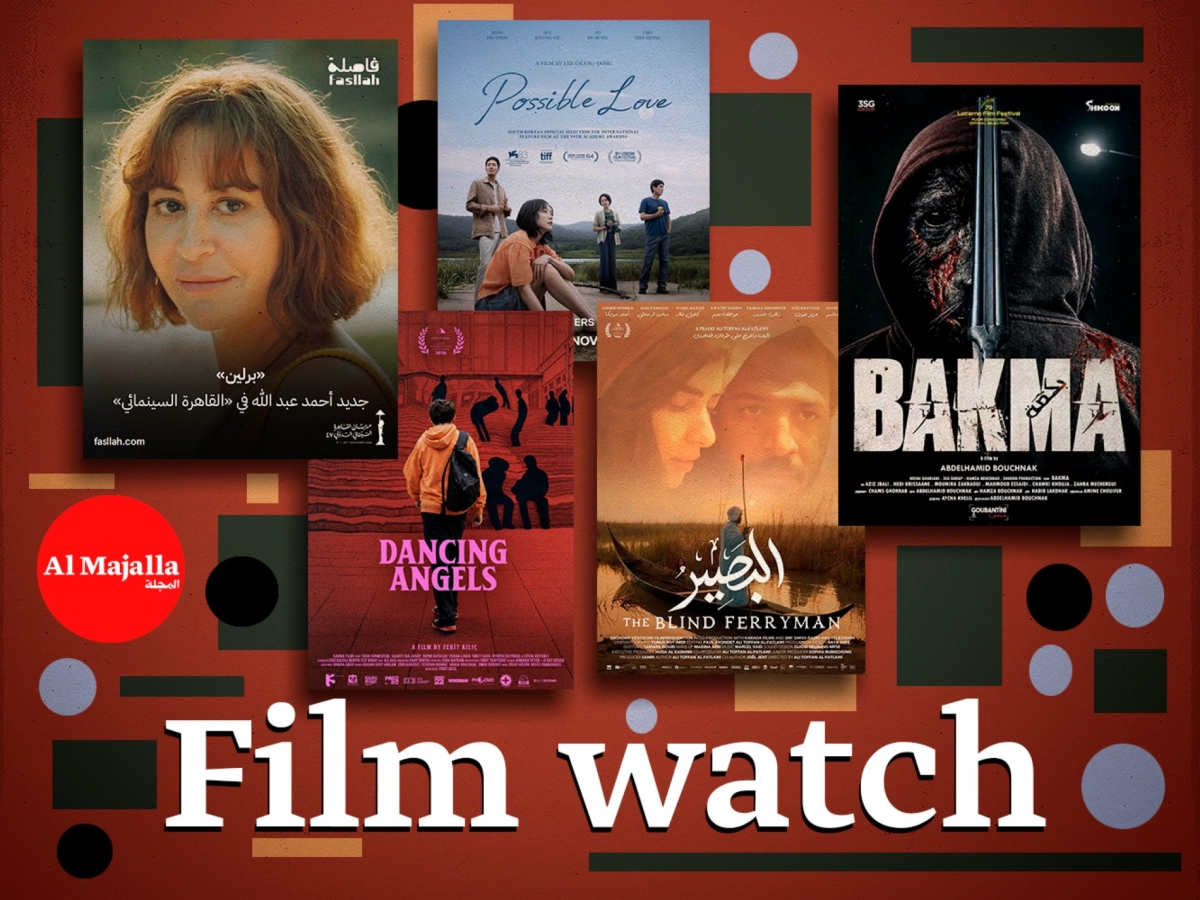
Possible Love
Directed by: Lee Chang-dong
Screenplay: Oh Jungmi, Lee Chang-dong
Countries of production: US, South Korea
Nearly nine years after Burning, South Korean director Lee Chang-dong returns with Possible Love, drawing on tragic events that unfolded in South Korea 17 years ago. When several major corporations arbitrarily dismissed thousands of employees, the mass layoffs triggered waves of strikes. These were met with severe police repression, and later, several workers took their own lives.
The film explores the psychological and social consequences of this calamity through the story of one dismissed worker, Seok, and his wife, Miok.
Social inequality and class division have long been central to Lee’s cinematic universe, appearing in earlier works such as Green Fish and Oasis. In Possible Love, he revisits these themes through a philosophical lens, bringing Seok (Sol Kyunggu) and Miok (Jeon Doyeon) into the orbit of a couple from an entirely different world: a wealthy documentary filmmaker (Cho Yeojeong) and her husband (Zo Insung).
When the filmmaker proposes a documentary about the couple’s ordeal, Seok and Miok move into the couple’s luxurious home. As their daily lives begin to intertwine, the screenplay quietly unfolds a series of ethical questions, particularly the filmmaker’s appropriation of the couple’s suffering as material for a film crafted for an elite audience.
Set in the German capital, Berleen follows a group of Arab migrants whose seemingly disparate stories gradually converge
Gradually, this gesture of solidarity acquires the contours of possession and subtle class domination. Lee evokes the tensions that thrive in such a charged environment, letting glances, room arrangements, and the smallest architectural details betray the forbidden desires stirring among the four characters. He sustains this psychological contest for nearly three hours, building tension with remarkable patience through a narrative whose calm surface hides a steadily rising intensity.
Possible Love is the second entry in a Netflix project that reimagines Krzysztof Kieślowski's celebrated Dekalog (inspired by the Ten Commandments) through 10 films by different directors, following Asghar Farhadi's Parallel Tales. Although Lee's film draws on the final commandment, 'Thou shalt not covet', it approaches covetousness as a sin of thought, unlike the tangible transgressions of theft, murder, or adultery.
In one revealing moment, Miok describes the house they have moved into as resembling a novel's setting. Her husband scoffs at the notion that she reads fiction. She replies with cool detachment: "Then let us say it is from a novel I have never read." Doyeon demonstrates her extraordinary range, offering a performance that is elusive, intricate, and at times bewilderingly layered.
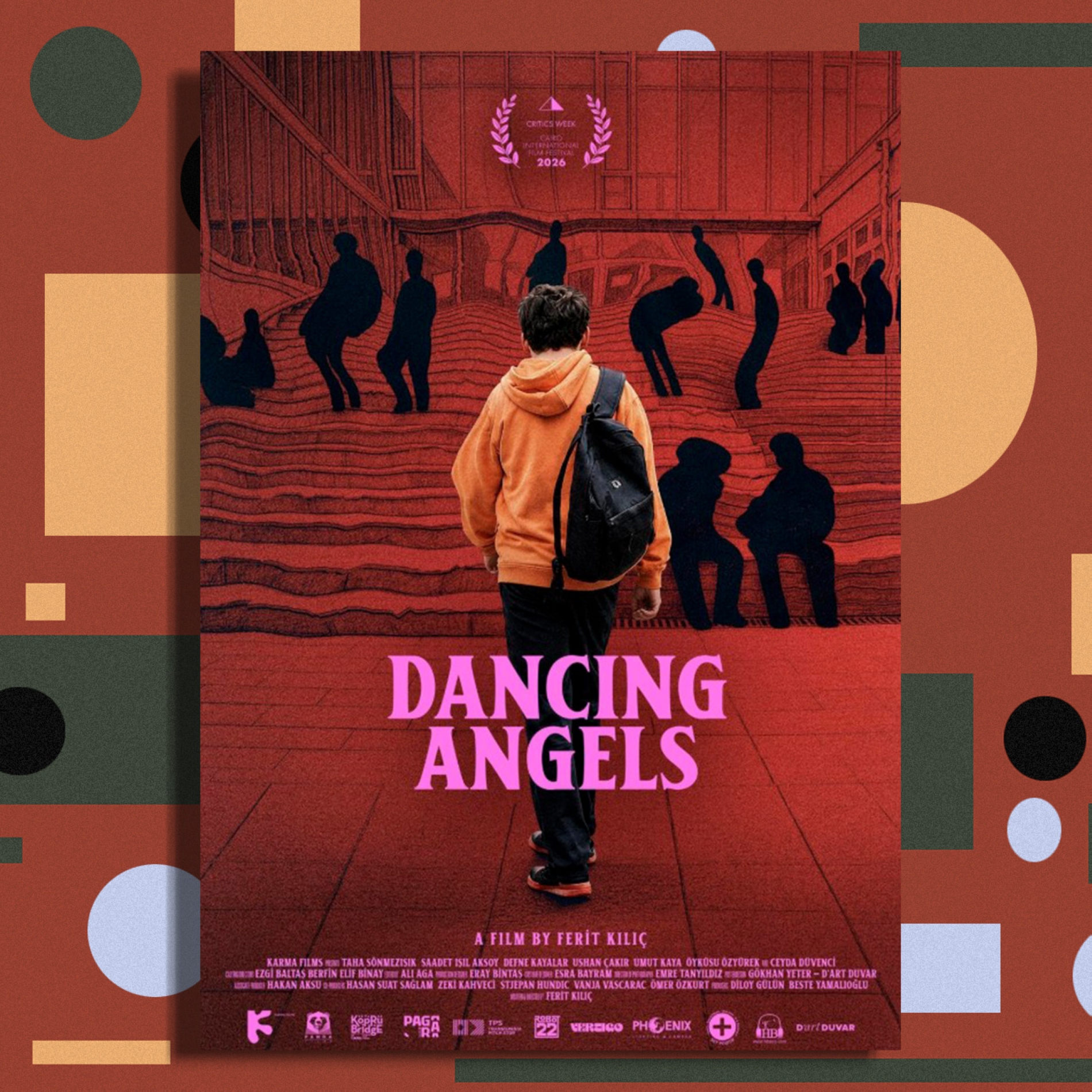
Ferit Kılıç's Dancing Angels
Dancing Angels
Written and directed by: Ferit Kılıç
Countries of production: Türkiye, Croatia
In his debut feature, Dancing Angels, Ferit Kılıç is remarkably close in age to his protagonist. He began writing the screenplay at 14 and completed filming at 19. At the heart of the story is Ali (Taha Sönmezışık), a 16-year-old boy struggling to pursue his dream amid suffocating pressures from family and society. Some reject his ambition outright; others respond with indifference.
Set in Istanbul, the film blends psychological thriller and drama. After a failed suicide attempt brought on by the pressures of his home life, Ali enrols at a private school. His father refuses to allow him to cultivate his talent for dance, the one pursuit in which he has found spiritual refuge. His distress deepens as he becomes the target of relentless bullying, while the school administration remains indifferent. The mounting psychological turmoil culminates in an unexpected act of rebellion.
The film examines the many forms of systematic violence imposed by adults upon children and adolescents under the pretexts of duty, discipline, and moral guardianship. In an earlier interview, Kılıç said he aimed to explore the consequences of violence and authoritarian control, tracing their roots across societies and cultures.
The creative seed of Dancing Angels was the four-minute short, Dancing in the Dark. Filmed by Kılıç in 2024, it follows a young boy trying to break free from the constraints his traditional surroundings impose on his artistic aspirations. He discovers his passion for dance in secret, practising alone at night in his dark room.
The Blind Ferryman
Written and directed by: Ali Toffan Al-Fatlawi
Countries of production: Iraq, Qatar, Switzerland
The fervour and ambition of a filmmaker at the beginning of his artistic journey are unmistakable throughout The Blind Ferryman. Its director, Ali Toffan Al-Fatlawi, immersed himself in nearly every facet of the film's creation, writing the screenplay and contributing to both the editing and production.
Although blind, Ayoub (Ahmed Moneka) works in the perilous waterways of the southern Iraqi marshes, where navigation would challenge even a sighted person. Yet he has become one of the village's most skilled boatmen, having memorised the waterways so thoroughly that the villagers readily attest to his expertise.
One night, however, Ayoub and his friends are attacked by a group of religious extremists. As they attempt to escape, his instincts falter, and he loses his way among the reeds for the first time in his life. A mysterious woman (Samya Rahmani) rescues him and gradually disrupts his life.
Evoking the atmosphere of One Thousand and One Nights, Ayoub falls in love with a woman the villagers refuse to believe exists, setting him on a spiralling quest to prove she is real. The film blurs the boundary between the tangible and the imagined, not only in how events unfold but also in the motivations driving its characters.
In a symbolic sequence filmed entirely underwater, their love acquires an ethereal quality. They move together with the grace of ballet dancers, their fluid motions expressing the intimacy and singular nature of their bond. Ayoub's love for the woman, however, renders him an outcast. In the eyes of his neighbours, he is transformed from a respected member of the community into a man whose sanity they doubt.
Al-Fatlawi began his career in Baghdad as a poet and painter before settling in Switzerland. His artistic background shows in the film's meticulous compositions and carefully arranged frames, where people, animals, and birds appear against the distinctive landscape of the marshes.
Many of these images resemble documentary photographs. He also fashions a visual language of contrasts, using light and shadow to evoke Ayoub's inner darkness. The soundtrack follows a similar aesthetic philosophy. Rather than relying solely on music, the film foregrounds the sounds of nature, giving the landscape a presence of its own.
Bakma
Written and directed by: Abdelhamid Bouchnak
Country of production: Tunisia
In Bakma, Tunisian director Abdelhamid Bouchnak weaves psychological and corporeal horror into the story of Khaled (Aziz Jebali), a professional killer whose psychological disturbances drive him to murder women, mutilate their bodies, and kill dogs.
Khaled equates sex workers with stray dogs, reflecting an entrenched association in many societies. Bouchnak implicates the viewer from the outset. A fleeting shot reveals a corpse assembled from the dismembered remains of several victims. More unsettling still, the director crowns this grotesque hybrid with the head of a dog, creating a disturbing fusion of victim and perpetrator.
For Khaled, dogs evoke a painful childhood memory that still shapes his behaviour. Childhood trauma and its lasting psychological effects are recurring themes in Bouchnak's cinema, notably in Dachra and Fartattou Dhahab.
The screenplay also explores the roots of criminal behaviour, recalling films such as They Made Me a Criminal, in which violence emerges from the circumstances that shape an individual's life. Khaled's childhood was marked by his mother's neglect and her preference for her dog over her son. After he harmed the animal, she punished him by forcing him to eat from its bowls and calling him a 'dog', an insult his friends later adopted to mock him. One of the film's most striking symbolic sequences shows Khaled skinning a dog's head, placing it over his own, and barking loudly.
The film relies on a potent combination of suspense and dramatic tension, punctuated by scenes of extreme violence that carry significant psychological and narrative weight. In one harrowing sequence, a defenceless dog approaches the killer as he sits in his car. Khaled points the barrel of his gun toward the animal, which innocently licks it, mistaking the weapon for a helping hand. A shot rings out, shattering the dog's skull.
Another scene draws a direct visual parallel between the ferocity of lions and other predators and that of human beings, embodied here by the killer. The film observes a shared response to hunger: merciless predation. Among animals, the impulse arises from biological necessity. Khaled, however, remains insatiable even after his succession of crimes. He is the wolf that resides within us all.
Berleen
Written and directed by: Ahmad Abdalla
Countries of production: Egypt, Germany
Nearly four years ago, Egypt's presence in the official competition at the Cairo International Film Festival was limited to a single film, 19B, directed by Ahmad Abdalla. The film went on to win three awards. Now the director returns to the same competition with Berleen, featuring two prominent actresses, Menna Shalabi and Yosra El Lozy.
As has become his practice, Abdalla has written the screenplay himself, remaining faithful to the tradition of auteur cinema that has defined his career since his debut feature, Heliopolis. Set in the German capital, Berleen follows a group of Arab migrants whose seemingly disparate stories gradually converge.
The events unfold over a single day, as the characters face personal crises that gradually converge into a collective predicament. Some episodes verge on the fantastical. One woman struggles to convince those around her that she is not the dead woman they believe her to be. A photographer captures hidden, parallel worlds within the cold city. Elsewhere, Hassan embarks on a psychological journey driven by revenge, haunted by mysterious musical strains that only he can hear.
As the day progresses, the narrative threads become increasingly intertwined, shifting between past and present. Abdalla weaves them together with considerable ingenuity, eschewing conventional storytelling and classical dramatic conflict in favour of a series of sharply drawn character portraits.