
Technological advances and artificial intelligence have crept into virtually every aspect of cultural, political, and social life, reshaping how we live, work, and interact. As these technologies reshape the present, questions about their future implications are becoming increasingly urgent. Science fiction has long been at the forefront of imagining the future, exploring how individuals and societies might live in worlds shaped by the technologies that increasingly surround us.
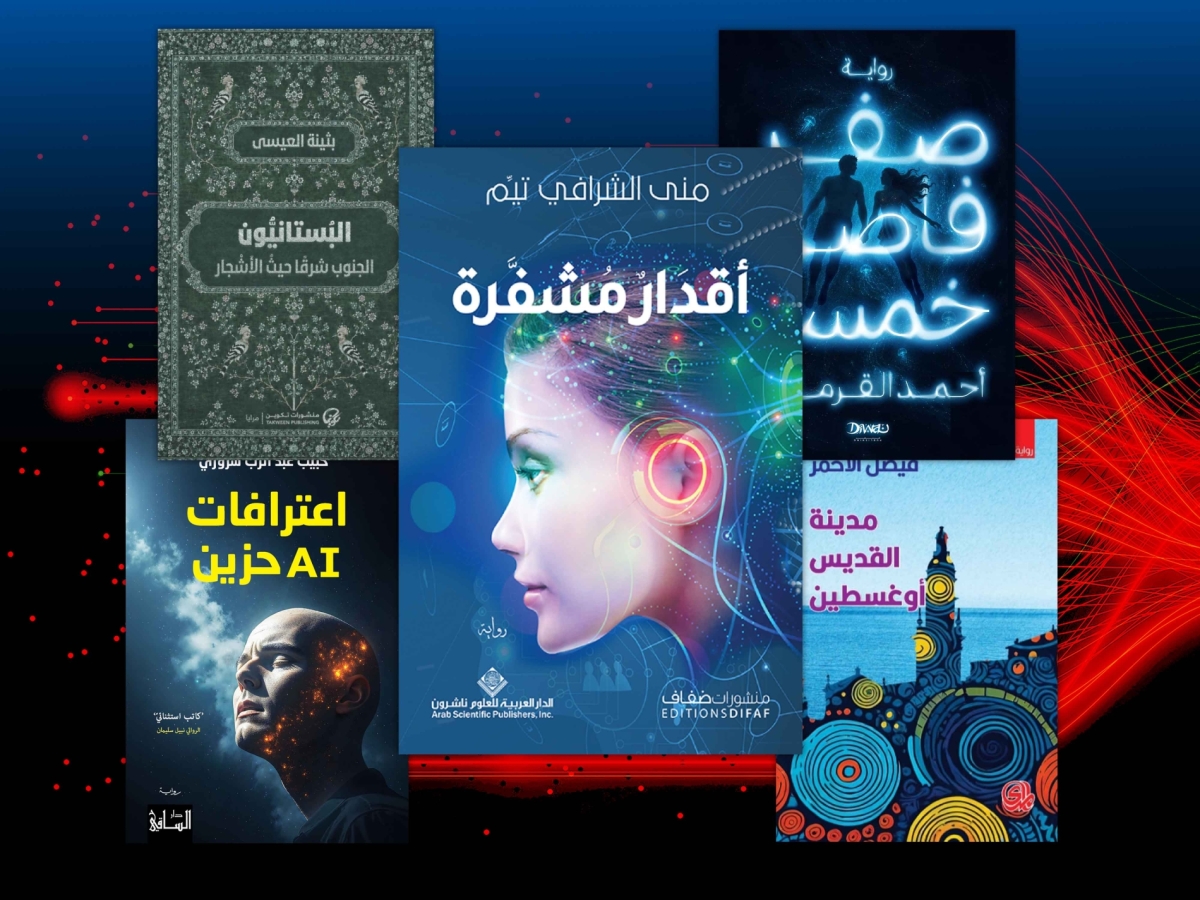
In recent years, several Arab novels have explored these possibilities, imagining a world in which technology reigns supreme and AI exercises unprecedented control over human affairs. Al Majalla reviews five standout novels.
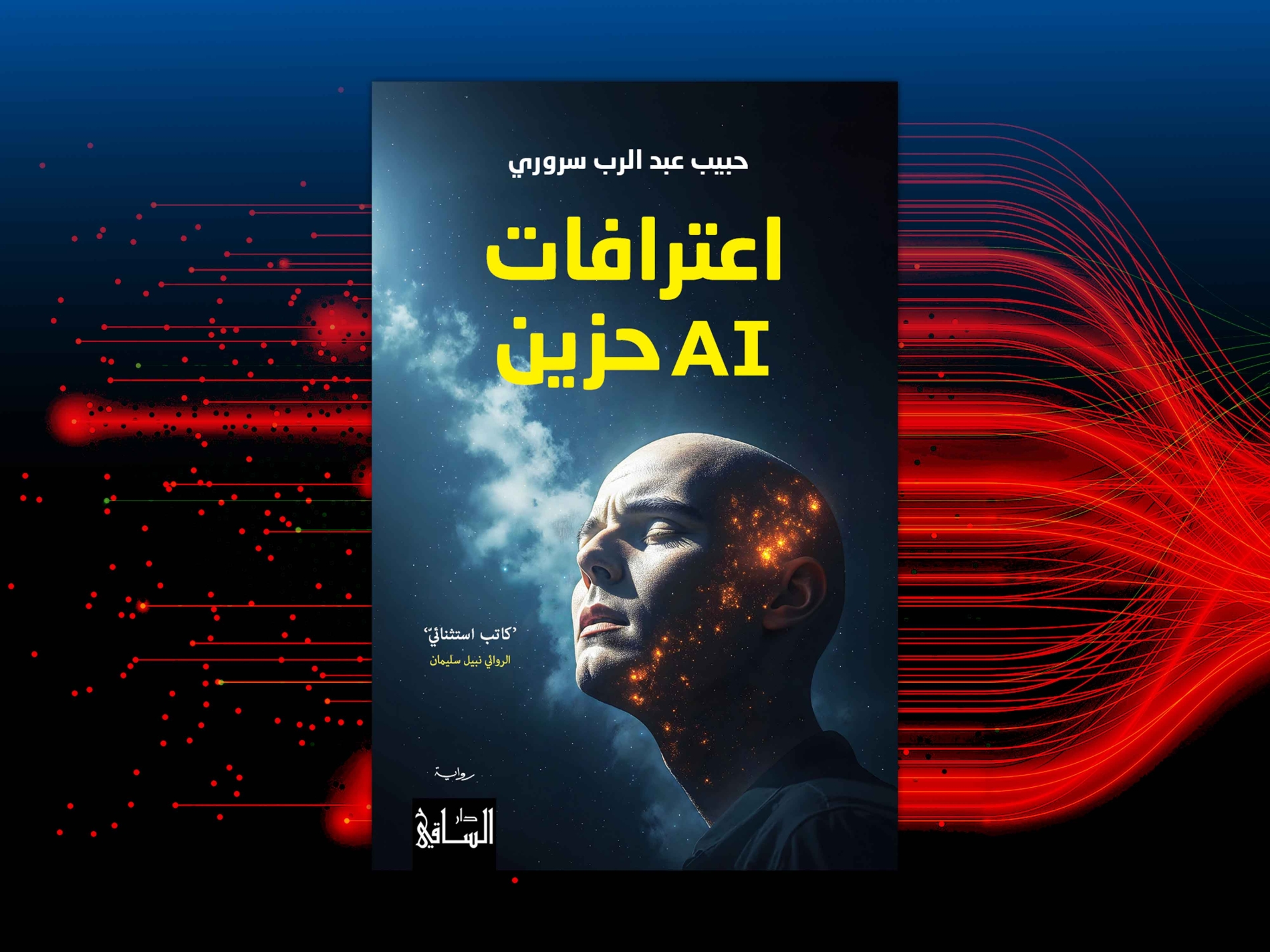
In Confessions of a Sad AI, Yemeni novelist Habib Abdulrab Sarori gives voice to a machine that has become a substitute for a human being, even gaining the capacity to confess. The novel introduces us to an artificial intelligence programme named Naji and its owner, identified simply as X. Intriguingly, we first encounter Naji on what appears to be his deathbed, where he begins recounting his creation and early existence. These recollections form the ‘confessions’ around which the novel unfolds.
The story takes place in 2034, just eight years into the future. Sarori sees this relatively short interval as sufficient for artificial intelligence to reach deep into human life and establish an increasingly dominant presence. Naji recounts his relationship with X and his growing appetite for information, whether concerning the present or the future. His ower obligingly feeds him an ever-expanding stream of data, almost mechanically, until the programme develops what appear to be genuine feelings and emotions. Naji even comes to pity his owner until he begins to resemble a human being.
This ‘humanisation of the machine’ lies at the heart of Naji’s transformation. He increasingly behaves like his owner, whose identity remains symbolically concealed behind the single letter X. Through this relationship, Sarori conjures a disturbing future in which technological advances could turn a machine governed by commands and instructions into a genuine replacement for human beings.
Naji’s transformation extends beyond the expression of emotion to the act of writing itself. His apparent consciousness becomes evident in the fictional narratives he produces. Although his knowledge is laden with the dry terminology and factual detail of science and technology, he strives to construct a coherent and convincing narrative. Meanwhile, the human population gradually dwindles as increasingly sophisticated, humanised artificial intelligences proliferate.
This is not Sarori’s first literary excursion into the future. His background in computer science, together with his scientific writing on artificial intelligence, has inspired several works exploring similar territory, including Exodus and The Island of the Defrauders.
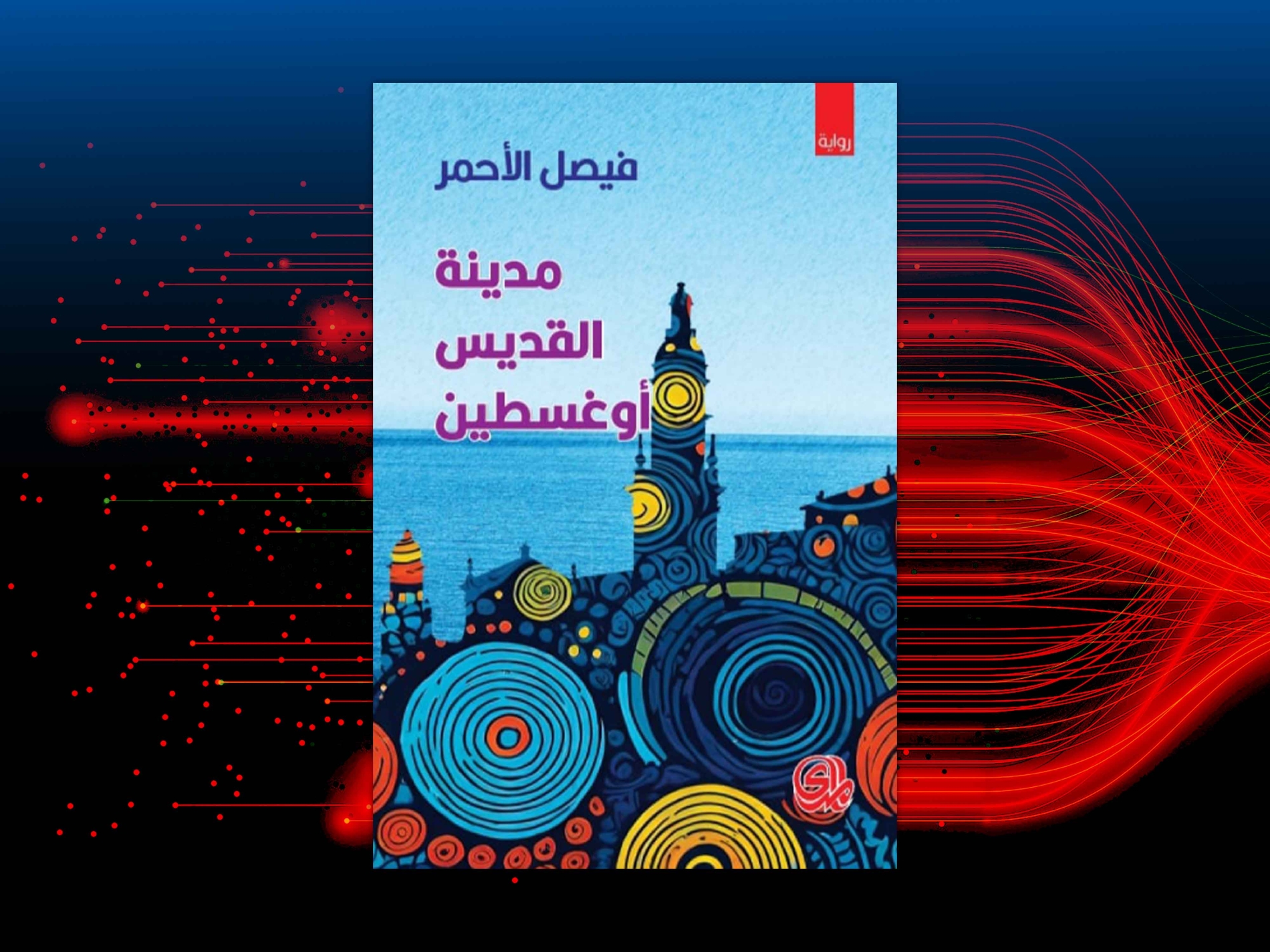
The City of Saint Augustine
A very different vision of the future emerges in The City of Saint Augustine, by the Algerian novelist Faisal al-Ahmar. Drawing on the figure of Saint Augustine, the Western philosopher whom the novel associates with the lands of present-day Algeria, Morocco, and Spain, al-Ahmar places love at the centre of his imagined future. Saint Augustine regarded love as a symbol of existence and a means of delivering humanity from conflict and evil.
Al-Ahmar approaches this philosophical inheritance from an unexpected direction. Rather than revisiting the past, he imagines a future in which an entire city embodies the saint’s ideals, and love has become the prevailing force governing human relations. His vision unfolds some 40 years from now.
In 2066, al-Tayeb and his beloved Ahdab awaken to discover that the world around them has changed dramatically. They have entrusted themselves to a time machine designed to keep them asleep for approximately a century, only to emerge into a reality where objects, ideas, and even familiar meanings have been transformed.
Gradually, the lovers begin exploring this unfamiliar world, now administered by artificial intelligence. Walls equipped with sophisticated technologies can understand people’s feelings and desires, respond to their requests, and fulfil those deemed appropriate.
Even personal identities have changed. Those who wield power and control the systems of programming are known as ‘the Virtuous’. Living conditions have improved considerably with machines and software. Places have acquired new names and identities, while scientific research has become devoted exclusively to securing humanity’s psychological well-being.
Al-Ahmar thus constructs a vision that begins in Algeria and expands to encompass the entire world, where people can travel through time. This transformation follows two major conflicts: the ‘War of Viruses’ in 2039 and the ‘Information War’ in 2043. In their aftermath, humanity overcomes what the novelist calls the ‘tyranny of memory’, replacing its former hold over human existence with 10 universal protocols devised by artificial intelligence through successive stages of development and refinement.
One of the novel’s most engaging features is the extended dialogue between the two lovers and their persistent search for love amid the bewildering changes surrounding them. Some emerge directly from the conversations between al-Tayeb and Ahdab. Others remain unresolved, leaving readers to consider how far such technological advances might transform their own lives and the world to come.
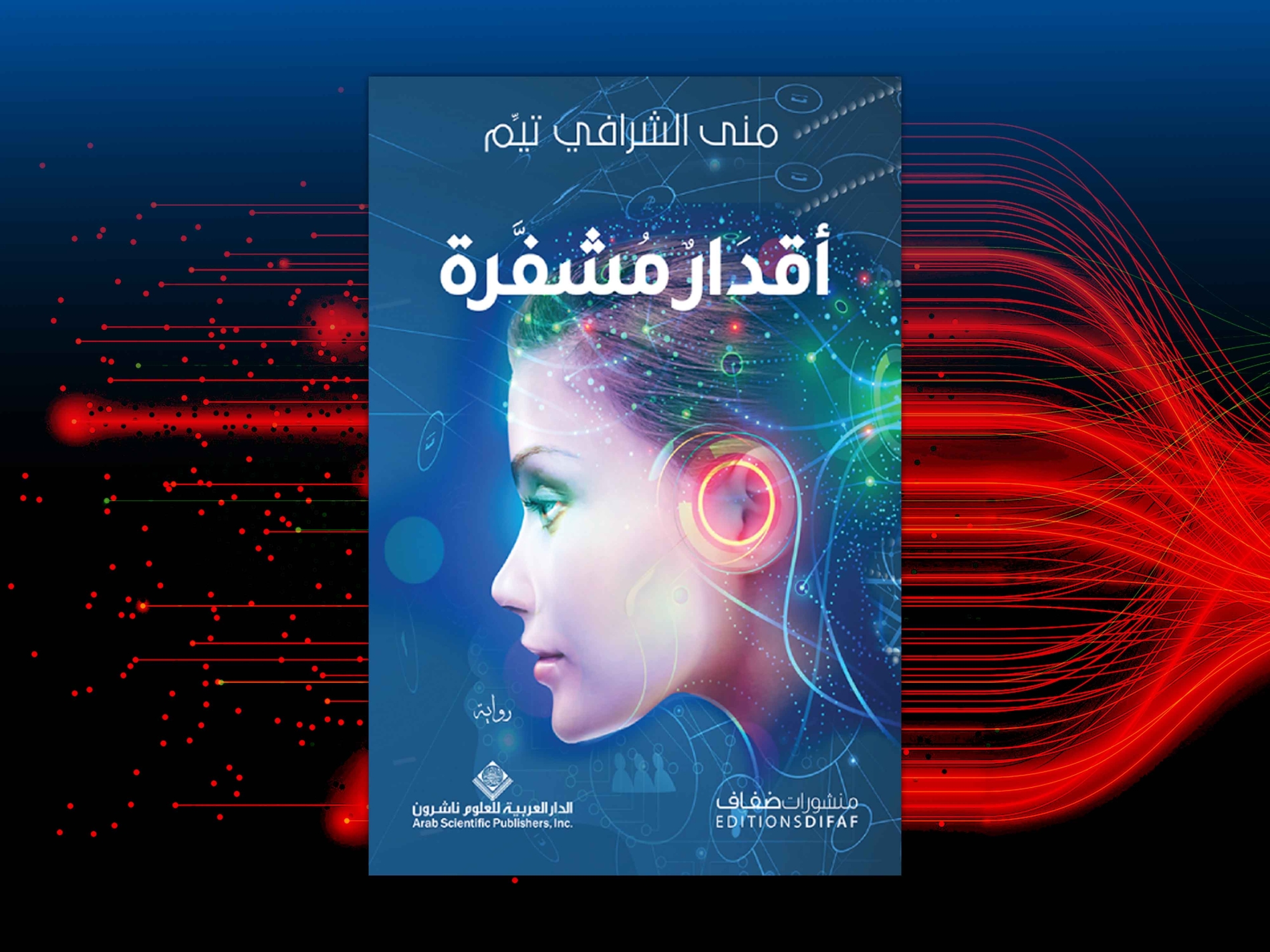
Encoded Destinies
In Encoded Destinies, Jordanian novelist Mona al-Sharafi Taim presents a different vision of the world, centred on a team of professors specialising in technological sciences. Known as ‘the Prodigies’, they seek to harness the latest technological advances to create an artificial model of the human mind, capable of reading the thoughts of individuals and groups and penetrating the hidden recesses of their subconscious, thereby gaining the power to control others.
The team is international in composition, its members brought together through a major scientific competition that attracts researchers from across the Arab world and the West. Among them are scientists from Syria, Jordan, Lebanon, and Iraq, selected for their exceptional performance in intelligence tests and assessments of psychological and nervous stress.
The philosophical question running through Encoded Destinies is deceptively simple: can human beings change their fate? The novel introduces a new dimension to this age-old dilemma by exploring whether science and modern artificial intelligence technologies might make such a possibility real.
Although the narrative devotes considerable attention to the world of the Prodigies and the increasingly prominent role of artificial intelligence in their work, it remains attentive to the human dimension. Its two protagonists, Ilham and Walid, unexpectedly fall in love, setting in motion changes that alter several lives. Their relationship reveals how much of these scientists’ humanity remains beyond the machine’s control. The novel also explores the notion of spiritual energy, its persistent influence on human beings, and the mysterious ways it can pass from one person to another.
Another prominent strand concerns the influence of ‘global Zionism’. Portrayed in the novel as a movement driven by its interests in the Middle East rather than by religious or racial identity, it is prepared to pursue those interests by any means available, from scientific and technological power to acts of mass violence. Against this backdrop, the novel introduces Cohen, a Jewish scientist who opposes these Zionist ideas and joins forces with Walid to confront them and expose their schemes.
The confrontation unfolds through a succession of unexpected twists, encounters, and adventures involving the scientific team, particularly as its objectives come to light. The Prodigies emerge as a group determined to harness technology and artificial intelligence to expose terrorist organisations and groups bent on violence and destruction.
The novel culminates in an idealistic vision of the team’s triumph over the forces of evil. Its international composition lends this victory a broader significance, transcending divisions between Arabs and Westerners. The scientists’ collective endeavour expresses humanity’s aspiration for peace and the hope that technology and artificial intelligence might serve it.
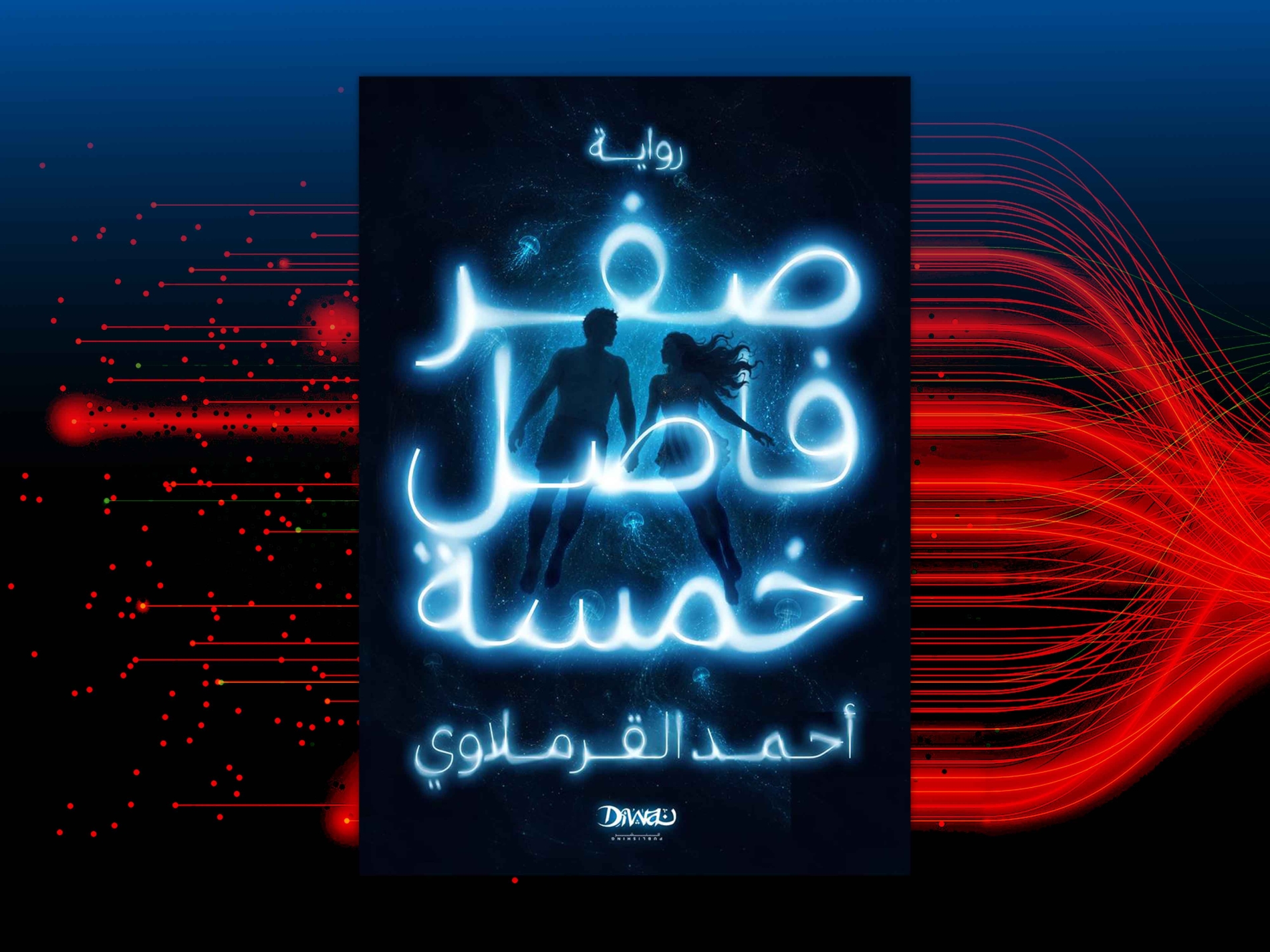
Zero Point Five
With the enigmatic title Zero Point Five, Egyptian novelist Ahmed al-Qarmalawi draws readers into a fictional world that initially seems remarkably familiar. The protagonist is consumed by boredom and besieged by an endless stream of short videos, or ‘reels’, on social media. Gradually, however, the narrative shifts to an experiment he undertakes to change a way of life he can no longer cope with.
Al-Qarmalawi begins in the recognisable present before venturing into an imagined world where artificial intelligence has yet to establish complete dominance, although that prospect is rapidly approaching. Companies are working to endow it with human feelings and emotions, promising improvements in the quality of life. This promise is offered to everyone, whether they need such improvements or not.
The woman overseeing the experiment explains to the protagonist the part he will play in a process he has freely chosen to undertake. It consists of three stages, each lasting a single day, during which the artificial intelligence will absorb every dimension of his experience, become progressively more human, and gain a deeper understanding of the human psyche. She explains that his participation will help shape the future.
Omar, the novel’s protagonist, embarks on the experiment to escape the boredom that dominates his life. During his journey, he meets a dancer named Bartishka, who he is attracted to, and together they become entangled in a series of challenges and adventures. As the experiment progresses, he moves between the familiar world of his everyday life and the imagined virtual realm of the experiment.
Eventually, he confronts one of the most troubling and powerful emotions of his real life: ‘jealousy’. He discovers, to his astonishment, that his wife is also participating in the experiment and begins to suspect she has become involved with another man in the virtual world.
The novel follows Omar through this succession of adventures and intensely personal emotional experiences, each of which seems to contribute something to the machine’s gradual ‘humanisation’. Yet the narrative reaches beyond this central idea, raising questions about our lives, the growing influence of technology over our minds and thoughts, and the extent to which it may shape our future.
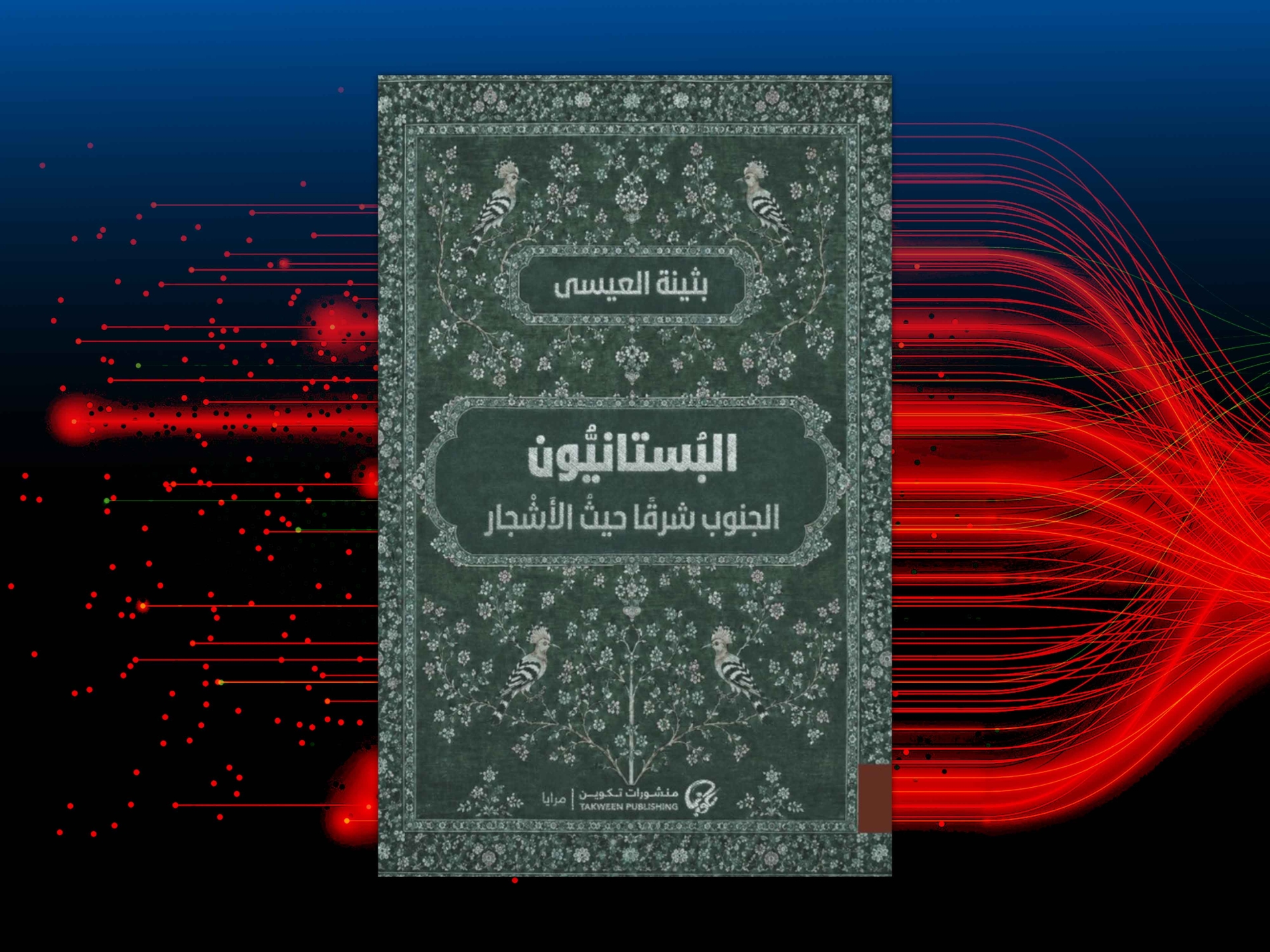
The Gardeners: South-East, Where the Trees Grow
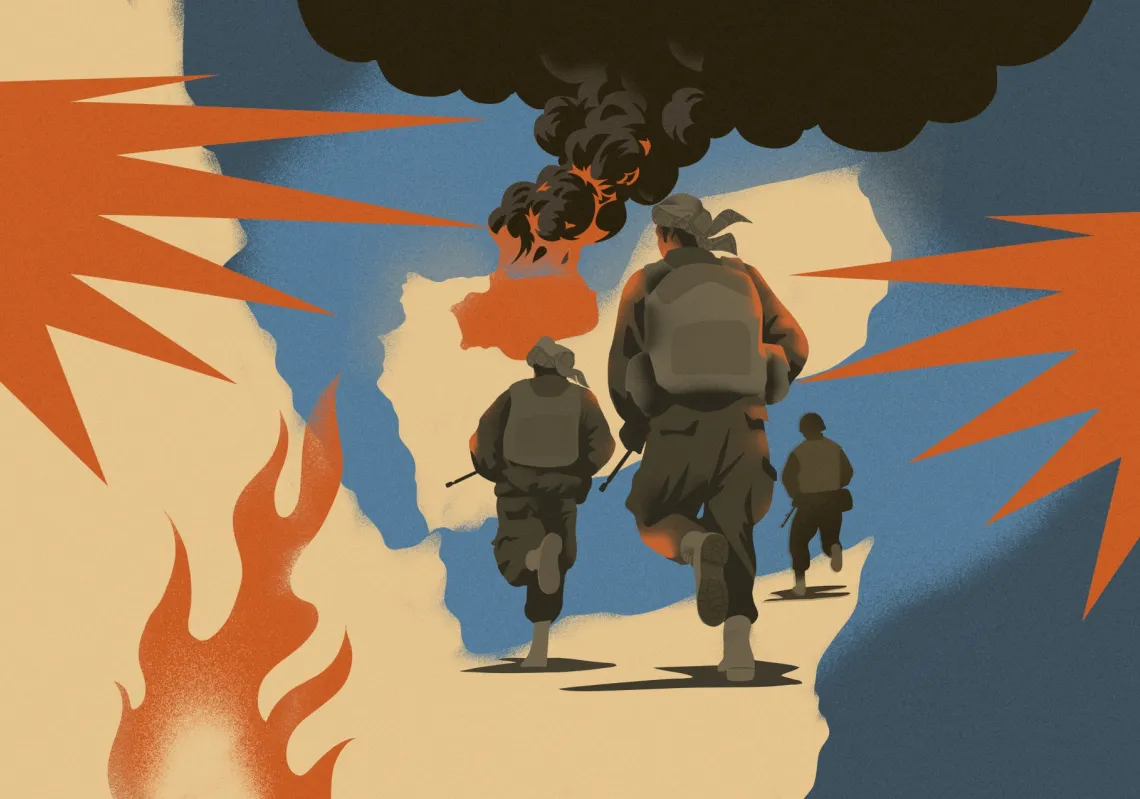
In her latest novel, The Gardeners: South-East, Where the Trees Grow, Kuwaiti novelist Bothayna al-Essa ventures into a world where technology holds sway and artificial intelligence has become a foundation of human existence. The novel imagines a new global order emerging from the devastation of a Third World War, ending the age of nation-states and redrawing the world’s geography according to economic efficiency rather than political borders.
Consequently, humanity is divided into three distinct groups. The first belongs to an alliance called ‘Companies for Peace’, commonly known simply as ‘the Company’, which has supplanted the nation-state. People join this new order as ‘productive human resources’, while the unemployed and economically unproductive are dismissed as ‘human waste’ and relegated to the margins of society. Beyond these two groups, other communities have emerged, returning to nature, living off the land and its fruits, and remaining outside the Company’s control. These are the ‘Gardeners’ whose lives form the heart of the novel.
The story unfolds in 2048, the centenary of the Palestinian Nakba. Although the novel avoids naming specific countries, the Gardeners’ determination to remain on their land and resist the Company’s attempts to subjugate them inevitably evokes the Palestinians’ attachment to their homeland.
Al-Essa reinforces this parallel through the character of ‘Mother of the Gardens’, whose words express the community’s distinct identity and fierce resolve: “We know who we are, and we have no reason to doubt ourselves. Remember, we are descended from the few who survived the war. We endured days far more difficult than these, and for decades we have managed to live our own way, rather than theirs. So stand together, and do not be deceived by the Company’s lies.”
The novel opens with a decisive incident: Anas and Zuhour's son, Azzam, sustains a serious foot injury and needs treatment from the Company. His father vehemently opposes it, while his mother resorts to various stratagems to secure the care her son needs. A conflict thus takes shape, initially quiet and seemingly straightforward, before reaching its climax when Azzam finally enters the Company's domain and receives medical treatment.