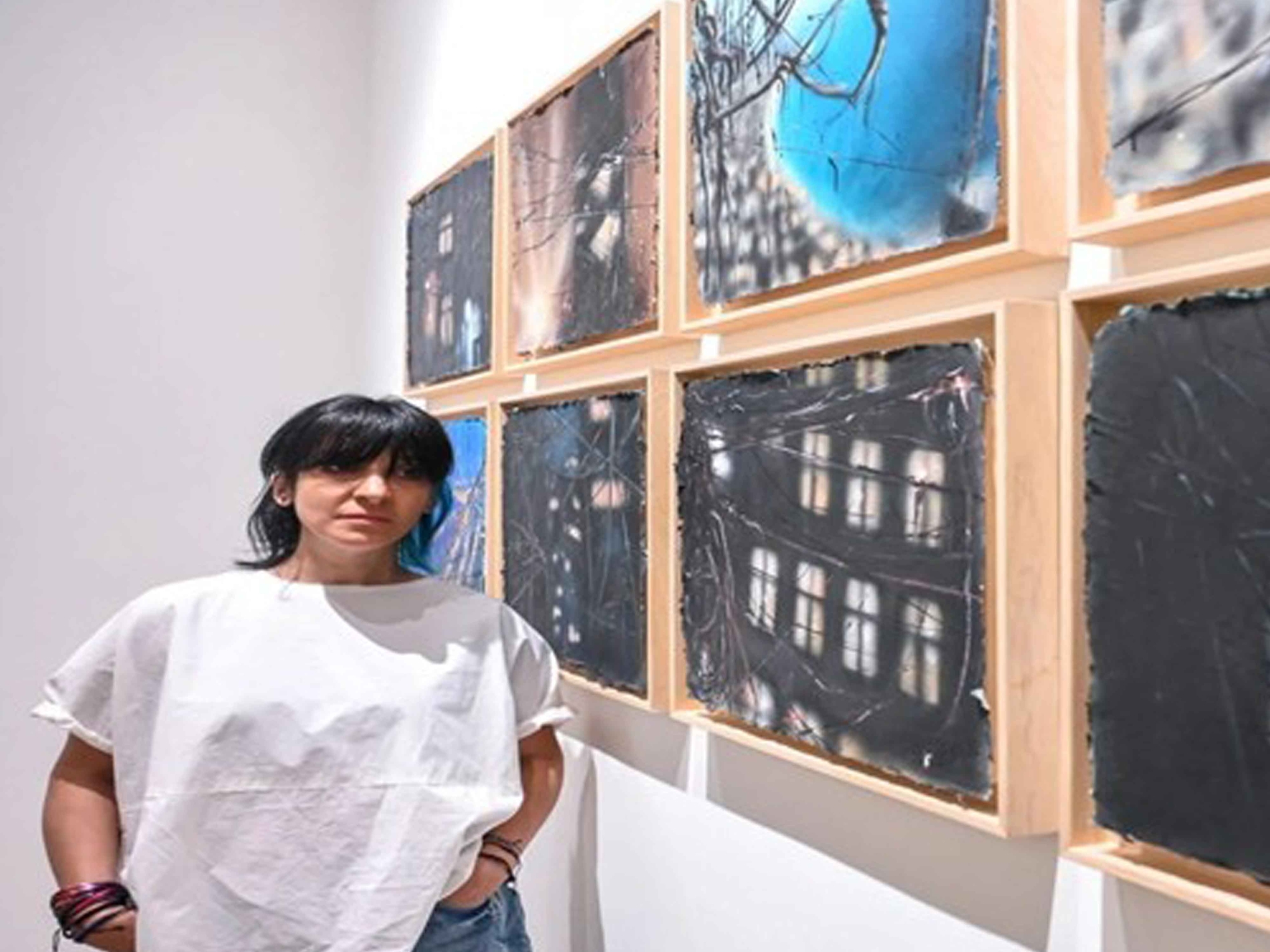
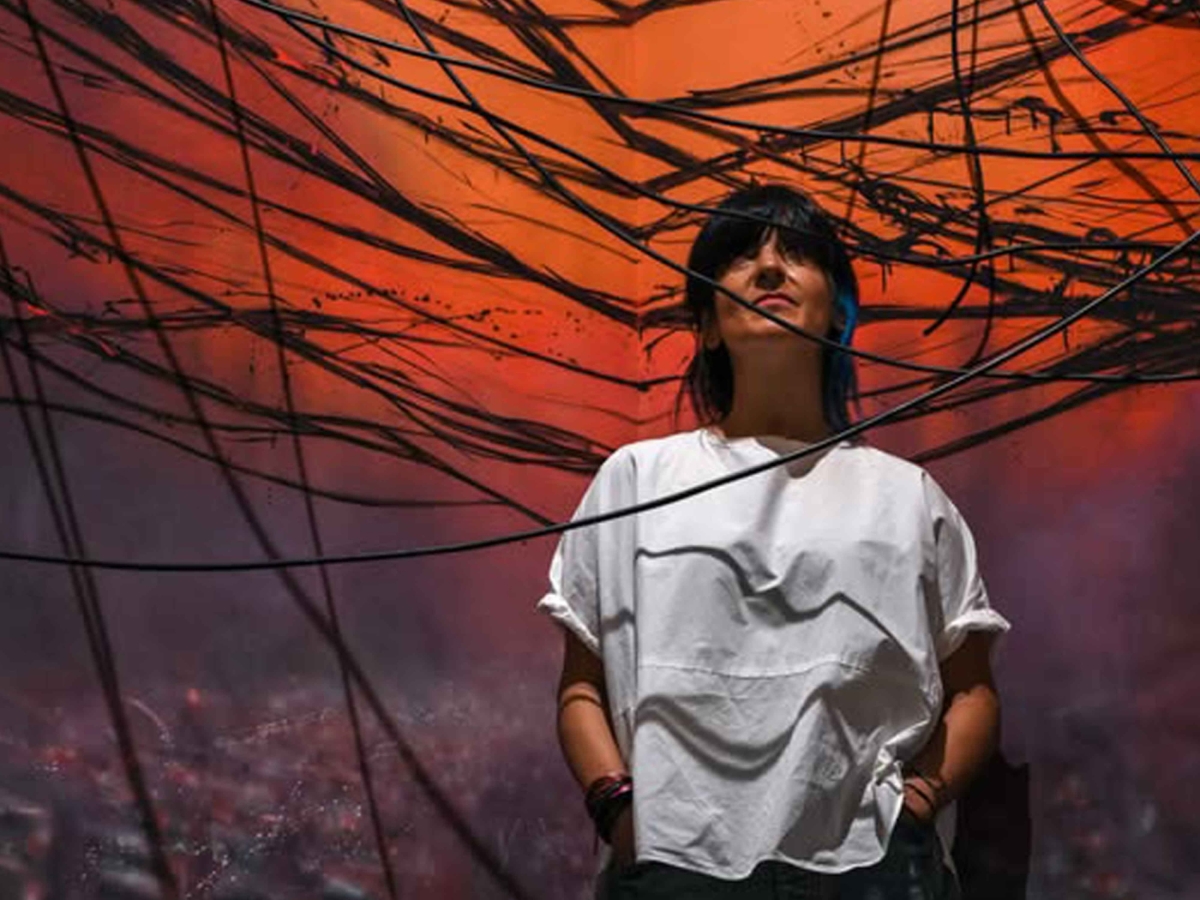

Beirut’s tangled web of electrical cables has long served as fertile visual material for contemporary Lebanese art, stirring the imaginations of painters, filmmakers and poets who have chronicled the city’s upheavals and crises. Yet the particular significance of Diala Khodry’s exhibition Ishtirak (Subscription), presented at Art on 56th in Beirut, lies in her distinctive philosophical and aesthetic engagement with this familiar motif. Her visual language carries a peculiar charm, eliciting a knowing smile from Beirut’s residents even as it deepens the melancholy of a city that has learnt to smile through its pain.
Lebanese artist Hussein Hussein has transformed electrical boxes, switches and circuit breakers into semiotic emblems of a city struggling against suffocation. Zeina Assi has woven these elements into her portrayal of Beirut as an organic and indispensable part of the city’s identity, reconciled with its own disorder. Maral Der Boghossian has taken yet another approach, introducing electrical wires—whether belonging to the state network or to private suppliers who charge exorbitant fees—as strands of translucent nylon cord that hold her canvases in a fragile suspension between foreground and background.
From precisely this point, Khodry leads the viewer into a different realm of perception. Her paintings move beyond social and emotional documentation toward a rigorous existential and environmental critique. The electrical network, in its many manifestations, becomes an oppressive structure that reshapes the very conditions of existence and movement within the urban space.
In Khodry’s compositions, the cables appear as dark, thick, unyielding strands that exert absolute dominion over the scene. In several works, she focuses on the knots interrupting their course, creating the impression that she is depicting a “network of sharp blades” rather than electrical wires. They twist, rise and fall in erratic mechanical patterns, trembling with changes in the weather or with the deterioration of their ageing fixtures between buildings and public structures.
Unsettling snapshots
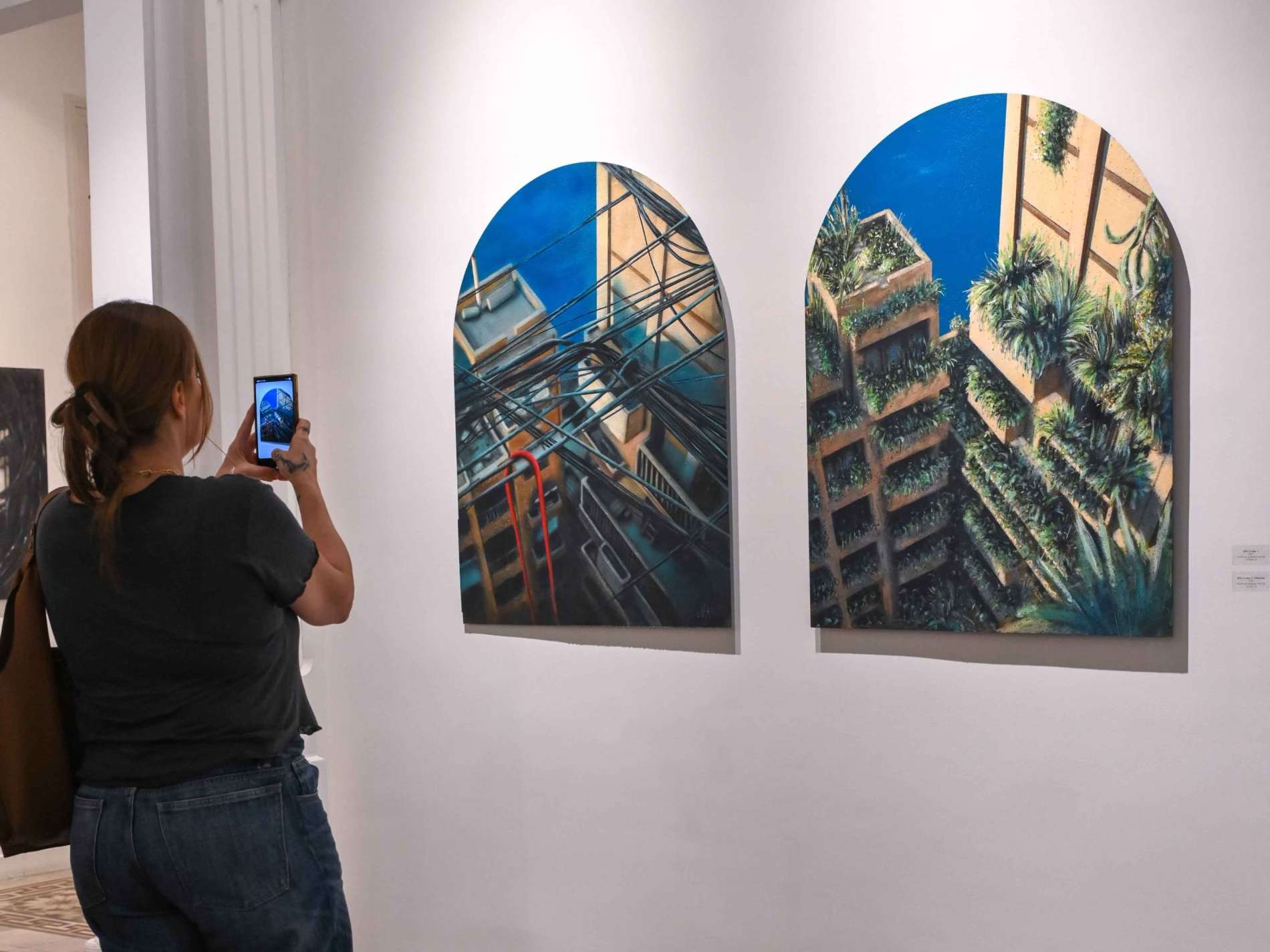
These blades and their restless strands seem to penetrate the city and become inseparable from its organisation, compelling the physical and visual landscape to bend or rise according to their severe dictates. In the work of the other artists mentioned above, buildings retain their concrete substance and architectural forms, interwoven with electrical cables. In Khodry’s paintings, architecture and the city itself are defined by the void that remains, its weight pressing upon the urban fabric. It is the expanse carved out and left behind by the blades.
This unsettling visual conception confronts the viewer with the experience of living within a “permitted geographical zone”. The daily sight of these menacing electrical cables —suspended overhead and hanging low enough to brush against people’s heads—in certain streets induces a terrifying psychological state in viewers and Beirut residents alike. Everyday life becomes a temporary existence within narrow boundaries prescribed by the generator owner or provisionally allowed by this network of taut, electrically charged wires.
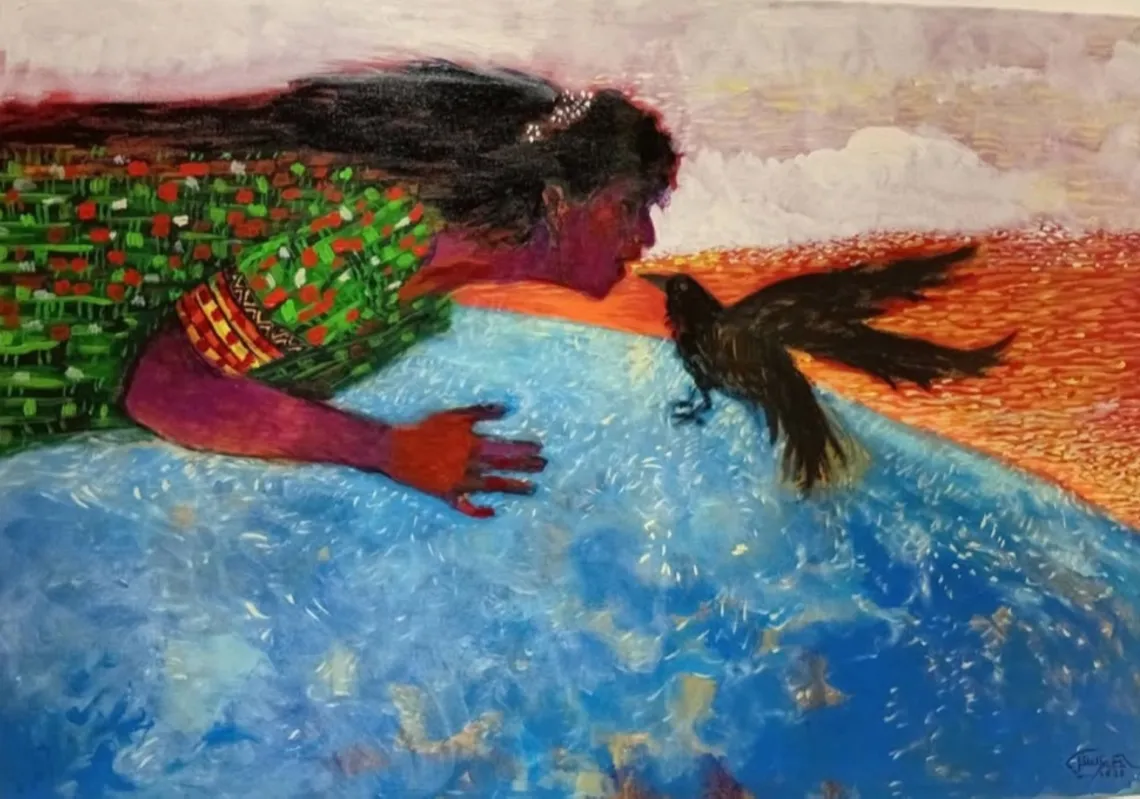
In Khodry’s paintings, this oppressive geometry even deprives birds of a branch or resting place where they might gather above the capital. Their absence is deliberate. Birds have occupied a distinctive place in Khodry’s earlier work, often offering their own perspective on the city. This was particularly evident in her previous exhibition The Crow and the Gaze, titled in French Le Corbeau et le Regard, a clear allusion to Jean de La Fontaine’s fables, in which animals—including the crow —speak. Doves, familiar inhabitants of Beirut’s rooftops, have also appeared in her paintings.
One work in the present exhibition is dominated by dark tones. Windows sink into shadow, and their faint glimmer of light reveals the dense, oppressive presence of electrical cables. It is one of several paintings in which Khodry’s visual language approaches abstraction without fully entering its realm, granting the scene an extraordinary ability to carry the viewer from the visible world into the domain of philosophical reflection.
Conceptual terrain
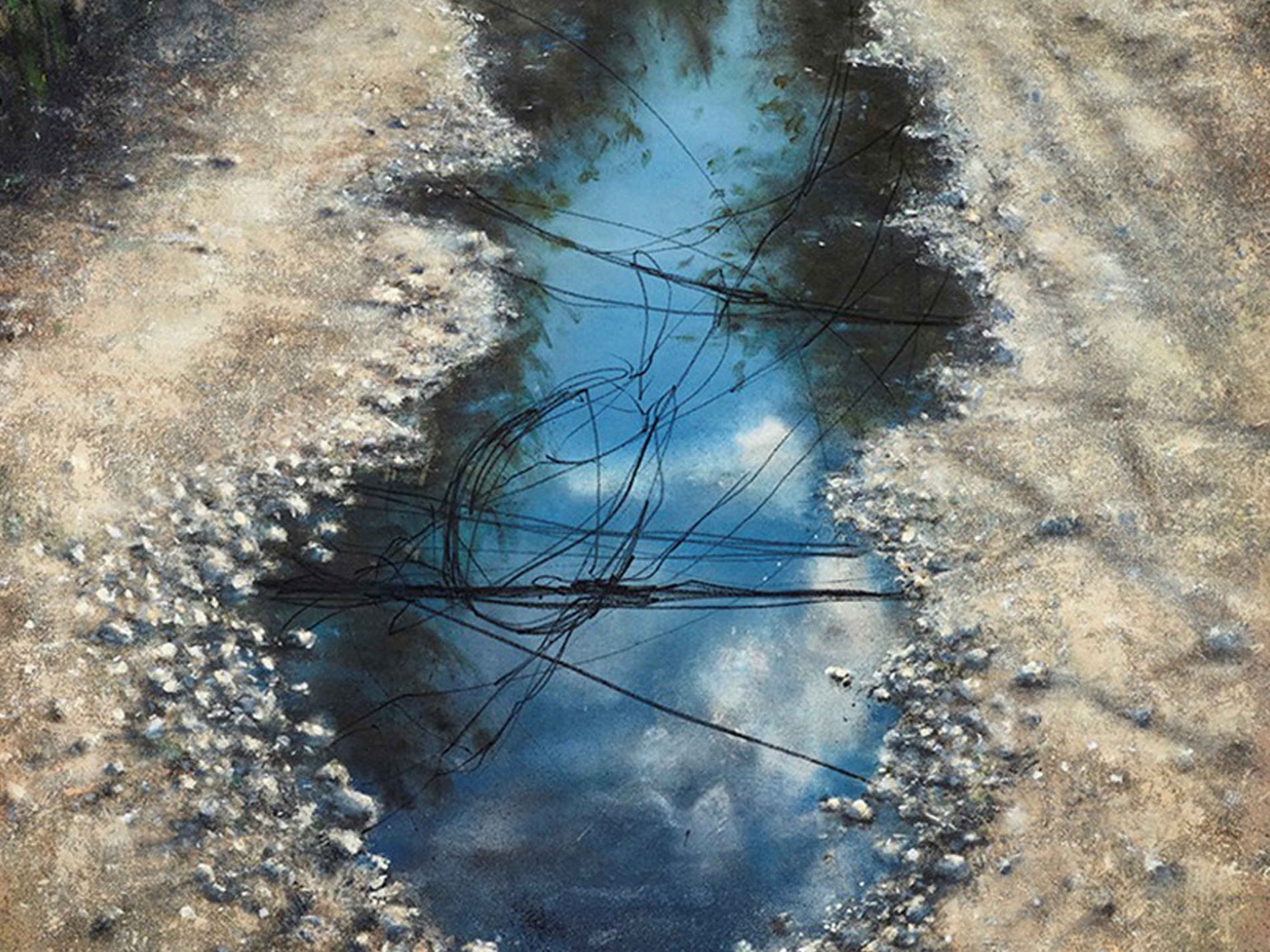
A more acute philosophical resonance emerges in the exhibition’s central work, Reflections of Rainwater on Asphalt. The painting invites the viewer to move beyond familiar documentary or environmental readings that treat stagnant water as evidence of urban neglect. Instead, it draws us into the conceptual terrain of Jean Baudrillard’s reflections on “simulation and hyperreality”.
Khodry renders rainwater as both a mirror for Beirut’s sky and a second ground upon which that sky appears to rest. The inversion is quietly disorienting. Beirut’s true, unclouded sky is obscured behind the dense tangle of electrical wires, removed from immediate perception and seemingly lost. The only surviving image of cosmic clarity lies inverted upon the ground, reflected in narrow pools of rainwater, pure and natural, fallen from the very sky that has vanished from sight.
The philosophical sorrow lies in the modest scale of these pools. The water gathers in confined patches rather than broad expanses. They resemble breaches that arise even within the most tightly controlled and meticulously engineered systems. Nature opens these sudden apertures in consciousness amid the city’s harshness, allowing urgent questions to resurface: What is Beirut? Where does its reality reside? And who are we, standing upon this fragile surface of water, at once yielding and strangely reconciled with the hardness of asphalt?
The breach, however, is short‑lived. Khodry’s severe black lines pierce the reflections, cutting through and fragmenting them. The result is a disturbing Baudrillardian omen in which the sign and its counterfeit pursue reality relentlessly, staining even its simulation and its mirrored presence in imagination and awareness.
Anchoring perspective
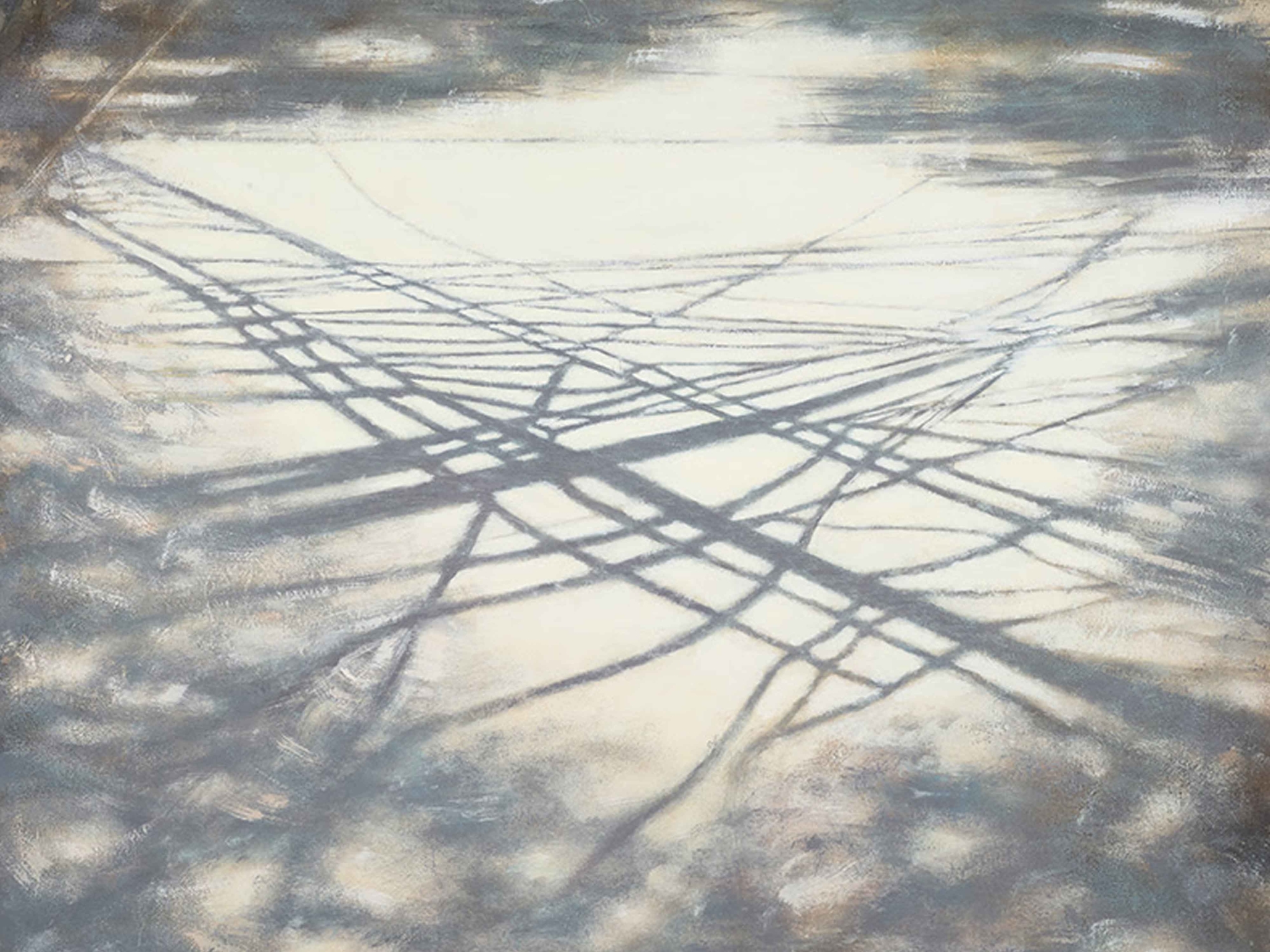
Shadows of Electrical Cables on the Ground forms a direct visual and psychological continuation of the rainwater work, completing the jaws of visual captivity. The puddles had offered a glimpse—ambiguous and interrupted though it was—of sky and horizon. The shadows extinguish that possibility entirely.
They operate as an inexorable mechanism that anchors the viewer to the ground. The shadows drag the suspended wires downwards, forcing them into the rough surfaces of pavement and asphalt until the eye can scarcely distinguish their spectral outlines from the solid matter of the street. The ground appears tattooed with these lines. The space through which our feet move is hemmed in by shadows below, just as our heads are confined by live electrical cables above. The imposed order settles over the scene with absolute authority, leaving no space for deviation.
This carefully orchestrated visual siege, enacted through the dual presence of physical wires and their shadows, generates the spiritual melancholy that permeates the exhibition. Much of this sadness arises from the exclusion of time and history. Lebanese memory, with all its nostalgia, is set aside with deliberate force.
The exhibition offers no lament for Beirut’s former splendour and seeks no solace in a recovered collective memory. Instead, it confronts the viewer with a stark chromatic duality: “blue reality and the white now”. The conjunction of the blue sea and sky—imprisoned and isolated behind the blades—with the whiteness of an immediate present stripped of historical depth renders the city severed from its roots. Beirut inhabits an anxious, ambiguous moment, seemingly disconnected from everything that preceded the crisis.
This unsettling vision deepens through Khodry’s densely translucent palette, whose shifting surfaces keep the viewer in a state of perpetual doubt. Even the paintings suffused with orange and yellow, among the exhibition’s most striking in their geometry and visual composition, possess an essential coldness, devoid of human warmth.