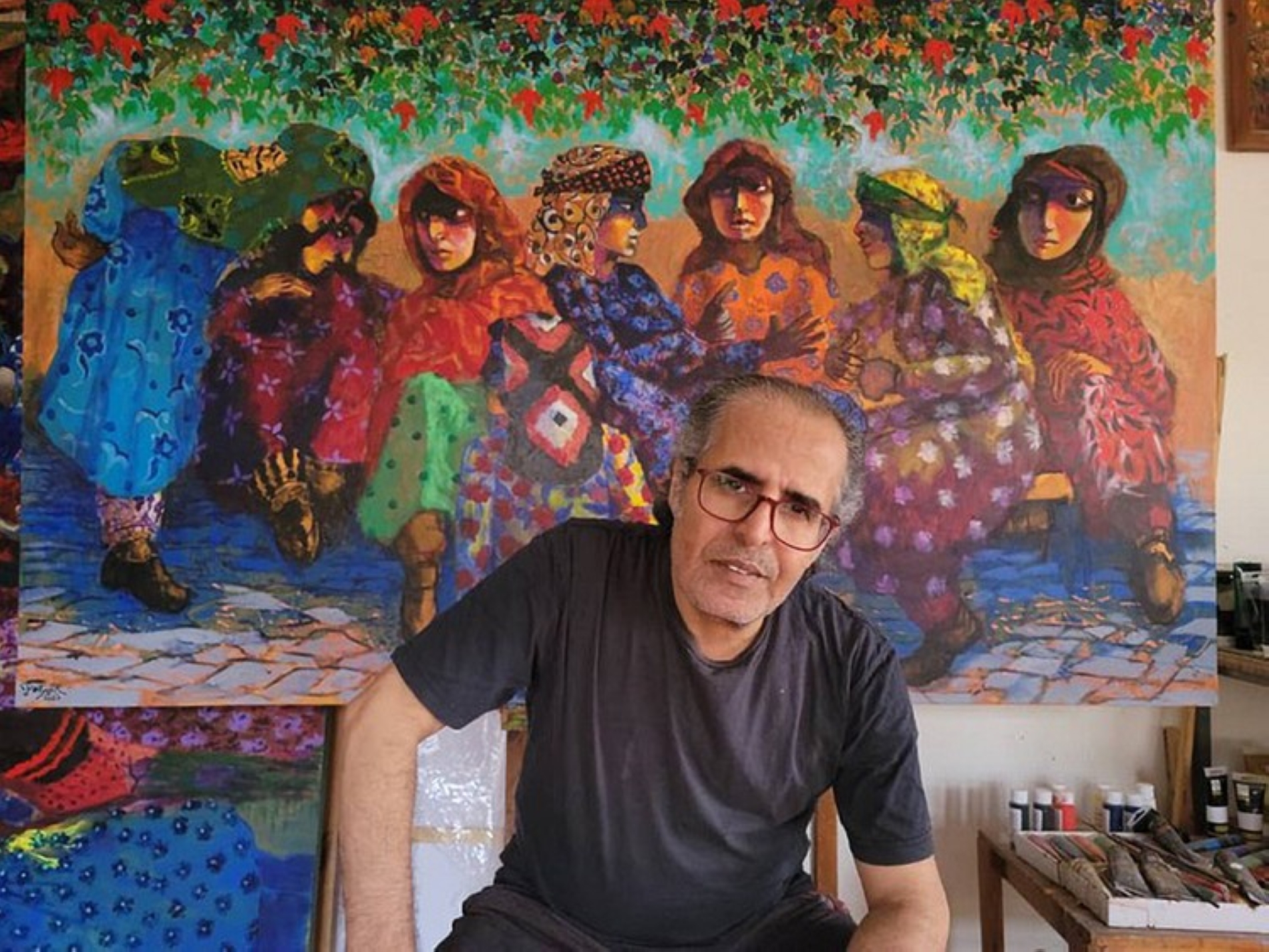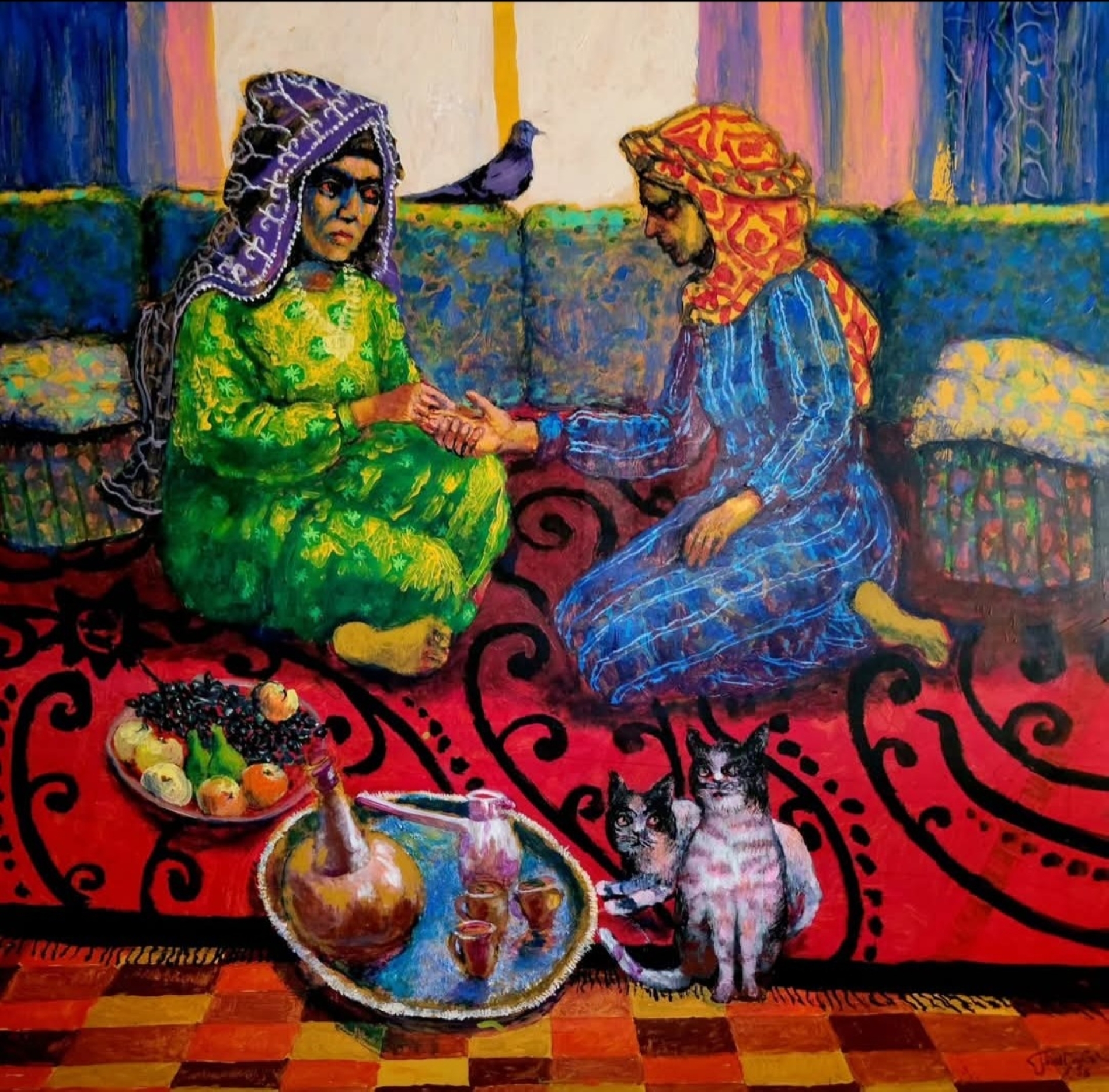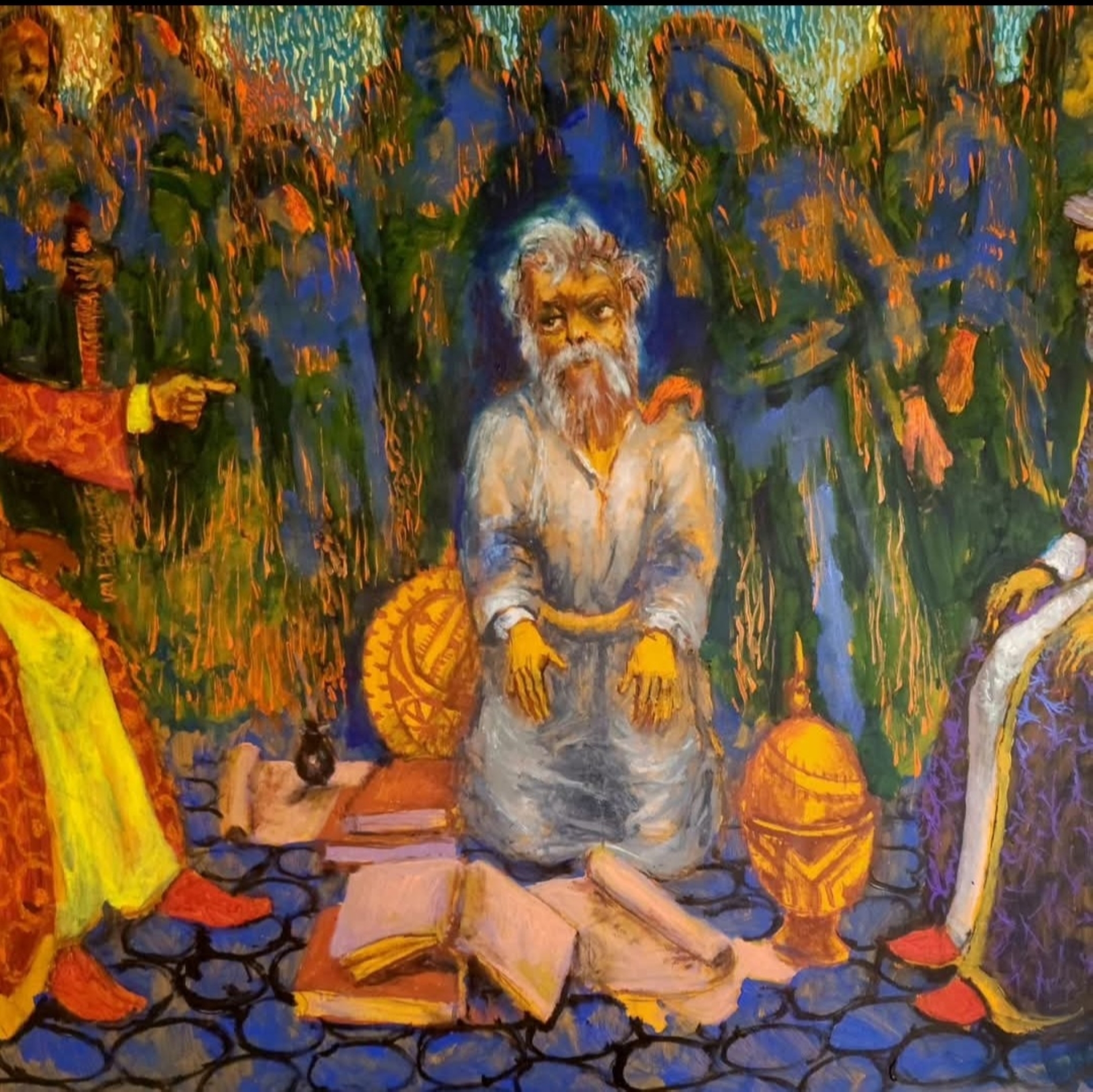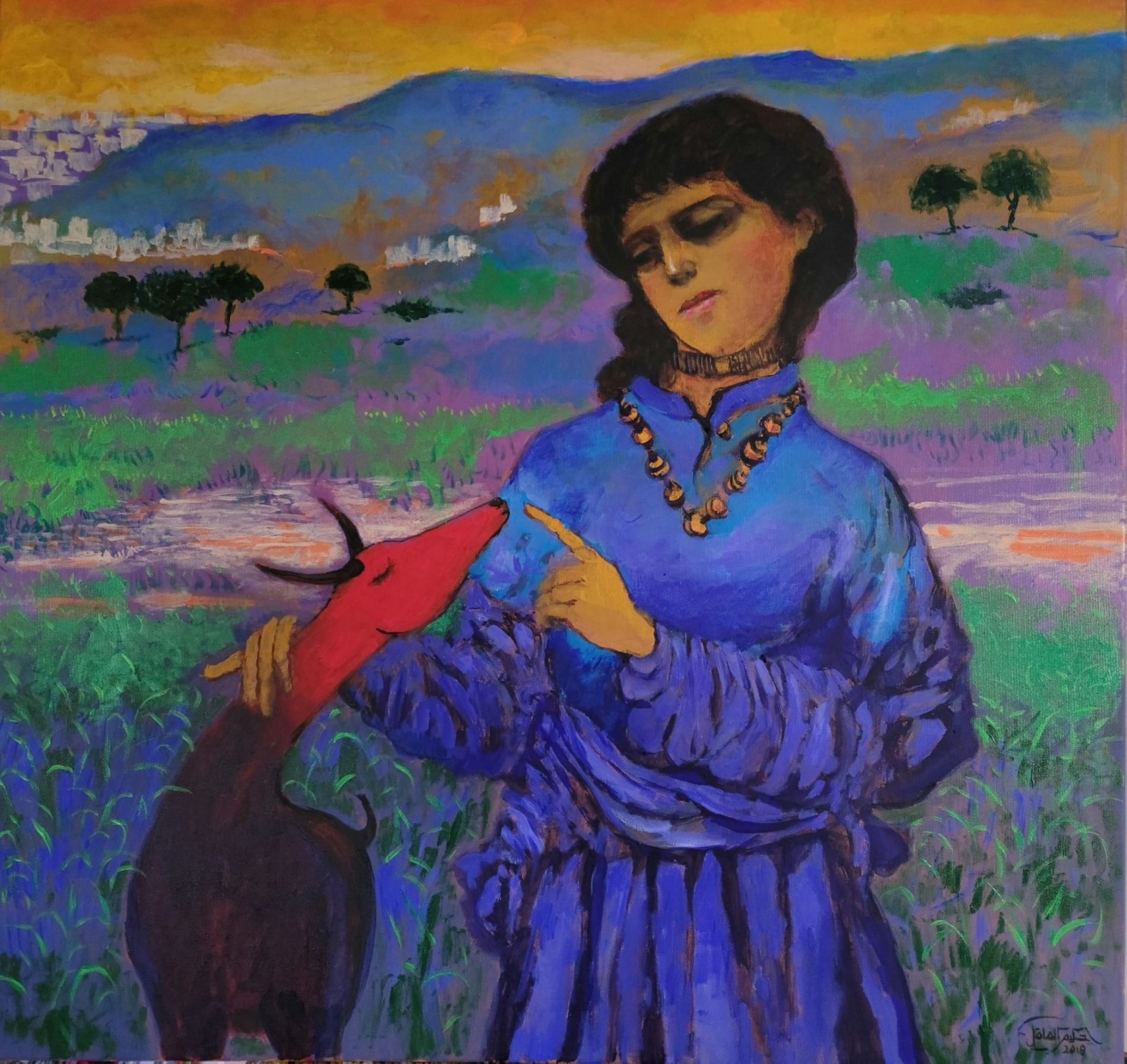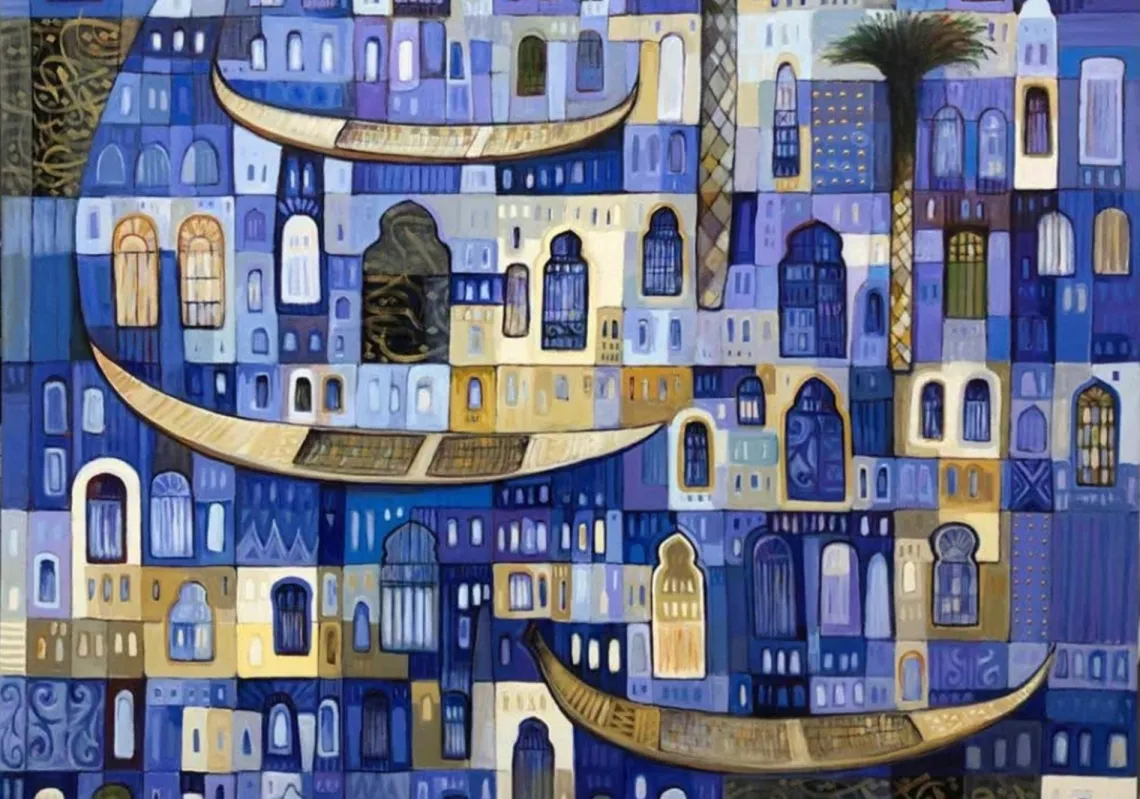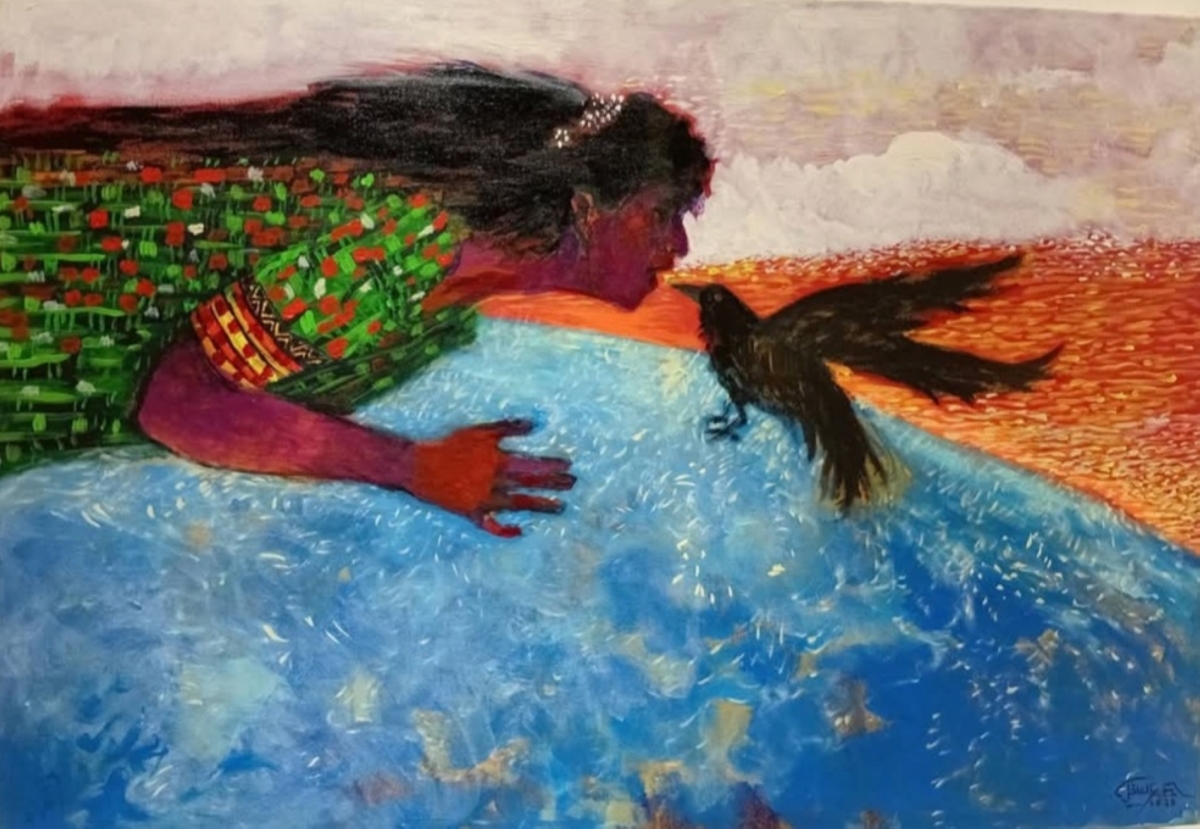

At Villa Azad in Cairo, Yemeni artist Hakim Al-Aqel presented two collections of paintings. The exhibition, Between Endless Chants and Star Divination, continued the artist’s exploration of the bird in flight, through whose watchful eye he has captured Yemen's emotional and geographical landscapes.
For more than a year, Al-Aqel has devoted himself to a new series of paintings rooted in Yemeni memory and heritage, its rituals and ceremonies, and the mysteries of “cosmic mythology and ancient Sabaean symbols”. The paintings follow the bird’s journey across Yemen, capturing scenes of everyday life in which memory and imagination intertwine with the realities of a country scarred by war and economic crisis, yet still rich in colour, vitality, and beauty.
Over the past decade, Al-Aqel’s paintings have evolved remarkably while remaining rooted in his enduring preoccupation with his homeland, which he has refused to leave despite the ravages of war. His artistic vision shifted when he imagined himself as a Yemeni bird, rising above the earth to survey the landscape and observe the rhythms of daily life, from cultivation and harvest to gatherings of friends and musical performances in courtyards and home interiors.
Music remains central to Al-Aqel’s work, featuring prominently in his earlier paintings and reflecting its deep roots in Yemeni cultural life. In the exhibition’s second collection, Endless Chants, music becomes a recurring refrain, its melodies continually renewed while retaining the intimacy, warmth, and mystery that suffuse his art.
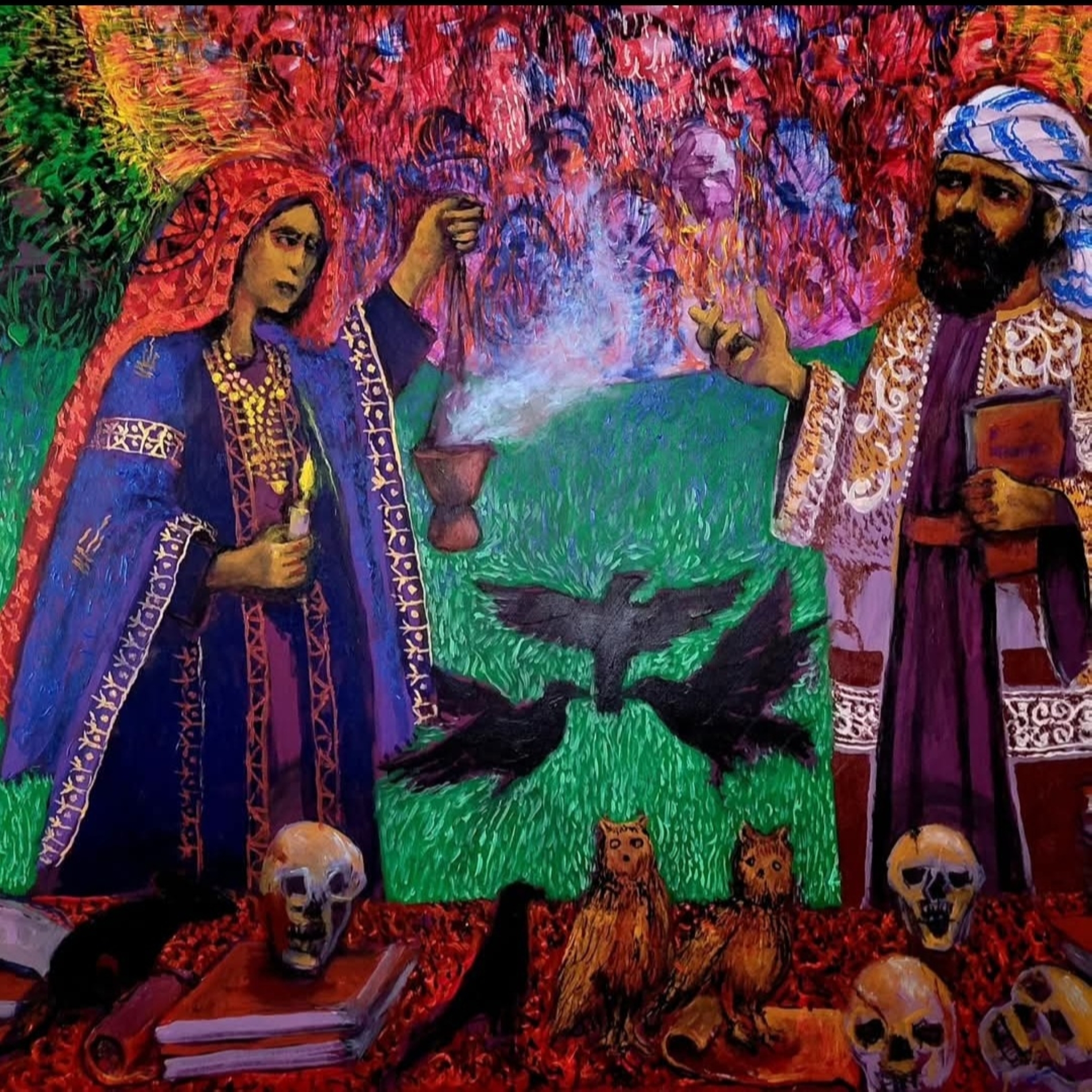
From the moment the artist took flight to the melodies of Yemen, interwoven with the oud’s joyous strains, he confronted formidable artistic challenges. He had to master perspective, gauge distance and proportion, and capture how forms change from different angles.
Birdseye perspective
In the early stages of his aerial wanderings, the artist, transformed into a bird, surveyed the landscape from above, employing a limited range of viewpoints and relatively simple forms. As the years passed and he grew more accomplished, his movements over the landscape became lighter and more varied. The painted scenes increasingly drew their significance from the interplay of two viewpoints or, at other times, from the height at which they were observed.
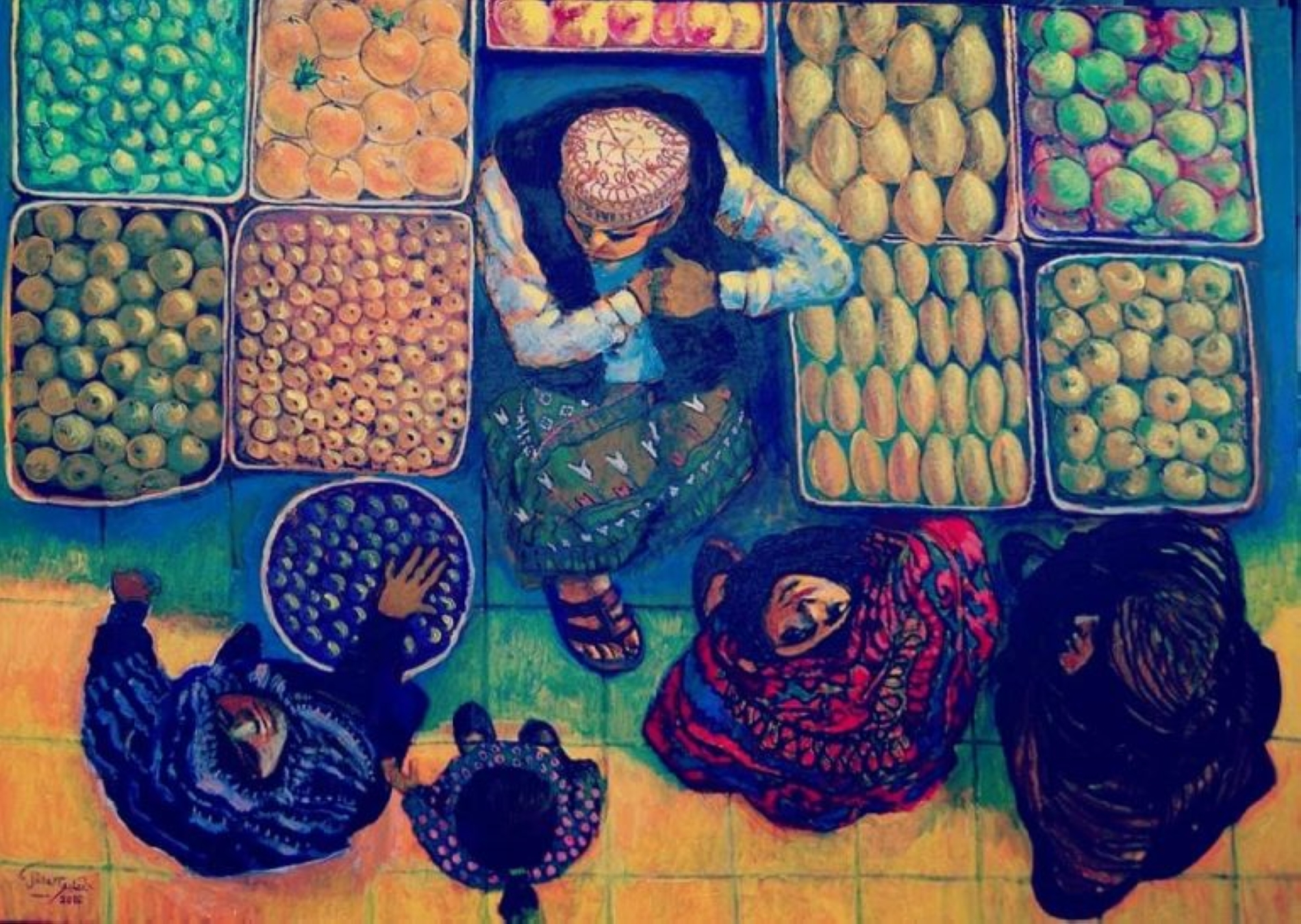
In one painting, two men stand on a hilltop, one pointing towards a distant landscape viewed from a greater height, its intricate details unfolding across a shallow valley. Another painting anticipates the works of the present exhibition, exploring the relationship between earth and sky. Here, women gathered beside a fruit seller gaze upwards, beyond the scene depicted in the painting, towards the bird watching them intently. The dynamic suddenly reverses: the bird that once observed Yemen from above has become visible itself, entering into an exchange with the people below.
A journey through Al-Aqel’s earlier and recent paintings reveals an enchanting Yemen, where greenery meets sand, colourful ornamentation mingles with the imposing grandeur of rocky fortresses perched on towering heights, and fertile agricultural terraces descend towards mist-shrouded valleys. Towns nestle among rugged peaks, their surroundings suddenly cloaked in green after the rain.
One of the most compelling qualities of Al-Aqel’s paintings is how the Yemeni landscape becomes inseparable from the figures and objects that inhabit it. Decorative patterns and warm colours appear entirely natural, woven organically into each composition. This is particularly evident in the intimacy with which trees, animals, and human figures coexist. Perhaps this explains why nature, along with scenes from the artist’s childhood in Taiz, occupies such a profound place in his imagination.
The women descending from the mountains and highlands, dressed in brightly coloured garments and enveloped in refreshing mists, lush vegetation, and blossoms after the rain, remain vivid in his memory. So do the stones and rocks in their myriad hues, from yellow, red, and green to grey, alongside agate, onyx, and amethyst.