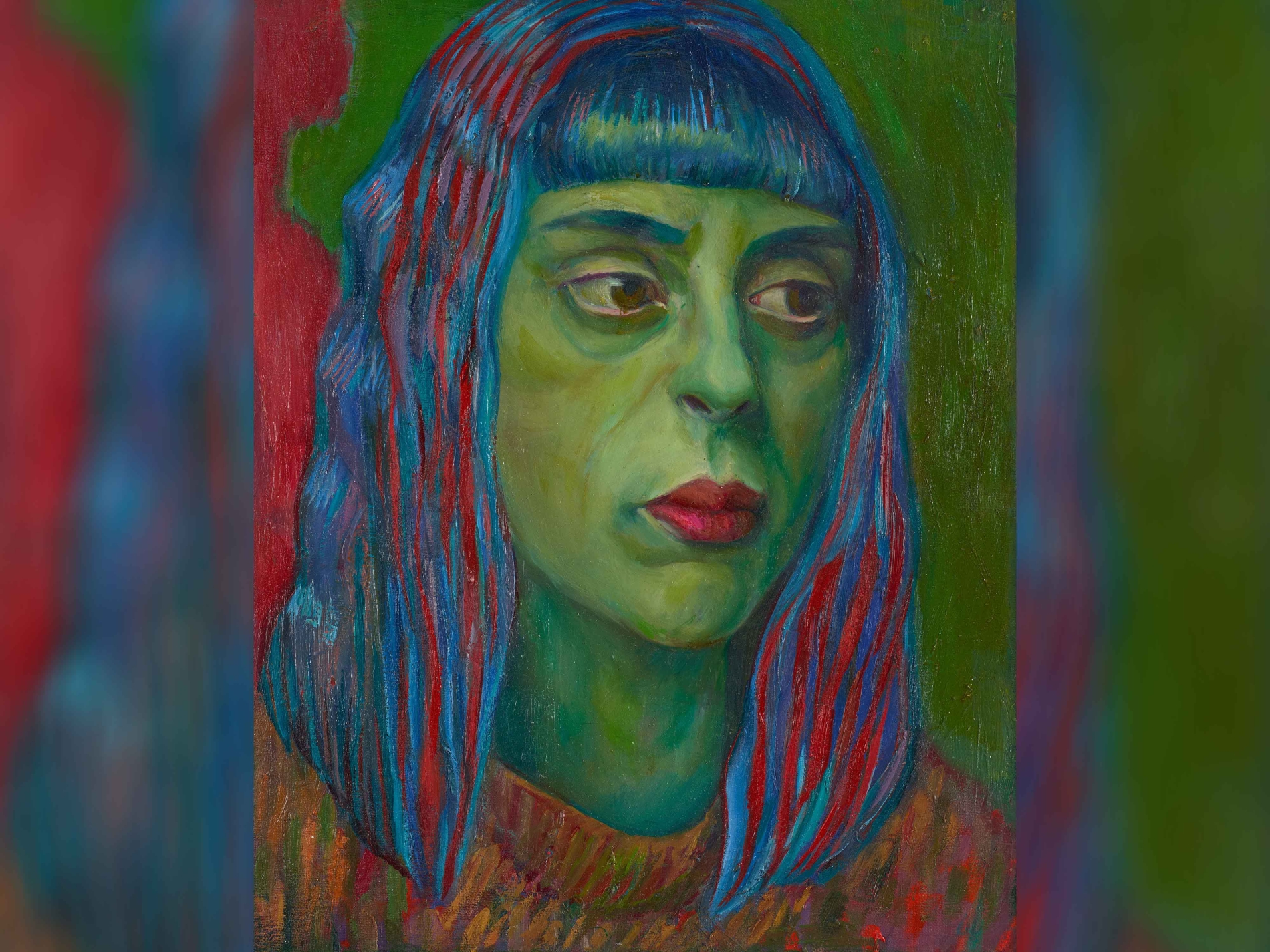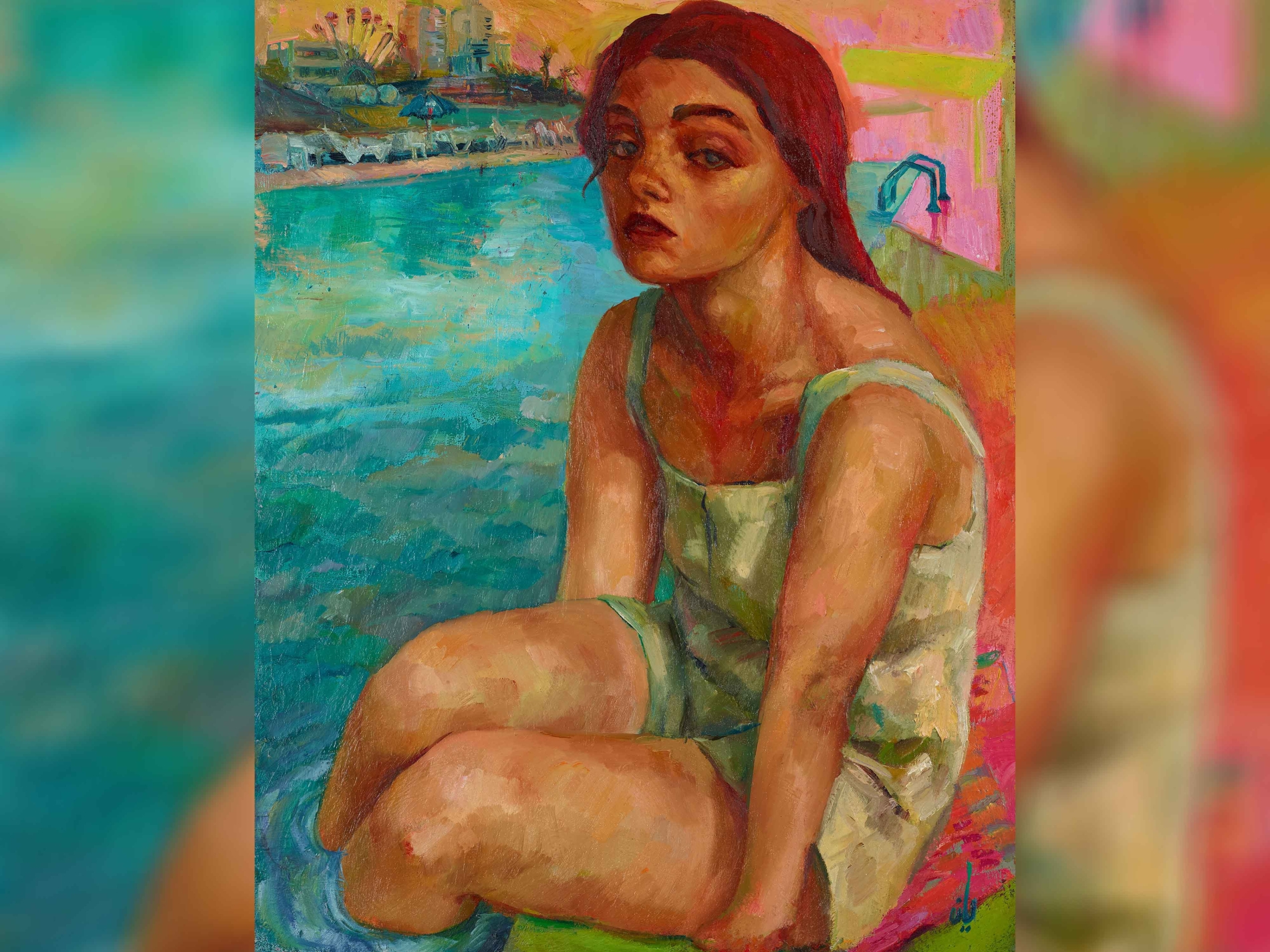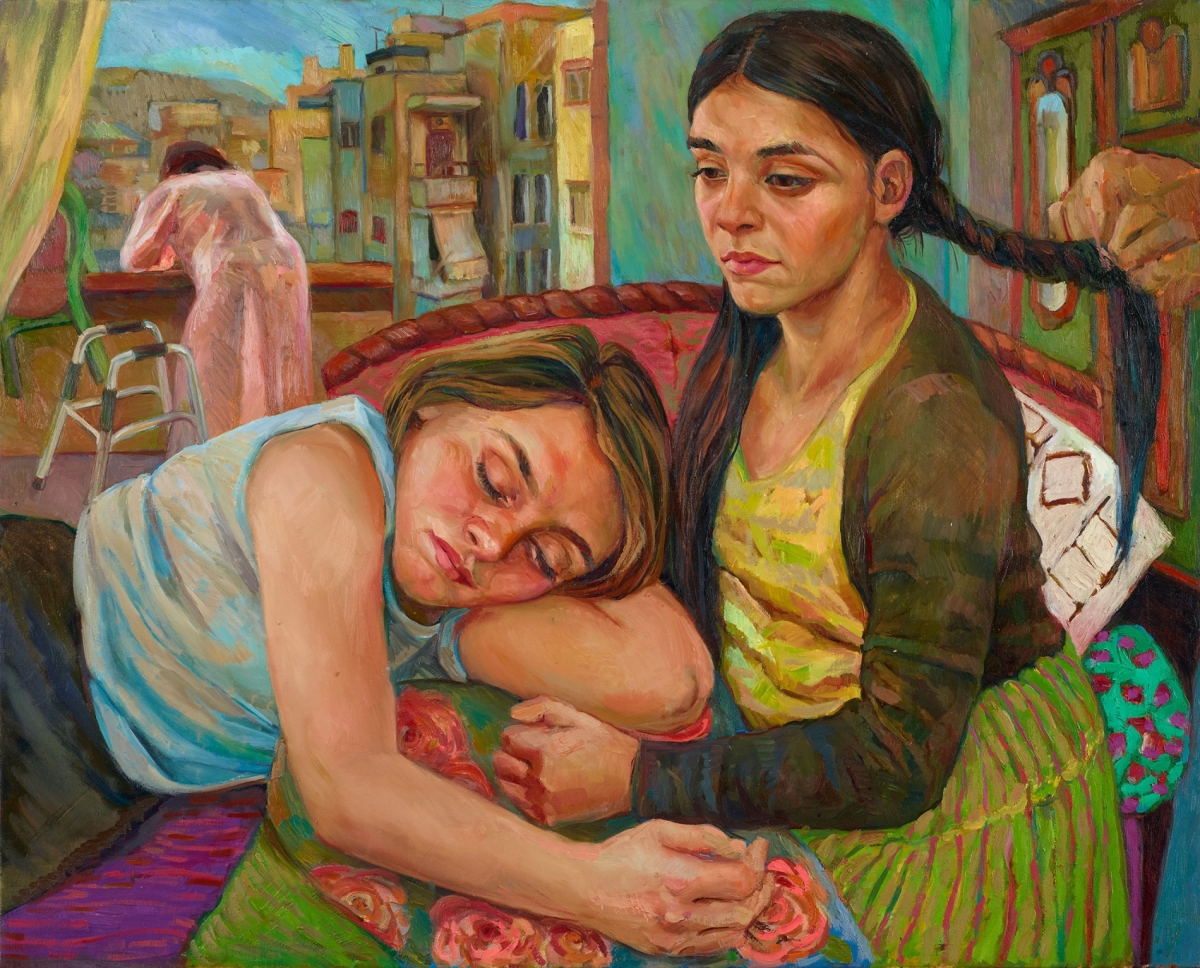

The title of Finnish-Lebanese artist Yasmina Nysten’s exhibition, Memory Keepers, held at the Saleh Barakat Gallery in Beirut in September, suggests that memory can be preserved. It suggests that the past may survive in an image—or a collection of images—that can be revisited, or at least recognised, centuries later.
Yet standing before the works, with their prevailing turquoise hues, unsettles the certainty the title implies. What emerges is a succession of fragments, fleeting images, and scenes suspended between clarity and ambiguity.
Memory inhabits Nysten’s paintings in unconventional ways. The viewer feels as if witnessing something that may have happened, or nearly happened, though the origins of these scenes remain elusive. As Nysten herself has said, this new body of oil portraits in the Upper Gallery explores portraiture beyond literal likeness.
Are the images rooted in an intensely personal experience that has acquired a universal resonance? One painting, for instance, depicts two girls with a woman behind them, perhaps their mother, bending to look through the window of a spacious room. A crutch stands beside her, suggesting that her legs are weakened. Or are the paintings, taken together, fleeting impressions drawn from a collective memory? Could they be images of a present whose very existence remains uncertain, scenes that may have unfolded in reality or emerged entirely from the artist’s imagination?
In several paintings, Nysten seems more concerned with exploring memory as a concept than with recalling vivid life episodes accumulated over time and imprinted on the psyche. One particularly revealing work depicts a girl wearing a blue necklace from which a bird with outstretched wings hangs. She stands with her back to a closed cupboard, painted in the same turquoise blue as the bird. Many of the figures inhabit a kind of theatrical staging imposed by memory, which associates them with ordinary activities: a seated girl, a figure looking on, a couple on their wedding day, a girl dipping her feet into a swimming pool.
The gestures and preoccupations of these figures remain suspended on the threshold of a story. Each painting begins to construct a narrative, only to draw back from it. In one work that inclines towards surrealism, a girl sits in the countryside with a book in her hand, her head resting in her lap, her eyes closed in peaceful slumber. Here, wakefulness cradles memory, or memory lulls wakefulness into an indefinite sleep.
Nysten's inclination towards what might be called open-ended narrative becomes apparent in such works. She favours stories that emerge from a single scene or situation, leaving us with questions the painting never resolves. What matters is preserving the possibility of whatever might happen next.
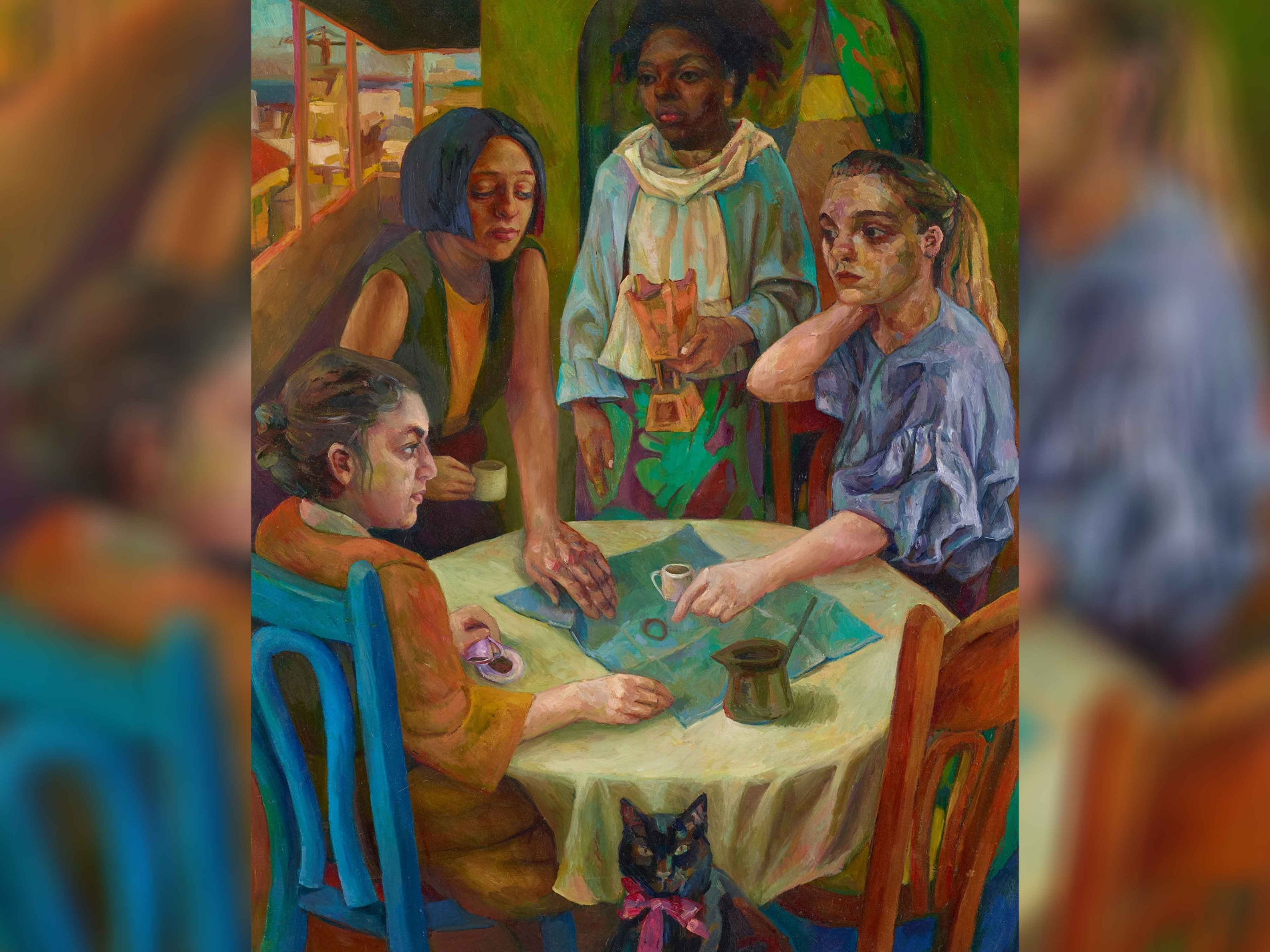
Among the most compelling examples is Secondary Keys, a painting rich in suggestive details: a coffee cup overturned on its saucer, as in the ritual of reading coffee grounds; a map spread across the table; a cat sitting beside the women, staring directly into the viewer's eyes, almost in protest against the intrusion of an inquisitive gaze into the scene.
An empty incense burner, carried by a woman who seems to have arrived from another world, adds to the mystery. She seems to come from a world distinct from the three women seated around the table, absorbed in solving a mystery or deciphering the geographical map before them. Behind them, a window overlooks a city that seems, in some way, connected to their search.