Can Yemen's army pierce the Houthi heartland?

Recent government gains in Al-Jawf have raised hopes that a successful campaign, coupled with leveraging social capital, could threaten Houthi strongholds

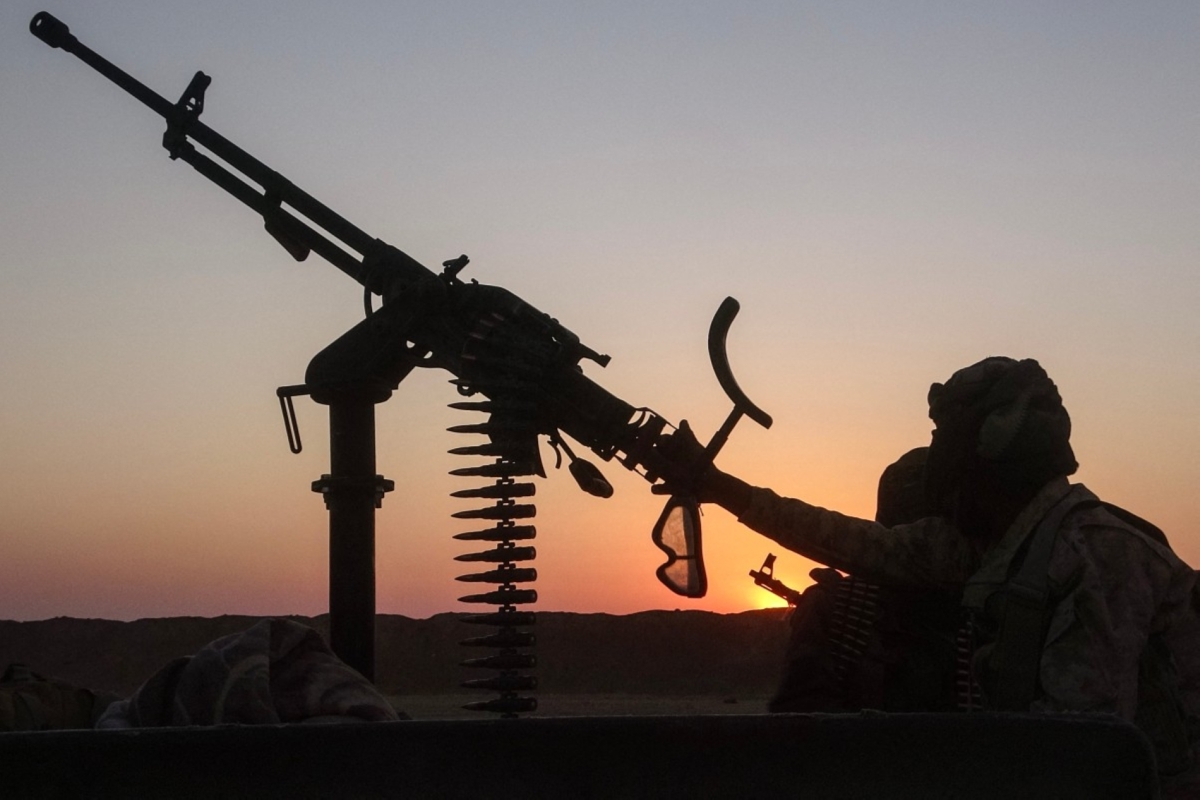
Fighters from the Saudi-led coalition sit on a pick-up truck mounted with a heavy machine-gun as they hold a position during clashes with Iran-backed Houthis in Yemen's northwestern Jawf province on 2 November 2026.
AFP
Fighters from the Saudi-led coalition sit on a pick-up truck mounted with a heavy machine-gun as they hold a position during clashes with Iran-backed Houthis in Yemen's northwestern Jawf province on 2 November 2026.

Can Yemen's army pierce the Houthi heartland?

As the Iran-backed Houthis seek to capture the city of Taiz and outflank government forces in and around Bab al-Mandab, the Yemeni army is advancing through heavily fortified and mined Houthi rebel positions in Al-Jawf governorate of northeastern Yemen. After recapturing the Huwashiyan mountain in late October, the Yemeni army's Emergency Forces announced further territorial gains around Al-Duhaydha and Mulayfifah on 3 and 4 November, as part of a broader push to control the commanding heights, supported by heavy Arab Coalition air cover and allied popular tribal resistance.

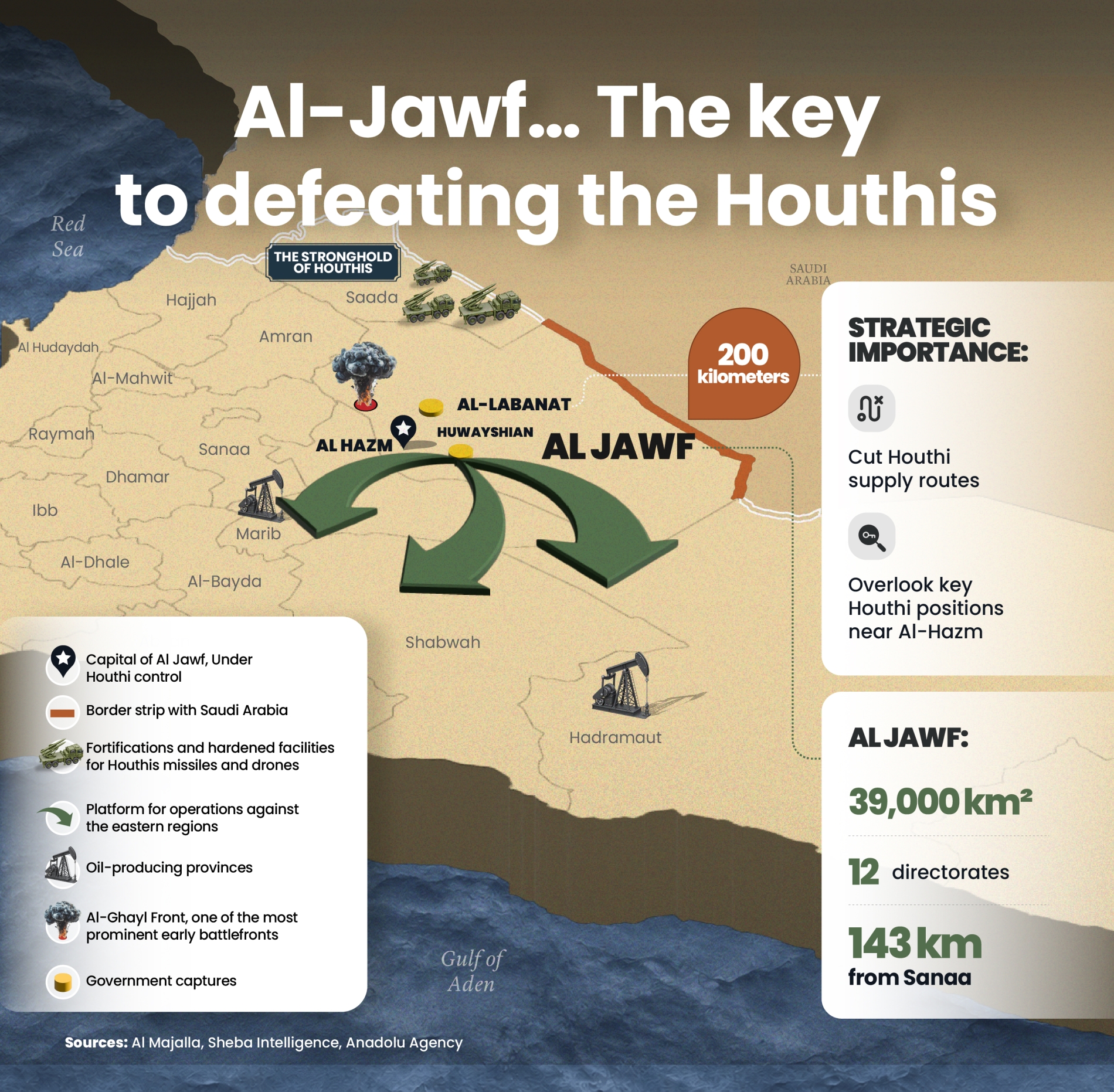
Controlling these mountains will help the Yemeni army push further toward Bir al-Marazeeq and ultimately al-Hazm, and will be key to assessing the campaign's military effectiveness as fighting extends into open terrain. If Yemeni army forces succeed, it could reshape the military balance and cut Houthi supply lines along the northeastern theatre. But that, of course, depends on several caveats, including whether the Yemeni army can maintain its offensive pace, remain unified, and overcome Houthi fortifications to recapture al-Hazm.

The governorate of Al-Jawf is strategically important as it abuts the government strongholds of Marib and Hadramawt, the Saudi frontier, and Houthi-controlled Sana’a, Amran, and parts of Ma’rib. Its territorial recovery would strengthen the Yemeni army's strategic depth and defence of its positions in Marib, reduce Saudi border security threats, expand the offensive arc in different directions into Al-Mutun, al-Matamah, Khaiwan, Fardat Nihm, and Sirwah fronts, threaten the rebels' defensive lines, and force them to divert resources to defend Sa’ada.

While recapturing al-Hazm would boost the government's overall position, it would not compensate for setbacks along the coast. Still, it would matter because it would send an important message that Houthi territorial control is reversible if an effective army campaign can be waged.
Diana Estefanía Rubio
The importance of Jawf

Social capital

Equally significant is Al-Jawf’s social capital. Its tribal networks extend mobilisation capacity, cross-regional ties and networks, and anti-Houthi resistance efforts, which the rebels have attempted to contain through reported coercion, intimidation, inducement, co-optation, and patronage. Earlier tribal mobilisations this year, notably the Rayyan encampment, demonstrate the level of popular resentment towards reported Houthi repression, monopoly of power and wealth, and excessive humiliation of social figures and interference in customary authority.

Therefore, credible military advances, coupled with deepening local discontent, could expand the Yemeni government's anti-rebel coalition, encourage realignments beyond al-Jawf, and rebuild trust between local communities and the state. Any success, however, must quickly prioritise stabilisation, state-building, good governance, a unified chain of command, and support for local development. To this end, converting the social capital into a durable, broad-based popular challenge to Houthi rule is key to reaching Sana’a.

However, tribal politics remain central to understanding local balances and the offensive's prospects. While Houthi expansion in the past encountered communal resistance, including from the Dhu Hussein and Dhu Mohammed branches of the Bakil Confederations’ Dahm tribe, opposition to Houthi rule does not automatically mean unconditional support for the Yemeni government. Tribal leaders, such as al-Ukaimi, retain distinct interests; they may resist both Houthi coercion and government rule if they are not incorporated and given a share of wealth and power. In Al-Jawf, as in several other contexts, alignments and alliances have historically reflected fluid tribal balances and interests, local rivalries, personal grievances or ambitions, and relationships with governing authorities. In wartime, tactics are as important as strategy.
While recapturing Hazm would boost the government's overall position, it would not compensate for setbacks along the coast

Military reshuffle

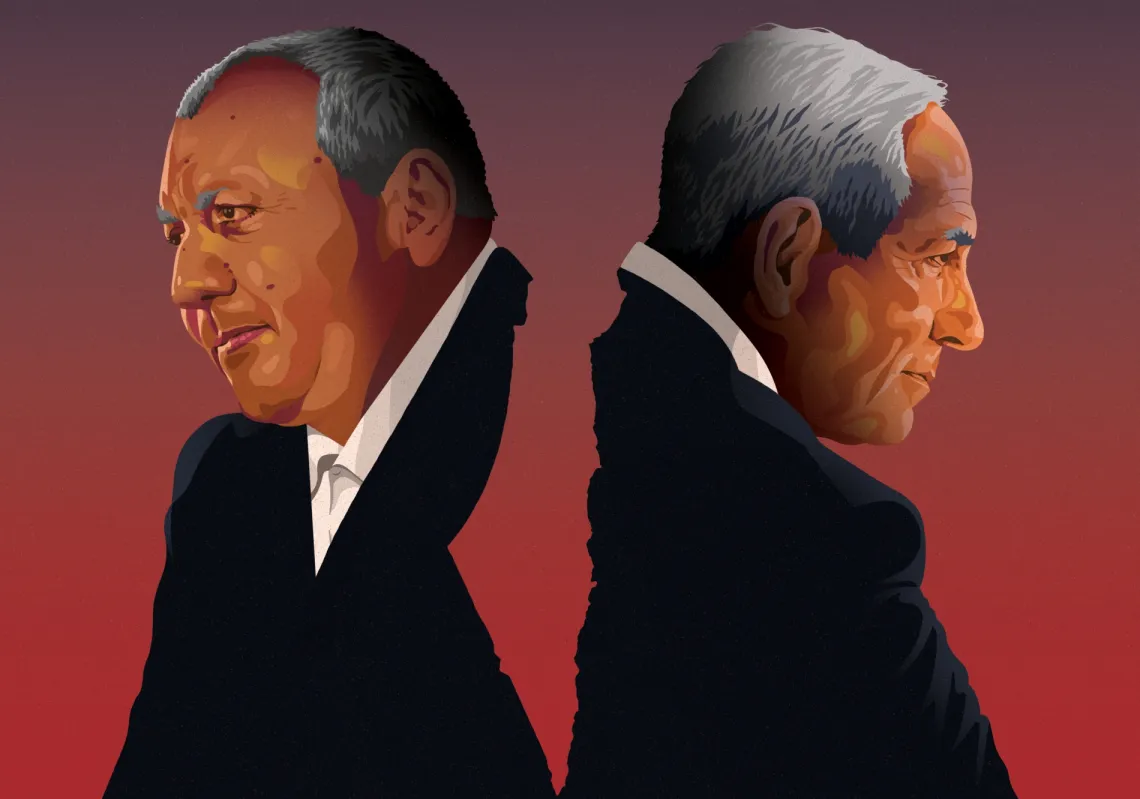
The Yemeni army's Al-Jawf offensive coincides with a partial reshuffle of the Yemeni government's military, executive and local authority leadership. On 1 November, President Rashad al-Alimi reappointed Major General Amin al-Ukaimi, a prominent tribal figure who hails from Dham's Dhu Hussein tribe, as governor of Al-Jawf and commander of its military axis, consolidating civil and military authority. He also transferred his predecessor, Major General Hussein al-Awadhi, to Al-Bayda, reappointed three new ministers, and appointed new local commanders in Taiz and Tur al-Bahah.

A section of prominent Islahi figures who lobbied for his reappointment think Governor Sheikh Al-Ukaimi could mobilise tribal support, improve the chain of command, and reconnect military operations to local politics. But he is not a new face. Al-Ukaimi governed al-Jawf when Al-Hazm fell to the Houthis in 2020. The unfolding offensive thus tests whether the Yemeni army, local tribes and coalition backers have overcome the military, social, political and institutional incoherence that contributed to the territorial loss of Al-Hazm, Al-Jawf's capital, before the Houthis intensified their military pressure on Ma'rib.

To this end, harmonising the political agendas is crucial. The test is whether the 2020 episode can be overcome by ensuring operational coordination, local and political party buy-in, reliable logistics, and accountable, transparent local governance.

REUTERS/Ali Owidha
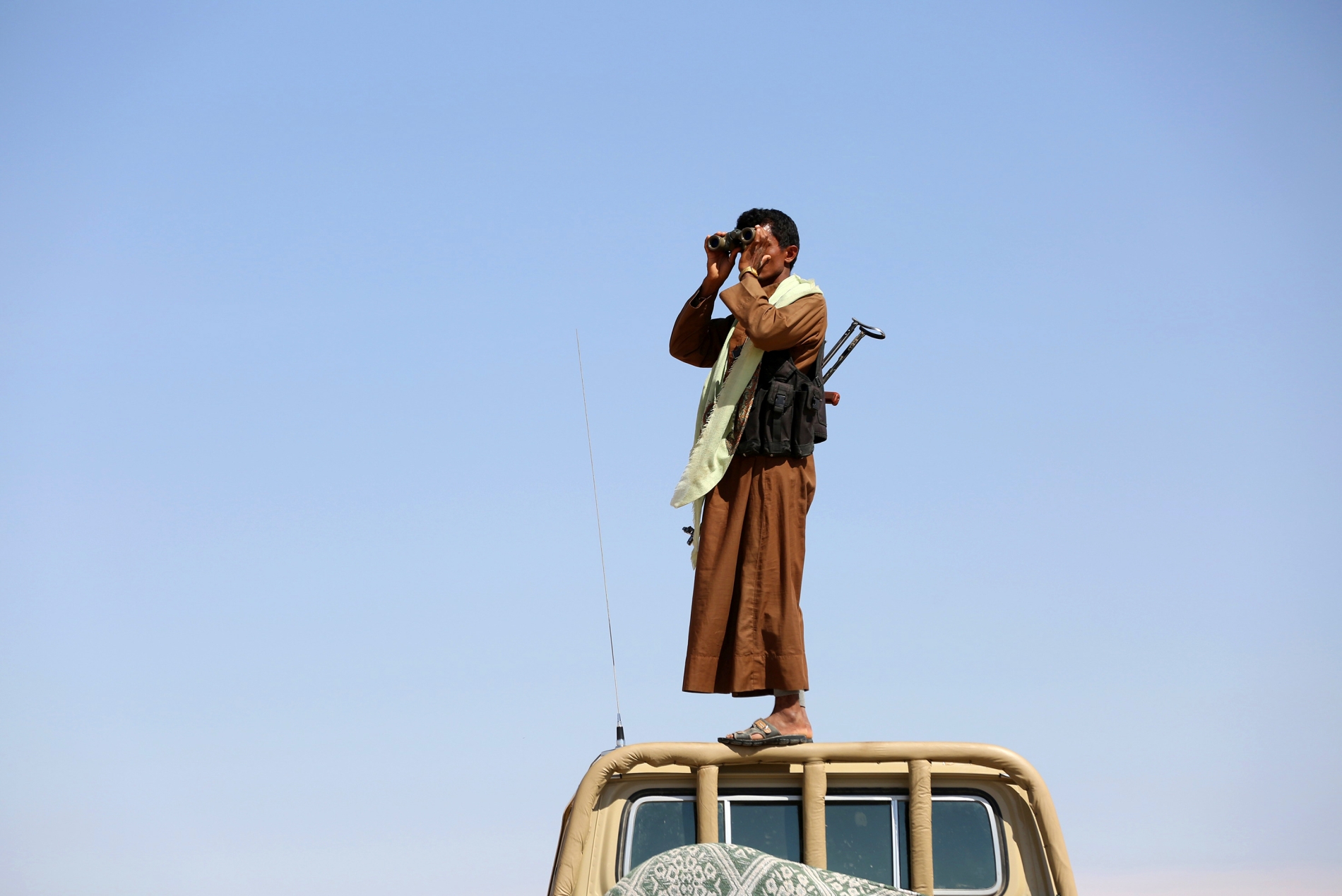
A tribal fighter loyal to Yemen's government stands on the roof of a pick-up truck as he uses binoculars to look at at Houthi positions in an area between Yemen's northern provoices of Al-Jawf and Marib on 5 December 2015.

Houthi redeployment

The Houthis are attempting to quickly adapt and redeploy forces to prevent territorial loss, secure their positions in Sa'ada, Amran, Sana'a and parts of Marib, as they continue their offensives in Taiz and Lahj. According to the latest press and military reports, the Houthis have redeployed specialised formations from the governorates of Sa'ada and Marib toward Al-Hazm and nearby districts, and expanded trenches, earthen barriers, and minefields across these approaches.

These preparations are designed to increase the cost of advance, delay ground manoeuvre and consolidation, create conditions for a counteroffensive, and confine the Yemeni army to vulnerable approaches so that the Houthis can then focus their drone, artillery, and missile fire. Therefore, the Yemeni army must rapidly deploy military engineers to clear minefields from captured positions to improve civilian mobility, fortify defences, and secure supply lines. The Yemeni army, along with the Arab coalition, has been targeting Houthi fortifications, reinforcements, equipment and storage facilities with drones. However, the Houthis' regeneration capacity remains largely intact.

With help from Iran's Revolutionary Guards Corp (IRGC) and Hezbollah, the Houthis have also intensified ballistic missile attacks on Yemeni army positions and advancing governmental forces. On 4 November, Houthi militia spokesman Yahya Saree claimed responsibility for six ballistic missiles striking Yemeni army formations east of Al-Jawf, which reportedly inflicted heavy casualties. Similar strikes against Yemeni army positions have been reported in the governorates of Lahj and Al-Dhaleh. 

Recapturing Hazm would send an important message that Houthi territorial control is reversible if an effective army campaign can be waged

The Yemeni army is simultaneously waging offensive and defensive campaigns, where it seeks to expand territorial control in Al-Jawf, while preventing Houthi gains in Taiz and the Bab al-Mandab theatre (Taiz and Lahj).

According to Fares al-Hemyari, a notable Yemeni-Dutch journalist, on 4 November, the Yemeni army's First and Third Emergency Divisions successfully breached Houthi defensive lines, crossing heavy minefields, earthen berms, trenches, and booby traps in a bid to conquer positions around Al-Say'ari and consolidate control over Mulayfifah.

If they succeed, gaining control over these commanding heights will improve the Yemeni army's observation and air fire control. This could bolster efforts on the ground to take more territory and cut Houthi supply routes. This requires credible, agile defences that can absorb Houthi counterattacks, promptly clear minefields, secure both the advance and supply lines, and finally exploit territorial gains quickly before the Houthis can re-organise.

Media Centre Of The Yemeni Armed Forces/Handout via REUTERS
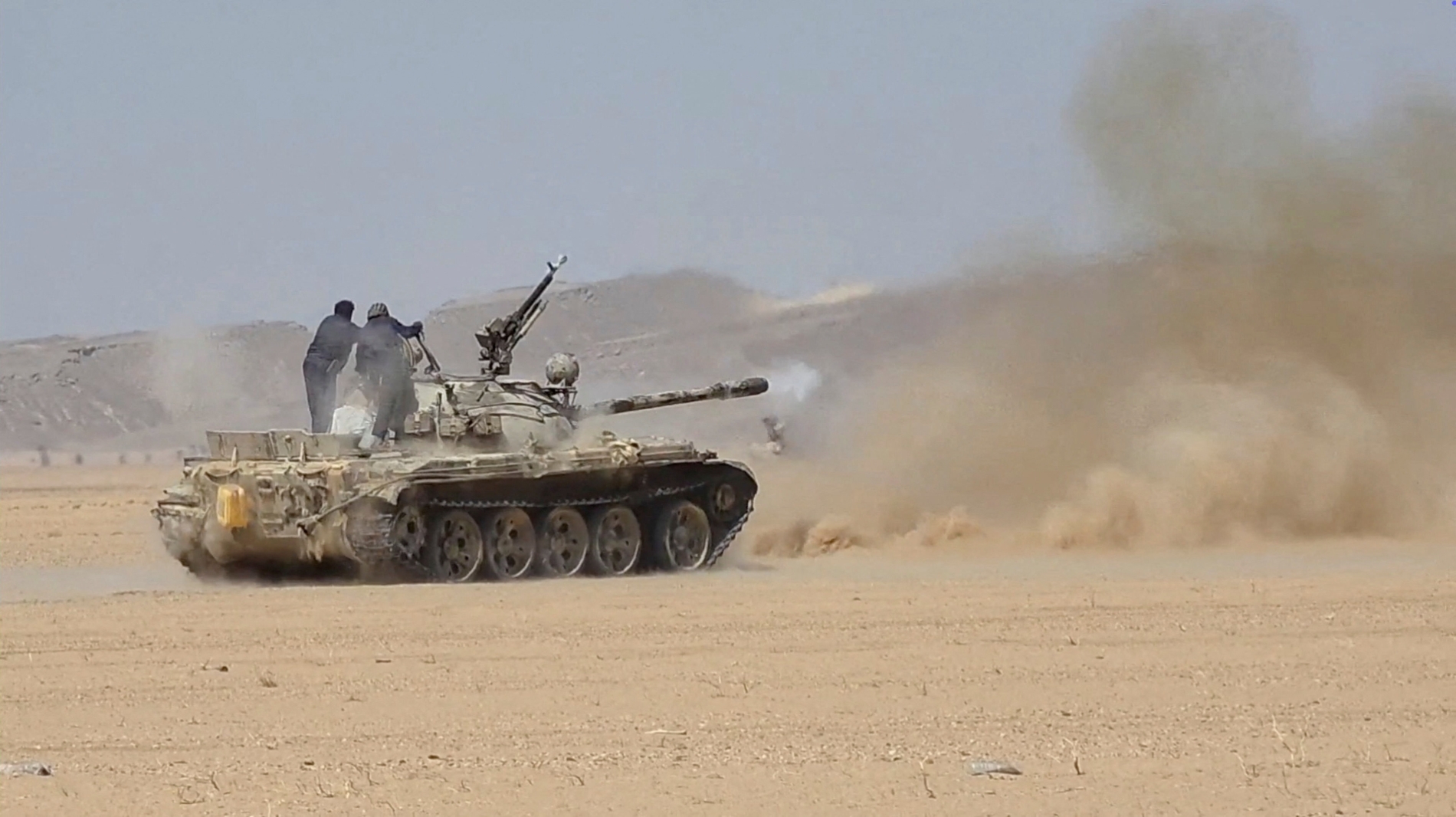
Members of the Saudi-backed Yemeni government forces fire a tank during what they say to be clashes with Yemen's Iran-aligned Houthis in Al-Hazm in a screengrab released on 9 September 2026.

Four possible scenarios

Going forward, I envision four possible scenarios which I will lay out below from least to most favourable from the Yemeni government's perspective.

1) A Houthi counteroffensive could reverse government gains by exploiting command-and-control gaps and overstretched supply lines, renewing pressure on Marib and further undermining the Yemeni government's overall standing. 2) If the Yemeni army achieves limited gains, this could evolve into a stalemate whereby its tactical position improves, but its strategic position does not. 3) If the Yemeni army successfully advances into Al-Hazm, this would reverse the Houthis' 2020 expansion, secure Marib's northern flank, and constrain Houthi supply lines and infiltration routes. 4) If Yemeni army gains coincide with improved local governance and unity of command, widening the front towards Fardat Nihm, Sirwah, Khaiwan, and beyond, this could challenge Houthi control and extend pressure towards Saada, eastern Marib, and Sana'a. 

Sustaining the Yemeni army's offensive in Al-Jawf and also defending its positions in Taiz and the Bab al-Mandab area requires heavy support from Saudi Arabia. Recapturing Al-Jawf and leveraging its social capital would expose critical approaches to the Houthi heartland; however, terrain and military logistics currently rule out a quick advance on Sa'ada.

In conclusion, it remains to be seen whether the current offensive can turn tactical gains into strategic gains and ultimate victory. Much depends on whether the command-and-control structure can remain unified and competing agendas can be squared so that the factors that led to the fall of Al-Jawf in 2020 are not repeated.

font change