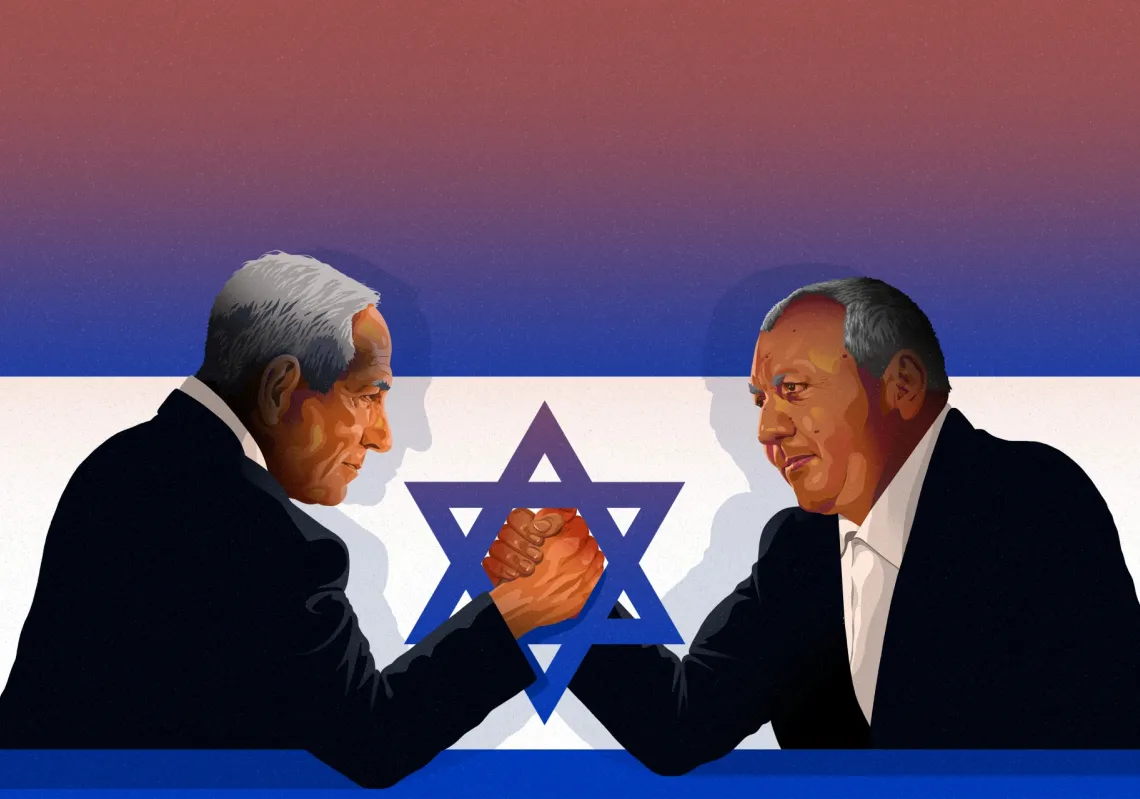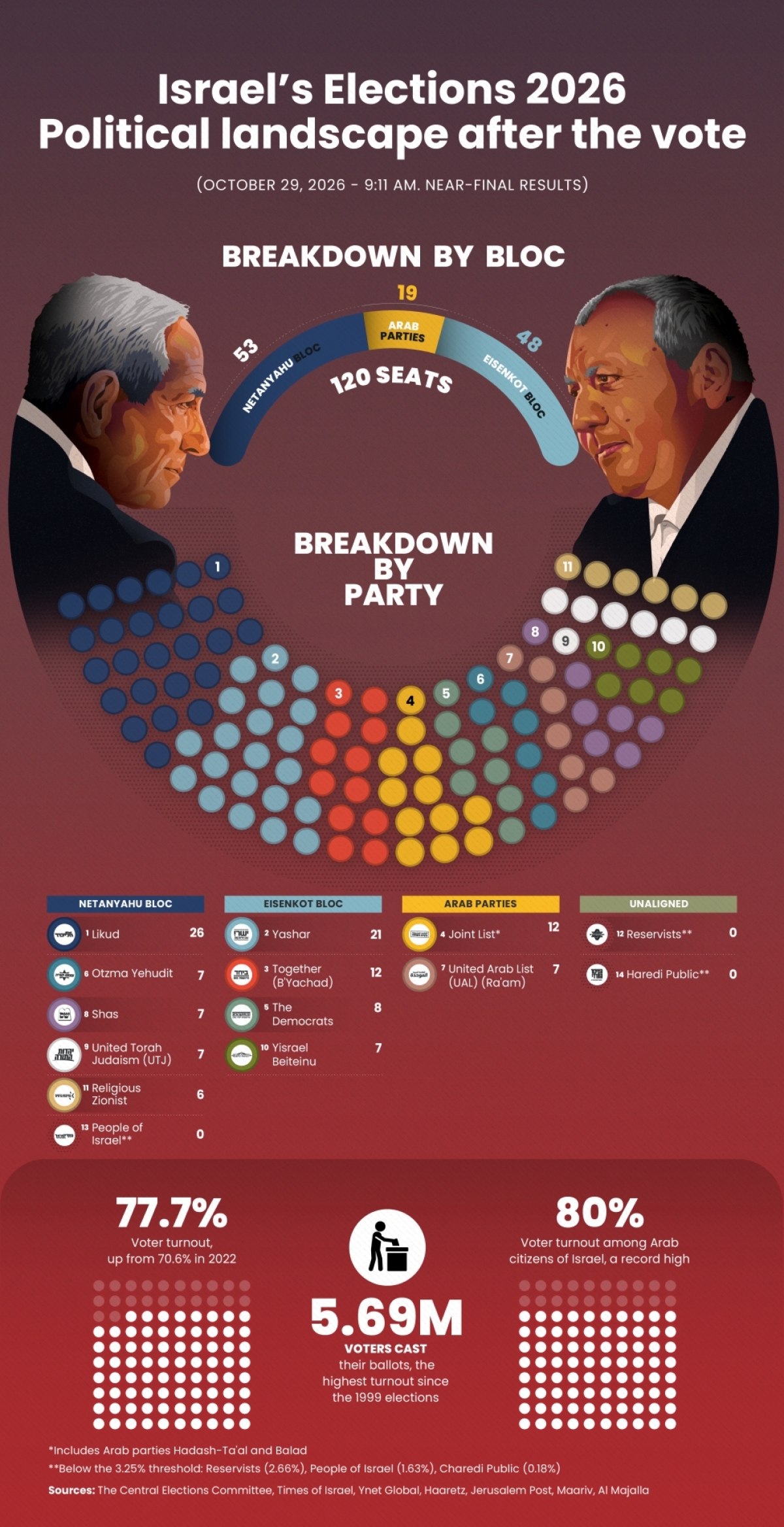

Israel’s 27 October election has left the battle for power unresolved, despite progress in the vote count and a clearer picture of the distribution of seats. Benjamin Netanyahu’s bloc lacks the majority needed to form a government, while the opposition bloc led by Gadi Eisenkot cannot secure one without reaching understandings with Arab parties or winning support from other political forces. With an alternative coalition difficult to assemble and Netanyahu seeking to broaden his support, attention is turning to the negotiations ahead, in which Arab lawmakers could play a decisive role in determining the next government.
Around 5.69 million people voted in the Israeli election, putting turnout at 77.7%, up 7.1 percentage points from the 2022 election and the highest level since 1999, according to published reports. Arab voter participation also rose sharply, reaching around 80%, according to Israel’s Channel 12. The results have meanwhile put Netanyahu’s bloc ahead of expectations set by pre-election polls.
With most votes counted, Netanyahu’s bloc is projected to win 53 of the Knesset’s 120 seats, compared with 48 for the opposition bloc led by Eisenkot. The two Arab lists, the Joint List and Ra’am, have secured a combined 19 seats, their strongest representation to date. A government needs the support of at least 61 lawmakers to command a Knesset majority. Netanyahu’s bloc has therefore lost 15 seats compared with its representation in the outgoing Knesset, while the opposing bloc has failed to secure a majority of its own.
The count and verification process are still underway, including the counting of “double-envelope” ballots cast by soldiers, prisoners, diplomats, and voters unable to vote at their regular polling stations. The final official results are expected to be published by 4 November, in line with the legal timetable.