Crypto platforms are tapping into the Gulf sporting boom

What started five years ago is gaining steam, but can sponsorship turn that exposure into lasting digital-asset adoption?

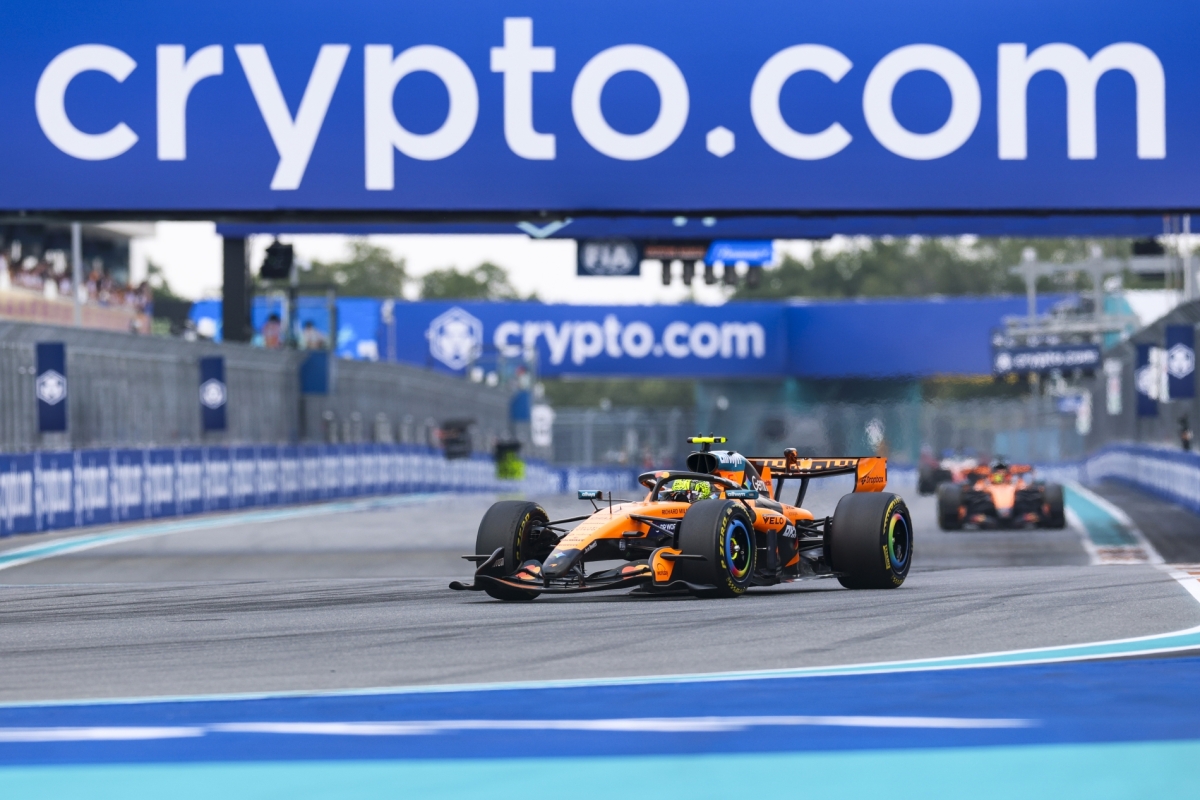
McLaren driver Lando Norris competes in the sprint race at the Miami International Autodrome in Miami, Florida, on 2 March, 2026
Nathan Ray Sebeck/Reuters
McLaren driver Lando Norris competes in the sprint race at the Miami International Autodrome in Miami, Florida, on 2 March, 2026

Crypto platforms are tapping into the Gulf sporting boom

When cryptocurrency platform Toobit signed a regional partnership with Spain’s top football division earlier this year, it did more than place its logo alongside LaLiga's. The $2mn package includes competitions and rewards for traders, trips to matches in Spain, signed shirts, and events featuring former stars.

At first glance, it looks like a conventional sports sponsorship. But beneath the surface, something rather different is happening. The platform isn't simply buying advertising space; it is creating a pathway from a fan’s attachment to a club or competition to a contest, prize, or exclusive experience—and potentially to opening an account, depositing money, and trading.

This is where sport’s value to cryptocurrency companies becomes clear. It offers access to a large audience and an emotional connection that conventional financial advertising struggles to create. Consumers may ignore an advertisement for an unfamiliar platform, but they are more likely to notice it when it appears alongside a club they support or a competition they follow week after week.

Cryptocurrency companies have used football and Formula One in Europe to reach investors, but the Gulf offers more than just a place to display their logos. The region’s sports industry is expanding alongside financial technology, while its young, digitally connected population increasingly uses smartphones for entertainment, shopping, payments, and investment.

Gulf countries now host international competitions in football, motor racing, boxing, golf, tennis, and esports. They are also investing in clubs, broadcasting, infrastructure, and talent development. Together, these investments create new sponsorship opportunities and give companies access to fan bases both within the region and beyond.

Commercial research firm Deep Market Insights estimates that Saudi Arabia’s sports sponsorship market was worth about $1.52bn in 2025 and could reach $3.06bn by 2034. It valued the UAE market at around $3.83bn in 2025, projected to rise to $7.69bn by 2034.

These are not official statistics, and estimates vary depending on how each organisation defines sports sponsorship. Some count only deals involving teams and competitions, while others also include advertising expenditure, events, and commercial rights. The figures should therefore be regarded as indicators of the market’s direction rather than definitive measurements of its size.
Reuters
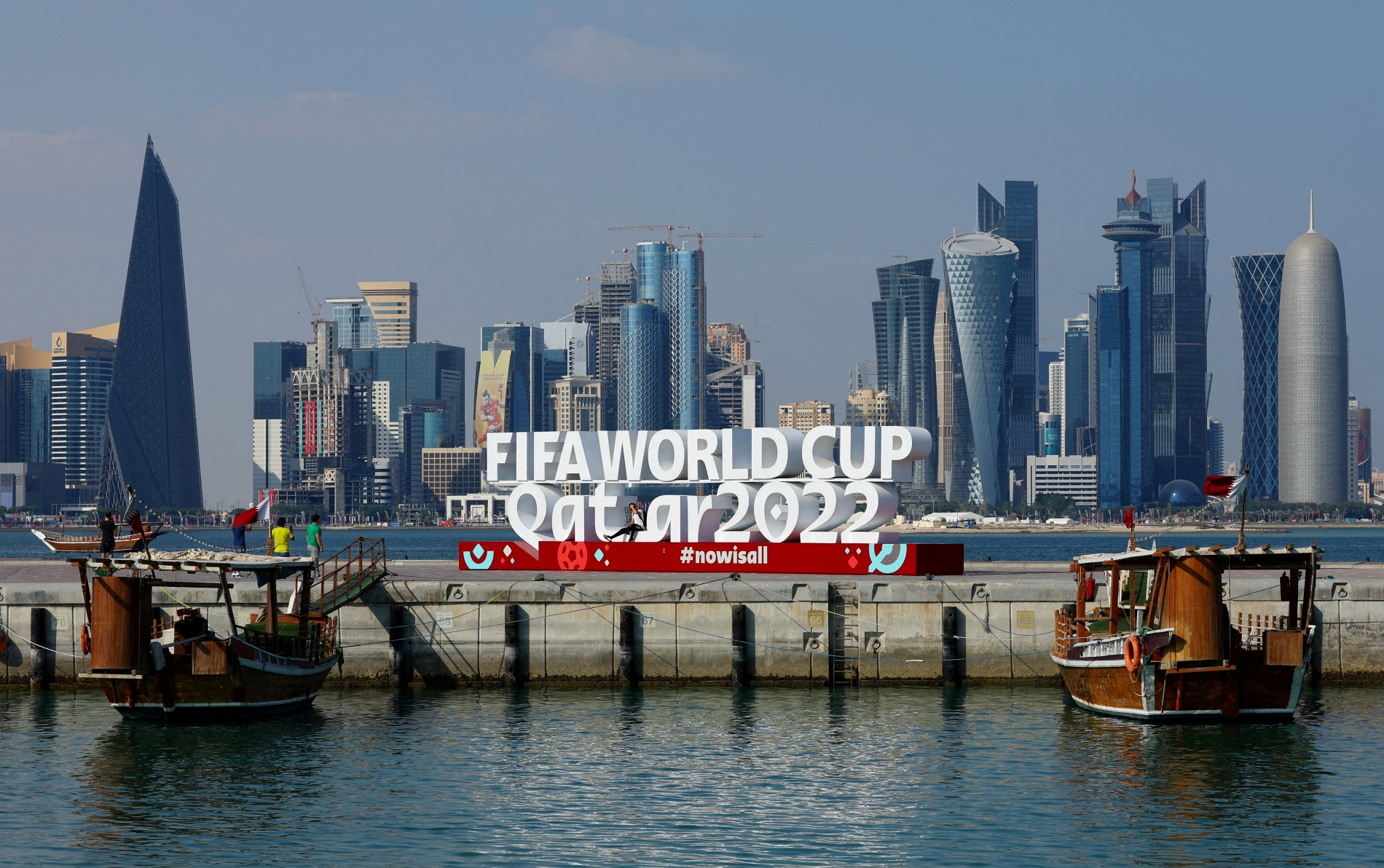
Qatar hosted the 2022 Football World Cup, which provided a big boost to the state's infrastructure development.

From World Cup to Formula One

The relationship between Gulf sport and cryptocurrency has developed through global sponsorships and more targeted regional partnerships. The 2022 FIFA World Cup in Qatar was an early and important milestone: Crypto.com became an official sponsor of the tournament and its exclusive cryptocurrency-trading-platform sponsor, while the Algorand network partnered with FIFA as its official blockchain platform, serving as a regional supporter of the tournament in North America and Europe.

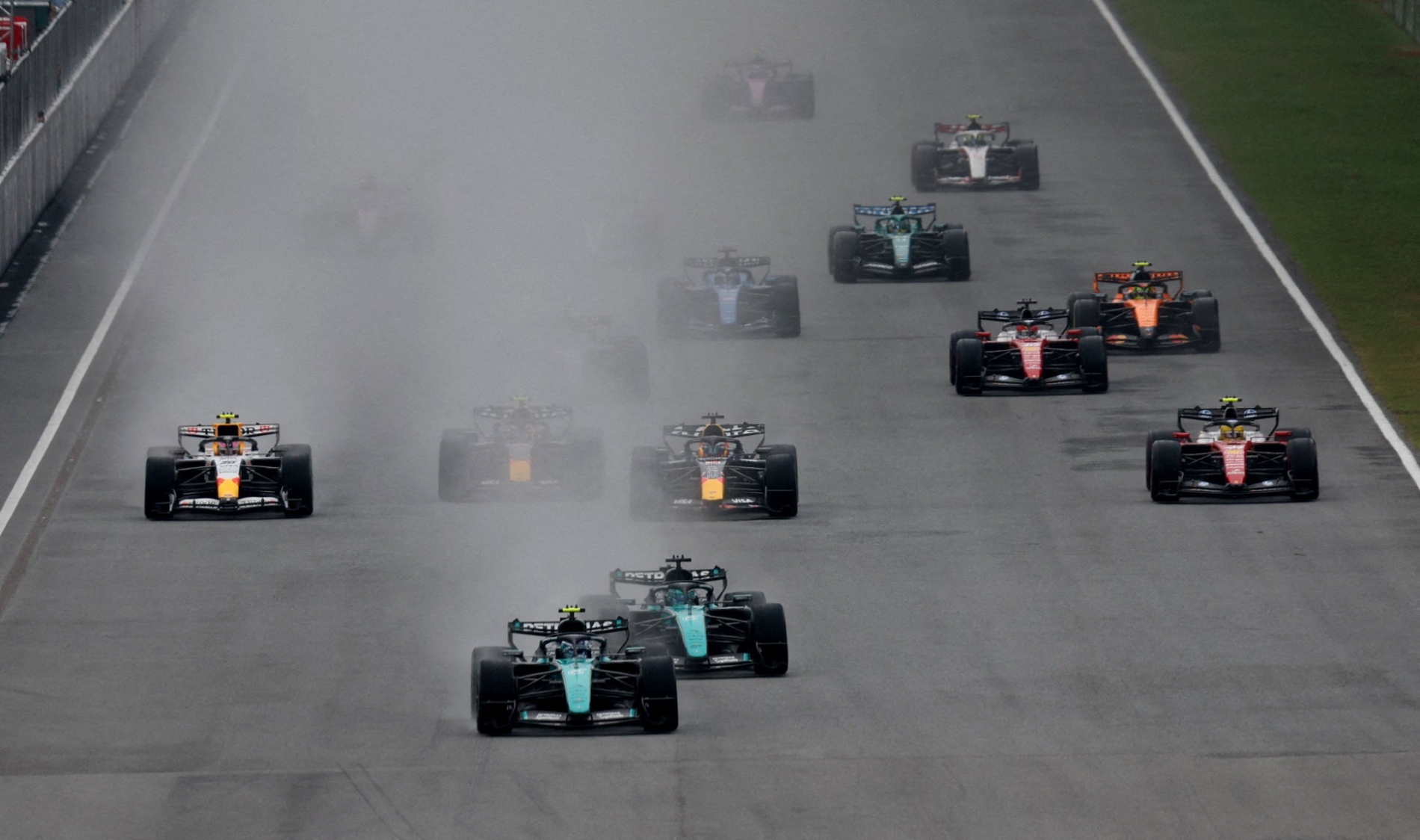
Formula One offers a long-running example of crypto sponsorship in sport. Crypto.com became a global partner of the championship in 2021, and the agreement was later extended to 2030. Formula One says it has about 750 million fans worldwide and a cumulative television audience of 1.5 billion for its Grands Prix. With races in Bahrain, Saudi Arabia, Qatar, and Abu Dhabi, the partnership reaches Gulf audiences despite its global scope.

Motor racing audiences are particularly attractive to digital asset companies: they are international, technologically engaged, and include high-spending segments. Yet viewing figures don't show how many people opened digital wallets because of a race or stayed active after a campaign ended.

In April 2024, Chiliz, which specialises in blockchain solutions for sport and entertainment, announced a multi-year partnership with the UAE Pro League. The proposed first phase included developing a Web3 fantasy football game and offering fans blockchain-authenticated match balls as exclusive collectables.

The idea goes beyond advertising. Under the proposed model, fans would take part in an experience linked to players, match results, and collectables. In theory, blockchain technology can verify a ball or collectable’s authenticity and record its history and ownership changes.
A club is not simply renting out space on its shirt; it is also placing some of its reputation in the sponsor's hands

In March 2025, Chiliz expanded its regional presence by partnering with Fanzword, a Dubai-based football gaming platform the company said had surpassed one million downloads. The agreement aimed to gradually integrate fan-token rewards into a platform with an established user base. This approach gets closer to building genuine usage than launching a token first and then trying to find an audience.

Very different activities fall under the label 'digital assets in sport'. First is advertising sponsorship, in which a platform pays for visibility. Next is digital engagement through authenticated tickets, collectables, fantasy games, and loyalty schemes. Finally, financial adoption occurs when fans open accounts or wallets and buy or trade tokens.

The evidence from the Gulf is strongest on sponsorship, while the impact on digital engagement and financial adoption remains less clear. Digital engagement is growing, though still incomplete, and financial adoption remains limited. Not enough independent data show how many Arab fans have become regular users of digital assets because of a sports partnership.

Fan tokens occupy a sensitive middle ground. They are tradeable assets that usually offer holders benefits such as voting on minor club decisions, entering competitions, or obtaining tickets, merchandise, and access to special events. If a fan buys a token for its lasting benefits, it may become a digital version of club membership.

AFP
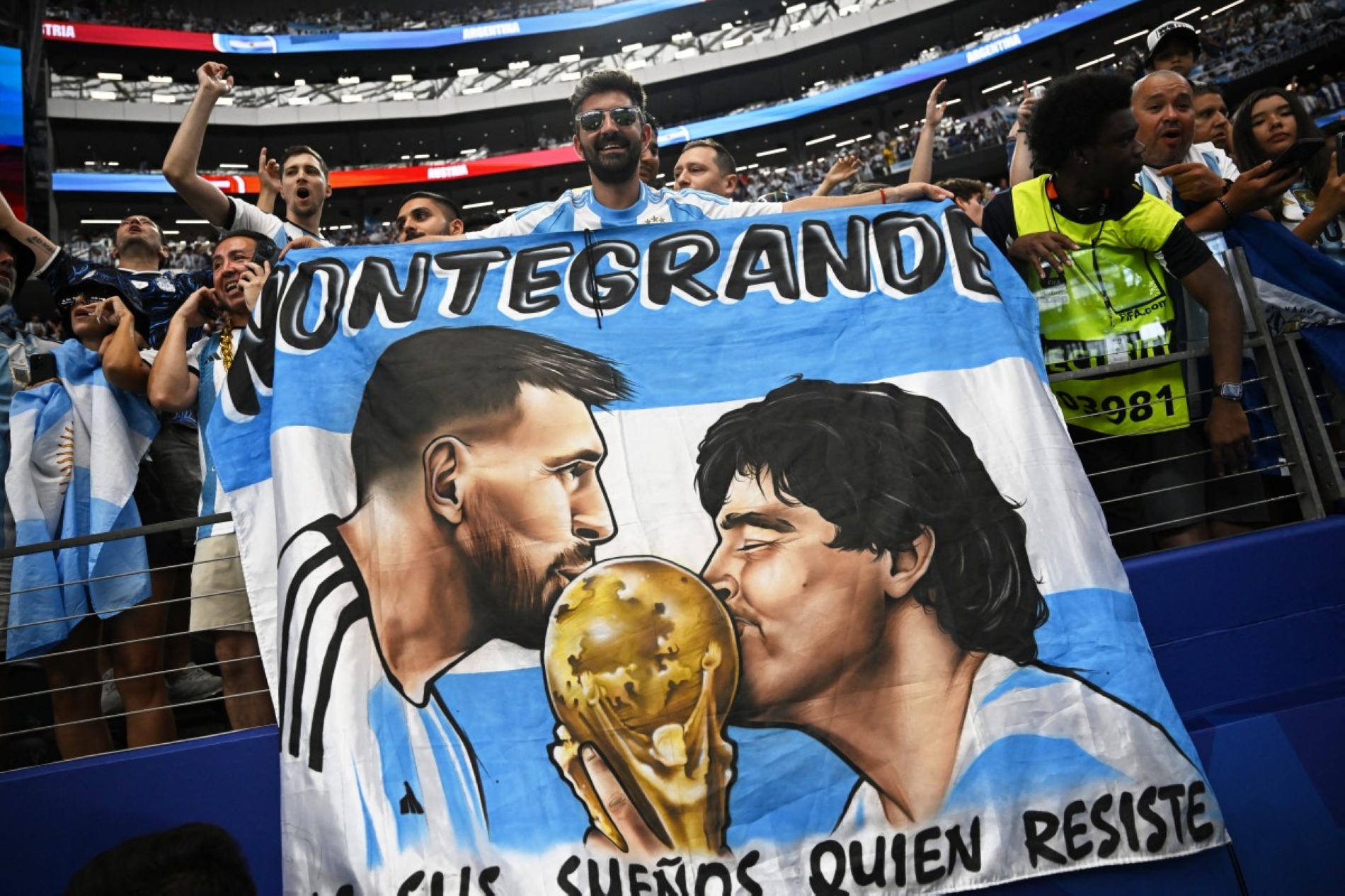
An Argentine fan holds a flag featuring Diego Maradona and Lionel Messi after the Argentina–Austria match at the 2026 FIFA World Cup on 22 June, 2026

An academic study of tokens linked to national teams that competed in the 2022 World Cup found that their prices rose before the tournament and then tended to decline once matches began, a pattern resembling the maxim 'buy the rumour, sell the news'.

By contrast, another study covering 3,576 votes found that, on average, about half of fan-token holders participated in polls. This suggests that the instrument can generate genuine engagement when it gives fans a clear role, but can also draw them into speculation disconnected from any stable sporting value.

The fan as a source of data

The digital token may not be the biggest prize. An organisation that manages a fan's app, wallet, ticket, and rewards knows which matches that person follows, which products they buy, and how much they spend. Over time, this knowledge becomes a commercial asset that can be used to personalise advertising, content, and prices.

That raises a fundamental question: who owns the fan's data? Does it stay with the club and league, or pass to the technology platform? And does the user know how the data will be used and who it will be shared with?

A token may lose popularity, but the database and the direct relationship with the audience remain. Data, rather than cryptocurrencies themselves, may therefore prove to be the most enduring source of value in these partnerships.

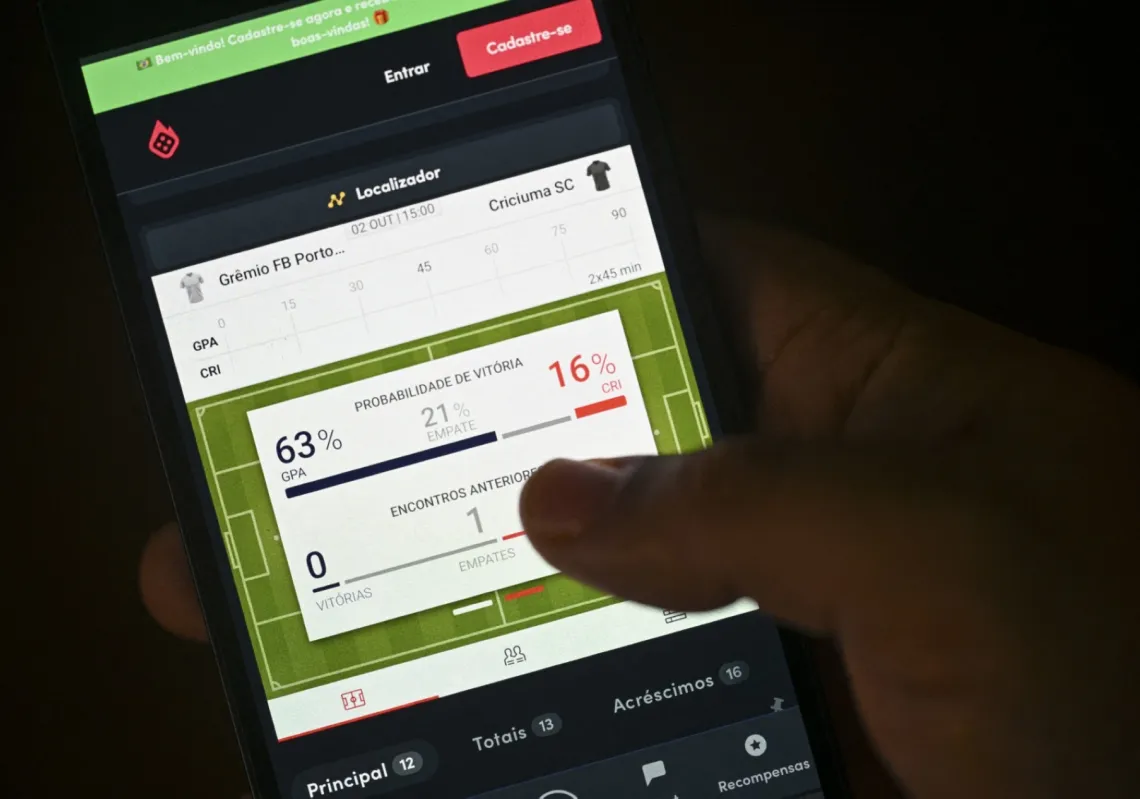
The partnership between Toobit and LaLiga exposes an important regulatory gap: regional advertising crosses borders easily, but financial licences do not. As of October, Toobit does not appear on the public register of firms licensed by Dubai's Virtual Assets Regulatory Authority (VARA). The company says it has no office, legal entity, or employees in Dubai, and points to registrations or licences in Poland and Australia. A sponsorship agreement does not automatically give a company permission to provide trading services in every country its campaign reaches. 

رويترز
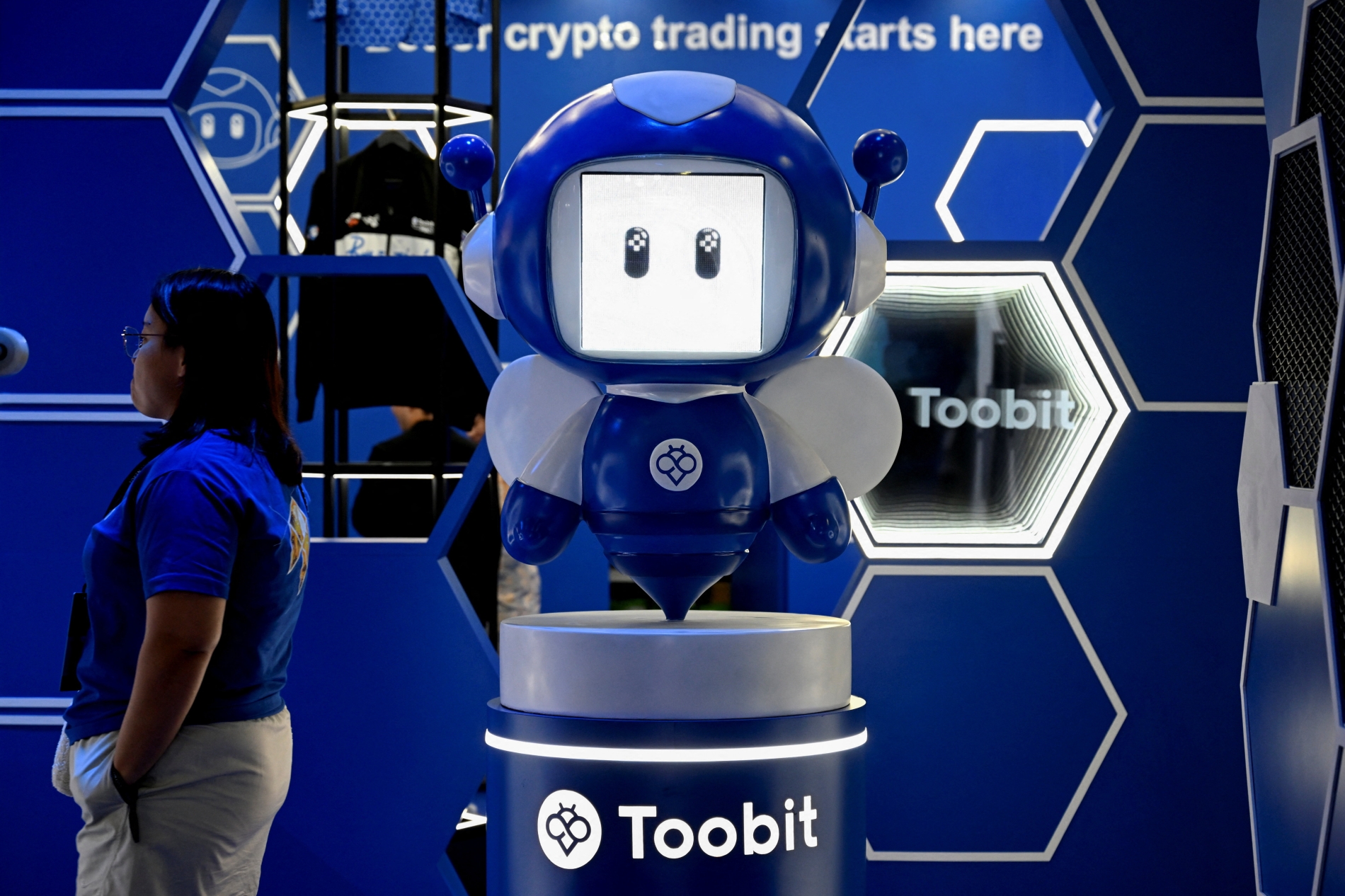
A robot demonstrates its capabilities at the Toobit booth during the TOKEN2049 cryptocurrency conference in Singapore on 7 October, 2026

Since October 2024, VARA has applied rules covering the marketing of virtual assets directed at the UAE. Meanwhile, the Qatar Financial Centre has established a framework governing asset tokenisation, property rights, and custody. Still, it excludes cryptocurrencies and stablecoins that function as substitutes for money from the category of permitted tokens. In Saudi Arabia, growing individual interest in cryptocurrency does not mean that a locally licensed market comparable to Dubai's exists.

Fans in different countries may therefore see the same advertisement while having different levels of access to the service and different legal rights. The phrase 'official partner' may also be interpreted as an endorsement of a product's safety, even though it describes a commercial relationship, rather than regulatory judgement.

When borrowed trust backfired

The latest expansion still carries memories of FTX, which spent heavily on teams, competitions, and athletes before collapsing in 2022. After its bankruptcy, promoters and sporting bodies became embroiled in lawsuits from investors who argued that sporting celebrity had lent the platform credibility it did not deserve.

In December 2021, the UK's Advertising Standards Authority ruled that Arsenal's fan-token ads did not clearly explain their price volatility, their nature as cryptoassets, or the costs involved in obtaining them. In June this year, the Financial Conduct Authority also warned football clubs against entering into sponsorship agreements with unauthorised cryptocurrency and trading platforms.

Reuters
Formula One cars compete at the Sepang International Circuit in Sepang, Malaysia, on 4 October, 2026

This does not mean sport should close its doors to the sector. It means treating it as a financial activity that requires scrutiny of licensing, solvency, funding sources, and product terms before a deal is announced. A club isn't simply renting space on its shirt; it is also placing part of its reputation in the sponsor's hands.

Yet it is still too early to describe this as mass adoption. A logo on a racing car isn't a wallet in active use, and a prize that leads a fan to a trading platform doesn't prove the fan needs digital assets.

Real success will become apparent when the technology is almost invisible: a ticket that is difficult to counterfeit, a collectable whose authenticity can be verified, a membership that delivers continuing benefits, and a loyalty scheme that works without requiring fans to understand private keys, network fees, or market volatility.

Only then can Arab sport move from being an advertising showcase for digital assets to becoming a gateway to their widespread use. If the relationship remains built around competitions, promises of profit, and price movements, however, platforms will have acquired the public's trust without necessarily giving the public equivalent value in return.

font change