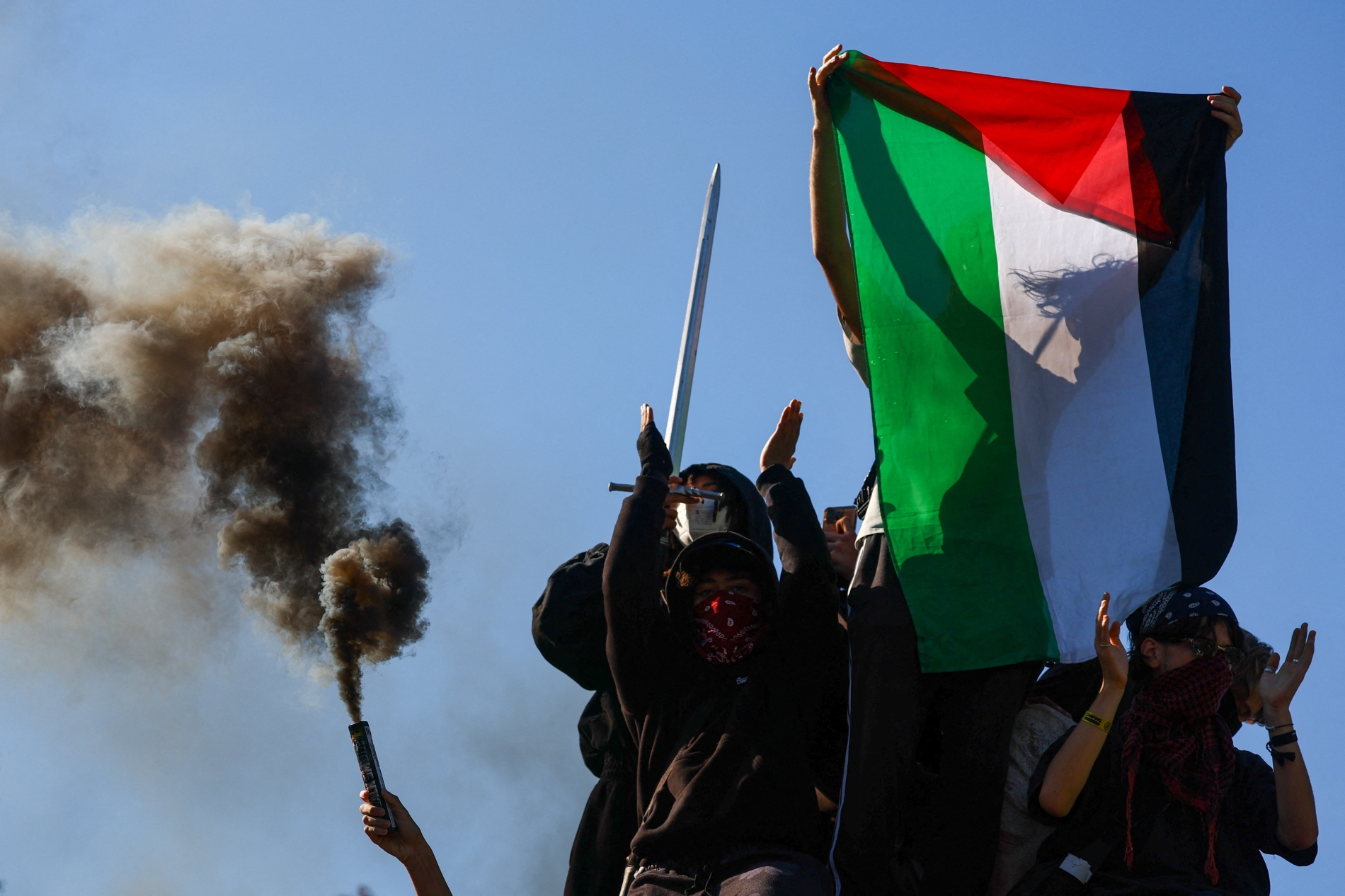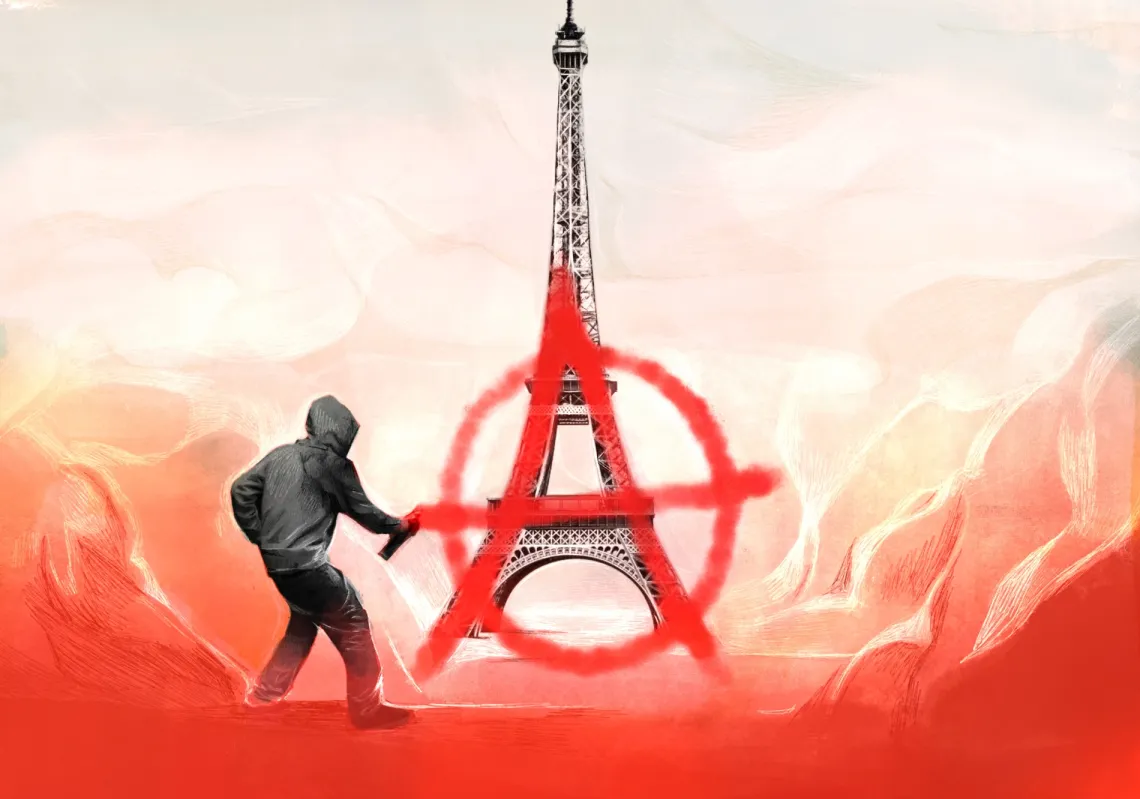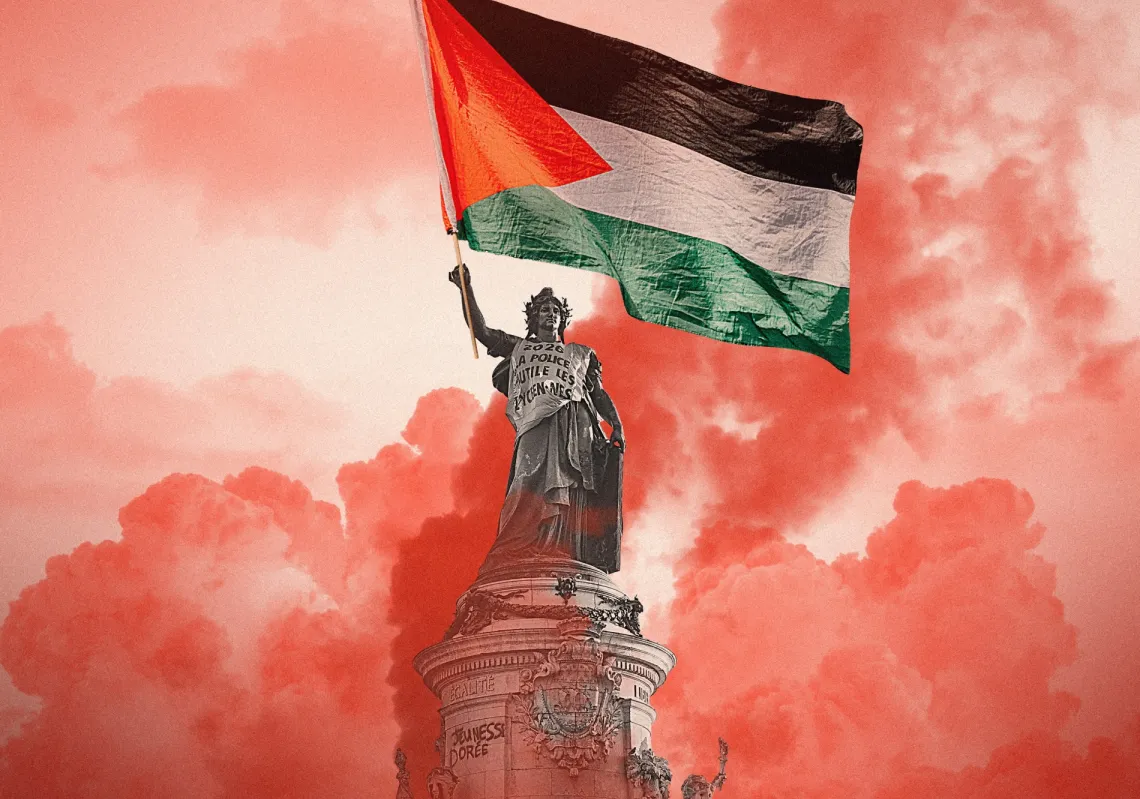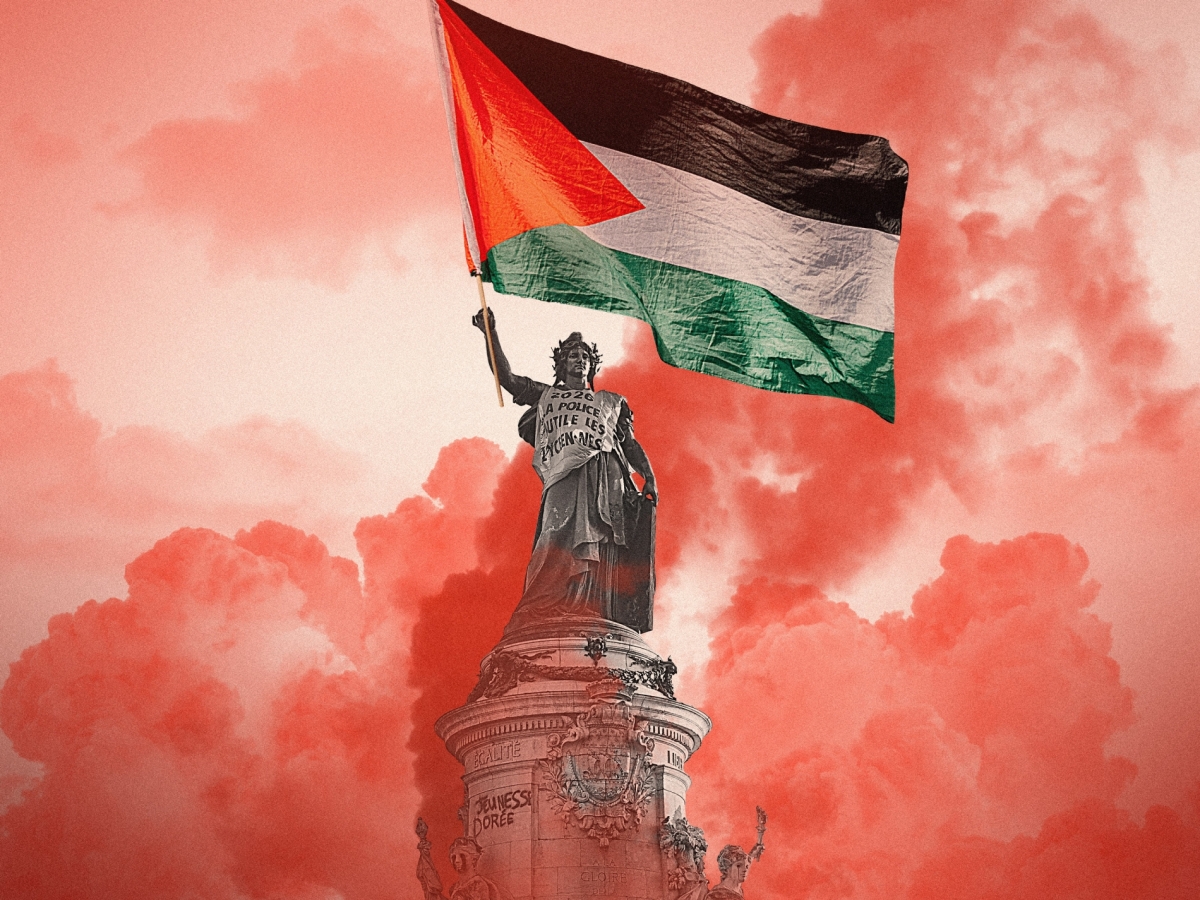

Amid the wave of demonstrations sweeping across France, one symbol has stood out amid the scenes of protest, violence, and vandalism: the Palestinian flag. Since late September, students, trade unionists, and broad sections of French society have protested conditions in the country’s schools, the rising cost of living, and pressure on public services, culminating in a nationwide mobilisation on 17 October.
Against this backdrop, the Palestinian flag has been used by different groups to mobilise crowds, express solidarity, and articulate political demands that extend beyond the Palestinian cause itself. But the scenes unfolding across France, including the burning of a city hall in Limoges and peaceful student demonstrations in Paris, present two strikingly contrasting images: a student or academic draped in a keffiyeh on a university campus, and a Palestinian flag appearing amid scenes of looting and vandalism: two images, one flag.
This juxtaposition shows how the Palestinian flag has increasingly become a symbol for groups and people around the world pursuing widely divergent objectives, with actual Palestinians having little influence over its use or the meanings attached to it.
This is the story of how the Palestinian flag found its way into the streets of France.
Student activism
In the spring of 2024, the Palestinian flag became a prominent feature of France’s academic landscape, replicating similar solidarity movements on university campuses in the United States and around the world. At Sciences Po in Paris, students waved Palestinian flags and wore keffiyehs, demanding that their institution take a stand against what the United Nations has termed an Israeli genocide against Palestinians in Gaza. On 28 May that year, it crossed another threshold, moving from the university campus into the heart of France’s legislature when MP Sébastien Delogu raised it in the National Assembly, an act that led to his suspension.
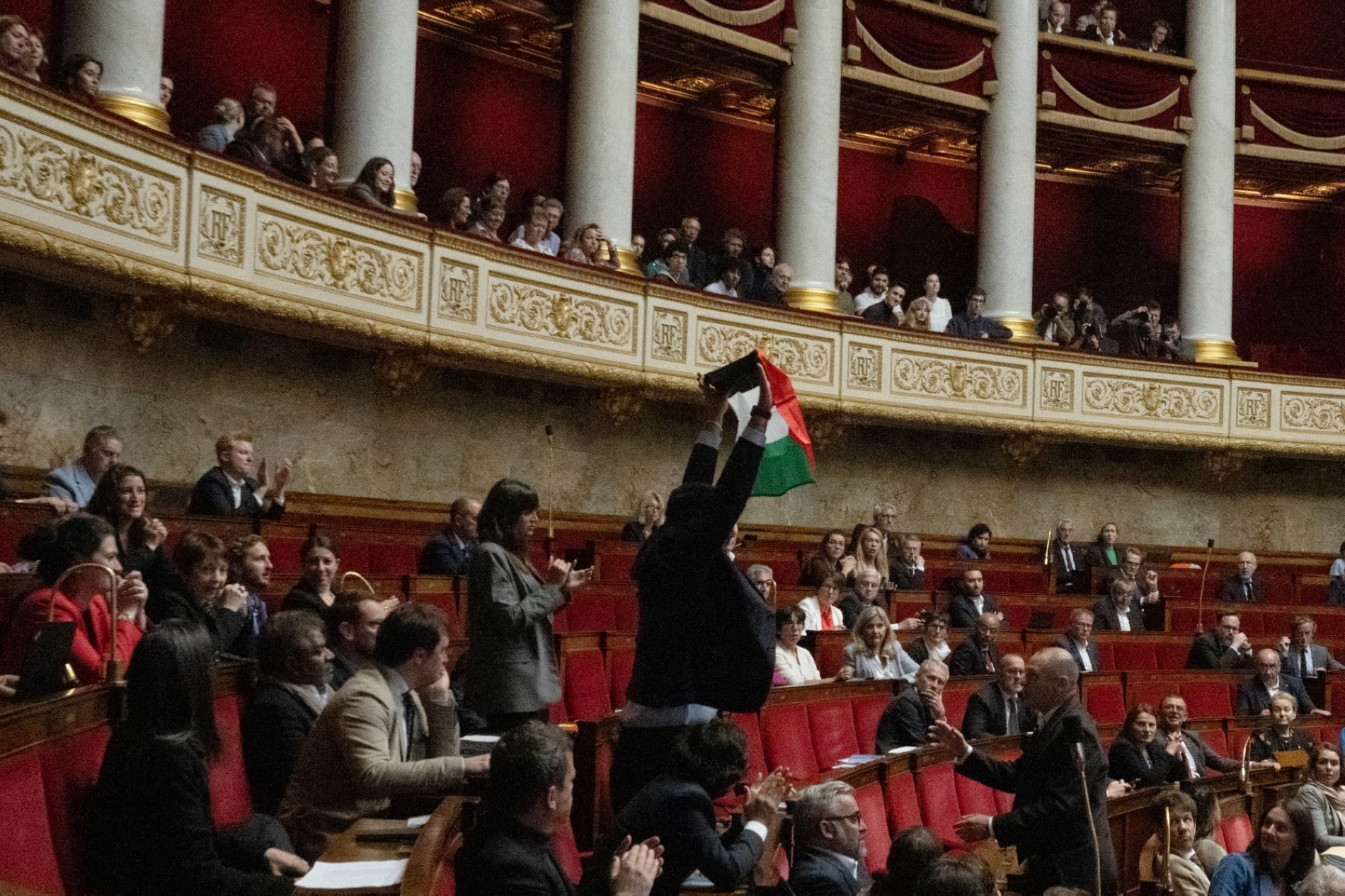
What started out as a student protest against Israel's war on Gaza spread to French society, connecting causes separated by geography and political partisanship. But while the flag has appeared at trade union protests, on university campuses, in academic institutions, and in the highest political circles, more recently it has been spotted amid scenes of vandalism and looting in the streets of France and elsewhere.
A thief carries it, just as a student, an academic, a trade unionist, or a politician might. One emblem passes through different hands, serving different agendas and acquiring contradictory meanings. Even bitter adversaries may raise the same flag, each using it to tell a different story about their own cause and identity.
The French right invokes it to demonise demonstrations or portray protests and public discussions as threats to national identity and security, associating it with Islam, immigration, and cultural tensions. Israel, too, has seized on the flag's presence amid widespread social unrest across Europe, portraying the demonstrations as a breeding ground for antisemitism and pro-Palestinian militancy.
The French left, and elements of the political centre, invoke it to mobilise supporters, rally public opinion, and champion their political causes. Others seek to appropriate its moral authority to legitimise their rhetoric, demands, and presence in the public sphere.
Amid these competing appropriations, Palestinians are increasingly losing control over who holds the flag and what agenda is being pushed. The flag left Palestine in the hopes of bringing liberation and dignity to the Palestinians suffering in their homeland, but has taken on a character increasingly detached from the original cause.
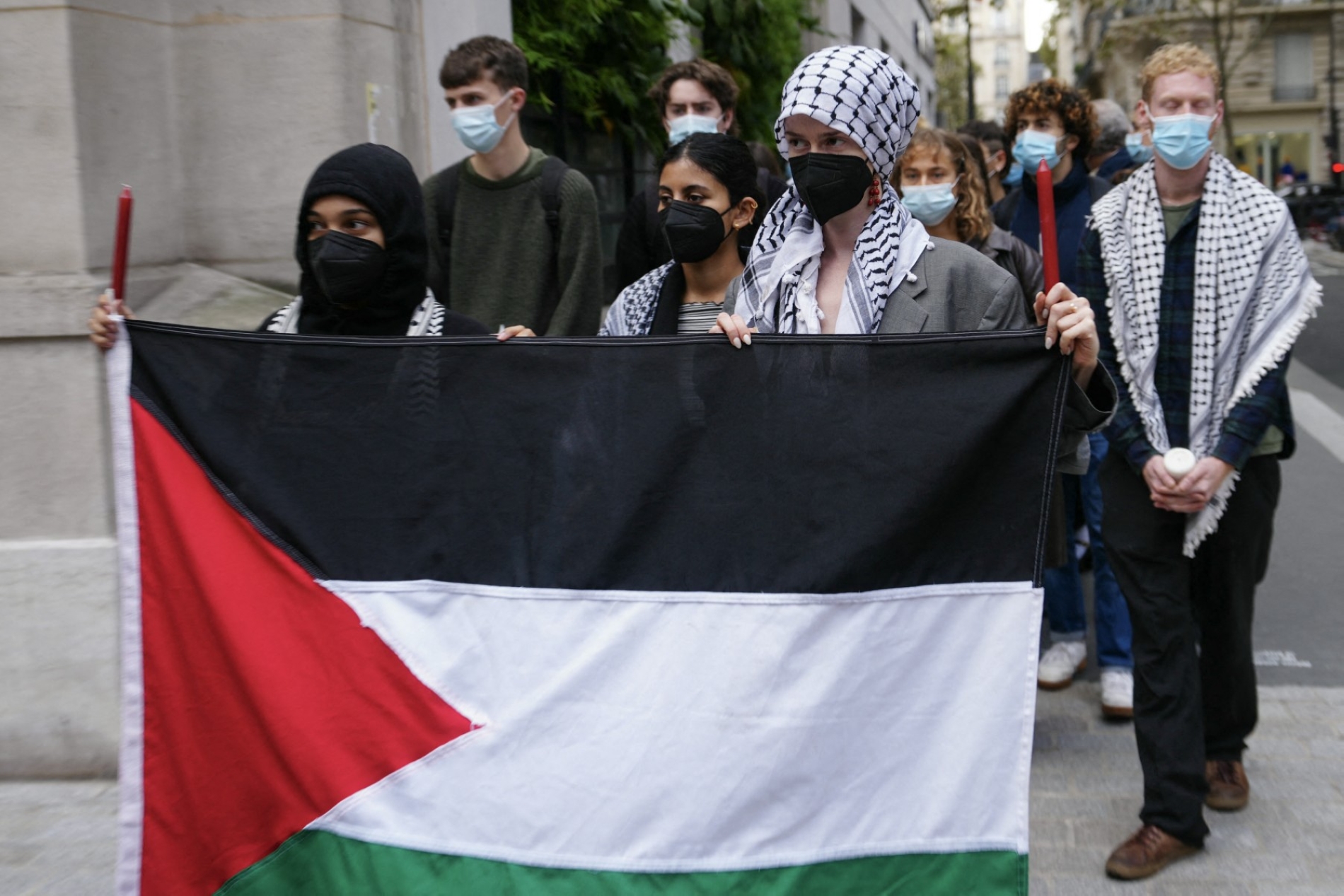
Palestinians consequently find themselves expected to condemn the thief while thanking the student or academic who raises their flag. They watch as the flag's original meaning disappears behind a cacophony of competing causes and agendas. They see it enlisted in struggles over identity, immigration, religion, and security. At the same time, their own story, like the Palestinians' collective national cause, fades into the background amid the growing politicisation of solidarity.
The flag has crossed borders, but those borders remain closed off to Palestinians. It has entered universities and institutions while schools in Gaza have been destroyed, depriving Palestinian children of access to education. It flies above demonstrations in Paris, while Palestinians in the West Bank are denied the freedom to carry it in protest against killing, imprisonment, and siege.