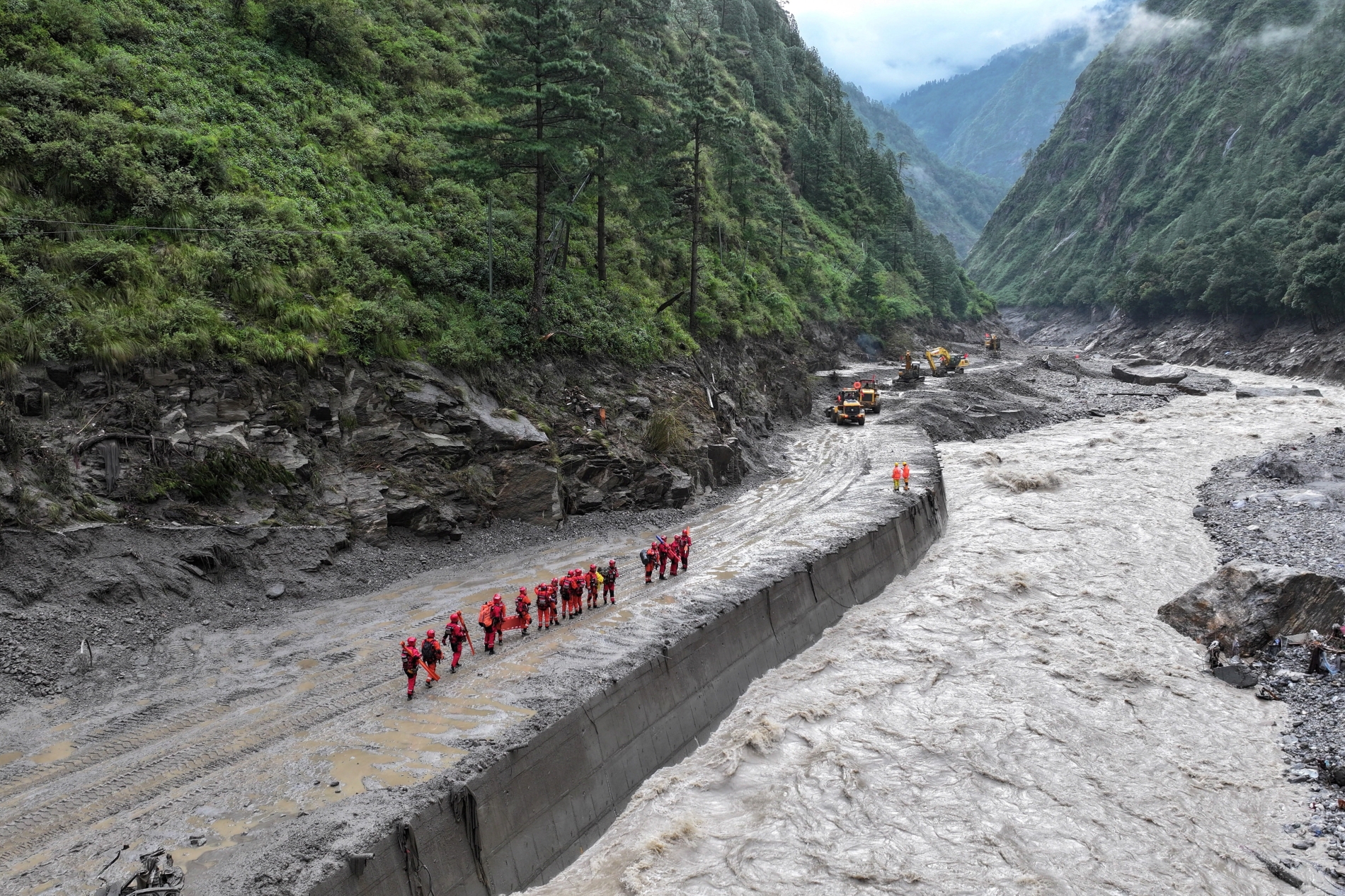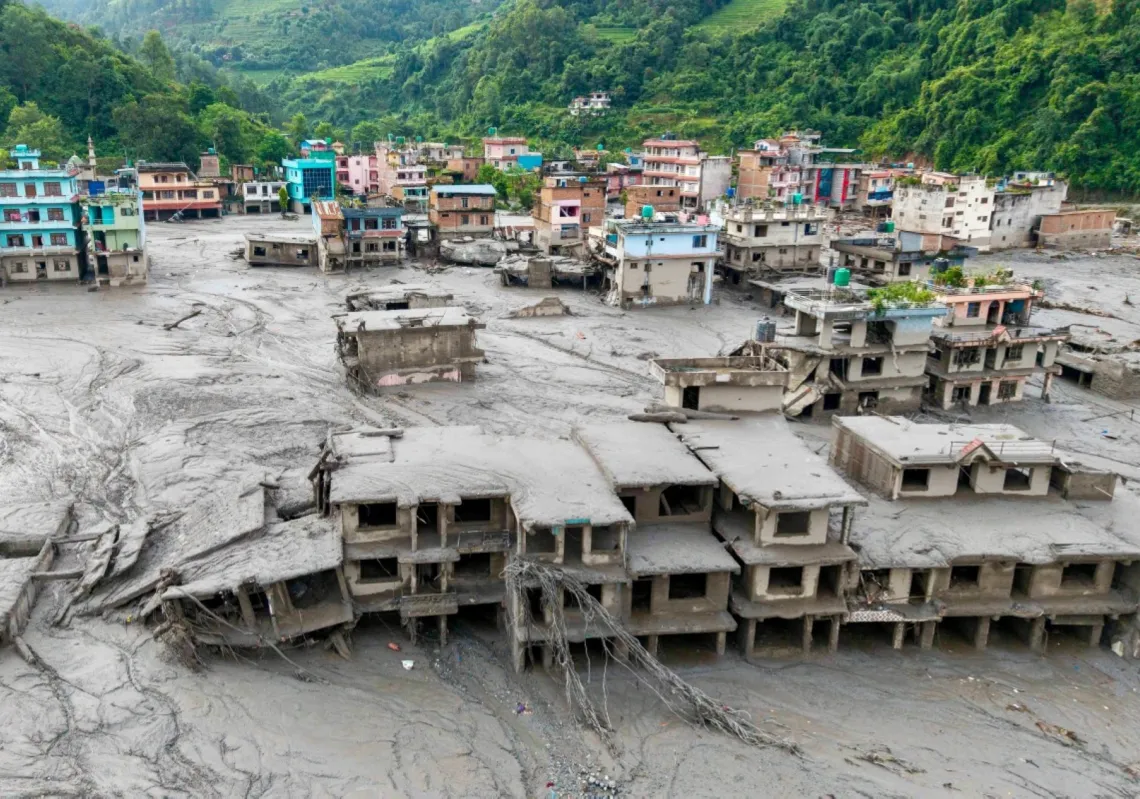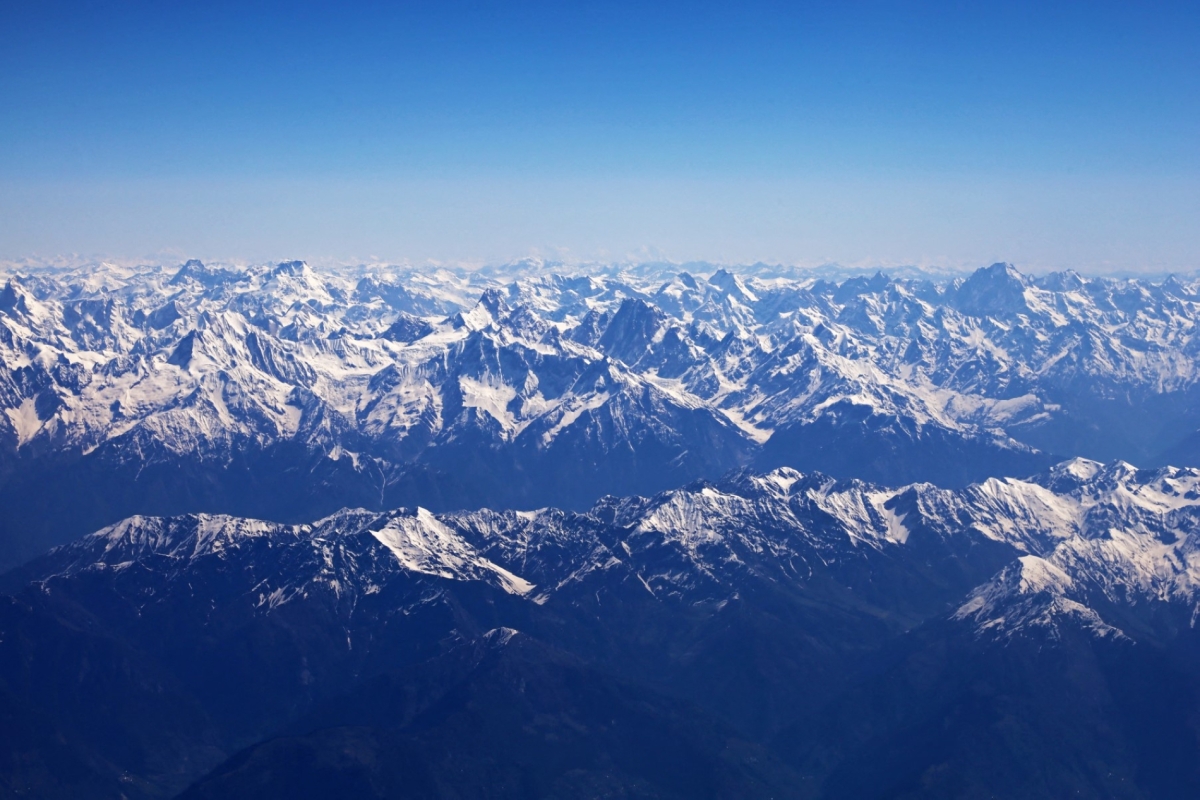

When an enormous mass of rock and ice broke away from Mount Langtang Lirung on the border between Nepal and Tibet on 26 August, it unleashed a torrent of water and debris that travelled nearly 100km through mountainous valleys, causing widespread destruction to villages, infrastructure, and the port of Gyirong. The impact generated seismic energy equivalent to a magnitude 5.2 earthquake. Thousands were killed.
The Himalayas have witnessed similar scenes before. In 2021, in the Chamoli region of India, 27 million cubic metres of rock and ice collapsed from Mount Ronti, killing hundreds and destroying hydroelectric facilities. Such events show how rising global temperatures are affecting the stability of mountain slopes in a geologically active region such as the Himalayas, where the terrain is also shaped by weather, erosion, gravity, and tectonic movements.
Global warming may not be the sole cause, but it is weakening slopes as glaciers retreat and ice melts within rock fissures and frozen ground, increasing the risk that natural landslides could develop into much larger disasters. Stretching nearly 2,500km, the Himalayas contain the highest peaks on Earth, including Mount Everest, at 8,849m above sea level.
‘The third pole’
The famous mountain range contains tens of thousands of glaciers and forms an essential part of what is known as the ‘third pole’ since it holds the largest concentration of land ice outside the Arctic and Antarctic. The Himalayas are sometimes called ‘Asia’s water towers’ because the snowfields and glaciers serve as an immense natural reservoir, feeding the continent’s most important rivers like the Indus, Ganges, and Brahmaputra, sustaining communities thousands of kilometres away with drinking water, agricultural irrigation, and electricity generation.
The Himalayan glacial system is therefore important for almost two billion people, but this natural reservoir is increasingly vulnerable to changes in the global climate. Glaciers around the world are losing mass as temperatures rise. Average annual ice loss hit 273 billion tonnes between 2000-23. The consequences are felt far beyond the mountains. Melting ice adds water to oceans, raising sea levels and affecting seasonal water supplies, ecosystems, and the economies that depend on it.
A study published in Climate and Atmospheric Science in July 2024 documented significant changes in the third pole’s climate over recent decades. Drawing on data from 1980-2020, the researchers examined temperature, precipitation, and glacier mass using databases, satellite observations, and climate models. They found a marked rise in temperatures, particularly in the western Himalayas, creating conditions conducive to the loss of snow and ice.
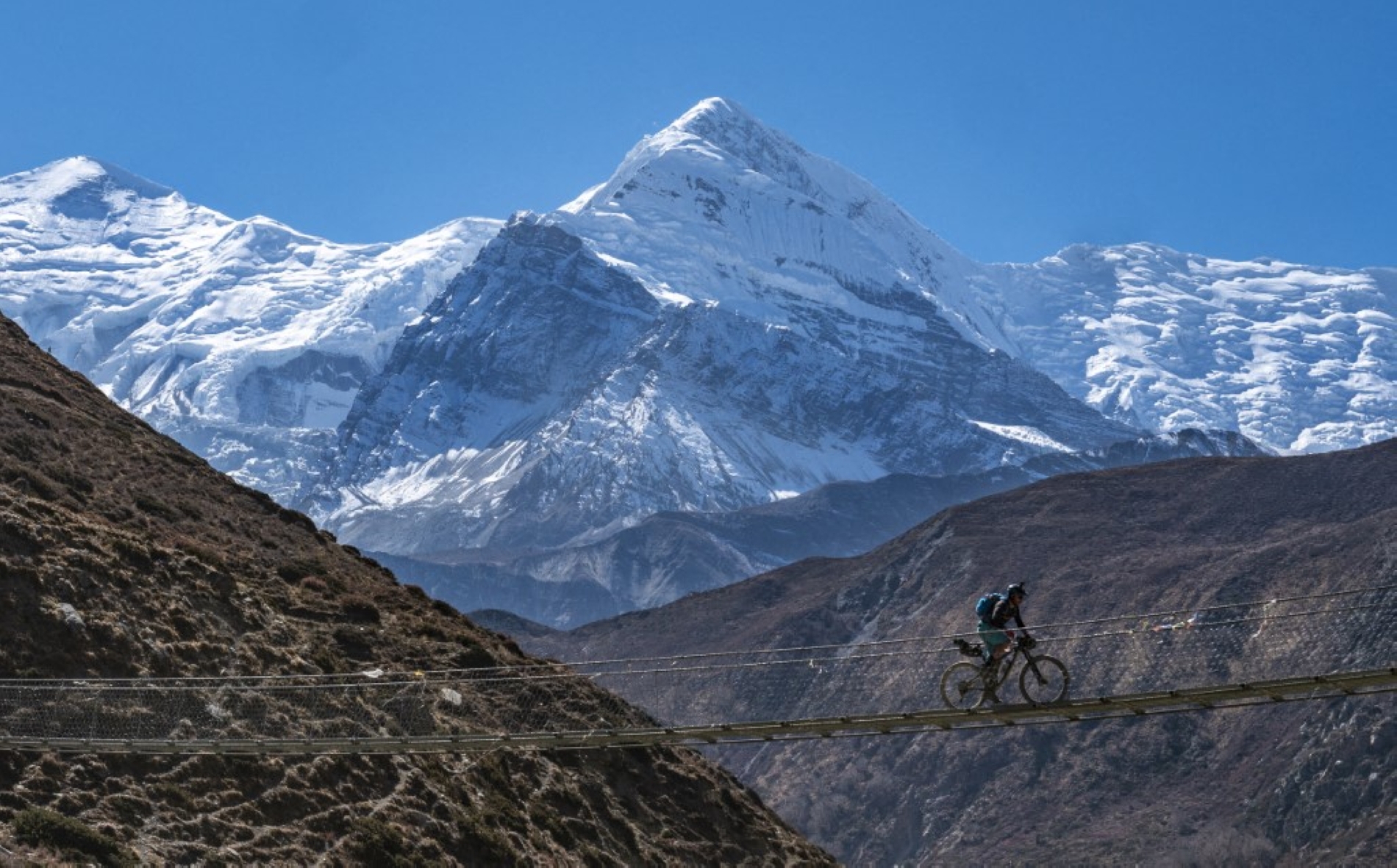
The findings were in line with the UN Environment Programme's 2022 report titled Scientific Assessment of the Third Pole Environment, which noted that temperatures across the Himalayas rose by around 0.3°C per decade between 1960 and 2018, nearly twice the global average. Warming was particularly pronounced during winter.
What holds steep mountain slopes together? At high elevations, rock does not always form a single, solid mass; it is often fractured by cracks and faults through which water and snow penetrate. Above the permanent snowline (which in the Himalayas generally lies between 4,500 and 5,700 metres, depending on location and local conditions), ice can remain trapped within or around rock formations for many years.
When water seeps into these cracks and freezes, it expands, exerting pressure on the surrounding rock. Repeated cycles of freezing and thawing gradually widen the fractures and break the rock apart through a process known as freeze-thaw weathering, or frost-shattering. At the same time, ice (within rock fissures) and permafrost can act as a natural binding agent, helping to hold sections of slope in place. Changes in the temperature and condition of this ice therefore affect the stability of the rock.