Can Gulf banks fund postwar recovery?

Borrowing to offset potential shortfalls in oil revenues will likely remain an important part of Gulf governments’ financing strategies in the coming years

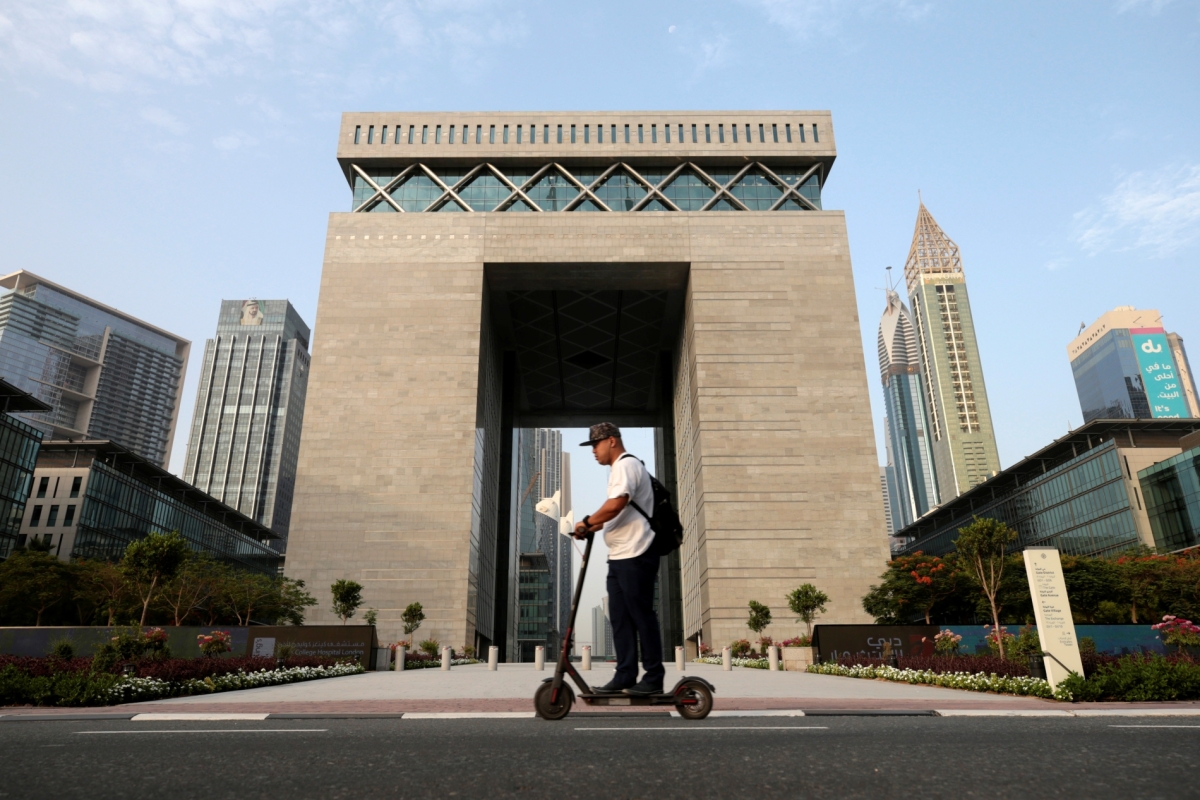
Dubai International Financial Centre, on 23 June, 2019
رويترز
Dubai International Financial Centre, on 23 June, 2019

Can Gulf banks fund postwar recovery?

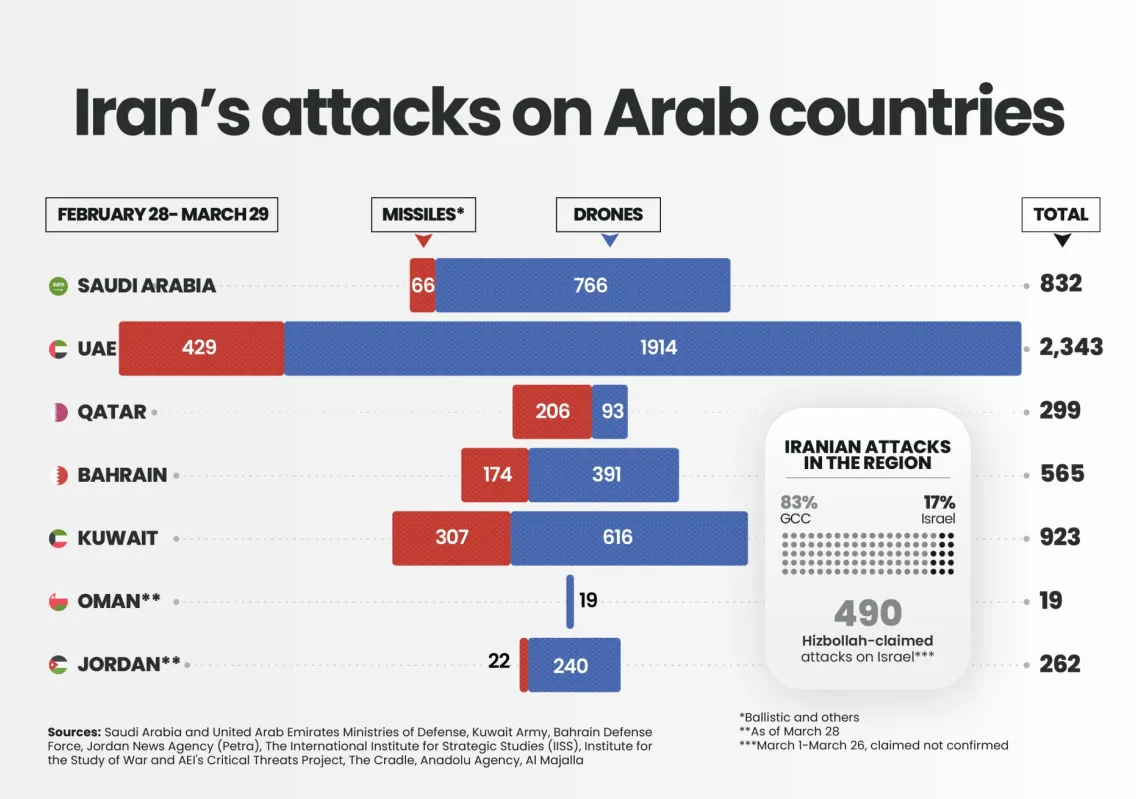
There is little doubt that economic conditions in the Gulf will be markedly different from those before 28 February, when the US and Israel attacked Iran. Iranian strikes have caused widespread damage to institutions and essential infrastructure, including electricity and water facilities, oil installations, ports, and airports. Rebuilding these assets will require substantial investment and could increase demand for financing.

Meanwhile, disruptions to shipping through the Strait of Hormuz reduced oil flows to 4.9 million barrels per day in the second quarter of 2026, a decline of 77% from a year earlier. Although higher prices offset some of the losses producers suffered, shipping and insurance costs rose, adding to pressure on public finances.

Financing needs extend beyond covering budget deficits. Saudi Arabia estimated its funding requirements for 2026 at approximately $57.9bn, including $44bn to finance the budget deficit and $13.9bn to repay maturing debt principal. The country also announced plans to continue diversifying its funding sources across domestic and international markets, alongside financing projects and infrastructure development. Qatar, meanwhile, issued $3bn in international bonds in two tranches in September, demonstrating that Gulf countries continue to turn to debt markets despite disruptions to energy supplies and shipping.

Borrowing through bonds, sukuk, and other debt instruments is therefore likely to remain an important part of Gulf governments’ financing strategies in the coming years. Such borrowing would help offset potential shortfalls in oil revenues, finance development projects, and refinance existing obligations. The volume of future issuance, however, will depend on oil prices, fiscal deficits, capital expenditure requirements, and global financial market conditions.
AFP
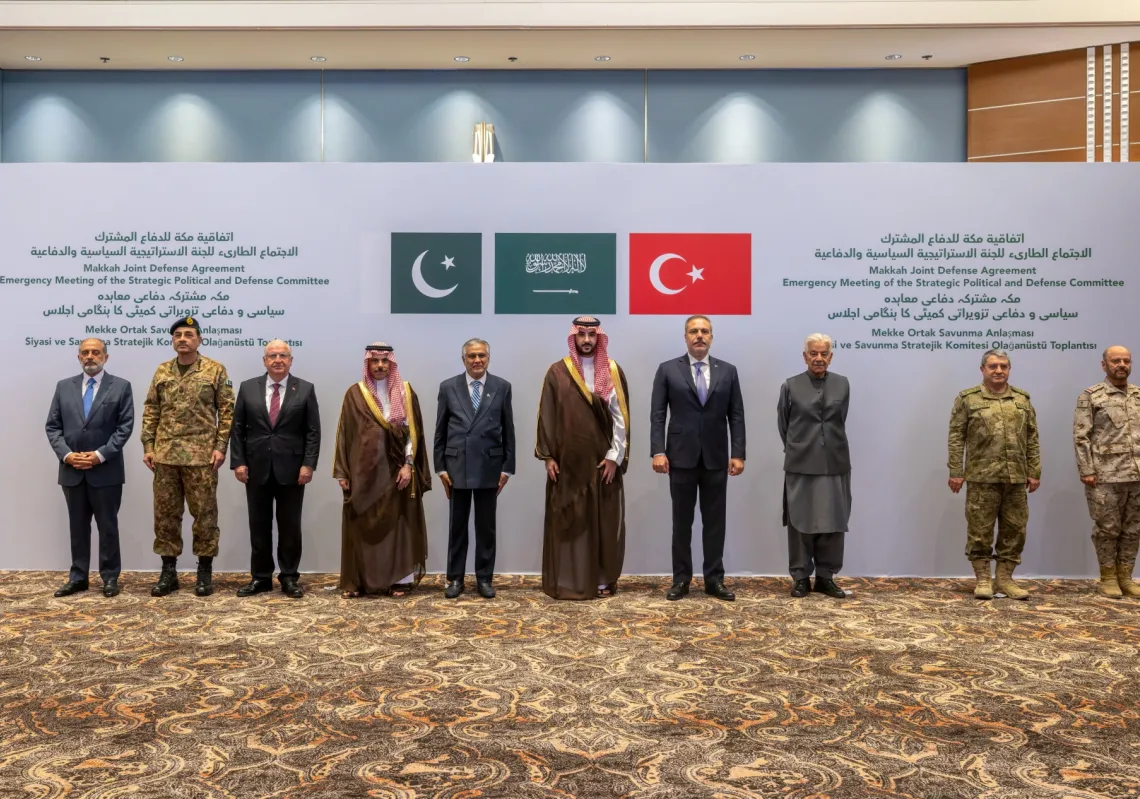
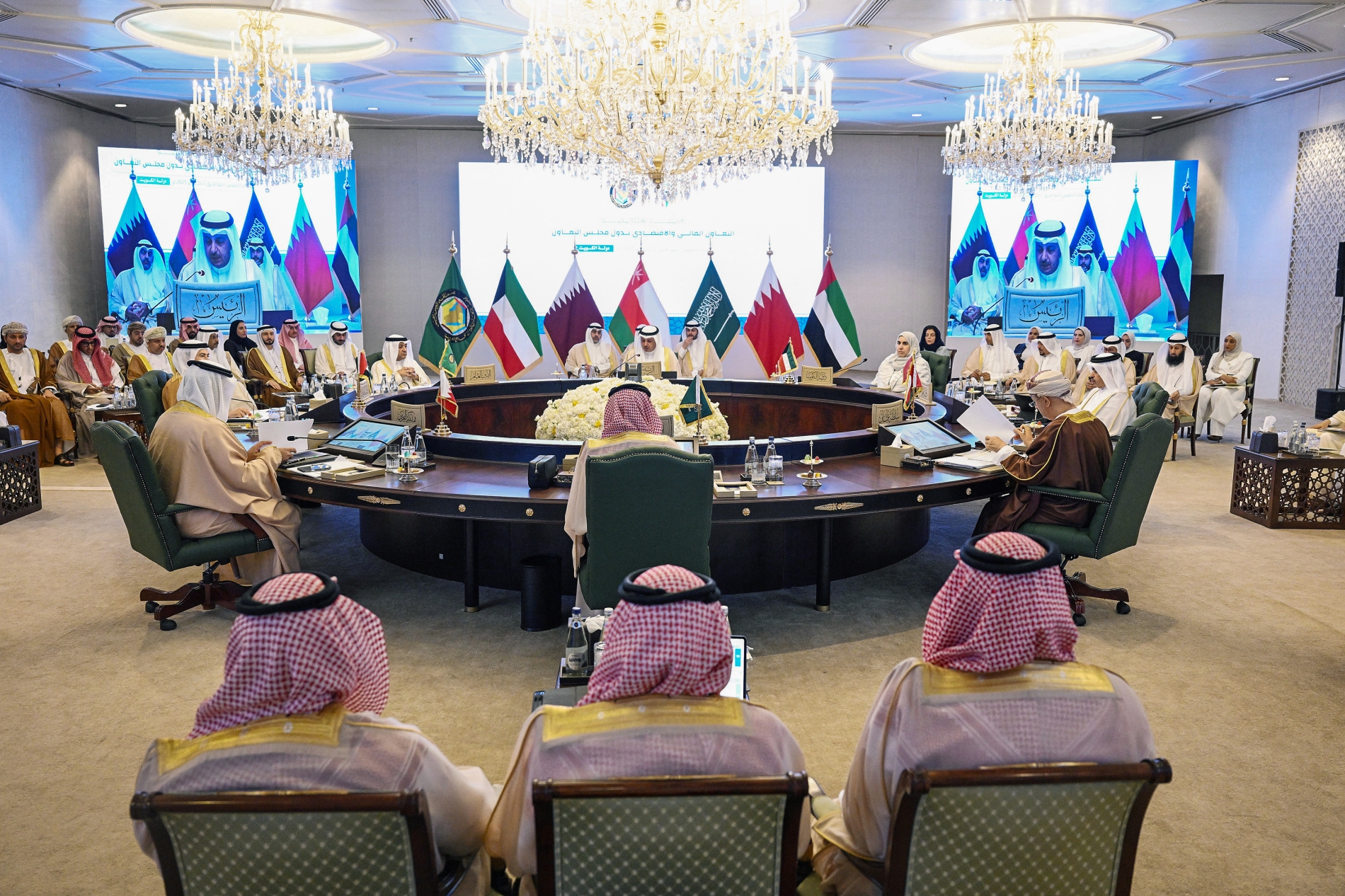
A meeting of GCC representatives, Kuwait, on 2 October, 2025.

Substantial assets

Commercial banks operating across the Gulf Cooperation Council (GCC) held more than $4tn in assets at the end of June, up 3.9% from the end of 2025, according to figures from the GCC’s General Secretariat. Outstanding loans at listed Gulf banks reached approximately $2.47tn at the end of the fourth quarter of 2025, up 2.7% from the previous quarter, according to a Kamco Invest report on the performance of the GCC banking sector.

How much funding banks can actually provide, however, depends on liquidity, capital requirements, credit growth, and borrowing costs. Outstanding credit facilities extended by GCC banks to various economic sectors reached about $2.17tn by the end of March, up 9.2% year on year. Saudi Arabia accounted for more than 41% of total Gulf credit, followed by the UAE at about 27% and Qatar at around 18%. Kuwait, Bahrain, and Oman shared the remaining 14%, according to Gulf central bank figures cited in a Kamco Invest analysis.
Geopolitical developments could affect demand for credit as well as banks' performance and risk exposure

Geopolitical developments could affect demand for credit as well as banks' performance and risk exposure. Disruptions to trade and energy markets may increase financing needs among businesses, particularly for infrastructure projects and working capital. Conversely, weaker economic activity or falling oil revenues in some Gulf countries could dampen demand for borrowing.

S&P Global Ratings expects bank lending across the GCC to grow by an average of 5% to 6% in 2026, with lending in Saudi Arabia and the UAE expanding at high single-digit rates. Growth in both countries is expected to be supported by substantial government projects and rising investment, despite the war and disruptions to shipping through the Strait of Hormuz. This suggests that spending and investment needs could continue to support credit growth, even as the geopolitical shock pressures the region's economies.

رويترز
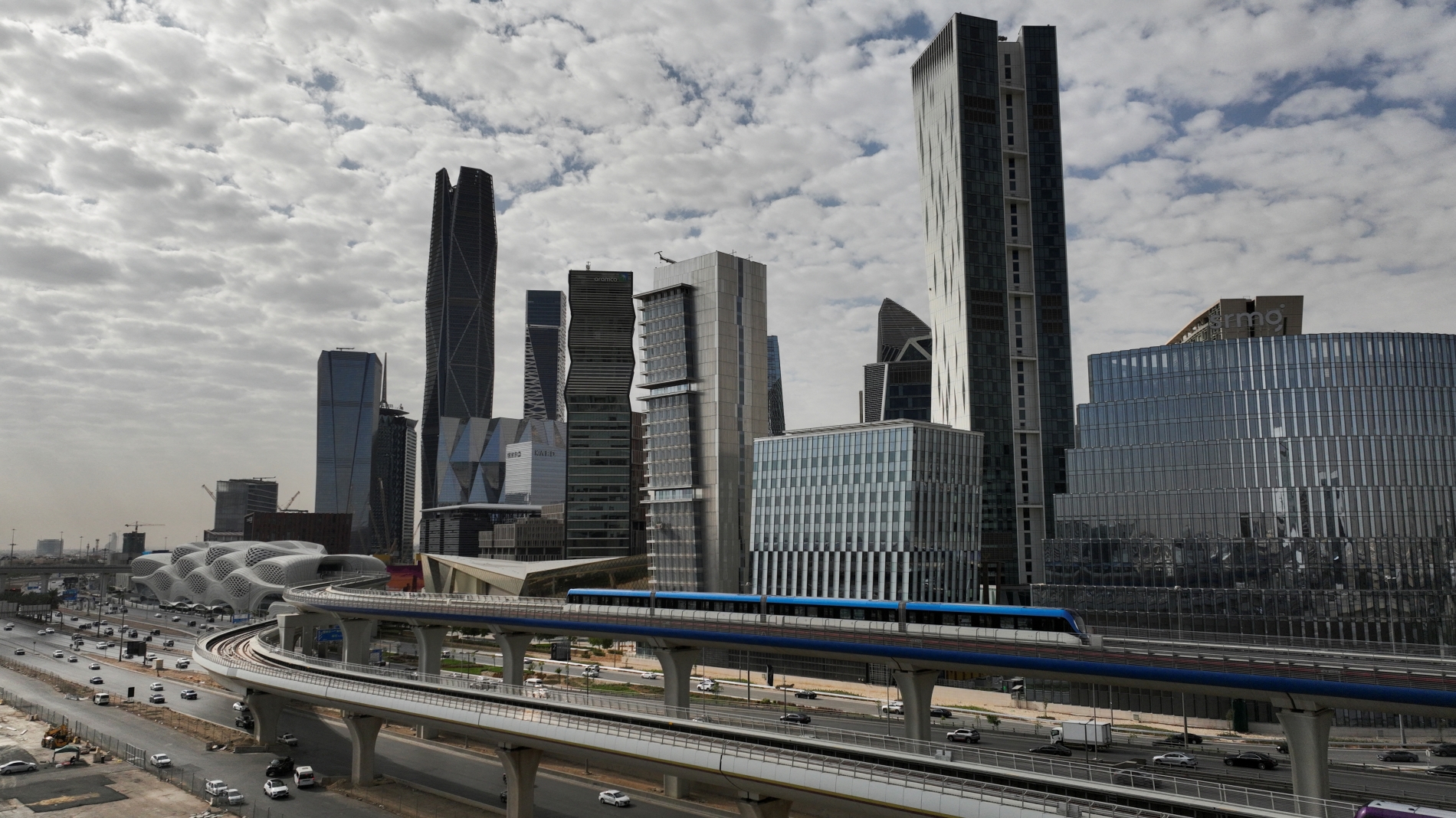
King Abdullah Financial District, Riyadh, Saudi Arabia, on 1 December, 2024.

Sectoral distribution of credit

Bank lending in Saudi Arabia reveals marked differences in the pace of credit growth across economic sectors. In July, real estate accounted for the largest volume of credit, while electricity, gas, and water recorded the fastest annual growth, rising by more than 46% from July last year. This reflects strong demand for financing in infrastructure and projects requiring substantial capital investment. By contrast, commercial and industrial lending grew modestly, while credit extended to financial and insurance activities declined.

Personal lending also remained substantial, reaching approximately $391bn in July, up from $375bn a year earlier. Taken together, the figures indicate that credit expansion continues to be driven by individual borrowing, project financing, and investment, although growth rates differ considerably across economic activities. 

In Kuwait, figures from the Central Bank of Kuwait show that the real estate sector accounted for around $37bn of outstanding utilised cash credit facilities in June, making it the second largest category after personal credit facilities. In the UAE, total credit rose by $6.86bn, from approximately $734.1bn at the end of March to $740.9bn at the end of April. Most of the increase came from domestic credit, which rose by $5.04bn. Private sector borrowing was the main driver, particularly personal lending, which increased by $1.69bn. The rise was largely attributable to an increase in housing loans, followed by personal consumer loans. Credit extended to government-related entities also grew by $2.10bn.

In Qatar, banks' total loan portfolios reached about $404.4bn in June, up 2.6% since the end of 2025. Credit growth, however, varied considerably across sectors. Lending to industry fell by 21.2% from the end of the previous year, while real estate financing declined by 3.2%. By contrast, loans to quasi-governmental institutions rose by 17.5%, while lending outside Qatar surged by 56% over the same period.

According to a report published by Kuwait Financial Centre, Markaz, in July, primary bond and sukuk issuance across the GCC reached $102.69bn in the first half of the year, across 161 issues. This was up 6.5% from $96.42bn in the corresponding period in 2025.

AFP
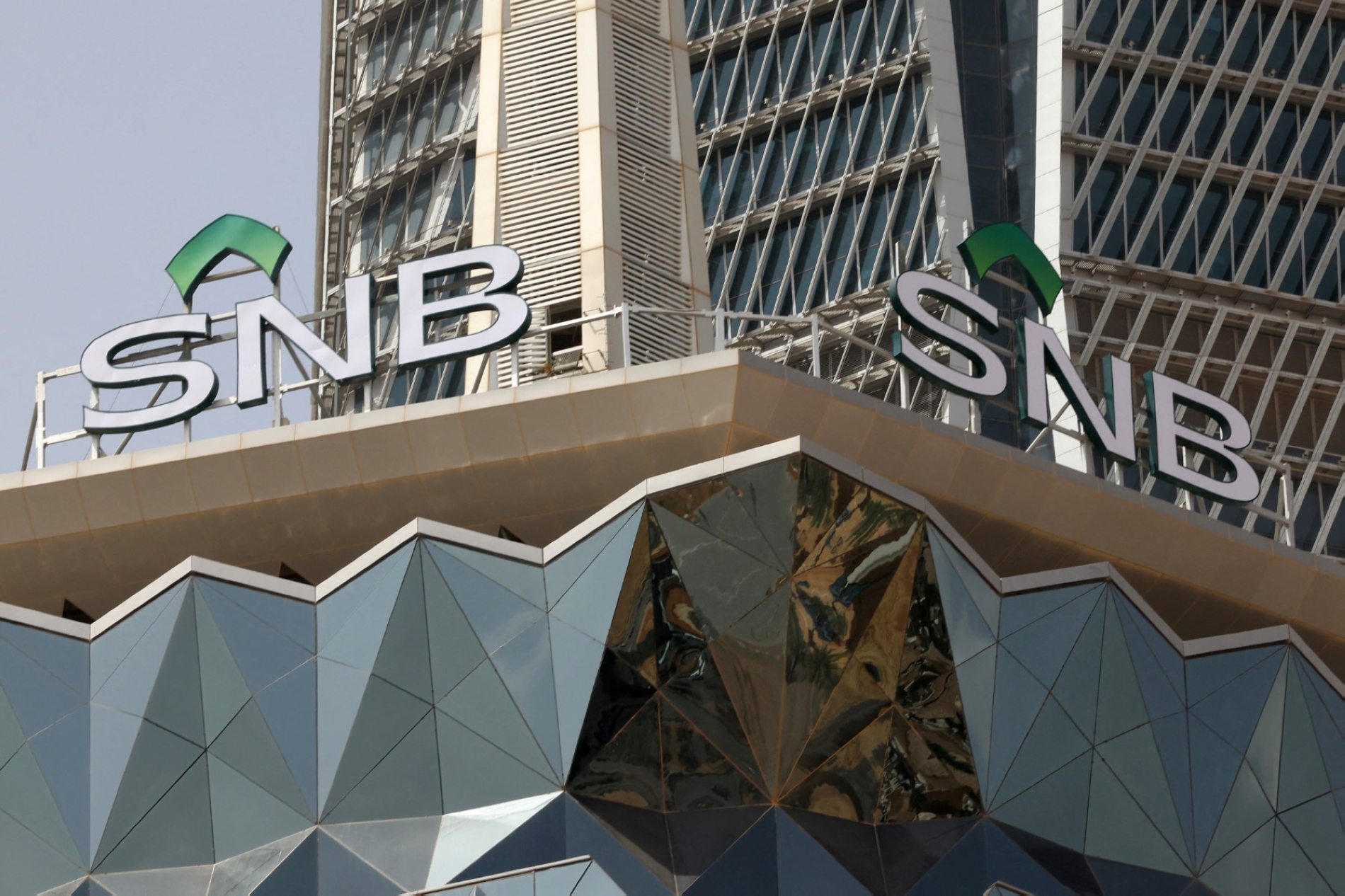
A branch of the Saudi National Bank in the King Abdullah Financial District, Riyadh, on 27 March 2023.

Saudi Arabia led the Gulf market with issuance totalling $49.34bn, followed by the UAE at $25.45bn, Qatar at $12.4bn, Kuwait at $8.67bn, Bahrain at $4.03bn, and Oman at $1.82bn. These figures include debt issued by governments, companies, and government-related entities, rather than sovereign borrowing alone.

According to the report, GCC sovereign issuance totalled $36.01bn in the first half of 2026, up 3.1% year on year, while corporate issuance reached $66.67bn. Of the latter, $20.37bn was raised by government-related bodies. The financial sector accounted for the largest issuance volume at $41.70bn, followed by the government sector at $36.01bn and the energy sector at $13.72bn.

Gulf banks, meanwhile, face a dual challenge. They must capitalise on growing demand for financing from governments and businesses through debt issuance and investment projects while preserving their interest margins and managing credit and liquidity risks in a volatile geopolitical environment.

Commercial and industrial lending grew modestly, while credit extended to financial and insurance activities declined

However, an easing of regional tensions could open up new financing opportunities. These could extend to government projects, infrastructure, utilities, and essential services, as well as private sector ventures that could benefit from stronger economic activity, consumer spending, and demand for housing, tourism, and entertainment.

If the consequences of the crisis encourage Gulf countries to integrate their infrastructure, supply chains, and energy networks more closely, opportunities for joint financing among Gulf banks could also expand. This prospect is particularly relevant given the Gulf states' intent to accelerate electricity grid interconnection and railway projects, explore water interconnection schemes, and develop oil and gas pipeline networks. Such projects could require substantial joint financing from banks across the region.

Against this backdrop, the current upheaval calls for a different approach to economic, financial, and monetary policy, with priorities varying across the Gulf. Banks and debt markets are becoming increasingly important sources of funding for government spending, capital projects, and the refinancing of existing debt.

font change