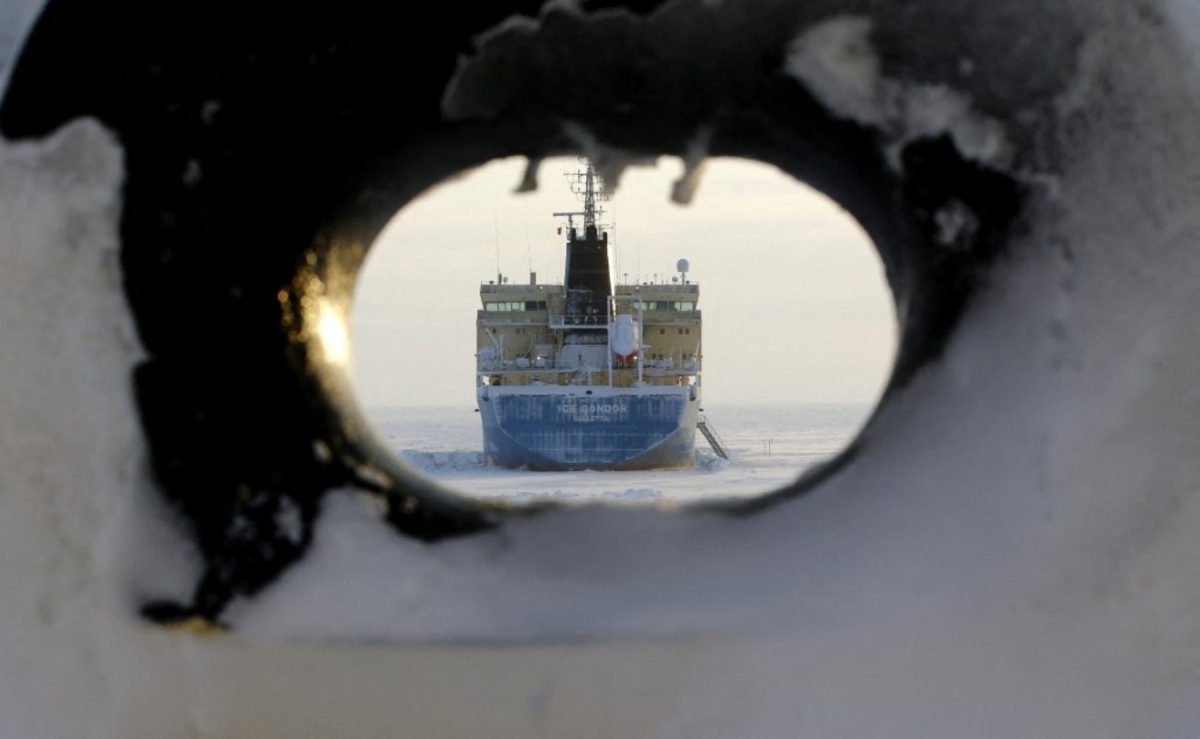

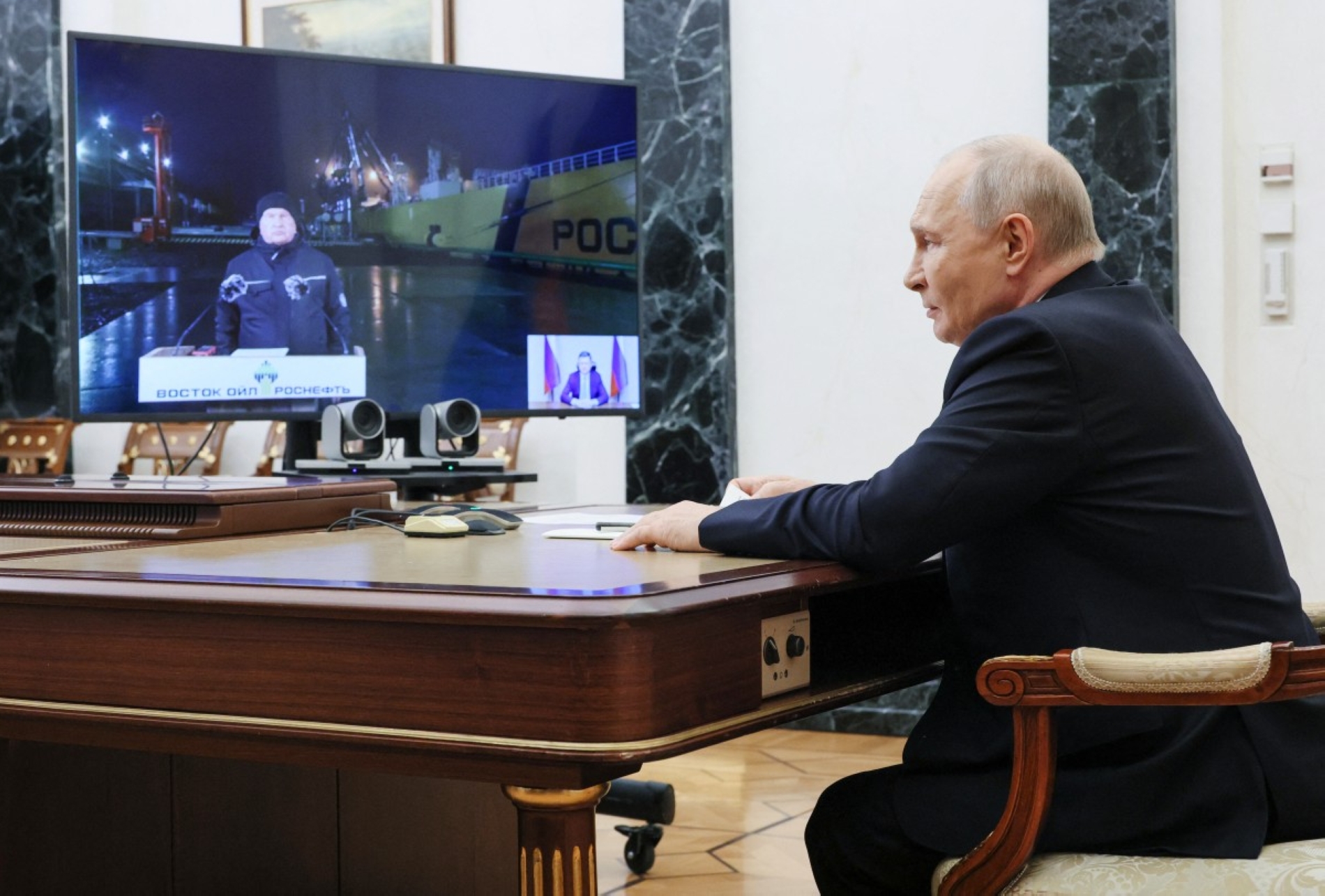
In the far north of Siberia, where the ground remains frozen for most of the year and some facilities lie hundreds of kilometres from the nearest settlement, Russian President Vladimir Putin gave the order on 6 September to load the first cargo from the Vostok Oil project. The crude had travelled through a new pipeline to the Bukhta Sever terminal—literally “North Bay”—on the Kara Sea. From there, it began flowing into the Arctic tanker Valentin Pikul.
This was more than a ceremony marking the shipment of a cargo of oil. Russia wants it to show that, despite war and sanctions, it can still build a project of such scale in one of the harshest environments on Earth. Rosneft presented the occasion as proof that a development once described as the largest new oil investment of the post-Soviet era had finally moved, however belatedly, from presentations and maps into operation.
But one tanker does not make a new oil province. Vostok Oil’s success will not be measured by its launch ceremony, but by the number of new barrels Russia can produce, its ability to transport them throughout the year, and the price they command in Asian markets once freight costs and sanctions are taken into account.
Vostok Oil is not a single field. It is a vast oil province being developed across northern Krasnoyarsk Krai and the Taymyr Peninsula. Some of its fields have been producing for years; others have yet to enter large-scale commercial production.
The project incorporates the Vankor group—the Vankor, Suzun, Tagul and Lodochnoye fields—alongside the Payakha group and the Irkinskoye, West Irkinskoye and Baikalovskoye fields. A 790-kilometre pipeline running from Vankor through Payakha to Bukhta Sever links them to the coast. Its design capacity is 100 million tonnes a year.
Rosneft says the project’s resource base has risen to seven billion tonnes of oil, equivalent to roughly 51 billion barrels on a broad conversion basis. “Resources”, however, is the important word. It would be misleading to treat the whole figure as proven reserves. Not all discovered oil becomes commercially recoverable: that depends on further drilling and appraisal, the construction of infrastructure and, ultimately, whether prices make extraction worthwhile.
High-value resource
The crude has a valuable commercial advantage. Rosneft puts its sulphur content at between just 0.01% and 0.1%. Refineries can use such low-sulphur crude to produce cleaner petroleum products, with lower processing costs than those associated with heavy, high-sulphur grades.
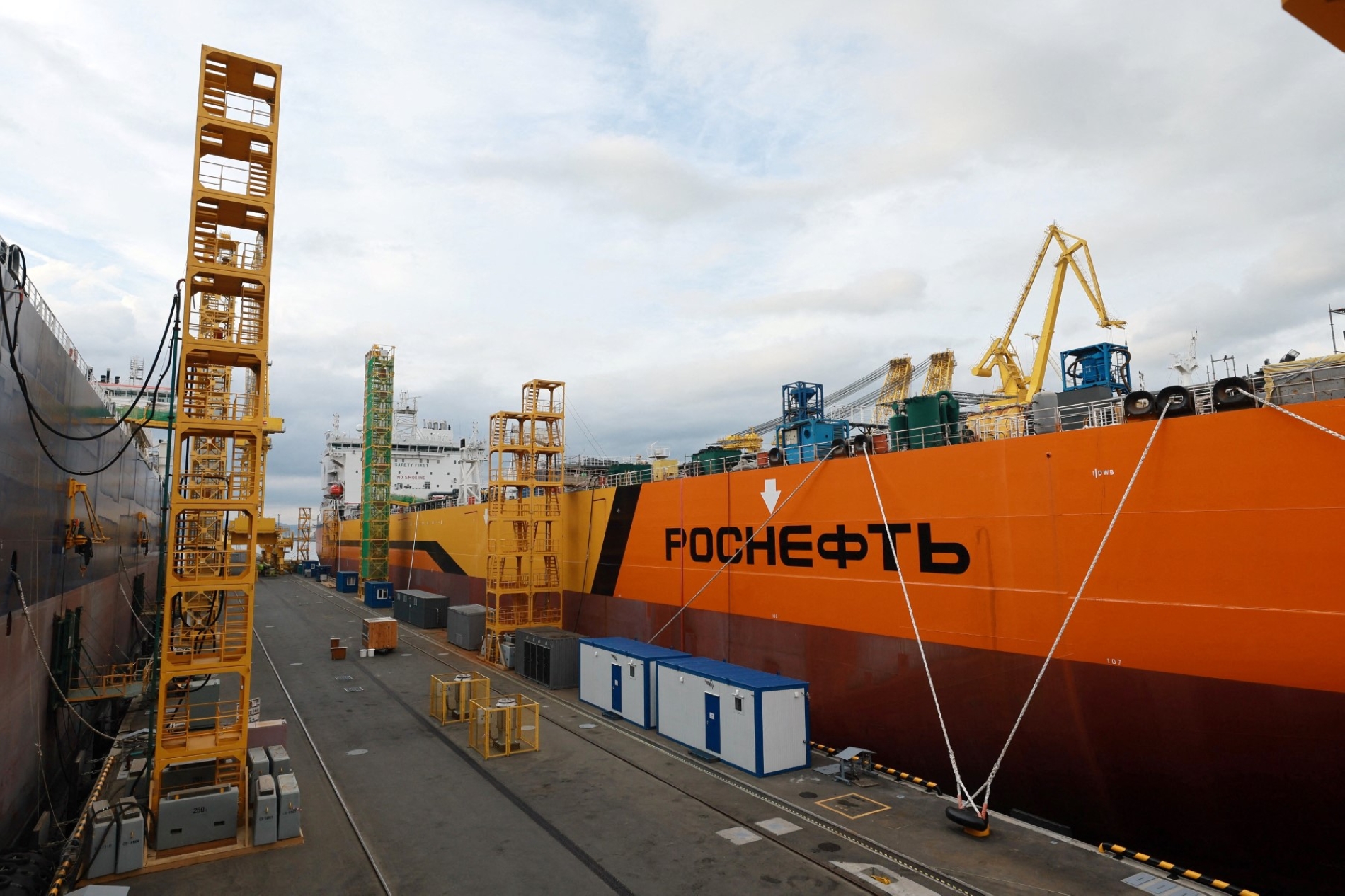
Bukhta Sever, described by Rosneft as the world’s northernmost oil terminal, currently has one berth for loading crude, two cargo berths and another for the port fleet. Fourteen storage tanks have been built, each capable of holding 30,000 tonnes. Rosneft eventually plans to raise the number of tanks to 102.
Almost none of the industrial infrastructure required for a project on this scale existed in the area. Rosneft has therefore had to build what amounts to a small economy in the middle of the tundra—the cold, largely treeless plains of the Arctic. The plans include an airport, field accommodation, roads, communications, power stations and a transmission network expected to extend for 9,000 kilometres. Targeted generating capacity stands at 3.5 gigawatts, divided among 16 power plants and 15 local power districts. A wind farm has also been commissioned with an initial capacity of 50 megawatts and is intended to eventually produce 200 megawatts.
Rosneft chief executive Igor Sechin says investment in Vostok Oil has reached RUB 4tn, or approximately $47.3bn. Developing the project in full could cost as much as RUB 12tn. Russia has built enough infrastructure to begin shipping oil, but most of the investment bill still lies ahead.
The RUB 12tn estimate dates from 2023. The eventual cost could be higher still, given inflation, expensive borrowing, construction delays and rising equipment and logistics costs. Nor does subtracting four trillion from 12 trillion necessarily reveal the amount still needed. The final bill will depend on how many fields are developed, how quickly production is increased and how much infrastructure is ultimately built.
Foreign capital was originally central to the plan. At the end of 2020, Singapore-headquartered commodities trader Trafigura acquired a 10% stake for €7bn, or approximately $8bn. The following year, a consortium led by Dutch Swiss energy trader Vitol and Singapore-based Mercantile & Maritime Energy bought a 5% interest for about €3.5bn.
Growing pressure
The war in Ukraine changed that landscape. Trafigura withdrew and sold its stake to Nord Axis, a company registered in Hong Kong. The Vitol consortium’s holding later passed to Dubai-based Fossil Trading. Their departure did not stop construction, but Vostok Oil lost partners that could provide finance, market the crude, arrange shipping and ease access to international services.
Pressure intensified in January 2025, when the United States imposed sanctions directly on the company operating Vostok Oil and on several affiliated entities. Washington made its purpose clear: to slow or halt further construction and restrict the project’s future ability to market and export oil.
Money has also become more expensive inside Russia. High interest rates and heavy state borrowing to finance the budget deficit and military expenditure have left companies with less room for manoeuvre. Rosneft’s existing production and cash flow allow it to keep investing, but Vostok remains exposed to swings in oil prices and the rouble, and to any widening of the discount demanded by buyers of Russian crude.
Russian authorities have granted Vostok Oil preferential tax treatment to ease the cost of Arctic development. When the corporate profit tax rate rose from 20% to 25%, the rate applied to Vostok Oil remained at 20%. That reduces the burden during the years of heaviest investment, but it does not exempt the project from other taxes. How much the state ultimately receives will depend on production, prices and profits.
The picture becomes murkier when the source of the oil is examined. Moscow has promoted Vostok as a new oil province capable of adding enormous volumes to national production. Its first phase, however, relies heavily on the Vankor group, whose fields have been producing for years and were already connected to Russia’s southbound pipeline network.
Vankor’s production peaked at about 22 million tonnes in 2016. By 2023, combined output from the group’s four fields had fallen to approximately 14.8 million tonnes. Redirecting this oil northwards through the new pipeline and terminal therefore does not constitute an entirely new addition to Russian production; it changes the route by which the crude reaches the market.
A genuine increase will require developing Payakha, Irkinskoye and Baikalovskoye. These fields lie in remote areas and will need thousands of wells, as well as processing, gathering and pumping facilities. Independent analyses of satellite imagery up to mid-2025 found evidence of appraisal and drilling work, but not the completed processing facilities the new fields would need to produce tens of millions of tonnes independently.
Rosneft’s statement that more than 2,000 wells had been commissioned also needs context. The company counts the long-producing Vankor fields as part of the Vostok Oil system. The figure does not mean that 2,000 new wells have been drilled at Payakha, Irkinskoye and Baikalovskoye.
Under the original timetable, Vostok Oil was supposed to produce around 30 million tonnes a year by 2024. Later projections put output at 100 million tonnes in 2030 and approximately 115 million tonnes by 2033. In reality, the first cargo was not loaded until September 2026, more than two years after the initial target date.