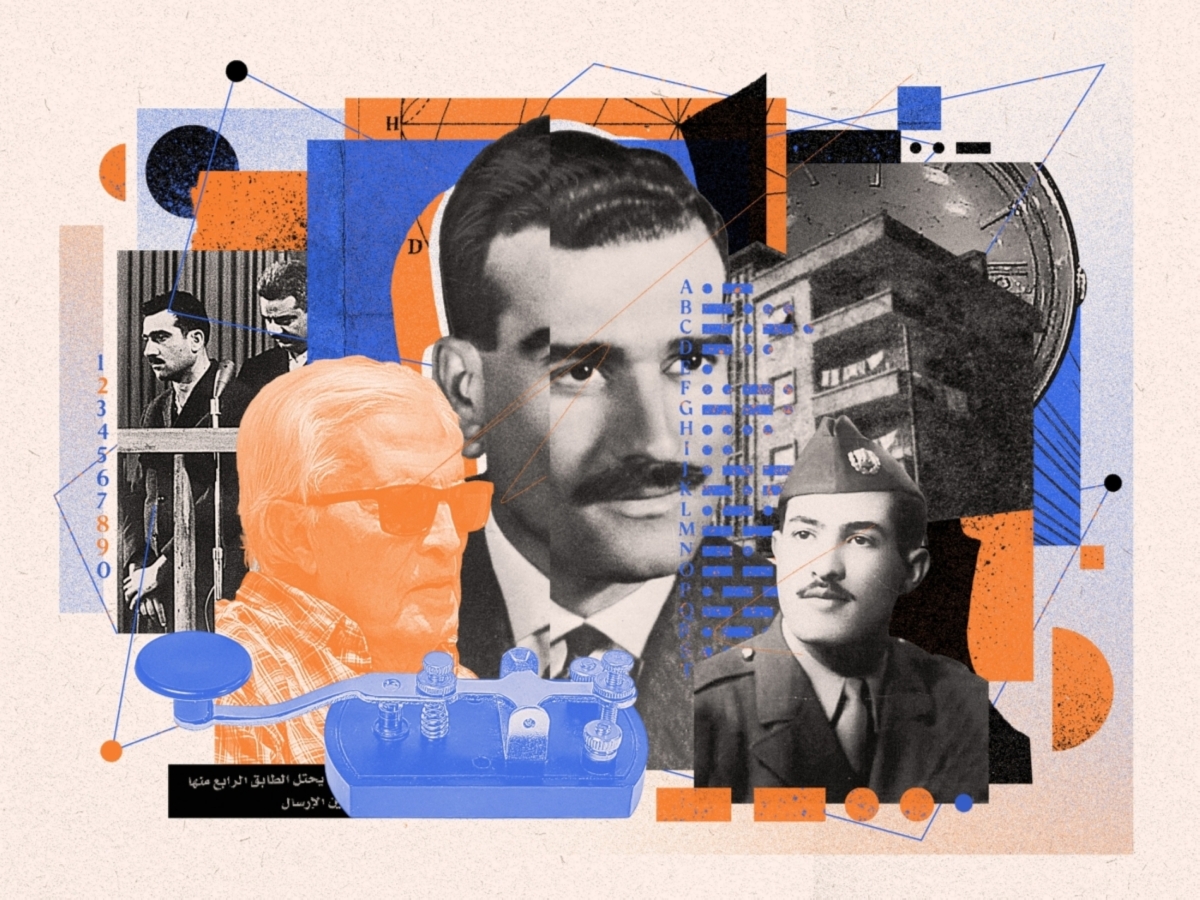

When Syrian army personnel at Signals Corps 134 intercepted an Israeli message in 1962, they had no name to search for. They had a radio frequency, a transmission date, and a code assigned to the unknown sender to distinguish their messages from others, but they had not yet broken Israel’s cipher, so they did not know what it said. Said Jawish, a signals specialist who taught Hebrew, led the team and the operation. He recently sat down with Al Majalla and revealed details of a famous Syrian counterintelligence operation more than 60 years later.
His small team kept the intercepted Israeli messages and sent copies to other teams. One team worked to break the cipher; another used Soviet equipment to locate the source. For three years, they saw what would prove to be Mossad spy Eli Cohen’s messages, but they did not know it was him. Later, they triangulated the sender’s position to 1km, then to a block, then finally to a building, whose residents they immediately investigated.
In this second instalment, Jawish retraces his team’s route from the signal to the address, from their searches of the wrong apartment to their rooftop escapades that revealed a professionally installed aerial. It stood out from all the other ham-fisted DIY jobs. The businessman on the fourth floor who spoke fluent Arabic was suddenly of interest when the team traced the cable to his home.
Ironically, if he had followed his commander’s steer, the diligent Jawish would not have pursued the clues to Cohen. Finally, after six decades, he has told how his team got their man, when their superiors had been too busy to bother. The details read like a John Le Carré novel, but they are true. For decades, Israel has lauded Cohen as a legendary Mossad figure who won the trust of Syria’s most powerful men and relayed their secrets, but the details of how he was exposed in 1965 as an Israeli spy are only now being revealed. Here is Part 2 of our conversation.
Not yet caught up? You can read the introduction and Part 1 of this instalment.
How did the Eli Cohen case begin?
We monitored several signals, including Cohen's and tracked them step by step. In 1962, we intercepted his first message, but we did not know who he was or where he was transmitting from. Whenever we intercepted a signal, we recorded the frequency and the date and assigned the sender a number or code. We did not know who he was, but we had a code for him. Cohen was one of those people.
Mustafa Wahbi al Kayyali, from Idlib, intercepted the signal. Mustafa intercepted the messages and filed each one. We did not know what they meant. A copy went to the cipher section, which could not decipher it, and another to the direction-finding section to locate the source. This continued from early 1962 until 1965, when we narrowed the location to Damascus, then to a triangular area south of Abu Rummaneh, between Abu Rummaneh and Air Force Command.
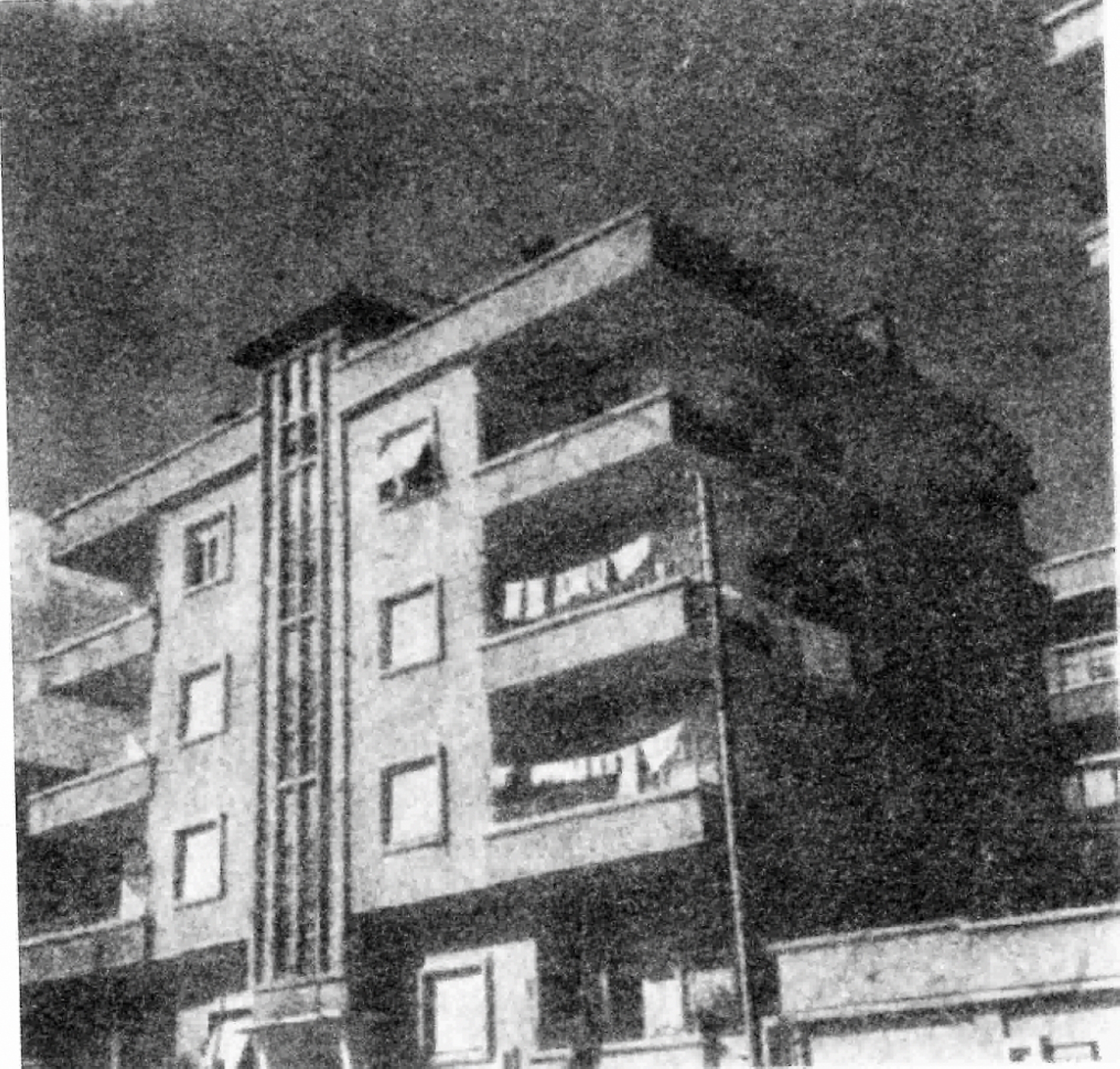
The Russian direction-finding equipment could not pinpoint the location exactly. It could identify an area extending 1-2 km, but not a house or a room. It identified this triangle, so we began investigating residents in that area, from the well-known Najma Square to the area near the Méridien Hotel. We continued until we narrowed the location down to just one building.
How did you narrow it down? With the direction-finding equipment?
Yes, we continued using it until the search focused on one building, then we investigated its residents. A foreign officer serving with the international monitoring body lived in the basement.
Was that during the armistice with Israel?
Correct. He was serving with the armistice mission. A pilot of Greek origin who worked for Syrian Airlines lived on the ground floor. The apartments in the building were small. A diplomat from the Turkish embassy lived on the first floor. There were also elderly, unmarried women from Damascus who worked as seamstresses, so we ruled them out.
I went to the airline and obtained the pilot’s travel schedule for the previous year. We compared it with the transmission times and found that, on most days when the pilot was away, there was no transmission, whereas there were transmissions on the days he was in Damascus. We presented our findings to the unit commander. He said: “By God, it is the pilot!”
What happened?
We had to enter the pilot’s home. We went to the Criminal Security Department and obtained Criminal Security and Interpol identity cards. Our pretext was that we were searching for drugs, so we would not reveal our real mission. On the appointed day, we went and knocked on the door. An elderly man opened it. He was elegantly dressed and appeared to be Greek. He was the pilot’s father and had been an army general before retiring. We entered and told him that we were from the police. We asked about the pilot, who was still in bed, as it was 8am.