Exclusive interview with the man who caught Israeli spy Eli Cohen

Ibrahim Hamidi spent years following the story of Mossad’s ‘spy in Damascus ’, but some secrets remained untold. He then learned that the man who could answer them was still alive

Eduardo Ramón

Exclusive interview with the man who caught Israeli spy Eli Cohen

Some stories do not end when they are published; they remain open, and years later they return to you, or you return to them. You discover that what you thought you knew then was only part of a much bigger story. The story of Israeli spy Eli Cohen in Syria is one such example.

In March 2004, I interviewed Maj. Gen. Salah al-Dalli, who headed the special court that tried Cohen and sentenced him to death in Damascus in 1965. I was a correspondent in the Syrian capital at the time and wanted to hear from the man who had read Cohen’s file, sat across from him in court, questioned him, and witnessed his final hours before he was hanged in the city’s central Marjeh Square.

Al-Dalli recalled Cohen differently from the image Israel created of him, that of a spy at the heart of the Syrian state, close to senior officials and privy to military secrets that would alter Israeli war calculations. Al-Dalli offered a far less dramatic picture. “The information he obtained was of no value because he could not ask worthwhile questions without exposing himself,” he told me. “He would hear ordinary conversations.”

Although al-Dalli did not deny that Cohen had built a network of relationships and sent information to Israel, he rejected the idea of Cohen as a ‘superman’ who penetrated the regime’s top echelons. He said one significant piece of information Cohen did transmit was the resignation of Maj. Gen. Muhammad Umran, a pillar of the regime, before it became known, but he dismissed claims that Cohen was close to Syrian President Amin al Hafiz or Baathist leaders Michel Aflaq and Salah al Din al Bitar, describing this as “the invention of Israeli intelligence”.
Al Majalla
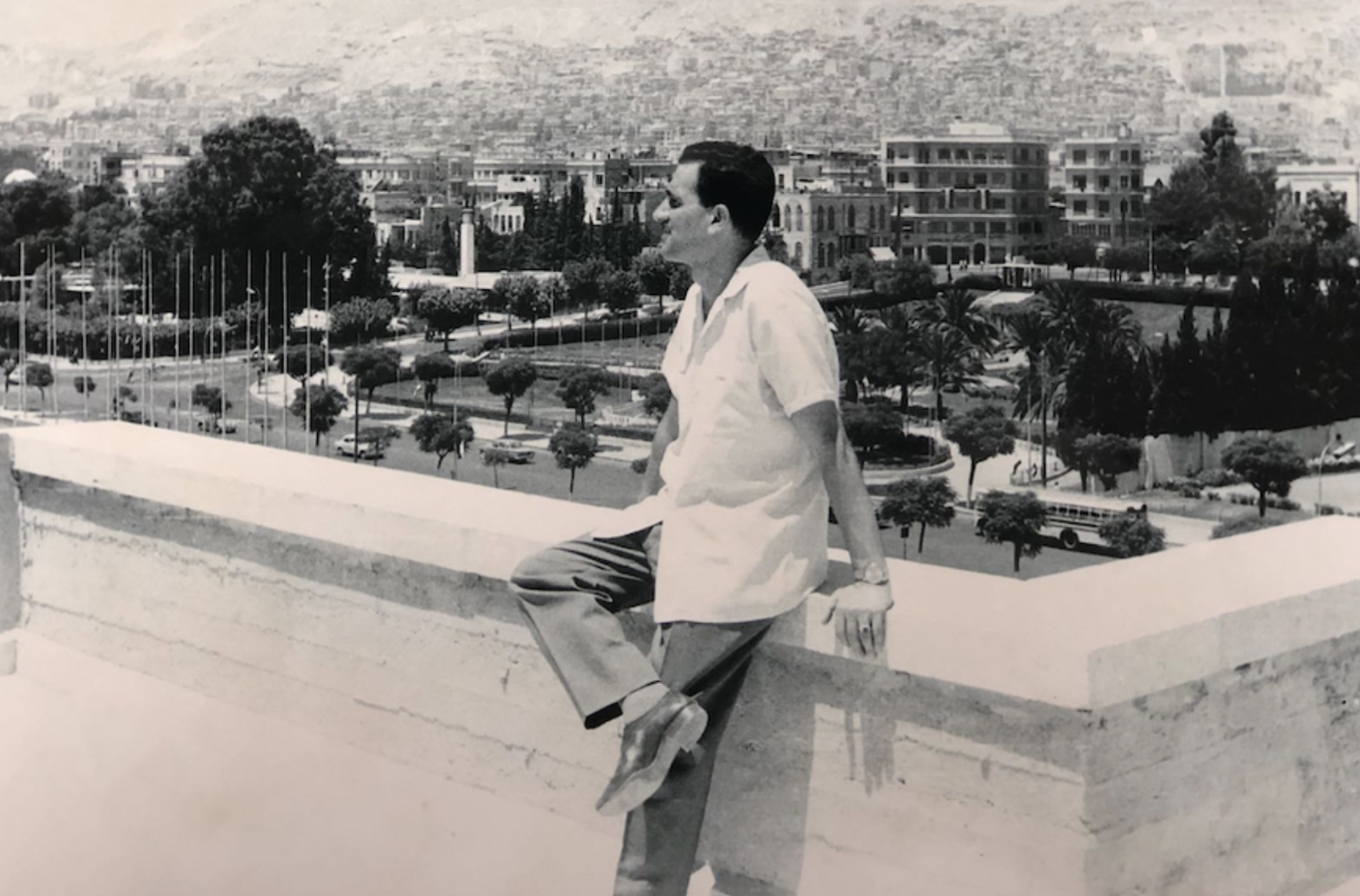
Israeli spy Eli Cohen in Syria in the 1960s.

Historical errors

Cohen’s death by hanging four months after his arrest in 1965 did not end the story. The location of his body was a mystery. Al-Dalli said Cohen was initially buried “in a cave on the road to Dimas near Damascus”, before his remains were moved. Israel’s search for his body became another chapter of the story. Years passed. In 2018, in a special covert operation, Israel’s spy agency Mossad retrieved Cohen’s wristwatch, which then went on display at the agency’s headquarters before being returned to his widow.

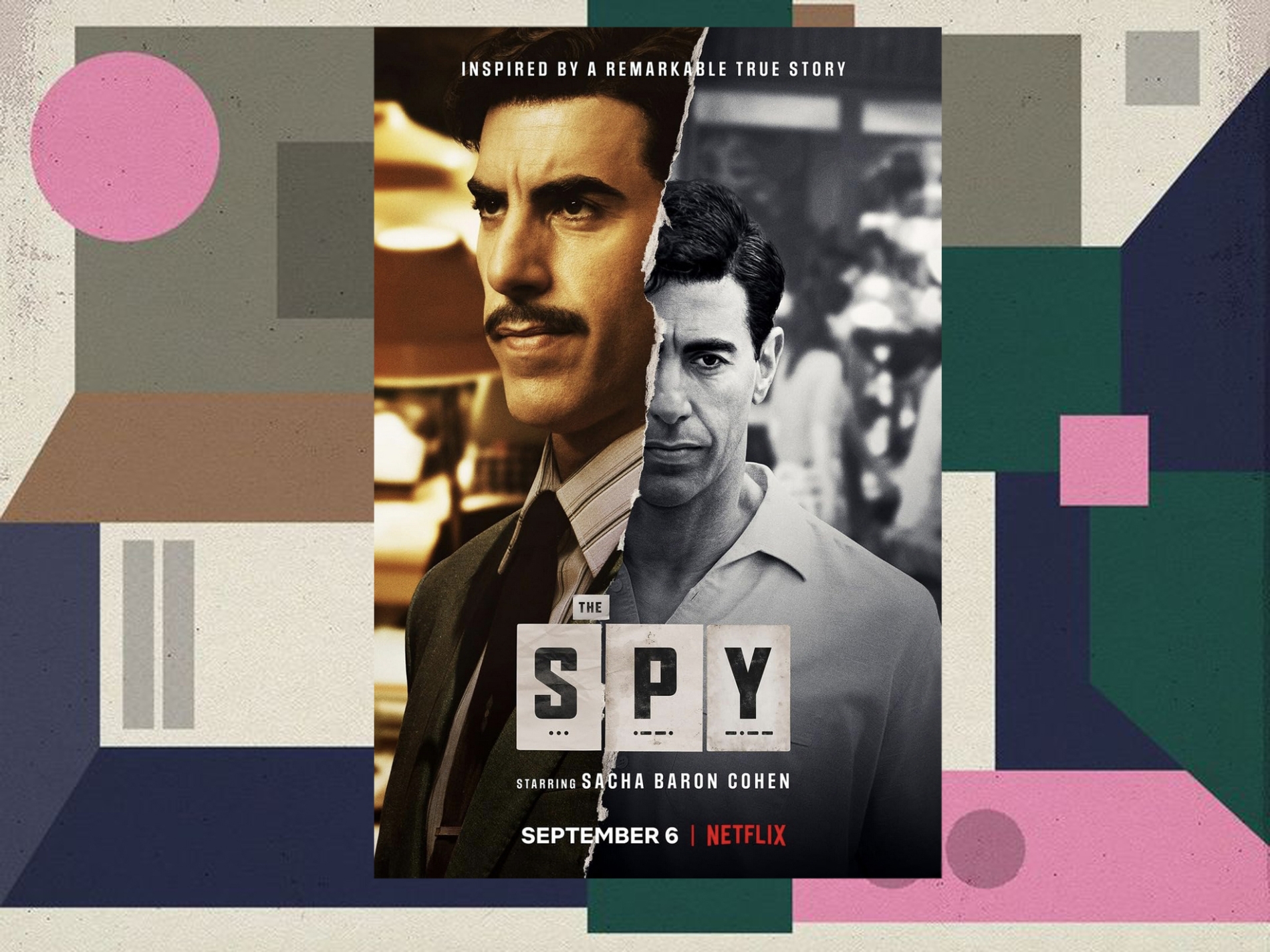
In 2019, Netflix brought Cohen back to life in the TV series The Spy. By then, I was in exile in London, following the outbreak of the Syrian revolution in 2011. I watched all six episodes in the British capital. It was difficult to watch simply as a drama. In our sister publication Asharq Al-Awsat, I wrote about “ten historical errors” in the series. I did not dispute a dramatic production’s right to use fiction; the problem lay in the distance between drama and history, and in the fact that some scenes remembered by millions never happened.

The series portrayed Cohen as close to the centre of Syrian power, moving among senior officials and forging relationships with leaders within the regime rather than on its margins. The facts were more complicated. For instance, Amin al-Hafiz was not in Buenos Aires during the period the series set for the beginning of their relationship; Cohen was not a friend of Michel Aflaq; and Cohen’s links to the Zahreddine family were not through Maj. Gen. Abdul Karim Zahreddine, as the series suggested, but through his relative, reserve officer Muazzaz Zahreddine.

Some of the official positions the series portrayed as part of its plot did not exist within the structure of the Syrian state at the time. Even the Damascus it depicted was not the Damascus I knew. Abu Rummaneh, the streets, the houses, the distances between Cohen’s home and government institutions and embassies. This was a dramatic Damascus created for the screen.
Netflix
Sacha Baron Cohen in The Spy (2019)

Unanswered questions

The most important questions for me remained unanswered. How did Eli Cohen get outed? Who exposed him? Some say Soviet equipment helped the Syrians locate the source of his radio transmissions. Others say interference prompted a search for a transmitter operating abnormally in the heart of Damascus. One account speaks of an Egyptian role. Another credits Maj. Gen. Ahmed Suwaydani, the former head of Syrian military intelligence who later became Syria’s army chief. As the years passed, witnesses died, and the legend grew, but the page did not close, and the question remained: who brought down the Israeli spy?

While visiting Damascus last July, I received information I initially found hard to believe: Said Jawish was still alive. Said Jawish headed the Syrian military unit that ran the operation that ended with Eli Cohen being outed and arrested. Said Jawish was still alive? Were they sure? Yes. More than 60 years after Cohen’s execution, not only was the man who caught him still alive, but he was in relatively good health and living in Damascus.
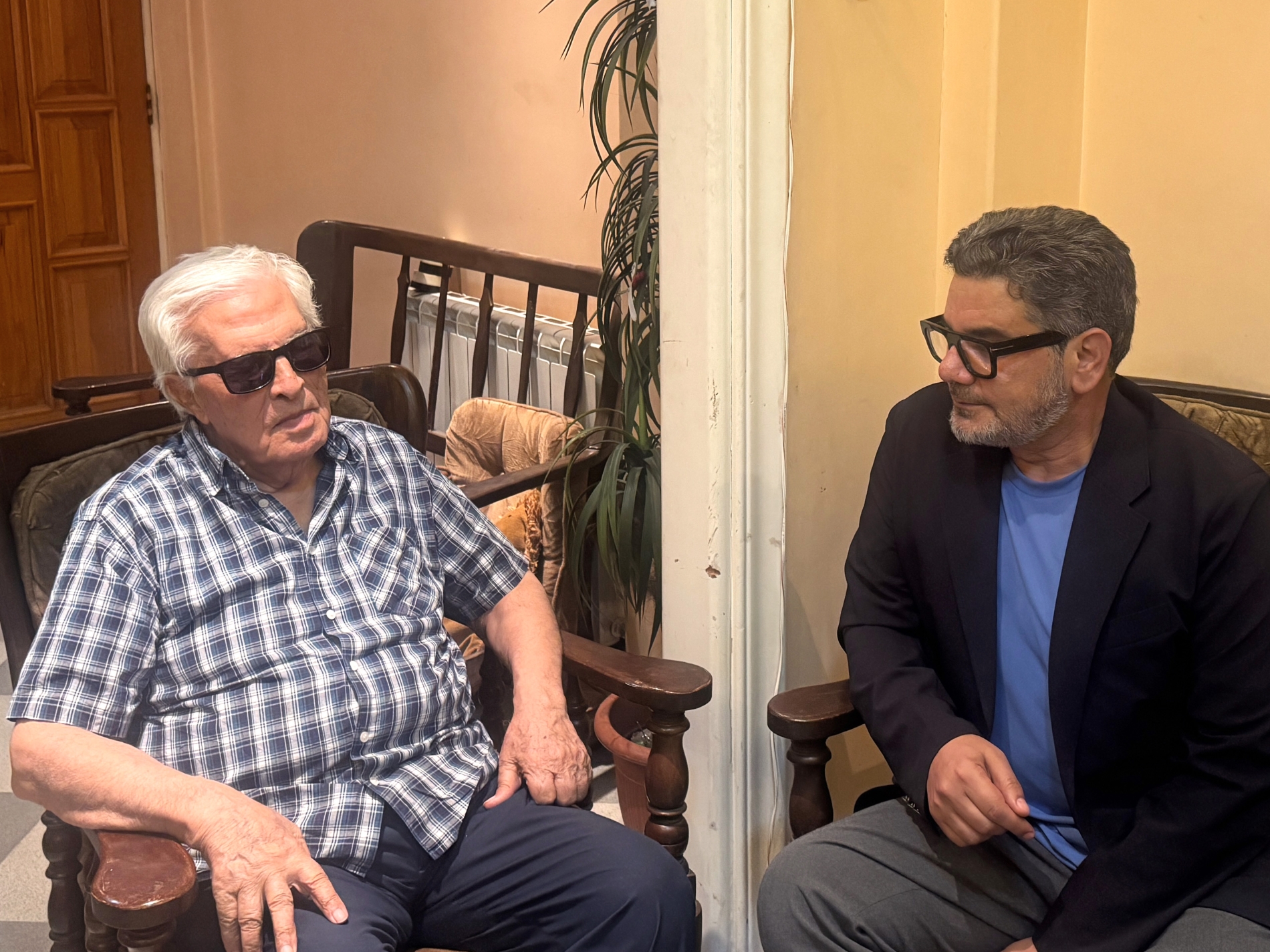
Said Jawish headed the Syrian military unit that ran the operation that arrested Eli Cohen. In July, I received information that was hard to believe: he was still alive

I started looking for him, but finding a former senior intelligence officer is never easy. Finally, I got a phone number, called, and waited. An older man answered in a clear voice. I introduced myself and explained why I was calling. He was kind, and his voice was calm. He had no objection to talking about those days. He said his health allowed him to speak and that his memory still retained the details, but his eyesight was poor. I told him that I would return to Damascus and he agreed to meet me when I did.

After arriving, I called him again. He did not give me an address in the usual way, but rather a rough description of the location. He asked what I looked like and said someone would be waiting for me in the street carrying a book, looking for someone wearing thick dark glasses (me). I arrived at the appointed time. This was another Damascus. Far from the cafés, restaurants, and new façades, these were old, weary streets. The asphalt was worn and the buildings aged, façades eroded by time and weather. Years of neglect were visible on the walls, balconies, and doors.

A man with a book

The further I went, the narrower the street became, tighter alleyways with Damascene homes in old concrete buildings pressed up against one another, their windows close together, electrical wires stretching overhead. Old iron-and-wood doors mixed with discoloured walls and pockets of rubbish. This was not the Damascus of jasmine and postcards, but the one emerging from beneath the cloak of a regime that had worn it down for decades. The air smelled of damp and stagnant water, a neighbourhood left untroubled by maintenance through years of war and plunder.

I was looking for a man carrying a book in his right hand. More than 60 years after one of the Middle East's most famous espionage operations, the password between one of the last witnesses and me was a book in the hand of a man I did not know. I got out of the car and was told to walk another 200 metres. I did. Around that distance, a man carrying a book emerged from behind a wall. After a cursory greeting, he gestured for me to follow him.

We moved from a main street into an alley, then into an even narrower passage. As I followed the man between the ageing houses, it struck me that more than 60 years earlier, other men had walked through similar streets on the other side of town looking for Kamel Amin Thaabet, whose real name was Eli Cohen. We reached a building with an old iron door and entered. The lift only worked when there was electricity (which, thankfully, there was that day). Up we went, eventually stepping out to an apartment with a wooden door. It opened, and I was beckoned inside.

Al Majalla
Al Majalla Editor-in-Chief Ibrahim Hamidi during his interview with Said Jawish at his home in Damascus.

Dark glasses, clean-shaven

A man was sitting behind a cooling fan. Solidly built and elegant, he was clean-shaven and wore dark sunglasses to hide his poor eyesight. I approached and greeted him, then we sat down. I tried to reconcile this elderly man before me with the officer who ran perhaps Syria's most famous counterintelligence operation. He could barely see who he was speaking to, but as he began to talk, time ran backwards, and his memory flowed like the Barada River through the streets of Damascus.

I sat between him and a window, between 2026 and 1965. In the distance, over the rooftops, I could see where Eli Cohen had lived as Kamel Amin Thaabet, where he hosted acquaintances and used a transmitter to send his secret cables to Israel before being caught in the act. Over the years, every time I thought the Eli Cohen story was nearing its end, another chapter appeared, and here we were again, me with my questions, Said Jawish with his details.

Having followed a stranger through narrow alleyways to a different Damascus, I wanted to know how the man I came to meet unmasked Cohen. How did he arrest him? Was Cohen an important spy? Where are his remains? What about his watch? And are there other spies? I placed three recording devices on the table between us. "Mr Said, I have started recording," I told him. "Go ahead," he replied.

**Al Majalla will publish the interview in separate instalments beginning on 1 October*

font change