
When Chinese President Xi Jinping arrives in the US this week, coinciding with the UN General Assembly meeting, trade, technology, and security will dominate the agenda, among other issues. A 24 September meeting with US President Donald Trump in Washington comes as both sides try to preserve a fragile economic truce while managing a rivalry over critical minerals, artificial intelligence and strategic influence. The immediate objective is to prevent this competition from falling into a confrontation.
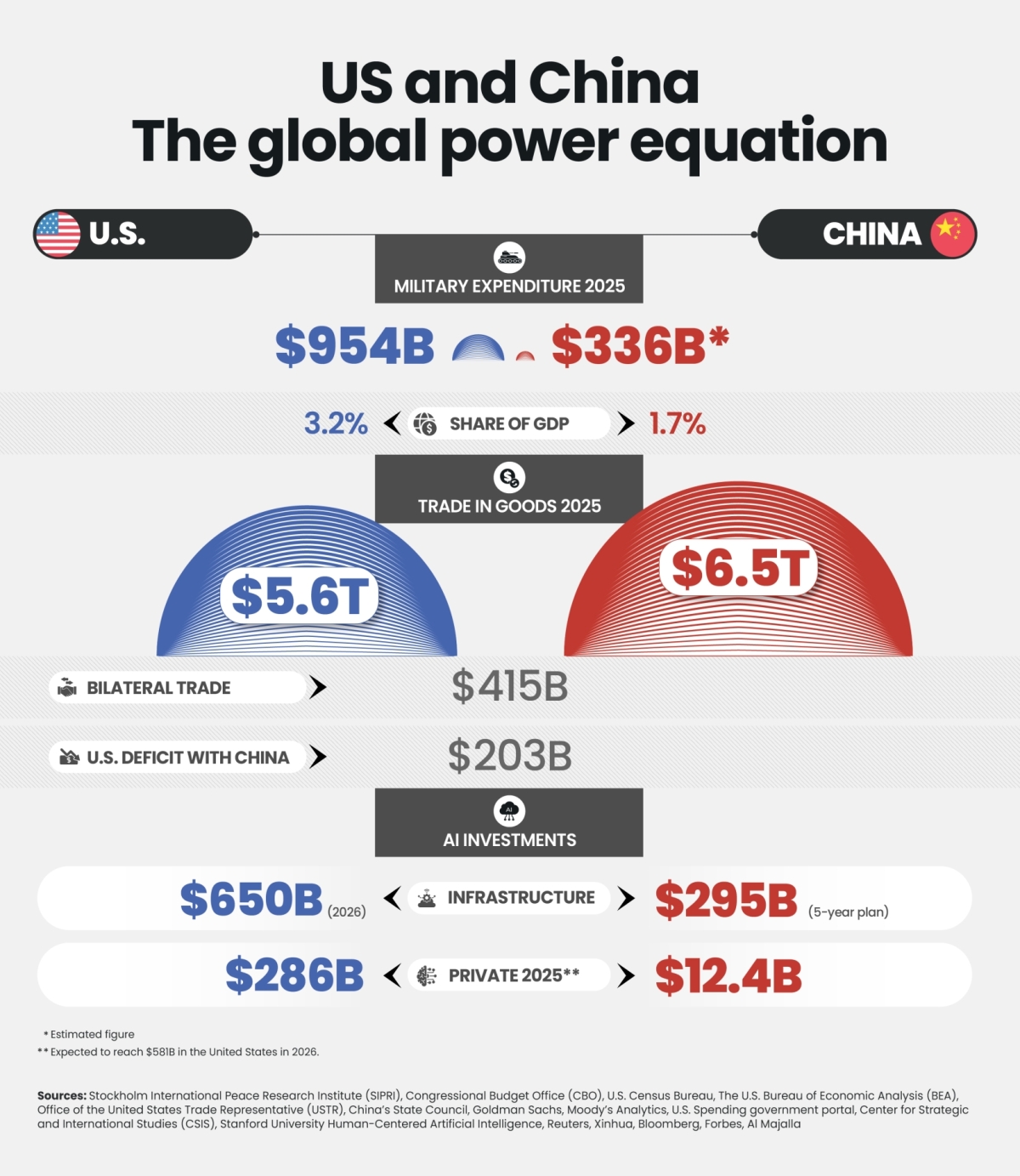
Trade remains the foundation of the relationship and one of its principal sources of friction. Washington wants greater access for American goods and a more balanced trading relationship, while Beijing is seeking greater predictability and relief from restrictions on Chinese commerce and technology. The two sides are still working on a proposed mechanism for reducing tariffs on non-sensitive goods, alongside discussions over Chinese purchases of American agricultural products and aircraft. The existing trade truce is due to expire in November, giving both governments an incentive to keep talking.
Critical minerals have added a new strategic dimension to the US-China rivalry. The latter's dominant position in rare-earth processing and its ability to restrict exports have demonstrated how a commodity used in everything from electronics to advanced technology can become an instrument of economic leverage. Washington is seeking more reliable supplies, while Beijing wants the restrictions on its access to advanced American technology eased. The issue has become particularly challenging because neither side can easily replace the other's capabilities in the short term.
Artificial intelligence sits at the intersection of their economic and national-security competition. Both countries are investing heavily in computing capacity and AI companies. Yet AI also creates risks that neither side can manage entirely alone. Ahead of the summit, US and Chinese officials discussed a possible mechanism for notifying each other about serious AI-related security incidents—a narrow form of cooperation amid broader technological rivalry.