Iran's shadow tankers run up against Hormuz geography

Sanctions created a maritime network adept at concealing oil and ownership, but the blockade and military strikes have exposed its limits now that the tankers themselves have become targets

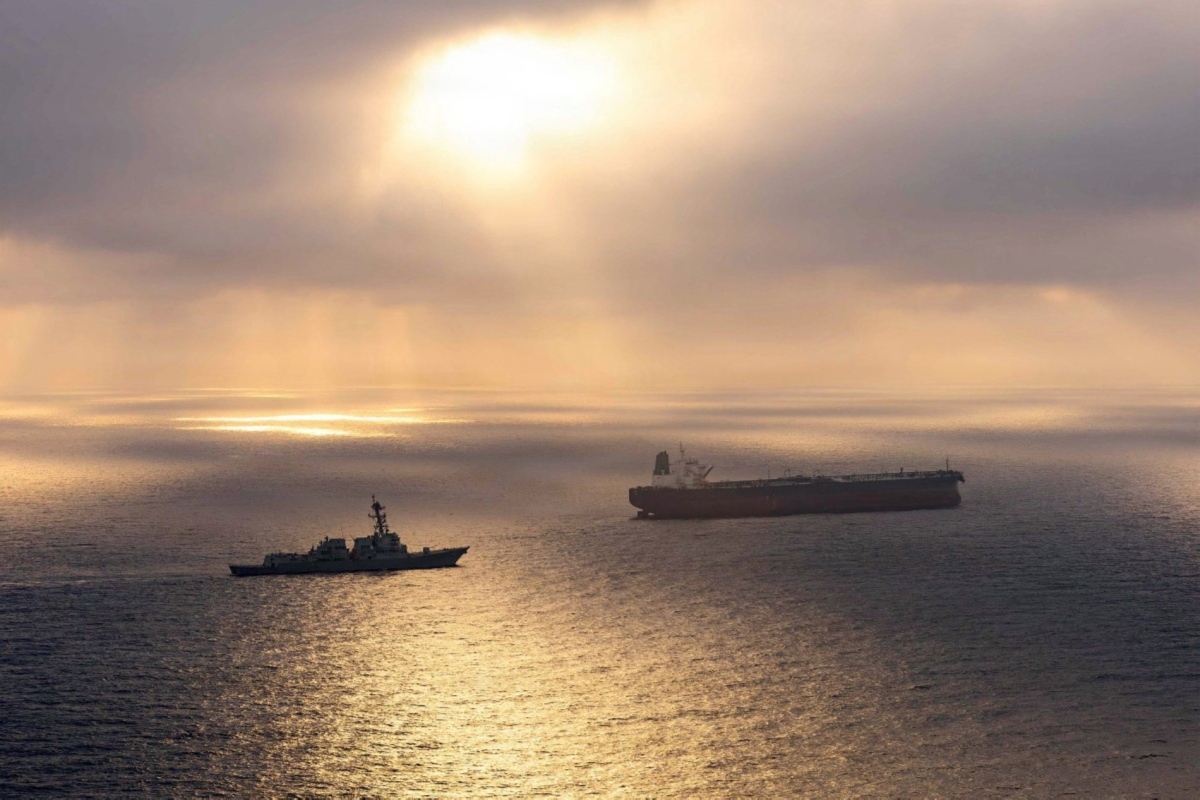
The USS Rafael Peralta implements a maritime blockade against the Iran-flagged crude oil tanker vessel Herby while the latter was attempting to sail toward an Iranian port on 24 April 2026.
US NAVY / AFP
The USS Rafael Peralta implements a maritime blockade against the Iran-flagged crude oil tanker vessel Herby while the latter was attempting to sail toward an Iranian port on 24 April 2026.

Iran's shadow tankers run up against Hormuz geography

When the war against Iran began on 28 February 2026, Tehran entered the conflict with what looked like a form of economic insurance. It had a large merchant fleet, a national oil tanker company and an extensive network of foreign tankers with opaque ownership. It had also accumulated years of experience in selling crude outside the Western financial system. Tehran was betting that this machinery would keep exports moving, however intense the pressures of war and sanctions became.

More than six months later, events have not unfolded as Tehran had hoped. Iranian ships have not disappeared, nor has the so-called “shadow fleet” been dismantled. But the war has widened the gap between the number of vessels on the books and the number actually able to enter Iranian ports, load oil or cargo and leave safely.

The crisis entered a more dangerous phase in September, when US Central Command said it had destroyed eight tankers linked to Iran in two rounds of strikes on 5 and 8 September, near Kharg Island and Jask and in the Gulf of Oman. After the second round, the Islamic Revolutionary Guard Corps said it had targeted 10 vessels, including eight tankers and two American ships. The escalation shows that tankers have gone from being instruments for circumventing sanctions to direct targets in the war.

The size of Iran’s merchant fleet cannot be reduced to a single figure. The various estimates measure different categories: vessels registered under the Iranian flag; ships owned or managed by Iranian companies even when they fly other flags; and foreign tankers carrying Iranian oil as part of the “shadow network”.

According to figures announced by the Islamic Republic of Iran Shipping Lines (IRISL) in October 2025, the group’s assets included 144 vessels with a combined capacity of around five million deadweight tonnes, including space for 160,000 20ft equivalent units. The Singapore-based commercial platform MagicPort estimates that the National Iranian Tanker Company (NITC), meanwhile, operates 53 vessels with a combined capacity of almost 13 million deadweight tonnes.

The two companies perform different functions. IRISL carries containers and general cargo, while NITC transports crude oil and petroleum products. Disruption to the fleet therefore does not merely mean lost oil revenue; it also affects imports of food, industrial equipment, electronics and spare parts that the Iranian economy needs every day.
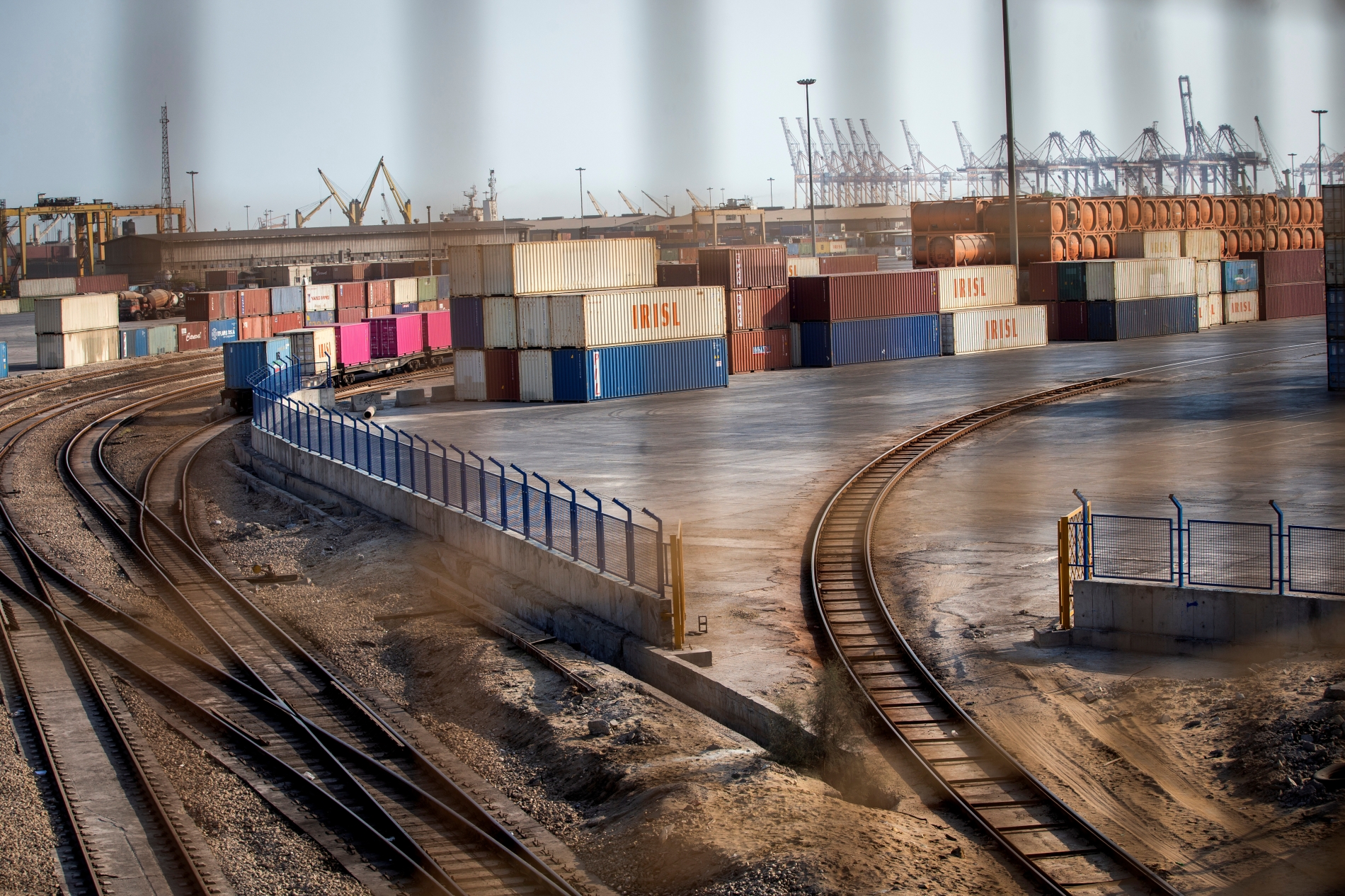
Nazanin Tabatabaee/REUTERS
Commodities containers are seen at Shahid Rajaee harbor at Bandar Abbas port, Iran on 22 August 2019.

A market, not a fleet

Iran’s “shadow fleet” was born of the sanctions that prevented conventional shipping companies, insurers and banks from serving Tehran’s exports. It does not operate as a single national fleet, but as a market of tankers, intermediaries and front companies willing to accept greater risk in exchange for higher returns.

A tanker is typically registered to a single-purpose company established in Hong Kong, the Marshall Islands or the British Virgin Islands, before flying the flag of another country. Its name, flag and manager may change more than once within a short period. Some vessels switch off their automatic identification systems (AIS), transmit false positions or transfer their cargo to another tanker at sea to conceal the oil’s origin before it reaches the buyer.

The International Maritime Organisation defines the “shadow fleet” as vessels engaged in illegal operations intended to circumvent sanctions or evade safety, environmental and insurance rules. Even so, the term has no single, universally accepted commercial definition, which is why estimates of the network’s size vary according to the organisation producing them and the criteria it uses.

Since the beginning of 2026, the US Treasury has sanctioned more than 100 vessels linked to Iran’s “shadow fleet”. That figure represents the ships Washington identified and decided to sanction during the period, not a complete count of the network. One round of sanctions included tankers flying the flags of Barbados, Mozambique, Vanuatu and the Marshall Islands, while their owners and managers were registered in China, Hong Kong and elsewhere.
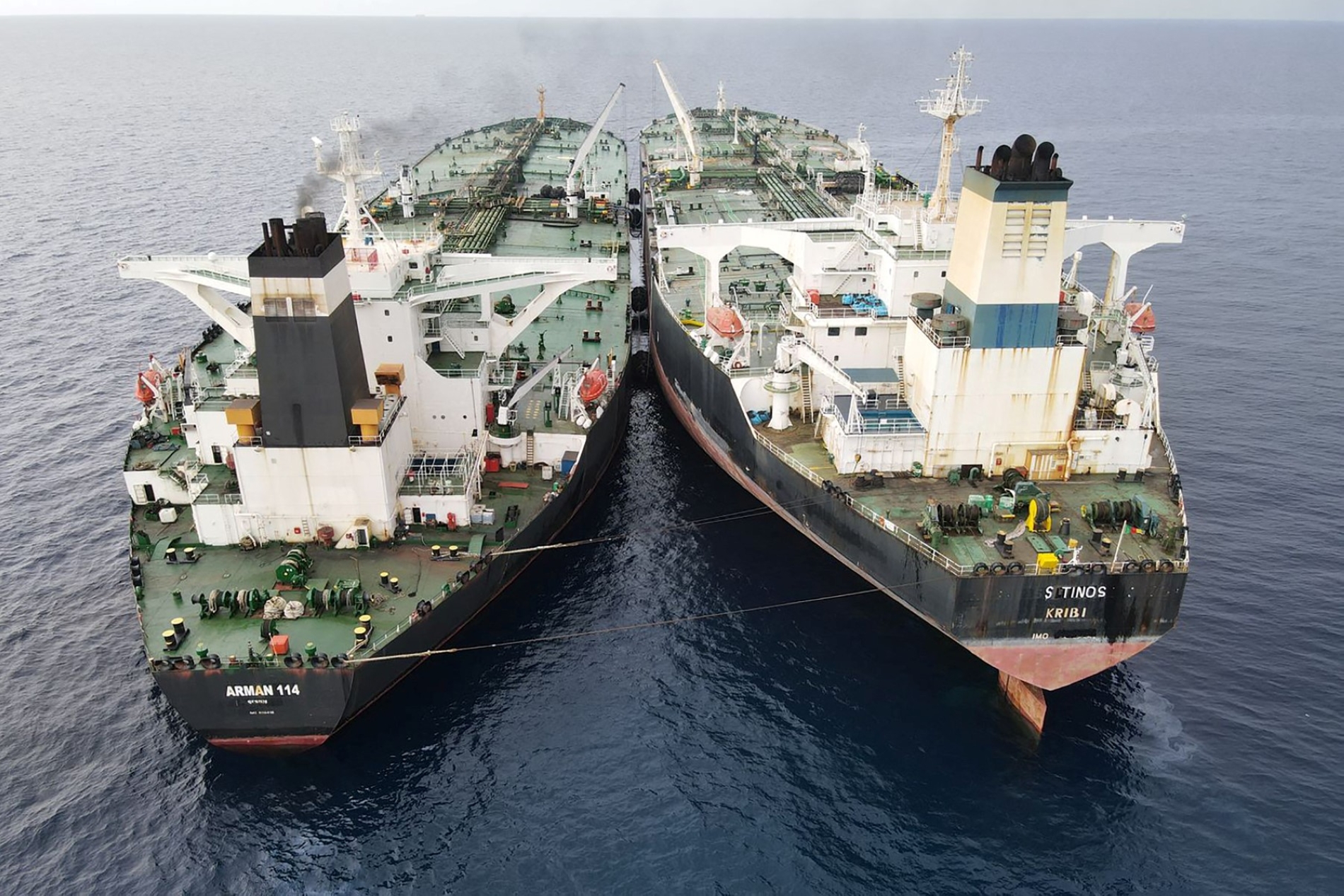
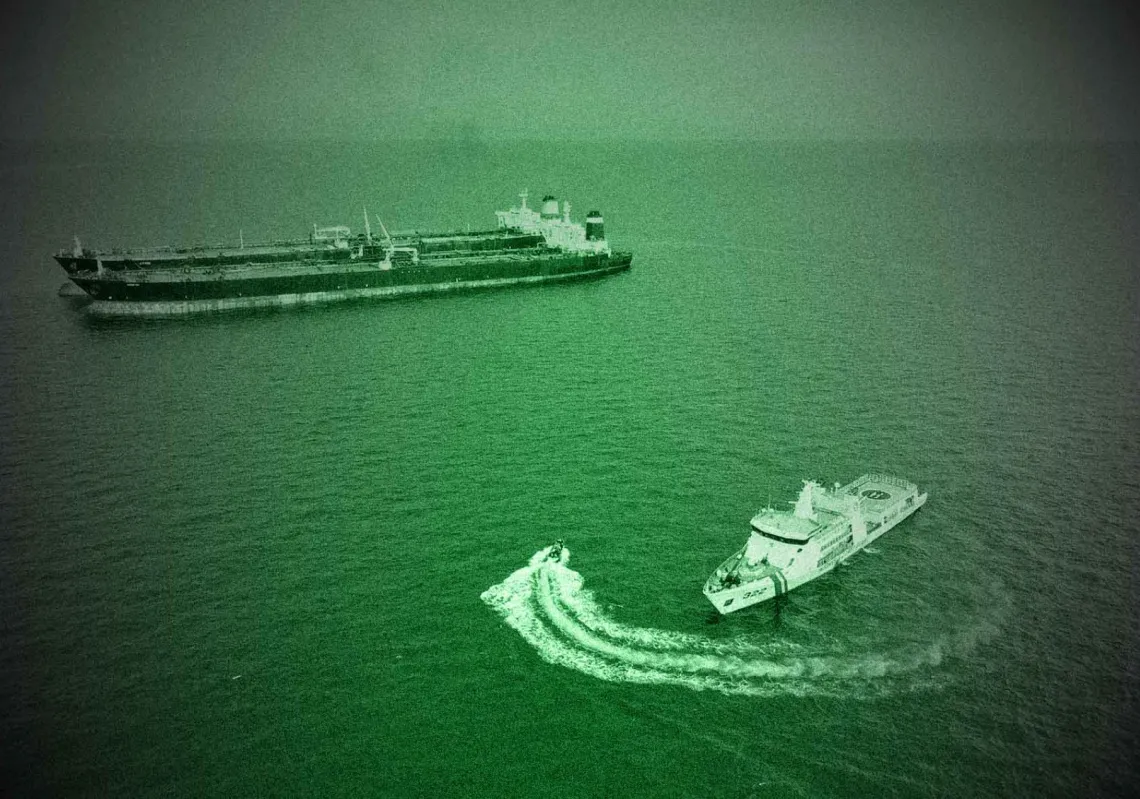
Indonesian Maritime Security Agency / AFP
An Iranian-flagged vessel MT Arman 114 (top L, in front) beside the Cameroon-flagged ship MT S Tinos conducting a suspected illegal transhipment in the waters of Indonesia's exclusive economic zone in the Natuna Sea on 7 July, 2023.

This structure is the secret of the network’s resilience. When a tanker or company is sanctioned, the vessel’s name, flag and registered owner can be changed. Yet the same structure is also a source of vulnerability, because tanker operators are not necessarily lasting allies of Tehran. They are investors weighing the profit from each voyage against the risk of having their cargo seized or losing the ship itself.

Before the war, the main challenge facing “shadow tankers” was concealing the origin of their oil and avoiding the banks, insurers and authorities that enforce US sanctions. Today, they must cross an active war zone and contend with a naval blockade, the threat of mines, military interceptions and attacks involving missiles and drones.

According to data from the ship- and energy-tracking companies Windward and Vortexa, Iranian oil exports fell by 43% during the first two months of the war. After the United States imposed its blockade on Iranian ports on 13 April, US forces had redirected 44 Iranian vessels, or ships connected to Iranian trade, by the beginning of May.

Exports did not, however, stop completely at every stage. Following a temporary understanding in June, dozens of tankers resumed sailing through a corridor close to the Iranian coast, allowing large quantities of crude oil and petroleum products to leave the country. The respite was short-lived. The collapse of the understanding and the reimposition of the blockade in mid-July erased most of the improvement.

By early August, activity at Kharg Island had subsided. By 9 September, ship-tracking data had detected no very large crude carrier leaving with Iranian crude since 12 July, although the disabling of AIS transponders makes it impossible to conclude that movements had ceased altogether. On 8 September, only six commodity-carrying vessels passed through the Strait of Hormuz, compared with roughly 125 commercial ships a day before the war.

This is where the distinction between a fleet that exists and one that can operate becomes clear. Iran may own, or charter, dozens of tankers, but their usefulness diminishes if they remain empty outside the Gulf or gather offshore near its ports. A concentration of tankers off the Iranian coast may be evidence of a bottleneck and the accumulation of floating storage, rather than a sign of recovering exports.
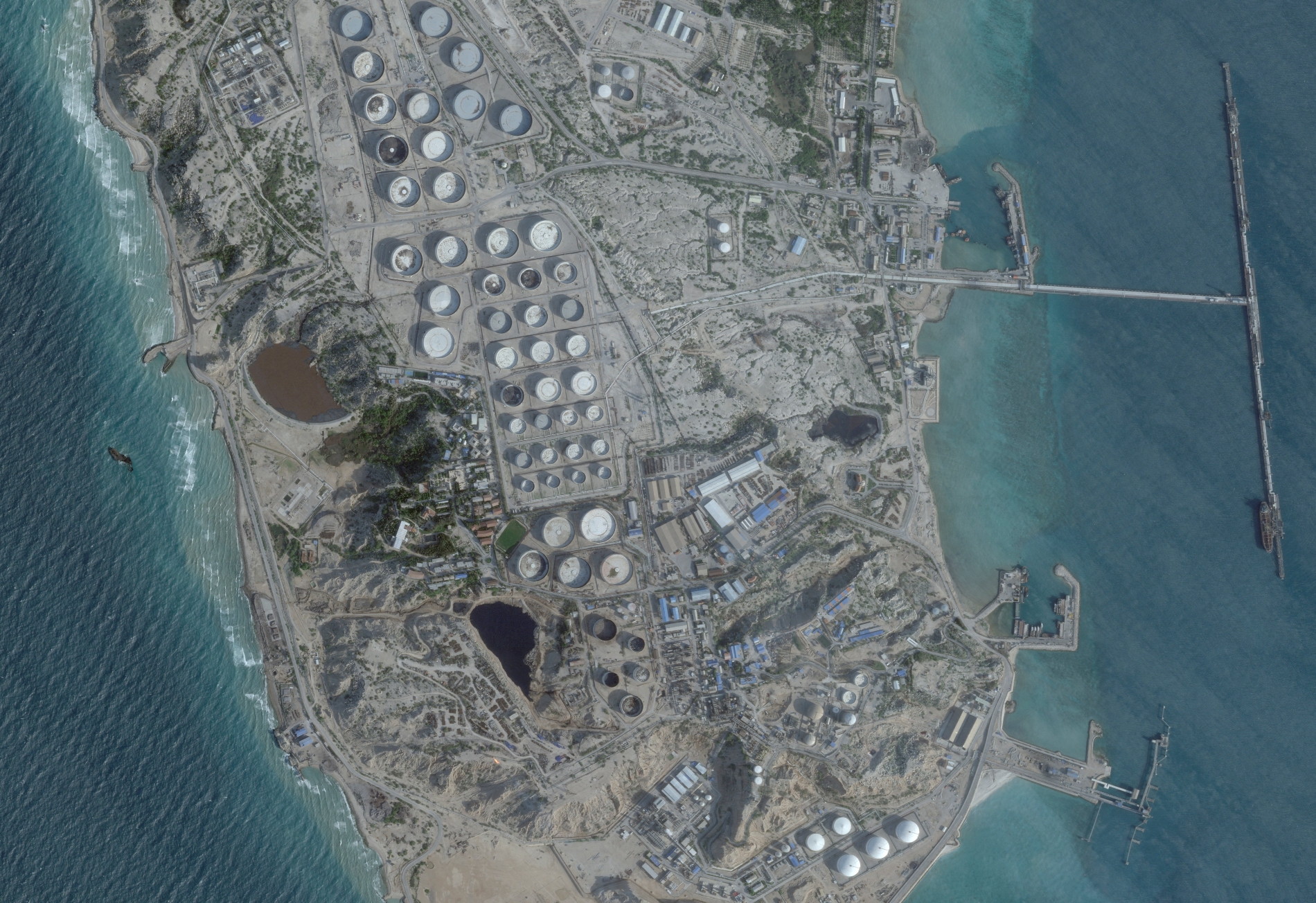
2026 Planet Labs PBC/Handout via REUTERS
A satellite image shows an oil terminal at Kharg Island, Iran, on 25 February 2026.

Kharg: the critical weak point

Around 90% of Iran’s crude exports pass through Kharg Island. Before the war, Tehran accelerated loadings from the island and shipped out large quantities of oil to reduce stocks exposed to attack. Windward data show that loadings reached around 2.2 million barrels a day in February, before falling to 1.25 million barrels a day in April and approximately 600,000 barrels a day after the blockade was imposed.

In September, the strikes were extended to the tankers themselves. On 5 September, US Central Command said it had disabled the Downy off Kharg and the Stark 1 near Jask, and destroyed the empty Kylo, also known as the Noxen, in the Gulf of Oman. On 8 September, it said it had destroyed another five tankers: the Kaviz, Charminar, Horizon 1 and Riesco in the Gulf of Oman, and the Derya near Kharg Island. According to US Central Command, the crews were instructed to abandon the vessels before they were struck.

The loss of a tanker does not merely mean the loss of its potential cargo. Large vessels are capital assets that take years to build, and Iran cannot readily replace them under restrictions on financing, engines, marine equipment, classification and insurance. Their targeting also deters foreign tanker operators that had been willing to bear the risk of sanctions but did not necessarily enter the trade prepared to face military attack.
Iran can disrupt Hormuz and raise the cost of global trade and energy, but it pays a direct price since its own exports and imports pass through the same waterway

Freight costs eat into the discount

Trade in sanctioned oil generated substantial profits for operators of "shadow tankers". Iran normally sells its crude at a discount, while tanker owners charge freight rates above conventional market levels. The arrangement remained profitable for both sides as long as the ship reached its destination. The war, however, has raised the cost of each voyage to a level that threatens this equation.

On 11 September, the cost of chartering a very large crude carrier from the Gulf of Oman to China reached the equivalent of about $11.50 a barrel, the highest recorded by the route's benchmark since it was introduced earlier in 2026. Such freight costs, coupled with the discount sought by buyers, can sharply reduce Tehran's net revenue.

There is no fixed discount for Iranian crude. It varies according to the grade, volume, buyer, severity of sanctions and terms of delivery. At different points in 2026, reported discounts for Iranian Light ranged from around $1 to $5 a barrel. Supply shortages subsequently pushed some cargoes offered in August from a discount to a premium of about $2 over Brent crude.

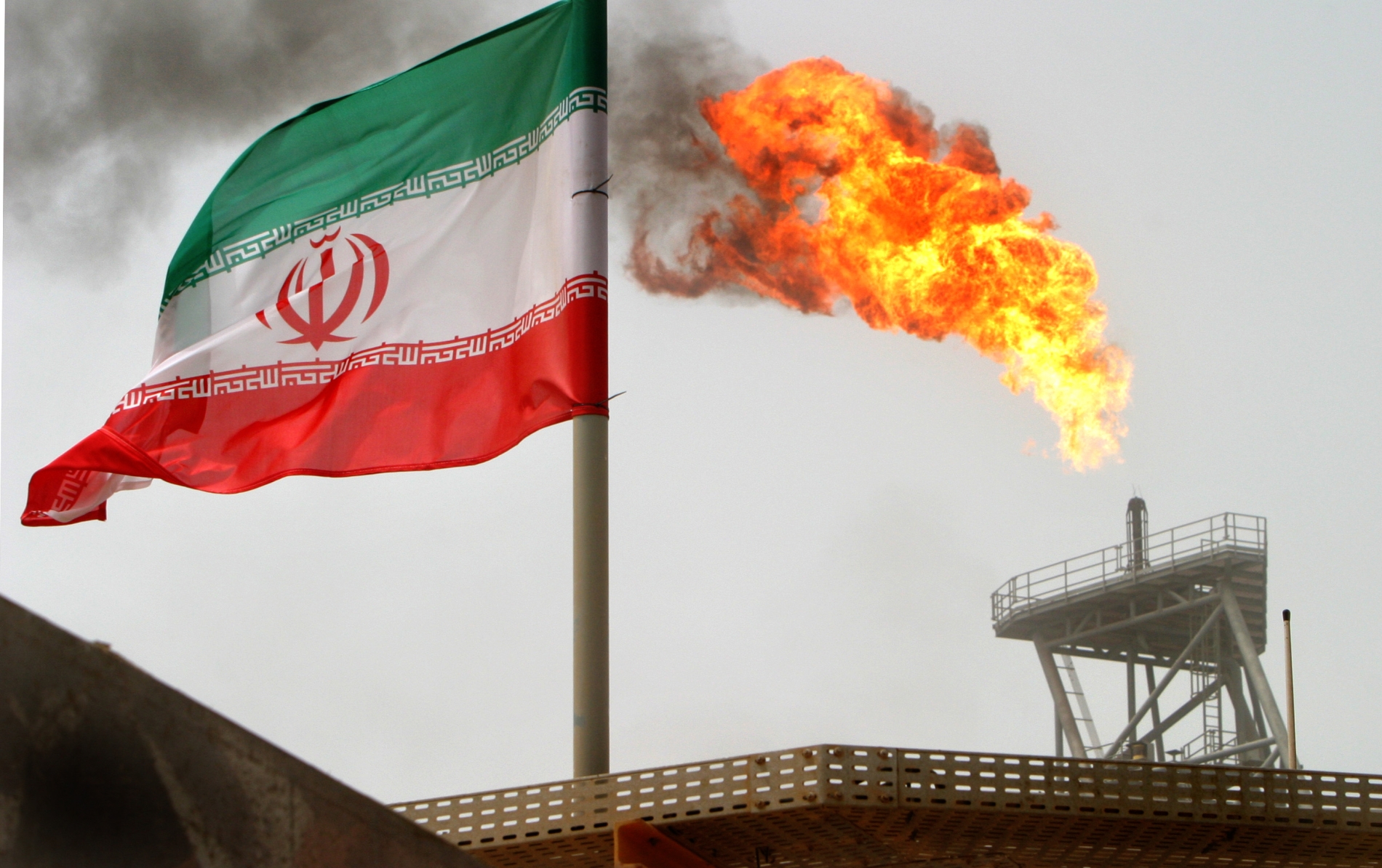
Reuters
An oil production platform in the Soroush oil field with the Iranian flag on 25 July 2005.

Freight rates and assumed discounts therefore cannot simply be added together and deducted mechanically from the global price, because the party responsible for freight costs varies according to the terms of the contract. Nevertheless, soaring tanker rates squeeze Iranian returns under either arrangement: Tehran bears the cost under delivered contracts, while under other terms buyers may invoke higher freight costs to demand a lower price.

Insurance costs have also soared. Paul Bradshaw, a director at Emirates National Oil Company (ENOC), told the Asia Pacific Petroleum Conference (APPEC) in Singapore that cargo insurance could amount to as much as 6% of the shipment's value, while additional war-risk premiums had reached as much as 10% in some cases. In his estimate, the new risks could add between $10mn and $20mn to the cost of a single vessel's passage.

This has prompted some market participants to sail without sufficient insurance cover. A voyage may pass without incident, but an accident or spill could leave coastal states facing a huge bill, with no clearly identifiable owner from whom compensation can be sought. The danger is heightened by the age of many "shadow tankers", some of which are more than 20 or 25 years old and are not subject to the maintenance and oversight standards applied to vessels insured by international protection and indemnity clubs.

China and Malaysia: the other half of the journey

China receives most of Iran's oil exports, particularly through privately owned refineries that benefit from discounted crude. Yet cargoes do not always travel directly from Iran to a Chinese port. The first tanker will often transfer the oil to a second vessel near Malaysia or at the outer limits of the Port of Singapore, before the documentation concerning its origin is altered and the voyage continues.

During the summer respite, United Against Nuclear Iran, an advocacy group that supports greater pressure on Tehran, tracked Iranian-flagged tankers gathered off the Malaysian state of Johor with their identification systems switched off as they waited to conduct ship-to-ship transfers.

Southeast Asia has thus become the other half of Iran's export chain. A cargo is loaded at Kharg, passes through Hormuz and is then disguised again near Malaysia before reaching China. This route gives Iran logistical depth, but also makes it more dependent on the tolerance of flag states, ports, service providers and Chinese refineries.

AFP
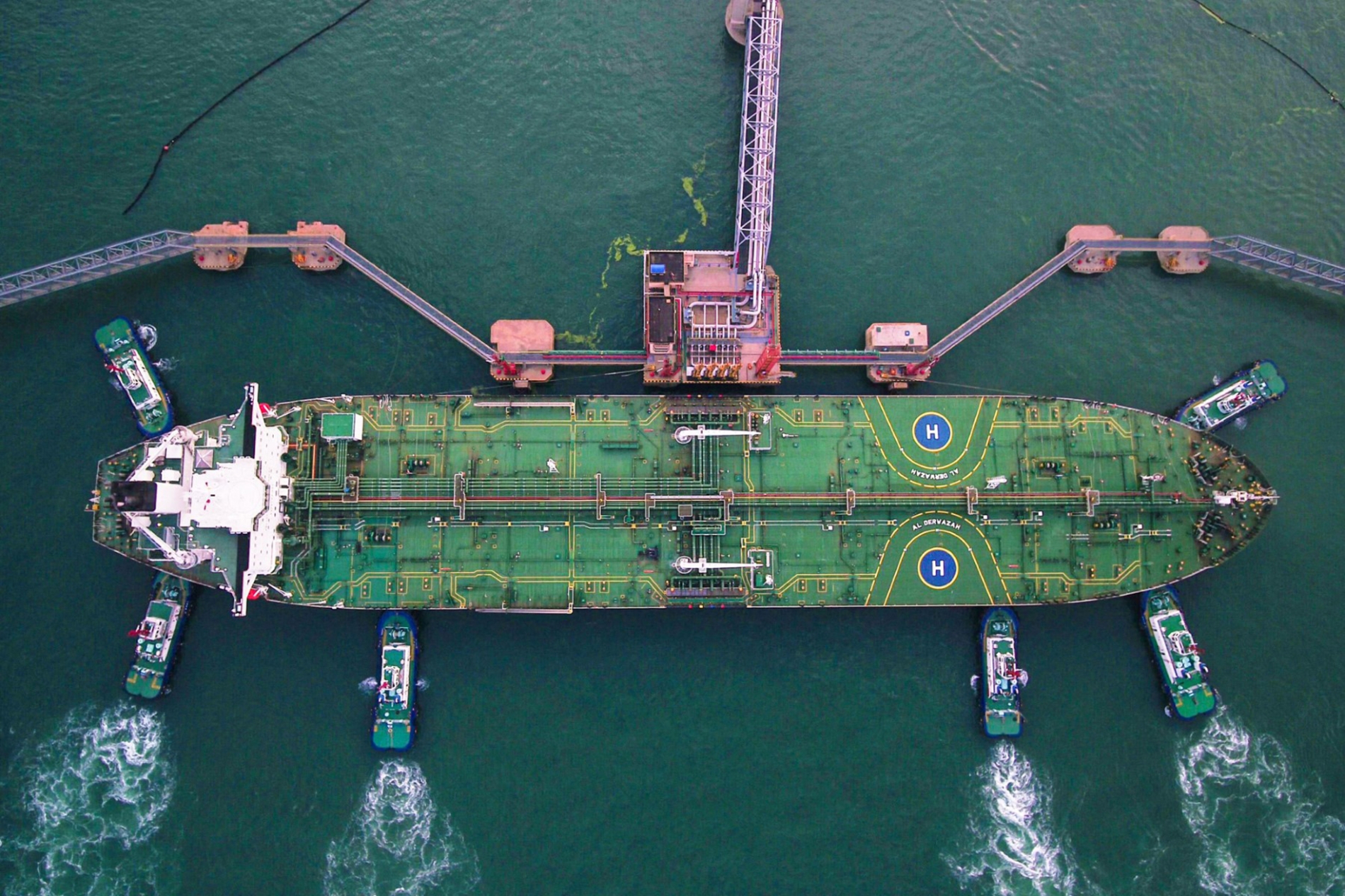
Tugboats help an oil tanker dock at Qingdao port in Shandong province, eastern China, on 4 August 2019.

Limited alternatives to the southern ports

Shahid Rajaee Port near Bandar Abbas is the principal hub for Iran's non-oil trade, handling around 80 to 85% of the country's containers. The effects of the war therefore extend to imports of food, industrial equipment and spare parts, rather than stopping at crude-oil revenue.

Iran has ports outside the Strait of Hormuz, most notably Chabahar on the Arabian Sea, as well as the oil port of Jask. Yet the capacity of their berths, pipelines, roads and railways does not allow them to replace Kharg and Bandar Abbas quickly. The US seizure in April of the Iranian container ship Touska near Chabahar demonstrated that being located outside the strait does not provide complete protection from blockade and interception.

The Caspian Sea gives Iran a supplementary corridor towards Russia and Central Asia. After Iran's Ports and Maritime Organisation announced that the country's Caspian merchant fleet had reached 87 vessels by the end of 2024, data published in March 2025 indicated that the number of Iranian-flagged ships operating there had risen to 94. It nevertheless remains a regional fleet with limited capacity, while its ports and overland and river routes cannot accommodate volumes approaching those of Iran's oil exports through the Gulf. It can support part of the country's trade in grain and general cargo, but it cannot replace the Hormuz route.

Reuters
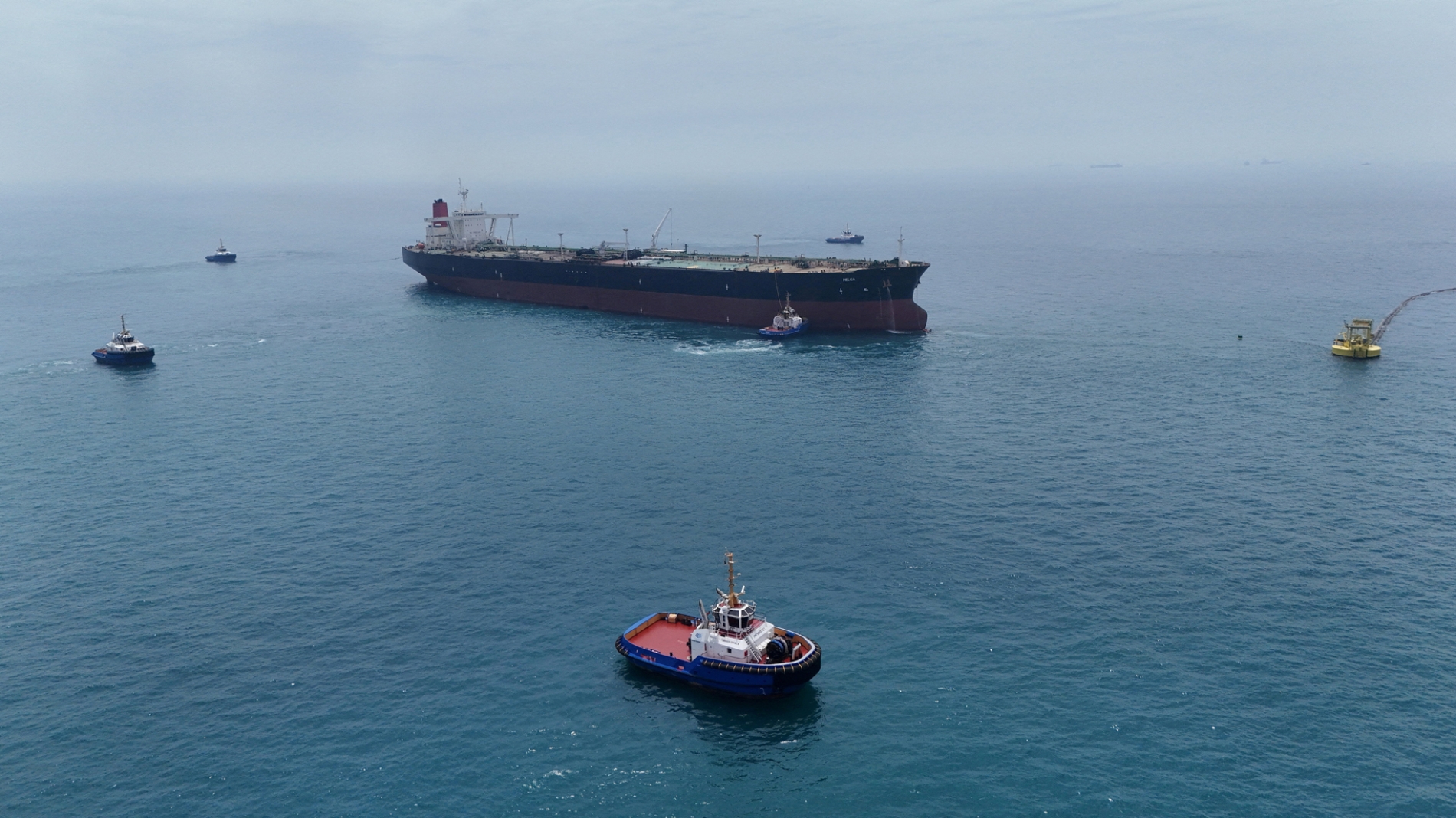
The oil tanker "Helga" is moored at an offshore oil terminal in southern Iraq, near Basra, in preparation for loading crude oil on 24 April 2026.

A network that survives on wartime terms

The "shadow tankers" will not disappear soon. Sanctions increase the returns available to those willing to take the risk, while vessels can be sold, renamed, re-registered and placed under new flags. The network will remain in demand for as long as oil sanctions remain in force and Chinese refineries are prepared to buy Iranian crude.

Yet the war has exposed its limits. Iran has built a system adept at concealing vessel ownership and the origin of cargoes from banks and insurers, but those tools cannot open a mined and contested strait or protect a tanker anchored outside a port under surveillance and attack.

On 12 September, Tehran said its preliminary understanding with Oman did not provide for the immediate reopening of Hormuz, but instead paved the way for discussions on future arrangements, conditional on the United States responding to Iranian demands. At the same time, Washington reduced coordinated air-defence support for tankers to two recommended transit windows a day—a sign that securing navigation was no longer an emergency measure, but a prolonged and costly military operation.

Iran's fleet therefore finds itself caught in a punishing equation. Tehran can disrupt Hormuz and raise the cost of global trade and energy, but it pays a direct price because its own exports and imports pass through the same waterway. The "shadow tankers" that provided it with breathing room for years can still move whenever a gap opens in the blockade. But the risk is no longer simply that a vessel's name might be added to a sanctions list. It is now that the ship may never return from its voyage.

font change

Related Articles