From the war on terror to networked security

The main change since 9/11 is that military security has become one component of a much wider security ecosystem

Al Majalla-Reuters

From the war on terror to networked security

The 9/11 attacks of 2001 ushered in a security paradigm centred on identifying and defeating a particular enemy: transnational terrorism. Twenty-five years later, security is better understood as protecting interconnected systems against multiple, overlapping forms of disruption.

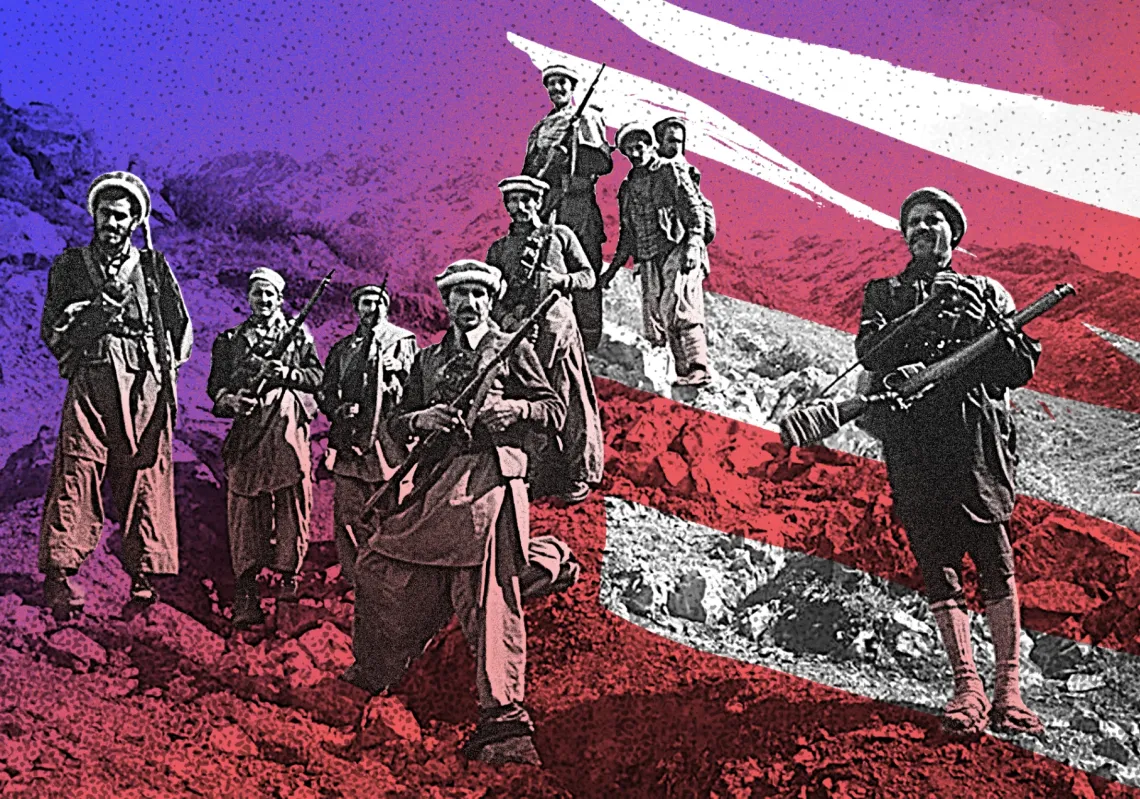
September 11 transformed international security by making transnational terrorism the dominant organising threat. The resulting “war on terror” was built around a relatively straightforward strategic logic: identify hostile organisations, disrupt their networks, deny them territory, and use military, intelligence, and law-enforcement tools to defeat them. This paradigm shaped US foreign policy and much of Western security thinking for two decades, from Afghanistan and Iraq to counter-terrorism partnerships across the Middle East and Africa.

Twenty-five years after 9/11, terrorism has not disappeared, and the “war on terror” paradigm has remained relevant, as illustrated in the military defeat of the Islamic State (IS) at the hands of an international coalition.

The “war on terror” is no longer the dominant organising framework for understanding today’s security landscape. Not only have new threats appeared, but the nature of security itself has changed. Three issues now rise to the fore when thinking about security: the rise of hybrid warfare; the meaning of resilience and deterrence; and networked security.
Ryan Lim / AFP
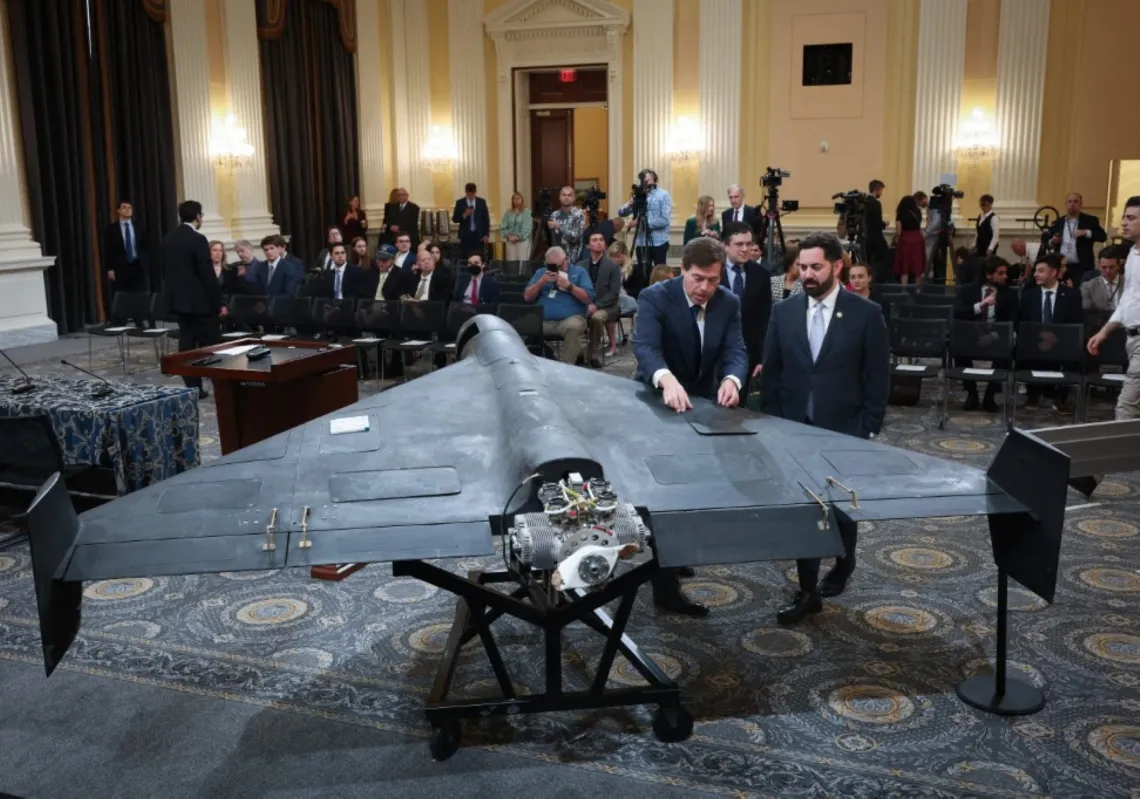
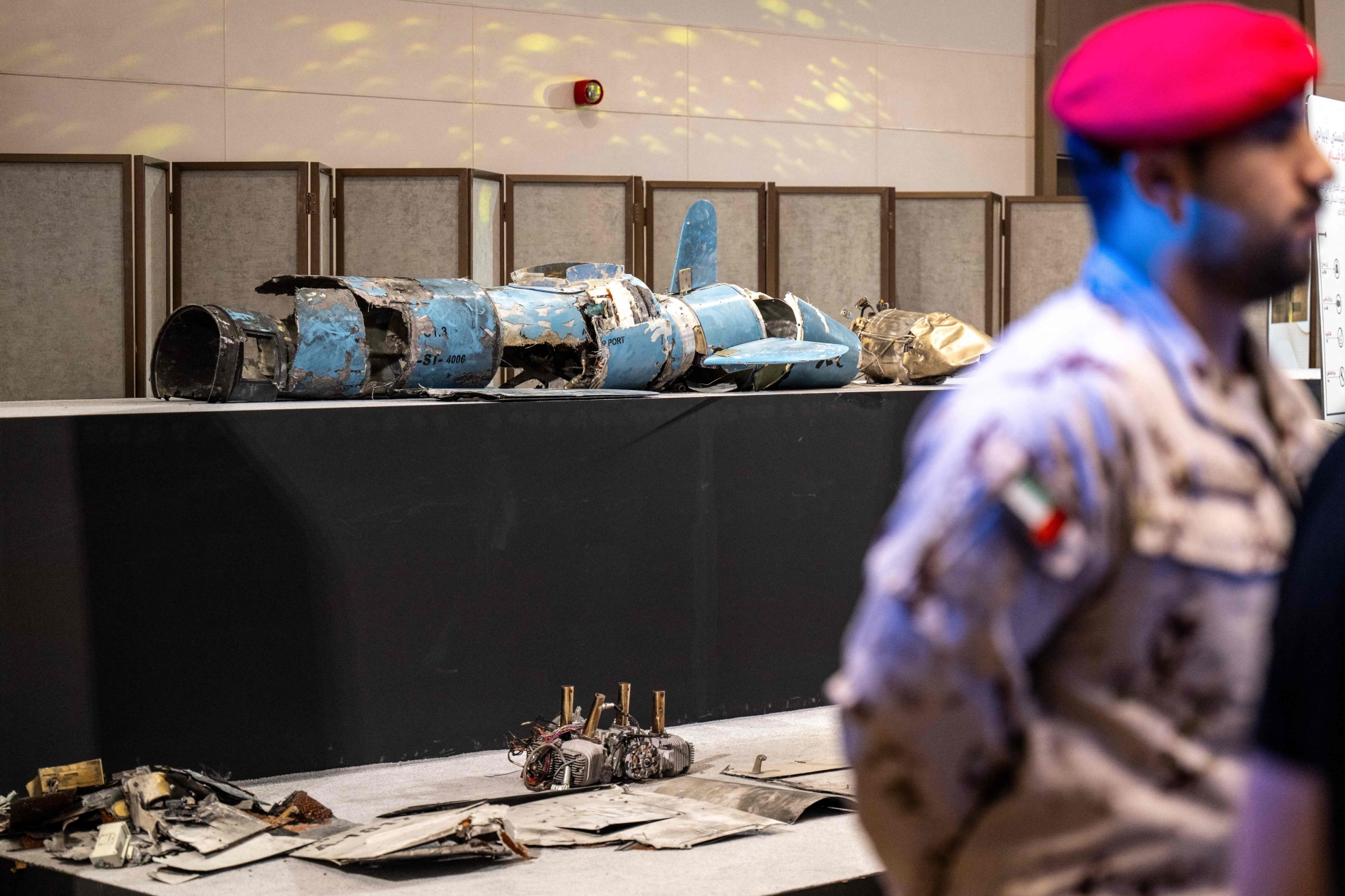
Pieces of missiles and drones recovered after Iranian strikes are displayed during a press briefing by the UAE government held in Abu Dhabi on 3 March 2026.

Hybrid warfare

Hybrid warfare has become a routine instrument of geopolitical competition. Before 9/11, there was a distinction between “war” and other security threats. Over the last 25 years, the differentiation between conventional warfare (between states) and asymmetric warfare against terrorists and insurgents has eroded.

As seen in the cases of Russia and Iran, states routinely employ asymmetric instruments, from proxies to cyber operations, sabotage, information warfare, to covert action. Meanwhile, non-state actors increasingly possess capabilities once associated with states, including precision missiles, sophisticated drones, surveillance technology, and electronic warfare. Security policy can no longer focus principally on defeating an identifiable enemy on a physical battlefield. Security itself as a concept therefore needs to be regarded as hybrid.

The same hybridity applies to the concept of power, which in the twenty-first century cannot be measured primarily by military capability. Power also depends upon control of, and resilience within, technological, economic, and informational systems. As vividly seen in the context of the Iran war, AI, cyber capabilities, drones, satellites, and advanced surveillance increasingly determine states’ ability to compete and defend themselves.

In the same vein, national vulnerability increasingly arises from technological dependence. Beyond military capability and domestic and foreign policies, national security also relies on cloud computing, digital platforms and telecommunications infrastructure, alongside physical structures like undersea cables.

ATTA KENARE / AFP
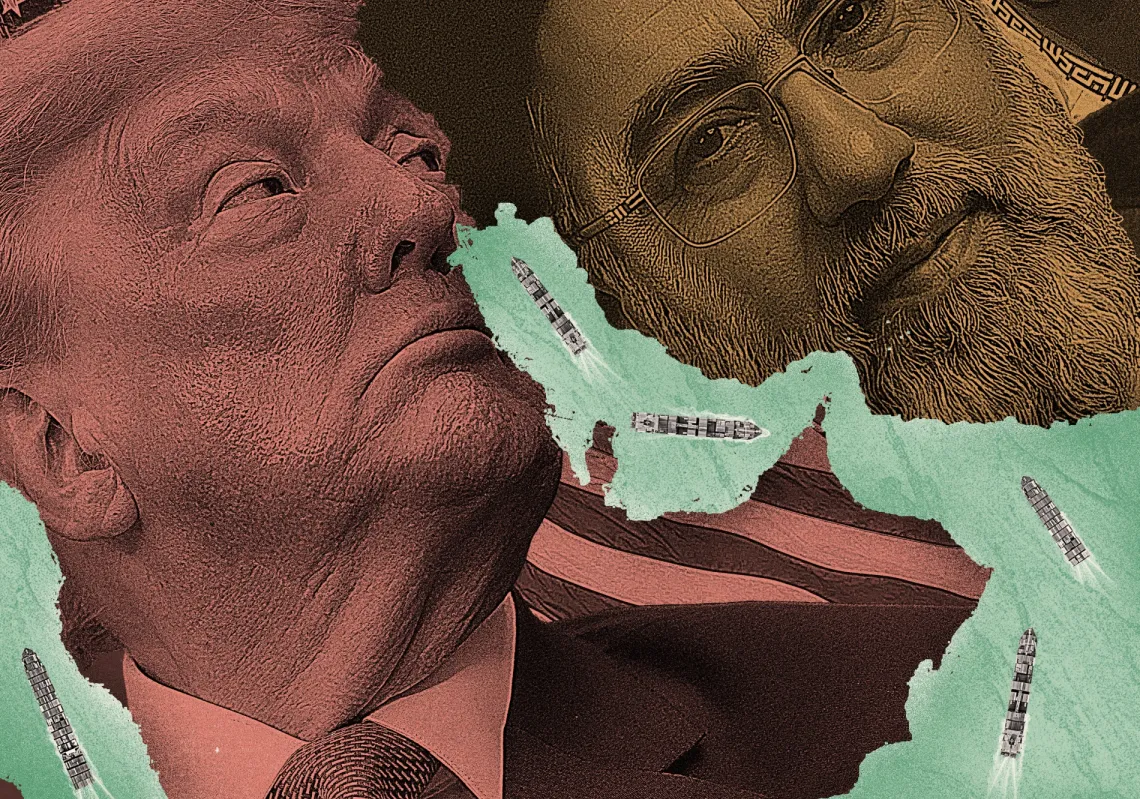
Commuters drive past an anti-US billboard referring to President Donald Trump and the Strait of Hormuz, installed on a building at the Valiasr Square in Tehran on 10 May 2026.

Resilience and deterrence

The Iran war further illustrates the centrality of economic resilience to the notion of security. Supply chains once viewed primarily through the lens of efficiency are increasingly assessed through the lens of resilience. Just as Iran and its proxies have tried to use economic disruption as part of hybrid warfare—by attempting to close the Strait of Hormuz and to attack shipping in the Red Sea—the US is using economic coercion to counter Iran’s destabilisation.

This demonstrates the growing merger between economic policy and security policy. Under such conditions of disruption, security increasingly means keeping essential systems functioning. This is why Arab Gulf countries are investing in alternatives to secure their food and energy sources and global trade.

The importance of resilience to security is not limited to the economy. The traditional conception of national security is fundamentally territorial, where governments must protect borders, populations, and sovereignty from external attack. Those responsibilities remain, but the systems societies depend on have become additional security frontiers that must be resilient.
The "war on terror" is no longer the main lens for viewing today's security landscape. New threats have emerged, and the nature of security itself has changed

A hostile actor can cause serious national disruption through cyberattacks, without crossing a border or firing a weapon. A biological threat could disrupt global economies, institutions, borders, and societies. Ecocide can similarly generate security consequences through food insecurity when land becomes unfit for agricultural use, the water supply is disrupted or polluted, and environmental disasters are orchestrated, triggering population displacement.

The other side of the coin to resilience is the concept of deterrence. During the Cold War, deterrence centred overwhelmingly on convincing an adversary that aggression would provoke unacceptable military retaliation. That logic is harder to apply to hybrid hostile activity. As the Iran war shows, modern deterrence requires more than the threat of military action.

In addition to military deterrence, resilient electricity grids, diversified supply chains, robust public institutions, cybersecurity, and trusted information environments can perform deterrent functions. This has been vividly illustrated in the Arab Gulf countries' handling of the various kinds of hybrid attacks inflicted on them by Iran.

Reuters
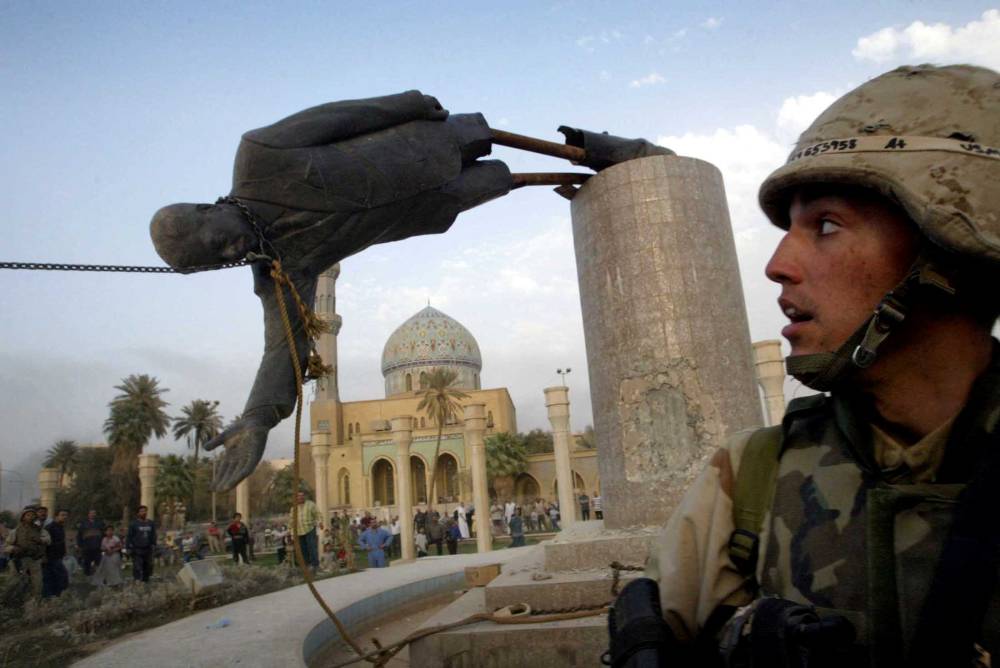
A US soldier watches as a statue of Iraq's President Saddam Hussein falls in central Baghdad's Firdaus Square, in this file photo from 9 April 2003.

Networked security

Although the US retains its supremacy in international security, the post-9/11 era has revealed the limits of security strategies that rely heavily on direct American military intervention. The case of Iraq is an example, with the country continuing to grapple with the repercussions of the US-led 2003 invasion. But the bigger picture shows that even the US is increasingly approaching international security as networked rather than something it handles on its own.

Cybersecurity, maritime security, counter-terrorism, and supply chain security all require cross-country intelligence, operational, and strategic cooperation. This is especially because disruptions in any one geographical region can have wider repercussions. As the case of the Strait of Hormuz shows, regional maritime insecurity can affect global shipping and energy markets. And as the situation in East and West Africa illustrates, instability can empower terrorist networks, create migration pressures, and cause economic disruption far beyond the region.

Regional partnerships have therefore become structurally important to US national security. By extension, this means that the security of the US increasingly depends on whether regional systems are themselves resilient. This explains why the US is so supportive of strengthening the post-Assad state in Syria and why it sees Arab Gulf countries as trusted security partners.

Although the US retains its military supremacy, the post-9/11 era has shown the limits of security strategies that rely heavily on American military intervention

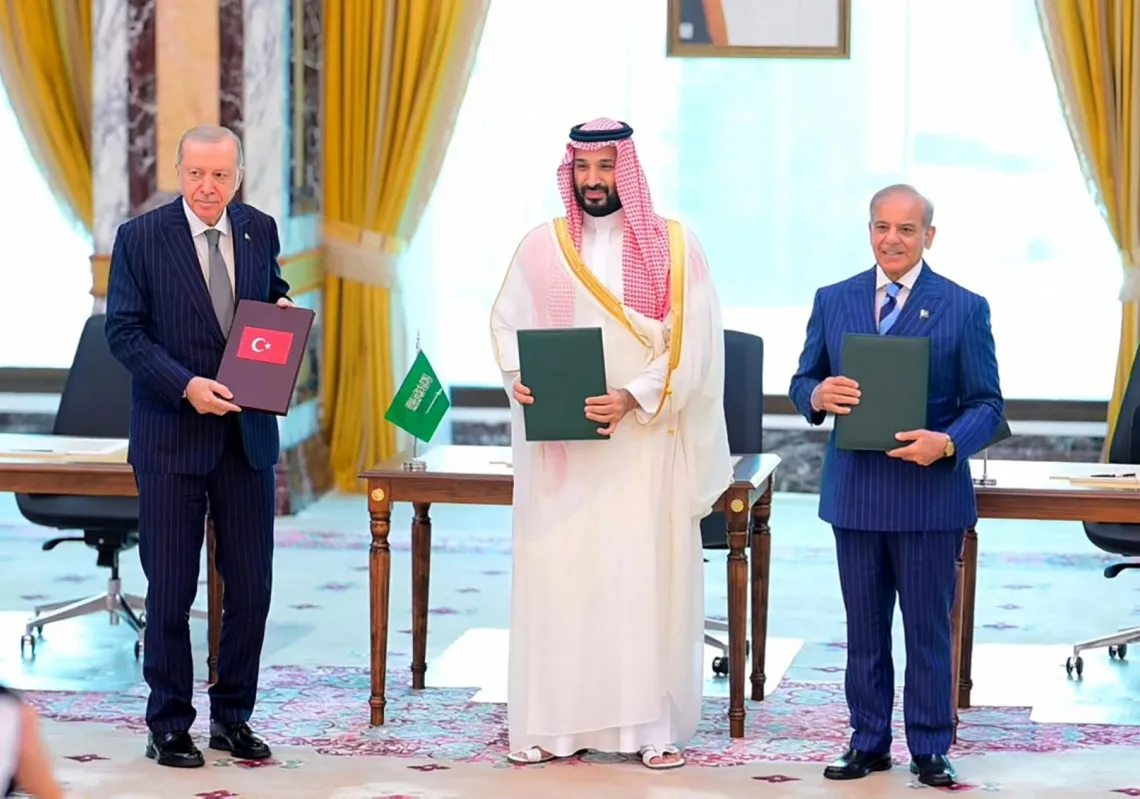
This dynamic does not mean that the US's regional security partners are subordinate components of American strategy. Unlike the rise of what many saw as US hegemony in the aftermath of 9/11, today the US's regional partners are increasingly autonomous actors. Middle powers such as Saudi Arabia, the UAE, and Türkiye have strong relationships with Washington while simultaneously engaging China, Russia, and others. It is in the US national interest to build and sustain networks of cooperation among its increasingly independent partners.

Twenty-five years ago, the defining national security concerns were about defeating threatening actors. Today, hybrid warfare has ushered in broader ways of thinking about resilience, deterrence, and security.

That does not mean that traditional military power or counter-terrorism have become obsolete. Russia's war against Ukraine, continuing terrorist threats in Africa, and conflicts in the Middle East demonstrate otherwise. The main change since 9/11 is that military security has become one component of a much wider security ecosystem.

font change