Eyal Weizman dissects the architecture of genocide

In his new book, the British-Israeli academic shows the methodical tactics Israel has used to uproot Palestinians from their homeland since 1948

Lina Jaradat

Eyal Weizman dissects the architecture of genocide

Award-winning British-Israeli architect Eyal Weizman’s new book is the latest in an increasingly long line of publications by the London-based professor, born in Haifa, whose pro-Palestinian views have led to his being denied entry to the US.

Weizman is Professor of Spatial and Visual Cultures at Goldsmiths University in the British capital and is renowned for exposing how architecture, maps, roads, settlements, and barriers structure the machinery of Israel’s occupation of Palestinian territories. Ungrounding: The Architecture of Genocide (Penguin, 2026) follows past books such as Hollow Land: Israel’s Architecture of Occupation and Forensic Architecture.

In 2007, together with the architects Sandi Hilal and Alessandro Petti, he co-founded the collective Decolonising Architecture (DAAR) in Beit Sahour, Palestine. Three years later, he established Forensic Architecture, an investigative agency that applies architectural and spatial knowledge to examine state violence and human rights abuses.

It brings together architects, filmmakers, journalists, programmers, lawyers, and researchers, weaving witness testimony, video, aerial imagery, maps, and digital modelling into reconstructions that determine the location and chronology of events. Its investigations have been presented before courts and international bodies, and have appeared in reports, exhibitions, and media platforms.

Architecture is politics

In Ungrounding, Weizman draws especially on the agency’s investigations in the Gaza Strip and on material prepared in support of South Africa’s case against Israel before the International Court of Justice. Although the term ‘ungrounding’ is often rendered in Arabic as ‘uprooting’, in English it carries a broader resonance, binding together the physical earth and the foundations upon which life depends.

The concept reaches beyond bulldozing soil or removing a population from its place. It encompasses the effacement of the traces that attest to a community’s presence, the destruction of infrastructure, soil and the subterranean realm, and the subsequent remaking of space from its own debris within a new military geography.
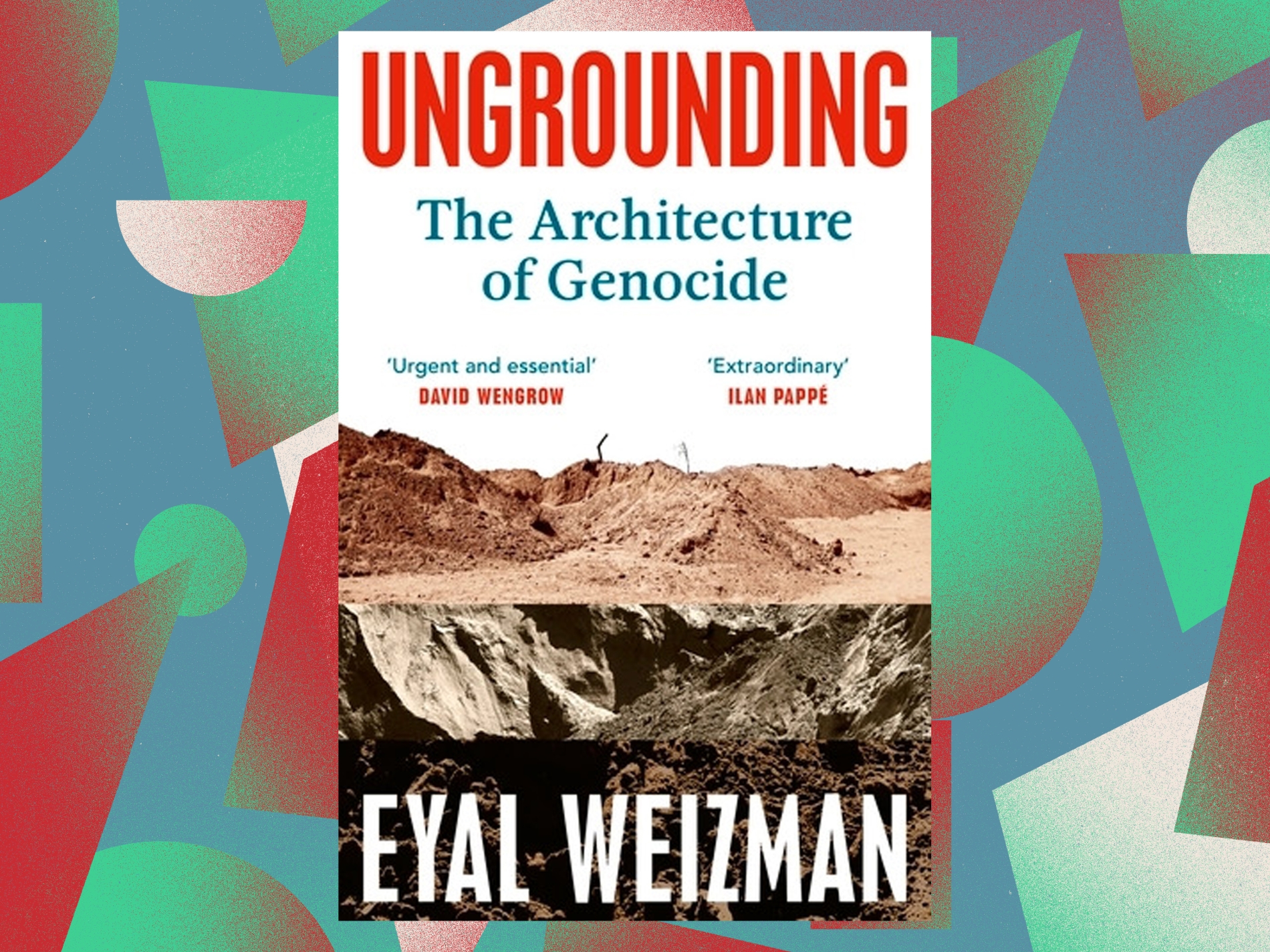
Weizman opens the book with two propositions that illuminate its argument. The first is that “architecture is politics slowed down into form”. The second is that “the incident is architecture exploding into politics”. The first conceives architecture as politics accumulated over time and given material expression in borders, roads, settlements, embankments, and infrastructure. The second suggests that a violent incident, however sudden, reveals this latent spatial order and thrusts it abruptly into political visibility.

Systemic reorganisation

The book moves continually between slow violence, which reshapes land across decades, and explosive violence, delivered by bombs and bulldozers in moments. Its title captures this interplay between architecture and destruction. The ‘architecture of genocide’ refers to no architectural style; rather, it describes a spatial and material system through which displacement, killing, siege, and the destruction of the conditions required for life are organised.

Weizman develops this thesis across three interlinked sections: Soil, Subsoil, and Ungrounding. ‘Soil’ returns to the British Mandate, the Nakba (Catastrophe), and the formation of the Gaza Strip and the settlement belt surrounding it. ‘Subsoil’ begins in 1967 and traces the evolution of tunnels, infrastructure, and spatial knowledge under siege. ‘Ungrounding’ examines the emergence of an architecture of genocide from October 2023 onwards.

This progression is as spatial as it is chronological. It delves into the earth’s depths, then rises again to a surface that has been overturned, poisoned, and reshaped. Through this movement, the Nakba appears as a continuous history of displacement and siege, and as an enduring process through which the land is transformed, and Palestinians’ relationship to place is repeatedly reorganised.

Section 1: Soil

The first section returns to the British Mandate and the 1948 Nakba, then extends into the late 1950s. It centres on the Palestinian village of Ma’in Abu Sitta and the settlement of Nirim, using them as a lens through which to read the transformation of southern Palestine. The region had once formed part of Palestine’s breadbasket, providing fruit, vegetables, and wheat through a landscape of fields, orchards, wells, and the agricultural production of surrounding villages.
  AFP
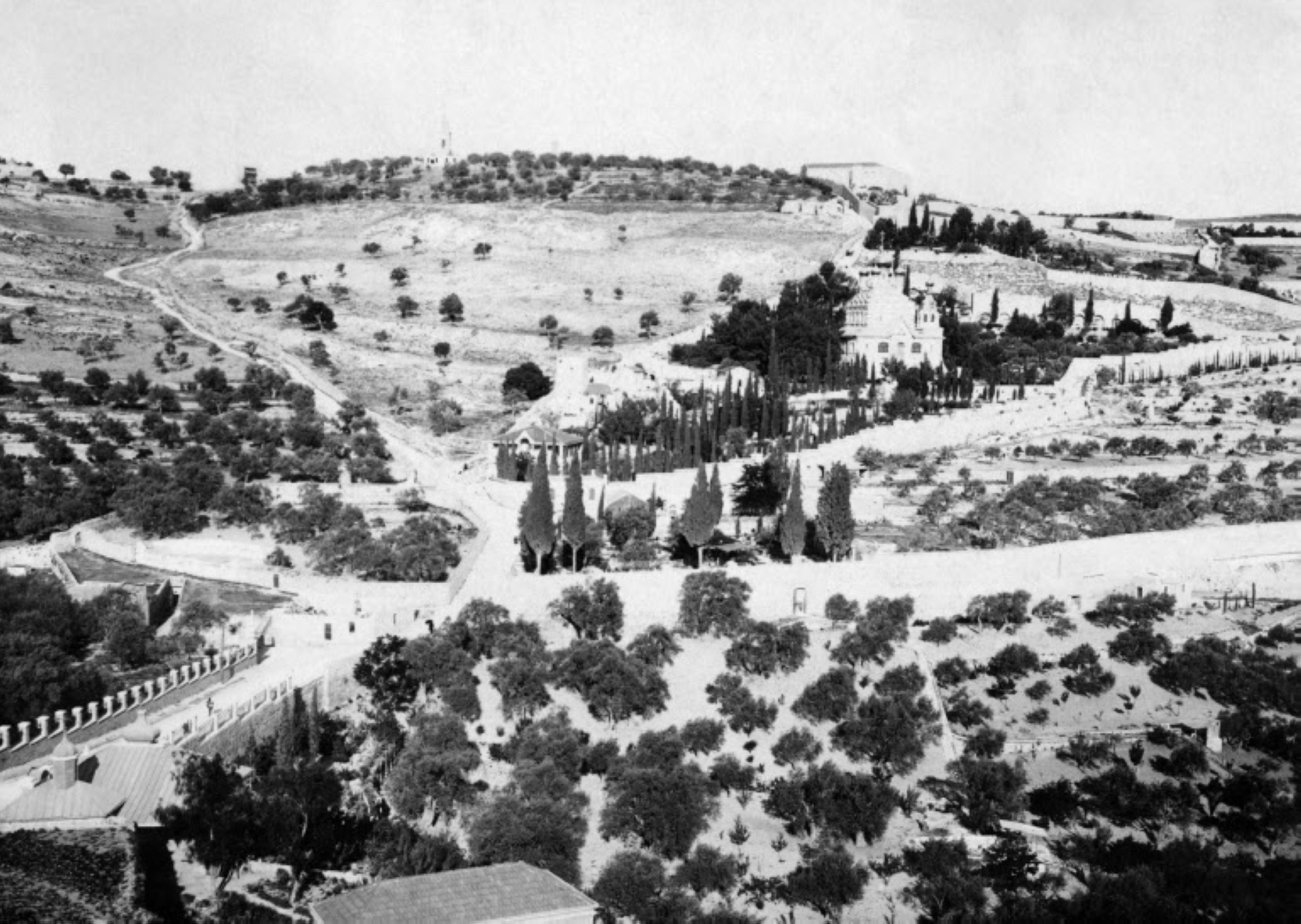
A general view of the Mount of Olives in Jerusalem, in a photograph likely taken in the 1920s.

After its inhabitants were expelled in 1948, Nirim was established on Ma'in's lands. The area gradually became an agricultural settlement belt surrounding the Gaza Strip. Weizman begins with a striking scene from 1950, when a tractor converted a line on a map into a physical scar across the land.

The plough cut through fields, orchards, and valleys, at times passing between neighbouring lands and villages. This ‘plough line’ had no international standing as a recognised border, but contributed to the formation of two complementary spatial entities: the Gaza Strip, into which refugees had been concentrated, and the Gaza Envelope, a front of agricultural and military settlements established to encircle them and obstruct their return.

Agriculture thus became entwined with violence. Ploughing and cultivation were used to efface the ruins of villages, property boundaries, roads, and cemeteries, and fresh greenery was laid over them to cover the traces. The force of this section lies in its treatment of soil as a material archive bearing the history of ownership, labour, expulsion, and resistance. Palestinians appear as active agents rather than passive victims, such as when residents of Abasan and Khuzaa, including women and children, gathered to obstruct the demarcation of the line and succeeded in shifting it at one point.
Weizman describes military desertification as the systematic destruction of environmental and material conditions that enable people to remain in place

Section 2: Subsoil

The first section reads the soil as a surface upon which borders were inscribed and through which ownership, agriculture, and settlement were reorganised; the second section descends beneath that surface from 1967 to October 2023, tracing the history of tunnels by the political history unfolding above it. As crossings were closed, roads severed, and the siege tightened, alternative routes emerged underground for trade, the movement of materials, storage, shelter, and resistance.

Weizman challenges Israel's portrayal of Gaza's tunnels as a centralised, interconnected network akin to a metro system, which conjures a military image and renders above-ground Gaza as the cover for a single vast combat installation (thereby providing a rationale for its destruction). He instead presents the tunnels as dispersed and varied formations, excavated and operated by different groups, organisations, and families, each with its own function, context, and history.

Weizman emphasises that his purpose is neither to map the tunnels nor to disclose their locations. Instead, he aims to dismantle the spatial mythology built around them. He also refuses to detach this subterranean architecture from Gaza's geology. Excavation proceeds through layers of sand, clay, and sandstone, alongside aquifers, infrastructure, and buried archaeological remains. It relies on a form of sensory knowledge handed down among well diggers and tunnel builders, who distinguish soils by texture, moisture, and density.

AFP
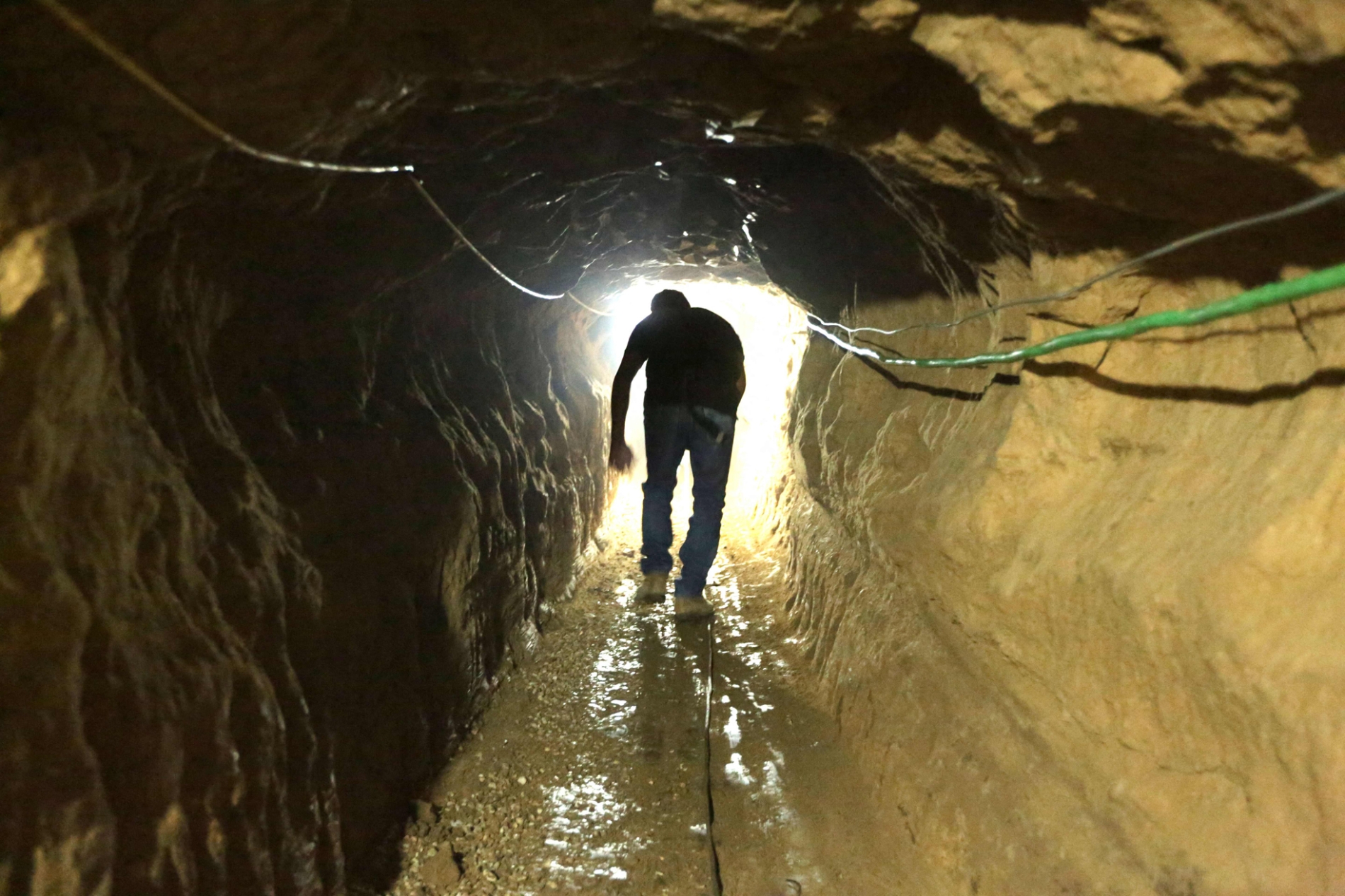
A Palestinian man walks from the Egyptian side of the border in a repaired, bombed smuggling tunnel linking the Gaza Strip to Egypt, in Rafah, on 29 November 2012.

Gaza's underground world thus appears as a terrain dense with knowledge, memory, resources, and means of survival, rather than a security void. This helps restore the tunnels to the historical and material conditions that produced them. They emerge as a mode of response to siege and the closure of the surface, rather than as a military phenomenon detached from life in Gaza. Still, the reader is left wondering about the purpose of Weizman's inclusion of water, earth, archaeology, and infrastructure. Are they there in their own right, or simply to demonstrate something else?

Section 3: Ungrounding

The third section turns to the period since October 2023, when the environment itself became a central element in the architecture of genocide. Weizman traces the displacement of Palestinians from the Strip's wetter north towards the more arid south, and from the fertile agricultural lands of the east towards the coastal dunes of the west, alongside the expansion of buffer zones and military roads.

He describes this as military desertification, a systematic destruction of the environmental and material conditions that enable people to remain in place. Within this framework, 'ungrounding' signifies the uprooting of a community, the effacement of the marks that bear witness to its presence, the ruin of life's conditions above and below ground, and the subsequent reconstitution of space under a new military order.

In Weizman's telling, Gaza became a site of construction as well as destruction. Bulldozers used the rubble of homes and overturned earth to build roads, embankments, hills, military bases, and detention sites. Rubble itself becomes an architectural unit, and destruction assumes the character of a design practice, producing a military geography from the material of the devastated city. This violence reaches beneath the surface as well, destroying water and sewage networks, graves, archaeological remains, and ecological systems, while contaminating the soil with explosive residues, metals, and chemicals.

Journalism of necessity

Weizman argues that genocide does not produce an architectural void. Rather, it replaces an architecture of life with an architecture of control. His analysis also raises questions about the author's own position and the methodology of Forensic Architecture. Writing from London, he relies on images, testimonies, and materials produced by Palestinians, which he then reorganises into maps, models, and bodies of evidence intended for courts and international platforms. He acknowledges this distance and embraces what he calls "engaged objectivity".

The material upon which the book relies reveals a significant transformation in the meaning of journalism and documentation during the war in Gaza. With foreign journalists banned, media offices destroyed, and Palestinian journalists killed, the recording of events could no longer depend on journalistic institutions alone. Locals filmed what they could. Paramedics and civil defence workers recorded events on their phones and released them across scattered platforms.

This could be called a journalism of necessity, a documentary practice imposed by the collapse of the professional infrastructure capable of preserving the event and conveying it to others. Such journalism may not always meet the standards of professional reporting, which benefits from a newsroom, an archive, means of verification, and clear information about when and where images are recorded. This form of necessary citizen journalism blurs boundaries, as roles overlap. Yet without these photos and videos, much of the reality of Gaza's genocide would survive only as private memory, vulnerable to deletion and disappearance.

 REUTERS/Alaa Al Sukhni
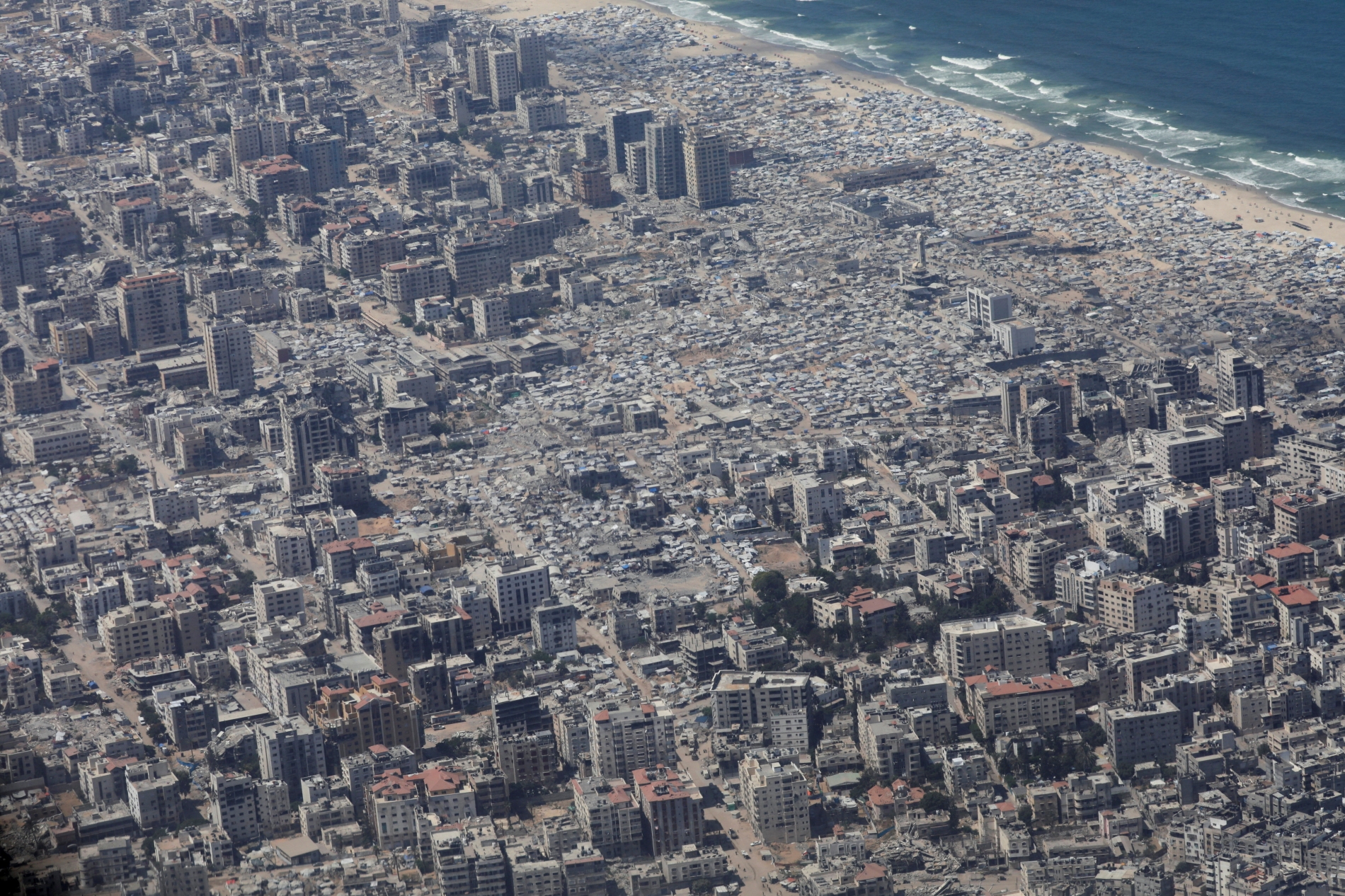
An aerial view of the Gaza Strip from a Jordanian military aircraft before the airdrop of humanitarian aid, on 17 August 2025.

The significance of Forensic Architecture lies in its reactivation of this dispersed archive. The agency gathered its materials, established their locations and chronology, and compared them with satellite imagery, testimony, and other sources. In this way, an image could become verifiable testimony and evidence of a wider pattern of violence. The process confers epistemic legitimacy upon a form of non-professional journalism.

If there was any criticism of this book, it is that Weizman could have lingered longer over this transformation itself, over the role played by this journalism of necessity in producing knowledge of the war and in preserving a Palestinian archive that might otherwise neither have survived nor acquired such evidentiary force without being gathered anew, interpreted, and transformed into evidence.

font change