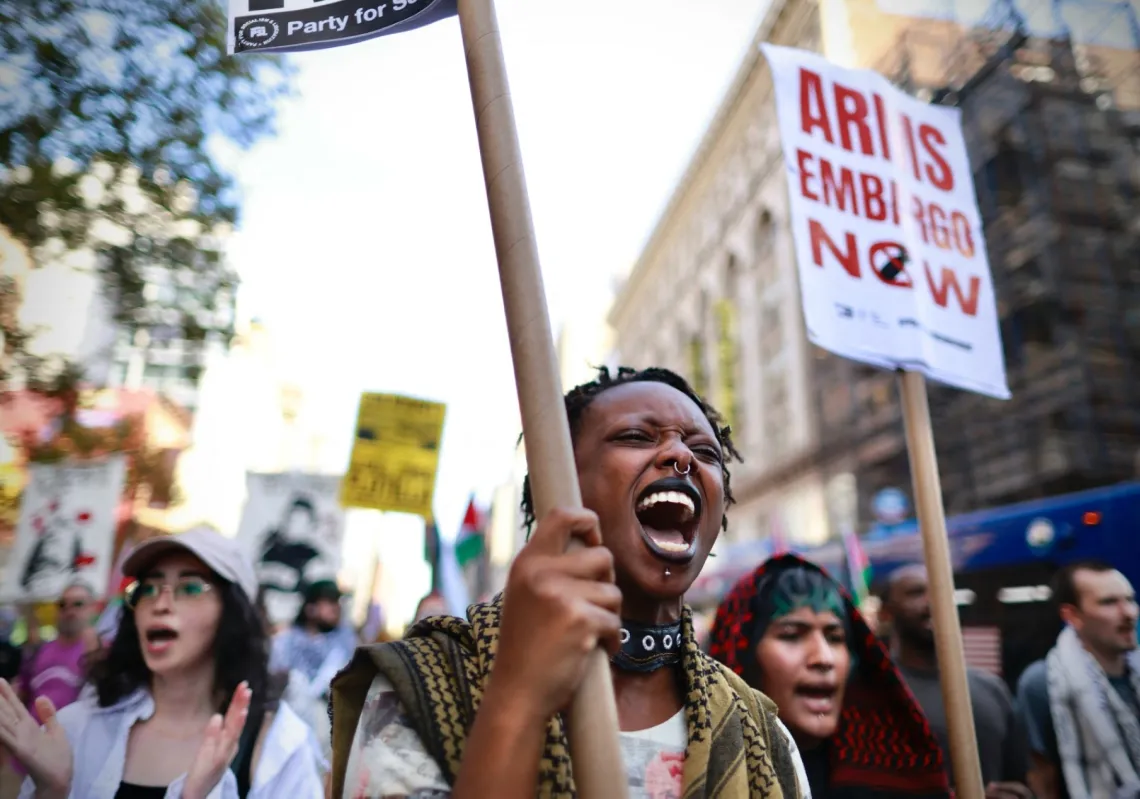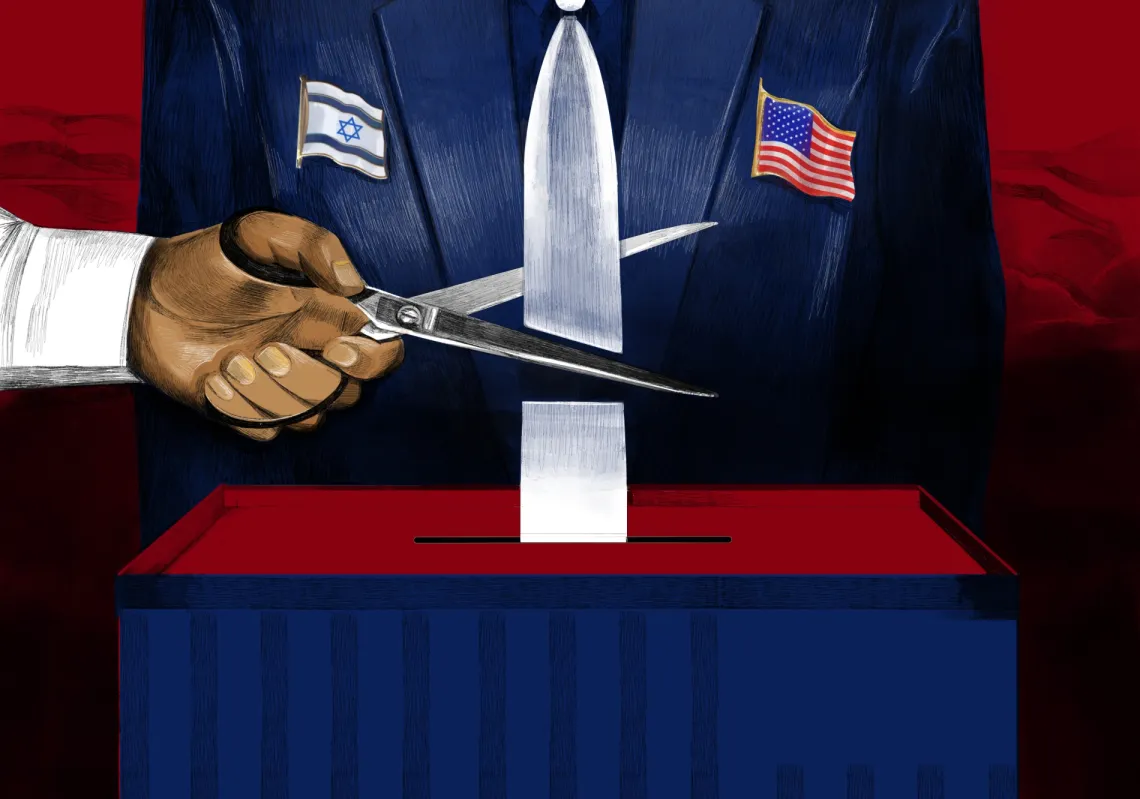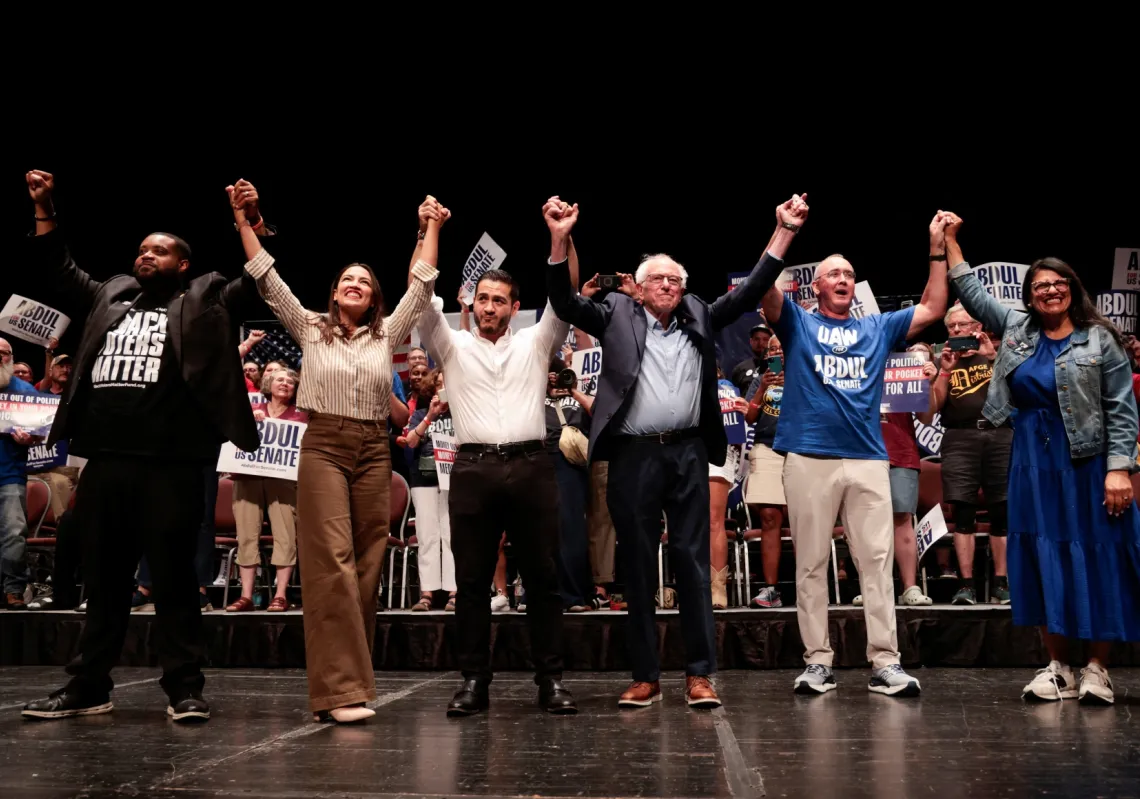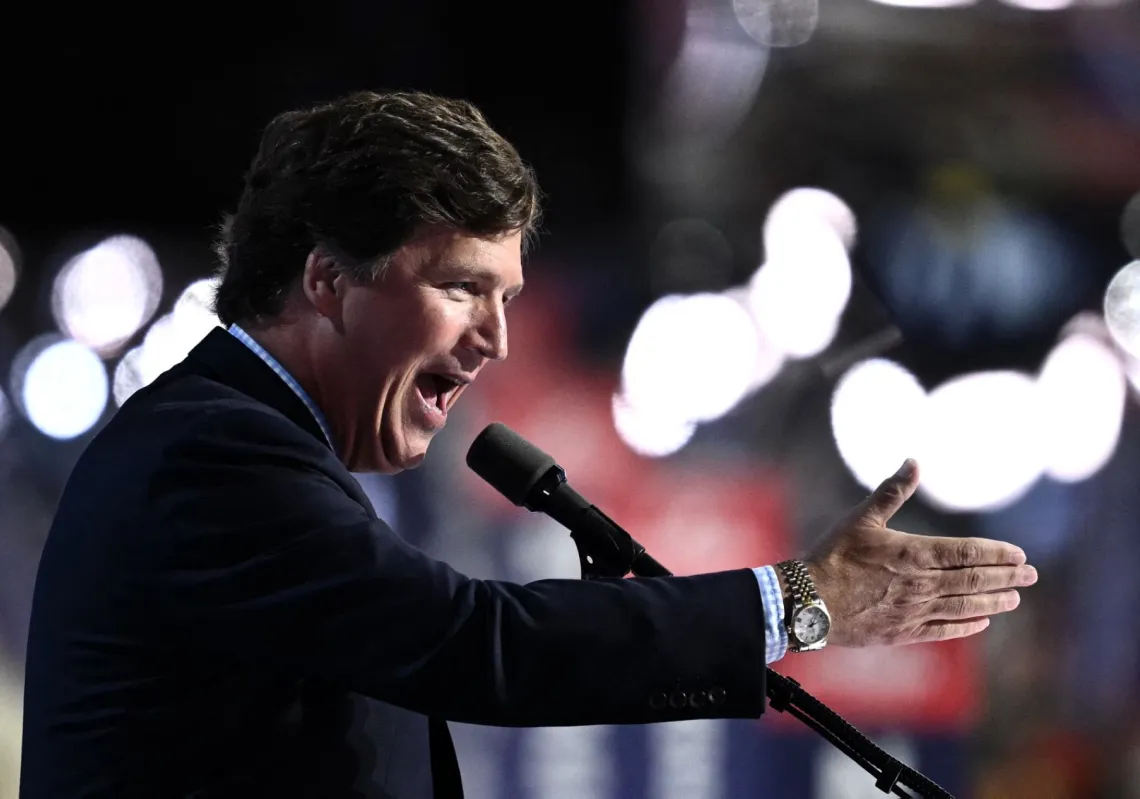

In more than 20 years of closely following US politics, foreign policy, and the issue of Palestinian liberation, there has always been one clear message: Washington's ironclad commitment to Israel is unconditional. A rare topic that enjoyed bipartisan unity, US support for Israel has been so entrenched in the American political psyche that it has long felt unquestionable. In fact, any equivocation on support for Israel was often a political liability for American politicians.
Whether Republican or Democrat, administration after administration has emphasised their near-unconditional support for Israel in words and deeds, through diplomatic protection and material assistance. That Palestine has finally entered mainstream US political discourse and criticism of Israel has become a political qualification in many races is a testament to the dramatic shift in public opinion and the depravity of Israel’s genocide in Gaza.
Though Israel’s illegal occupation of Palestinian land, blockade of Gaza, apartheid policies, and daily abuse of Palestinians is nothing new, it was not until Israel launched its most devastating assault on Gaza to date that US public opinion finally began to shift.
It should not have taken mass slaughter and apocalyptic destruction. But the daily stream of horror from Gaza is what finally broke through the overwhelming propaganda machine and media ecosystem that perpetuates the narrative of Israel’s “right to self-defence,” while castigating any form of resistance by occupied and oppressed Palestinians.
Americans were not only shocked by the disturbing images from Gaza—parents carrying the remains of their children in plastic bags, children amputated without anaesthetic, entire neighbourhoods flattened, and so much more—they were also seeing the blatant hypocrisy of Western governments and media playing out in real time. What they were being told directly contradicted what they were seeing with their own eyes.
The response of Israeli and American officials, from Prime Minister Netanyahu to Biden officials and recognised political figures like Hillary Clinton, was to dismiss any wrongdoing by Israel, deflect with often baseless accusations of antisemitism, and blame youth naivete or social media for the growing public outrage.
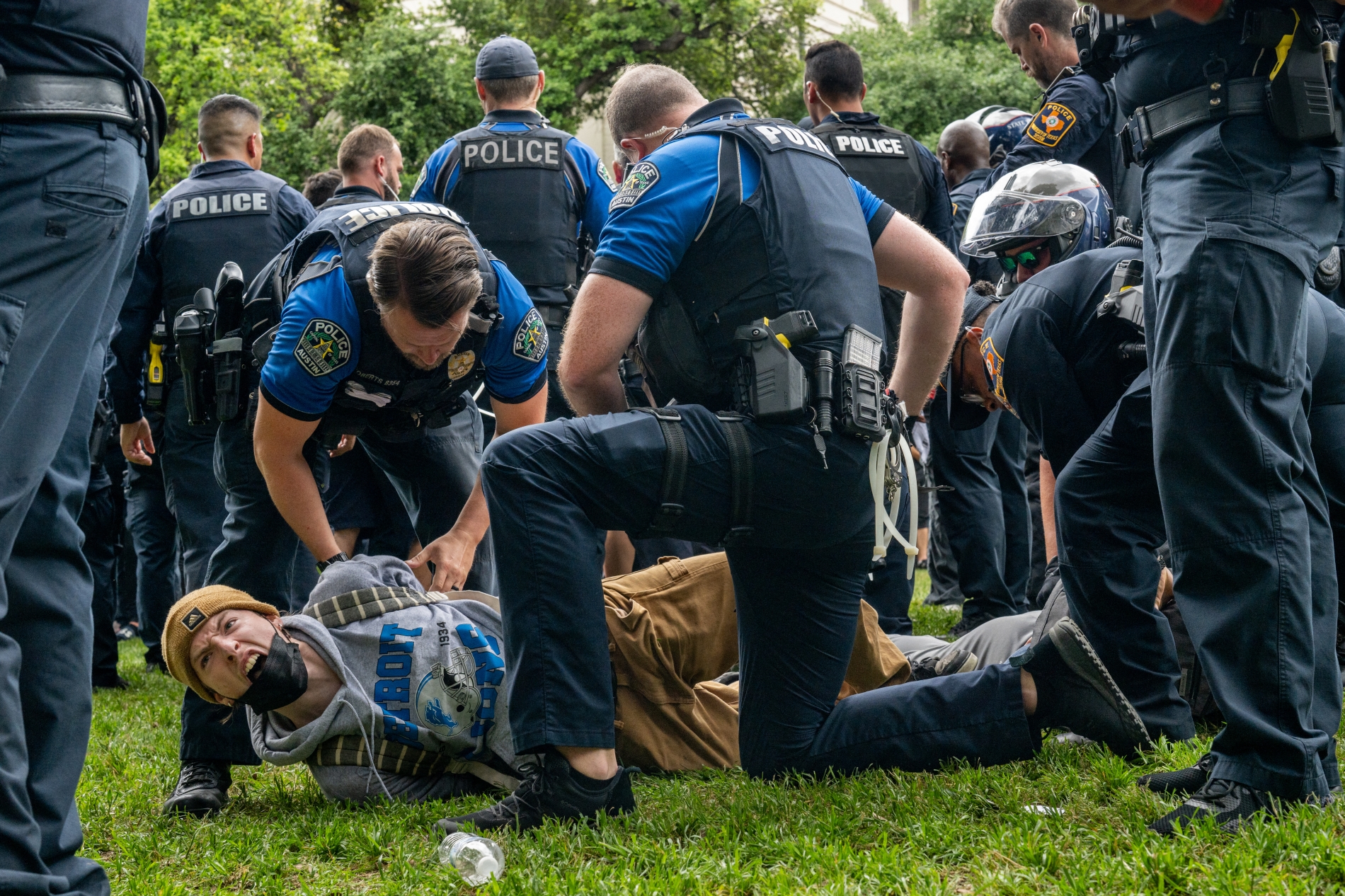
During the 2024 election, when campus protests spread across the country, President Biden ignored the content of their message and called for “order.” As election events were disrupted by protestors calling for an end to US support for Israel’s genocide, presidential candidate Kamala Harris callously shut them down and said she would do nothing different than Biden. After losing in 2024, the author of an election “autopsy report” confirmed what everyone already knew: Gaza hurt Harris.
This trend in public criticism of Israel and changing views on Palestine and Palestinians continued into 2025. By spring of 2025, positive feelings towards Israel had declined across the political spectrum, but particularly among Democrats. One poll from the Chicago Council on Global Affairs showed “the first time Democratic ratings of Israel have fallen below the 50-point midline in nearly five decades of Council polling.” A Brookings poll two months later exposed similar developments, with a plurality of voters believing Israel’s continued attacks were unjustified and 84% supporting an immediate ceasefire.
Read more: US public opinion finally sours on Israel: what next?