
The 17th-century Dutch philosopher Baruch Spinoza sought to inaugurate an intellectual transformation that would redefine the fundamental relations between people and the world, between reason and emotion, and between freedom and necessity.
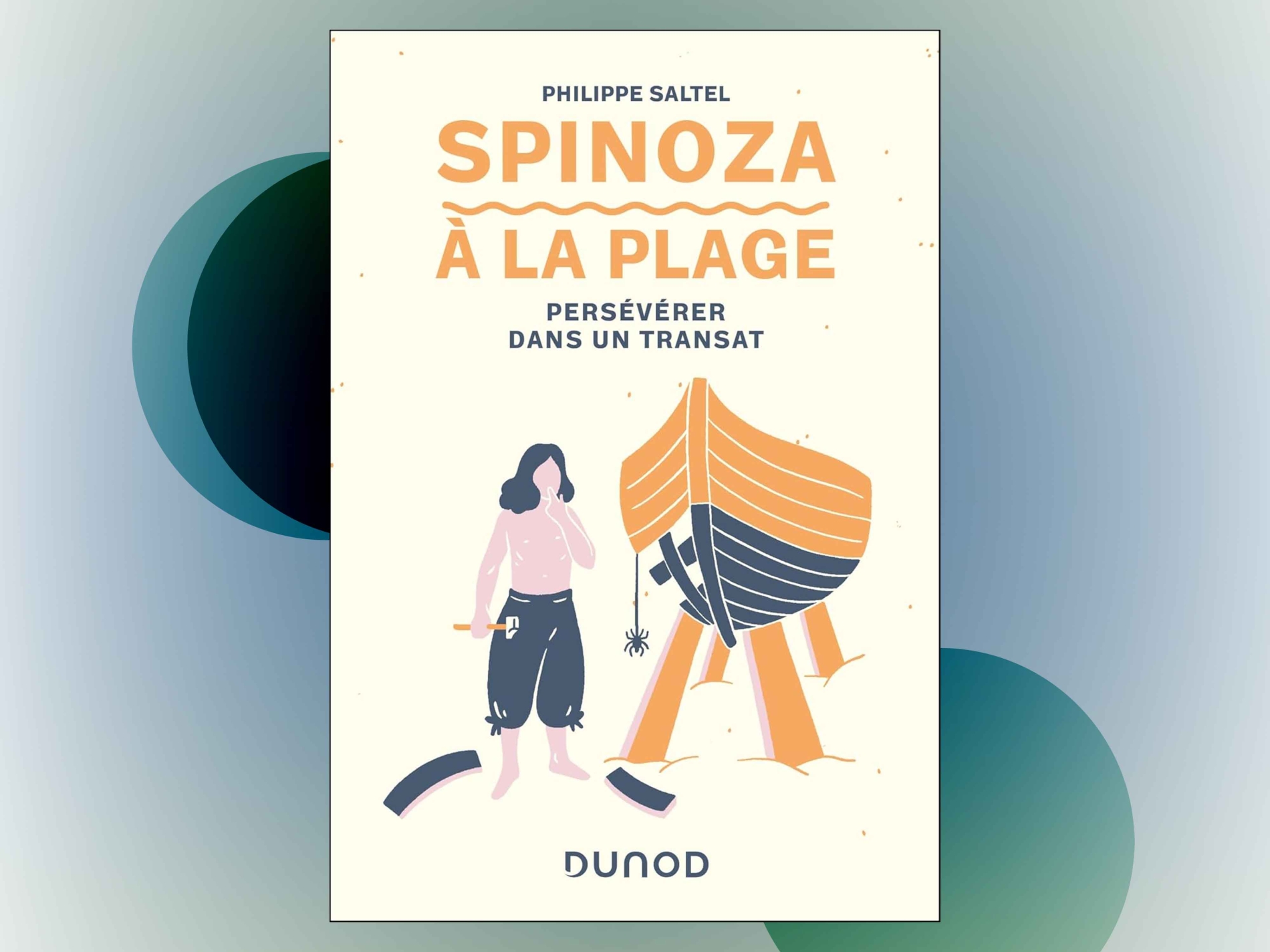
Yet for decades he was considered an austere and forbidding thinker who set out his ideas in a geometric idiom reminiscent of mathematics, making his writings seem like a fortified citadel accessible only to specialists. Enter Spinoza on the Beach (Dunod, 2026), a new book by the contemporary French philosopher Philippe Saltel.
Born in Toulouse in 1960, Saltel is a university professor specialising in the history of moral philosophy from the 17th to the 19th century. He is also a translator and a leading scholar of the Scottish philosopher David Hume and of ethical naturalism. His books include Hume: A Vocabulary (1999), Philosophers and Hatred (2001), A Detestable Passion: A Philosophical Analysis of Hatred (2007).
His most recent book, on Spinoza, achieves a delicate intellectual feat: it brings one of the most intricate philosophical systems in the history of thought within reach of the general reader while preserving its depth and resisting the temptation to reduce its central ideas to hollow formulas and popular simplification.
Interpretative reading
The book is part of a well-known French series that presents major philosophers in lucid prose, combining scholarly precision with the pleasures of intellectual discovery. Yet Saltel’s contribution reaches beyond the series’ pedagogical purpose. His interpretative approach makes Spinoza seem strikingly contemporary, as though his existential questions arise from the anxieties of our own age, marked by environmental crises, mounting psychological strain, and the relentless acceleration of daily life.
Saltel wisely distances himself from the familiar portrait of the philosopher secluded among metaphysical abstractions and concepts remote from lived experience. He presents Spinoza (1632–1677) as a man whose relatively brief life unfolded amid intense intellectual, religious, and worldly confrontations. Spinoza emerges as a thinker of unusual courage who paid dearly for his independence of mind.
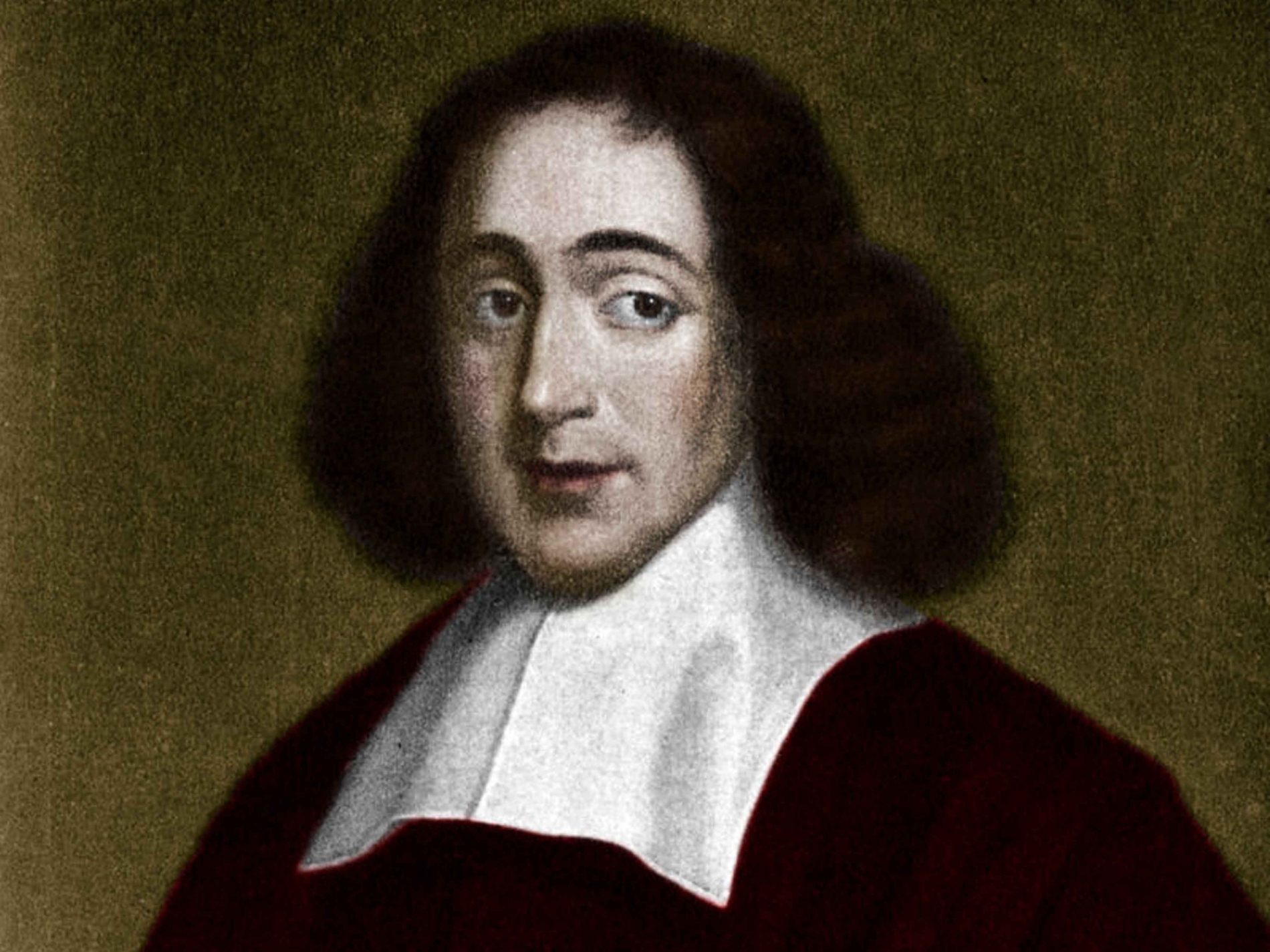
He was expelled from Amsterdam’s Jewish community and later declined prestigious academic appointments that might have secured him financial comfort and social standing. Instead, he chose to earn a modest living by grinding optical lenses, preserving the intellectual freedom he considered indispensable to thought and writing.
Saltel uses this biography as a vital entry point into Spinoza’s philosophical project. His life and manner of living emerge as the practical expression of a philosophy founded on intellectual autonomy, resistance to prejudice, and refusal to submit to the authority of superstition prevalent at the time. From this finely judged biographical introduction, the book turns to the concept that forms the backbone of Spinoza’s system: the striving to persevere in existence.
Known in philosophical literature as the ‘conatus,’ Saltel presents it as a key to understanding human behaviour. We all, by our very nature, strive to persist in existence, while human actions, desires and emotions may be understood as different expressions of this fundamental impulse to preserve and enlarge one’s power of being.
The details of life
Saltel keeps his distance from the didactic manner of textbook exposition, with its static definitions and abstract formulations. Instead, he invites the reader to recognise these concepts within the texture of ordinary life. The desire to succeed, the fear of failure, the search for love, the effort to sustain friendship, even inner conflict or struggles with others, all appear as varying expressions of the human endeavour to strengthen one’s capacity to exist and act. Philosophy becomes a living instrument for understanding the deeper architecture of human experience.
The book then moves beyond philosophical psychology and gradually leads the reader into the heart of Spinoza’s metaphysics, where inherited boundaries between humanity and nature begin to dissolve. Spinoza does not conceive of a transcendent God standing outside the world and governing it from beyond, like an operator controlling a mechanism. God and Nature are two names for one substance, one reality, captured in his resonant formula: ‘God, or Nature’ (Deus, sive Natura).
Saltel explains how this concept cannot be reduced to the crude atheism for which many of Spinoza’s religious contemporaries condemned him, nor does it amount to a revival of ancient animistic paganism. Rather, it is a rational vision of a universe governed throughout by necessary and unified laws. As humans, we occupy no privileged realm within this order. We are not, in Spinoza’s memorable phrase, “a dominion within a dominion” but an integral part of the whole.
This ontological dimension is among the most compelling sections of Saltel’s book because he draws out its ethical and existential implications, instead of leaving the theory suspended in abstraction. If we belong to nature and are governed by its laws, then understanding those laws liberates us from illusion and servitude.
Here, the intimate connection between knowledge and freedom in Spinoza’s philosophy comes fully into view. Freedom does not lie in an arbitrary ability to act on whatever desire happens to arise (an idea rooted in the illusion of absolute free will); it lies in understanding, as far as possible, the things that shape our thoughts, desires, and actions.
We imagine ourselves free because we are conscious of what we do but are unaware of the causes that move us. Saltel draws on perceptive examples from everyday life to show how emotions, unconscious habits, and social pressures influence us. Genuine liberation begins when we learn to decipher this web of causes.