The minority in Israel that no longer needs to win votes

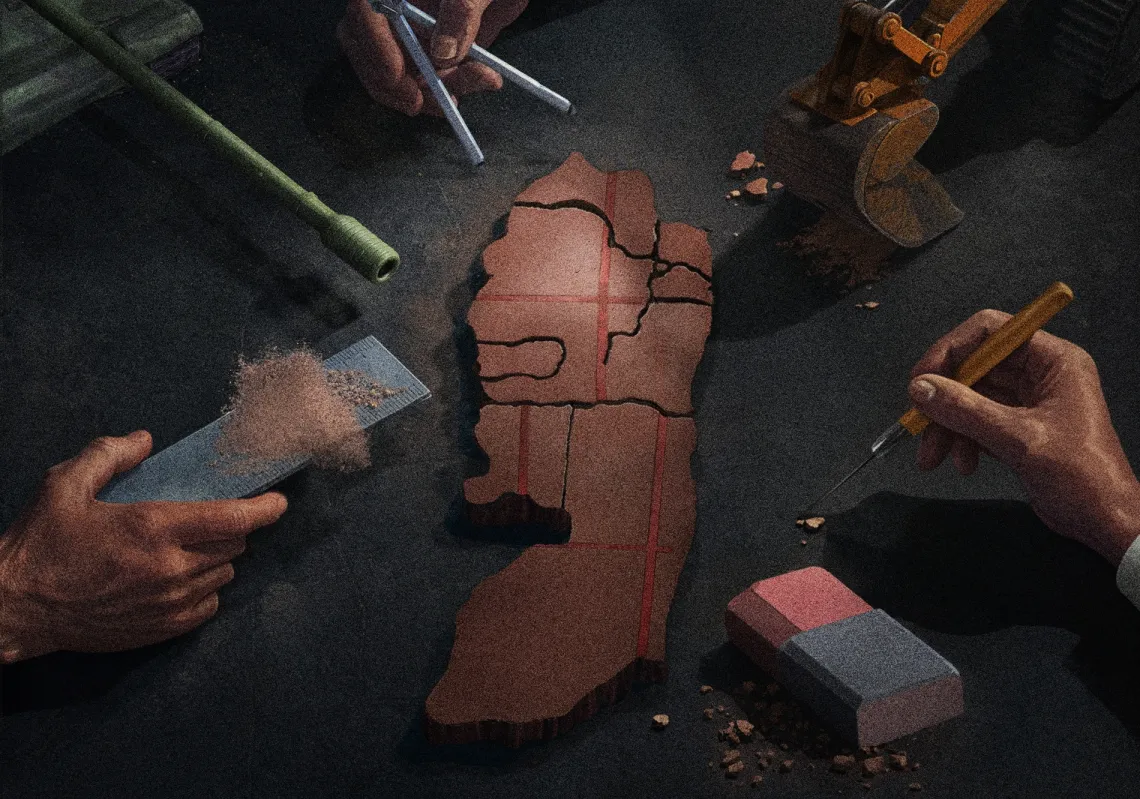
The settler movement's outsized influence in government allows it to put its far-right ideology into practice and facts on the ground

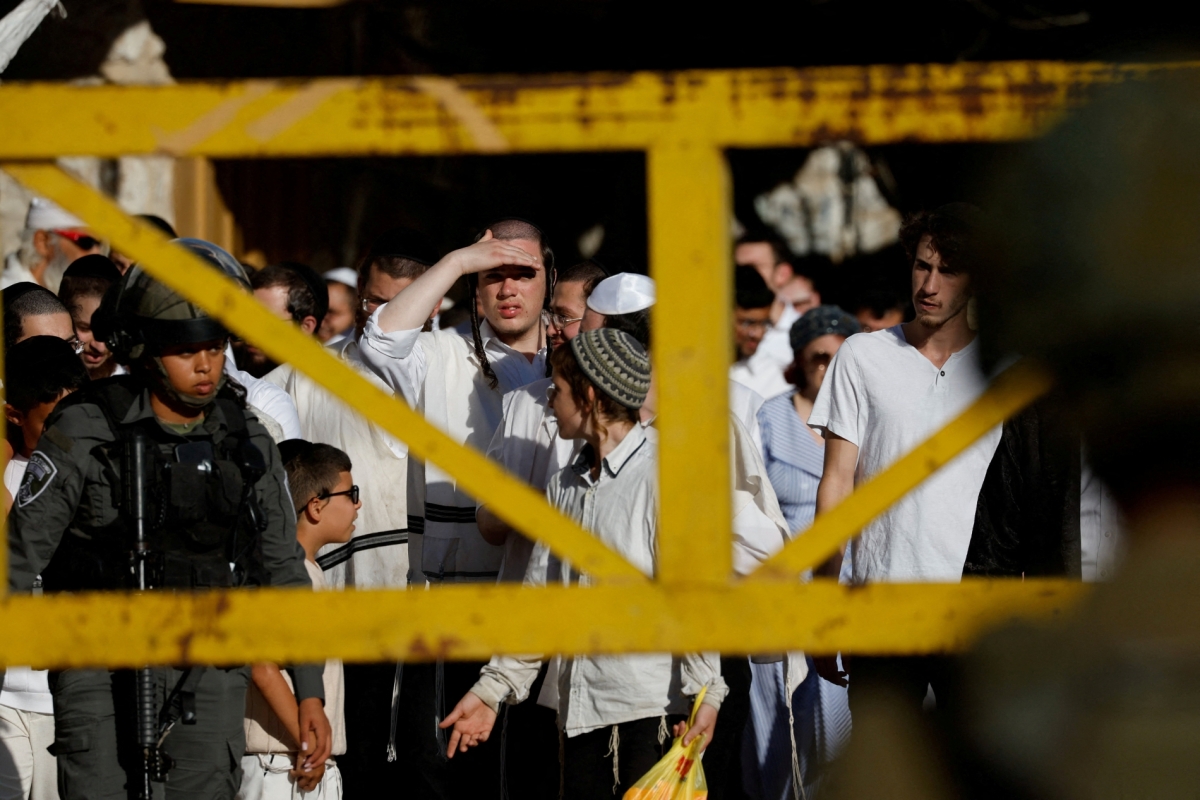
Israeli settlers take part in a weekly tour inside the city of Hebron in the occupied West Bank on 11 July 2026.
Reuters
Israeli settlers take part in a weekly tour inside the city of Hebron in the occupied West Bank on 11 July 2026.

The minority in Israel that no longer needs to win votes

When Rabbi Zvi Yehuda Kook died in 1982, he had never held political office, never led a party, and never sat in parliament. Yet few people shaped Israeli politics more.

He spent most of his life running a religious college in Jerusalem, teaching a small number of students an idea inherited from his father, which is that the founding of Israel was not merely a political event but a stage in a divine process, and that Jewish rule over the whole ‘land of Israel’ was a religious duty rather than a negotiable policy.

For decades, almost nobody outside that classroom was listening. Then Israel won the 1967 war, and his students walked out into a country that suddenly seemed to confirm everything they had been taught. They built the settlement movement. They became teachers themselves of the generations to become religious Zionists. The radical teachings outlived the teacher. Within a generation, it had reached the cabinet table.

Today, the finance minister, Bezalel Smotrich, holds authority not only over the budget but over civilian administration in the occupied West Bank—a portfolio that executes settlement ideology as ordinary bureaucracy. He does not argue that annexation is expedient—he argues it is owed by a biblical right.

The heritage minister, Amichai Eliyahu, comes from rabbinic aristocracy. His grandfather was a former Sephardic chief rabbi—a major religious authority who publicly opposed the 2005 Gaza withdrawal. His father is a serving municipal chief rabbi who has drawn repeated censure for racist statements about Palestinian citizens of Israel.

What Eliyahu inherited is not a specific instruction but a standing: the assumption that religious authority has something binding to say about where the state may and may not withdraw.

This is what makes the present moment different. The radical position is no longer shouted from a hilltop caravan in the occupied West Bank. It is drafted, funded and executed by the incumbent government led by Benjamin Netanyahu. Religious Zionism won enough seats in 2022 that Netanyahu had no coalition without it.
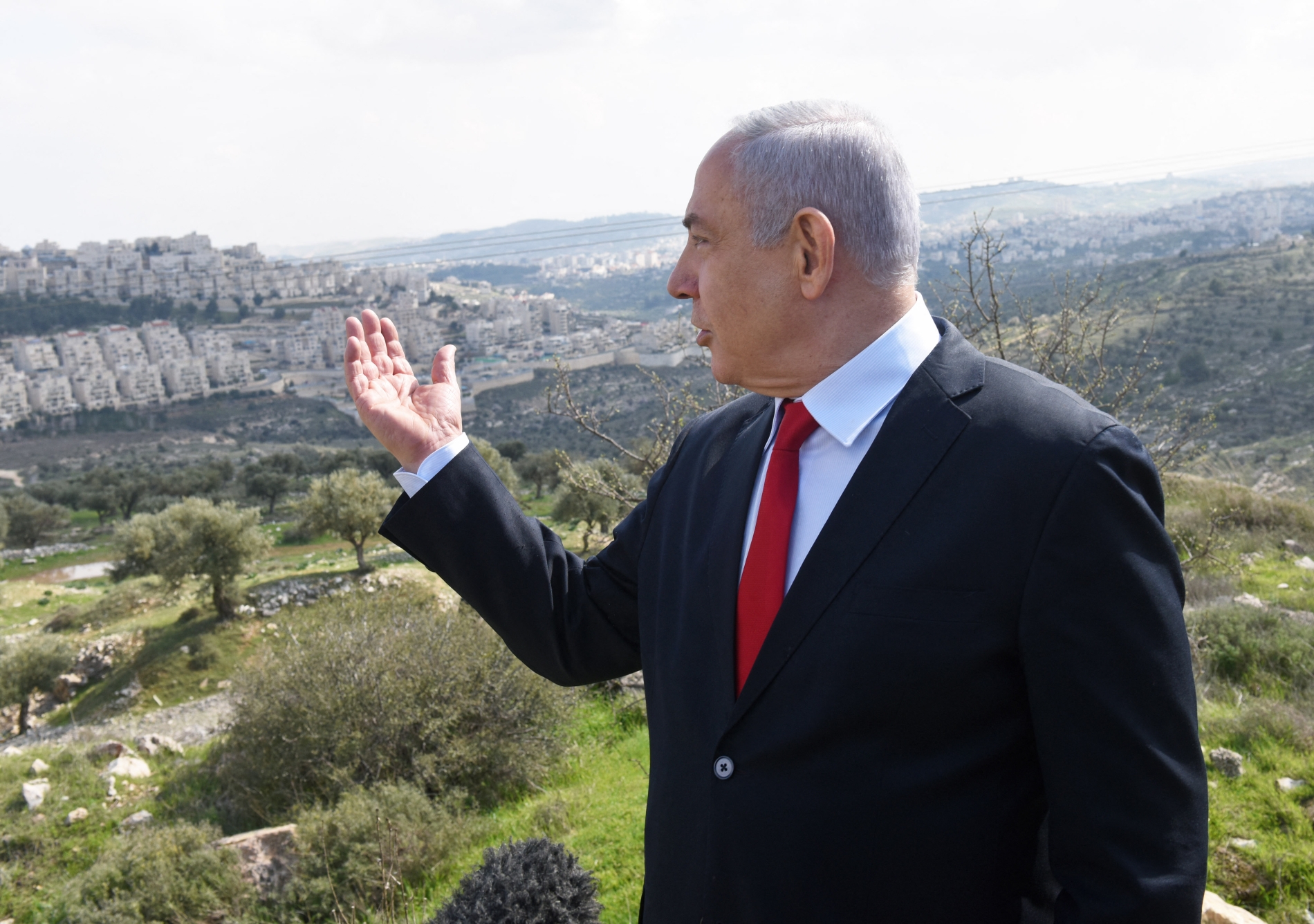
Israeli Prime Minister Benjamin Netanyahu stands at an overview of the Israeli settlement of Har Homa (background) on 20 February 2020.

If you believe compromise is a sin, there is no argument that can change your mind. When people who think that way run ministries, the usual checks in a democracy—a court ruling, an election result, a cabinet vote—stop working as checks. They become obstacles.

Permeating force

Religious Zionism no longer needs the ministries to hold its ground. Its assumptions have permeated into the wider culture—into what schools teach, what soldiers are told they are defending, and what ordinary Israelis feel able to say out loud. The shift is subtle but decisive: positions once identifiably "religious" are now simply "patriotic", and disagreeing with them is read less as dissent than disloyalty.

Eliezer Don-Yehiya, the late professor of political studies at Bar-Ilan University and one of the foremost scholars of religion and politics in Israel, left behind important academic literature about how a small group of religious Zionists came to speak politically for a much larger one.

A minority holding the budget, the police, the courtroom and the vocabulary of a country is not, in any meaningful sense, on the margins.

Within religious Zionism, he argued, there emerged what he called the "nationalist Haredim" — the national ultra-Orthodox, stricter in observance and harder in politics than the community around them. They "are a minority group in the religious Zionist community," he wrote, "but they gained an influential position in this community through their educational work." That description has been overtaken over the past three years, at least.

Consider what a minority now controls. The finance ministry sets the budget, and the money moves—to settlements, to religious-Zionist schools, to the ideological networks that sustain both. The police ministry is held by the same camp represented by his fellow Itamar Ben Gvir. Meanwhile, the officer corps of the army is being steadily reshaped with the radical ideology.

AFP
Israel's National Security Minister Itamar Ben-Gvir (C) gives M5 automatic assault rifles to settlers in Ashkelon, Israel.

"Over 40 years ago, the settler movement aimed for a state takeover to pursue annexation, infiltrating the political sphere and gaining control of various ministries, including education, but they struggled to establish themselves within the Israeli army, as settlers often live in isolation and don't typically rise to officer rank," Nadav Weiman, the Executive Director of Breaking the Silence, an Israeli organisation of ex-soldiers who now speak out against Israel's military conduct, told me in an interview.

"To address this, they initiated pre-military academies that train young Israelis for leadership roles in the military. Currently, there are about 150 of these academies, most of which are right-leaning. Reports suggest that over 50% of new combat officers in the Israeli army come from this background, despite settlers representing less than 10% of the Israeli population. This trend is evident among high-ranking officers as well. Many in key positions are settlers, indicating a significant shift within the army towards right-wing influence," he said.

On the Supreme Court, a judge from within the movement sits as vice president. These are not positions of influence over policy; they are the machinery of the state itself.

Hardly on the margins

The numbers may still say minority in Israeli society. But a minority holding the budget, the police, the courtroom and the vocabulary of a country is not, in any meaningful sense, on the margins.

There is a psychology as to why this kind of politics cannot be negotiated with, and social psychologist Philip Tetlock has described it precisely. In Trends in Cognitive Sciences, Tetlock defines sacred values as those a community treats as "possessing transcendental significance that precludes comparisons, trade-offs, or indeed any mingling with secular values".

Land held on that basis is not expensive to trade away; it is unthinkable to trade away. And as he notes, "'don't do x because I say so' has less impact than 'don't do x because God says so'".

AFP
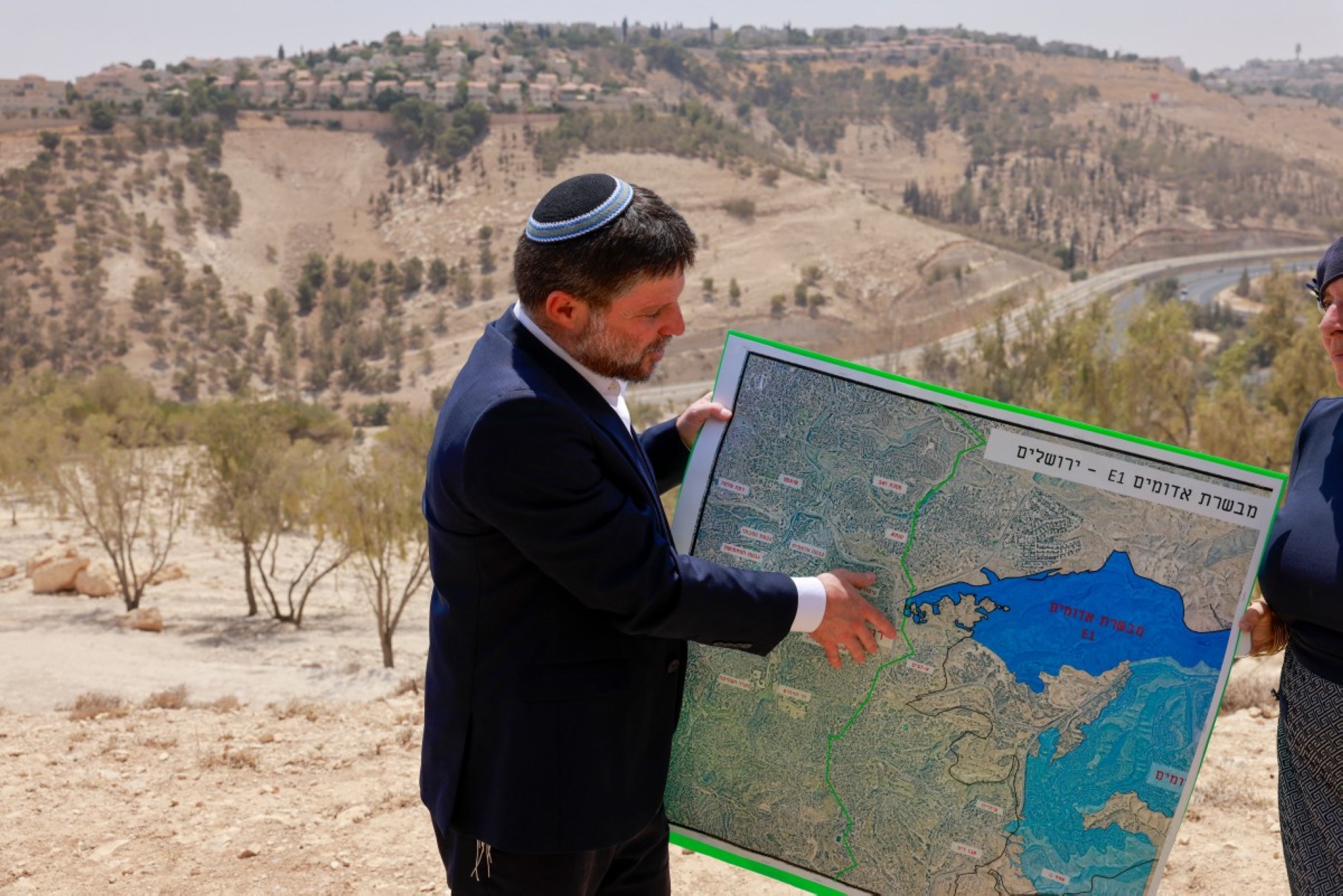
Far-right Israeli Finance Minister Bezalel Smotrich holds a map of an area near the Ma'ale Adumim settlement—a land corridor known as E1, located outside Jerusalem in the occupied West Bank.

Recent polls in Israel show Smotrich's list struggling at or below the 3.25% threshold, punished mainly by its own base for propping up Haredi draft exemptions.

Politically, the religious Zionism movement is going backwards, but on every other measure it is not. Support for the ideology among national-religious Israelis has hardened since the start of the Gaza war. Which is why the polling misleads. Elections change ministers. They do not change who staffs the bureaucracy, funds the settlements or writes the syllabus.

A movement that regards the state as a stage in a divine process has become the most patient and procedural actor in Israeli politics. Its people remain where the decisions are made. Messianism expressed as administration.

font change

Related Articles