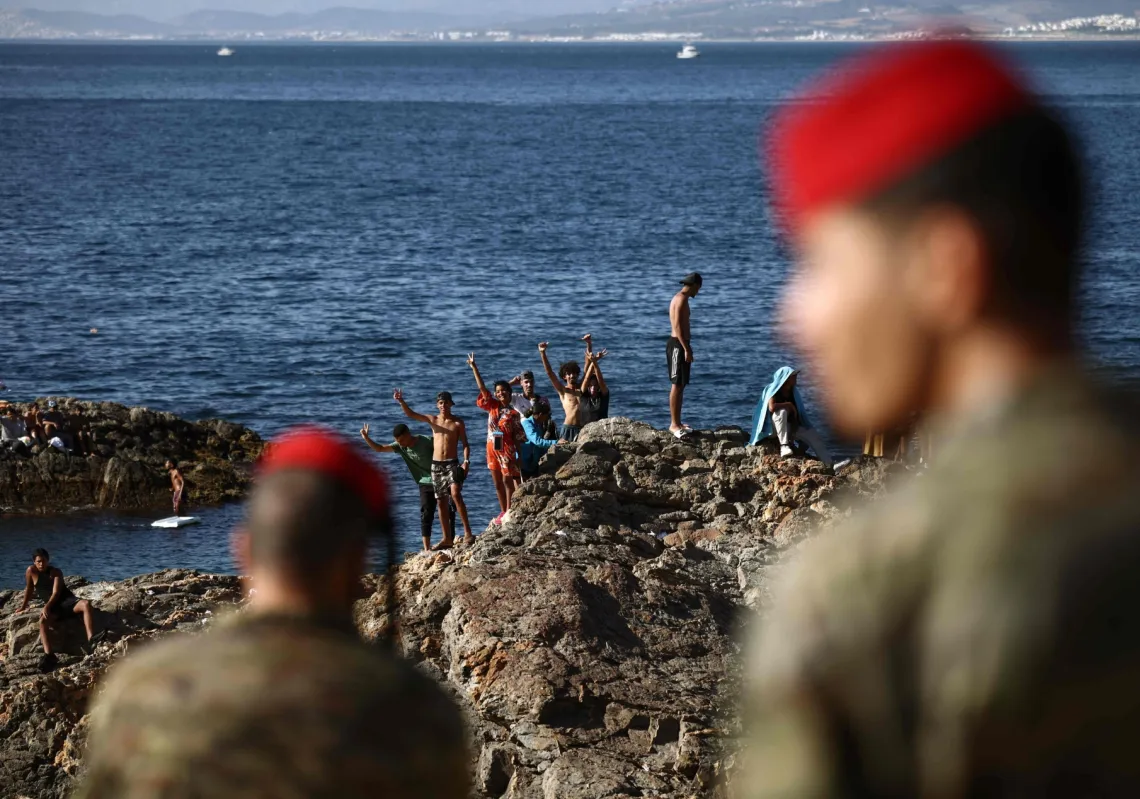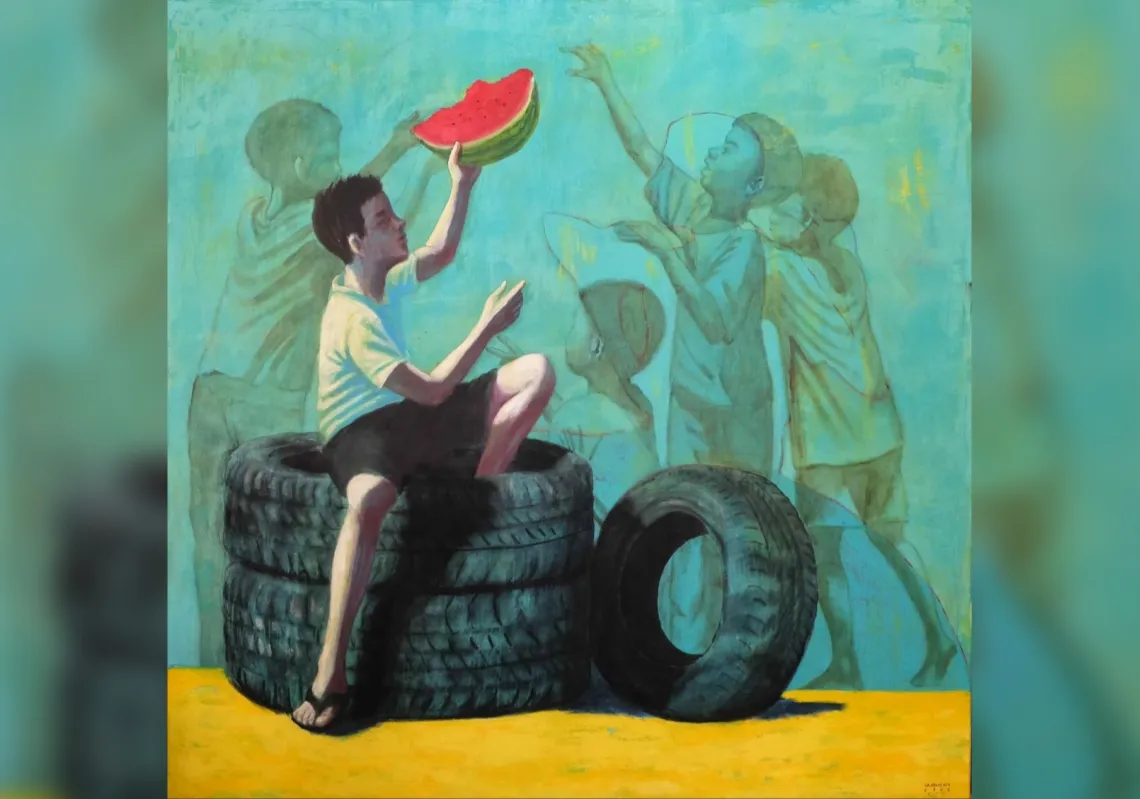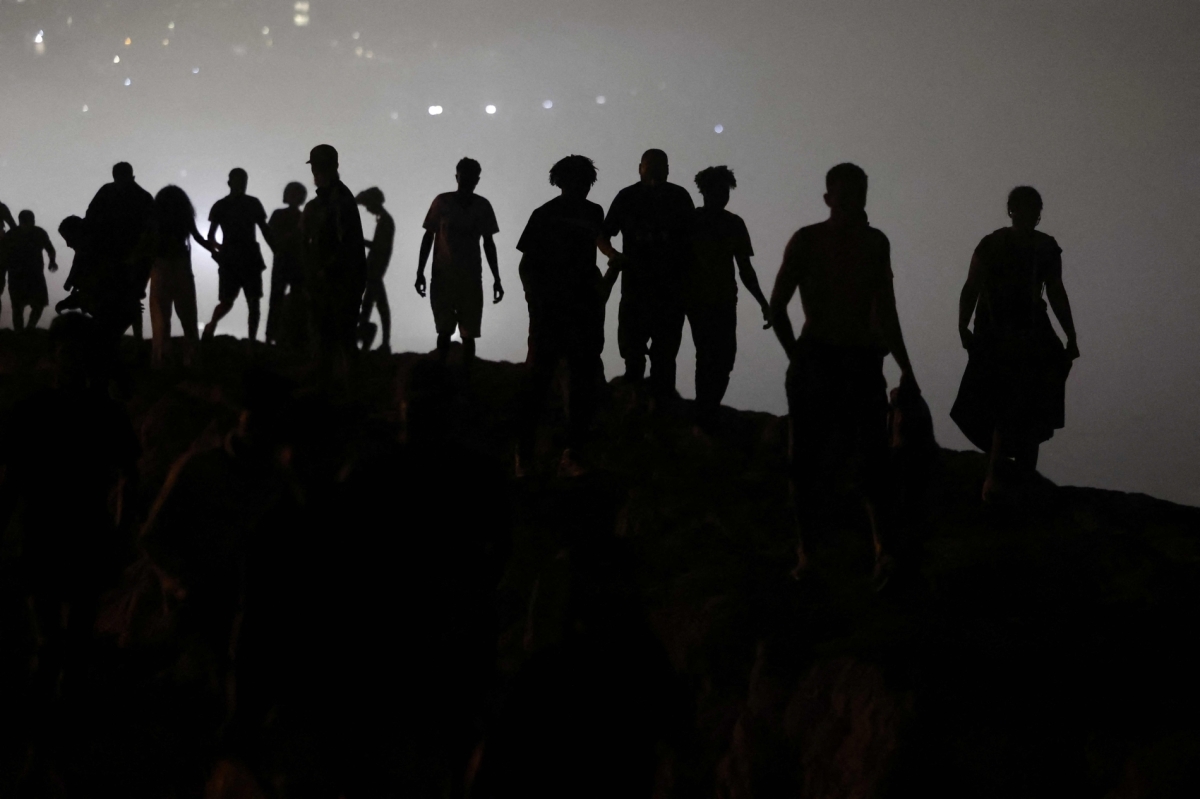

As hundreds of thousands of people around the world queued outside cinemas to watch the story of the wandering king Odysseus and his epic voyage home to his kingdom and family, thousands of young people, three millennia after The Odyssey and in a similar maritime setting, were leaving everything behind and swimming towards another imagined "homeland". It existed only in their minds, perhaps also on their phone screens, where it appeared as the promised land of their dreams.
A vast distance separates the longing to return home, even renouncing immortality for that purpose, from being compelled to abandon one’s homeland. That distance raises the question of identity and belonging in our age. Yet the two experiences share one element: the price we pay for one choice or the other. In both cases, the journey is fraught with danger. There are treacherous temptations, the possibility of annihilation and, at the end, the prospect of reaching deliverance or failing to reach it.
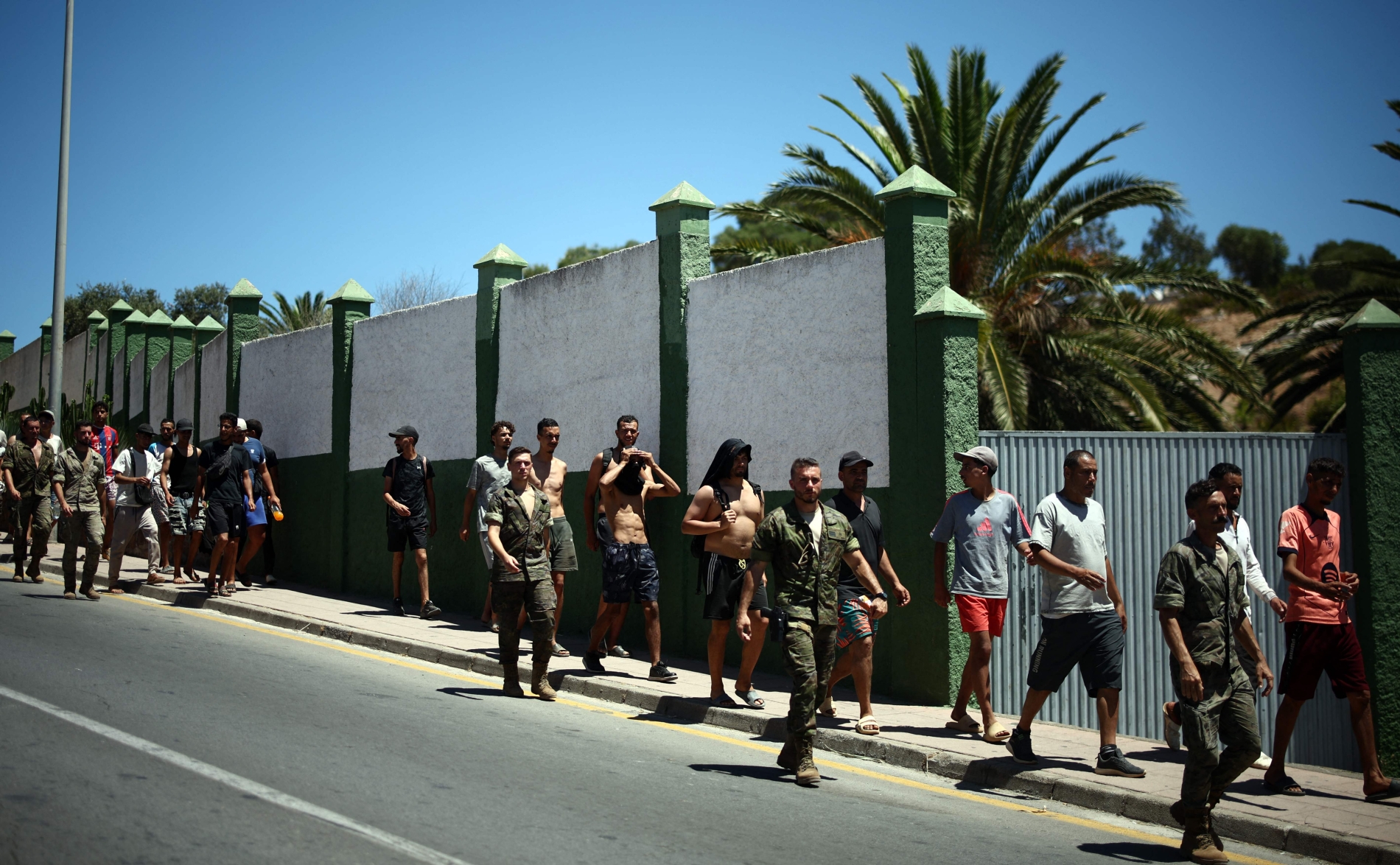
The world did not need a young female footballer to be among the 70 victims reported by the Spanish authorities, or the 11 cited by the Moroccan authorities, of the mass crossing disaster from Morocco to Spain, which some described as an incursion or invasion, to grasp the scale of the tragedy.
Everyone came to know the young woman’s name, Faten Al-Azizi, yet she remained unknown, like the other victims. We are unlikely to learn soon, and may never learn, precisely how the tragedy unfolded or at whom the finger of blame should be pointed. In the political game so clearly displayed during the Ceuta crisis, accusations are easily made. Indeed, accusation itself becomes the essence of the affair.
Arab, Spanish and Western social media platforms overflowed with commentary. Some of it was plainly part of a digital campaign seeking to steer global "public opinion", though "public emotion" might be the more accurate term, in one direction or another. Other posts offered fragmentary glimpses of moments from the catastrophe. A third group showed survivors who had returned to where they had come from, recounting hunger, thirst and the deception to which they had been subjected, without knowing who had devised it or carried it out.
At first, it was a matter of numbers: 40,000, 50,000, 60,000, 70,000 migrants. Thousands of people lay across the pavements and squares of a small city with a population of no more than 80,000—a place that fate had made a strategic point of global importance, where questions of crossings, borders, homelands, colonialism and migration converge.
The exploitation of tragedy
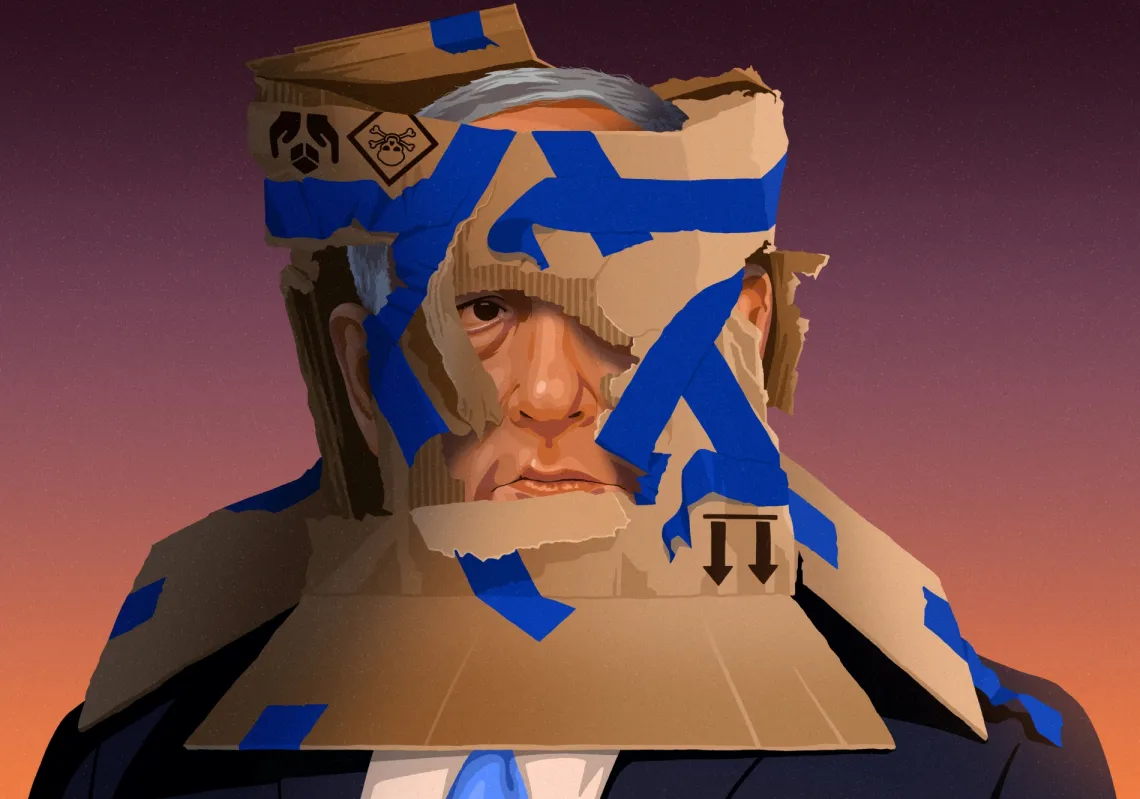
Israel’s far-right minister Itamar Ben-Gvir saw in the spectacle an opportunity to gloat over Spain, which had become an enemy for all the familiar reasons. US President Donald Trump found in it an opportunity for political exploitation and electoral gain, as well as a means of striking at his bitter opponent, the Democratic Party. He claimed that the sight of Moroccans "invading" Spain would be nothing compared to what the US border would witness if the Democrats were in power.
Italy’s Giorgia Meloni seized the moment to attack Spain’s migration policies, which had embarrassed and challenged the policies of Europe’s far right. Others used the event to criticise Morocco’s rulers, accusing them of driving people to despair and sacrificing them as instruments of political blackmail.
Whatever the case, none of this alters the truth of what happened. In the end, dozens of people died within hours while trying to move from one place to another—a tragedy that raises a sombre question for humanity as a whole. It is the same question posed by the open wars stretching from Sudan to Palestine, Lebanon, Ukraine and Iran.
What unites all these places is the world's utter inability to protect civilians and the innocent. Every slogan embraced by humanity, especially by the West, after the Second World War, and every organisation, institution, law and conference crowded with promises of development, human rights, equality, poverty reduction and good governance, now appears utterly incapable of confronting any major crisis facing the world, foremost among them the migration crisis.
The prevailing logic in this global landscape, which becomes more deeply entrenched with every passing day and every new crisis, is the law of the jungle. What was once just a hypothetical warning has transformed into a lived reality.
The world has fallen into two camps: the strong and the weak. The first reaps the real benefits. The second pays the real price. The strong are easy to identify. They no longer feel the need to wear a mask. The weak are generally anyone who lacks a robust protection network.
Amnesia and short attention spans
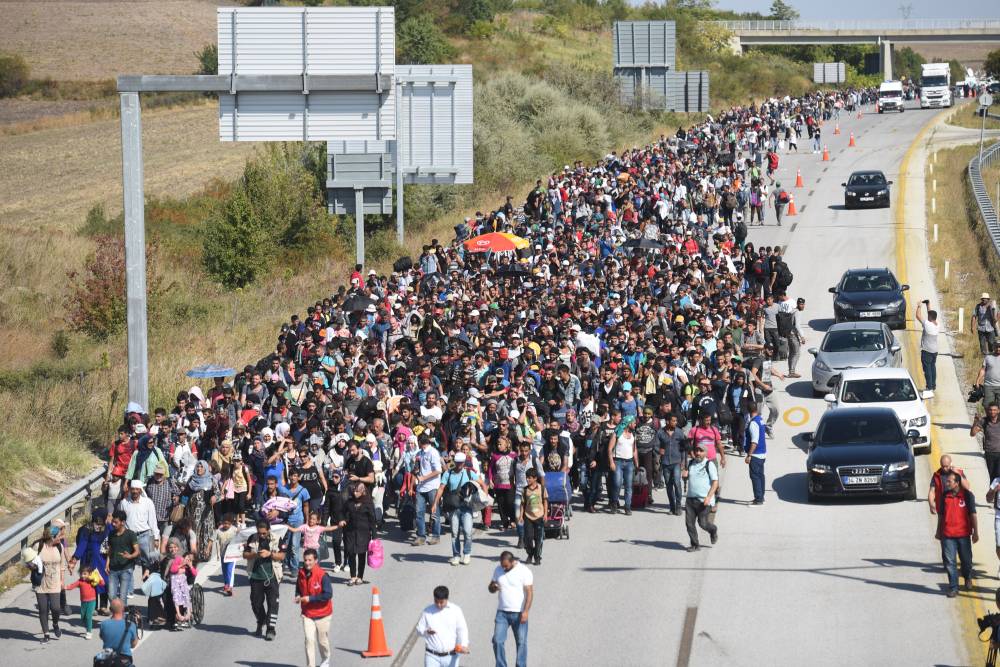
When so many commentators describe the latest wave of migration from Morocco to Ceuta as "unprecedented", it's as if they all have amnesia. It wasn't that long ago that Europe was inundated by Syrians fleeing war in their country—an epic whose chapters have yet to be told in full, but whose undeniable outcome was millions of refugees scattered across several countries and tens of thousands of victims.
We forgot that story, along with every other crime and injustice that has befallen the weak. In Gaza, the genocide hasn't stopped, but the world has seemingly moved on. In the West Bank, crimes of Israeli occupation and settlement expansion disappear from arenas of debate that once dominated news programmes.
People also seem to have lost interest in Trump's war on Iran, although it hasn't quite ended yet. From the holocaust committed against Syrians, to the current one being waged against the Palestinian and Lebanese people, and the massacres being committed in Sudan, extreme violence has been normalised. The effect is that cries against the "cheapness" of human life in response to the events in Ceuta practically fall on deaf ears. The bar for human suffering has been set so high that anything short of a genocide barely registers on our collective radars. In this post-genocide world, the crimes that moved the world only a few decades ago have lost their effect on people today.
Fifteen years ago, when a Tunisian vendor set himself on fire to highlight the desperate economic conditions in his country, it sparked revolutions across the Arab world. If something similar happened today, it would barely summon a yawn.