More casual fling than committed friends: Russia and Hamas

Moscow is supportive of the Palestinian cause, but a key Kremlin figure’s removal in July 2025 put the relationship back. A year later, when contact resumed, it was too late to effect change

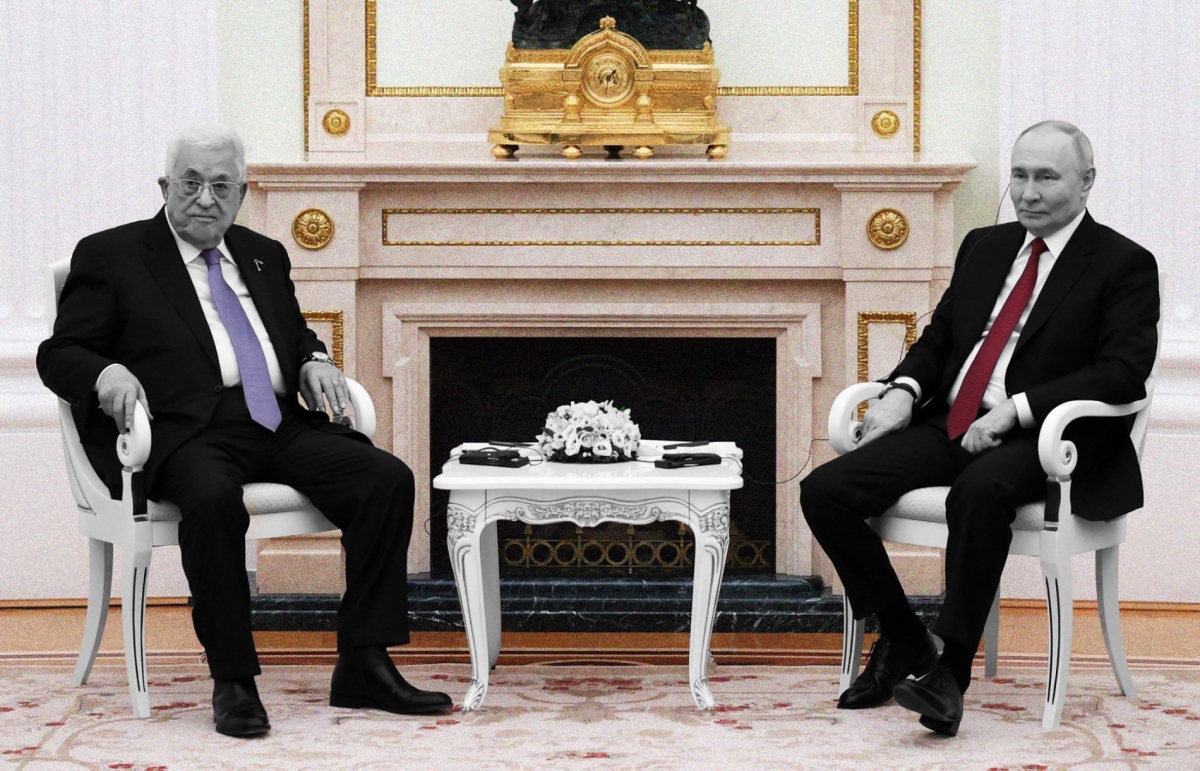
Palestinian Authority President Mahmoud Abbas (L) meets Russian President Vladimir Putin in Moscow on 22 January 2026.
AFP
Palestinian Authority President Mahmoud Abbas (L) meets Russian President Vladimir Putin in Moscow on 22 January 2026.

More casual fling than committed friends: Russia and Hamas

With Hamas having finally decided to disarm in Gaza, it can now be revealed why Russia stepped back from its support for the Palestinian group, as new details emerge about the Kremlin’s thinking. Speaking anonymously, diplomatic sources say several interrelated factors contributed to Moscow’s waning interest, including its conclusion that pressure from Israel and the US on Iran, combined with Israeli military operations in Gaza, had so weakened and fragmented Hamas that it was no longer worth betting on.

Due to an internal scandal, Mikhail Bogdanov, one of Russia’s most authoritative Arabists, was dismissed from his position as deputy minister of foreign affairs and special presidential envoy for the Middle East on 9 July 2025. During his tenure, Moscow maintained contact with Hamas, including over the release of Russian hostages held in Gaza, and consulted the group ahead of a high-level conference on Palestine at the United Nations in New York in September 2025.

According to those close to events, Russia’s contacts with Hamas resumed only in June of this year, on the initiative of Bogdanov’s replacement, Georgy Borisenko. On 10 June 2026, Musa Abu Marzouk, deputy chairman of the Hamas Political Bureau, arrived in Moscow at the invitation of the foreign ministry. Following the talks, Marzouk answered questions from Russian media, stating that Hamas had asked Moscow to again initiate a meeting of key Palestinian factions to “facilitate reconciliation”. According to a source at the foreign ministry, the initiative in fact came from Moscow.

Dirty tricks?

Anonymous ‘briefings’ by ‘sources’ have appeared on Telegram in recent weeks that have left diplomats confused. One ‘leak’ said ministry officials were angered by Abu Marzouk, who had sought a meeting for eight months offering new information, only to arrive with none. Another claim was that he asked Moscow to act as a ‘guarantor’ of Hamas during the disarmament period. Yet those who spoke anonymously to Al Majalla said this description bore little resemblance to reality.

“Of course, there are those in the ministry who propose to completely cut off contact with Hamas due to the nature of the movement, but this is more likely a targeted information leak in the interests of Israel, since it is obvious that this post has not gone unnoticed by the Palestinian side,” they explained.
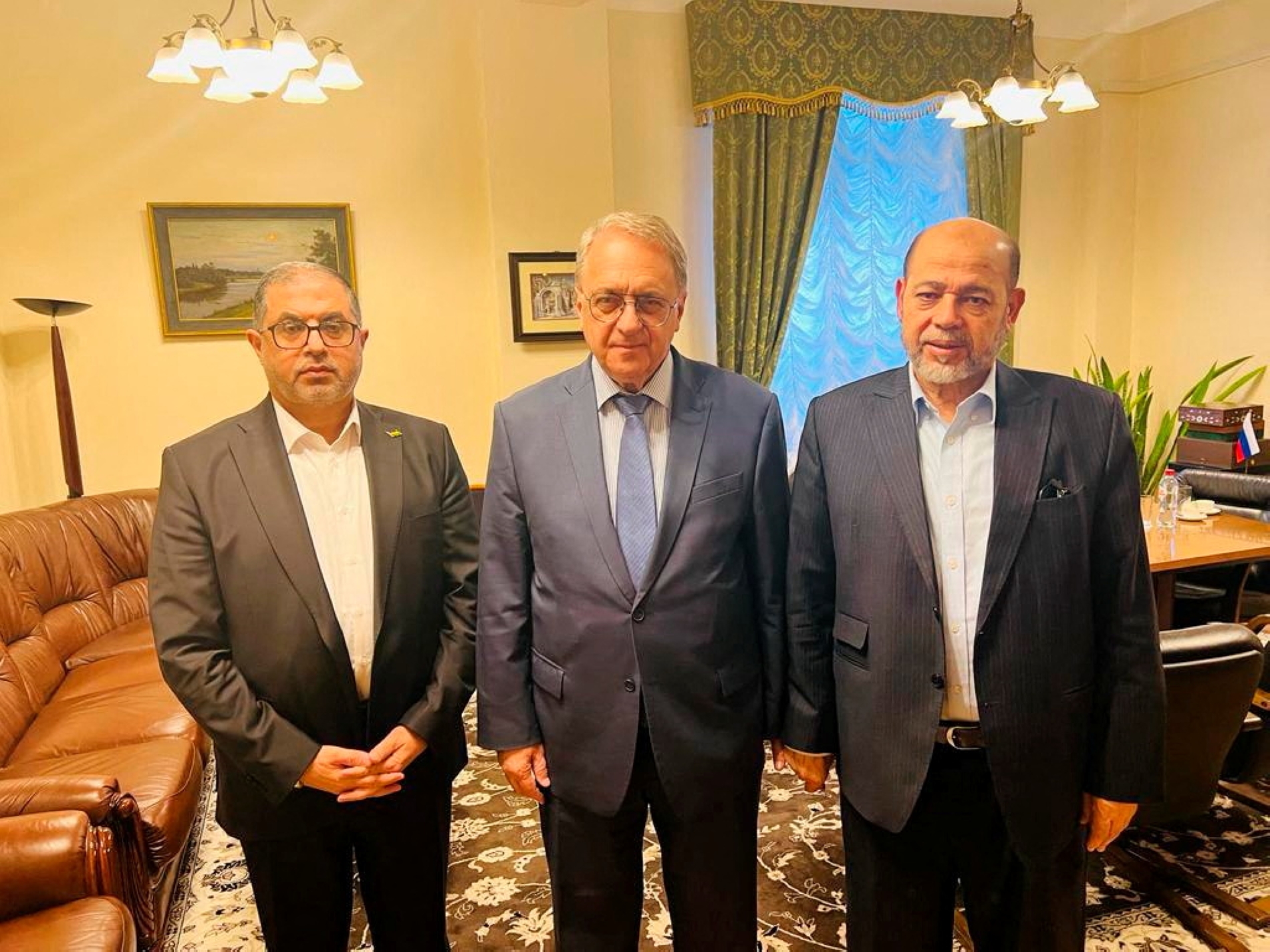
On 10 June 2026, Musa Abu Marzouk, deputy chairman of the Hamas Political Bureau, arrived in Moscow at the invitation of the foreign ministry

Another person familiar with discussions said such a 'leak' may have come from the Palestinian side, noting that Palestinian Authority President Mahmoud Abbas was still engaged with Russia and had visited Moscow in January 2026 to meet Russian President Vladimir Putin. "Abbas often pushes initiatives that benefit Israel," Al Majalla was told. "But naturally, Moscow cannot allow even a hint of that officially." They noted that, during a round of inter-Palestinian dialogue in Moscow, Abbas had introduced last-minute amendments to the agreed text without consulting anyone.

No real leverage

On 28 July 2026, Deputy Permanent Representative of Russia to the UN Anna Evstigneeva said "the Donald Trump plan" was only a plan on paper, given that the Peace Council was not operational and the International Stabilisation Force (ISF) had yet to be established. "In essence, the US leadership's peacekeeping efforts on the Palestinian track are currently on pause," she noted.

Reuters
Senior Hamas officials Bassem Naim and MoussaAbu Marzouk, and Russia's Deputy Foreign Minister Mikhail Bogdanov, meet for talks on 26 October 2023, three weeks after the Palestinian group attacked southern Israel.

Russia's lack of any real leverage over the Palestinian situation, compounded by the ongoing consequences of the war in Ukraine, effectively negates any attempts by Moscow to play a meaningful role in helping to resolve the decades-old dispute. A retired Russian diplomat who served in the Middle East said in the aftermath of the Cold War, Moscow often provided a "brokerage-for-hire" service but added that this was made far more difficult when there was an intense conflict, as in Gaza.

"You can miscalculate and fail to live up to expectations," they said. "In highly protracted conflicts, as in Syria, you have to be directly involved in events on the ground to achieve any result. The Kremlin's desire to help the Palestinians is genuine, but the situation is such that any attempts in this direction are invariably interpreted, and will continue to be interpreted, as a desire to draw attention away from Ukraine, to play the role of counterweight to the US, and to demonstrate the dismantling of the liberal world order in favour of multipolarity."

font change