Gianni Infantino: controversial FIFA boss reflects political change

Due to be re-elected for an unprecedented fourth term in March, the president of FIFA has monetised the World Cup and filtered that money down to football associations around the world

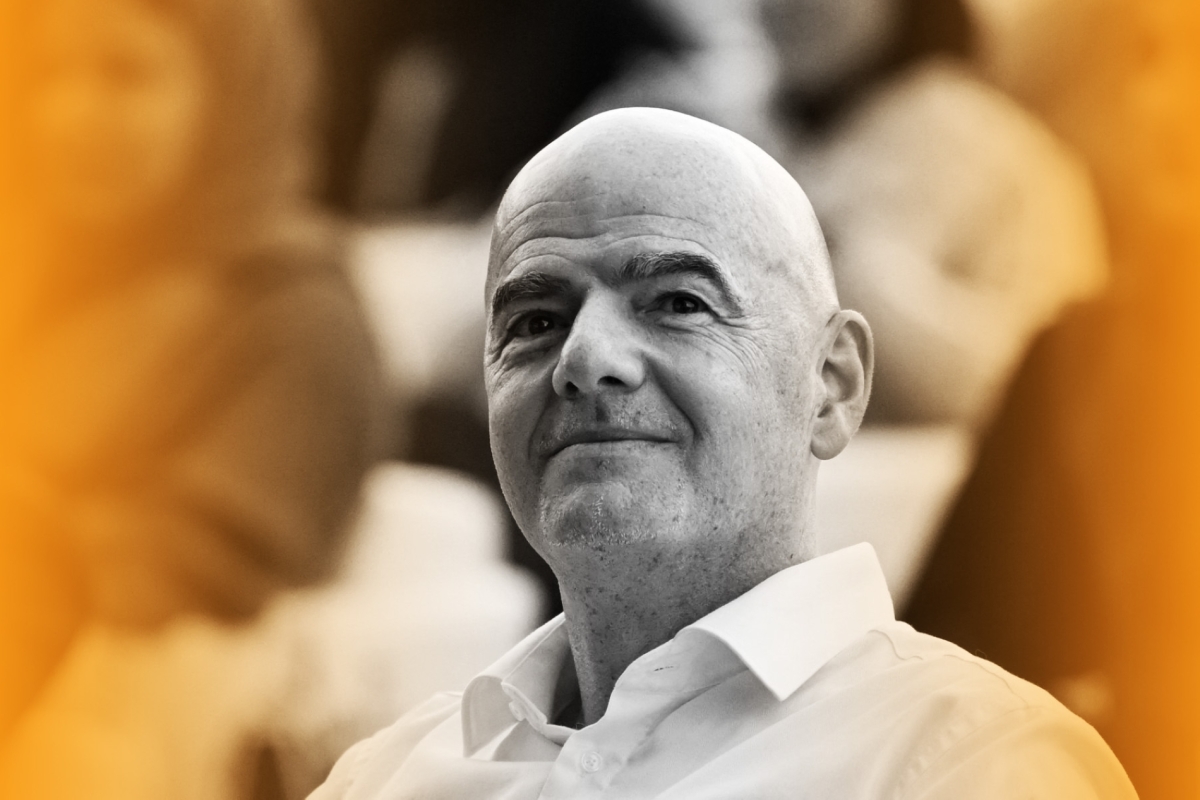
FIFA President Gianni Infantino attends a Youth festival opening ceremony in Doha on November 17, 2022, ahead of the Qatar 2022 World Cup football tournament.
Kirill Kudryavtsev/AFP
FIFA President Gianni Infantino attends a Youth festival opening ceremony in Doha on November 17, 2022, ahead of the Qatar 2022 World Cup football tournament.

Gianni Infantino: controversial FIFA boss reflects political change

Gianni Infantino is no stranger to controversy. Since becoming FIFA president in 2016 he has, among other things, been accused of cosying up to autocrats, dismissing concerns over human rights, and putting profits over people. Fans everywhere were enraged during this summer’s World Cup in the US, Canada and Mexico, when Infantino was called by US President Donald Trump and within hours, FIFA had ‘suspended’ a one-match ban for the United States’ top striker. “I’m the one that got them to do it,” Trump boasted.

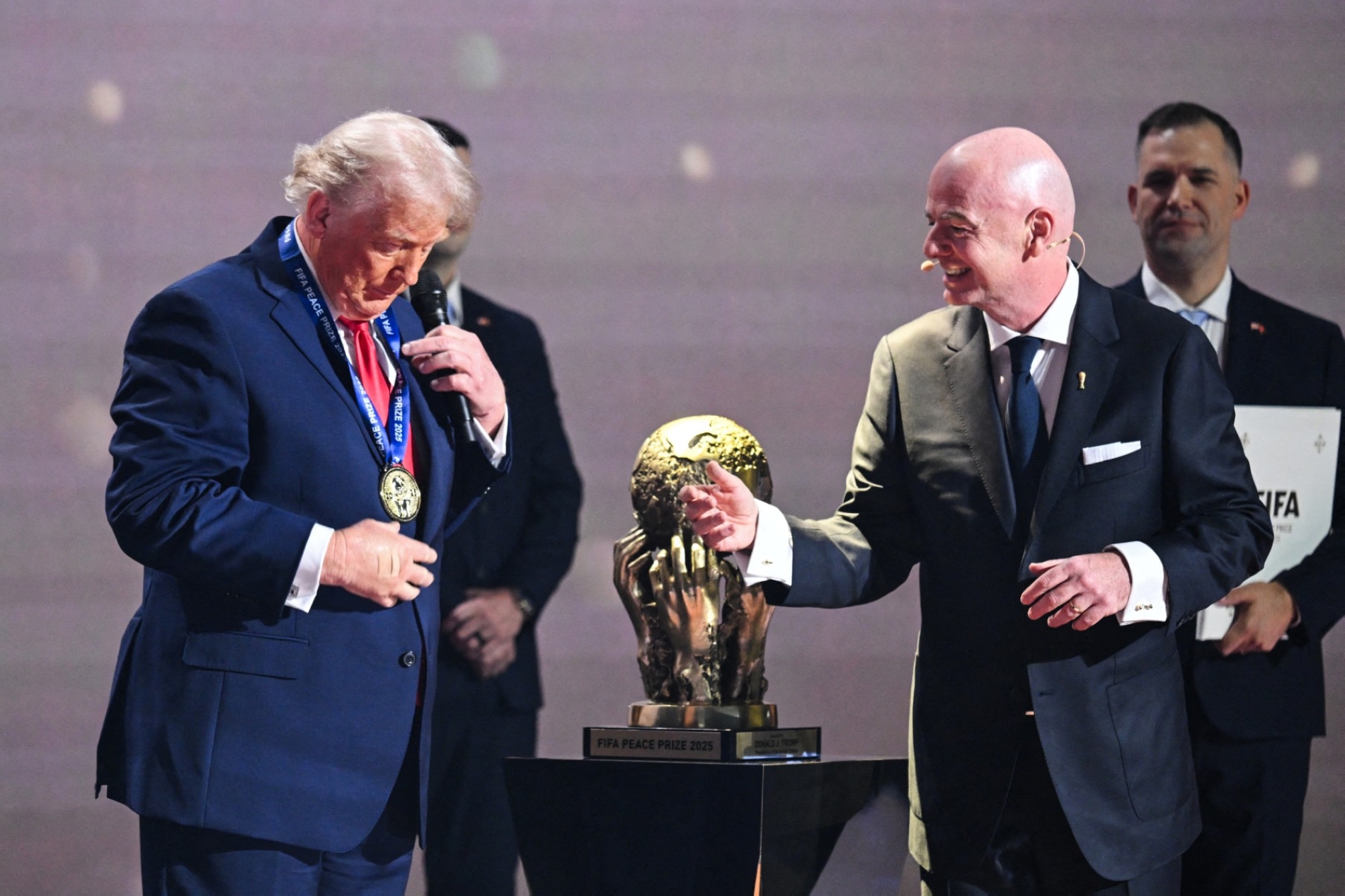
Many saw it as the FIFA chief bending of the rules for the powerful (Infantino had earlier given Trump the inaugural and newly-conjured FIFA Peace Prize, leading former BBC football presenter Gary Linekar to dub him ‘Gianni Sycophantino’). But those hoping this may trigger Infantino’s downfall will be disappointed. It emerged this weekend that he has the formal endorsement of more than 200 countries for re-election in March, making a fourth term all but inevitable.
Saul Loeb/AFP
US President Donald Trump receives the FIFA Peace Prize from FIFA President Gianni Infantino during the draw for the 2026 FIFA Football World Cup.

As Dale Johnson of the BBC was quick to note, a European backlash “won’t worry Infantino”. Even though Germany’s football association is yet to write a letter of support for Infantino, there are only a tiny handful of FA’s that are yet to do so. Despite emerging from within Europe’s governing football body, UEFA, Infantino’s power base is in the non-western world. In many ways, his time at FIFA reflects the broader changes to global politics that have come about during his time in office: the weakening of the West at the expense of others, and a growing disregard for norms and rules.

Obscurity to controversy

One of the most recognisable global figures, Infantino was once an obscure UEFA official, never expected to become FIFA president. The son of Italian migrants to Switzerland who holds citizenship in both countries, he joined Europe’s football governing body in 2000 and rose to become Secretary-General nine years later. He was right-hand man to UEFA president Michael Platini, who most thought to take over at FIFA. But when a corruption scandal squashed those plans and forced FIFA president Sepp Blatter to resign, Infantino was Europe’s preferred candidate for the top job.
Fabrice Coffrini/AFP
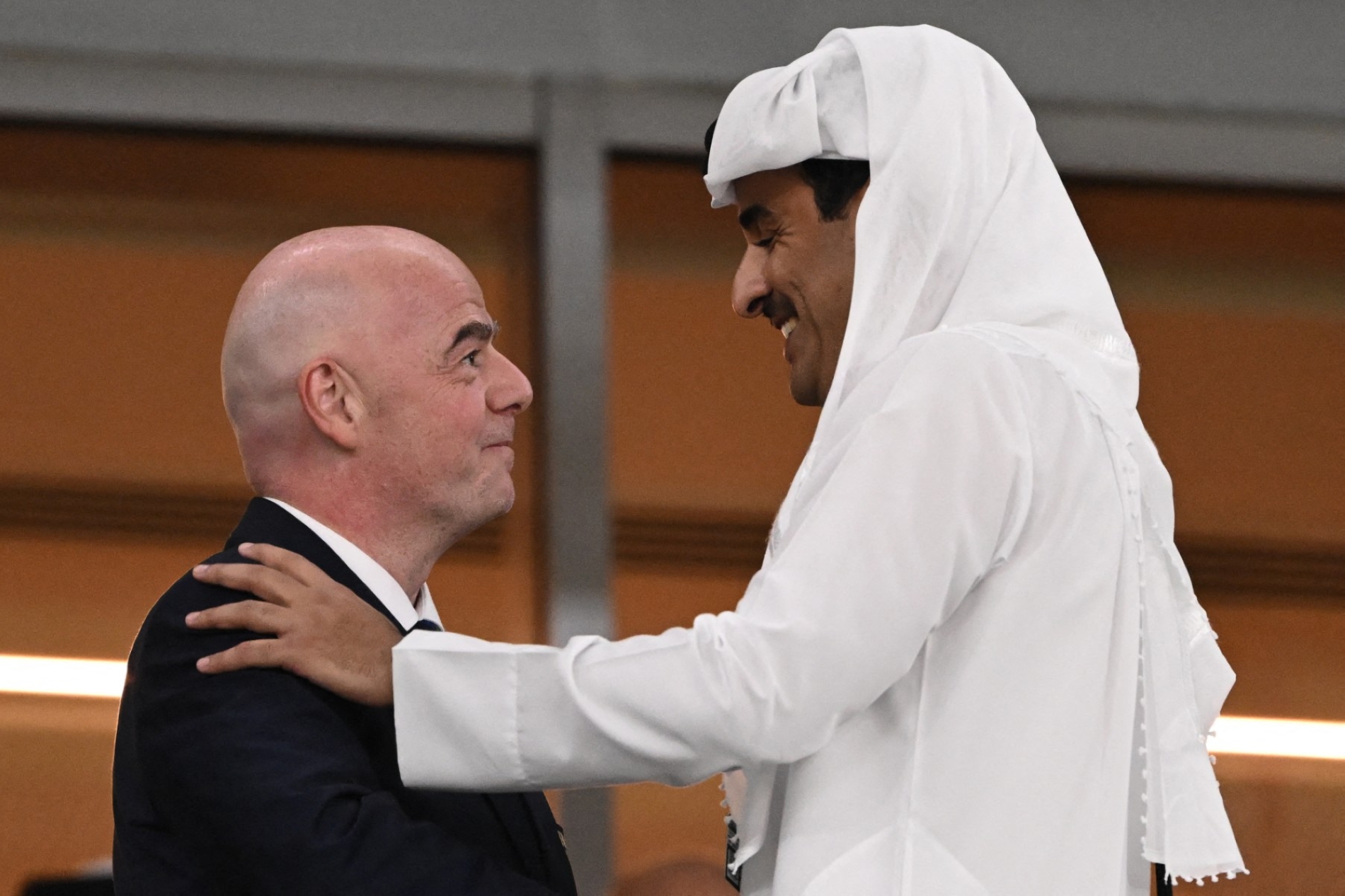
FIFA President Gianni Infantino talks with Qatar's Emir Sheikh Tamim bin Hamad al-Thani during the Qatar 2022 World Cup.

Ironically, given the latest accusations against him, Infantino was originally put forward as an anti-corruption candidate, being a member of FIFA’s reform committee. After promising change and transparency, Infantino narrowly defeated Jordan’s Salman bin Ibrahim Al Khalifa in February 2016. A decade on, his relations with his former employer are increasingly strained.
Even though Germany's football association is yet to write a letter of support for Infantino, there are only a tiny handful of FA's that are yet to do so

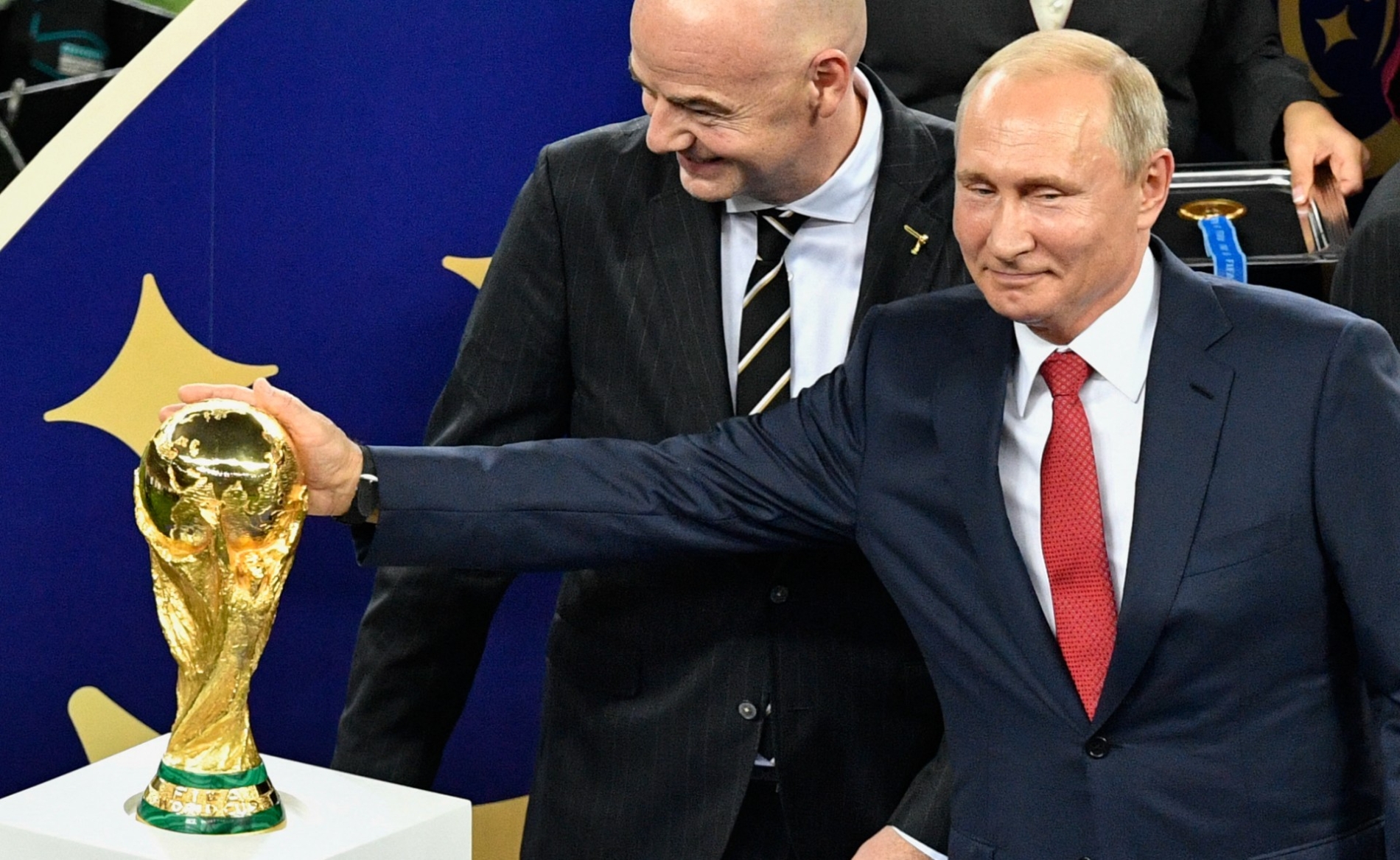
After US striker Folarin Balogun's red card was suspended, UEFA said FIFA had crossed "a red line" and undermined the integrity of the World Cup. National associations and managers criticised the decision, including those of Belgian and England. It is just the latest item on a long charge sheet against Infantino. His close ties to the Saudi Arabian government came under scrutiny after FIFA awarded the country the 2034 World Cup, having awarded it to Qatar in 2022, and Russia in 2018. In no case has the host country been known for its unblemished human rights record.

Profits and popularity

Despite the heavy criticism, Infantino is popular in the non-western footballing community. Standing for a fourth term, as he is doing, is both unprecedented and forbidden in FIFA's rules, but he argues that he did not serve a full first term when he took over after Blatter resigned. The Confederation of African Football (CAF) and Asian Football Confederation (AFC) have both said that they will support Infantino again, as has South American football's ruling body, CONMEBOL.

Jean Bizimana/Reuters
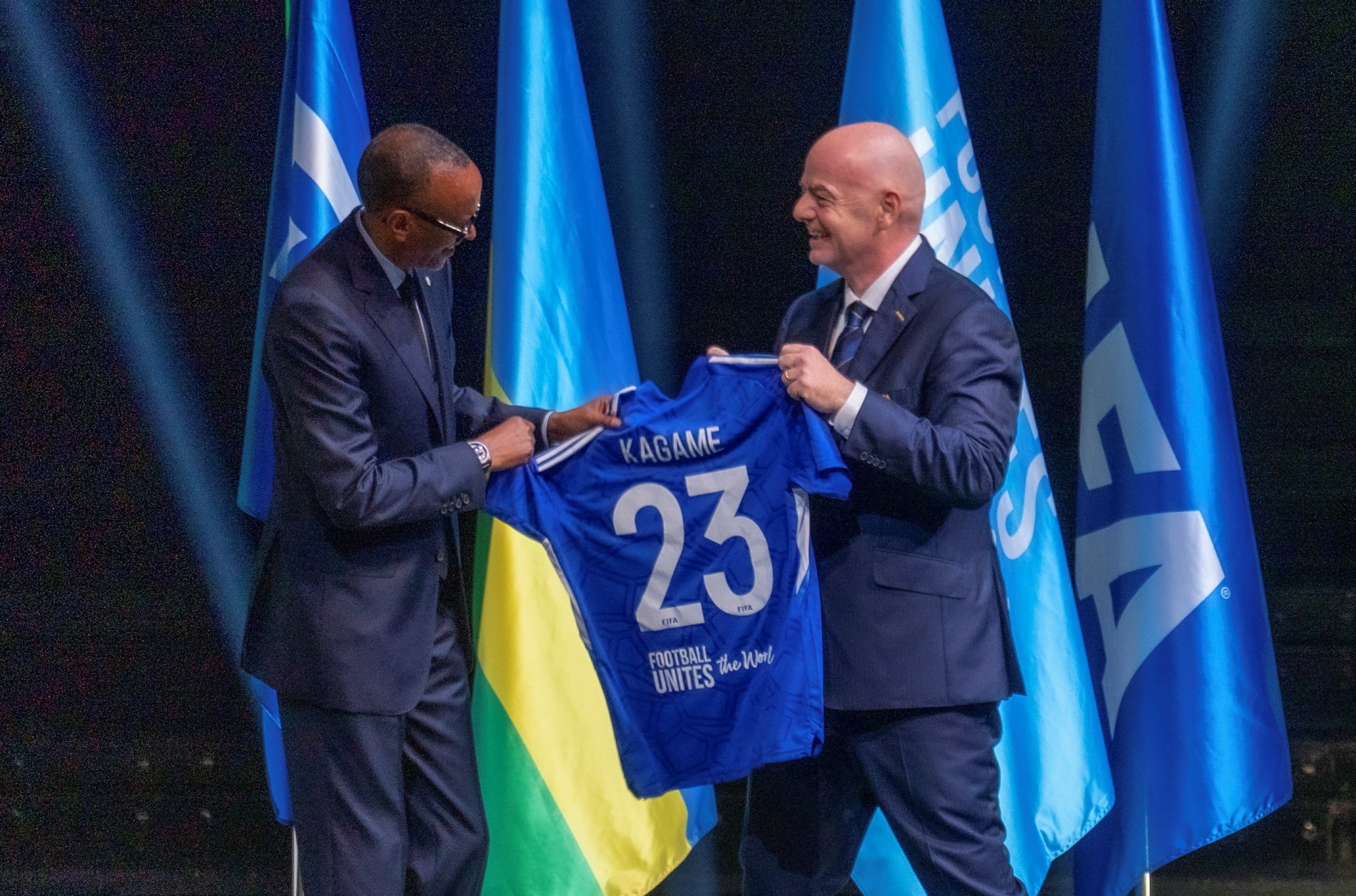
FIFA President Gianni Infantino gives a soccer shirt to Rwanda's President Paul Kagame during the 73rd FIFA Congress.

Why the contrasting view of Infantino in Asia, Africa and South America? The first reason is money. As AFC President Salman bin Ebrahim Al Khalifa stated in April: "FIFA is in its best position ever." He has a point. When Blatter was forced out, FIFA had a reported $550m black hole after sponsors walked away. Today, it is enjoying record revenues, with $13bn expected for the 2023-26 cycle. This was helped by an expanded World Cup (from 32 teams to 48) and an expanded World Club Cup last year.

A second, related reason, is where that money goes. Part of his election pitch was to ensure these record profits are spread more widely across FIFA's membership, which is of great appeal to associations that lack the lucrative football income enjoyed by UEFA members. Infantino promised, and delivered, an extra $5m for every national association during his first four years, and $40m for each confederation. In the next four years, $2.8bn was made available for investment across FIFA's 211 members. In his third term, this increased by 30%. As the BBC put in, "he has enriched some of the poorest and smallest footballing nations," and so bred fierce loyalty.

Reflecting a changing world

As well as funding thousands of footballing projects across the developing world, Infantino's reforms have allowed wider participation. Of the 16 new places created for this year's expanded World Cup, only three went to Europe, whereas Africa's representation leapt from five to nine, Asia's from four to eight, Central America's from three to six, and South America's from four to six. While Europeans bemoan a lack of ethics, non-Europeans clearly see the benefits. 

Alexander Nemenov/AFP
Russian President Vladimir Putin (R) with FIFA president Gianni Infantino (C) during the trophy ceremony at the end of the Russia 2018 World Cup final.

Infantino's journey from UEFA stalwart to advocate for non-European football in many ways reflects changing global politics. His tenure has included Brexit, Trump, and Ukraine, to name but three. it was perhaps unsurprising that FIFA elected yet another Western president (eight out of nine permanent chiefs have been European), but since his election, Western power has diminished and the world has become multipolar.

In such a climate it is perhaps unsurprising that Infantino has seen the value of broadening his base away from his European heartland. Many praise him for embracing the Global South and granting greater agency from long marginalised regions, but his apparently willingness to cross sacred footballing 'red lines' (like allowing political interference in on-field issues) has turned many others against him. While he will still win a fourth term, he risks the credibility of FIFA in the long term.

font change