Fighting in Yemen suggests a spillover from the US-Iran war

Clashes in the vital port city of Hodeidah were curiously timed, so soon after a senior Houthi delegation attended the funeral in Iran of the late Supreme Leader Ali Khamenei

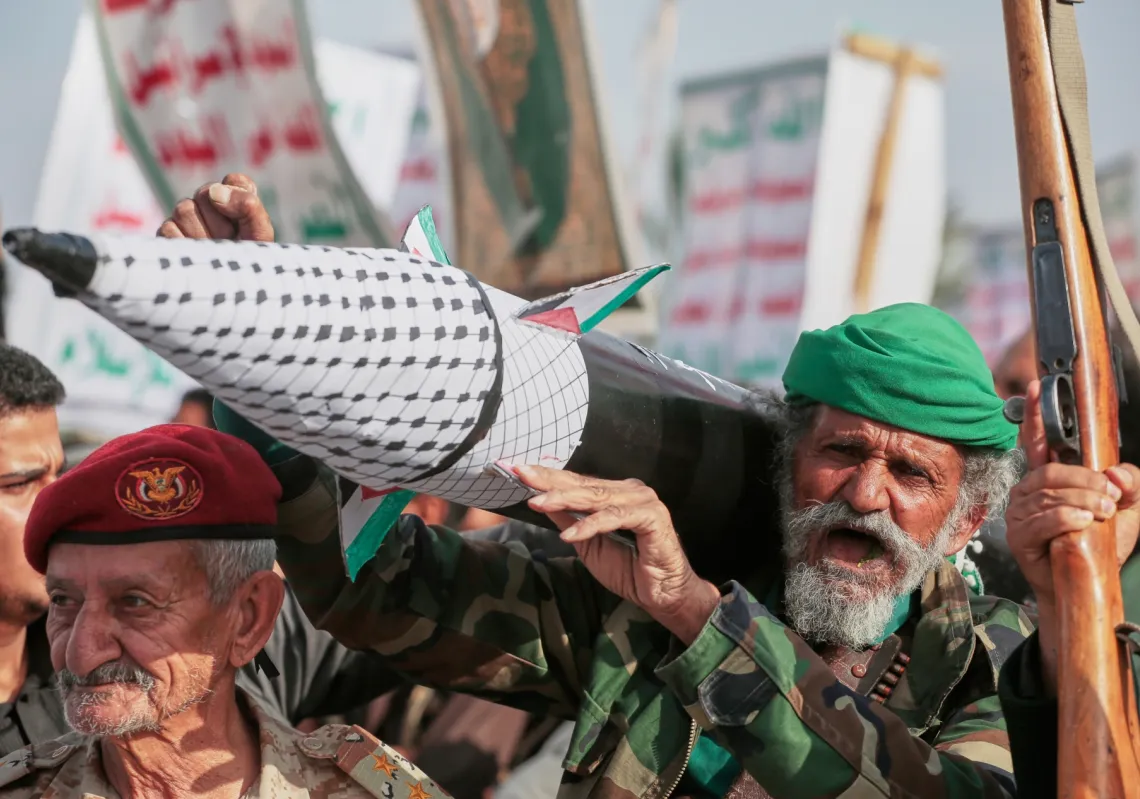
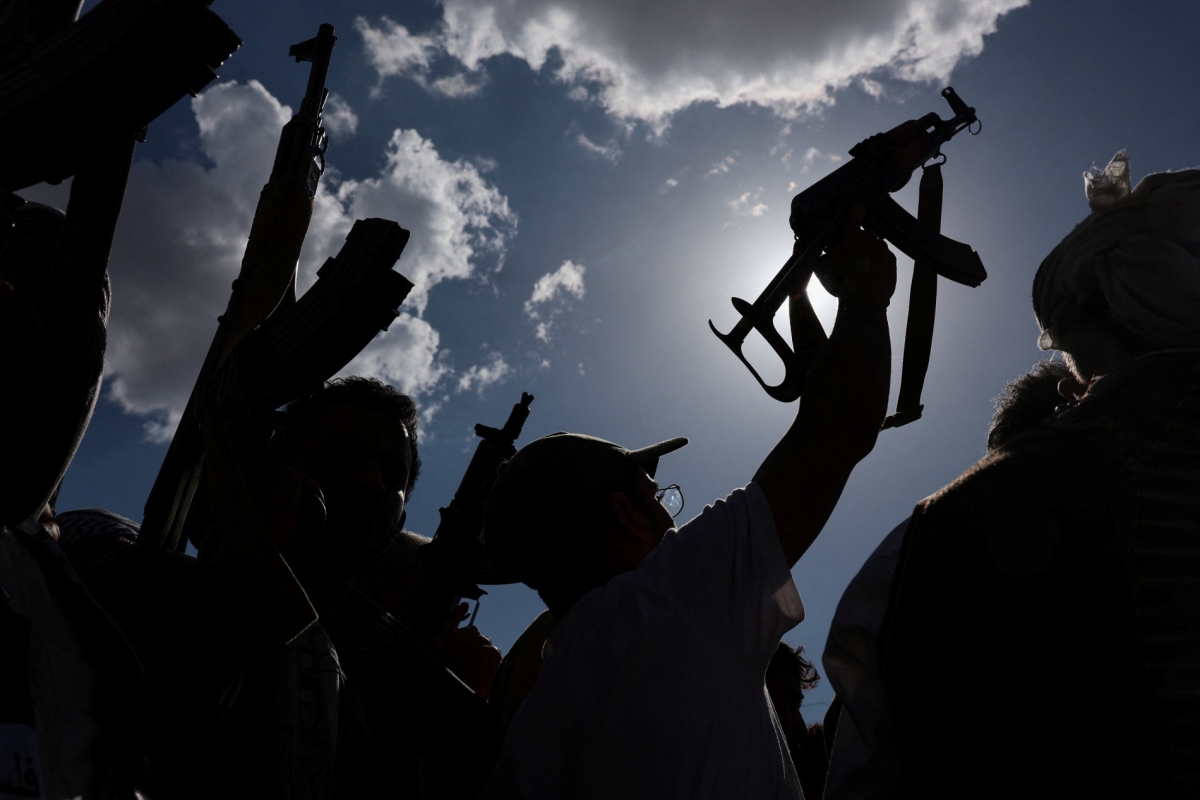
Supporters of the Houthi group demonstrate in solidarity with Iran in Sanaa, Yemen, on April 10, 2026.
Reuters
Supporters of the Houthi group demonstrate in solidarity with Iran in Sanaa, Yemen, on April 10, 2026.

Fighting in Yemen suggests a spillover from the US-Iran war

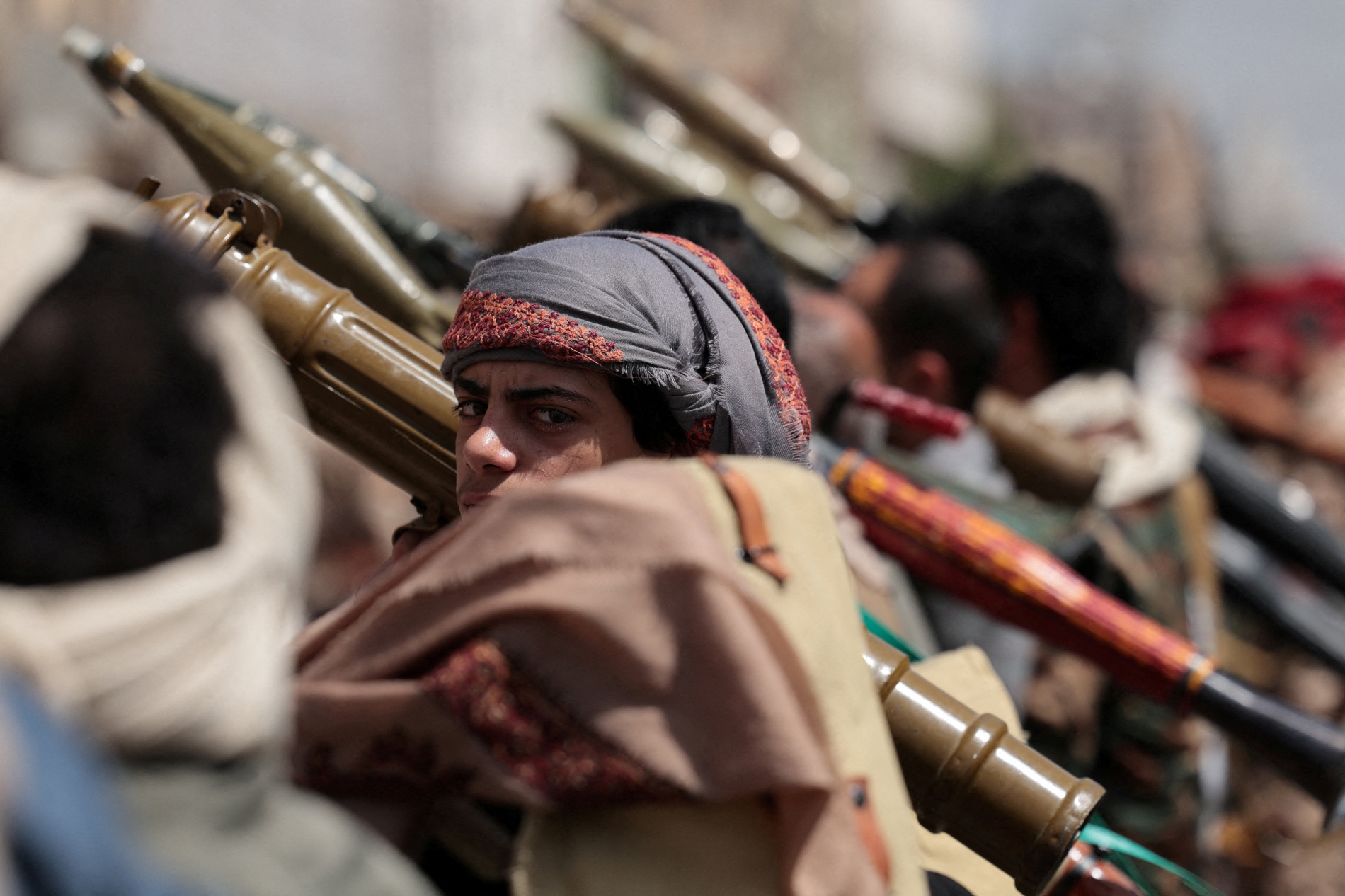
The renewed hostilities between the United States and Iran are causing deep concern in several Arab countries affected by this dispute, including Yemen, with sudden and unprecedented clashes. These have erupted south of Hodeidah governorate in the west along the Red Sea coast between militias loyal to the Iran-aligned Houthi movement and local forces allied with Yemen’s internationally recognised government.

This was the fiercest fighting that the vital port city of Hodeidah has witnessed on the Jabal Dabbas front, north of Hays, one of the most volatile lines of contact between government forces and the Houthis. Dozens were killed or injured on both sides, marking a dangerous slide in the fragile truce that has held since April 2022. It threatens to unravel that calm and raises the prospect of renewed, heavy fighting.

Yemeni Minister of State Walid al-Qadimi said fighting between the Tihami Zaranik Brigades and Houthi fighters left more than 50 Houthis dead, with 15 government fighters also killed. The claims could not be independently verified, but the timing suggests a possible link to the renewed US-Iran confrontation in the Gulf, after senior Houthi leaders attended the funeral of the late Iranian Supreme Leader Ali Khamenei.

Iranian influence

This clash on Yemen’s western coast suggests an Iranian attempt, through its Houthi proxies, to test Yemeni government forces, which are supported by a Riyadh-backed coalition. The goal may be for the Houthis (and therefore Iran) to control the Bab al-Mandab Strait, a maritime chokepoint for access to and from the Red Sea. Analysts think Iran may use this as an additional bargaining chip, alongside its control of the Strait of Hormuz (for access to and from the Arabian Gulf) in talks with Washington.

Speculation aside, the motives behind recent events in west Yemen—described by government sources as a Houthi attack—remain unclear. The core of the US-Iran dispute lies in the Strait of Hormuz, not the Bab al-Mandab Strait, despite the latter’s importance and despite the Iranian narrative that the post-war landscape differs fundamentally from the pre-war framework.
The goal may be for the Houthis (and therefore Iran) to control the Bab al-Mandab Strait, a maritime chokepoint for access to and from the Red Sea

If Saudi Arabia proceeds with a project to expand its energy exports through the Red Sea port of Yanbu to more than nine million barrels of crude oil per day (bpd), and if the wider world that benefits from that route undertakes to protect this new corridor, the strategic calculus would shift dramatically. The impact would be greater still if other Gulf states contributed to ending Iran's threats in both Hormuz and Bab al-Mandab.

Diversionary tactic

The Houthis control much of Yemen's north and west, and the capital, Sanaa, but it is not clear that they feel any responsibility for the suffering endured by millions of Yemenis in areas they control, with severe shortages of food and medicine. Instead, the Houthis divert attention, framing theirs as a fight against "the Saudi enemy and its attempt to mislead public opinion by distorting events and falsifying facts".

Reuters
A Houthi supporter at a pro-Iran demonstration—amid the ongoing US-Israel-Iran conflict—in Sanaa, Yemen, April 6, 2026.

A statement issued by the Houthis claimed that "the Yemeni people… have taken their decision to end the aggression, break the siege, and break the aggressor's grip, and will not retreat from that decision whatever the cost; that reopening Sanaa International Airport is a sovereign right of Yemen; and that Sanaa is proceeding with it without permission from anyone." It added that the "unjust" Saudi regime "must realise that many stages remain that will restore to our dear and noble people their stolen rights and end the state of misery and suffering".

The latter point was a reference to a roadmap agreed with Riyadh under the auspices of the United Nations and sponsored by Oman. Little is known about the roadmap cited by the Houthis, who denied that they rejected it. The Saudis have never said that any roadmap was signed, or that it had become an agreement that could be presented as a basis for resolving the conflict. It appears instead to have been a draft set of proposals for dialogue, and therefore still under formulation.

Doing Iran's bidding

Some think the Houthis, prompted by Tehran, will continue to deploy new and startling tactics against the internationally recognised government while blaming the Saudi-led coalition, which has sought to restore order across Yemen, north and south alike. Yet confrontation only covers up the group's failure to administer the areas it controls.

It cannot accept, or even comprehend, that the world has no intention of recognising it as a legitimate government in a country that, despite all its suffering, is still a politically distinct country with distinct geographic borders. Those realities cannot be altered by imposing a fait accompli through the force of any imported Iranian weapon.

font change