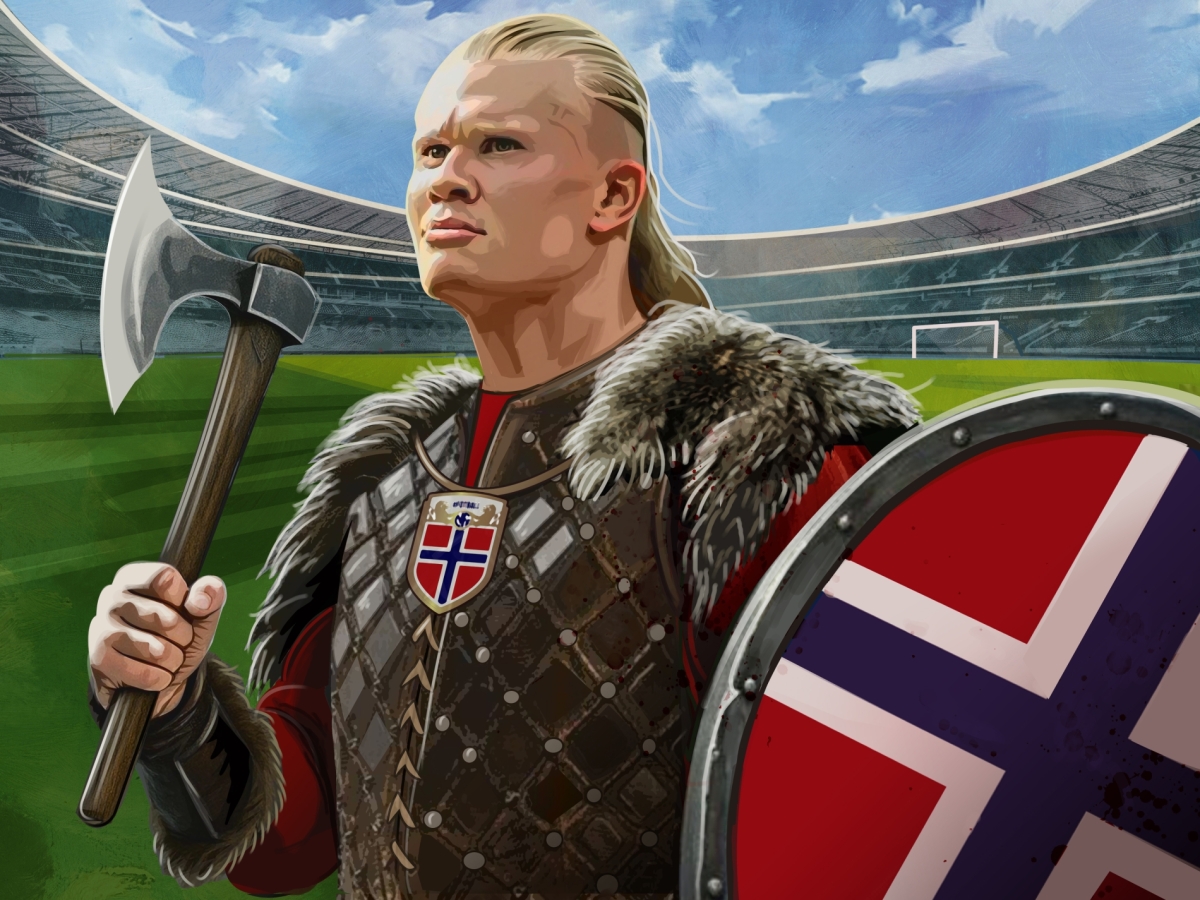
Playful Viking: Norwegian striker Erling Haaland

Manchester City’s goalscoring machine has repeatedly found the net at the 2026 FIFA World Cup, with his dad, Alfie, watching from the stands. How did he get to where he is today?

Footballer Erling Haaland channels Norway's Viking heritage in his ruthless pursuit of goals, but has a playful side, too.
Bill McConkey
Footballer Erling Haaland channels Norway's Viking heritage in his ruthless pursuit of goals, but has a playful side, too.

Playful Viking: Norwegian striker Erling Haaland

The short journey from the northern British cities of Leeds to Manchester was not enough for Norwegian footballer Alfie Haaland to consider every possible outcome. This was the summer of 2000, and the industrious midfielder was on his way to Manchester City, aka ‘the blue half,’ with the red of Manchester United being the metropolis’s other (better known) team.

With Alfie was his infant son, Erling, who had the same white-blond hair, and who could not have known that one day his father would bring him back to the same city. Alfie’s tenure in Manchester was short-lived. This was a period of United dominance. Both Leeds and City are United’s great rivals, so this red ascendency no doubt registered with Alfie, United's repeated triumphs stirring deep resentment.

It was in a City shirt that Alfie’s playing career was brought to a shuddering halt by a dangerous tackle from United captain Roy Keane, who later admitted that the foul was an act of revenge. Without realising it, Keane gave Alfie the time to prepare Erling, who would prove in time to be the ultimate response as City’s sharp shooter.

Haaland clearly came from sporting stock, with his mother, Gry Marita Braut, having been Norway’s heptathlon champion. With that lineage, he found sport in every corner of the family home. Alfie moved the family from England to his hometown of Bryne in Norway when Erling was three, introducing his son to every sport a child could possibly practise in a town of 12,000 people. Tall enough for track and field events, and strong enough to rise above defenders in handball halls, Erling found in his father’s football career a prospect more compelling than high jump records.

Route through Europe

The thrill of the English Premier League seemed close geographically but distant in footballing reality, yet Erling saw in his father’s story an open account that he alone could settle. Step by step, he refined a passion and ability that quickly outgrew the pitches of Bryne. He chose to play for Molde in Norway over the temptation of an early venture to Germany, drawn by the chance to work with Ole Gunnar Solskjaer, a celebrated Norwegian goalscorer who helped Manchester United win their European Champions League trophy in 1999.
Reuters
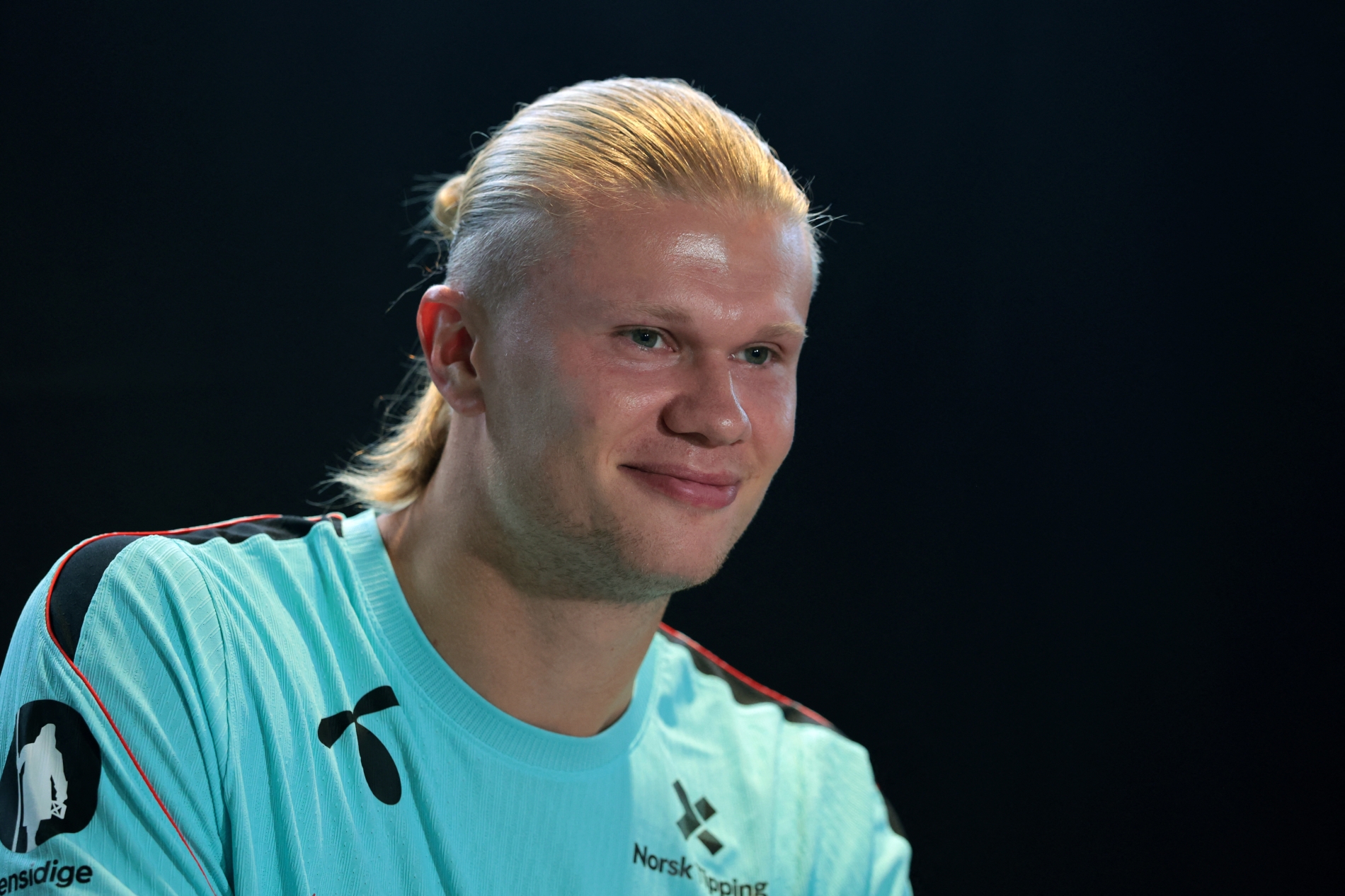
Norway's Erling Haaland speaks to the media at the 2026 FIFA World Cup.

For the young Haaland, Solskjaer’s famous story carried a particular magic: scoring the winning goal in the Champions League final having only been on the pitch for a few minutes, a single pounce after arriving in a goalmouth space that he had already sensed, sending him into world’s headlines. To Erling’s ears, it was pure music.

At Molde, he soon caught his coach’s eye, with his explosive pace and the force of his left foot. Solskjaer was so impressed that he called his old club, alerting United officials to a tall blond teenager who could be the phenomenon to pull the club out of its recent malaise. Yet for the Haaland family, there was no rush. Erling needed time to develop before becoming the patient goalscorer he is today, someone who can be largely anonymous in matches before grabbing the winner in the last minute.

Today, Erling Haaland is an example of how measured steps can carry talent to its appointed destination at precisely the right time. After growing under Solskjaer, he moved into the Red Bull football ownership system, choosing its Austrian outpost in Salzburg (RB Salzburg), where the light was softer than at its German counterpart at RB Leipzig, and the room for trial and error was wider, free from the full glare of the media and the impatience of supporters demanding trophies.

He travelled to Austria to test his speed and shooting power where few knew his name. It was not long before he became a subject of global fascination. By then, football had created the ‘false nine’ outfield position, after the Spanish manager Pep Guardiola employed it to such effect at Barcelona through the genius of Argentine striker Lionel Messi, who hunted goals from loose balls, guided by an instinctive sense of space near the goal.

Germany to Manchester

What Haaland possessed was too rare for Europe’s major clubs to overlook and he was too mature for analysts to dismiss him as ‘not ready’, yet none of this tempted him towards the bright lights. He knew he had the luxury of choice and so could remain patient. Borussia Dortmund became the chosen next step, a club long known for developing young footballing talents. For Erling, this was the rung on the ladder he needed before he could return to where his father’s story left off.
Reuters
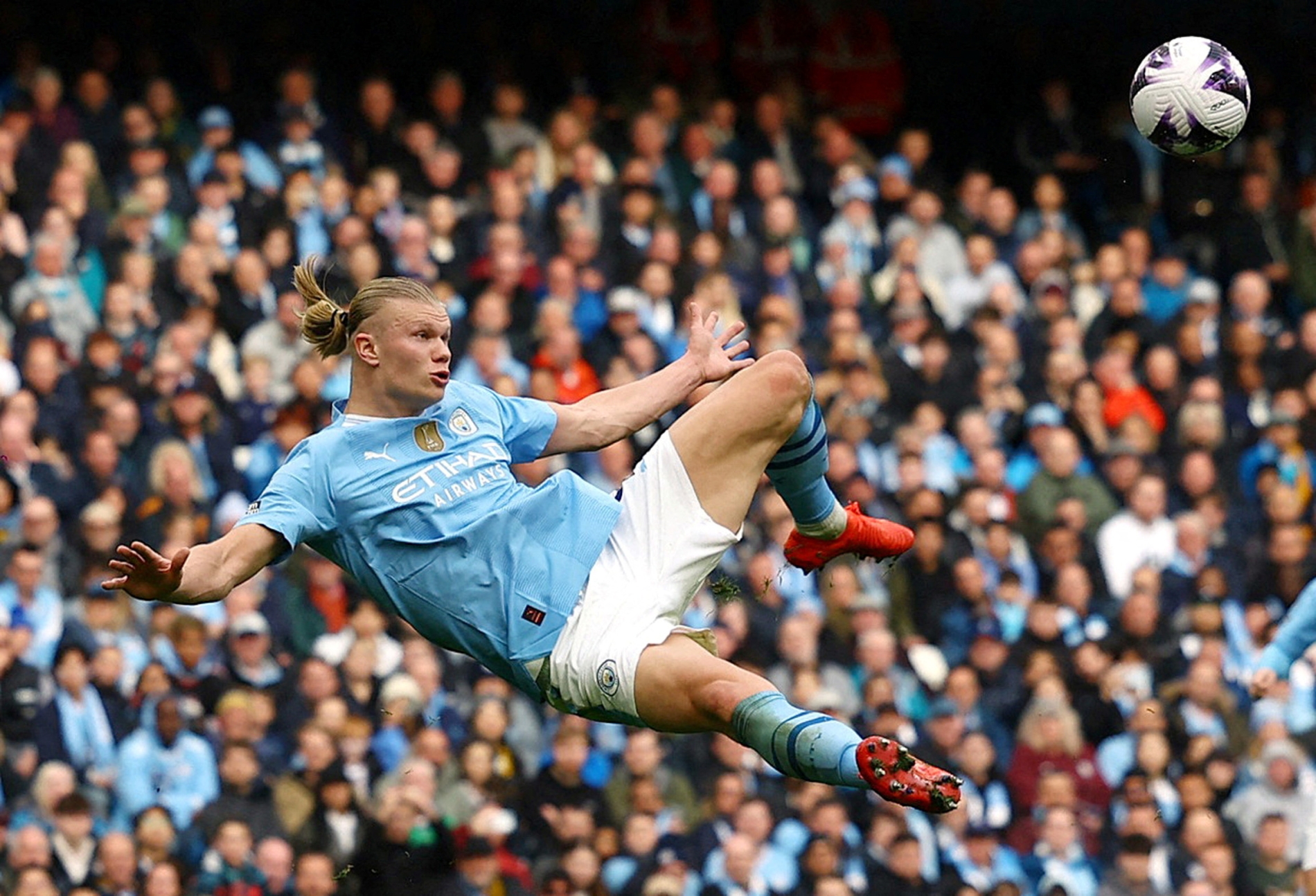
Erling Haaland later followed in his father's footsteps by joining Manchester City, but not until a period playing in Norway, Austria, and Germany.

Dortmund also gave him a gateway into the European Champions League, the continent’s top-tier footballing competition, in a team that was not expected to win it, meaning that there was no burden of expectation—a pressure that can sometimes narrow the sense of adventure for elite players who thrive on creativity. His success at Dortmund gave Haaland an even greater choice, but the sky-blue shirt of Manchester City increasingly felt like the natural destination.
What Haaland possessed was too rare for Europe's major clubs to overlook and he was too mature for analysts to dismiss him as 'not ready'

Some wonder whether it was the legacy of his father, or the hunger of that half of Manchester for an icon, or a combination of factors. Regardless, his arrival gave City the chance to create a new legend to rival of those United, whose murals depicted stars such as George Best, Bobby Charlton, Wayne Rooney, and Cristiano Ronaldo. By now, Guardiola was managing City and wanted a ruthless striker to net as many goals as possible. This was more than enough motivation for Erling.

Haaland was a scoring machine almost as soon as he arrived at Manchester City. He needed no period of adaptation, either to life in the city where he was born, or to a team that had already imposed its authority on English football. What City found in him was the raw material it had been missing: a superhero in sky-blue, as if drawn from a comic strip.

Becoming a hero

The young man of few words gradually began to reveal traces of a childlike personality that seemed at odds with his frame and ferocity on the pitch. In that contrast, young football fans found a connection with football. Here was a lethal goalscorer in a brilliant Manchester City side that had been reshaped by Guardiola to meet the demands of its new striker. It worked, the team winning a rare 'treble' of Premier League, cup, and Champions League in Erling's first season.

Scoring appears to come easy to the blond striker who continues to toy with every record, a mischievous personality whose story is still being written, most immediately at the 2026 FIFA World Cup, with Norway reaching the quarter-finals to play against an England side featuring several of his Manchester City teammates. Absent from the World Cup for 28 years, Norway returned on the strength of Haaland's hunger for goals, aided by a generation whose players often played in England. Coincidentally, it was in the United States that Alfie played for Norway in the 1994 World Cup.

AFP
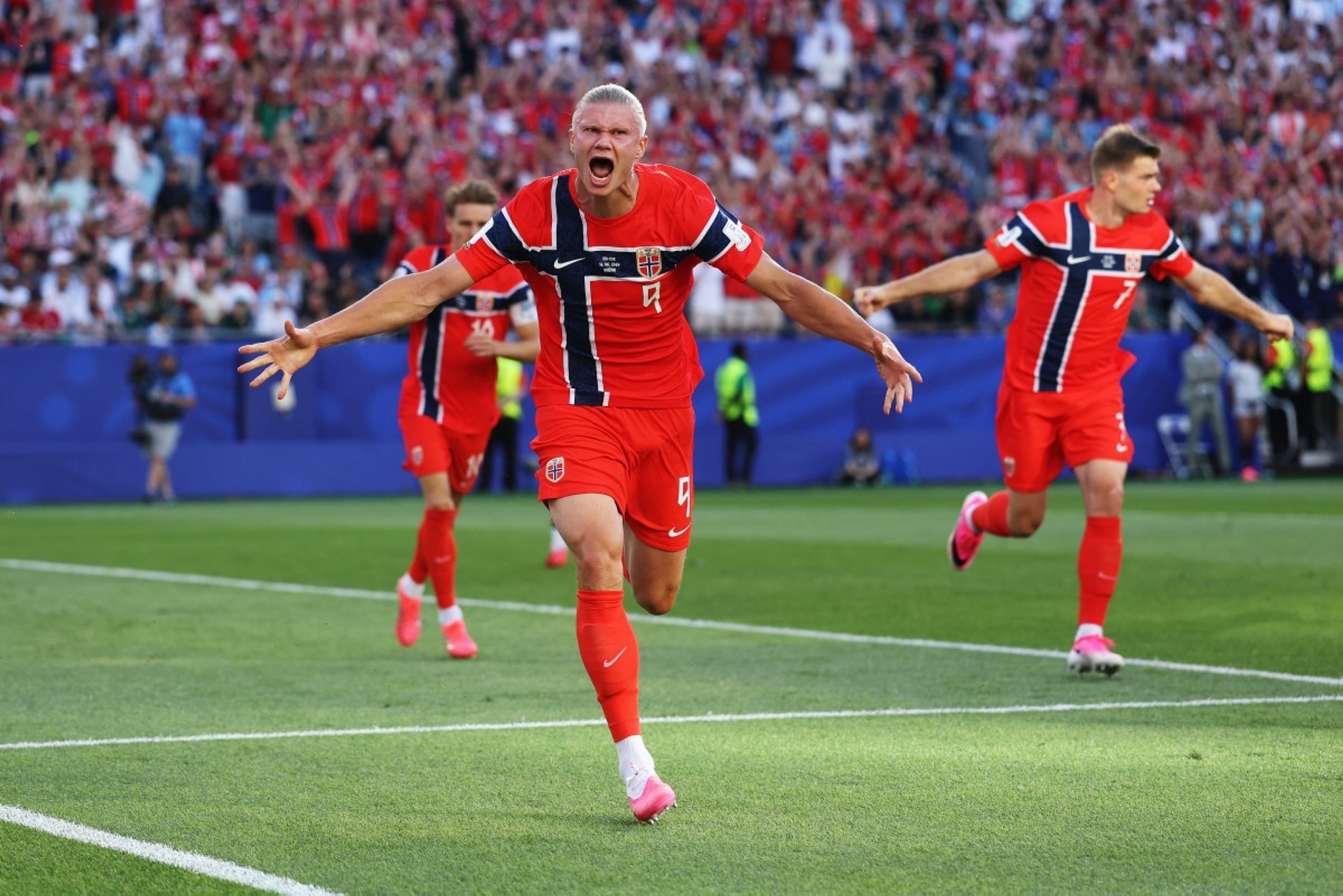
Erling Haaland wheels away after scoring for Norway in the 2026 FIFA World Cup. By the quarter-finals, he was the third-highest scorer behind Lionel Messi and Kylian Mbappe.

Erling and his Norwegian teammates arrived at this year's tournament without the burden of being one of the favourites, and Haaland appears to have approached the tournament with the lightness of a tourist, wandering through the streets of New York as freely as he wanders through opposition penalty areas. With the same lightness, Norwegian supporters have turned escalators, station floors, and even Times Square into stages for their drum-beat Viking rowing, which has captured fans' imagination.

Football's relaxed icon

Norway progressed to the quarter finals having beaten Brazil in the round of 16. Despite a reputation for playing with flair and enjoyment, the Brazilians seemed weighed down by expectation, unlike the free-scoring Haaland, who bagged a brace. The rest of the Norwegian side know that it is their task to get the ball to their deadly striker somewhere near the opposition goal and that he will do the rest.

AFP
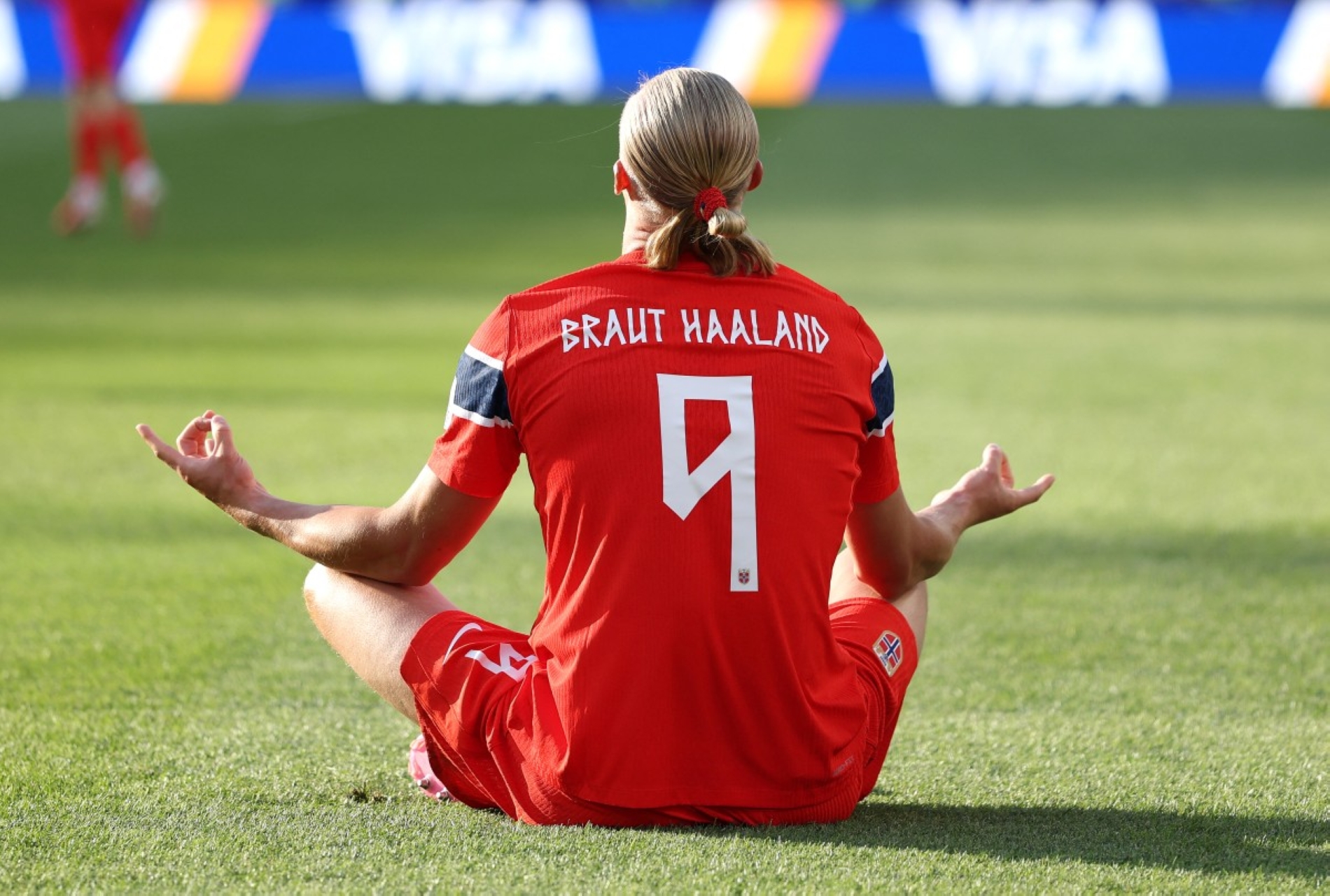
Ever the relaxed icon, Erling Haaland insists on his shirt showing his mother's name (Braut) as well.

Haaland celebrated both goals without excess, but with the mischievous pride he had fashioned for himself in America, blending the composure of an expert goalscorer accustomed to the grandest occasions with the ease of a young man who had stepped out of his American holiday for two hours to play his favourite game. Watching from the stands, of course, was his father, Alfie. Interestingly, Erling wears a shirt that includes his mother's name (Braut) alongside the family name.

At the time of writing, Norway's talisman was in contention to win the tournament's Golden Boot, given to the competition's top scorer. Still, he cuts the figure of an infinitely relaxed footballing icon, not imprisoned by the pressures of competition despite being repeatedly mentioned in the same breath as Argentina's Messi, England's Harry Kane, France's Kylian Mbappe, and Portugal's Cristiano Ronaldo. With his powerful frame and habit for popping up unexpectedly in dangerous areas, Haaland looks as if he enjoys being a nightmare for defenders. They have no doubt who is beating the drum.

font change