How Syria and Lebanon can cooperate to shape their collective futureshttps://en.majalla.com/node/331742/politics/how-syria-and-lebanon-can-cooperate-shape-their-collective-futures
How Syria and Lebanon can cooperate to shape their collective futures
The two states are working closer now than they have for decades, with Hezbollah a common problem. But Syria’s army entering Lebanon is not the answer.
Eduardo Ramon
How Syria and Lebanon can cooperate to shape their collective futures
In recent days, the Syrian government has said that it has no intention of intervening militarily in its smaller neighbour, Lebanon, after a comment from US President Donald Trump provoked concern. At the G7 summit in Paris this month, Trump suggested Syria intervene in Lebanon to disarm Hezbollah because the country would “do a better job” than Israel, whose attacks have frequently threatened Trump’s ceasefire with Iran.
Damascus has stressed that it has no intention of re-instigating Syrian tutelage over Lebanon, which lasted for several decades under the former Assad regime, and only ended in 2005. It left thousands of Lebanese dead or missing over the course of a period that is still a raw subject in the country. “Syria is part of the solution, not part of Lebanon’s suffering,” Syrian President Ahmed al-Sharaa said in a television interview in recent days.
“The situation in Lebanon needs joint solutions. Syria can very much be relied upon in the search for a safe path towards a solution.” He explained that Syria’s role would involve “renewed support for the Lebanese state, strengthening its institutions again, and seeking channels of communication between the political parties and active forces in Lebanon, including Hezbollah, in the search for a safe solution that all sides can support”.
His remarks do not rule out a Syrian role in resolving the Lebanese dilemma, especially as Syria’s security is linked to Lebanon’s. Syria urgently wants to de-fang the pro-Iran militia, which has been reinforcing its positions along the Syrian border, attempting to recruit new cells inside Syrian territory, and continuing efforts to smuggle weapons and drugs between the two countries.
Al Majalla understands that Damascus is trying to define the scope of any American proposal without triggering fresh chaos in Syria and its border regions. There have been several meetings between Syrian and Lebanese officials over the past two months to strengthen cooperation and coordination on border security and the nature of possible Syrian support for Lebanon. This close coordination was confirmed by Lebanese President Joseph Aoun on 24 June.
French President Emmanuel Macron’s visit to Syria early next month is important both economically and politically, as France seeks a strong return to the country. Macron will bring dozens of company leaders looking to invest in Syria. Lebanon will be on the agenda, and Macron will discuss possibilities for Syrian-European cooperation in defining Syria’s role in Lebanon, in coordination with Beirut.
An ominous hint
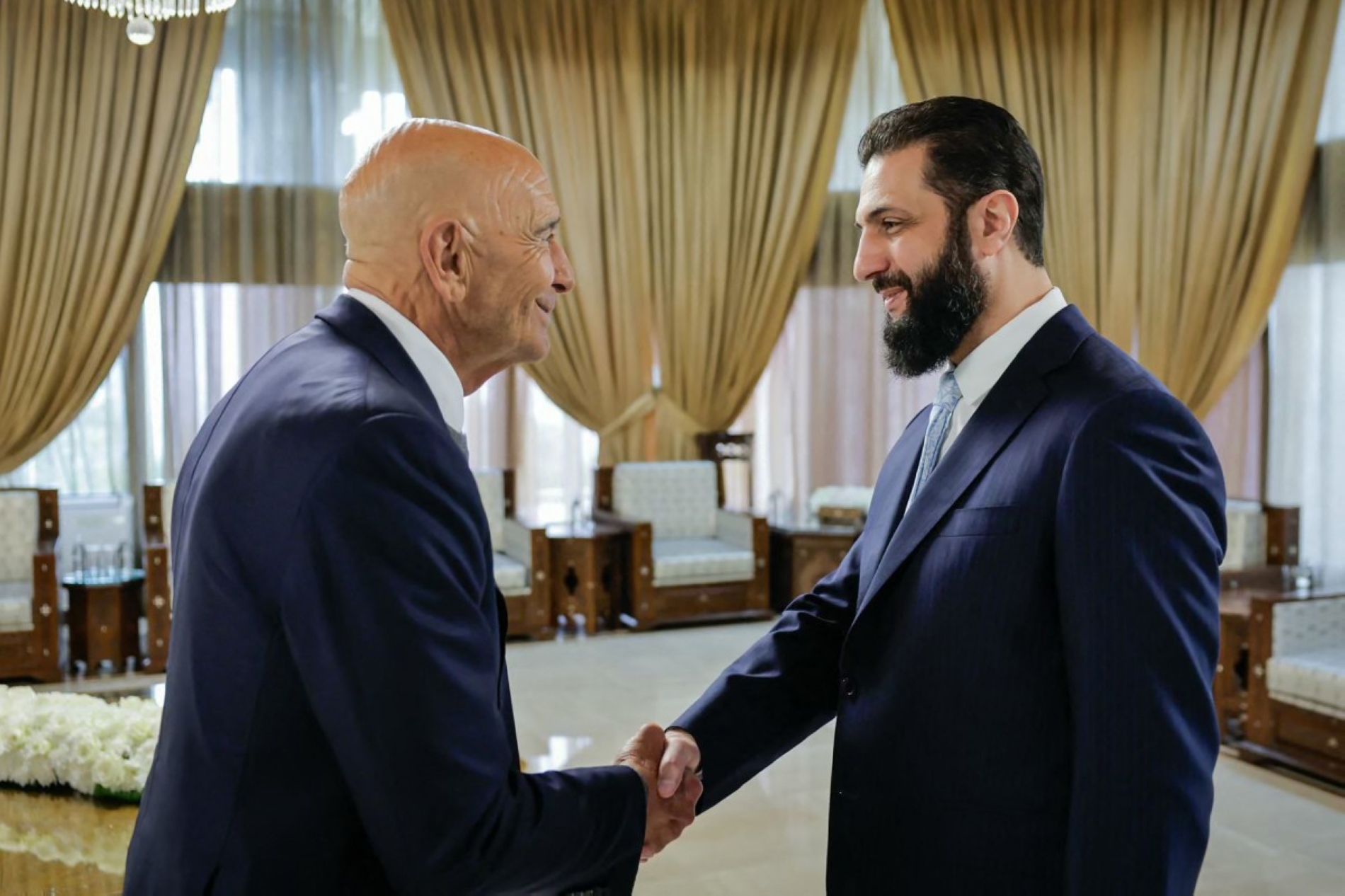
Syrian President Ahmed al-Sharaa and US envoy Tom Barrack at the presidential palace in Damascus on 18 January 2026.
Last year, US envoy Tom Barrack hinted that Lebanon would “return to Bilad al-Sham once again... if it does not act”. Bilad al-Sham translates as ‘land on the left-hand’ and refers to a historical, geographical, and cultural designation comprising both Syria and Lebanon, sometimes referred to as ‘Greater Syria.’ His remarks caused an outcry, one not dampened by Trump’s later suggestion that Syria disarm Hezbollah in Lebanon.
Damascus wants good relations with its neighbours, and that means working with Lebanon to open windows of economic opportunity that will also assist in Syria’s rebuilding and reconstruction. Most Syrians do not seek conflict beyond their borders and know that Syrian military intervention in Lebanon would foster mistrust and undermine the prospects for bilateral cooperation. Damascus believes that its position aligns with the Arab and European stance.
Common interests between Syria and Lebanon have converged for the first time in decades.
US-Syrian talks about Lebanon mean that the White House understands Syrian concerns about any military intervention. Damascus has presented several ideas regarding its role in Lebanon. A Western source told Al Majalla that Washington still wants Syria to help disarm Hezbollah and has exerted some pressure on it to do so, but that the nature of Syria's role had not yet been agreed upon, even within Trump's team.
Differing viewpoints inside the US administration over the nature of the Syrian role could be used to formulate a mutually agreed trilateral US-Syria-Lebanon framework, they said, with the aim of disarming Hezbollah without exposing Syria and Lebanon to a confrontational scenario that could further destabilise the Middle East.
Hezbollah undermines the security of both Syria and Lebanon, so Syrian and Lebanese leaders have been discussing the matter for more than a year, since Lebanese Prime Minister Nawaf Salam's historic first visit to Syria in April 2025. Syria's new rulers see Lebanon as an independent state, a neighbour, and a partner, and coordination between the two governments is increasing on military and security matters.
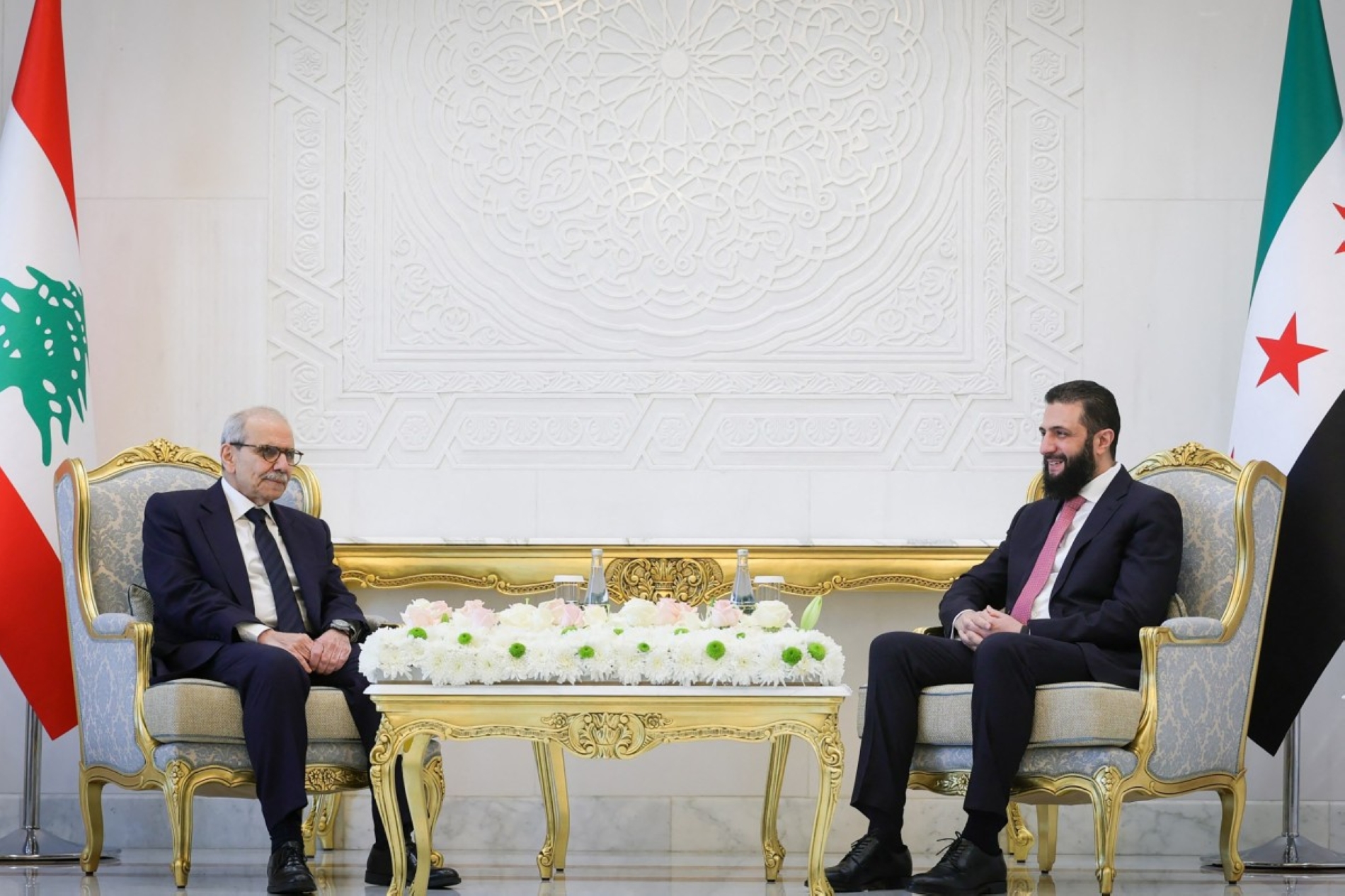
Syrian President Ahmed al-Sharaa (R) meets with Lebanese Prime Minister Nawaf Salam at the People's Palace in Damascus on 9 May 2026.
Converging interests
Al Majalla understands that Lebanese military and security delegations have visited Syria at least five times over the past four months, discussing border security, intelligence coordination, and Washington's perceptions and statements regarding Syria's role in Lebanon. Beirut knows there is American pressure on Damascus to play a role in Lebanon, but also knows that Damascus does not want that role to be military.
With both countries enjoying relatively new leadership teams, common interests between Syria and Lebanon have converged for the first time in decades, in stark contrast to the approach taken by Syria's former Assad regimes, when Hafez and then Bashar al-Assad saw Lebanon as a Syrian satellite. Shared interests, together with the regional and international support, have created an unusually positive climate.
Syrian officials believe that current levels of cooperation and coordination between the two states are at their highest for many years, raising the possibility of finding a common path that can withstand external pressure. Security and intelligence cooperation has helped both states control the border and curb smuggling, and there are discussions to increase coordination further to prevent Hezbollah from rebuilding its strength with weapons and fighters smuggled from Syria.
Expanding bilateral security and military coordination remains a complex process, however. The Syria-Lebanon border is not straightforward. Geographically, the smugglers have the upper hand, and decades of ties with local families mean there are established smuggling networks to dismantle. The smuggling structure even includes tunnels that remain unknown to the Syrian and Lebanese governments.
To make matters more complicated, over the years, Hezbollah has infiltrated the ranks of the Lebanese army and security services. This penetration could expose sensitive communications and operational coordination between Syria and Lebanon, giving Hezbollah advance knowledge of plans and of border-monitoring equipment, and alerting it to the limits of joint patrols, allowing the militia to stay one step ahead.
Both countries lack the kind of advanced surveillance tools needed to monitor the border for smuggling. There is even a lack of suitable military vehicles to traverse the more mountainous areas. International support would help, but so would better working practices to undermine Hezbollah's power, secure the Syria-Lebanon border, and open the way for the Lebanese government to weaken the group militarily. It would also make it easier for the Syrian government to dismantle the group's networks in Syria.
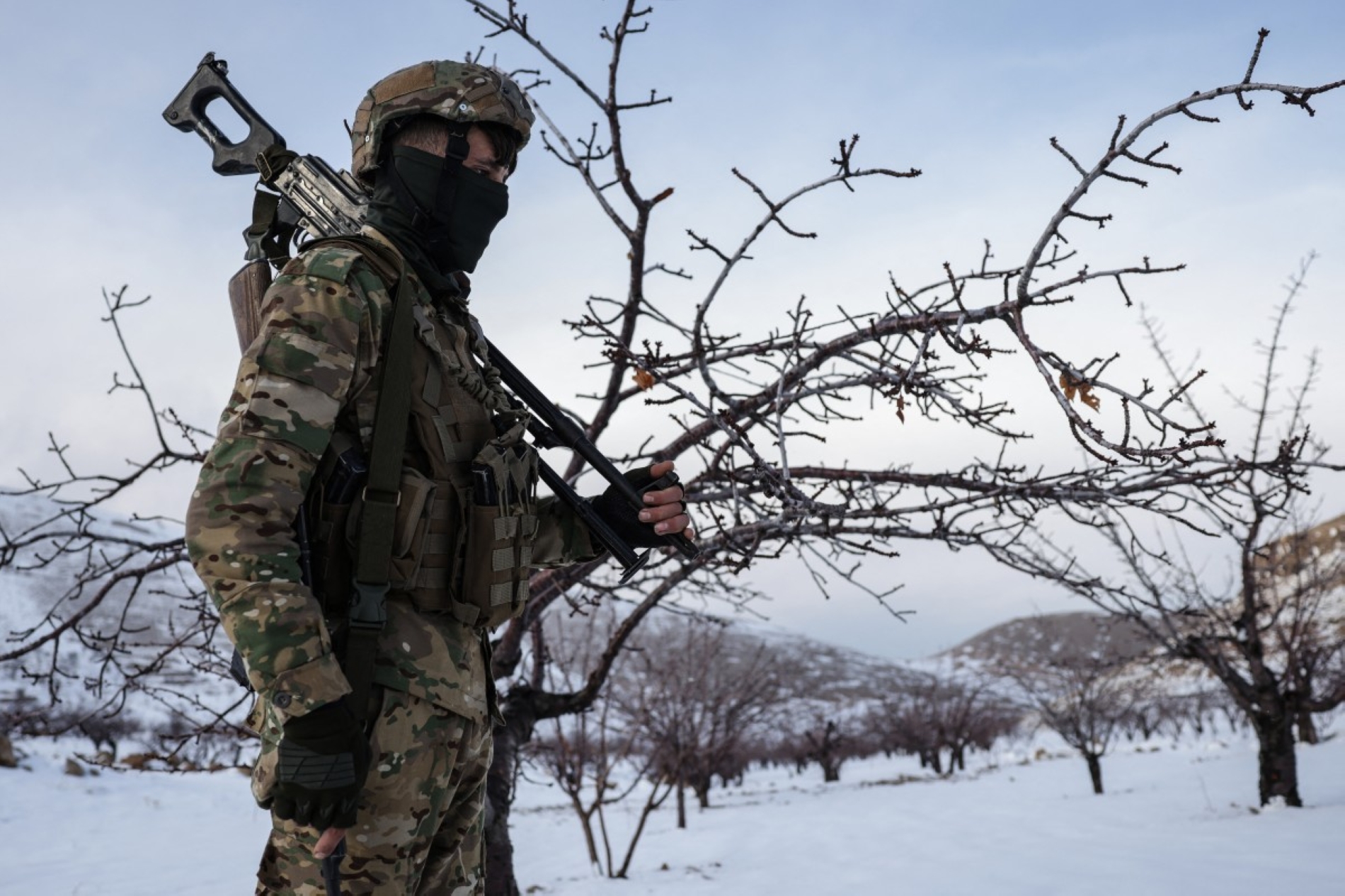
A Syrian soldier stands in the snow in the country's mountainous Qalamoun region, near the border with Lebanon, during a patrol to secure the frontier and prevent smuggling operations on 1 January 2026.
Syrian pivot
Syria's openness to countries in the region and its reorientation towards Washington and the West could be a positive factor for the Lebanese government in strengthening its internal security and giving the state a monopoly over the legitimate use of force. During the Assads' reign, Syria counted Iran as an ally, and this helped strengthen Hezbollah, making any attempt at Arab and Western support for the Lebanese government prone to failure or complication.
Today, Syrian and Lebanese leaders are aligned with the international community in their view that there is no place in either country for armed groups, Iranian interference, or the illegal production and distribution of drugs, most notably Captagon. Beirut may point to this political convergence of interests in seeking Arab and international support to rebuild Lebanon's institutions, including its armed forces.
During Syria's civil war (2011-24), Iran and Hezbollah worked closely to factionalise the Syrian army in what amounted to a divide-and-conquer strategy. Yet the fall of the Assad regime and the nation's new armed forces, led by units from Idlib and elsewhere, have wiped the slate clean. In recent months, the Syrian government has announced the arrest and interrogation of cells in Syria affiliated with Hezbollah, and there have been limited military clashes between Hezbollah and the Syrian troops on the border.
Damascus knows that Hezbollah's aim is to push Syria towards an armed confrontation that would create chaos, undermine Syrian-Lebanese cooperation, and revive the possibility of Syrian military intervention in Lebanon. Damascus knows that being drawn into a conflict with Hezbollah would only serve the militia's interests.
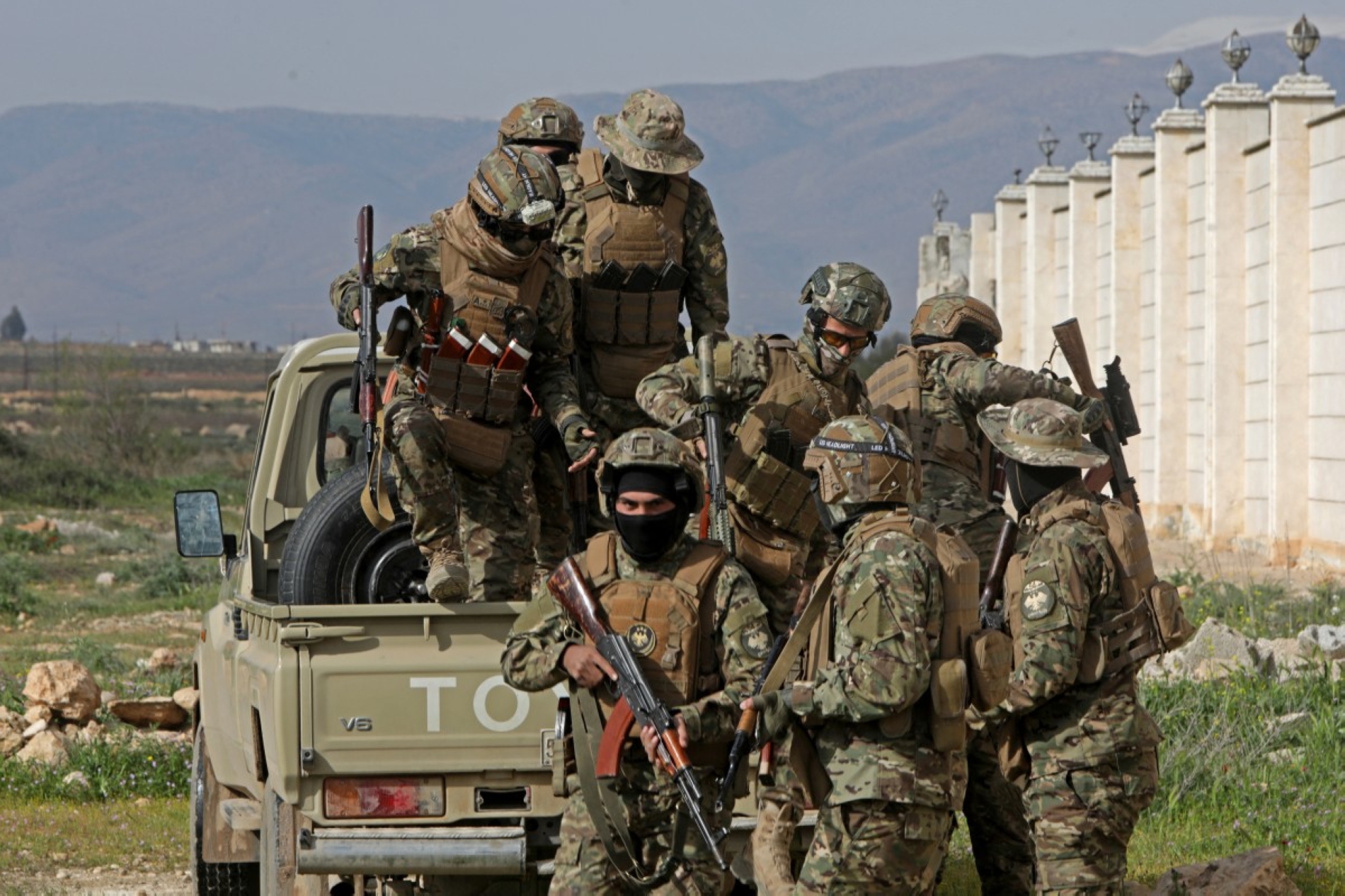
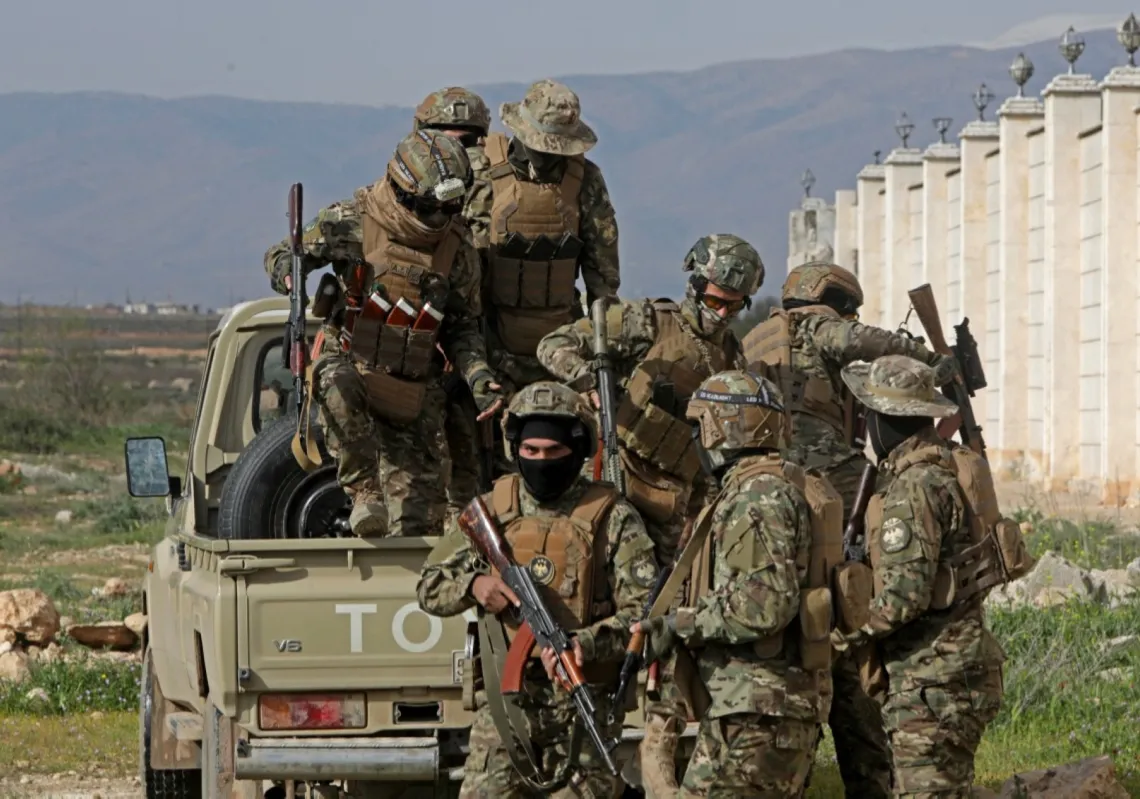
Syrian army soldiers patrol along the Syrian–Lebanese border in the rural area of Al Qusayr on 1 April 2026.
Conflict as a last resort
With Hezbollah having sent hundreds of fighters over the past two months to the Syrian border, preparing for a confrontation, there remains the possibility of a joint Lebanese-Syrian military operation, which could be easily justified, and which may even have strong international backing.
Yet this scenario remains the most complex and dangerous for Beirut and Damascus and would probably be a last resort. It could backfire and galvanise Hezbollah's supporters. It could also give pro-Iranian militias in Iraq the pretext to destabilise security on the Syria-Iraq border. Given all Syria's other security concerns, this would be an extra headache that Damascus could do without.
In summary, with the new national leaderships in Beirut and Damascus finding common ground and increasingly coordinating in matters of security, analysts are within their rights to consider this a turning point after decades of Assad's rule in Syria. The country's new leaders have worked hard to strengthen trust among the Lebanese public and to build a new framework for cooperation. Both have a strong working relationship with the White House, and both want to see Hezbollah disarmed.
Whatever the future holds for bilateral relations between these two neighbours, many are optimistic that they can be based on mutual understanding and shared interests aligned with those of others in the Arab world and beyond. That bodes well.