Egypt looks to EVs to slash $21bn in fuel imports

War in the Gulf has left petroleum importers like Egypt urgently reviewing how to wean themselves off fossil fuels. Ditching the combustion engine is top of the list.

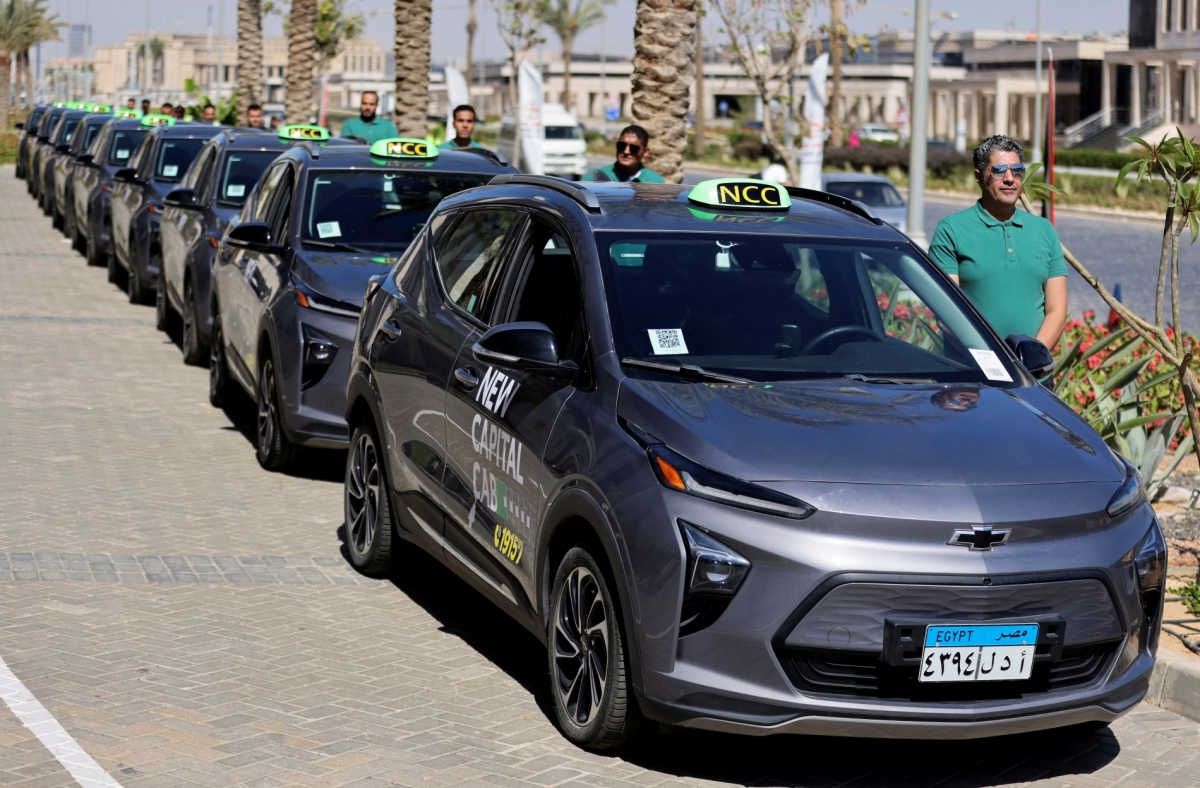
Drivers stand near electric cars, as Egypt began operating first electric taxis service, providing an eco-friendly ride-hailing solution for people in Cairo, on 16 May 2024.
REUTERS/Mohamed Abd El Ghany
Drivers stand near electric cars, as Egypt began operating first electric taxis service, providing an eco-friendly ride-hailing solution for people in Cairo, on 16 May 2024.

Egypt looks to EVs to slash $21bn in fuel imports

The Egyptian government has decided to accelerate the adoption of electric vehicles (EVs) to reduce dependence on petroleum imports and ease long-term pressures on its budget. In the 2024/2025 fiscal year, petroleum imports cost the country $21bn, so EVs are a practical measure to curb foreign currency outflows while modernising the local transport sector.

Several years ago, an ambitious local EV manufacturing plan was developed through partnerships with international producers, especially those in China. That strategy has now acquired more urgency in the wake of the US-Israeli war against Iran and its impact on global supply chains. Heavily dependent on petroleum imports from Gulf countries, Egypt suffered from Iran’s closure of the Strait of Hormuz, when oil imports dried up, raising the cost for both the state and consumers.

Even before the war, petroleum imports were putting serious pressure on the state budget, which was already strained. This makes EVs a potential economic lifesaver. The government’s decision means ditching thousands of internal combustion engine (ICE) vehicles used by workers in Egypt’s bloated public sector, replacing them with EVs.

Economist Rashad Abdo said reducing fuel consumption and related costs meant increasing dependence on non-fuel-consuming transportation. “The petroleum import bill has become a real concern for the Egyptian government, given its huge volume,” said Abdo, a professor of economics at Helwan University, speaking to Al Majalla.

Transport accounts for almost a third of Egypt’s annual energy consumption, even more than industry, which accounts for 28%. This shows the impact of ICEs, as does walking on the fume-filled streets of Cairo, where combustion engines also have an environmental cost.

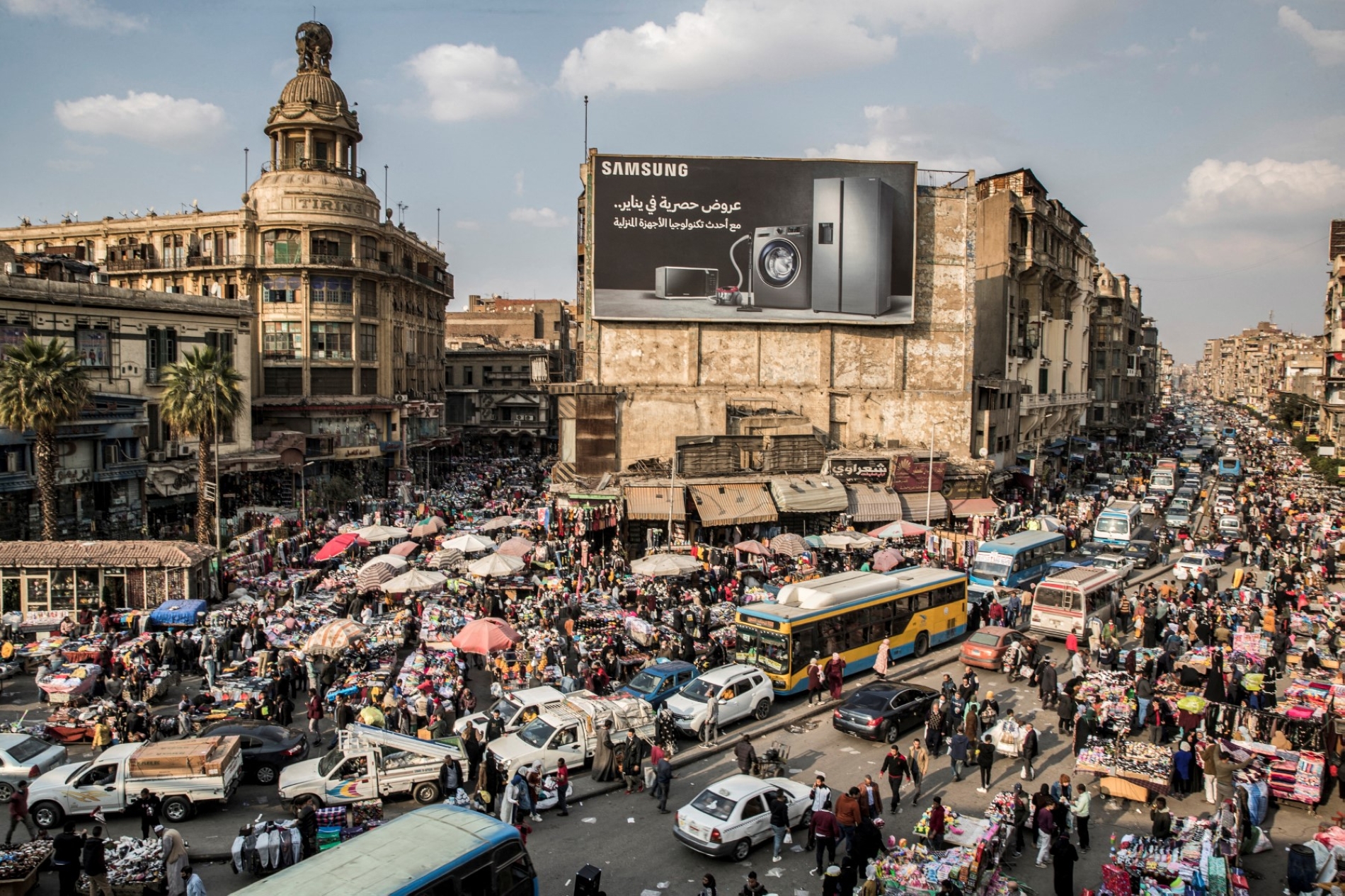
The Egyptian capital is one of the world’s most polluted cities. Engines account for almost 33% of fine inhalable particulate matter (commonly known as PM2.5) levels in Greater Cairo, which includes Giza and Qaluibia. By the end of 2025, Egypt had more than 11 million licensed vehicles. Almost all were ICEs. Around one in four cars is in Cairo, a city of ten million.
Khaled DESOUKI / AFP
Cars stuck in a traffic jam amidst street vendors and pedlars in the central Attaba district of Egypt's capital, Cairo, on 22 February 2021.

In 2023, the government launched the Automotive Industry Development Programme, a national strategy for the localisation of automotive manufacturing through investment, with EVs at its heart. The goal is to transform Egypt into a leading vehicle manufacturing and export hub, capitalising on its geographic location, abundant human resources, and an improving investment climate.

The same programme aims to increase the scale of domestic production, using local components, to 100,000 EVs annually. Agreements with Chinese partners aim to transform Egypt’s car assembly factories into competitive industrial hubs that rely on 60% locally made components.

Transport accounts for almost a third of Egypt's annual energy consumption, even more than industry.

Strategic option

The government has reduced customs duties and tariffs on imported EVs, their components, and charging station equipment. These and other measures, industry specialists say, encourage EV production and create the conditions for Egypt to become a major producer.

"EVs are becoming a strategic option to reduce the effects of overdependence on ICEs on the environment and downsize the traditional fuel import bill," says Nashat Heta, head of the Auto Industry Section at the Afro-Asian Investors' Federation. Speaking to Al Majalla, he added that in encouraging EV adoption, Egypt is following a global trend, pursuing cost-effective transport that does less harm to the environment.

The size of the government's ICE fleet is unknown, but the sector employs almost six million people. A shift to EVs would be gradual over several years. Economists say that petroleum imports are not strictly economic in nature, but they have a political dimension. "The rise in petroleum prices in the international market always forces the government to raise prices for local consumers," says Prof. Abdo. "This causes anger among the public, highlighting the political cost that might come with price hikes."

REUTERS/Amr Abdallah Dalsh
Mohamed Badawy, Chief Executive of Revolta, looks at Hyundai's Ioniq full electric car at an electric charging station in Cairo, Egypt, 18 February 2018.

In striving to reduce its fuel import bill, Egypt is also looking at options such as renewable energy and nuclear power. Cairo is building a nuclear power plant in the Western Desert in cooperation with Russia, aiming to produce 4,800 megawatts of electricity annually by 2030. This would equate to almost 10% of Egypt's overall energy needs. The country also aspires to generate 42% of its electricity from renewable sources by 2030 and 60% by 2040.

Lacking the infrastructure

The national EV drive faces a series of barriers, with EV adoption still limited. Only 18,500 EVs were licensed in Egypt between 2021 and 2025. While this number is growing, it is only a fraction of the total vehicles in this country. One of the biggest problems is a lack of charging infrastructure.

By early 2025, there were only 1,500 charging points across Egypt, which is four times the size of the United Kingdom. This creates what some call "range anxiety", especially outside the big cities, where charging points are concentrated. The government has plans to double the number of charging points, but there are delays, and areas beyond Cairo and Alexandria have been left out in the cold.

AFP
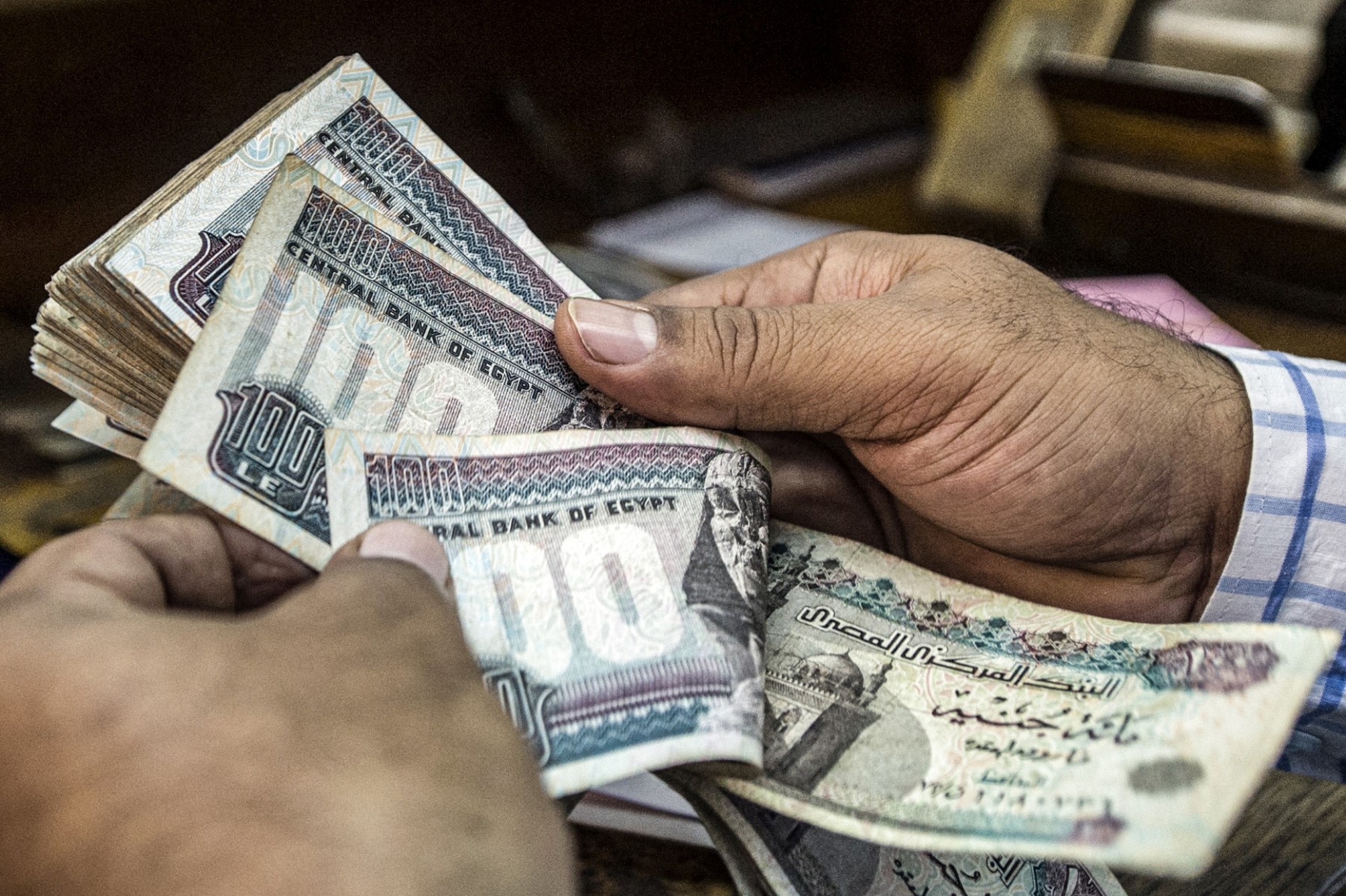
An employee counts Egyptian pounds at a currency exchange in downtown Cairo.

Another issue is that EVs are more expensive than ICEs, and most Egyptians are already grappling with high commodity prices owing to high inflation and the weakening purchasing power of the Egyptian pound. The government offers only a modest subsidy for EVs, of roughly $1,000. Experts have recommended stronger incentives, massive infrastructure investment, and awareness campaigns if the government is serious about its strategy.

Auto industry expert Gamal Askar said the government was moving "slowly" to implement its strategy and described its EV charging infrastructure ambition (of 3,000 charging points) as "modest". Speaking to Al Majalla, he said: "We are badly in need of mobile apps to guide motorists to these points, which requires substantial investment in technological infrastructure. We also need to attract more foreign investment into the EV manufacturing sector, but this investment will not come unless there is a win-win model for partners."

Whether the plans to electrify Egypt's EV sector rev into gear or stall on a hill start could therefore be decided in the boardrooms of big multinational manufacturers, whose investment would be needed if the North African country's ambitions are to be met. It remains to be seen whether these companies see in Egypt an opportunity too good to ignore, or whether they drive on to other destinations.

font change