From Tintin to Tetouan: the rise of Moroccan comics
Long dismissed as kids' entertainment and overshadowed by literary traditions, comics have evolved into a vibrant medium of artistic expression, social critique, and cultural memory
AFP
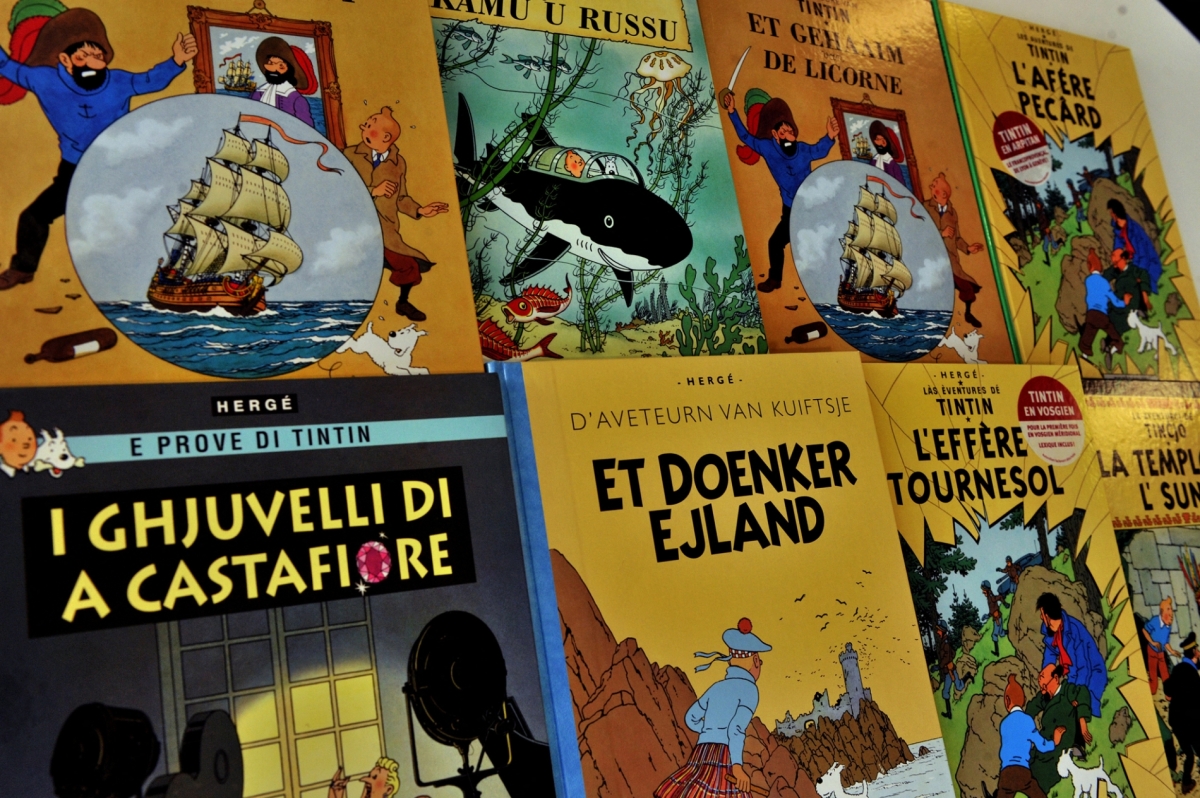
A picture taken on 24 January 2014 shows covers of the comic series Tintin translated into several languages at the Casterman publisher headquarters in Brussels.
From Tintin to Tetouan: the rise of Moroccan comics
For years, comics, also known as graphic narratives, were confined to the fringes of Moroccan culture. And yet, over the decades, they have evolved into a powerful medium of social and political expression.
By mirroring changes in Moroccan society, they have shed their reputation as illustrated stories intended for children and emerged as artistic works that document collective memory while engaging with questions of identity, freedom, the city, and the margins.
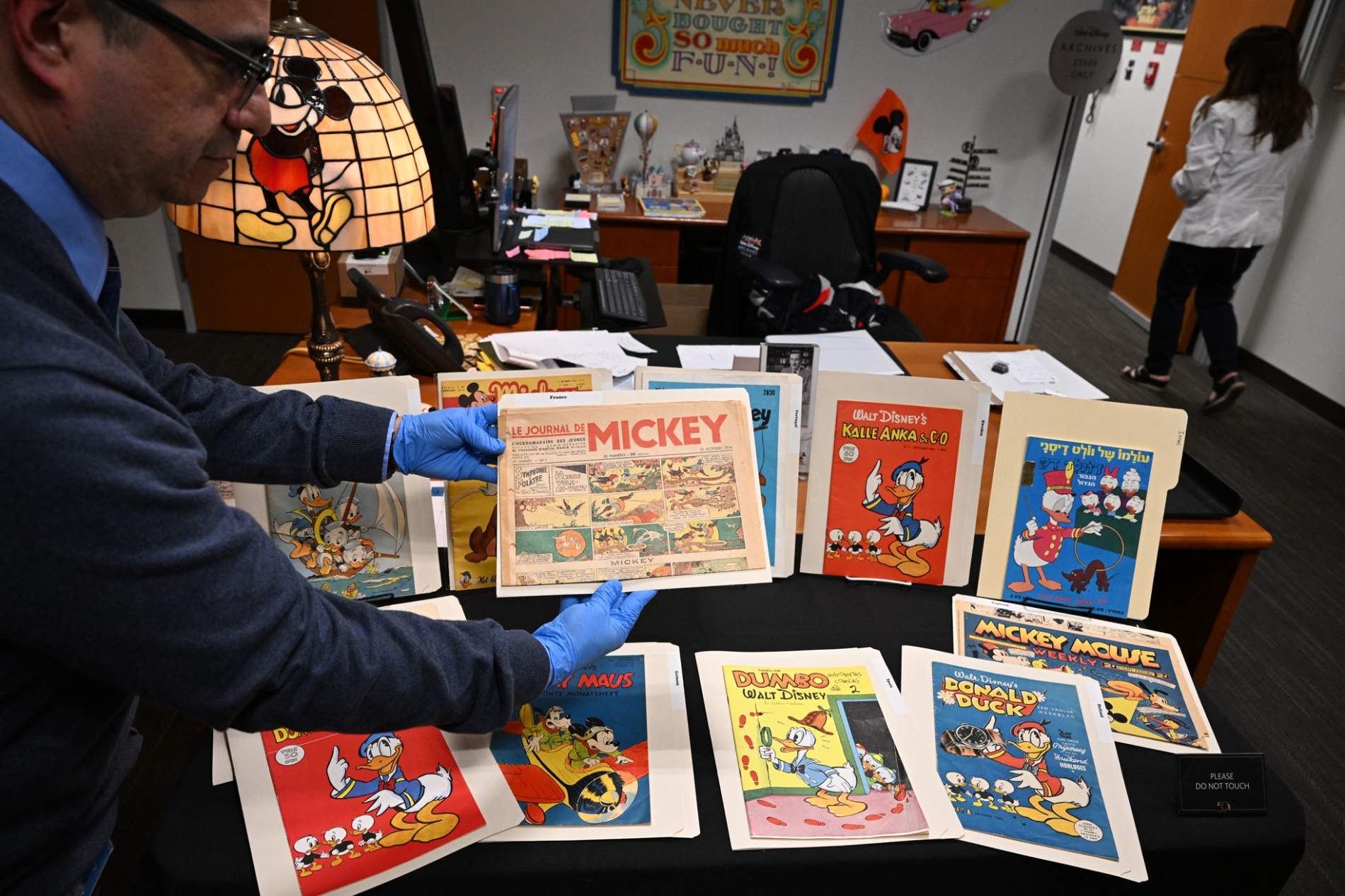
During the colonial period, comics entered Morocco through the circulation of French and Spanish magazines, particularly in major cities such as Casablanca, Rabat, and Tangier. Read primarily by children and young people educated in modern schools, these publications introduced generations of Moroccan readers to characters such as Tintin, Asterix, and Mickey Mouse, whose adventures became embedded in the country’s visual imagination.
In Moroccan colloquial speech, children referred to comics as ‘Mickey magazine’, ‘Titan’—a popular distortion of Tintin—or simply as ‘picture-and-story magazines’ and ‘French comics’. These popular names reveal how the medium was initially perceived: not as a distinct form of visual literature, but as a recreational activity associated with childhood, illustration, and play.
The Journal de Mickey," the first French-language Mickey Mouse comic, published in 1934 is displayed on 20 June 2023 at the Disney Studio lot, in Burbank, California.
Despite the wide circulation of these magazines, no genuine Moroccan comics production emerged during this period. Morocco remained primarily a consumer of Western forms, without developing a visual discourse that reflected its own social and cultural reality. This can be attributed to the country’s limited cultural infrastructure, the absence of specialised publishing houses, and a prevailing perception that did not consider the image as a serious artistic medium of expression.
After independence in 1956, Moroccan cultural life acquired a new dynamism, extending across theatre, literature, the visual arts, and journalism. Comics, however, remained relatively marginal. Nevertheless, individual initiatives began to emerge in newspapers and magazines, especially those of a political bent, which used visual narratives as tools for education and mobilisation. Newspapers such as Al Alam, Al Muharrir, and Al Ittihad Al Ishtiraki played an important role in this regard, publishing drawings and short illustrated stories with political and social themes, at times resembling caricatures and at other times taking the form of comic strips.
These works were not technically advanced, yet they helped lay the foundations for a new understanding of the image as a language capable of criticism and protest. Cultural magazines such as Souffles, although not dedicated to comics, also contributed to the development of a modernist aesthetic sensibility that would later influence generations of Moroccan artists, who came to see the image as a means of dismantling and reinterpreting reality.
By the 1990s, Moroccan comics had begun gradually to loosen the hold of direct Western influence
From caricature to comic strips
In the 1970s and 1980s, political and social caricature gained a much stronger presence in the Moroccan press, particularly as societal tensions intensified. This development helped pave the way for the emergence of comics, as illustrators acquired experience in satire, visual storytelling, and the art of condensation.
During this period, Abdelaziz Mouride emerged as one of the leading pioneers of Moroccan comics. Drawing on his own experience of political imprisonment, Mouride transformed the suffering of Moroccan prisons into visual narratives of remarkable documentary force. His works extended beyond illustration, becoming an artistic testament to a chapter of the 'Years of Lead', when art intersected with political memory and struggles for human rights.
By the 1990s, Moroccan comics had begun gradually to loosen the hold of direct Western influence. Artists sought to create characters, settings, and narratives drawn from everyday Moroccan life: working-class neighbourhoods, cafés, buses, markets, local dialects, and the social anxieties bound up with poverty, unemployment, migration, and political change. It was during this period that the contours of a distinctly Moroccan comics tradition began to emerge, rooted in a local visual language and sensibility rather than in the imitation of European models.
With the advent of the new millennium, comics in Morocco underwent a significant transformation, supported by the emergence of festivals devoted to the art form in cities such as Casablanca, Meknes, and Tetouan. Foremost among them is the International Forum for Comic Strips in Tetouan, launched in 2004 and which held its 19th edition in May, bringing together artists and creators from across the world.
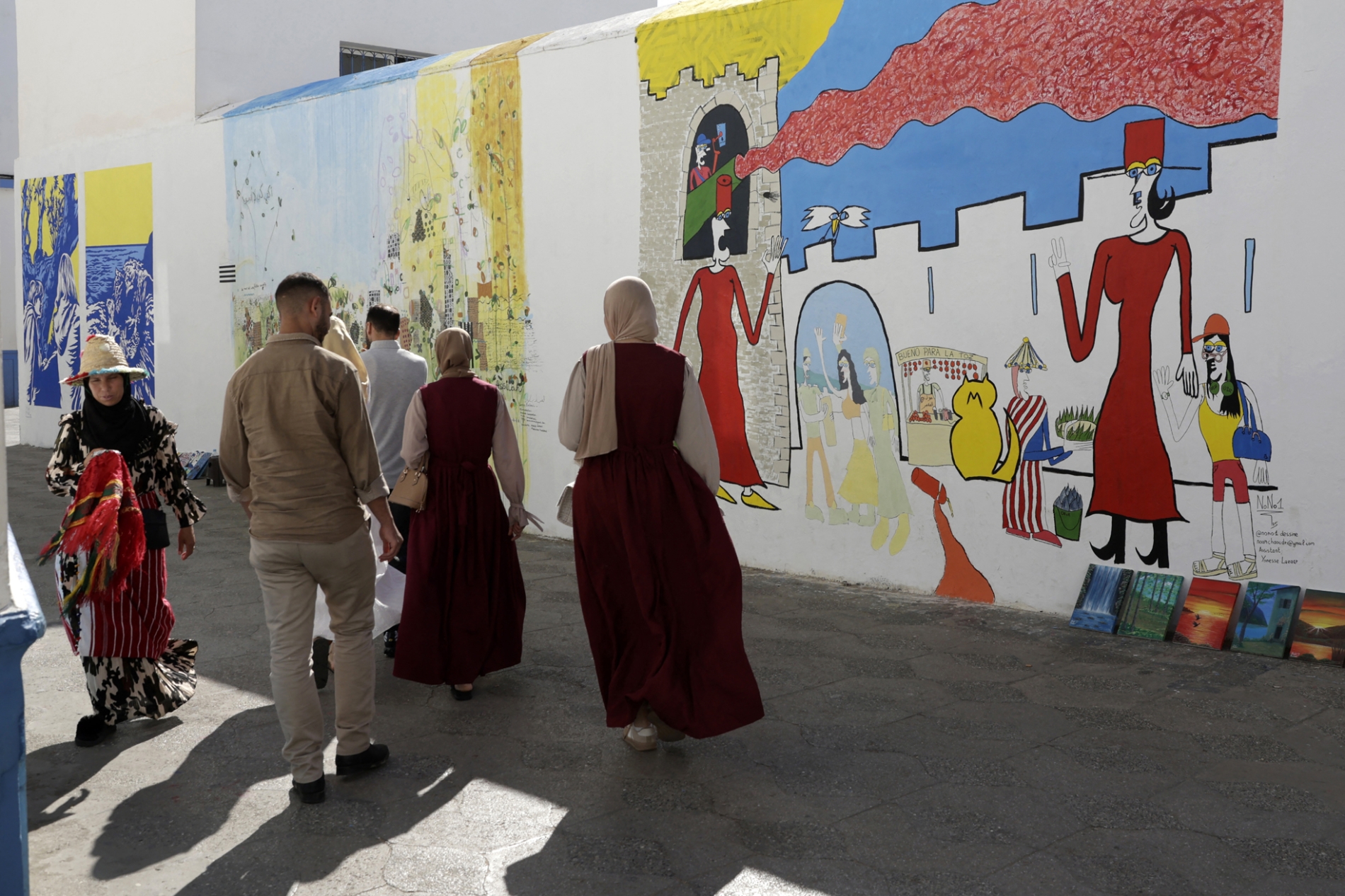
Visitors walk near mural paintings during the annual Asilah Arts Festival, which transforms the coastal Moroccan town into an open-air art gallery, on 12 July 2025.
Coming of age
Since its launch, the forum has expanded considerably, attracting growing numbers of participants from across the world and establishing itself as a key meeting point for artists, publishers, and creators working in the field of comics. Its programmes include exhibitions, workshops, seminars, and film screenings, giving it the character of a comprehensive cultural event that both draws enthusiasts of the medium and deepens public engagement with comics in Morocco and the wider Arab world.
The forum has also played a significant role in supporting the development of Moroccan comics, serving as a platform for regional and international creators while reinforcing the art form's place within the country's cultural landscape.
Alongside these festivals, Moroccan artists increasingly began publishing their own books, addressing a broad range of themes and concerns. Some works explored issues of gender and individual rights, while others focused on the challenges facing young people amid social and economic change. These publications helped expand the readership of comics, which were no longer seen solely as a medium for children but increasingly appealed to adult audiences as well.
At the same time, Moroccan cultural institutions began to recognise the educational and cultural value of comics. This growing awareness has strengthened the medium's status and encouraged greater investment in it, opening new possibilities for creative work that reflects Moroccan realities while bringing the country's cultural identity into sharper relief.
During this period, important independent initiatives also emerged, most notably Skefkef magazine, published between July 2013 and May 2018, which marked a decisive turning point in the history of Moroccan comics. The magazine sought to create a free space for young artists and to showcase works rooted in Moroccan realities, whether in language, style, or subject matter. Skefkef reflected the outlook of a new generation that viewed comics as a contemporary art form capable of engaging critically with society, rather than merely serving as entertainment for children.
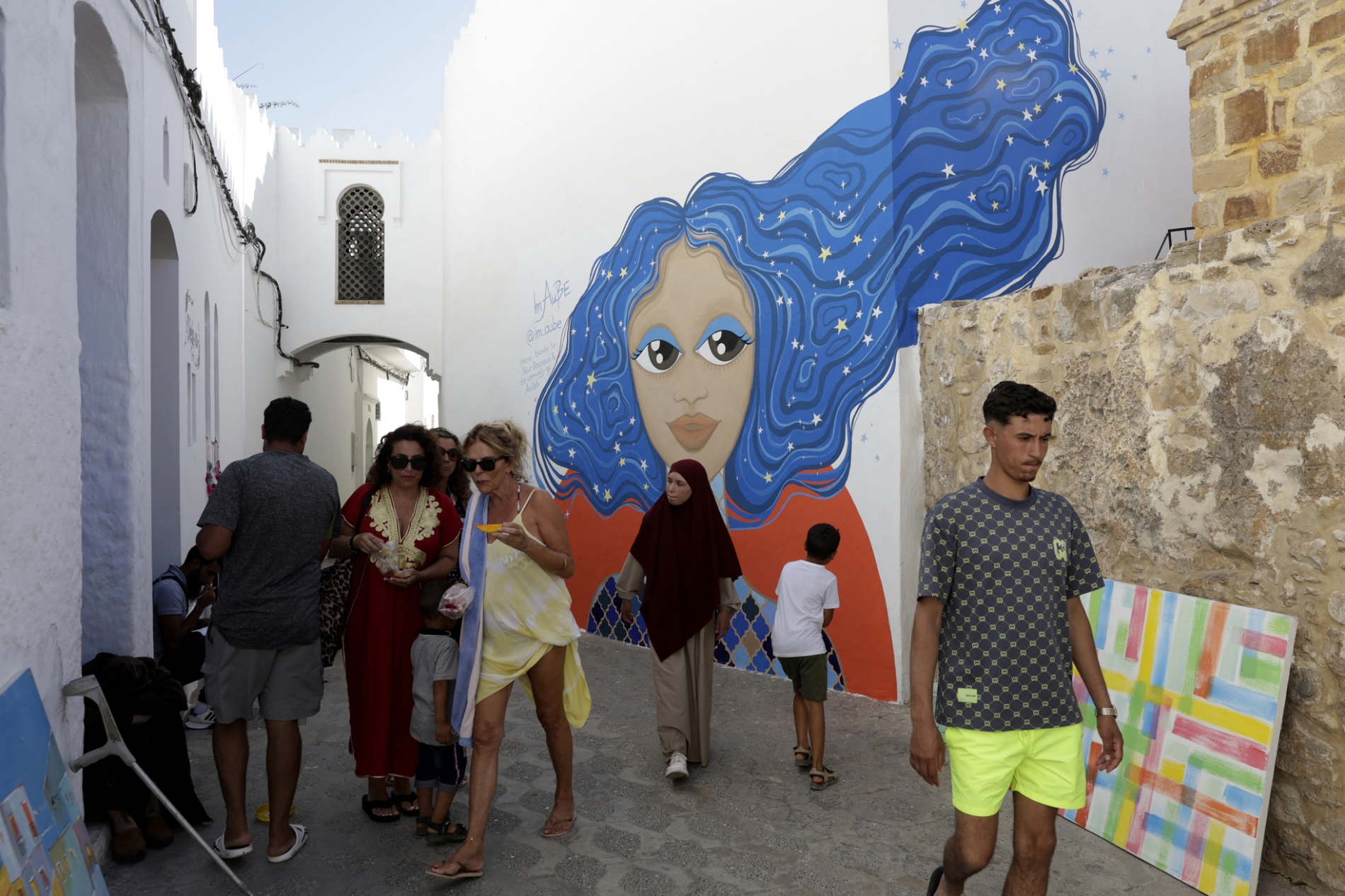
Visitors walk near mural paintings during the annual Asilah Arts Festival, which transforms the coastal Moroccan town into an open-air art gallery, on 12 July 2025.
Roadblocks to success
Despite the significant developments the medium has undergone, including the establishment of a comic arts department at the National Institute of Fine Arts in Tetouan—the first programme of its kind on the African continent—it continues to face several challenges.
Foremost among them is the persistent perception of comics as superficial entertainment primarily for children, a view that limits their recognition and circulation as a mature artistic medium capable of conveying profound and complex cultural and social messages.
The comics industry in Morocco also faces structural challenges, including limited infrastructure and the absence of effective distribution networks to bring Moroccan works to wider international audiences. Another obstacle is competition from Western productions, which benefit from advanced production techniques and greater financial resources. This imbalance makes it difficult for Moroccan artists to achieve broad visibility for their work, especially given the limited size of the local market.
The history of comics in Morocco is one of continual evolution. From its early encounters with Western influences, the medium has reached a degree of artistic maturity that reflects the particularity of Moroccan identity.
Despite persistent challenges, it has established its place as an effective instrument for social and political commentary, historical memory, and cultural expression. With continued support and creative innovation, the medium appears well-positioned to strengthen its role within Morocco's cultural life while reaching ever wider audiences beyond the country's borders.